
How to Figure Out the Right Number of Wedding Invitations to Order

One of the most common (and costly) mistakes couples make is ordering the wrong number of wedding invitations. Order too few and you're scrambling for a reprint — which almost always costs more per unit. Order too many and you've spent money on invitations that sit in a box forever. The good news: calculating your ideal quantity is straightforward once you know the rules. Here's exactly how to do it.
Start With Households, Not Heads
The single most important thing to understand is that you order one invitation per household, not one per guest. A married couple living together gets one invitation. Roommates who are both on your guest list each get their own. A family of four — two parents and two adult children living at home — typically receives one invitation addressed to the whole family.
So if your guest list has 150 people, you might only need 80–90 invitations once you group everyone by household. Sit down with your guest list spreadsheet and go address by address. That number is your true baseline.
Add a Buffer — Always
Once you have your household count, add a buffer of 15–20 extra invitations. Here's why:
- Last-minute additions: Someone gets added to the B-list, or a family member you forgot needs an invite.
- Addressing mistakes: Calligraphers, printers, and even careful couples make errors on envelopes.
- Keepsakes: You and your partner will each want one. So will your parents. That's already four right there.
- Reprints are expensive: Most stationery vendors charge setup fees per order, so ordering a small batch later costs significantly more per piece than ordering extras upfront.
A practical rule of thumb: if your household count is under 75, add at least 15 extras. If it's over 75, add 20 or more.
Account for Every Piece in the Suite
Your invitation order isn't just the main card. A full wedding invitation suite often includes:
- The invitation itself
- An RSVP card and return envelope
- A details or accommodations card
- An outer envelope (and sometimes an inner envelope)
When you place your order, make sure every component matches your total invitation count — including your buffer. It's easy to order 85 invitation cards but forget to order enough RSVP cards to match. Double-check every line item before you confirm.
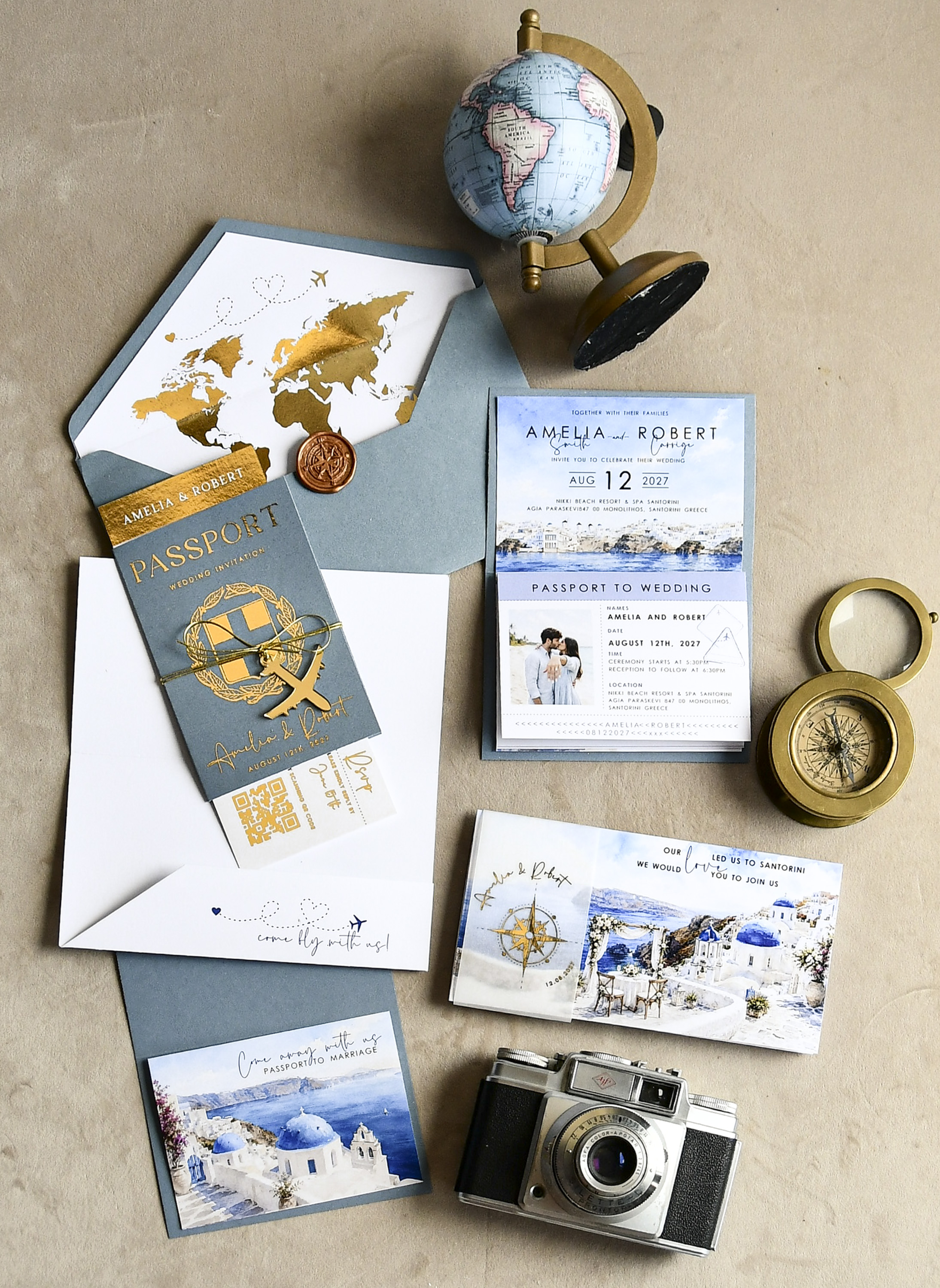
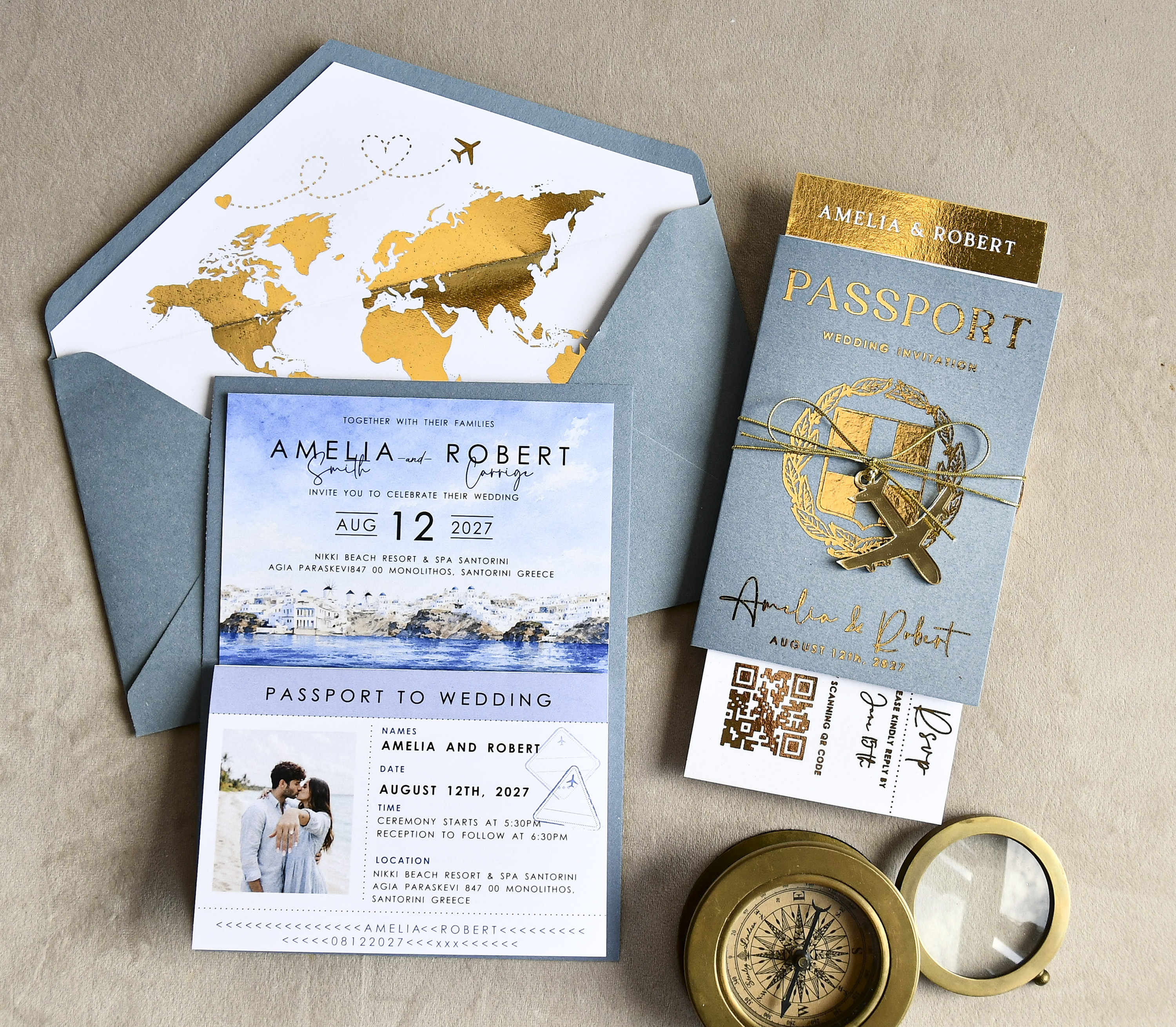
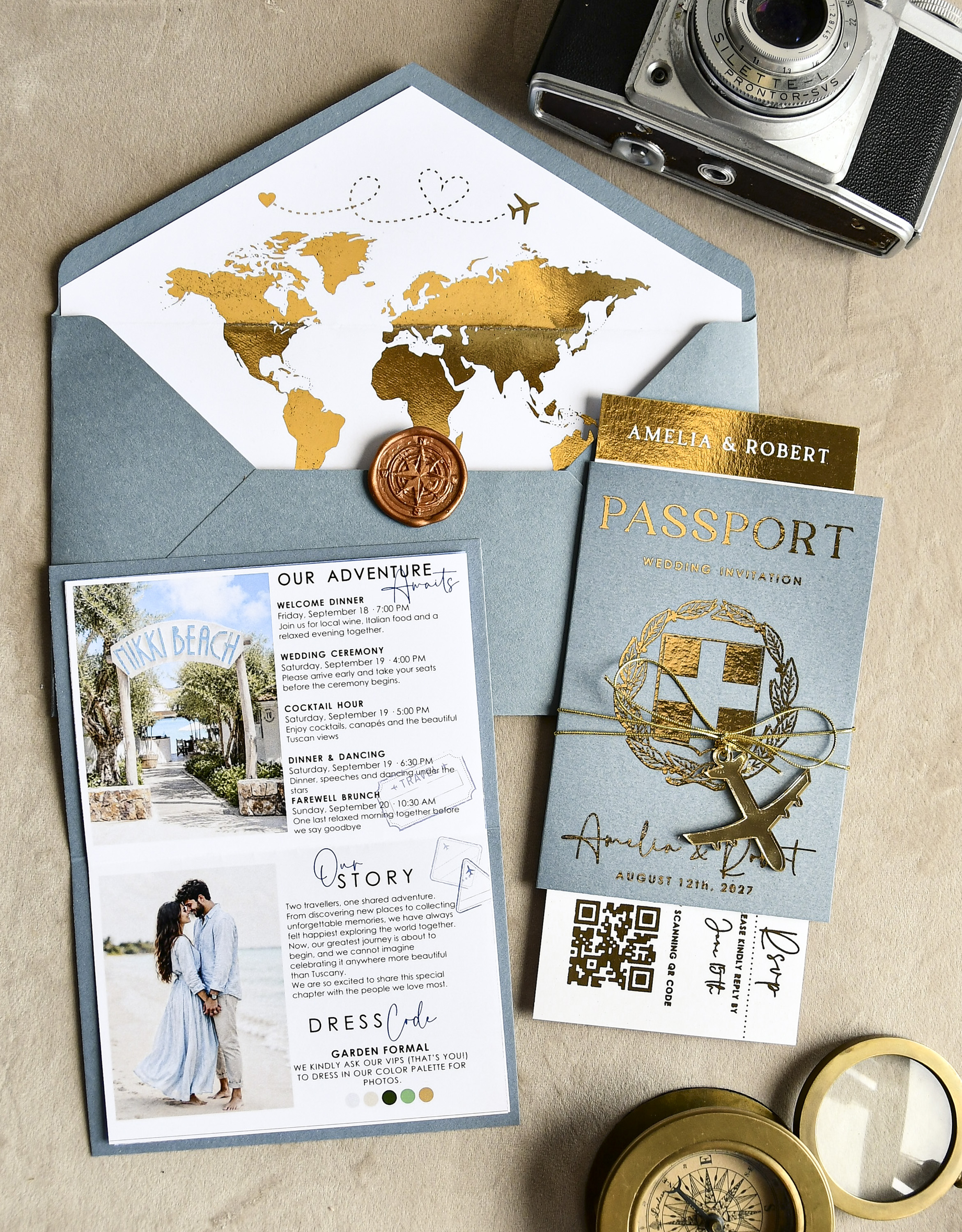
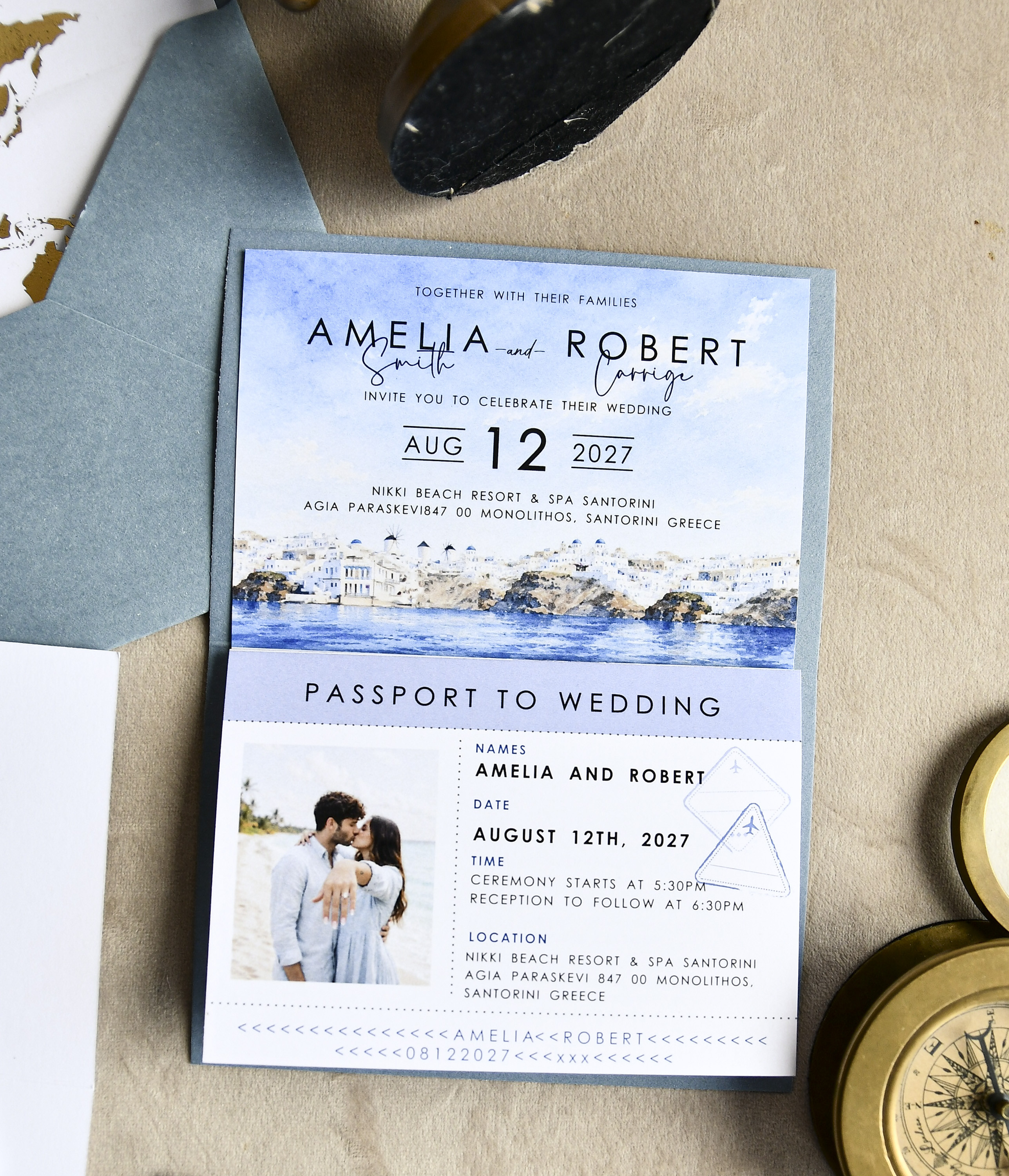
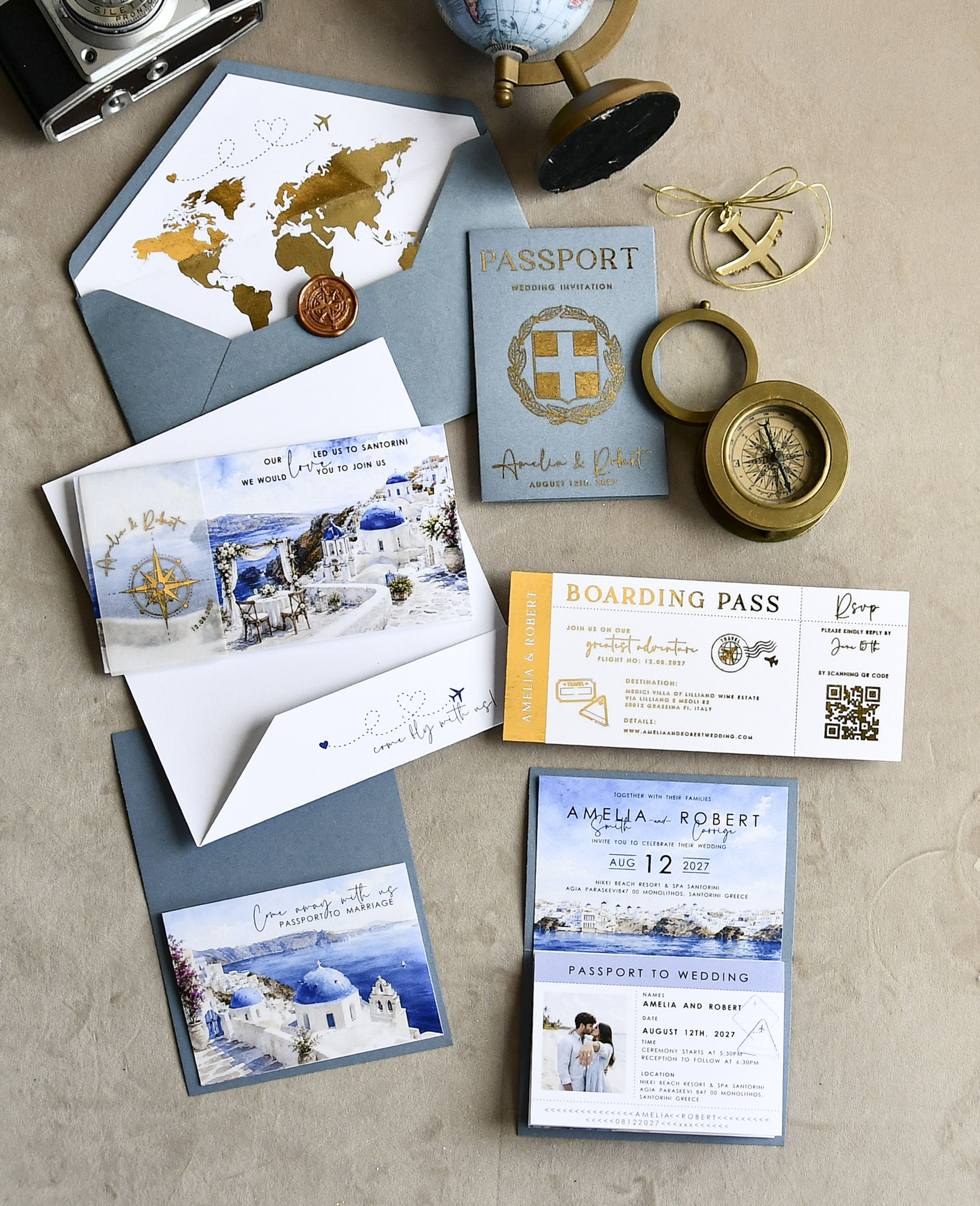
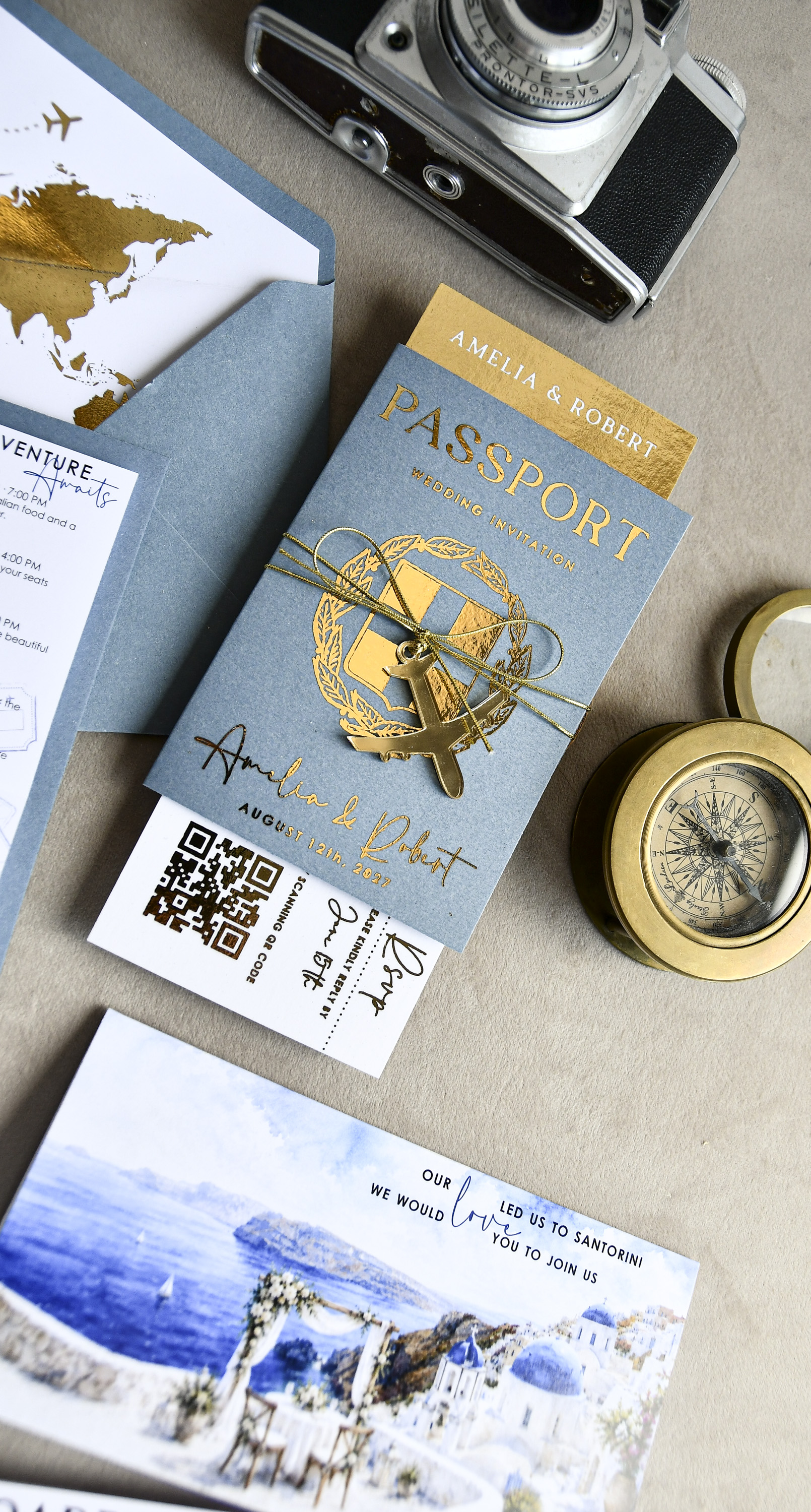
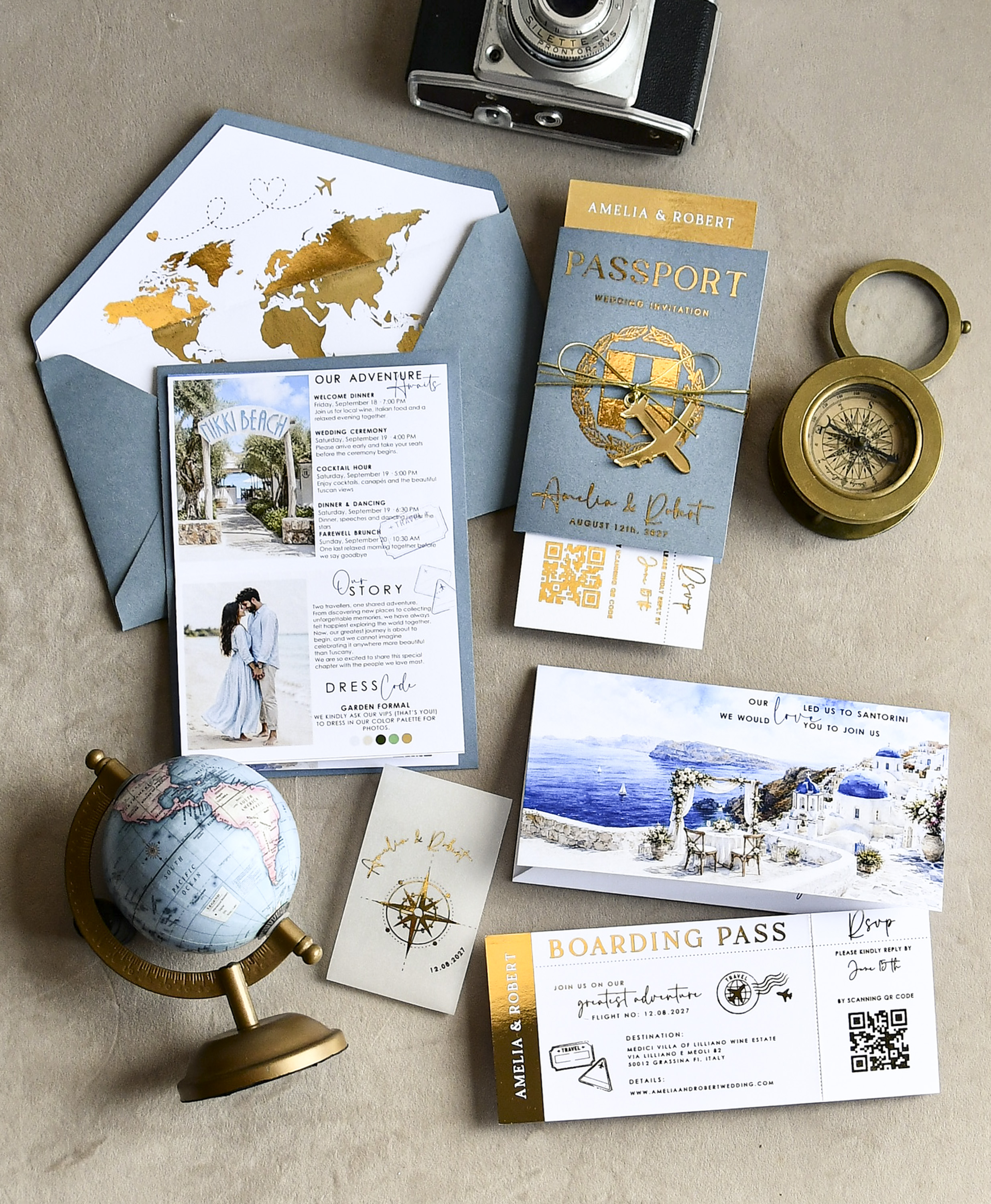
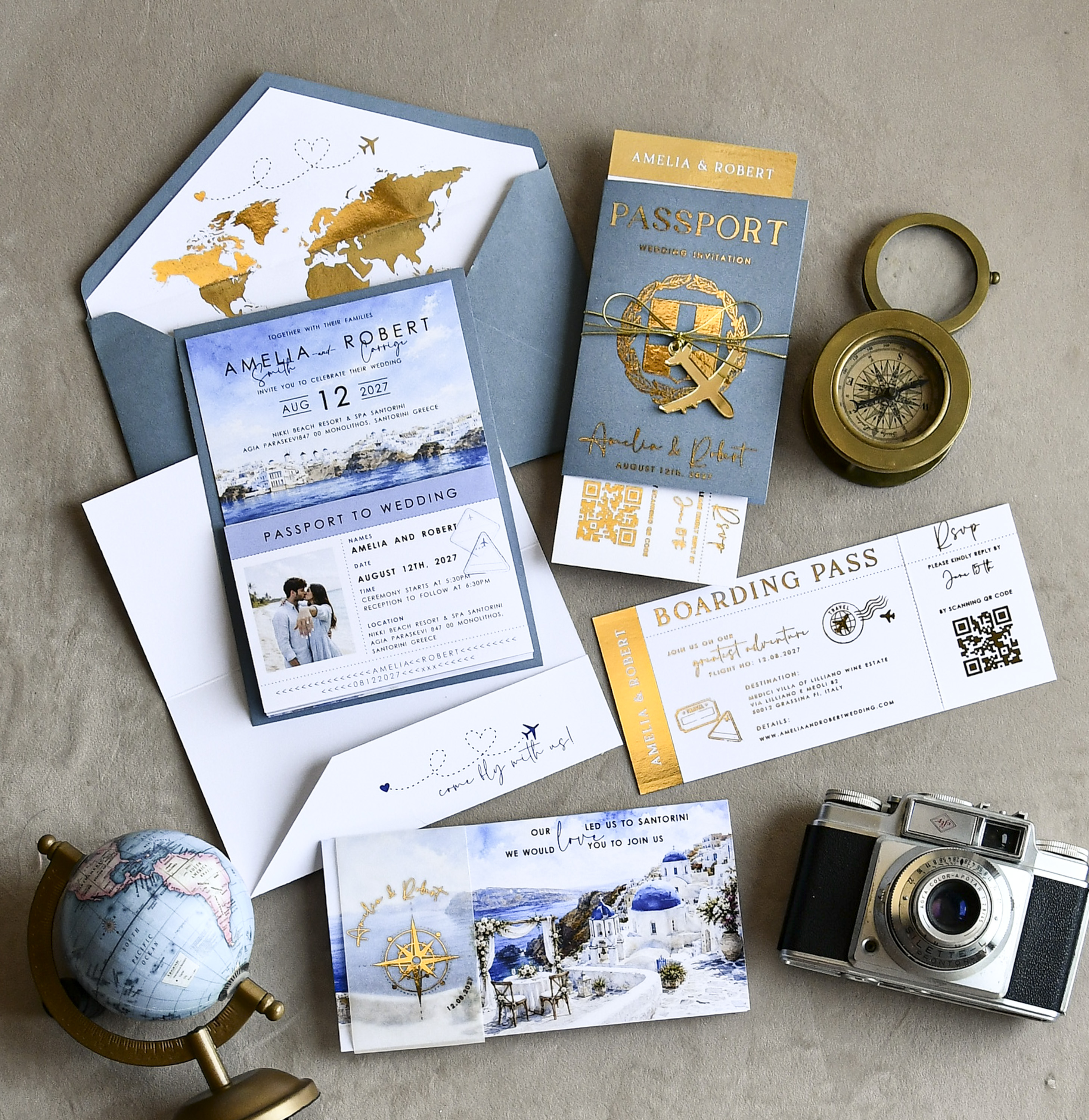
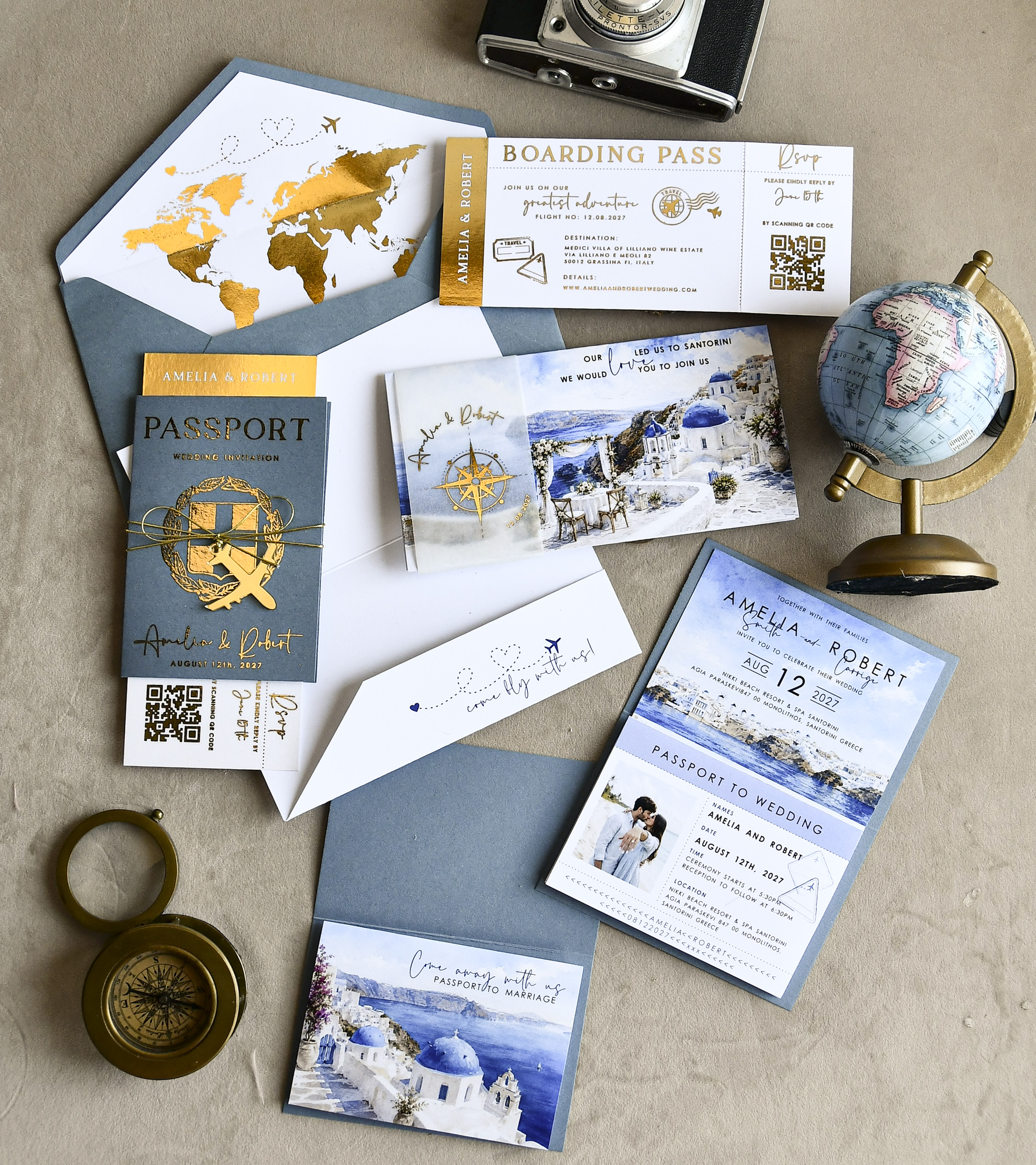
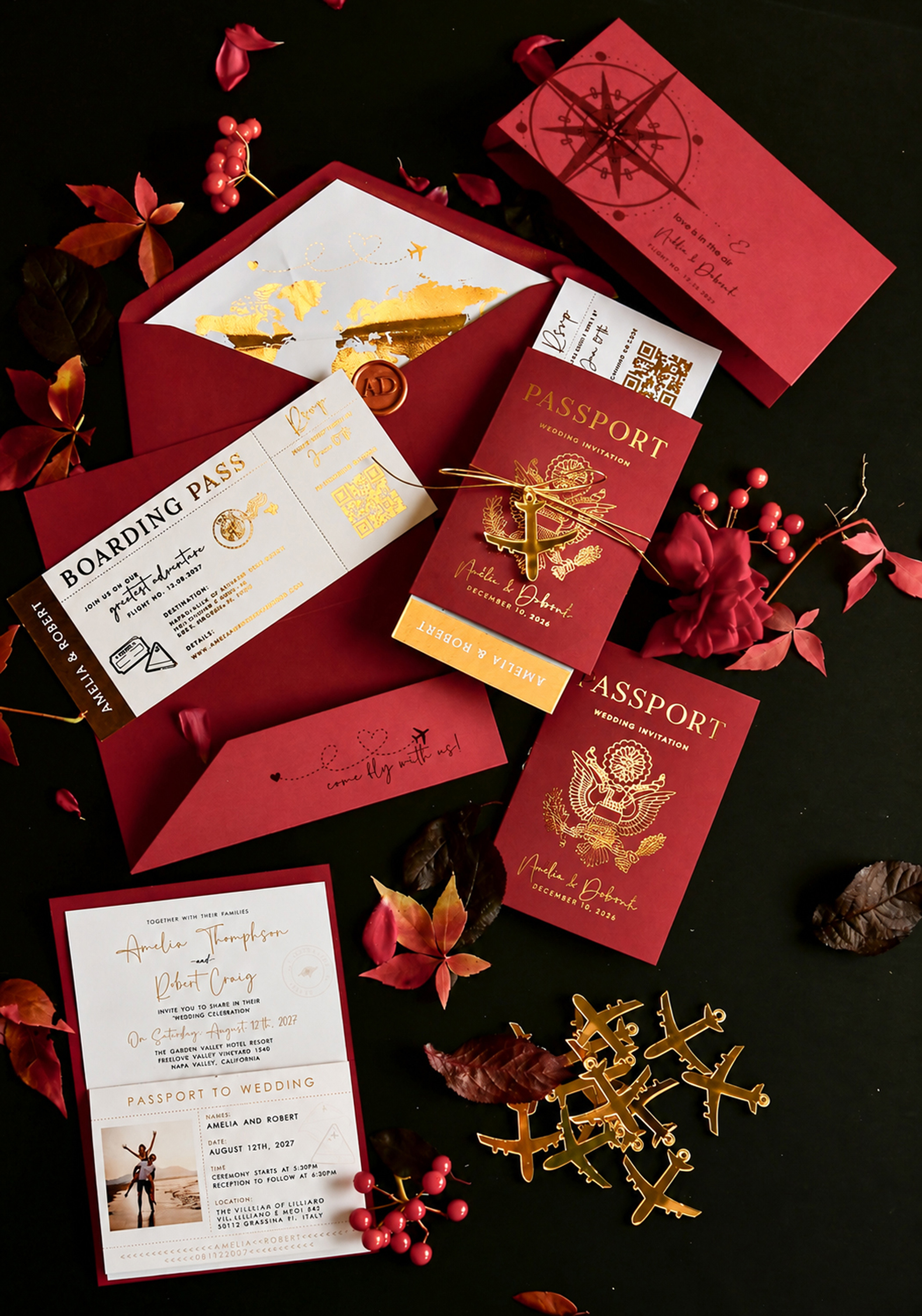
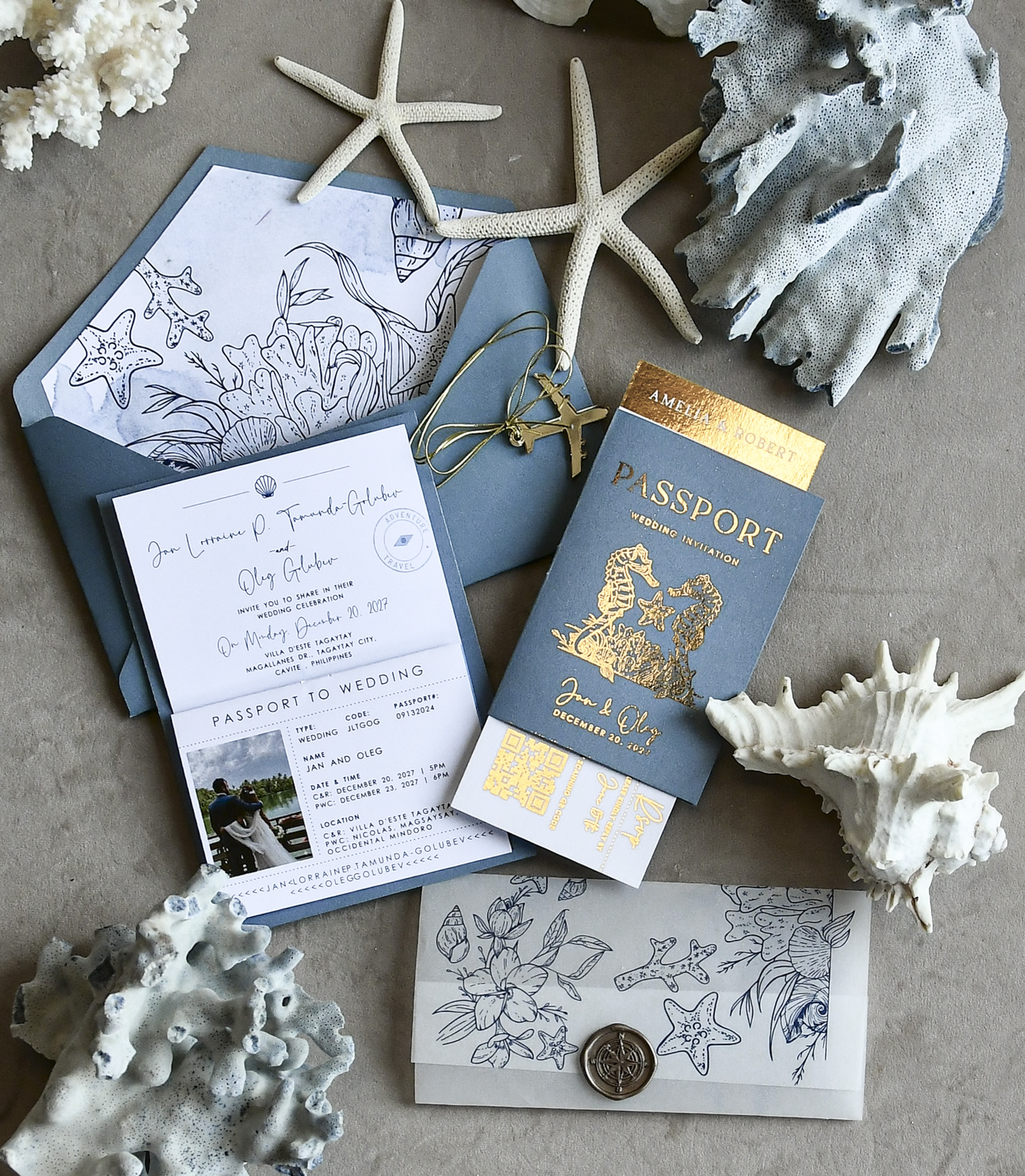
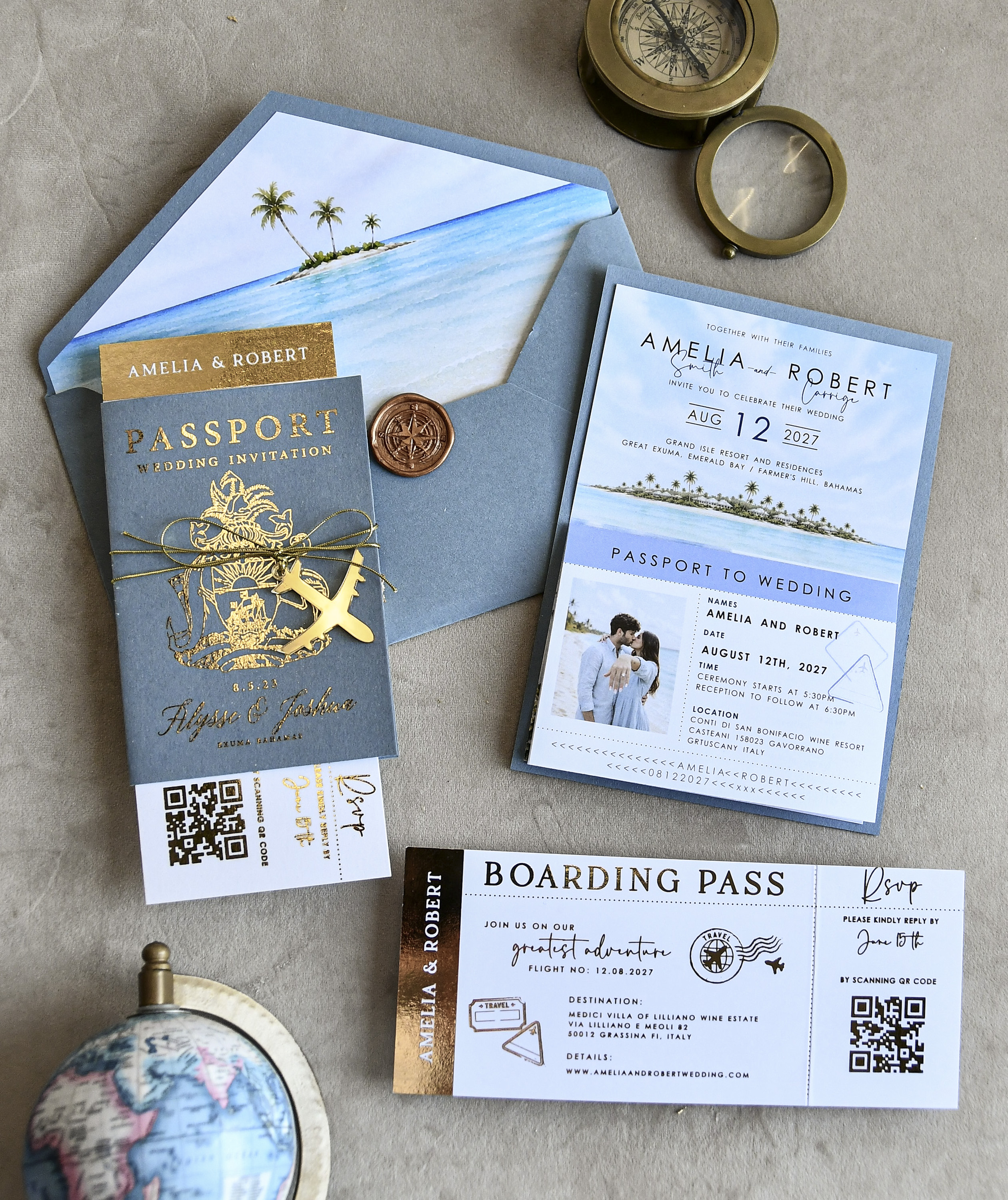
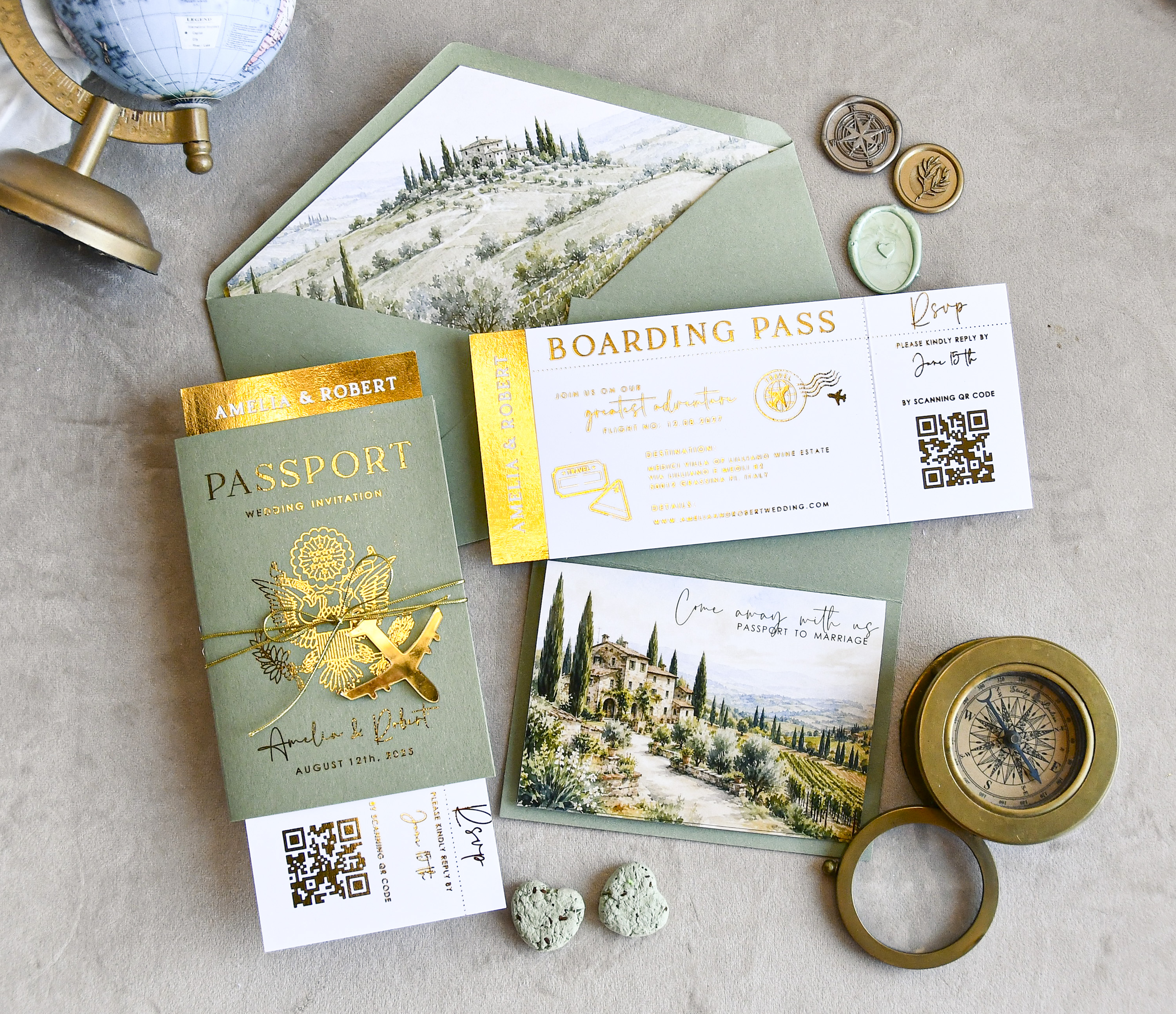
If you're ordering a destination-style suite — like our 03/passDest/z passport to love beach wedding invites, which start from $8.00 — keep in mind that multi-piece passport booklets may have a slightly different assembly process, so confirm quantities for each insert with your stationer.
When to Order and How Long It Takes
Most couples should order wedding invitations 4–6 months before the wedding. That gives you time for design proofing, printing, addressing, and mailing — without panic. Here's a simple timeline:
- 6 months out: Finalize your guest list and household count.
- 5 months out: Choose your stationery, confirm quantities, and place your order.
- 4 months out: Receive your invitations and begin addressing.
- 6–8 weeks before the wedding: Mail invitations (8 weeks for destination weddings or holidays).
- 3–4 weeks before: RSVP deadline hits — follow up with non-responders.
Rushing an invitation order often means paying expedite fees or settling for a design you don't love. Give yourself the runway to get it right.
Special Situations That Change Your Count
A few scenarios that can affect how many invitations you need:
- Divorced parents with separate households: Each household gets its own invitation — even if they're both listed as hosts on the invite.
- Children with a plus-one: If a college-age child living away from home is bringing a guest, their household gets one invitation.
- Work colleagues or acquaintances: These often get forgotten until late. Audit your list one more time before ordering.
- International guests: Mail these 10–12 weeks early to account for customs and slower delivery. Factor that into your timeline, not your quantity — but flag those addresses when you're addressing envelopes.
When in doubt, round up. The cost difference between 90 and 100 invitations is usually small. The cost of a reprint — plus the stress — is not.
Frequently Asked Questions
Yes — if they're on your guest list, they should receive an invitation regardless of whether you expect them to attend. It's a matter of etiquette, and not inviting someone you know personally can cause hurt feelings. The exception is people you're intentionally not inviting.
You'll need to place a reprint, which almost always costs more per invitation than your original order due to setup fees. Contact your stationer as soon as possible and ask whether they can match the paper stock and print run from your original order. This is exactly why ordering a buffer upfront is so important.
No — one invitation per household is the standard rule. Address the outer envelope to both people (e.g., 'Ms. Jane Smith and Mr. Tom Lee') and they'll understand the invitation is for both of them. The only exception is if they have different last names and you want to be especially formal.
Most couples set aside two to four invitations as keepsakes — one for each partner and possibly one for each set of parents. If you're planning to frame yours or include it in a wedding album, make sure those copies are kept flat and pristine from the moment they arrive.
You can, but it's not ideal. A second batch almost always costs more per unit, and there's a risk the paper or print color won't match exactly. A better approach is to estimate your B-list size upfront and include those households in your original order quantity.
Most stationery vendors, including online printers, have a minimum order — commonly 25 or 50 invitations. If your guest list is very small, check minimums before you choose a vendor so you're not forced to order far more than you need. Some boutique printers offer lower minimums for small weddings.
See This Design Up Close












You May Also Like
More Wedding Planning Guides
- → The Complete Guide to What Goes on a Wedding Invitation
- → Plus One Etiquette: Exactly Who Makes the Cut at Your Wedding
- → How to Navigate a Wedding When Your Divorced Parents Are at War
- → Inviting Guests to the Ceremony But Not the Reception: What You Need to Know
- → The Case for a Small Wedding: Everything You Need to Know
- → When to Send Wedding Invitations: A Complete Timeline Guide
- → Who Gets Cut First When Your Guest List Is Too Long?
- → Wedding Invitation Addressing: Etiquette Rules Every Couple Should Know
- → Do You Have to Invite Your Future In-Laws' Friends to Your Wedding?
- → Coworkers and the Wedding Guest List: How to Decide Who Gets an Invite
- → Yes, Guests Can RSVP Online — Here's How to Make It Work Beautifully
- → More Guests or a More Memorable Wedding? How to Choose What's Right for You
- → Inviting Your Ex to Your Wedding: A Practical Guide to Making the Right Call
- → Do You Have to Invite Your Cousins to Your Wedding?
- → Should You Invite an Estranged Sibling to Your Wedding?
- → Going Digital: Everything You Need to Know About Sending Online Wedding Invitations
- → No-Shows After a Yes RSVP: How to Handle It Gracefully
- → Navigating the 'Them or Me' Wedding Guest Ultimatum
- → When Parents Want to Add Friends to the Guest List: A Practical Guide
- → No Kids at Your Wedding: Navigating the Etiquette With Confidence
- → How to Defuse Family Arguments Without Losing Your Mind Before the Wedding
- → Uninvited Plus-Ones and Tag-Alongs: How to Keep Your Guest List Intact
- → When Family Feuds Threaten Your Wedding Plans: A Practical Peacekeeper's Guide
- → Inviting an Estranged Brother or Sister: Finding Clarity Before You Seal the Envelope
- → Cousins, Invites, and Hard Choices: A Practical Guest List Guide