
When to Send Wedding Invitations: A Complete Timeline Guide

One of the most common questions newly engaged couples ask is: when exactly should wedding invitations go in the mail? Send them too early and guests may misplace them; send them too late and people can't make travel arrangements. The sweet spot depends on your wedding style, location, and guest list — and getting the timing right sets the tone for everything that follows.
The Standard Rule: 6 to 8 Weeks Before the Wedding
For most weddings, mailing invitations 6 to 8 weeks before the wedding date is the widely accepted etiquette standard in the United States. This window gives guests enough time to check their schedules, arrange childcare, request time off work, and RSVP by your deadline — without receiving the invitation so far in advance that it gets buried under other mail.
If your wedding falls on or near a major holiday weekend (Memorial Day, Labor Day, Thanksgiving), lean toward the 8-week mark. Guests booking travel around busy holidays need extra lead time to find affordable flights and accommodations.
Destination Weddings Need More Lead Time
If you're hosting a destination wedding — a beachside ceremony in the Caribbean, a vineyard abroad, or even a resort a few states away — you should send invitations 3 to 4 months in advance. Guests need time to budget for flights, book hotels, and request extended time off work.
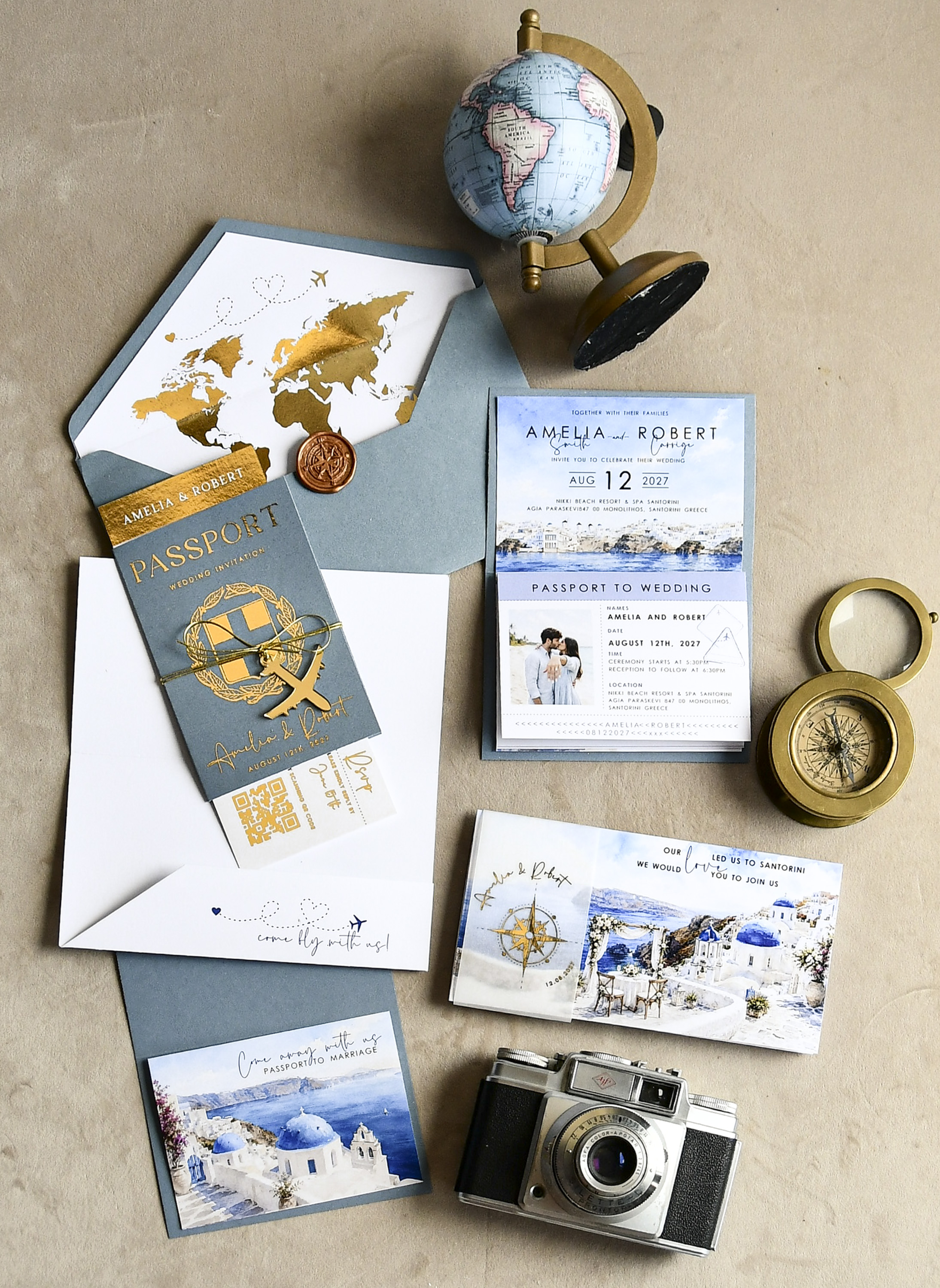
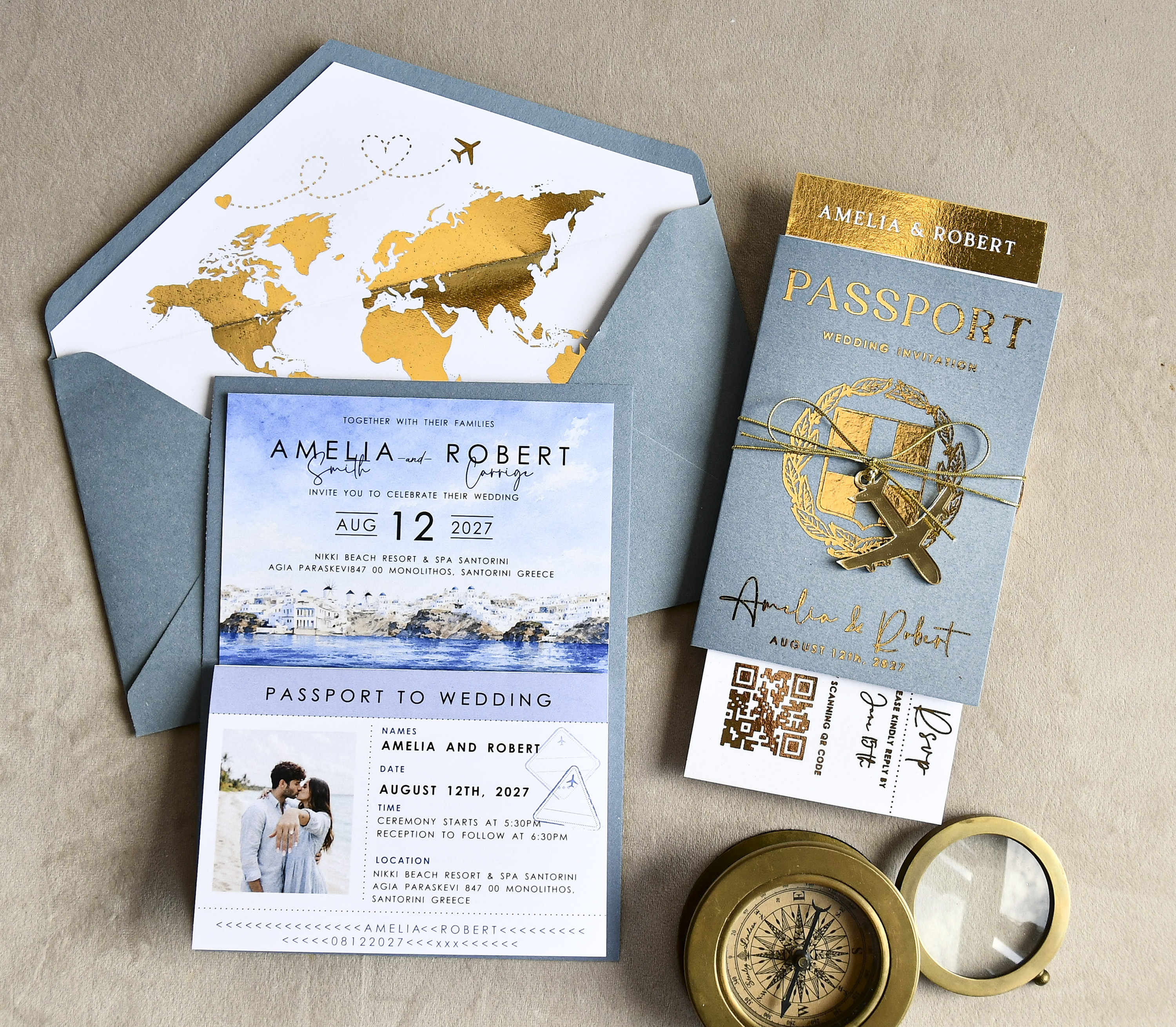
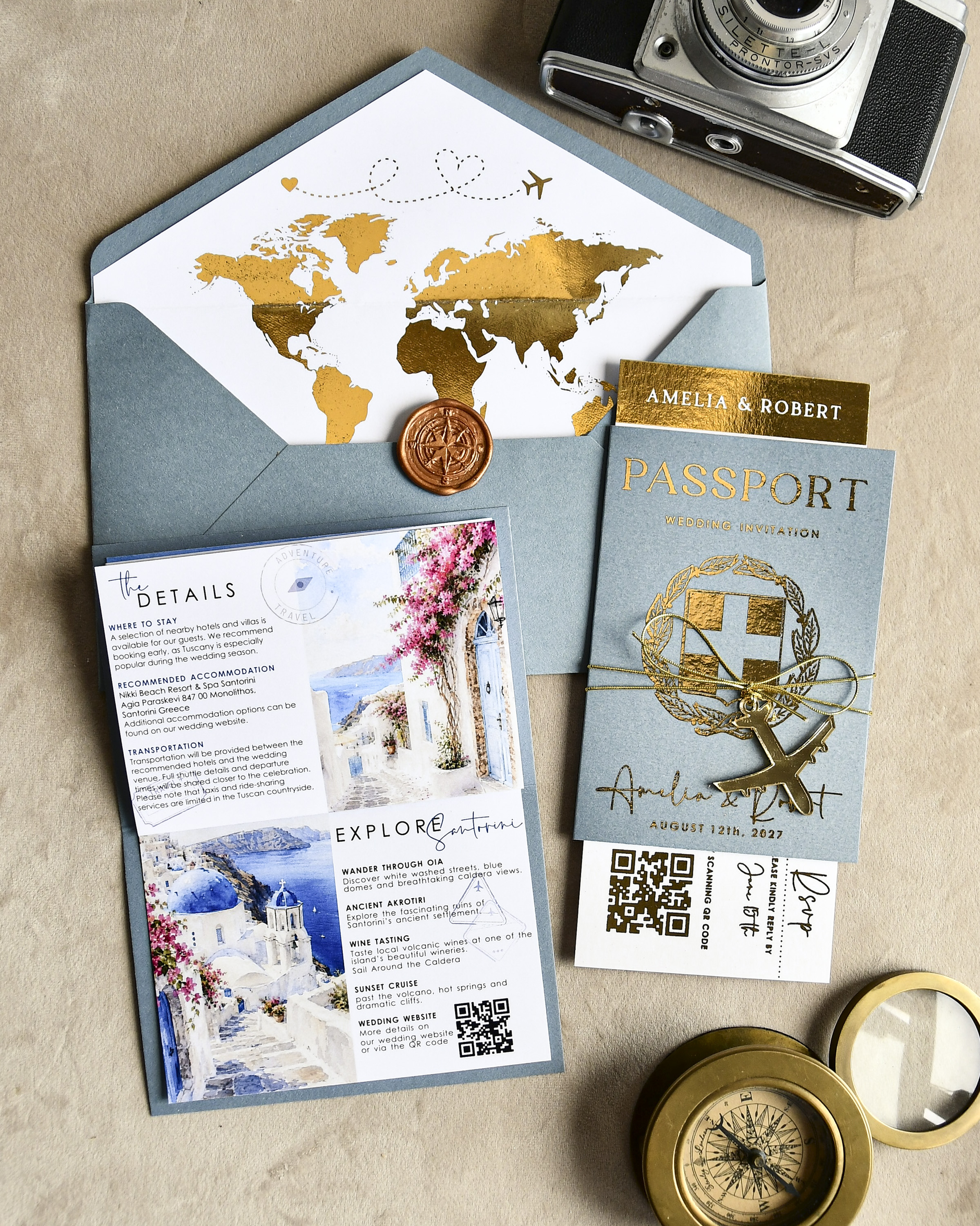
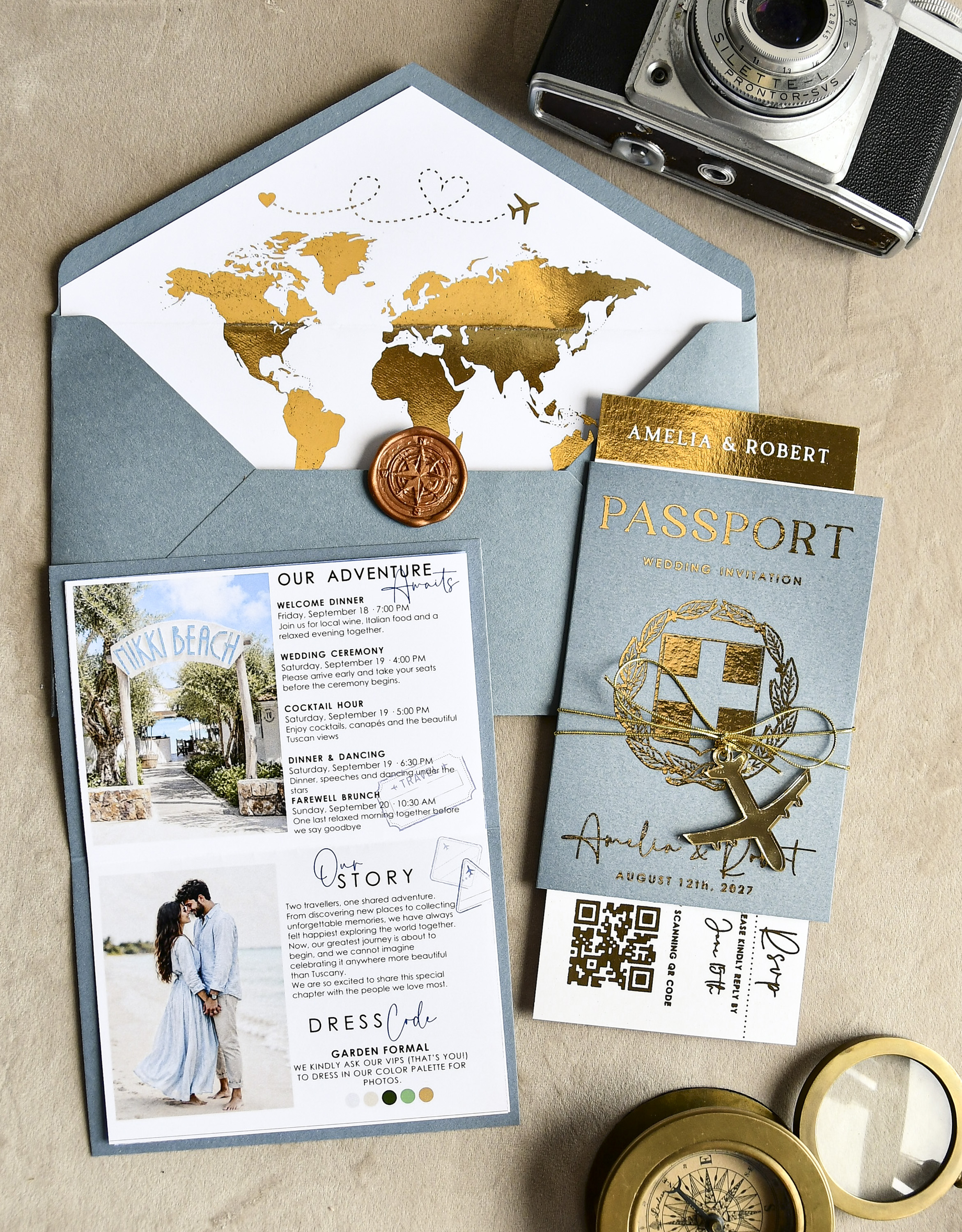
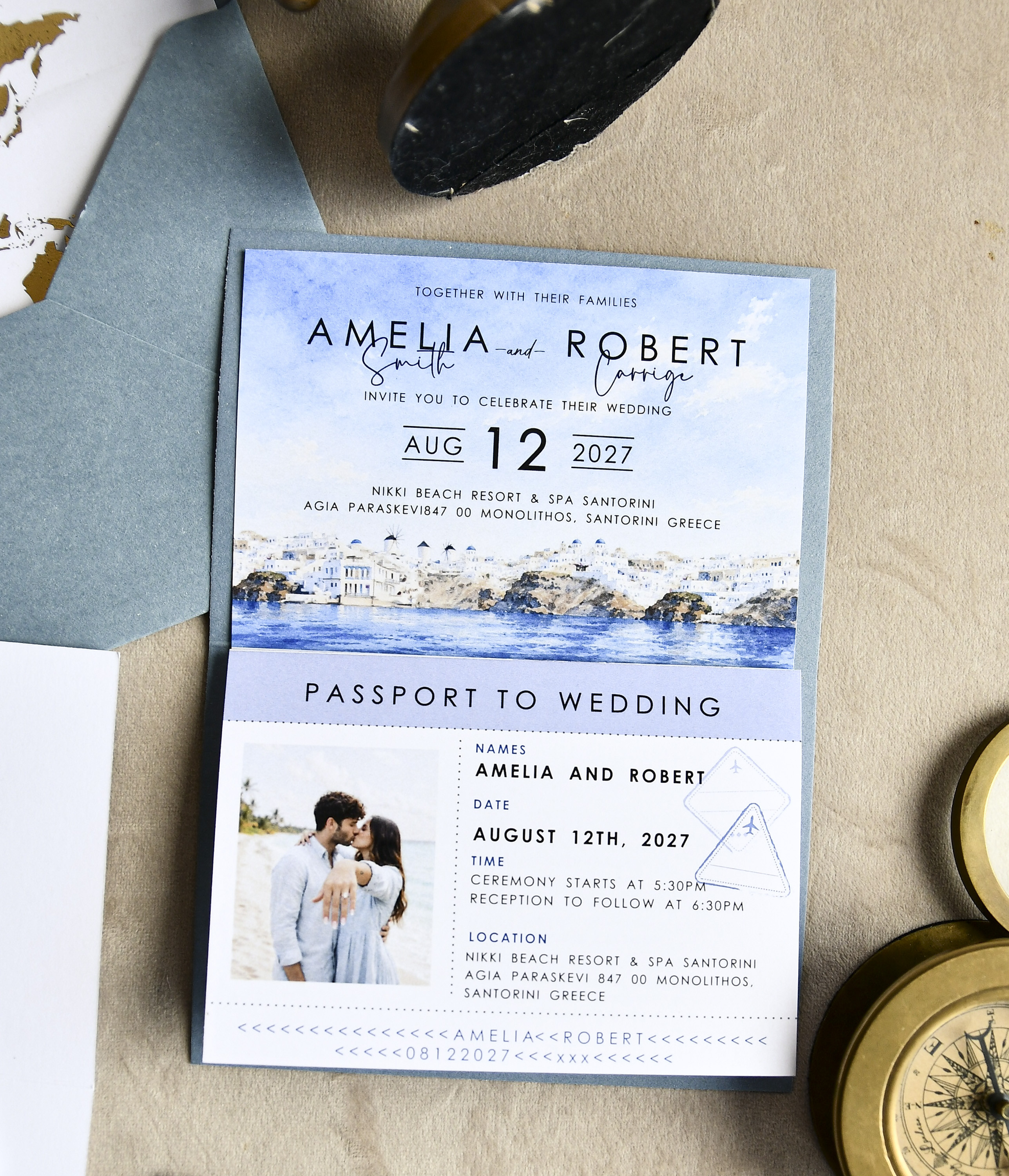
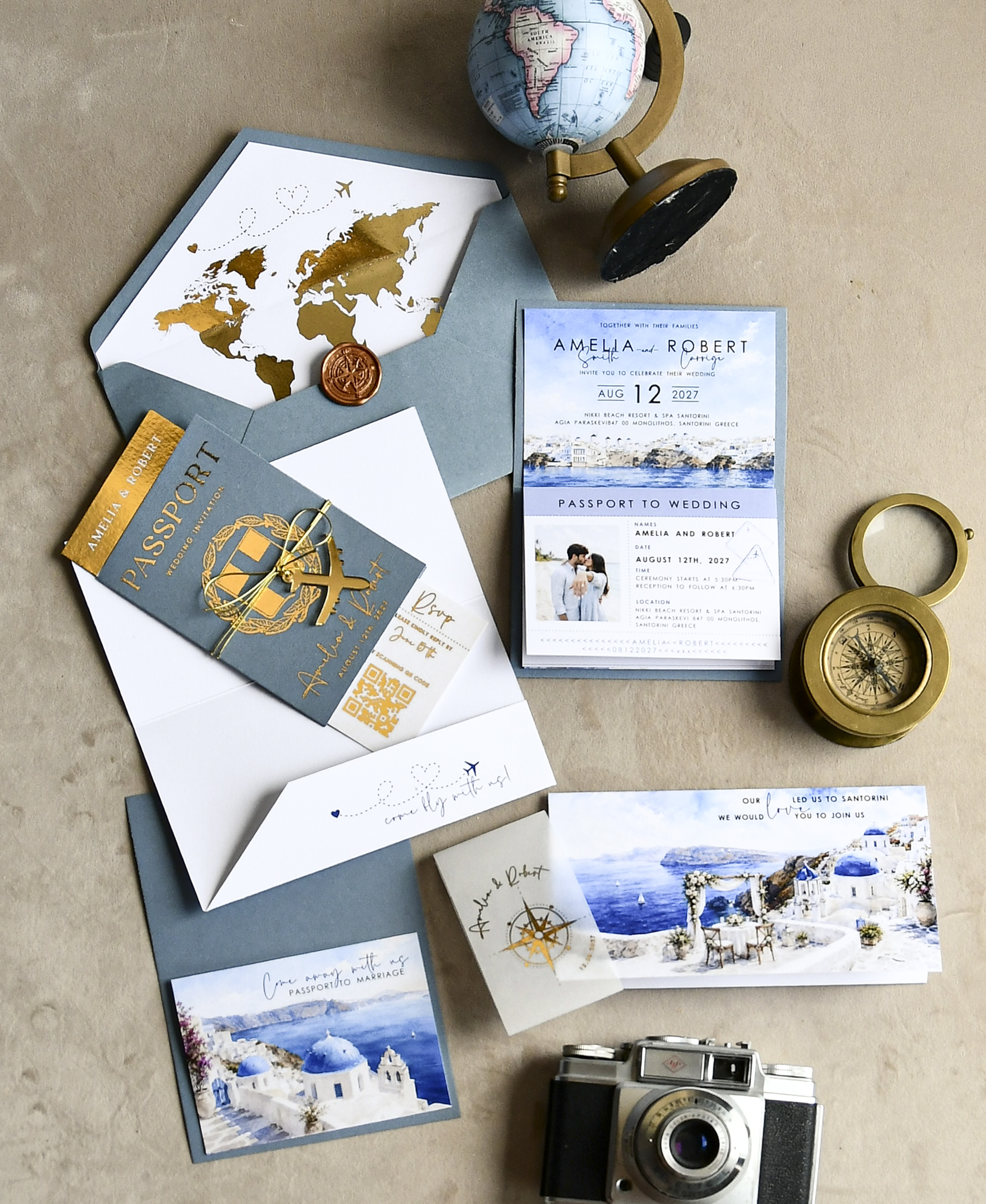
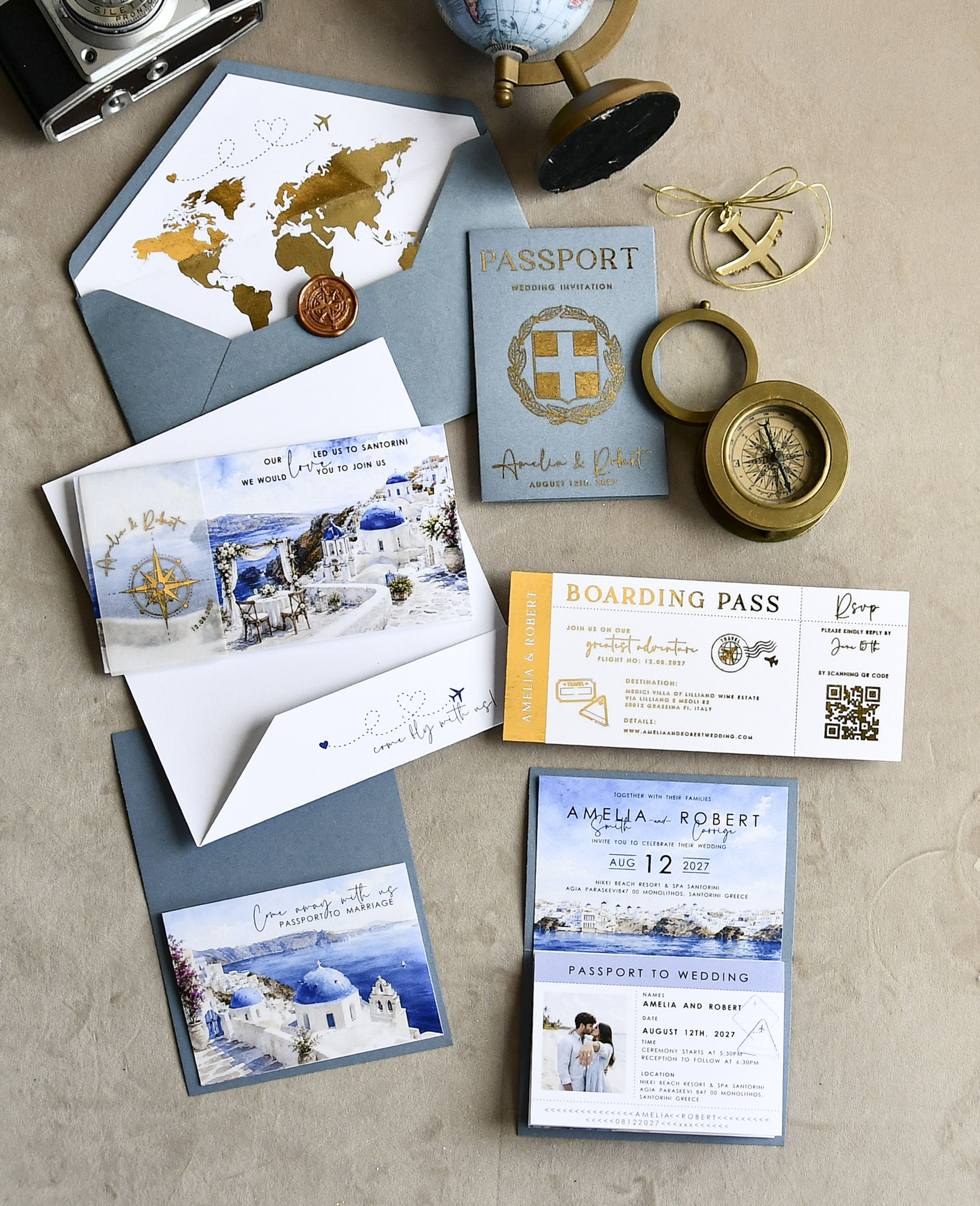
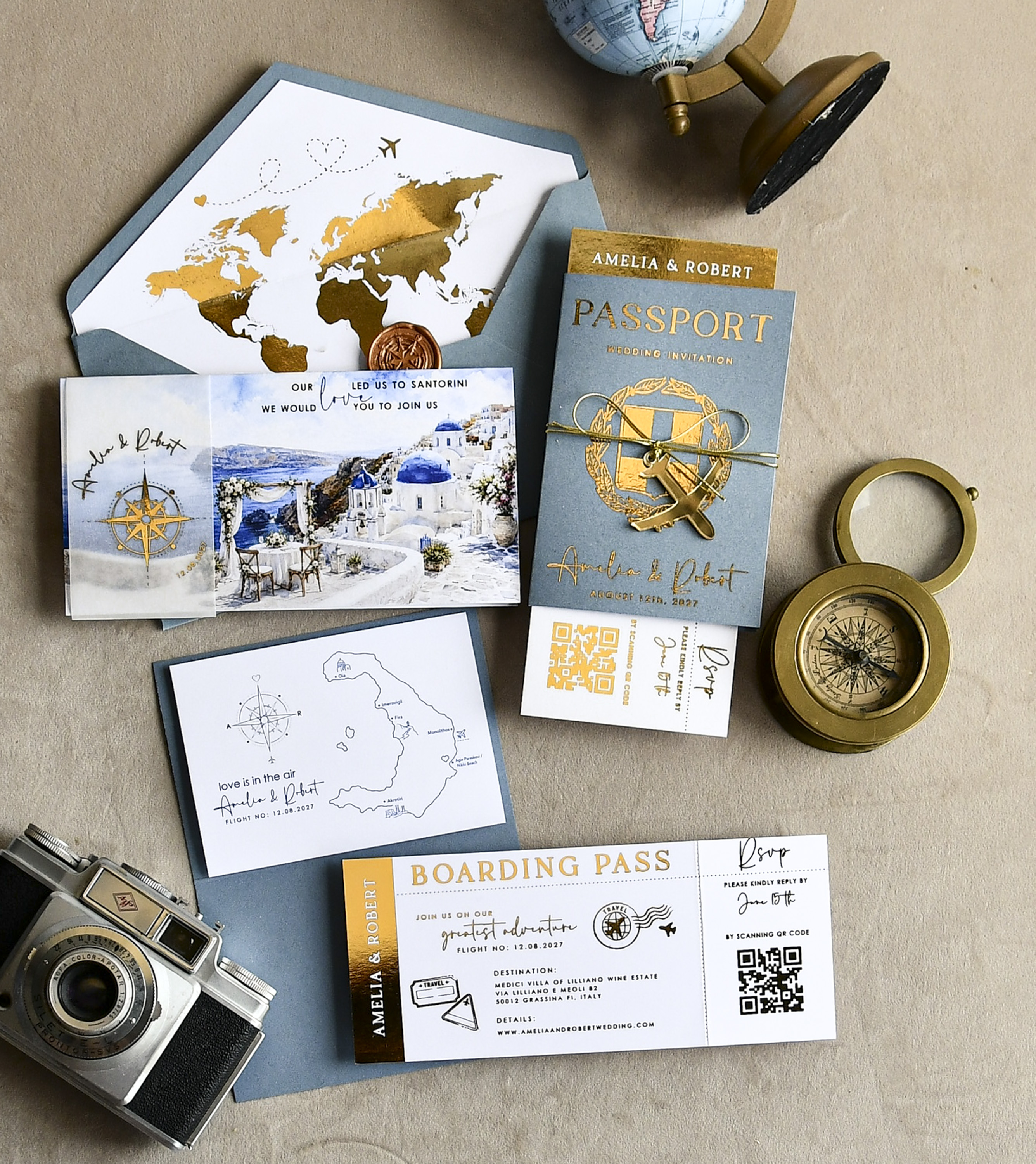
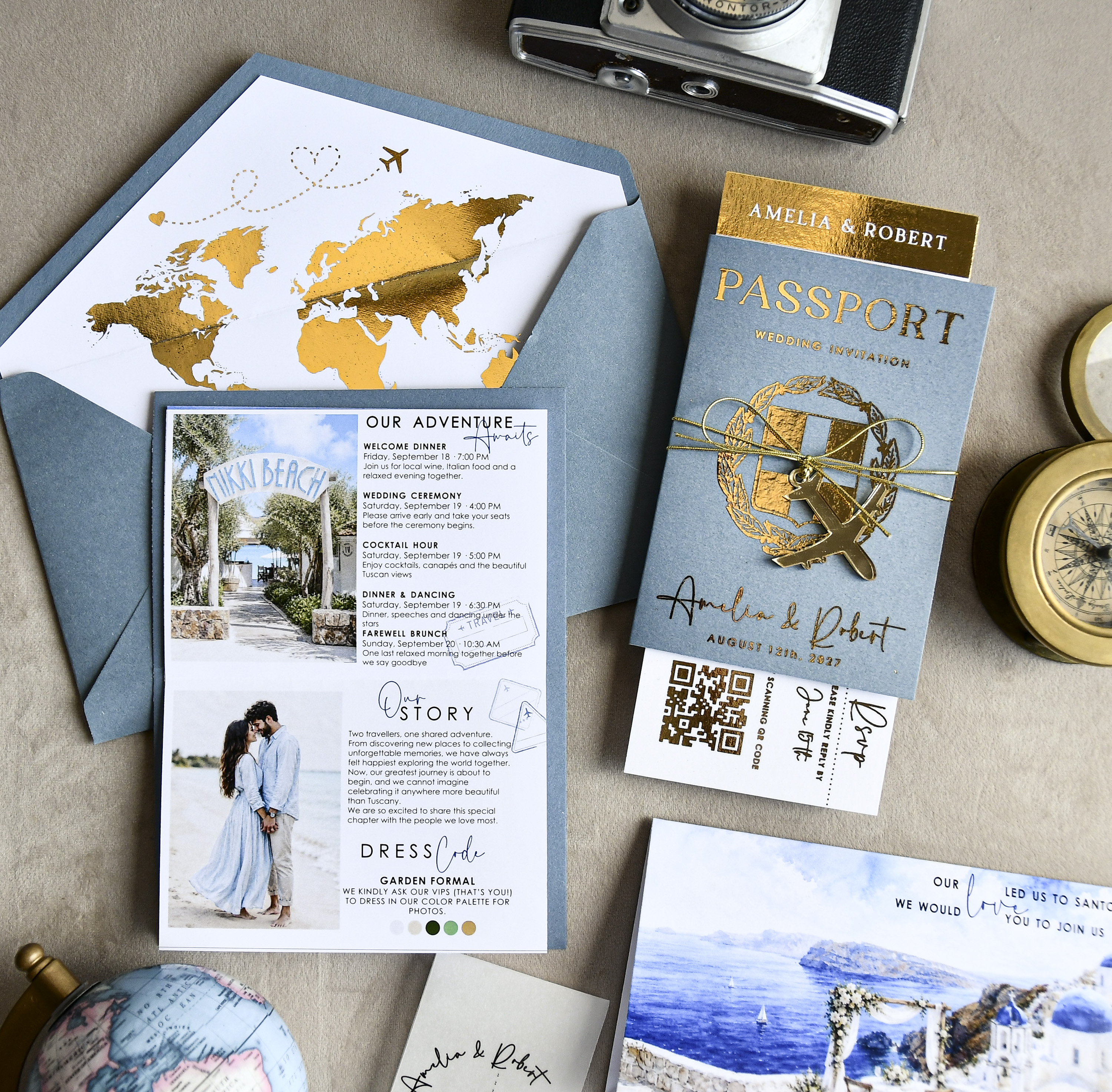
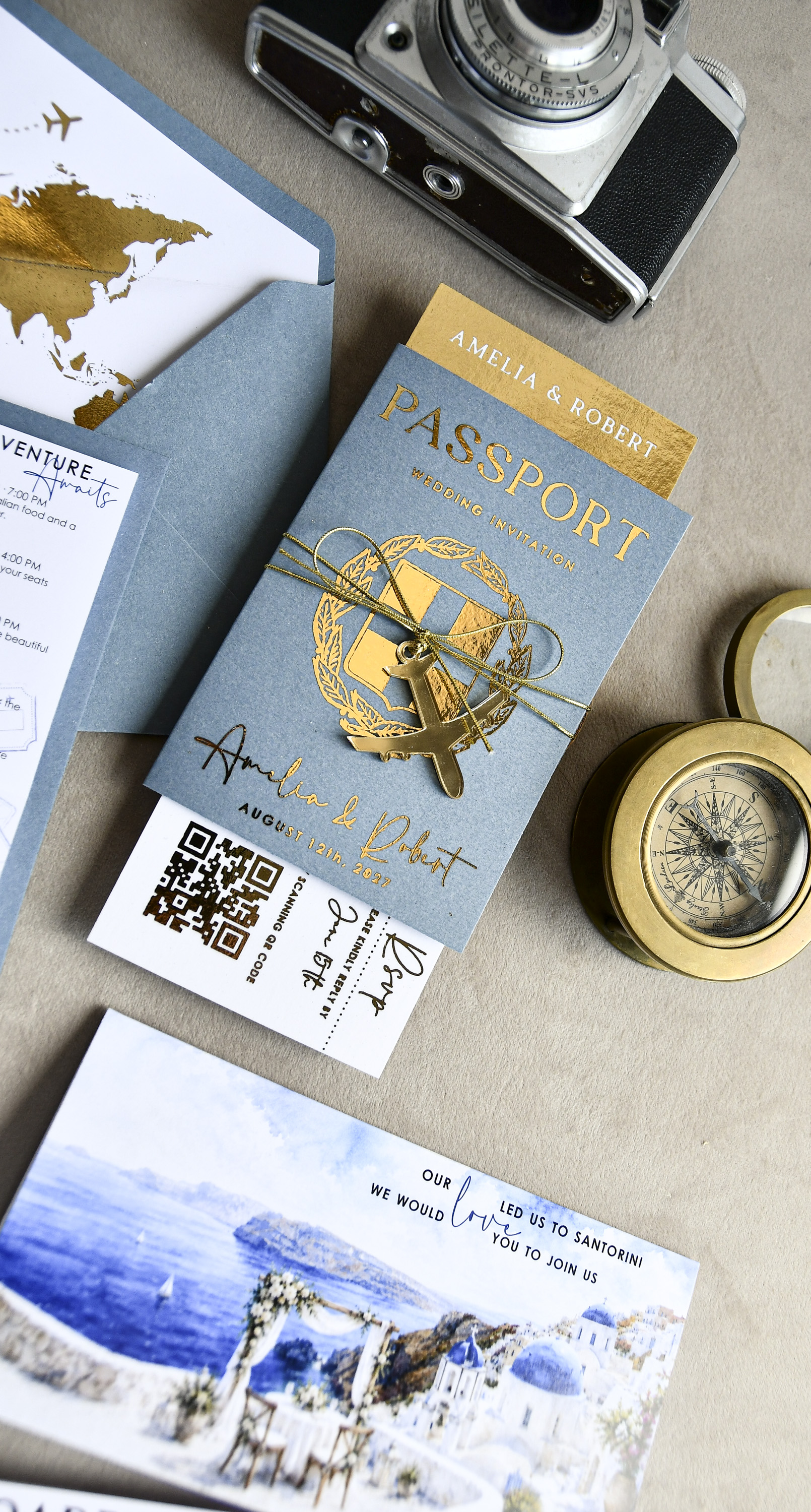
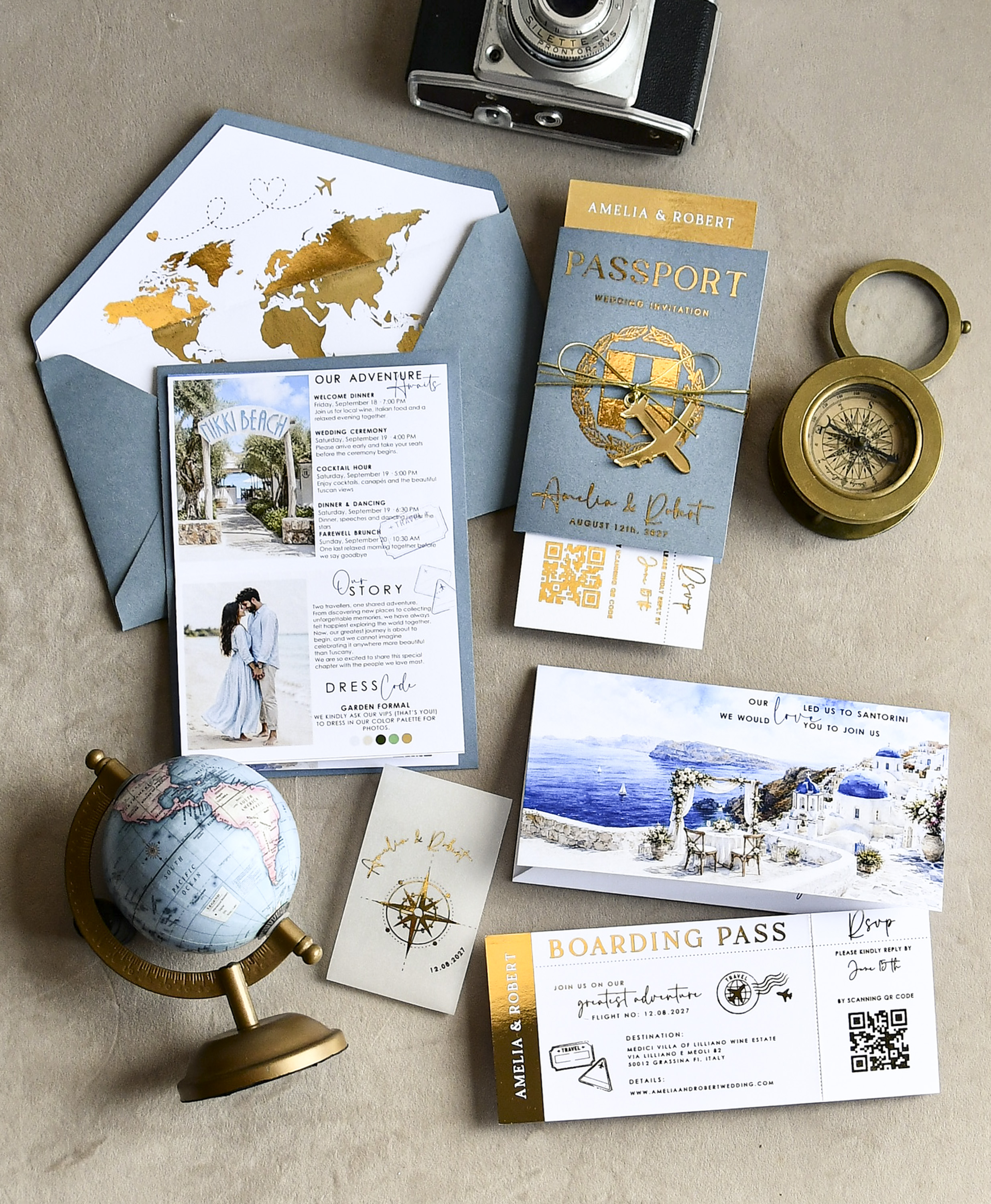
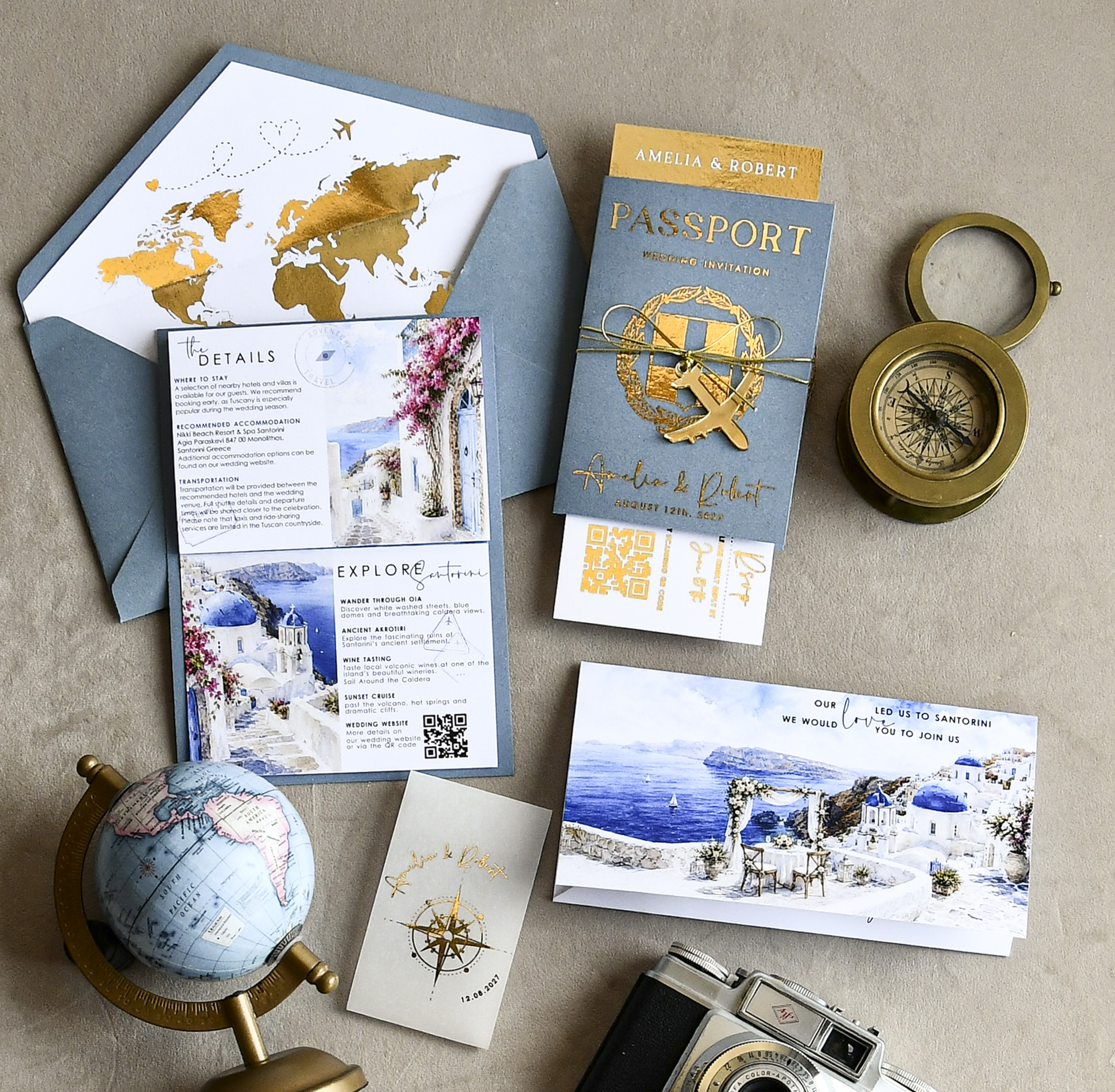
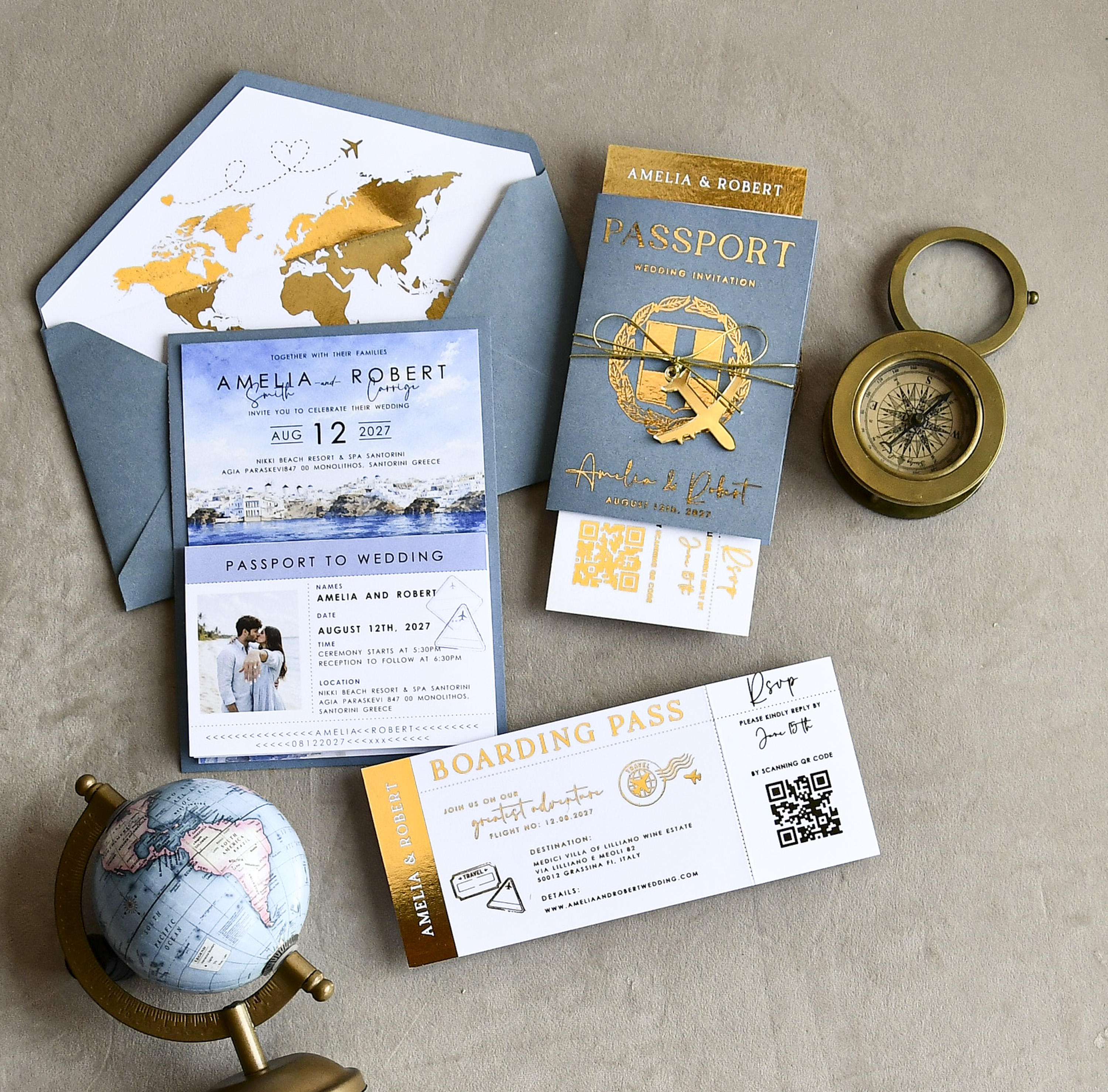
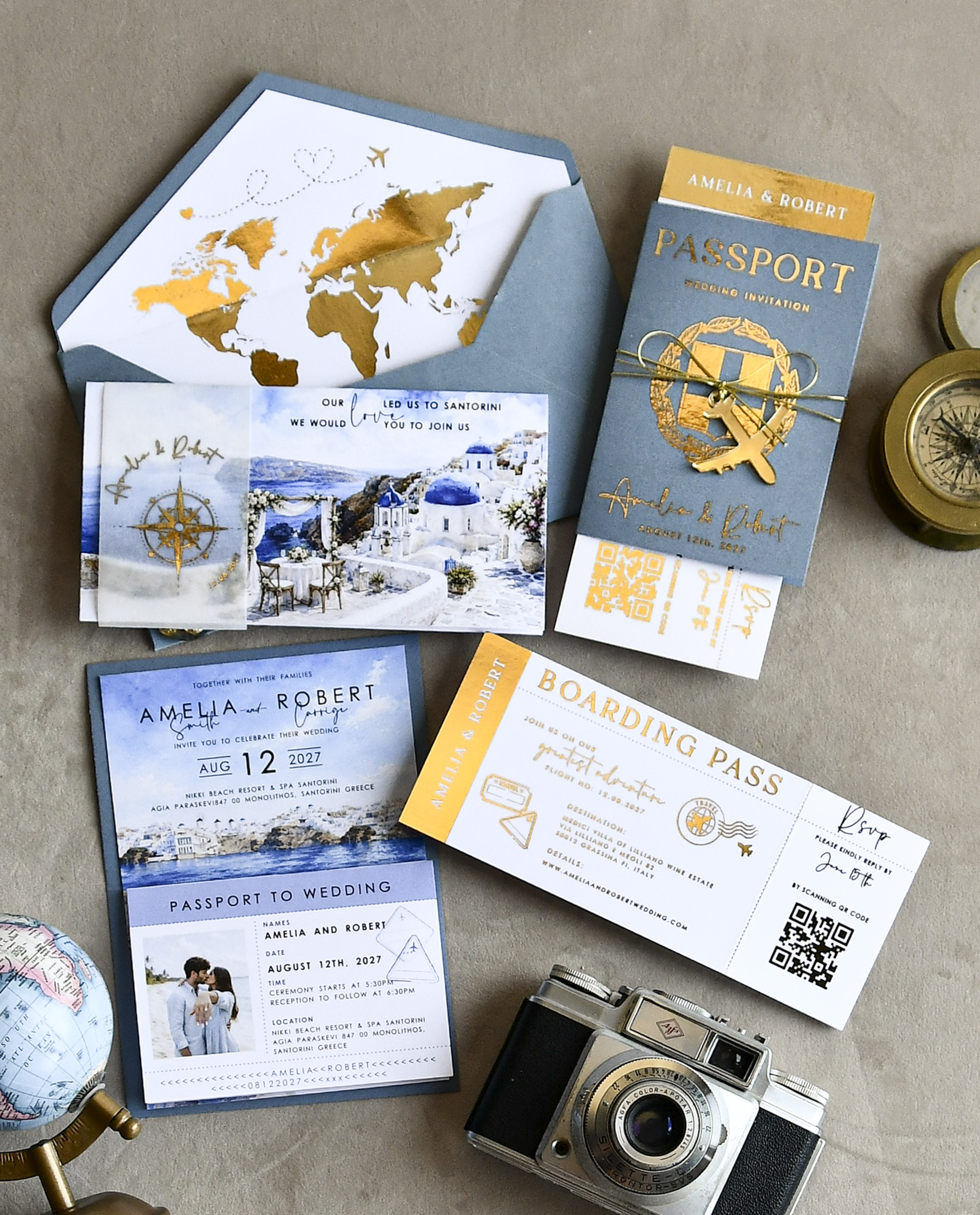
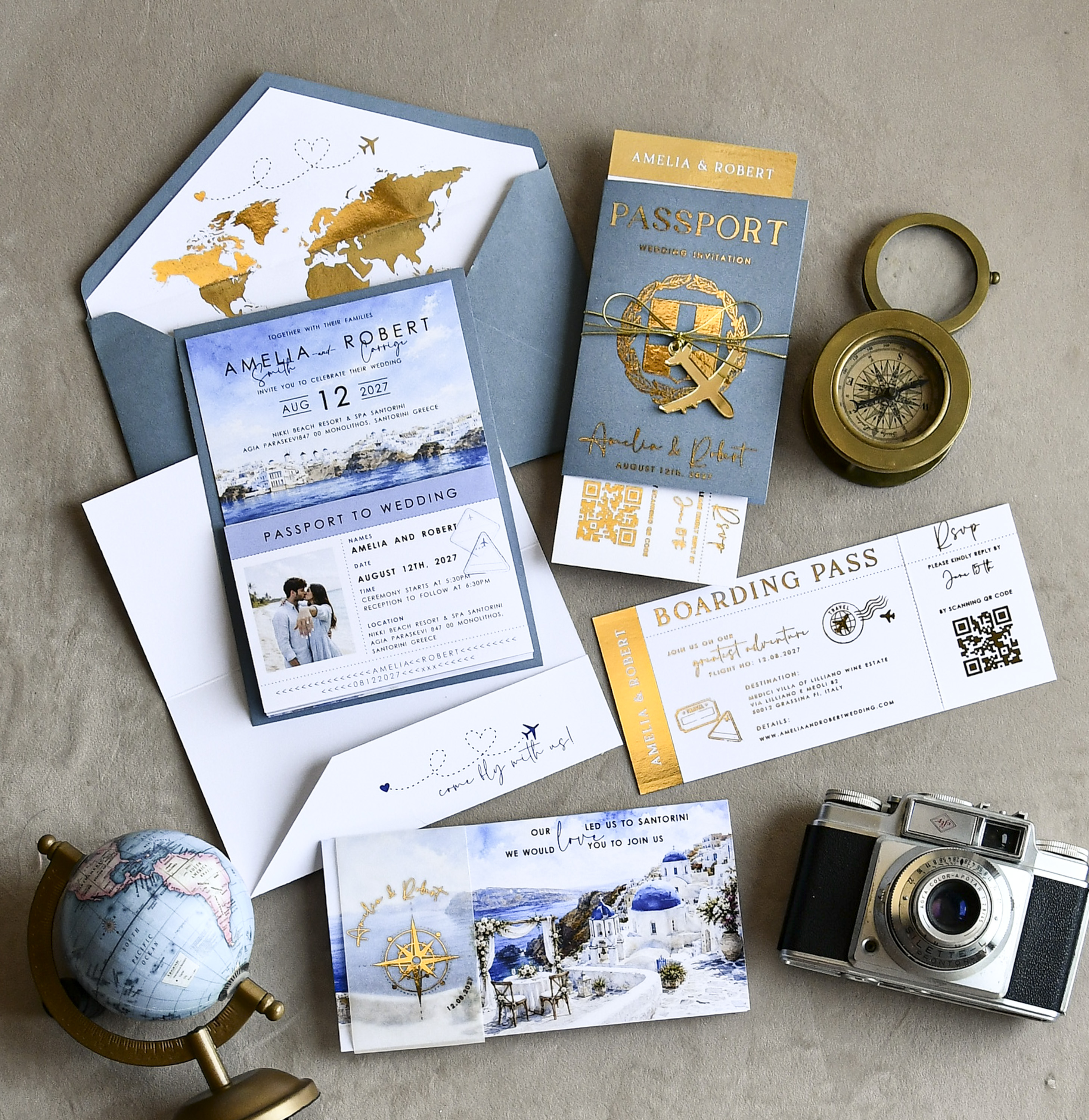
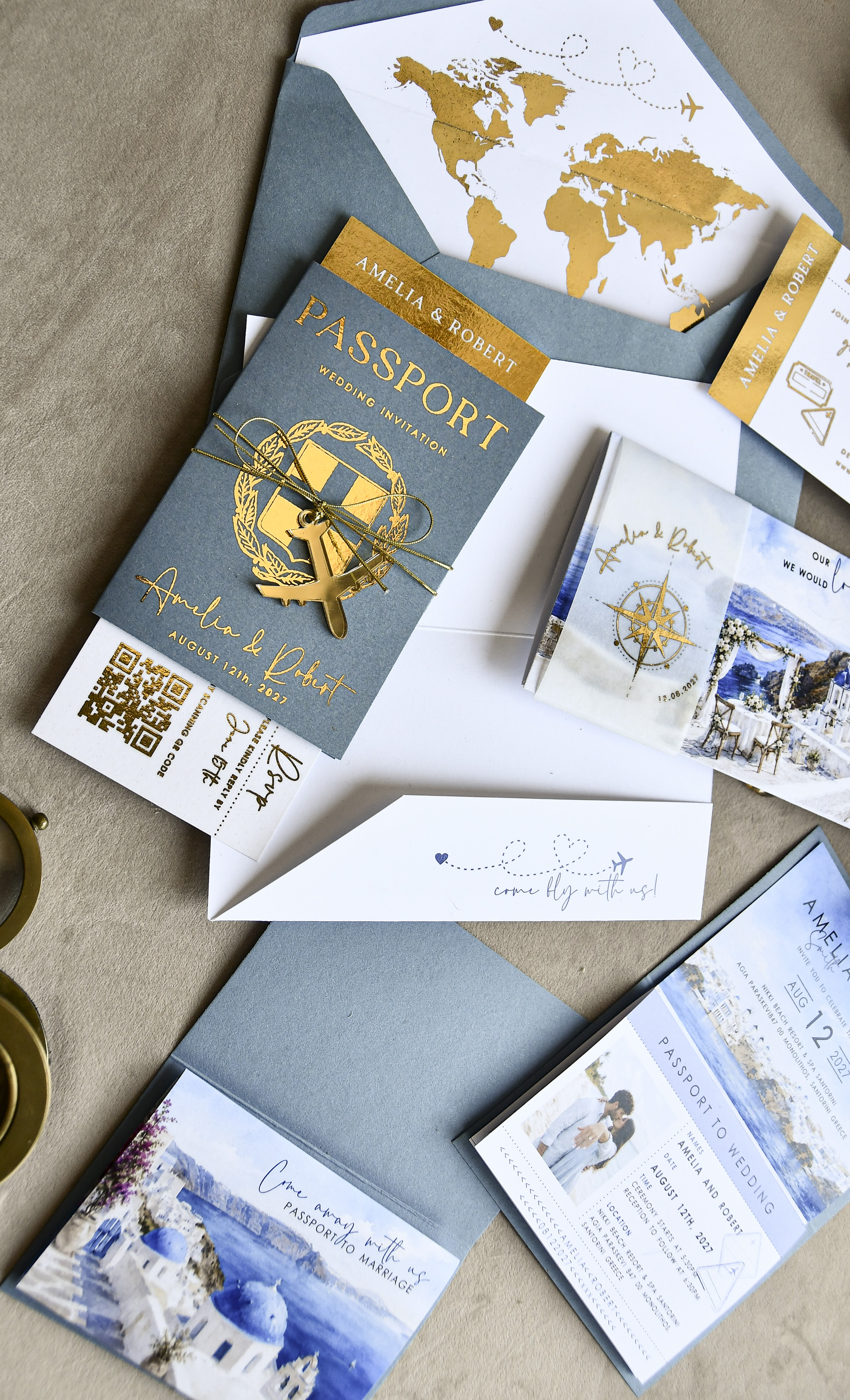
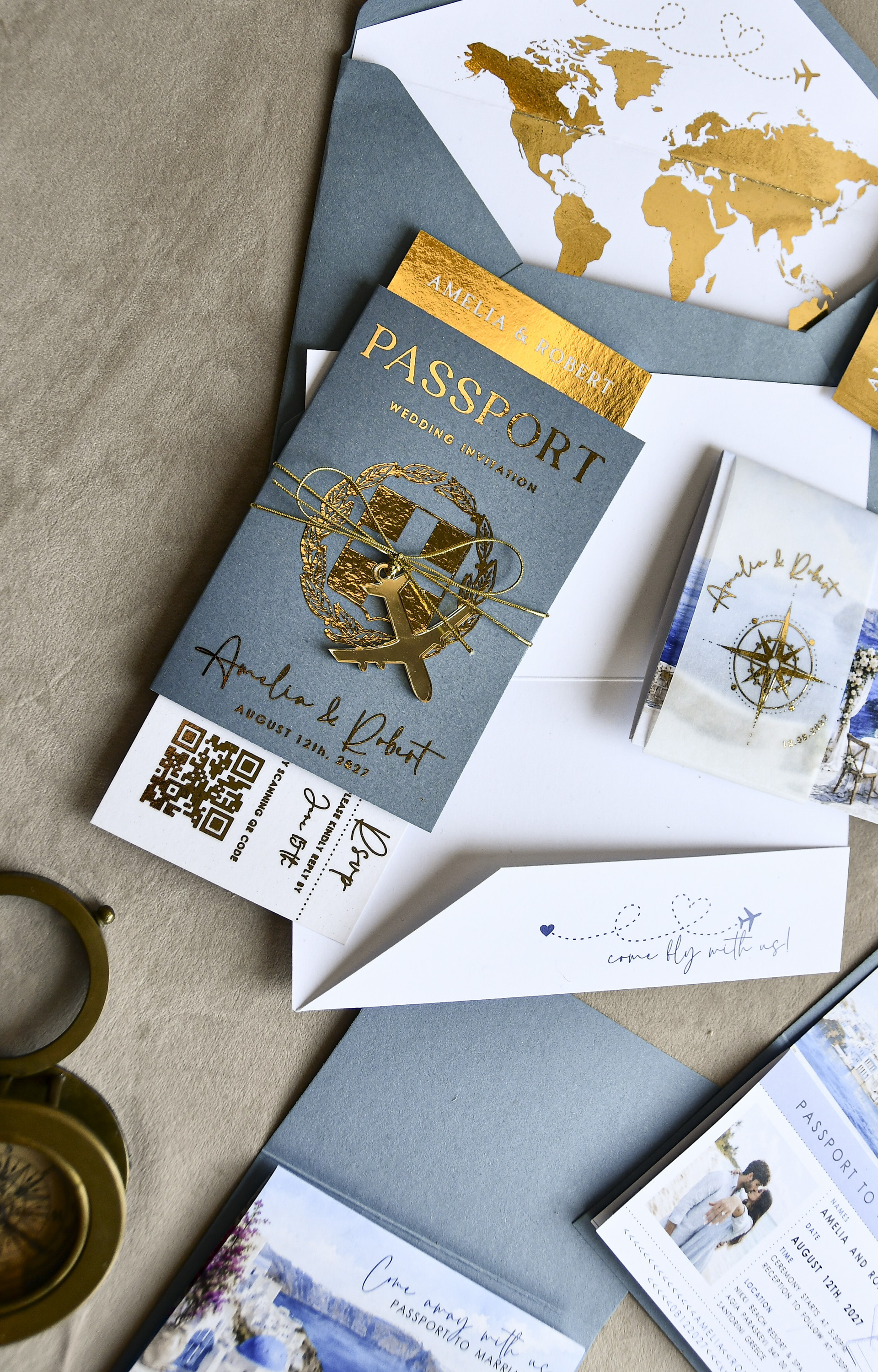
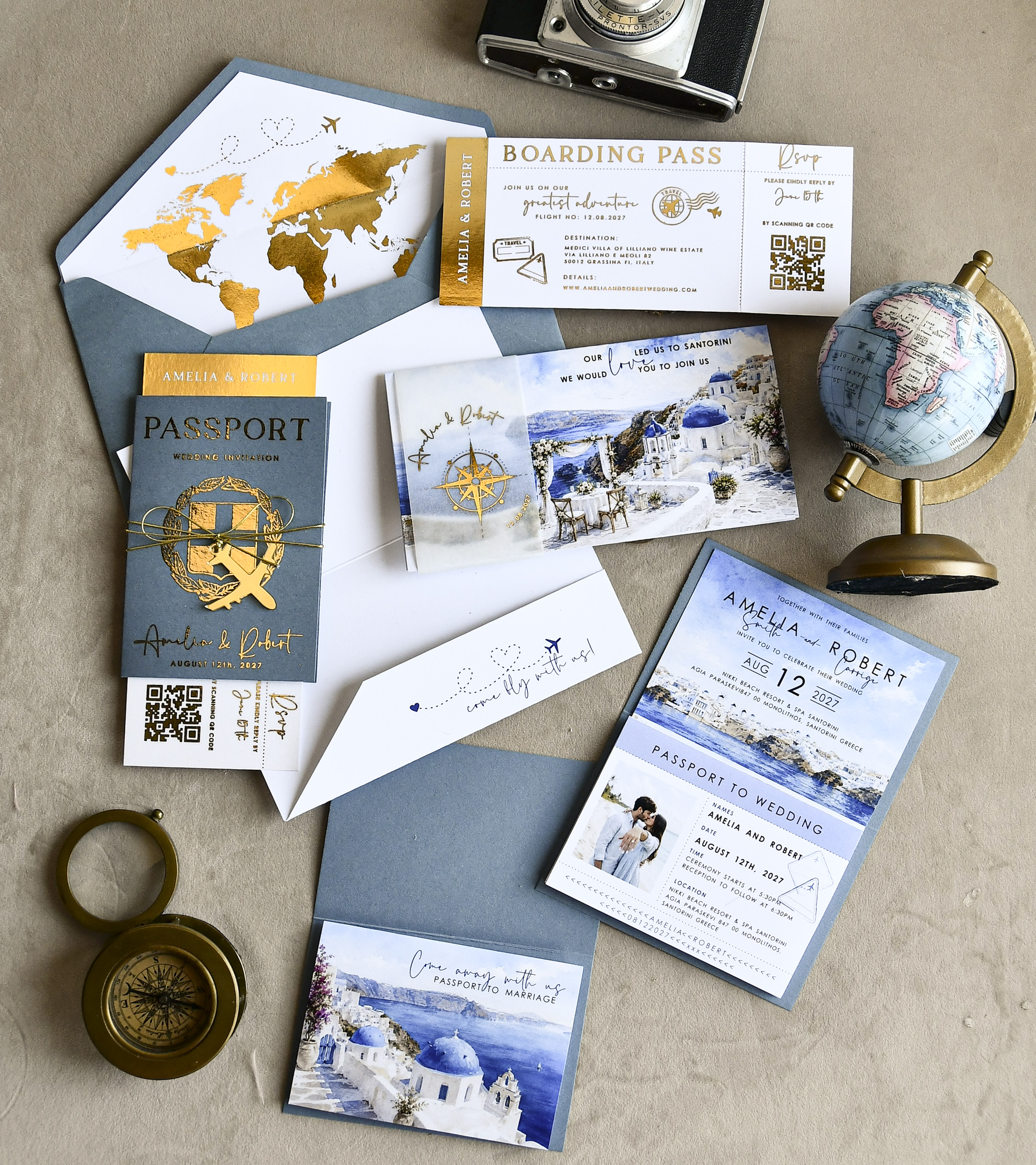
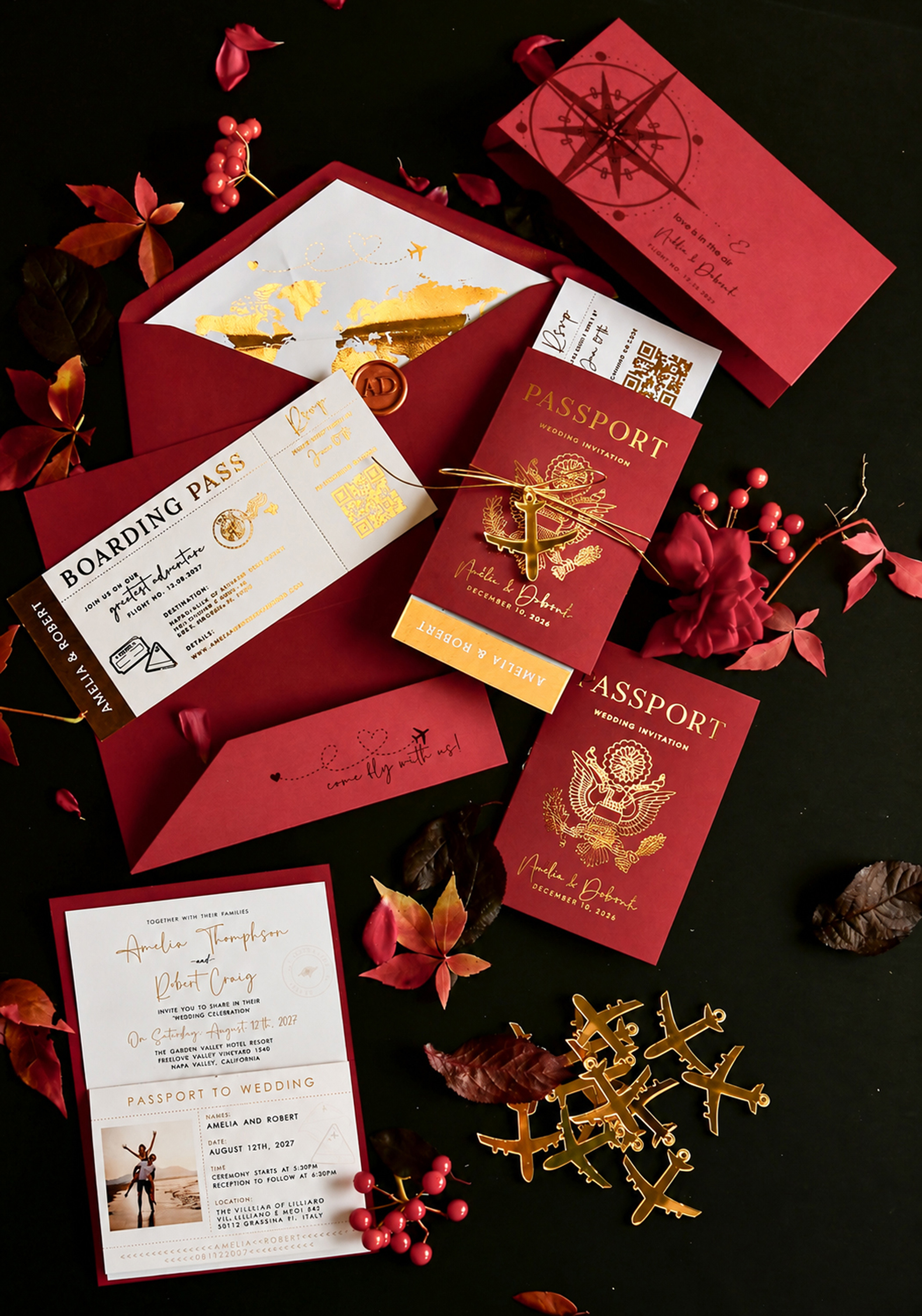
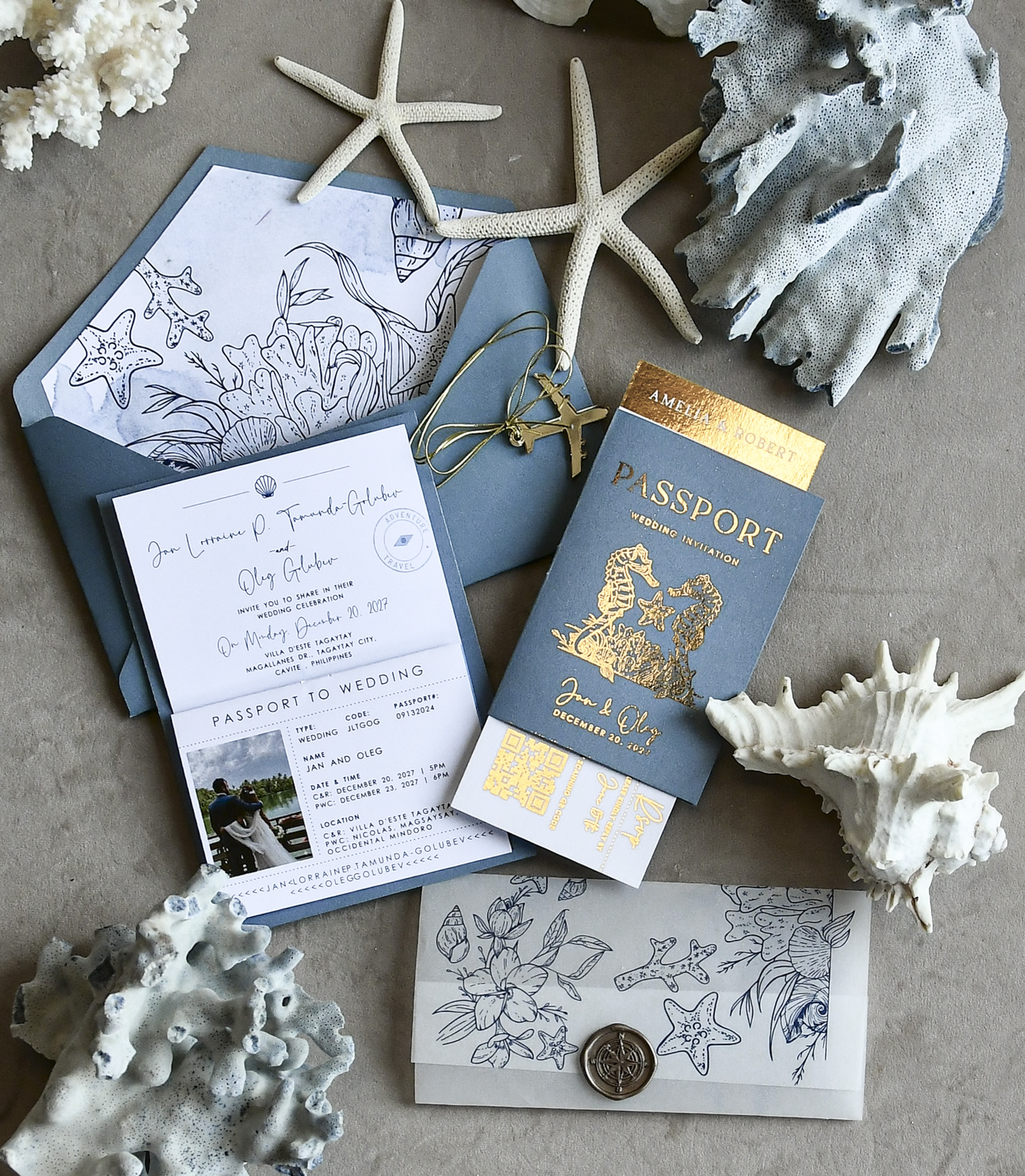
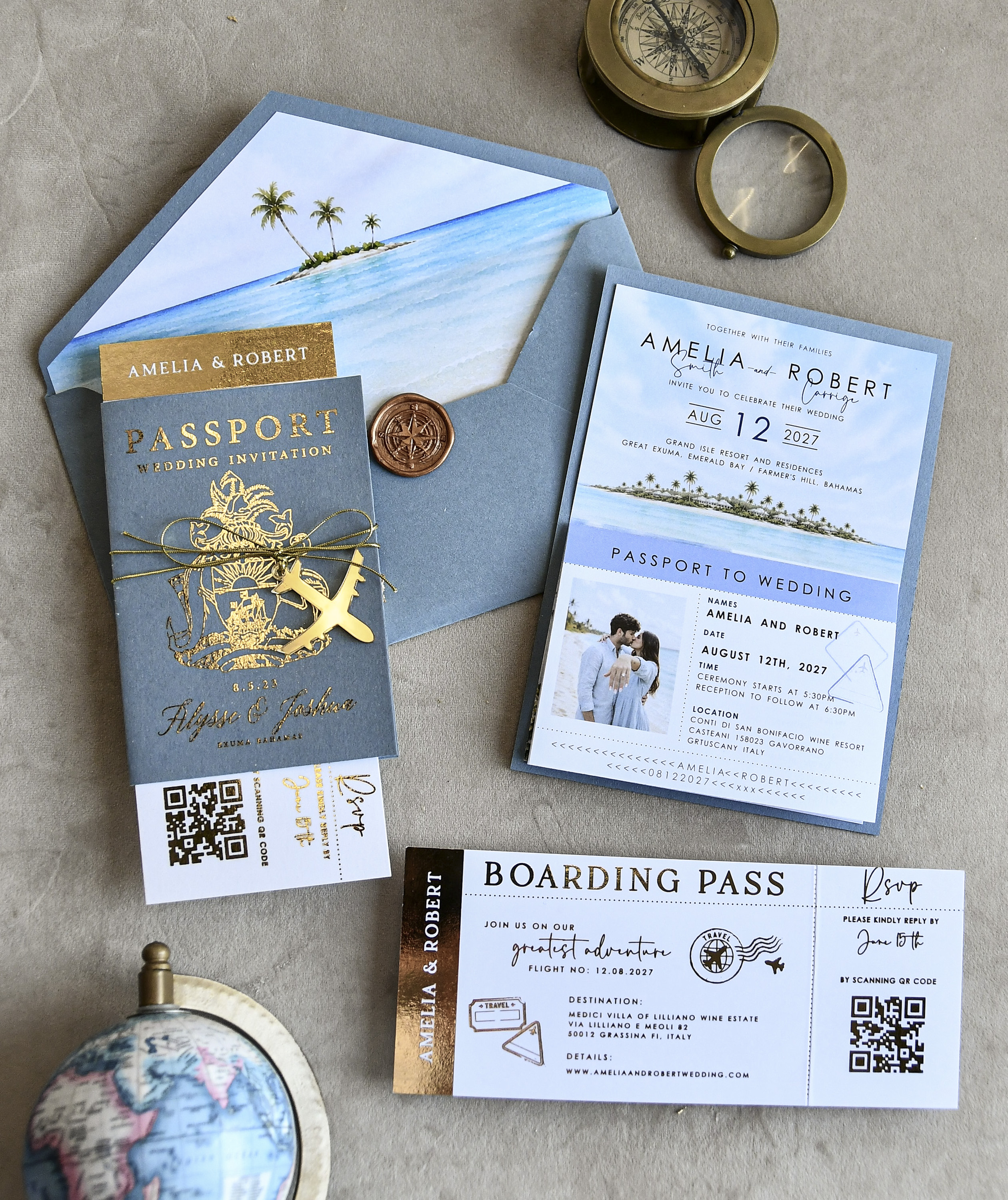
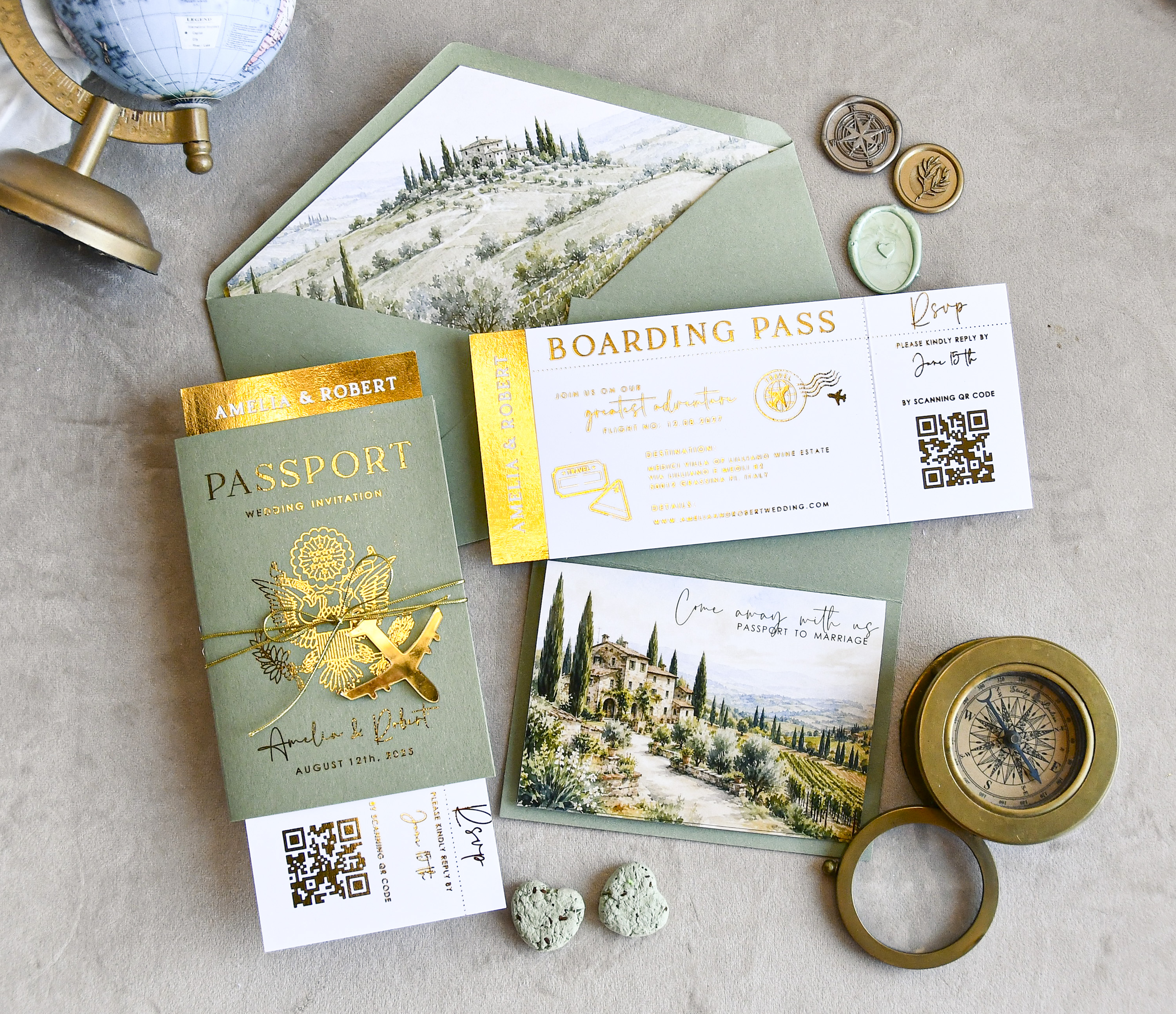
This is especially important for couples choosing travel-inspired stationery, like our passport-style beach wedding invites from the Passport to Love collection, which set the destination mood from the moment guests open the envelope. Pairing an early send date with a beautifully themed invitation builds excitement and gives guests every reason to start planning immediately.
- 3–4 months out: Send invitations for destination or international weddings
- 6–8 weeks out: Standard local or regional weddings
- 8–10 weeks out: Holiday weekend weddings
Don't Forget Save-the-Dates
Save-the-dates are a separate step that comes before your invitations — and they're especially important if you have many out-of-town guests. Here's a simple framework:
- Local weddings: Send save-the-dates 4 to 6 months before the wedding
- Destination or holiday weddings: Send save-the-dates 8 to 12 months in advance
Save-the-dates are informal — they simply announce the date and location so guests can hold it on their calendars. Your full invitation suite (with ceremony details, RSVP cards, and any enclosures) follows later. Never send a save-the-date to someone you're not certain you'll invite; it creates an obligation.
Setting Your RSVP Deadline
Your RSVP deadline should be printed on your invitation and set 2 to 3 weeks before the wedding. This gives you time to submit a final headcount to your caterer (most require numbers 1 to 2 weeks before the event) and follow up with guests who haven't responded.
A practical example: if your wedding is October 12th, set your RSVP deadline around September 21st. Mail invitations around August 17th (8 weeks out). That timeline keeps everything running smoothly without last-minute chaos.
Pro tip: number the back of your response cards in pencil to match your guest list. If someone forgets to write their name, you'll still be able to identify who sent it.
Practical Tips Before You Seal the Envelopes
Before you mail a single invitation, run through this checklist:
- Get a postage quote: Take a fully assembled invitation to the post office to be weighed. Odd shapes, multiple enclosures, or wax seals can push postage above a standard stamp.
- Order extras: Print 10–15% more invitations than your guest count to cover addressing mistakes, late additions, and keepsakes.
- Proofread three times: Check names, dates, times, venue address, and your wedding website URL carefully before approving your design.
- Hand-cancel if needed: If your invitations are delicate or have embellishments, ask the post office to hand-cancel them so they don't go through sorting machines.
For couples planning a beach or tropical celebration, our Passport to Love beach wedding invites make a stunning first impression — and mailing them at the right time ensures guests have every reason to celebrate with you in person.
Frequently Asked Questions
Four weeks is generally too short for most weddings, as it doesn't give guests adequate time to make travel arrangements or respond before your RSVP deadline. Aim for at least 6 to 8 weeks, and longer for destination or holiday weddings. If you're running behind, prioritize getting them out as soon as possible and consider a digital RSVP option to speed up responses.
Sending invitations more than 3 months before a standard local wedding can cause guests to misplace them or forget to RSVP. If your wedding is far out, use a save-the-date to hold the date and send the formal invitation closer to the 8-week mark. For destination weddings, 3 to 4 months in advance is appropriate and expected.
Prioritize your must-invite guests and send their invitations on schedule. You can hold a small second wave of invitations for a B-list — but only send those after you've received regrets from the first group, and do so quickly so the second-wave guests still have reasonable notice. Never let the second wave go out less than 4 weeks before the wedding.
Yes, absolutely. A save-the-date is not a substitute for a formal invitation — it simply reserves the date. Every guest who received a save-the-date must also receive a full invitation with ceremony details, RSVP information, and any enclosures like hotel accommodation cards or directions.
Yes, it's best to mail all invitations at the same time so no guest feels like an afterthought. Out-of-town guests simply have the advantage of having received your save-the-date earlier, which gave them extra planning time. Staggering invitation mailings can create awkward situations if guests compare notes.
Many wedding invitation suites require additional postage beyond a standard Forever stamp because of weight, size, or square envelope shapes. Take a fully assembled and sealed invitation to your post office to be weighed before purchasing stamps in bulk. Budget for both the outer envelope and the pre-stamped return RSVP envelope as well.
See This Design Up Close



You May Also Like
More Wedding Planning Guides
- → The Complete Guide to What Goes on a Wedding Invitation
- → Plus One Etiquette: Exactly Who Makes the Cut at Your Wedding
- → How to Navigate a Wedding When Your Divorced Parents Are at War
- → Inviting Guests to the Ceremony But Not the Reception: What You Need to Know
- → The Case for a Small Wedding: Everything You Need to Know
- → Who Gets Cut First When Your Guest List Is Too Long?
- → Wedding Invitation Addressing: Etiquette Rules Every Couple Should Know
- → Do You Have to Invite Your Future In-Laws' Friends to Your Wedding?
- → Coworkers and the Wedding Guest List: How to Decide Who Gets an Invite
- → Yes, Guests Can RSVP Online — Here's How to Make It Work Beautifully
- → More Guests or a More Memorable Wedding? How to Choose What's Right for You
- → Inviting Your Ex to Your Wedding: A Practical Guide to Making the Right Call
- → Do You Have to Invite Your Cousins to Your Wedding?
- → How to Figure Out the Right Number of Wedding Invitations to Order
- → Should You Invite an Estranged Sibling to Your Wedding?
- → Going Digital: Everything You Need to Know About Sending Online Wedding Invitations
- → No-Shows After a Yes RSVP: How to Handle It Gracefully
- → Navigating the 'Them or Me' Wedding Guest Ultimatum
- → When Parents Want to Add Friends to the Guest List: A Practical Guide
- → No Kids at Your Wedding: Navigating the Etiquette With Confidence
- → How to Defuse Family Arguments Without Losing Your Mind Before the Wedding
- → Uninvited Plus-Ones and Tag-Alongs: How to Keep Your Guest List Intact
- → When Family Feuds Threaten Your Wedding Plans: A Practical Peacekeeper's Guide
- → Inviting an Estranged Brother or Sister: Finding Clarity Before You Seal the Envelope
- → Cousins, Invites, and Hard Choices: A Practical Guest List Guide