
Do You Have to Invite Your Future In-Laws' Friends to Your Wedding?

One of the trickiest parts of wedding planning isn't choosing florals or finding a venue — it's the guest list. Specifically, the moment your future in-laws hand you a list of their friends and expect to see every single name on your invitation envelopes. So, do you actually have to invite them? The short answer is no — but the longer answer involves some real talk about family dynamics, budget, and keeping the peace without losing your mind.
The Short Answer: No, But Context Matters
You are under no obligation to invite anyone to your wedding, including your future in-laws' social circle. Your wedding is a celebration of your relationship, and the guest list should reflect the people who are genuinely meaningful to you as a couple. That said, context matters a lot. If your future in-laws are contributing financially to the wedding, it's reasonable — and pretty standard etiquette — to give them some say in the guest list. A common rule of thumb is that whoever pays a share of the wedding gets a proportional share of the guest count. If they're covering 30% of costs, offering them roughly 30% of the seats is a fair and widely accepted approach.
If they aren't contributing financially, you have much more latitude to politely decline their additions — and you shouldn't feel guilty about it.
How to Set Guest List Boundaries Early
The best time to establish expectations is before anyone starts drafting lists. As soon as you're engaged and have a rough venue capacity or budget in mind, sit down with both sets of parents and share a realistic number. For example: "We have space for 120 guests total. We're dividing that into thirds — one-third for each family, one-third for our own friends." Giving each family a hard number prevents the slow creep of "just one more" additions.
- Be specific early: Vague conversations lead to hurt feelings later. Put the numbers in writing if it helps.
- Involve your partner: Your partner should be the one communicating limits to their own parents. This is non-negotiable for keeping the peace.
- Stay consistent: If you say no to your in-laws' book club, make sure you're applying the same standard to your own parents' requests.
When In-Law Friends Actually Belong on the List
There are real situations where inviting your future in-laws' friends makes total sense — and skipping them could create lasting awkwardness. Consider including them if:
- You've met them multiple times and they feel like extended family to you.
- They are long-standing family friends who attended your partner's milestones growing up (graduations, bar mitzvahs, etc.).
- Your in-laws are hosting or co-hosting the wedding, making it partly their event too.
- The friend group is small and leaving one or two people out would be noticeably pointed.
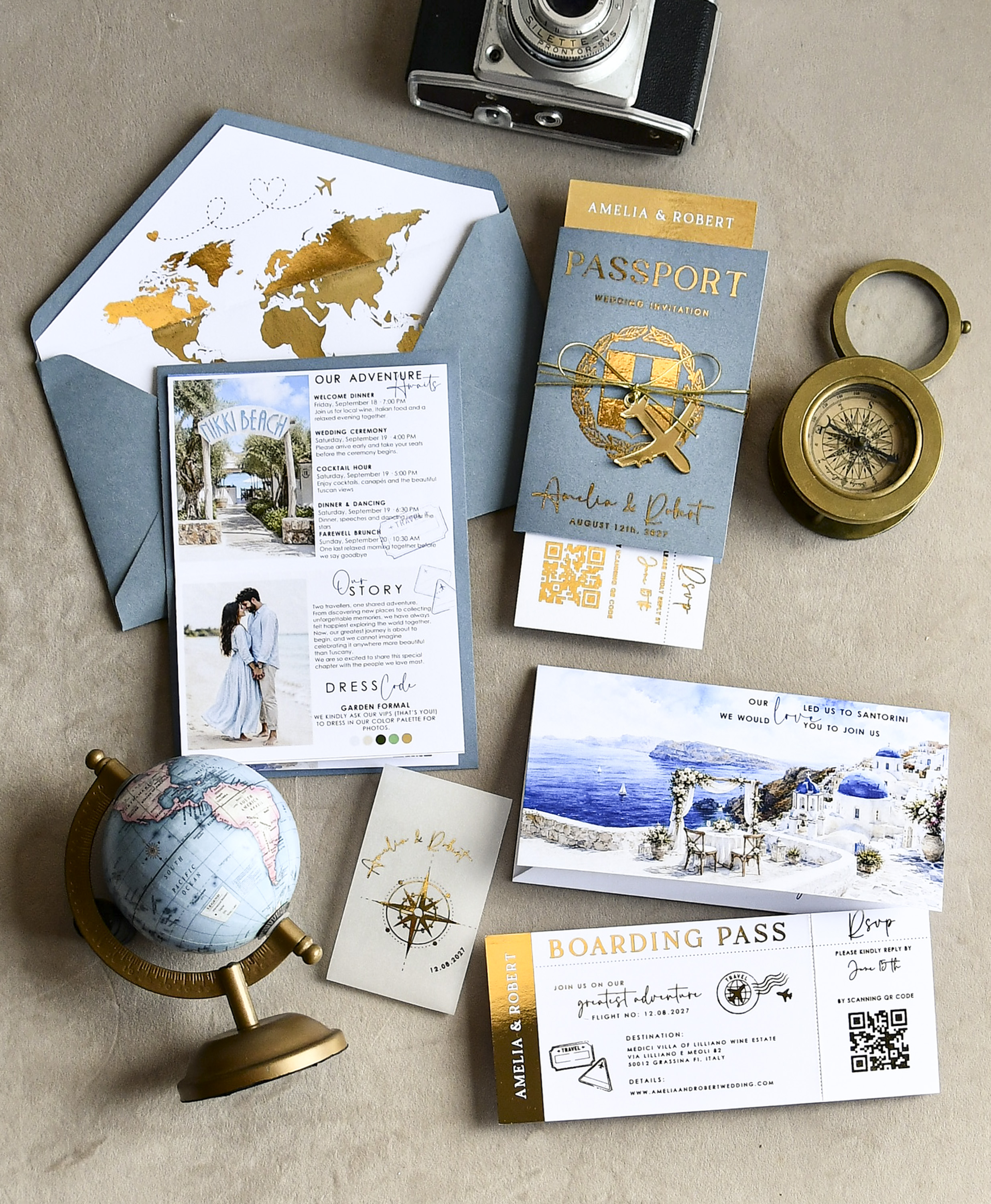
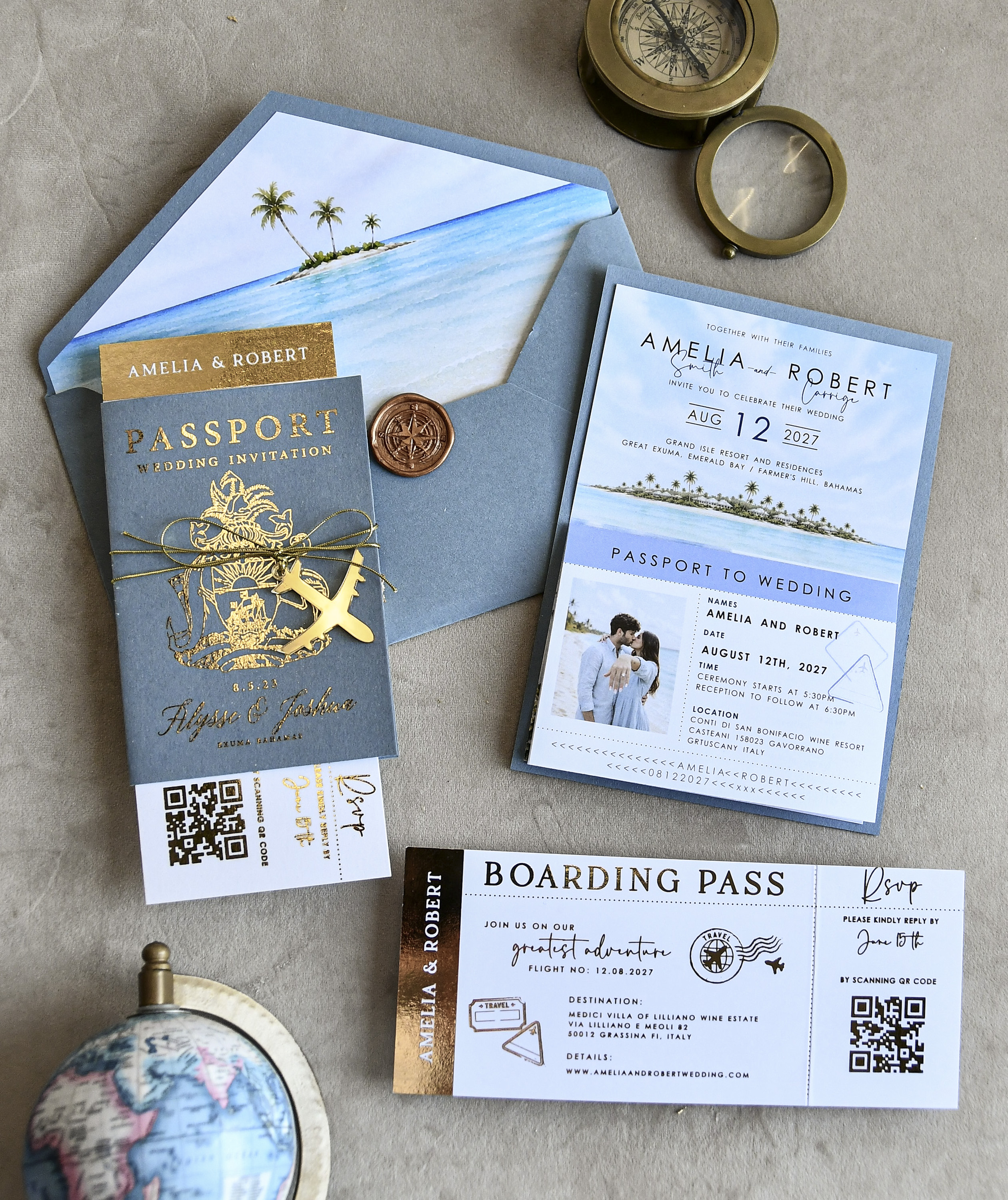
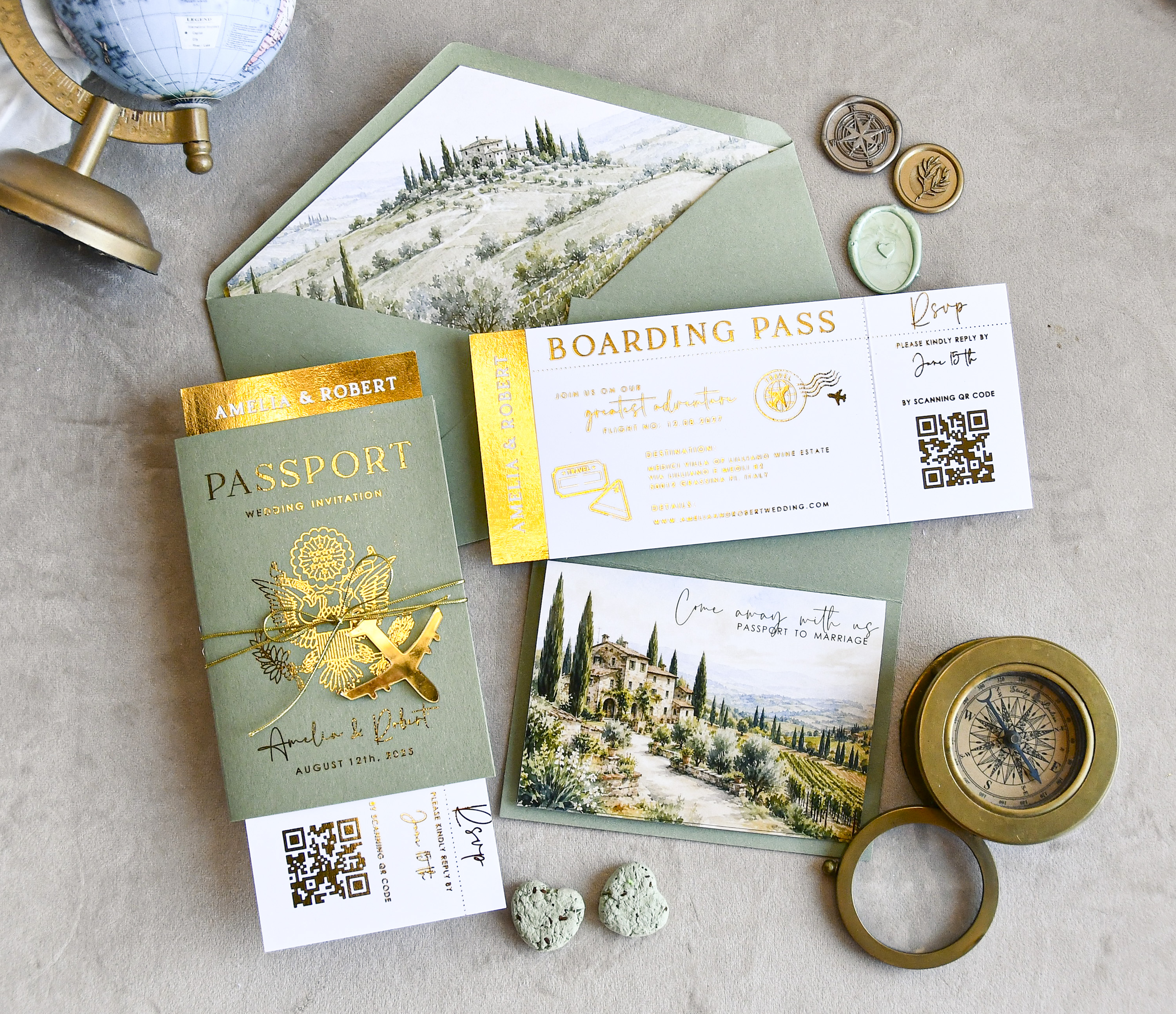
In these cases, a warm, beautifully designed invitation — like the passport-style beach wedding invites from Margo & Bees' Passport to Love collection — makes every guest, whether your pick or theirs, feel genuinely celebrated from the moment they open the envelope.
Scripts for Saying No Without Causing Drama
Telling your future in-laws their friends didn't make the cut is awkward, but it's far better than inviting 20 strangers you'll spend your wedding day meeting for the first time. Here are a few honest, kind ways to handle the conversation:
- Blame the venue: "We absolutely love that you want to include them, but our venue has a strict 100-person maximum and we're already at capacity."
- Offer an alternative: "We'd love for you to host a separate celebration with your friends — a dinner or a post-wedding party where you can share photos and celebrate with them."
- Keep it about the vision: "We're keeping the wedding to close family and people we both have a personal relationship with. It's the only way we could make the numbers work."
Let your partner lead these conversations with their parents. A united front is everything.
The Bigger Picture: Protecting Your Relationship
However you resolve the guest list debate, remember that this is one of your first major negotiations as an engaged couple — and how you handle it sets a tone. Advocate for what matters to you, but also listen to what matters to your partner and their family. A wedding is one day; your relationship with your in-laws is (ideally) a lifetime. Finding a compromise you can all live with — even if it means adding a few extra names or having a candid conversation about limits — is almost always worth it. And once the list is finalized, lean into the joy of it. Sending out stunning invitations, like the travel-inspired designs in the Passport to Love collection, is a reminder that no matter who's on the list, you're inviting people into something truly worth celebrating.

Frequently Asked Questions
Not full control, but contributing financially does earn them reasonable input. A fair approach is to allocate guest list seats proportionally based on financial contribution, then hold firm on the total number so it doesn't balloon beyond your budget or venue capacity.
Address it quickly and kindly before invitations go out. Have your partner explain that the guest list is finalized and invitations are being sent to a set number of people — any additions would require removing someone else from the list.
No, it's not rude — it's your wedding. Parents and their social circles are separate categories. Being clear about your criteria (close family and personal friends only) helps soften any disappointment without making it feel like a personal slight.
Simply say you're having an intimate ceremony with immediate family and close friends only, and that you hope to celebrate with everyone more broadly at a later gathering. Most people understand and appreciate the honesty.
Generally, no. Inviting people you've never met can feel performative and adds cost without adding meaning to your day. If your in-laws feel strongly, suggest a separate post-wedding celebration where they can introduce you to their wider circle.
Ideally within the first few weeks of getting engaged, before anyone starts mentally planning who they'll invite. Setting a firm total number per family upfront prevents misunderstandings and makes later conversations much easier.
See This Design Up Close



















You May Also Like


More Wedding Planning Guides
- → The Complete Guide to What Goes on a Wedding Invitation
- → Plus One Etiquette: Exactly Who Makes the Cut at Your Wedding
- → How to Navigate a Wedding When Your Divorced Parents Are at War
- → Inviting Guests to the Ceremony But Not the Reception: What You Need to Know
- → The Case for a Small Wedding: Everything You Need to Know
- → When to Send Wedding Invitations: A Complete Timeline Guide
- → Who Gets Cut First When Your Guest List Is Too Long?
- → Wedding Invitation Addressing: Etiquette Rules Every Couple Should Know
- → Coworkers and the Wedding Guest List: How to Decide Who Gets an Invite
- → Yes, Guests Can RSVP Online — Here's How to Make It Work Beautifully
- → More Guests or a More Memorable Wedding? How to Choose What's Right for You
- → Inviting Your Ex to Your Wedding: A Practical Guide to Making the Right Call
- → Do You Have to Invite Your Cousins to Your Wedding?
- → How to Figure Out the Right Number of Wedding Invitations to Order
- → Should You Invite an Estranged Sibling to Your Wedding?
- → Going Digital: Everything You Need to Know About Sending Online Wedding Invitations
- → No-Shows After a Yes RSVP: How to Handle It Gracefully
- → Navigating the 'Them or Me' Wedding Guest Ultimatum
- → When Parents Want to Add Friends to the Guest List: A Practical Guide
- → No Kids at Your Wedding: Navigating the Etiquette With Confidence
- → How to Defuse Family Arguments Without Losing Your Mind Before the Wedding
- → Uninvited Plus-Ones and Tag-Alongs: How to Keep Your Guest List Intact
- → When Family Feuds Threaten Your Wedding Plans: A Practical Peacekeeper's Guide
- → Inviting an Estranged Brother or Sister: Finding Clarity Before You Seal the Envelope
- → Cousins, Invites, and Hard Choices: A Practical Guest List Guide