
Save the Dates and Wedding Invitations: What Each One Does and Why You Need Both
If you're newly engaged and staring down your wedding stationery checklist, you've probably already asked yourself: do I really need both a save the date and a wedding invitation? The short answer is yes—and they serve very different purposes. Understanding exactly what each piece does will help you plan smarter, keep guests informed, and avoid last-minute panic. Here's everything you need to know.
What a Save the Date Actually Is
A save the date is a heads-up, not a formal invitation. Its only job is to claim a spot on your guests' calendars as early as possible—before they book vacations, say yes to other weddings, or make plans that conflict with yours. It's informal by nature and intentionally light on details.
A typical save the date includes:
- Your names
- The wedding date
- The city and state (full venue details aren't required yet)
- A note that a formal invitation will follow
- Your wedding website URL, if you have one
That's it. No RSVP card, no menu choices, no dress code breakdown. Think of it as a friendly announcement, not a logistical document.
What a Wedding Invitation Is—and Why It's Different
Your wedding invitation is the official, formal request for your guests to attend. It carries all the specific details they need to actually show up and participate. Where a save the date plants a flag, the invitation hands guests a map.
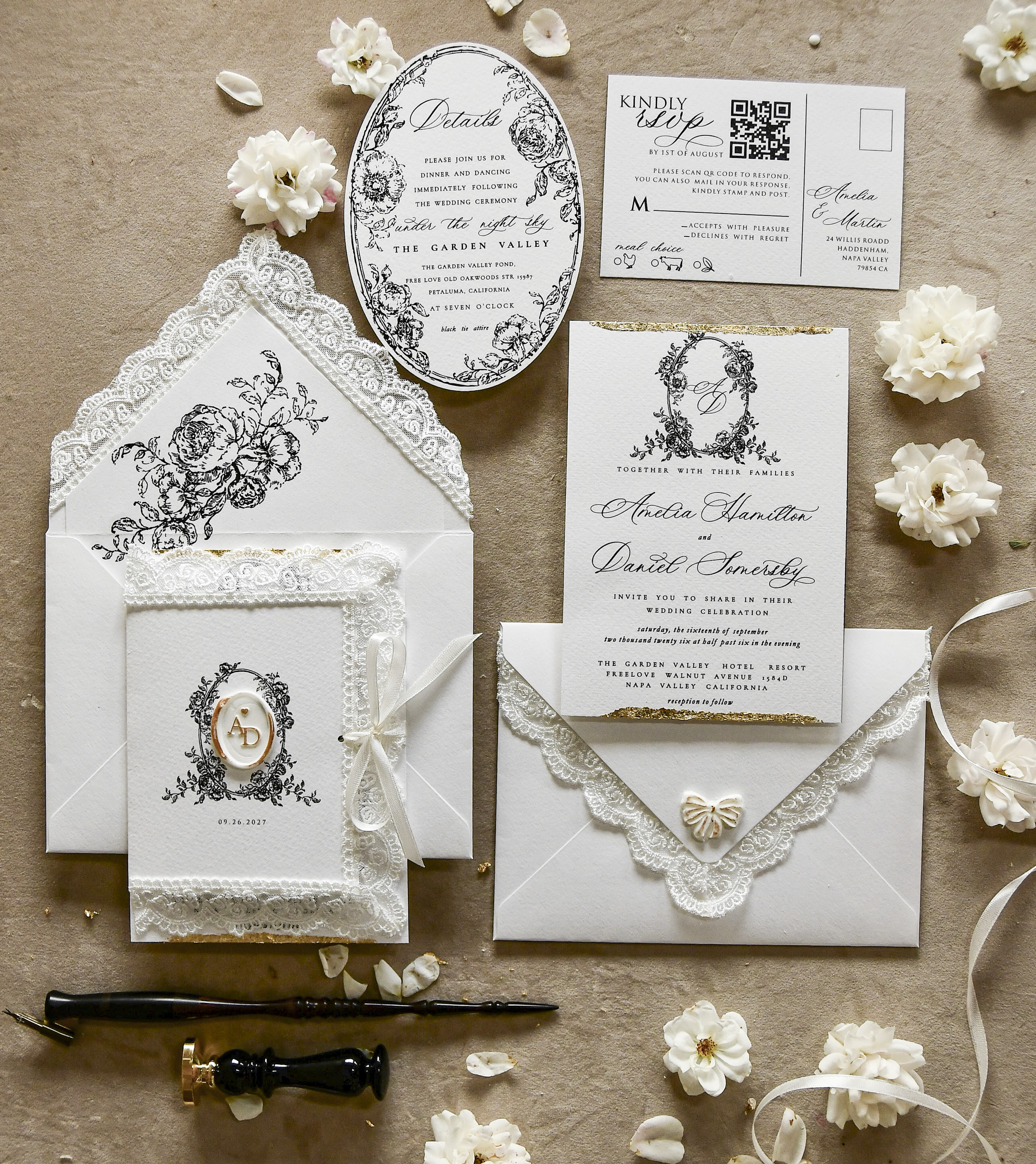
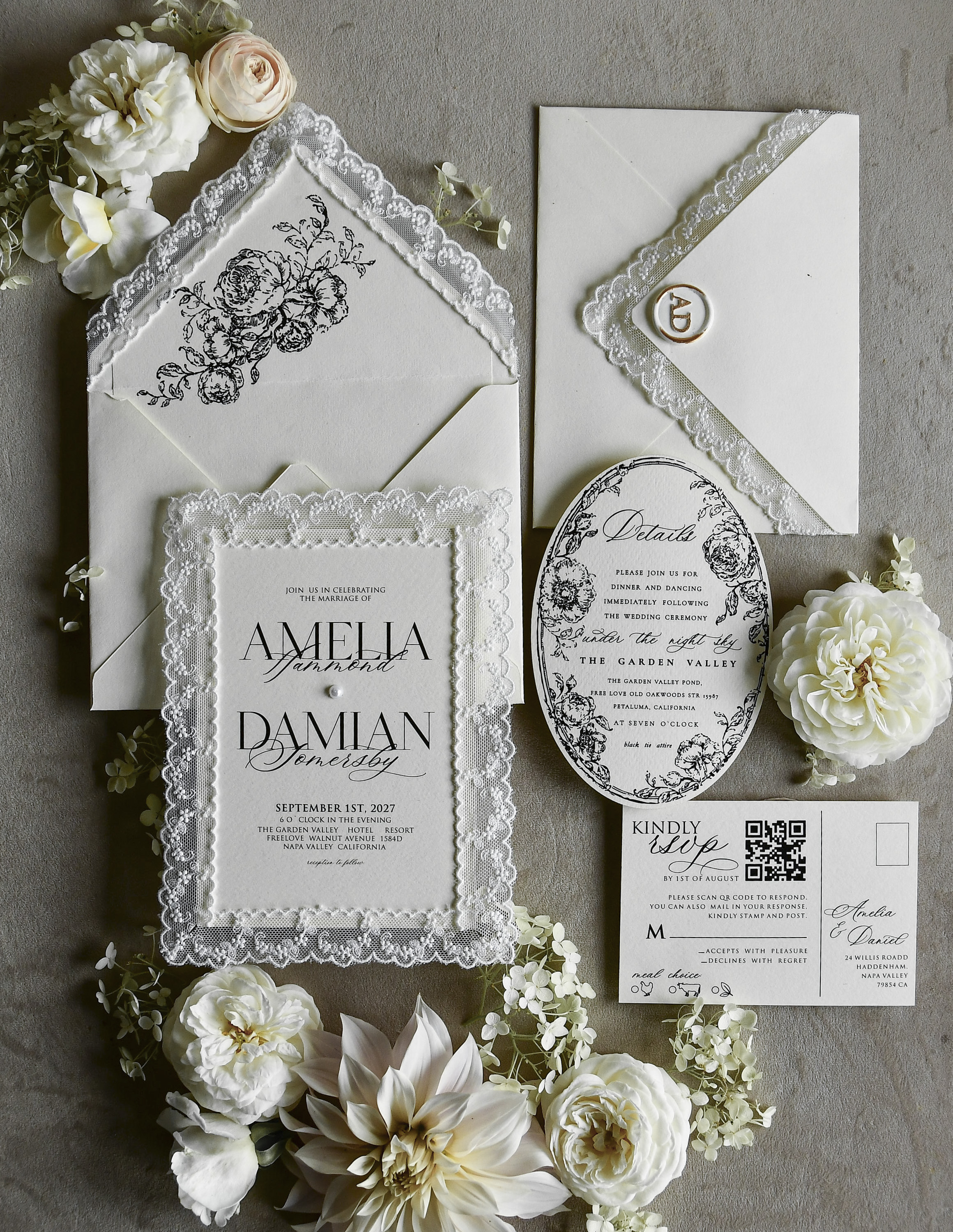
A complete wedding invitation suite typically includes:
- The formal invitation card with full names, date, time, and venue address
- An RSVP card with a response deadline
- A details or accommodations card with hotel blocks, transportation, or reception information
- Return envelopes for RSVPs
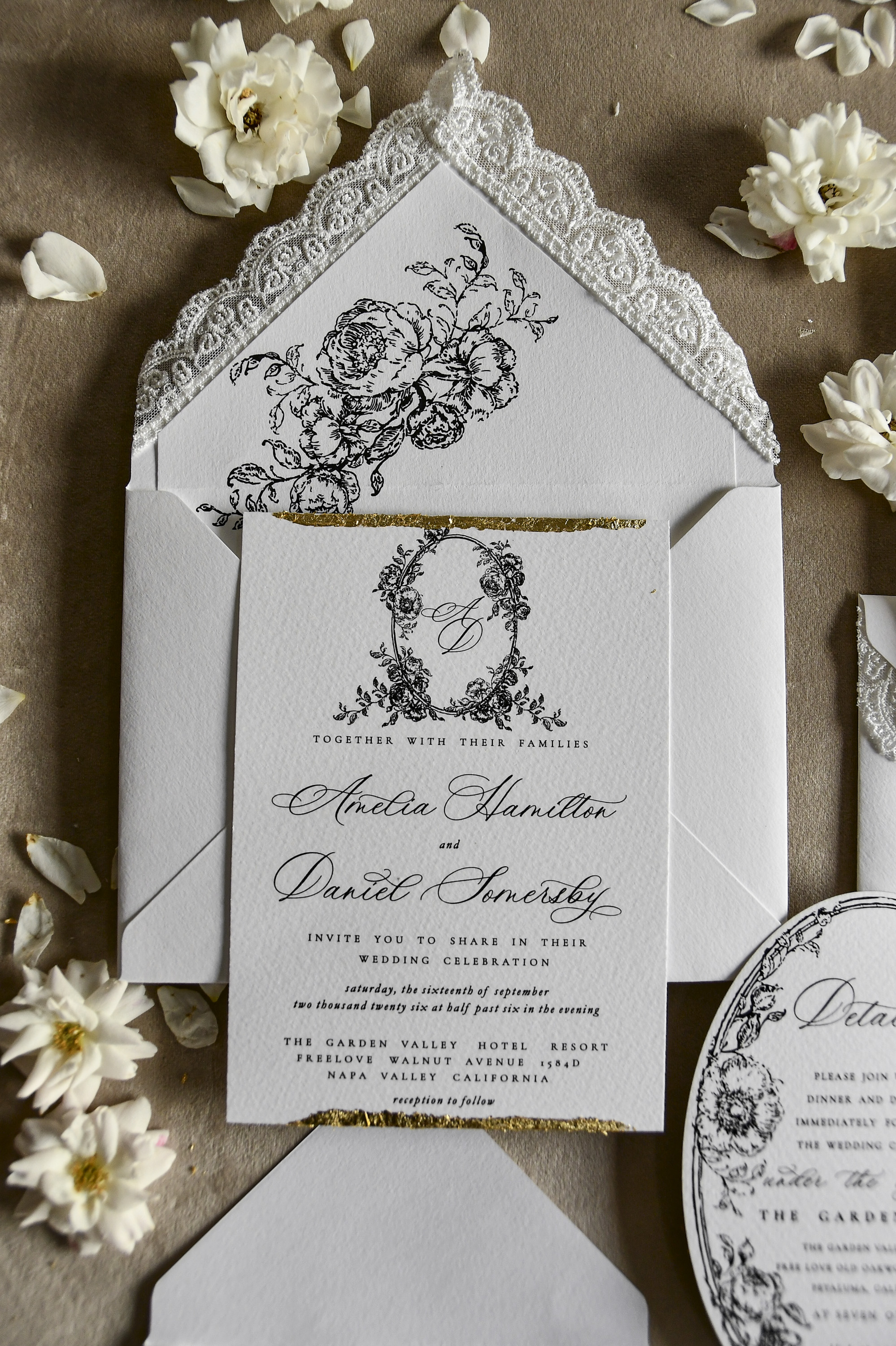
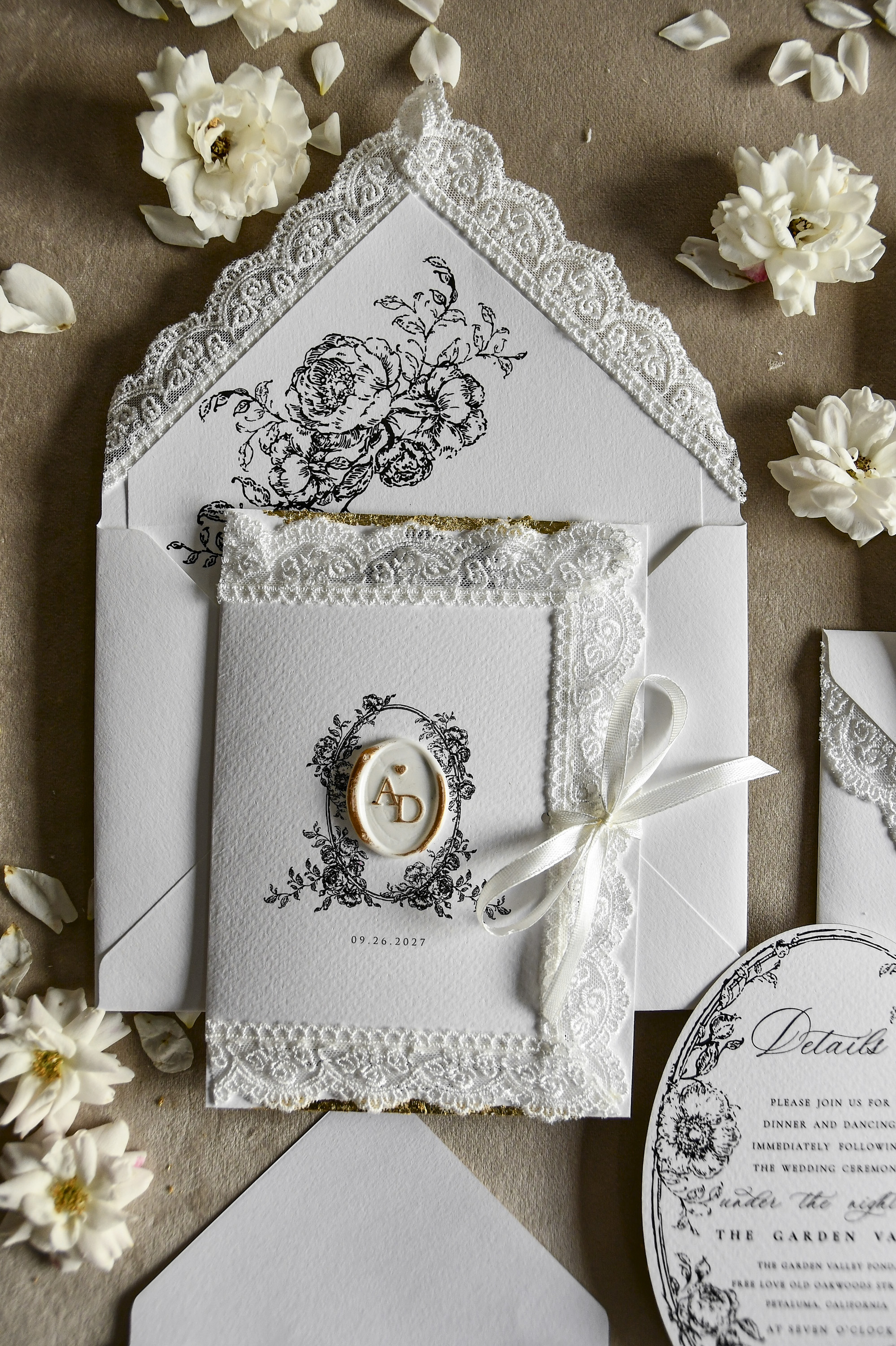
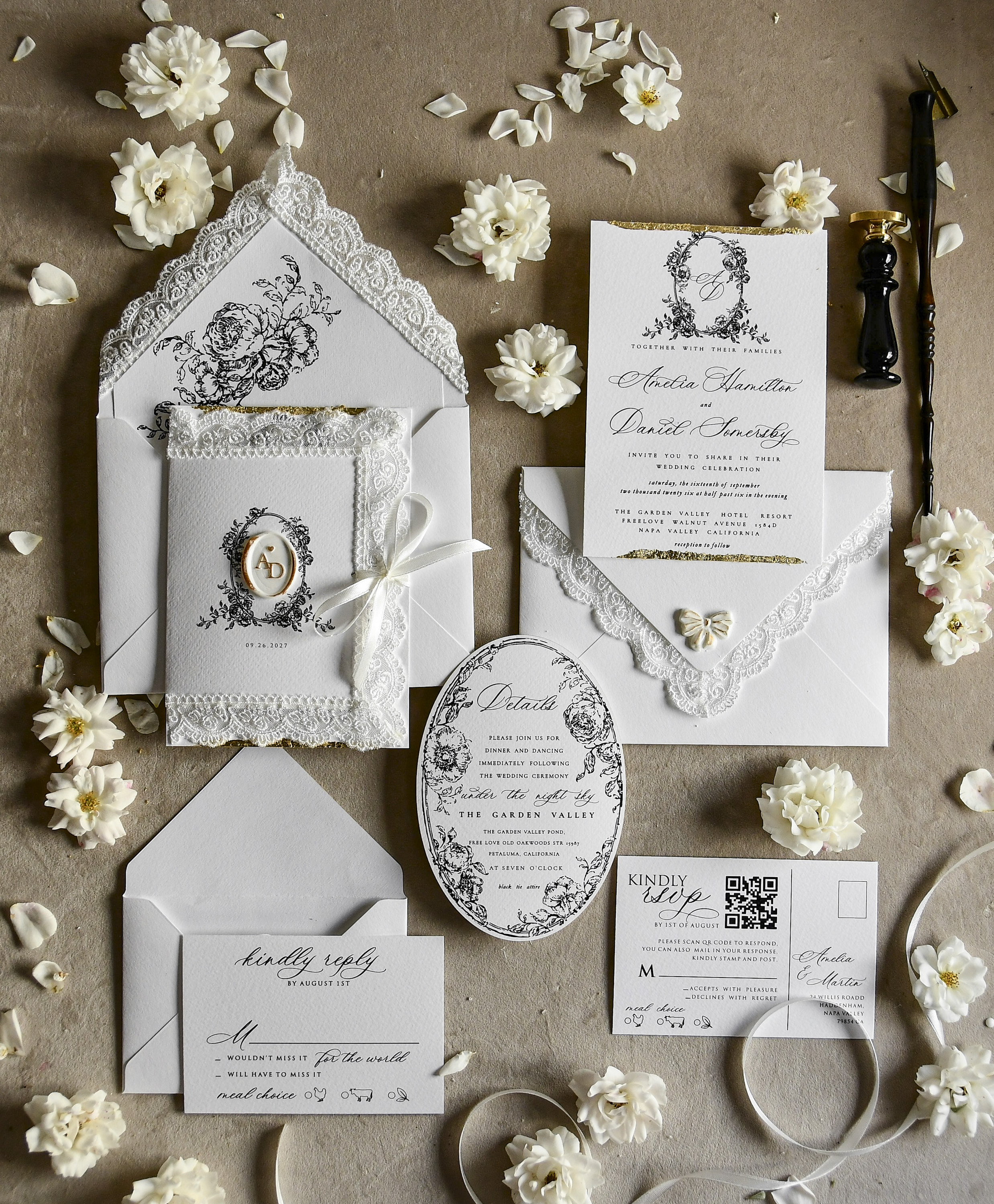
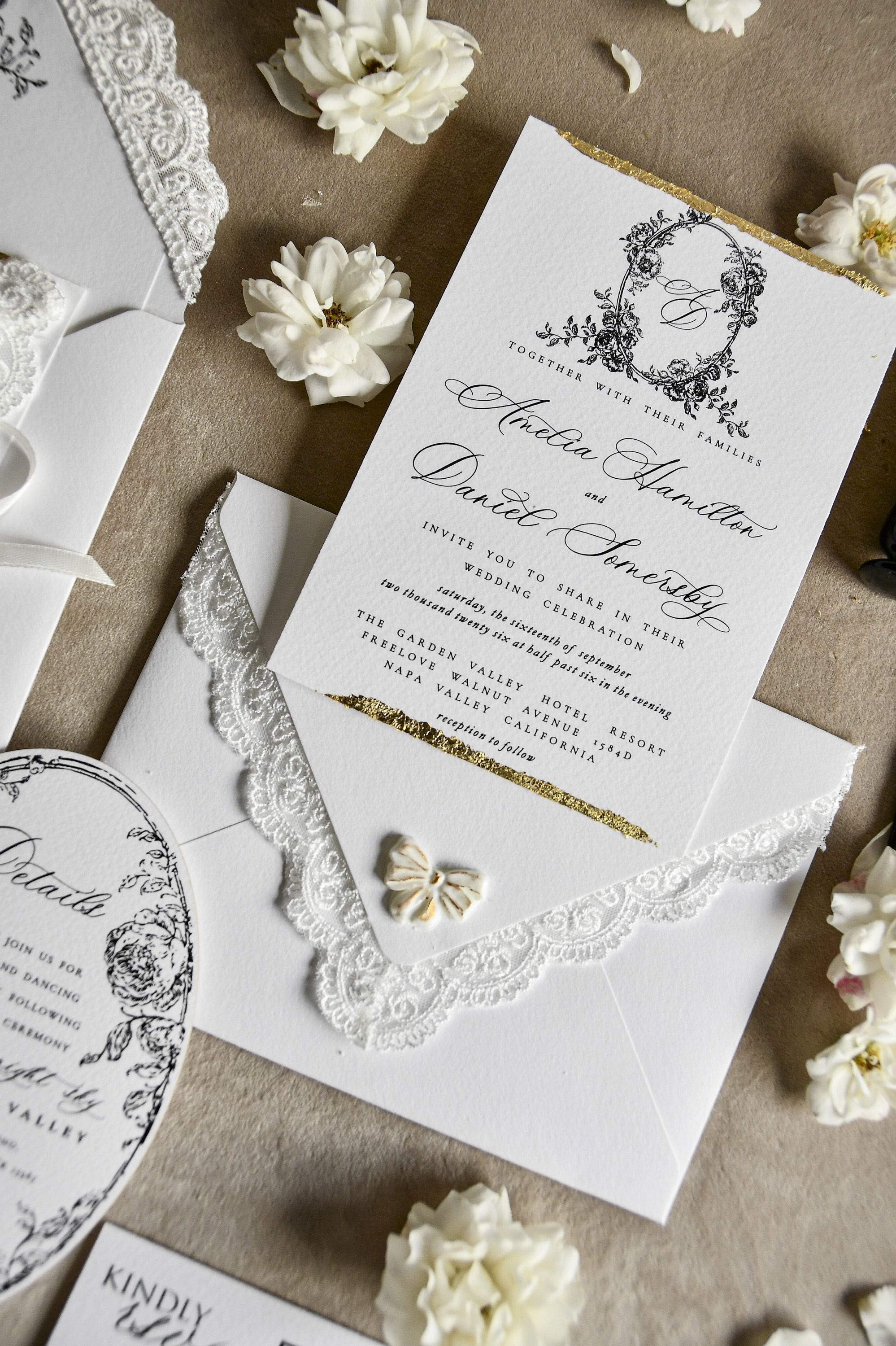
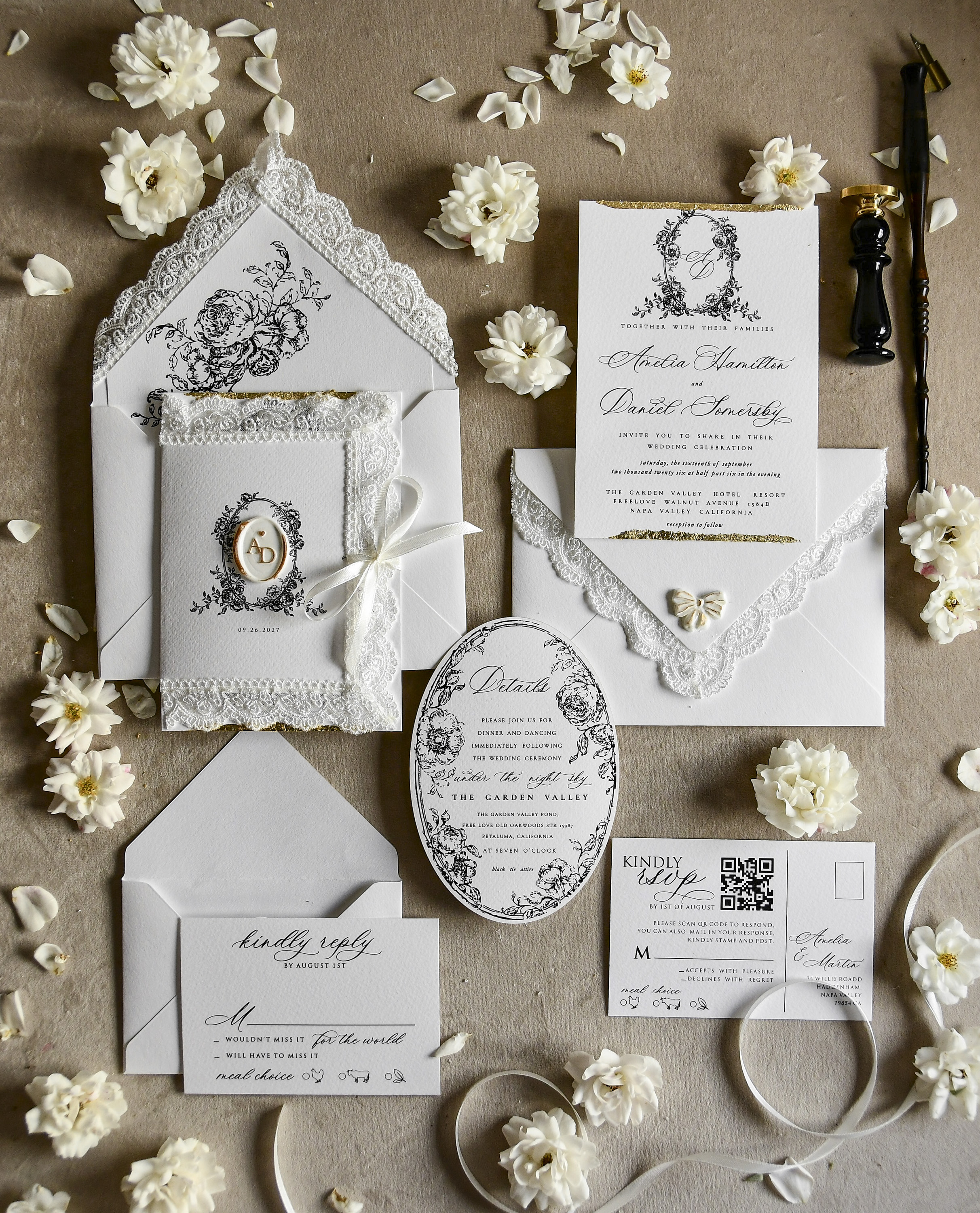
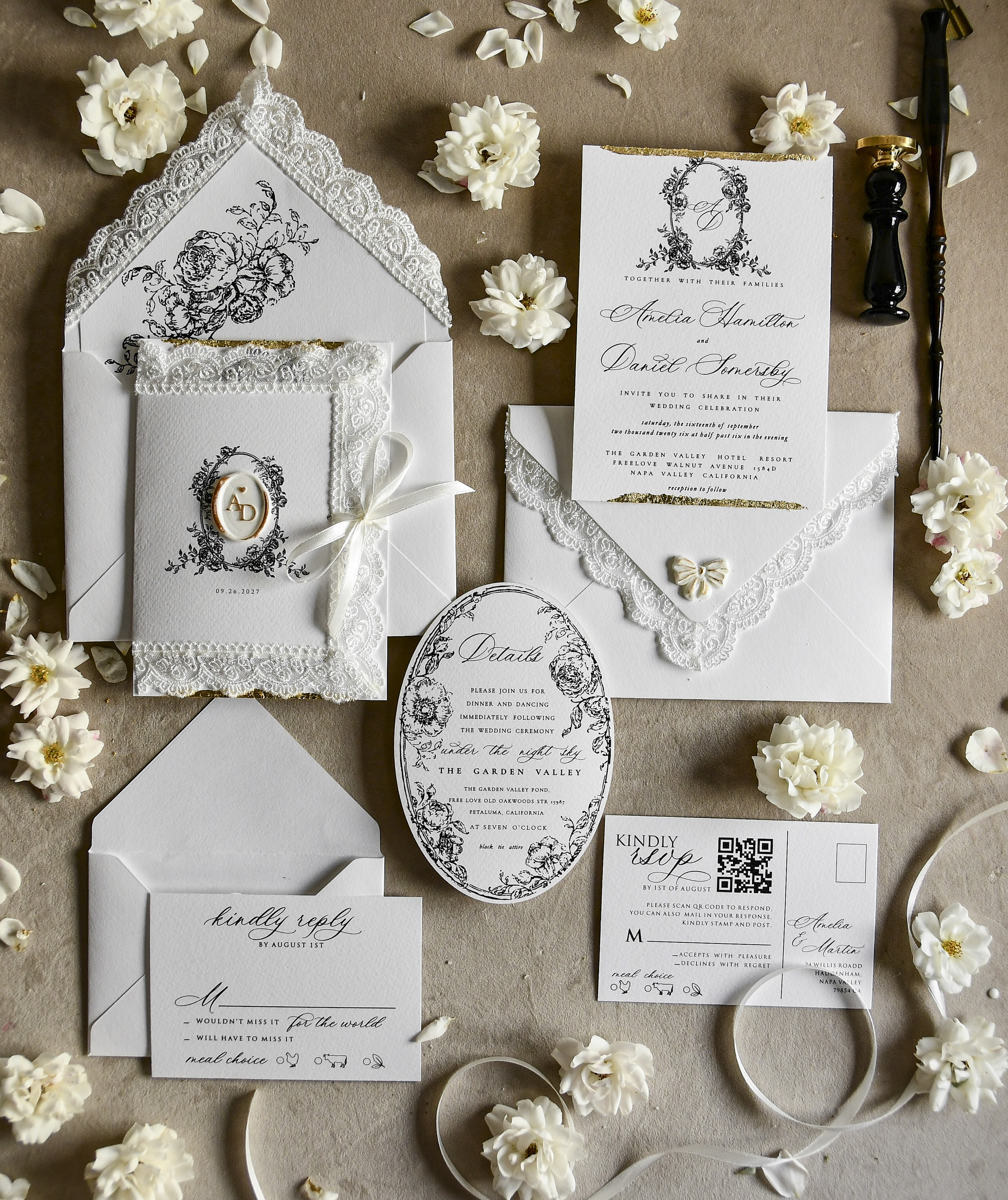
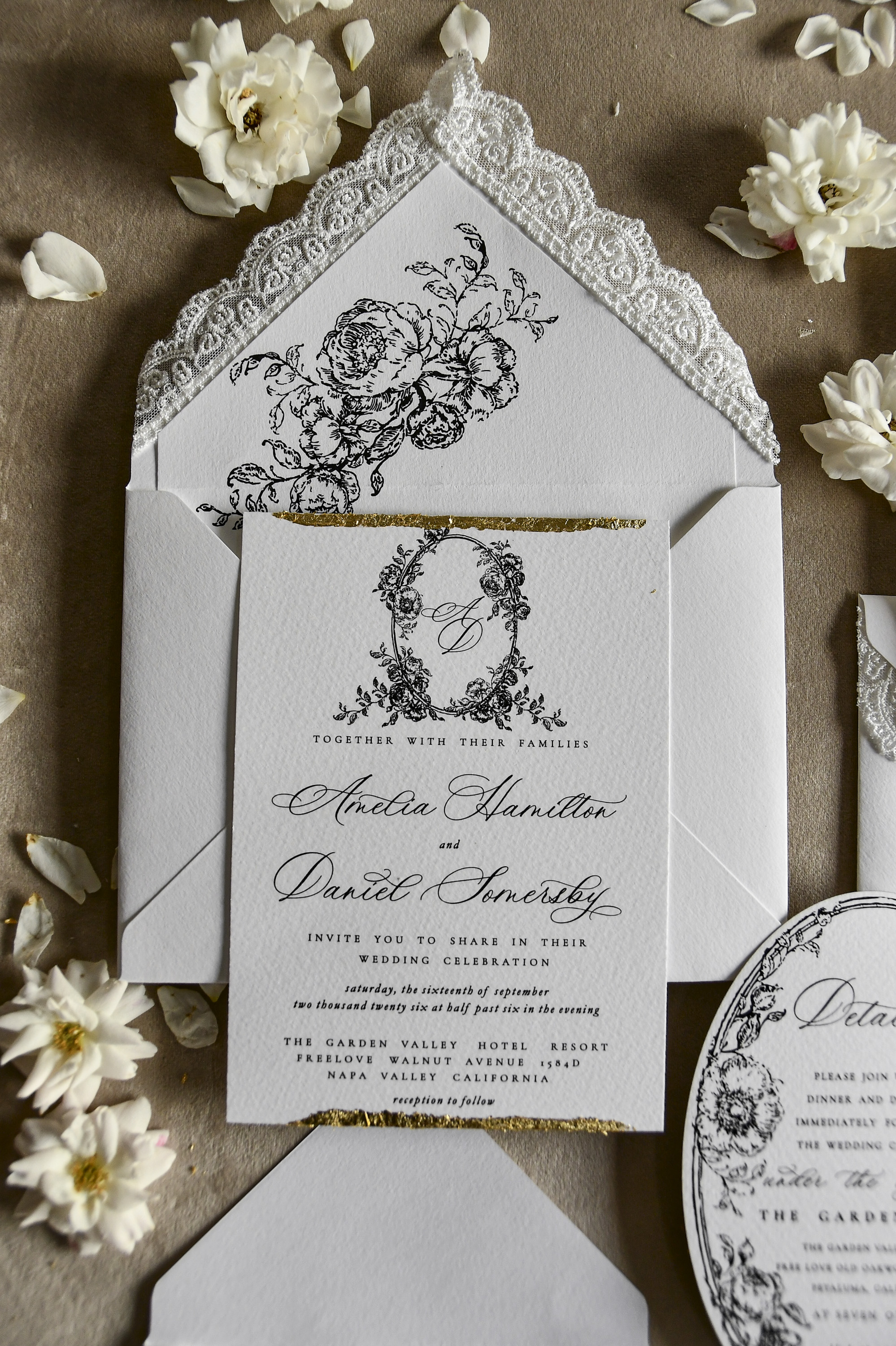
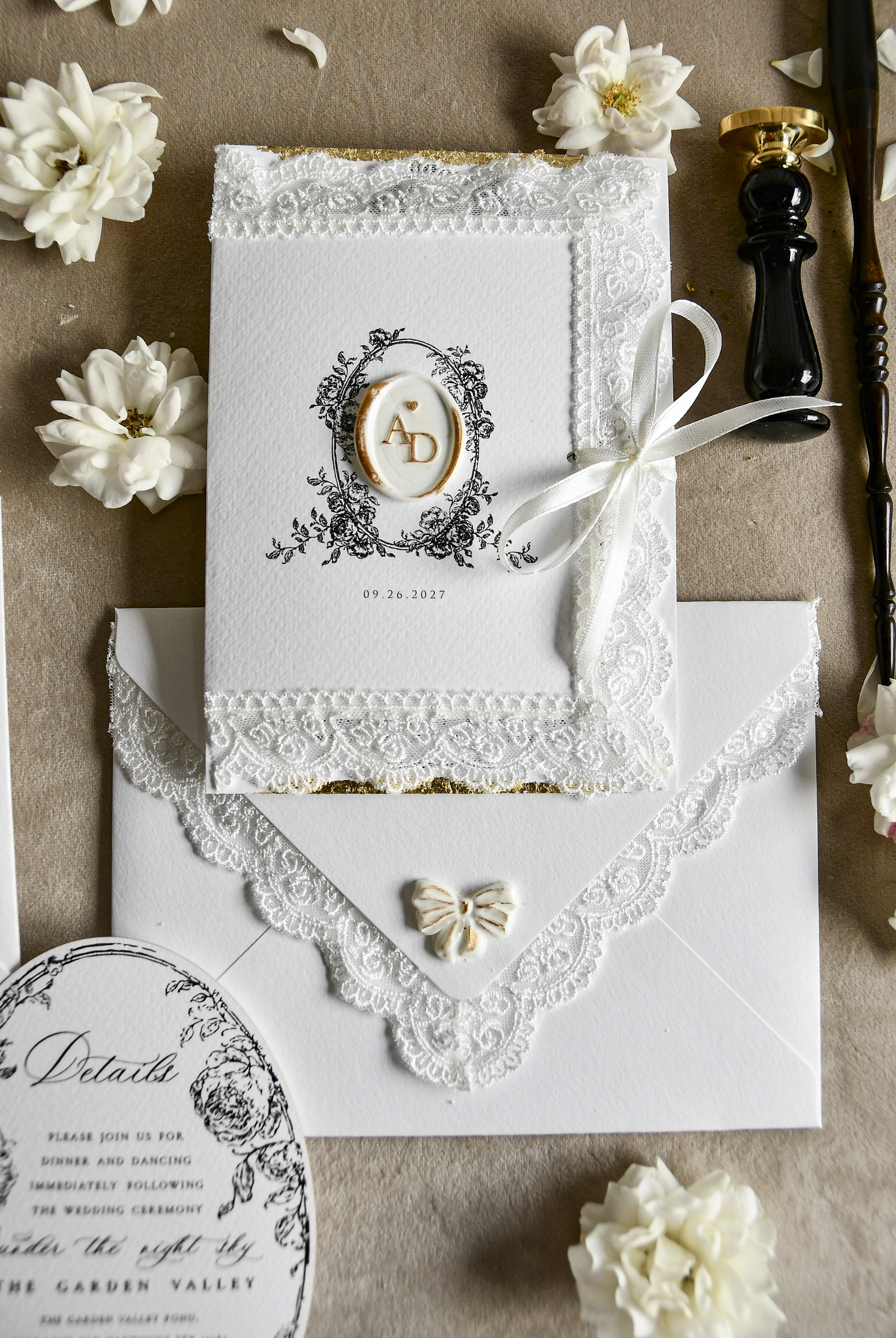
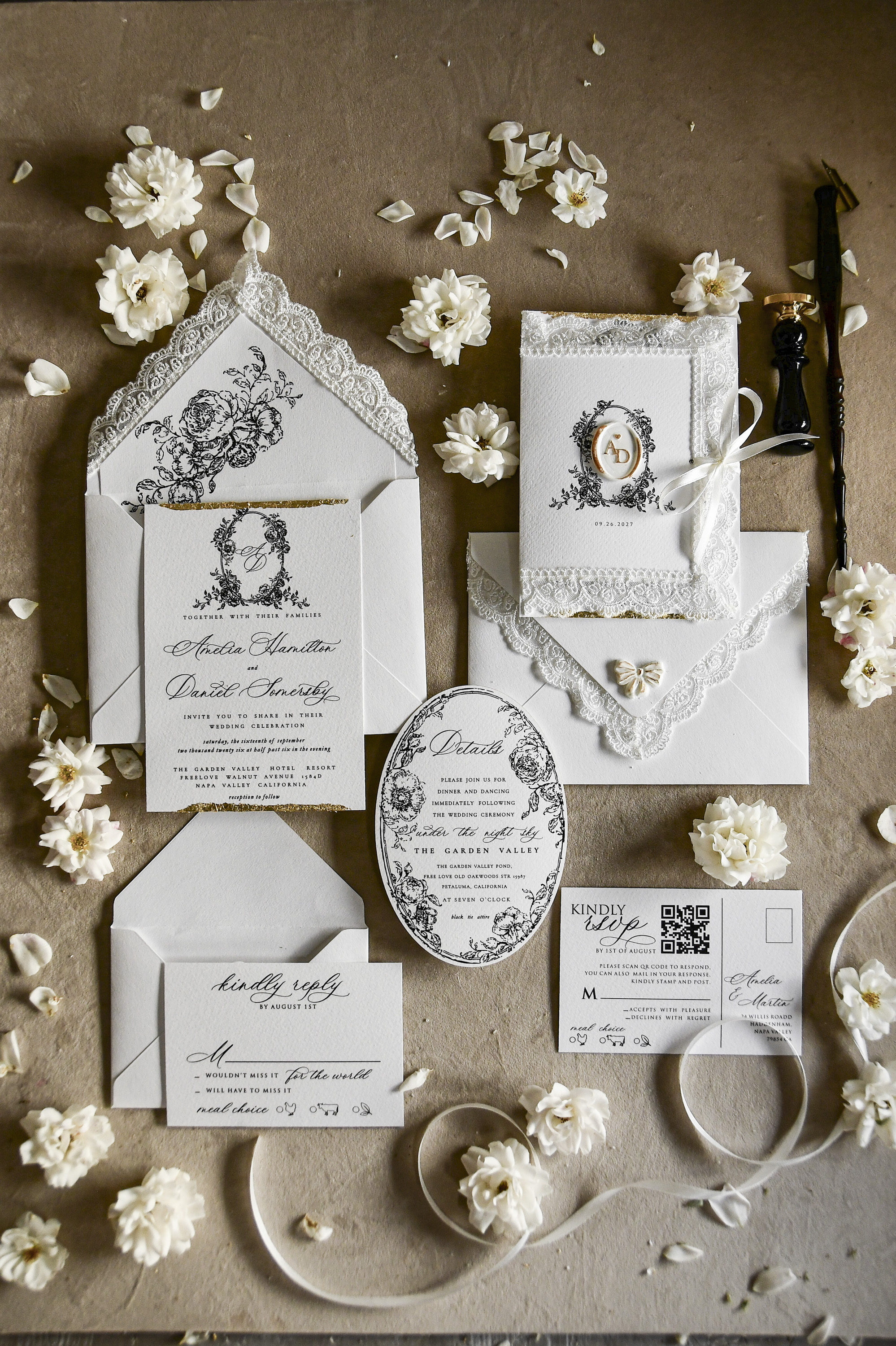
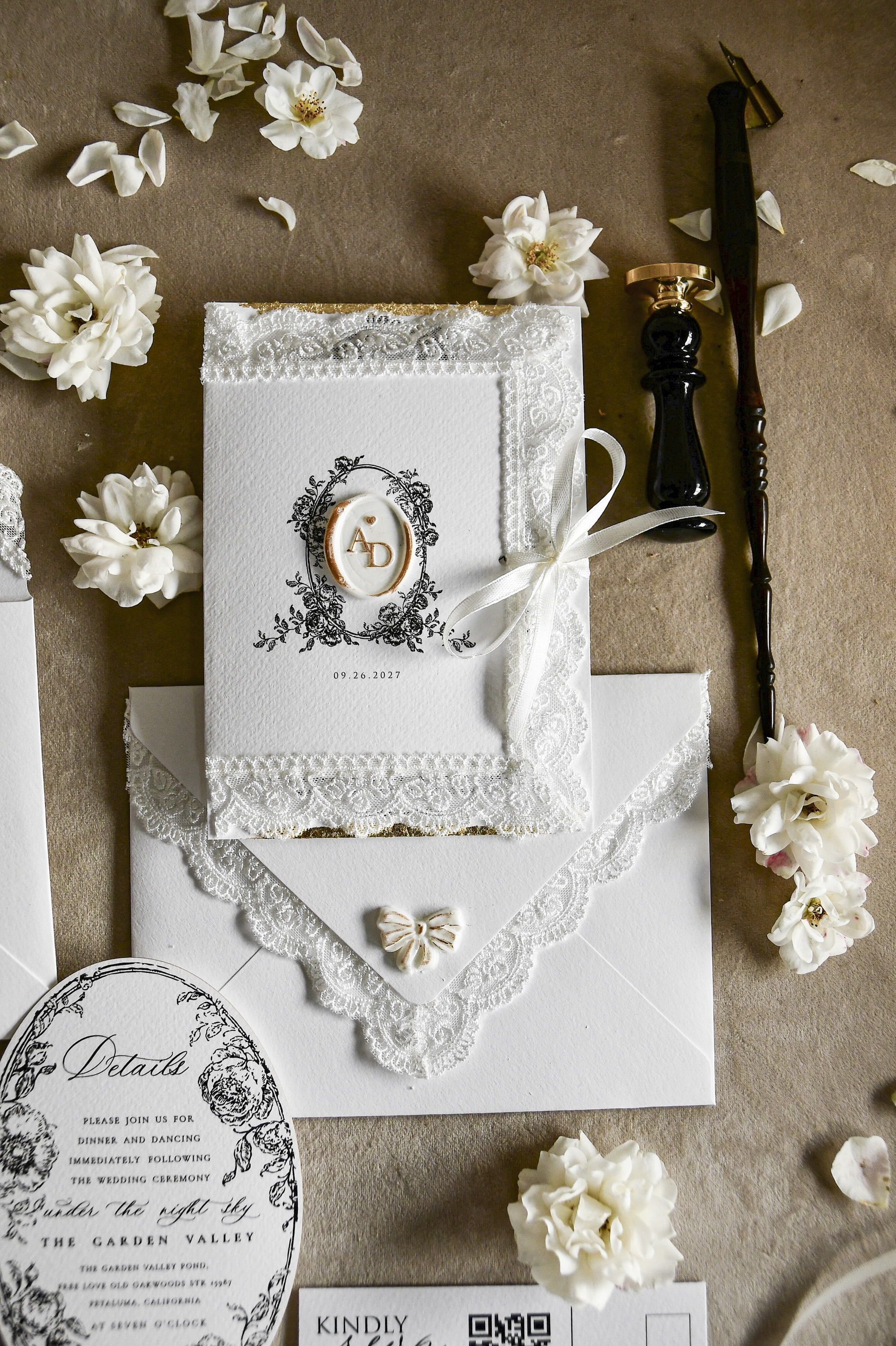
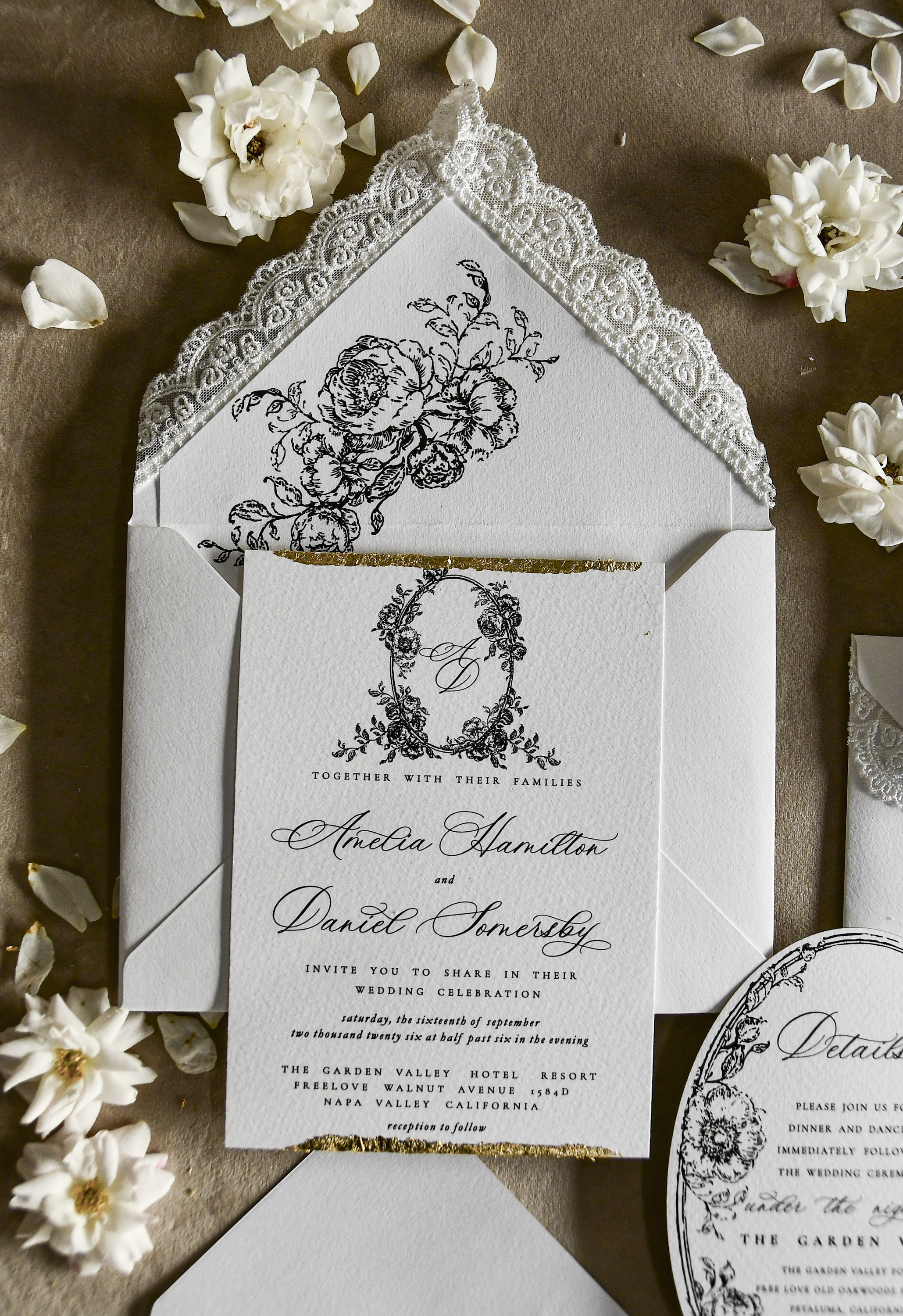
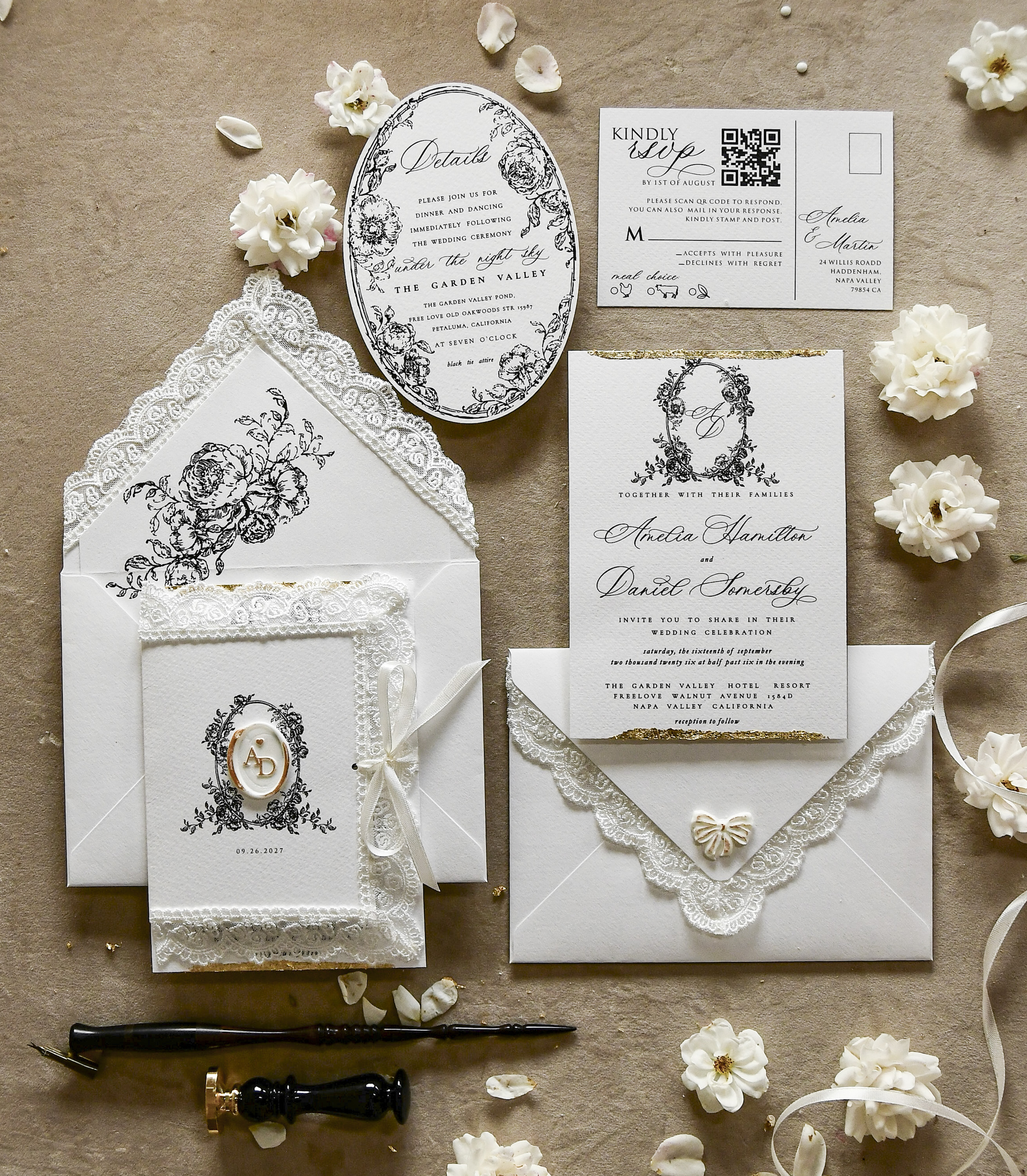
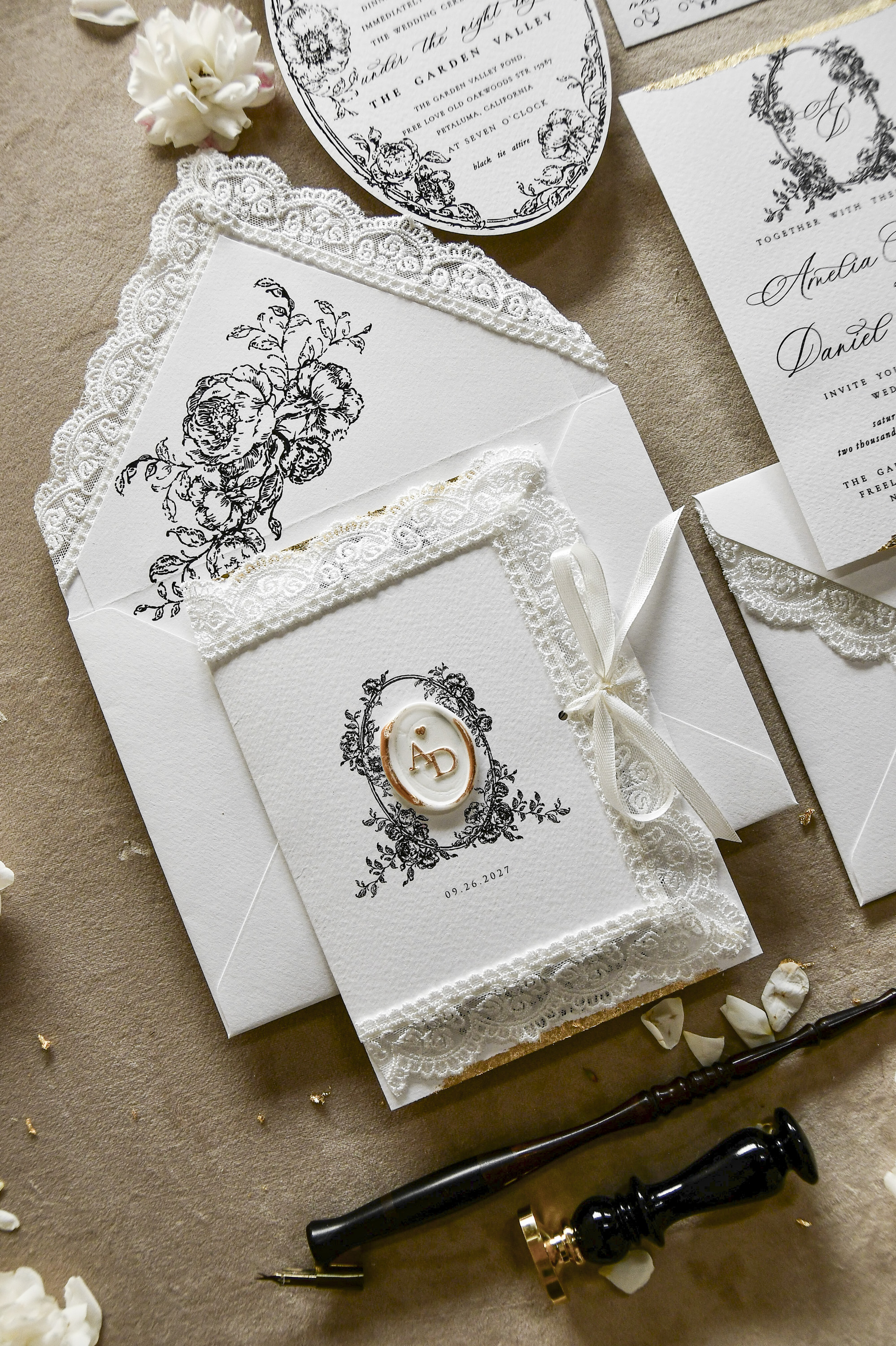
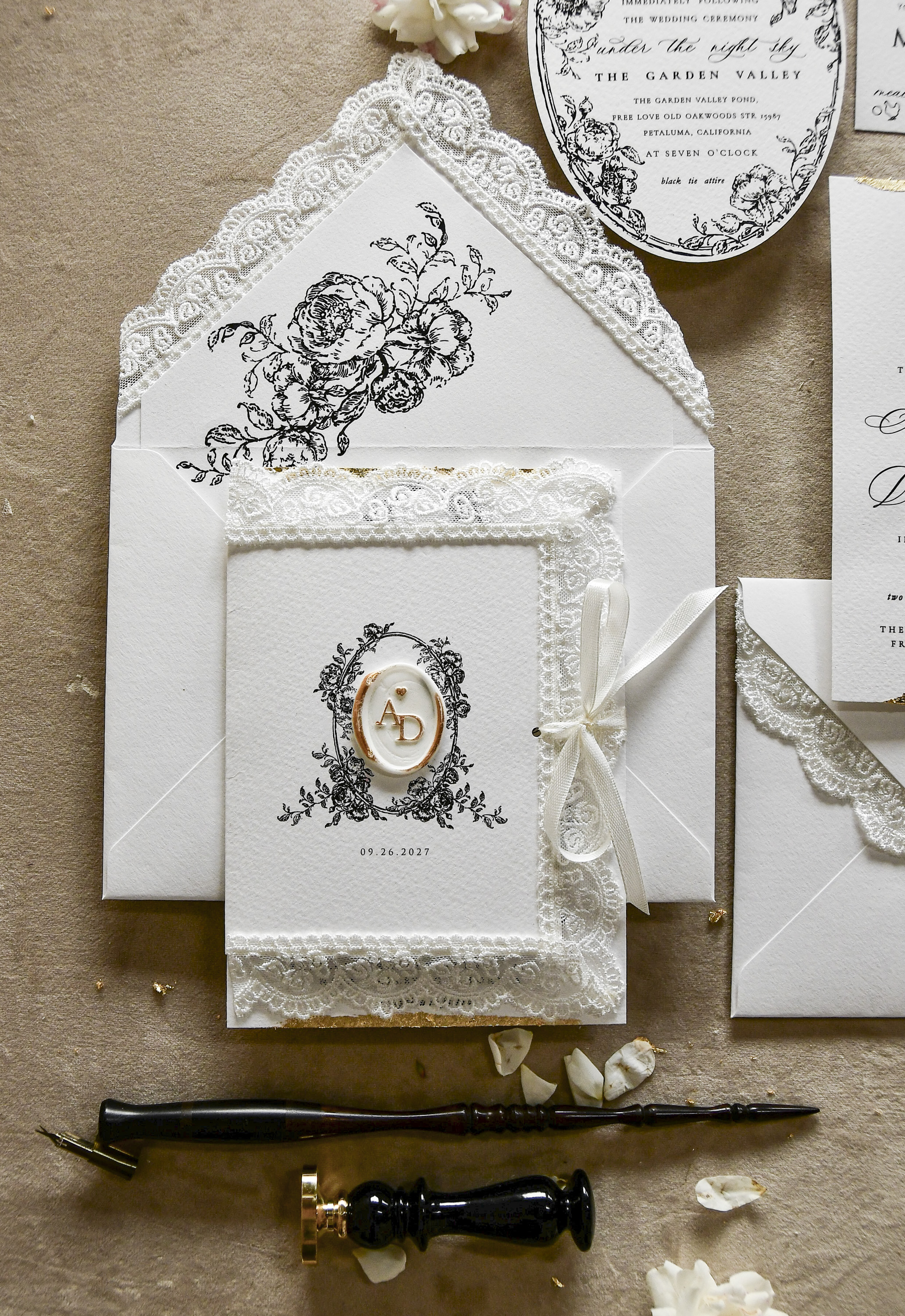
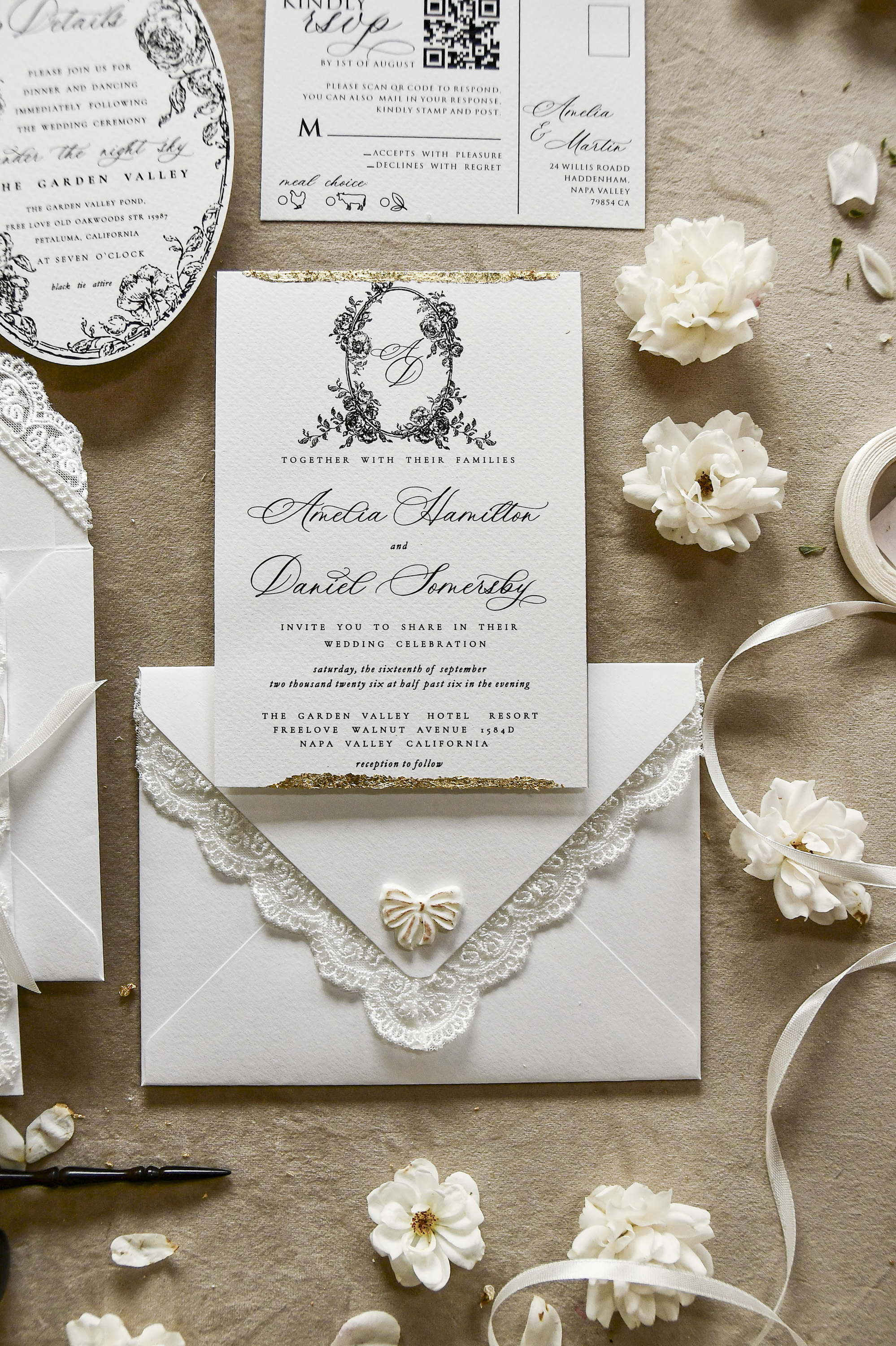
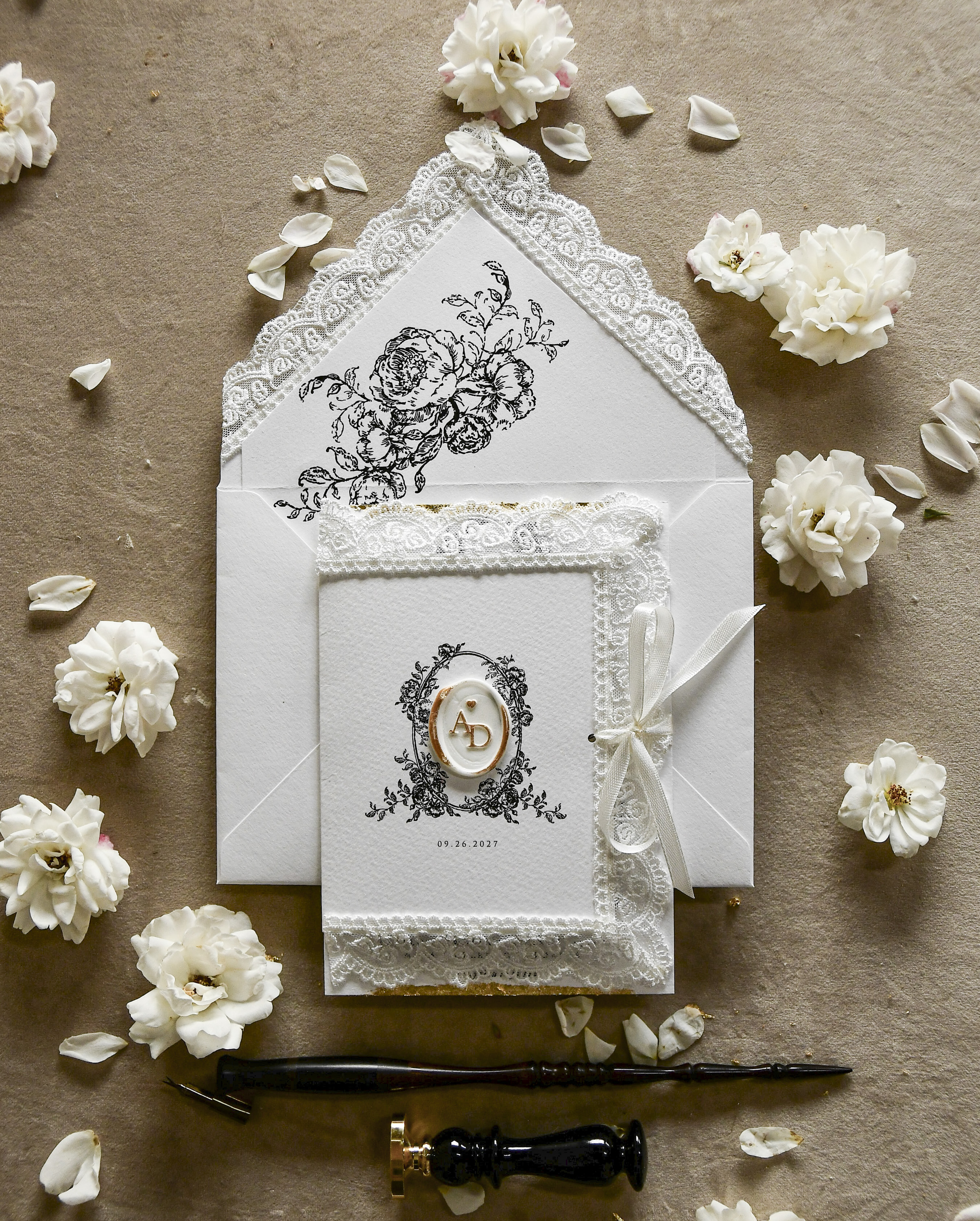
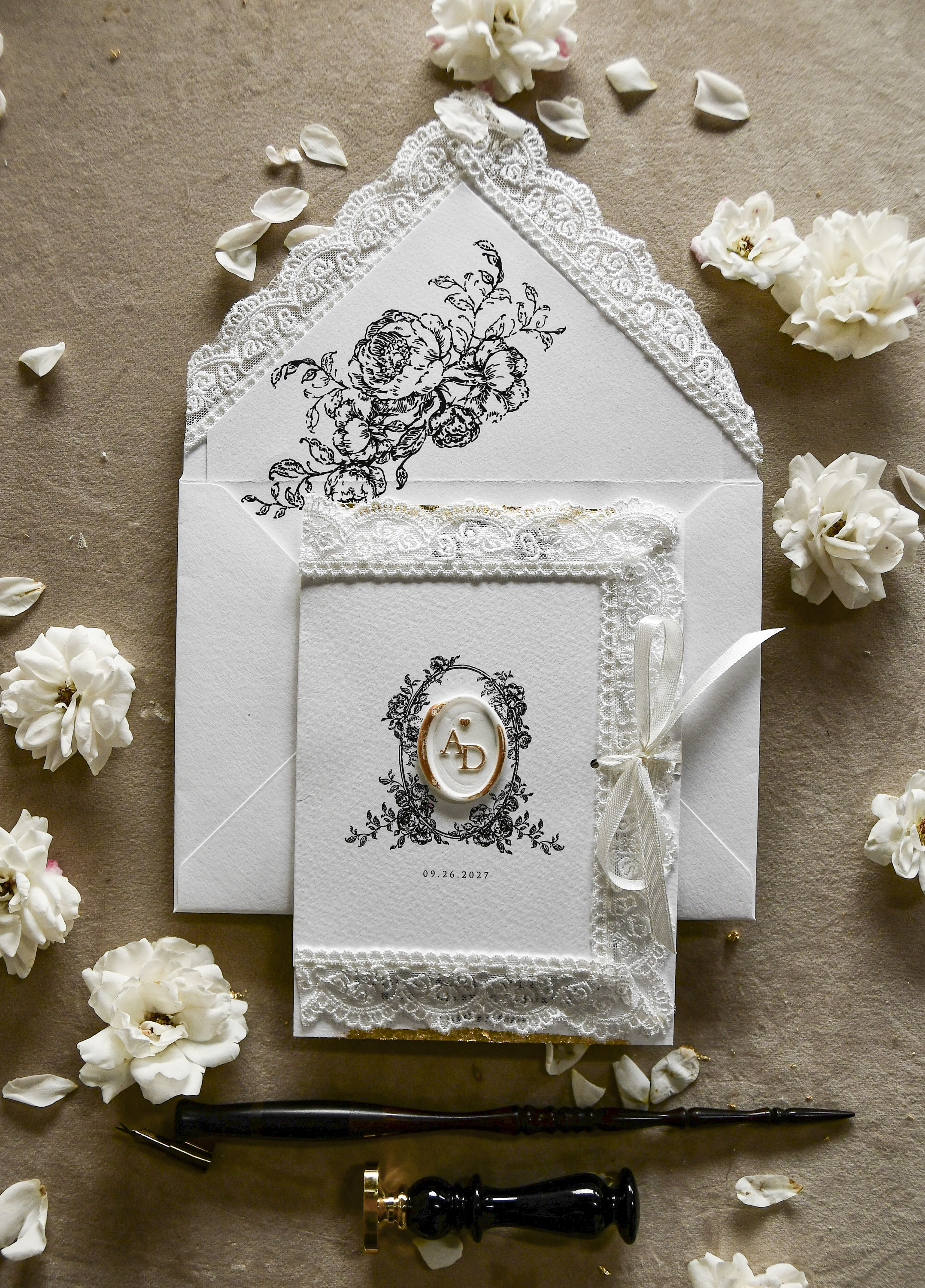
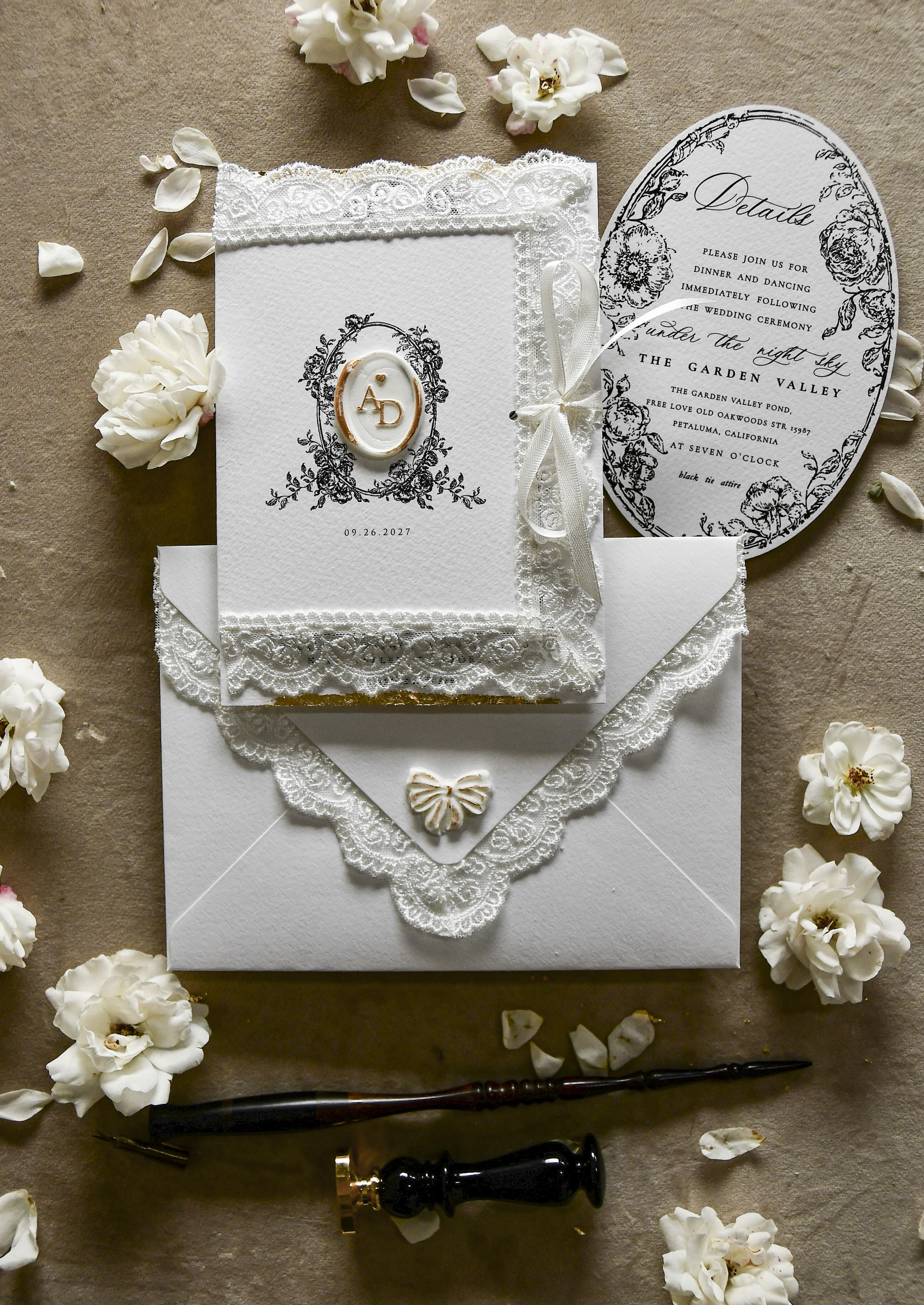
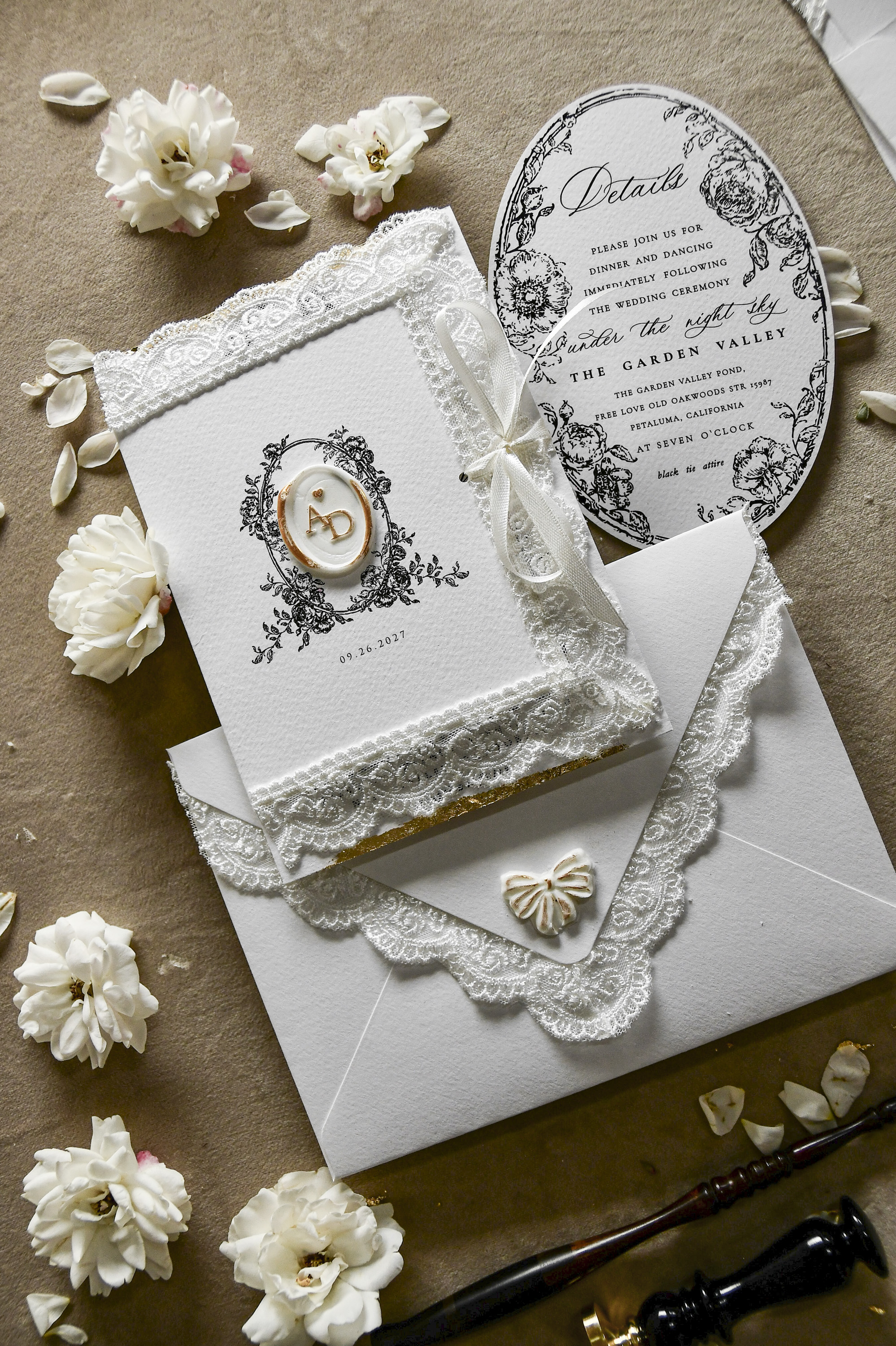
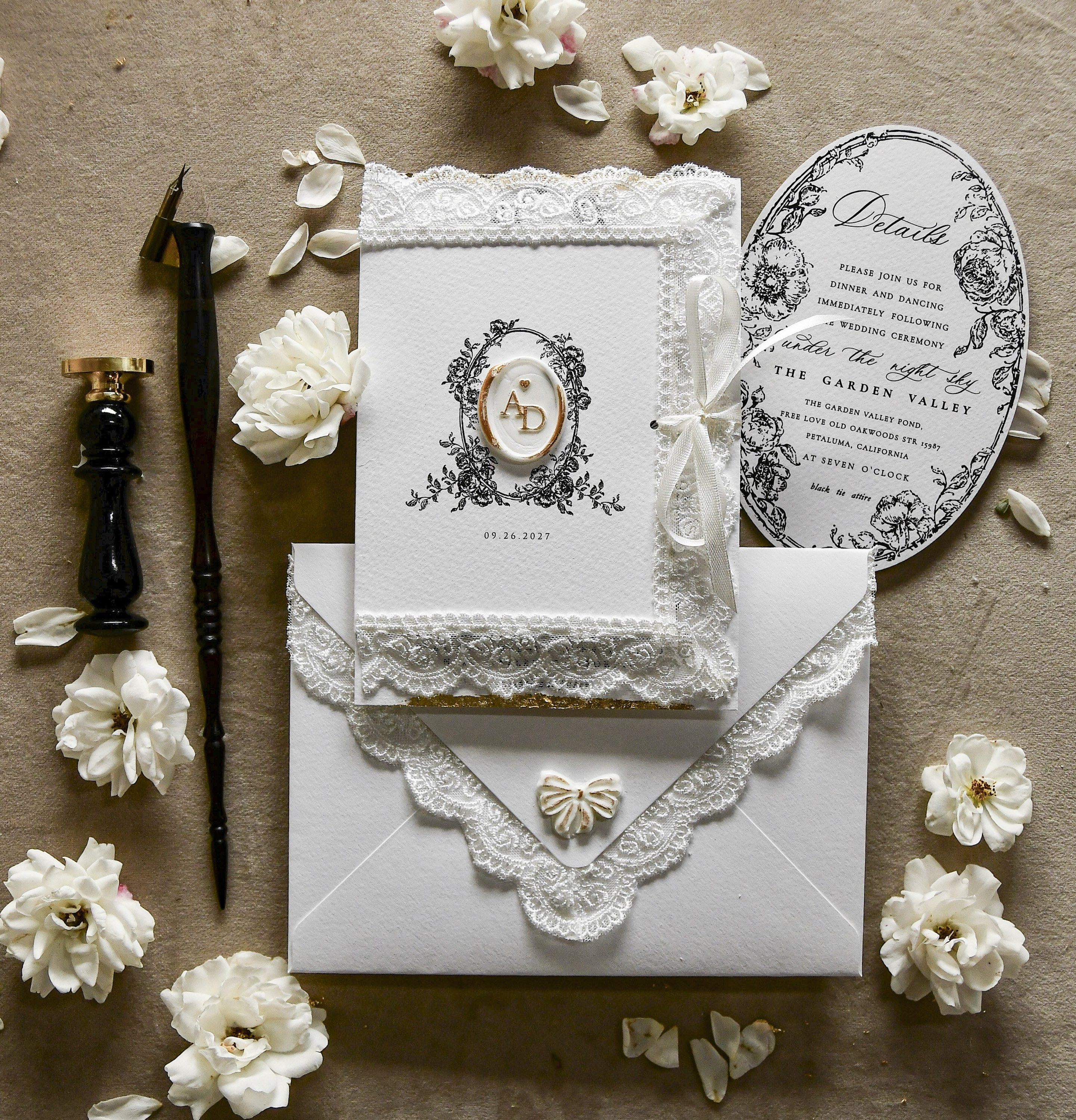
The tone is also more formal. This is where your wedding's aesthetic truly comes through—in the paper weight, the typography, the wording, and the design. A beautifully designed invitation like the 03/laceTR/z from Margo&Bees' vintage lace collection sets the mood before guests ever walk through the door. Starting at $9.00, it's an elegant way to make a lasting first impression.
When to Send Each One
Timing is everything with wedding stationery. Sending too early wastes the effort; sending too late creates stress for guests and vendors alike.
Save the dates:
- Local weddings: 4–6 months before the wedding date
- Destination weddings or holiday weekends: 8–12 months in advance
Wedding invitations:
- Standard timeline: 6–8 weeks before the wedding
- Destination weddings: 10–12 weeks before, to allow for travel booking
A practical rule: once you have your venue booked and your date locked in, order your save the dates. Start designing your invitation suite about three to four months before your wedding so you have time for proofing, printing, addressing, and mailing without rushing.
Who Gets Each One—and Does the List Have to Match?
This is one of the most common points of confusion. Your save the date list and your invitation list do not have to be identical—but there's one firm rule: anyone who receives a save the date must also receive a wedding invitation. You cannot un-invite someone after you've put their name on your calendar hold.
This means you should be thoughtful about who makes the save the date cut. If you're still deciding whether to invite work colleagues, extended family members, or plus-ones, leave them off the save the date list until you're certain. It's perfectly fine to send invitations to people who didn't receive a save the date—but never the reverse.
For A-list and B-list guest strategies, save the dates go to your confirmed A-list only. Invitation-only guests can be added later if RSVPs come back with regrets.
Etiquette Tips That Make Both Pieces Work Better
A few practical etiquette notes that will save you headaches later:
- Address save the dates carefully. How you address the envelope signals who is invited. If a couple's children aren't invited, don't address it to the whole family.
- Include your wedding website early. Put the URL on the save the date so guests can find accommodation and travel info on their own timeline.
- Match your aesthetic. Your save the date doesn't have to be identical to your invitation, but they should feel cohesive. If your invitation suite leans toward a romantic, vintage lace style—like the 03/laceTR/z—choose a save the date with a complementary feel.
- Set a firm RSVP deadline. Place it on your invitation card and stick to it. A deadline of three to four weeks before the wedding gives you time to finalize headcounts with your caterer and venue.
- Keep digital backups. Save a PDF proof of both pieces. You'll reference them more than you expect when answering guest questions.
Frequently Asked Questions
You can skip the save the date if your wedding is very small, very local, and you're giving guests at least three months' notice. For any wedding over 50 guests, a destination event, or a holiday weekend date, a save the date is strongly recommended to protect your guest attendance.
Yes—that's exactly the point. You only need the date and general location confirmed. Leave the specific venue address, ceremony time, and reception details for the formal invitation once everything is locked in.
Digital save the dates are widely accepted today and work especially well as a backup if you're mailing physical ones to some guests. However, for older guests or formal weddings, a physical save the date still makes a stronger impression and is less likely to get lost in a spam folder.
Save the dates are casual: 'Save the Date! Emma & James are getting married on June 14, 2026 in Charleston, SC. Formal invitation to follow.' Wedding invitations use traditional, formal language: 'Together with their families, Emma Rose Collins and James William Hart request the honor of your presence…'
Budget varies widely by quantity and design, but a reasonable starting point is $2–$5 per save the date and $4–$10 per invitation suite for quality printed pieces. Always order 10–15 extras of each to account for address changes, last-minute additions, and keepsakes.
Send a change-of-date card as soon as possible to everyone who received the original save the date. Be direct and apologetic in the wording, and update your wedding website immediately. Most guests will be understanding if you communicate the change promptly.
See This Design Up Close
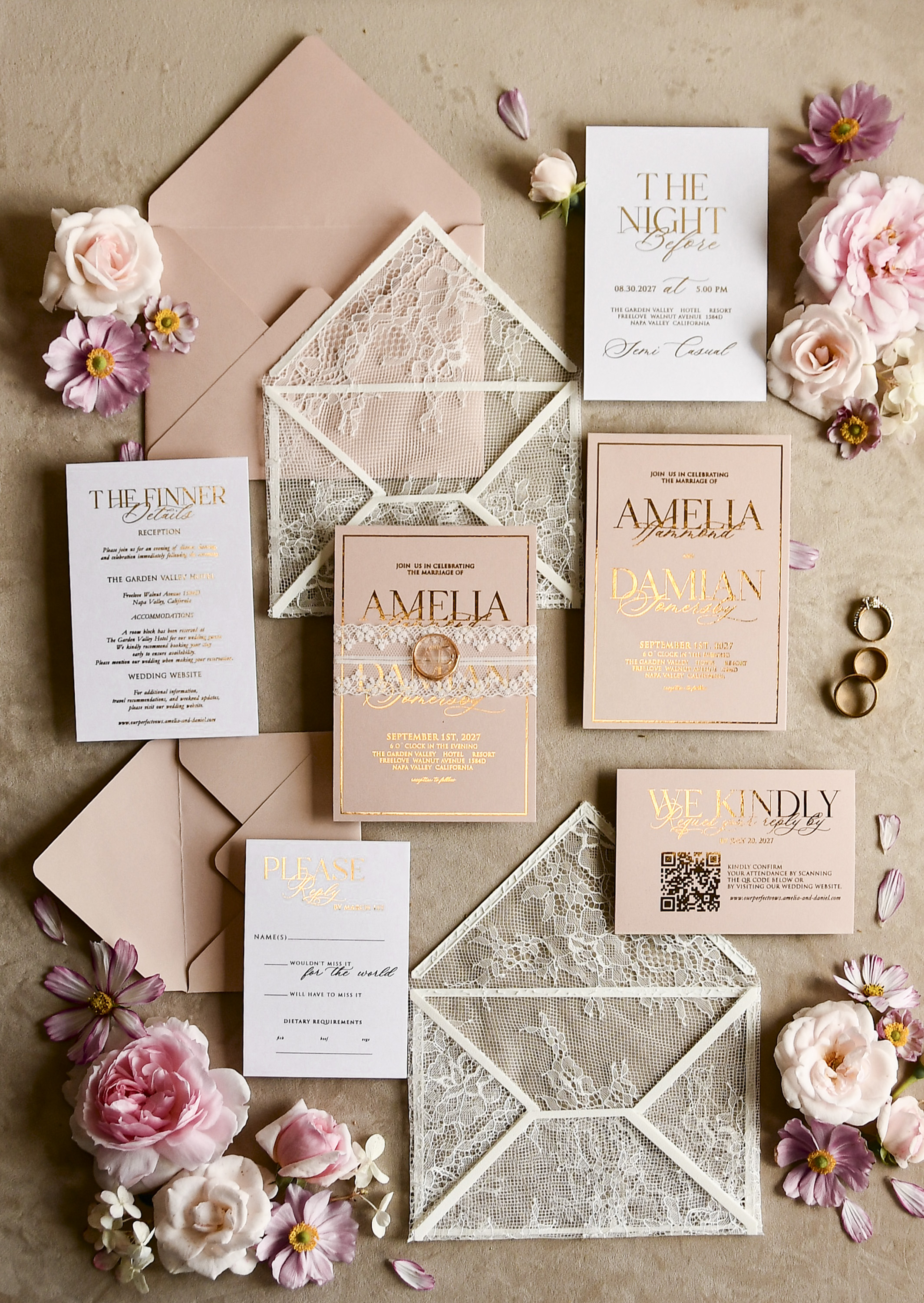
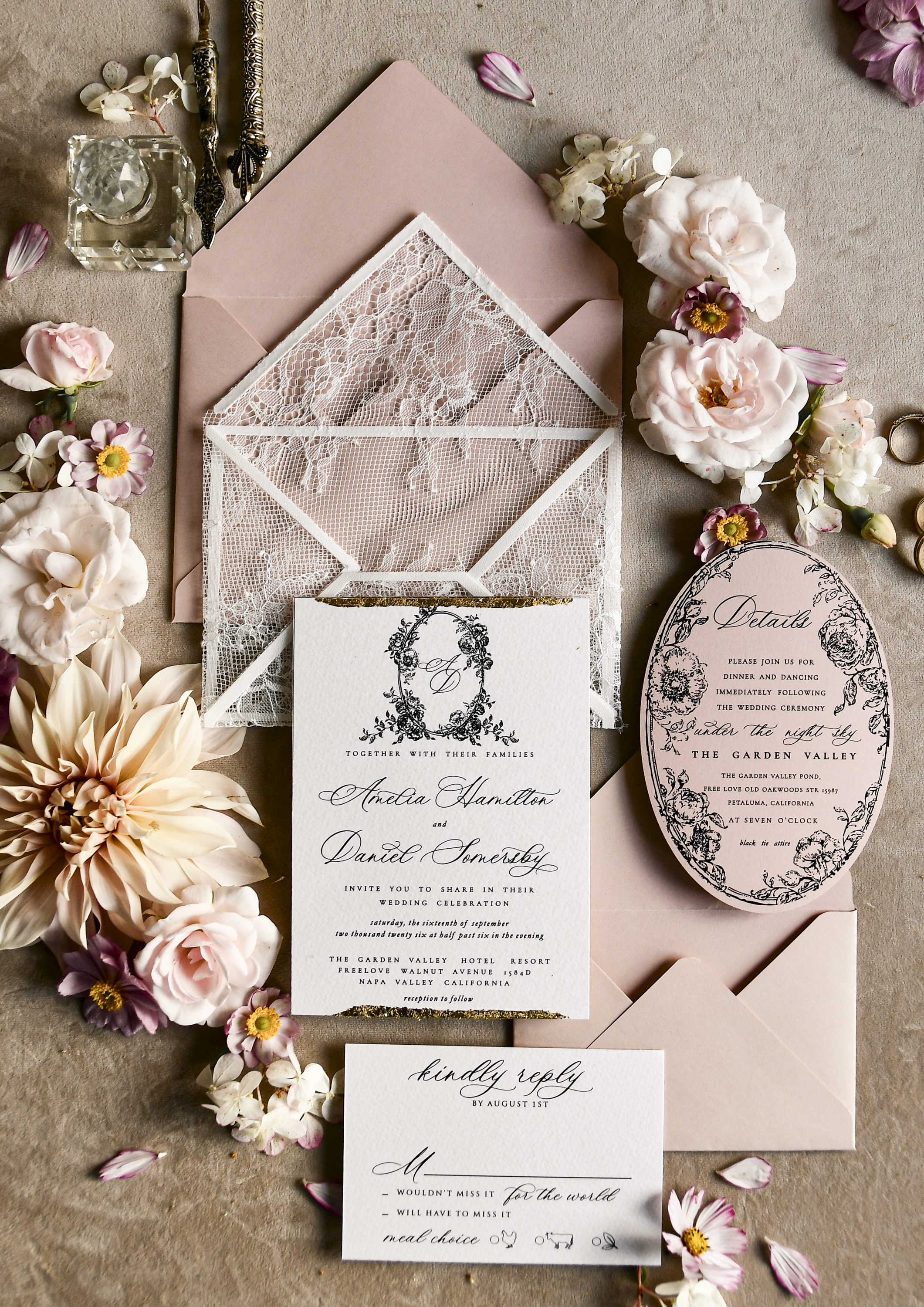
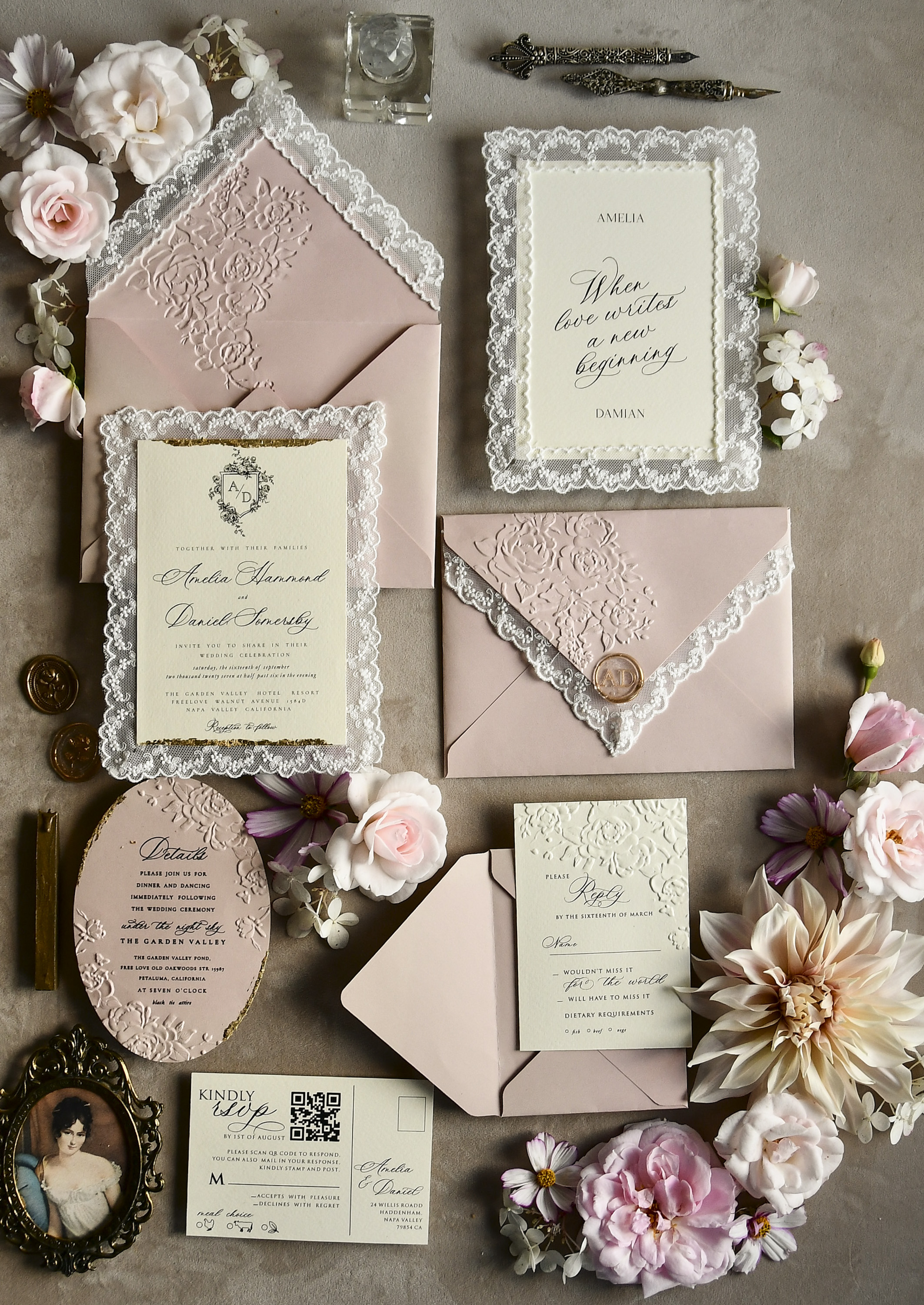
You May Also Like
More Wedding Planning Guides
- → Kids at Your Wedding: How to Decide What's Right for Your Celebration
- → Mailing vs. Hand-Delivering Wedding Invitations: What's the Right Call?
- → When Silence Speaks: How to Handle Guests Who Never RSVP'd
- → The Plus-One Dilemma: How to Handle Dates for Single Guests
- → Ceremony-Only Guests: The Honest Guide to Partial Wedding Invitations
- → Navigating the Parent Guest List: How to Keep the Peace Without Losing Control
- → The Honest Guide to Trimming Your Wedding Guest List Without the Guilt
- → The Graceful Art of Telling Someone They're Not on the Guest List
- → Seating Your Divorced Parents at the Wedding: A Practical Guide
- → When Guests Ghost Your RSVP: What to Do Next
- → The Honest Guide to Deciding Who Gets a Plus One at Your Wedding
- → The Ex Factor: How to Decide Whether a Former Partner Belongs on Your Guest List
- → The Perfect Timing for Mailing Your Wedding Invitations
- → Digital vs. Paper Wedding Invitations: Which Is Right for You?
- → Child-Free Weddings: What's Rude and What's Perfectly Fine
- → Everything Your Wedding Invitation Needs to Say
- → Navigating Guest List Pressure: When Mom Wants to Invite Someone You Don't
- → When Your Partner Wants a Smaller Guest List Than You Do
- → Online RSVPs vs. Mailed Cards: What Every Couple Should Know
- → Uninvited Plus-Ones and Tag-Alongs: How to Keep Your Guest List Intact
- → When Family Feuds Threaten Your Wedding Plans: A Practical Peacekeeper's Guide
- → Inviting an Estranged Brother or Sister: Finding Clarity Before You Seal the Envelope
- → Cousins, Invites, and Hard Choices: A Practical Guest List Guide