
Everything Your Wedding Invitation Needs to Say
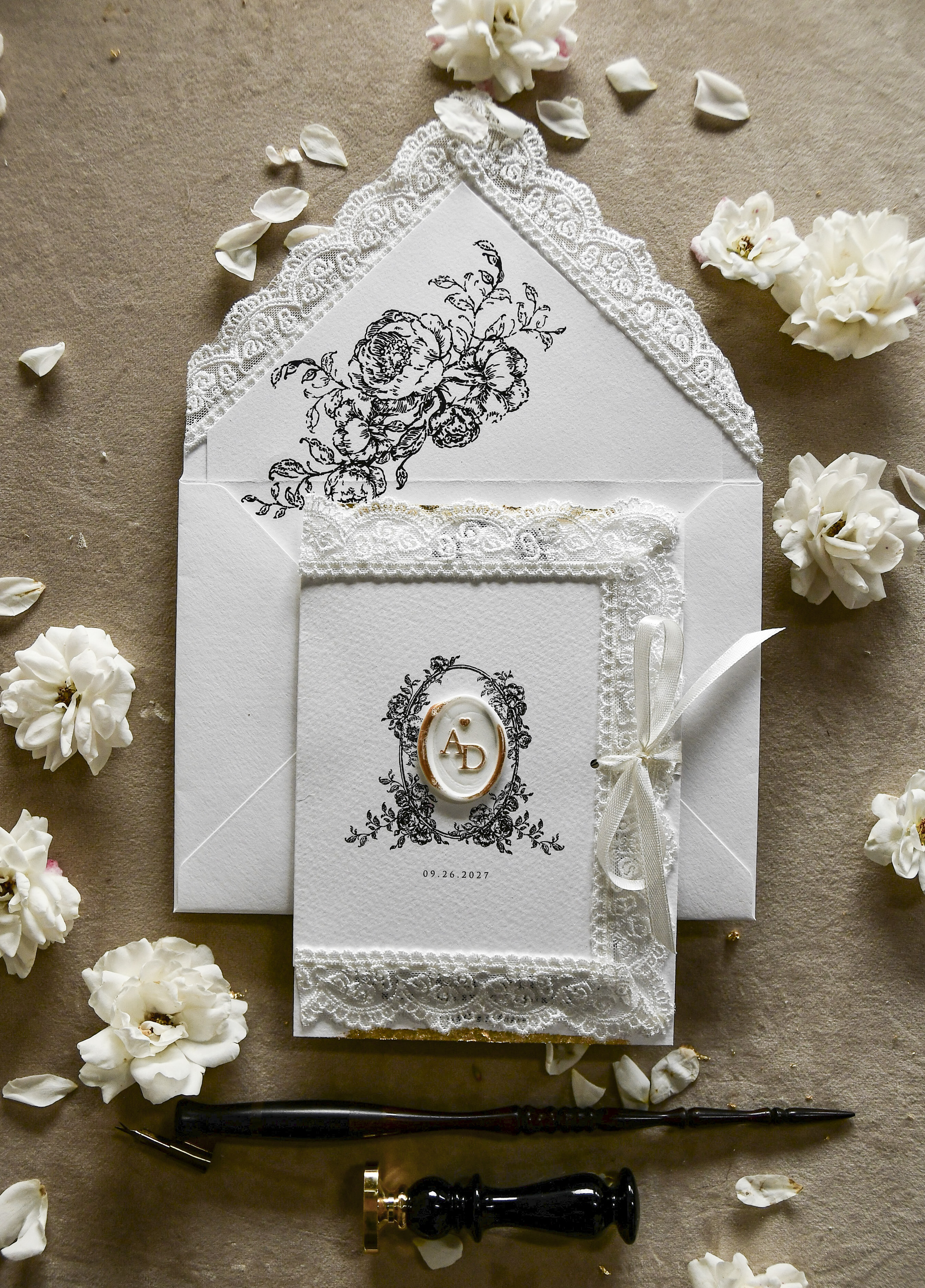
Your wedding invitation does more than announce a date — it sets the tone for your entire celebration and gives guests everything they need to show up ready to celebrate. Getting the wording right can feel overwhelming, but once you know which details are essential and which are optional, the whole process becomes much simpler. Here is a clear, practical breakdown of everything your invitation should include.
The Five Must-Have Details Every Invitation Needs
No matter your style, budget, or venue, every wedding invitation needs these five core pieces of information:
- The hosts: Traditionally, the couple's parents are listed as hosts, but modern invitations often feature the couple themselves. Either is perfectly acceptable in today's etiquette landscape.
- The couple's names: List names clearly and in full. For a formal invitation, use first and last names. For a casual celebration, first names alone work beautifully.
- The date: Spell out the day and date in full for formal invitations — for example, Saturday, the fourteenth of June, two thousand and twenty-six. Numeric formats are fine for casual styles.
- The time: Include the ceremony start time. You do not need to list the reception start time on the main invitation unless the two events are at separate locations with a gap between them.
- The venue: Provide the full name and street address of the ceremony location, including city and state. Guests will need this for GPS navigation, so accuracy matters.
Wording the Request to Attend
The line that invites guests to join you is called the request line, and it carries more meaning than most couples realize. Classic formal phrasing includes "request the honour of your presence" (traditionally used for ceremonies held in a house of worship) or "request the pleasure of your company" (used for all other venues). More relaxed alternatives include "invite you to celebrate with them" or simply "would love for you to join them." Choose language that matches the overall feel of your wedding — a black-tie ballroom affair calls for different phrasing than a barefoot beach ceremony.
What to Put on Enclosure Cards Instead of the Main Invitation
A well-organized invitation suite keeps the main card clean by moving secondary details onto separate enclosure cards. This is where you include:
- Reception details — if the reception is at a different location or you simply want to keep the main card uncluttered, add a reception card with the venue name, address, and start time.
- RSVP instructions — include a deadline (typically three to four weeks before the wedding), a return address or email, and a meal-choice line if needed.
- Accommodation information — list hotel room blocks with booking codes and deadlines.
- Website card — direct guests to your wedding website for directions, registry links, and event schedules.
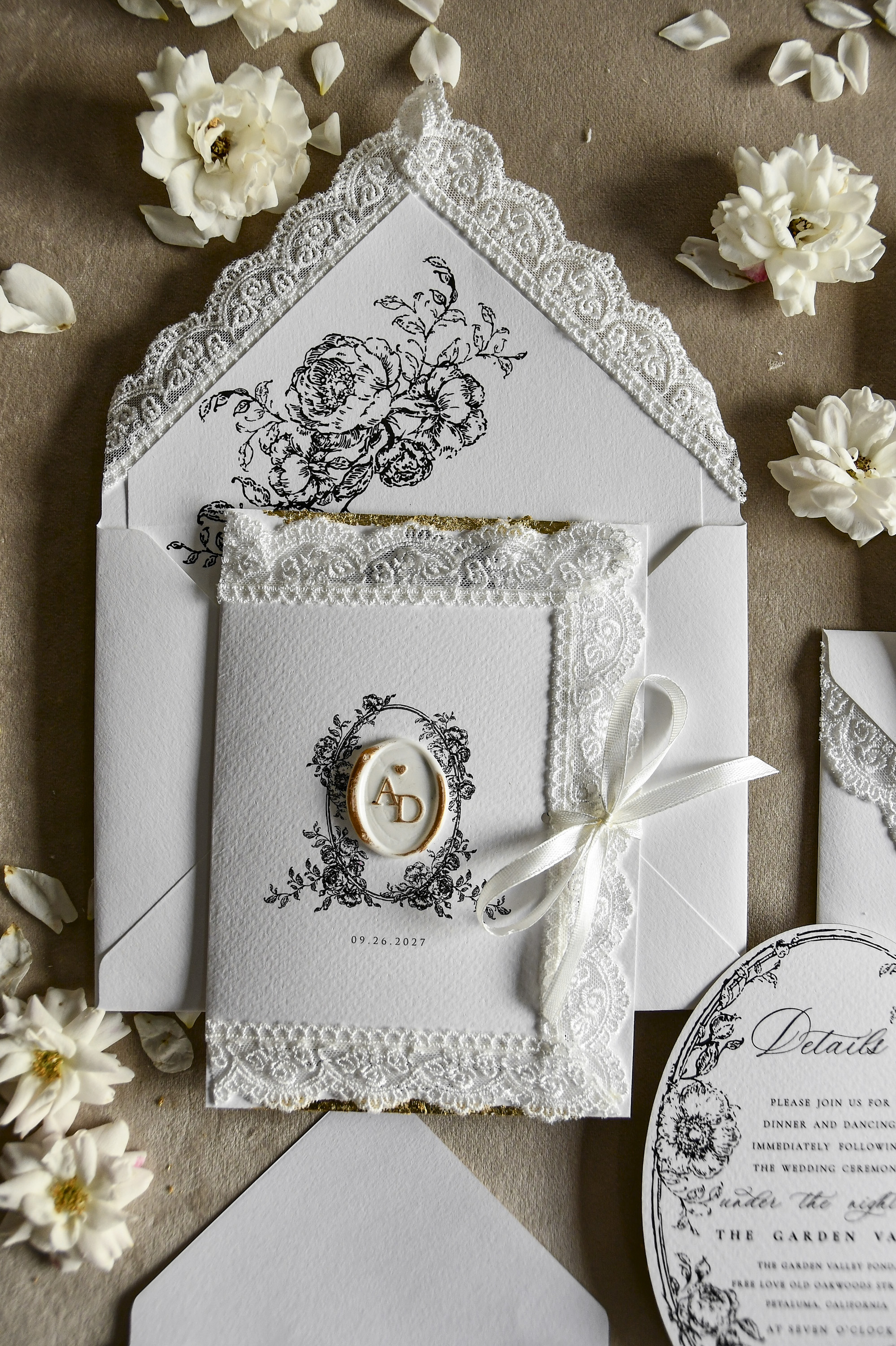
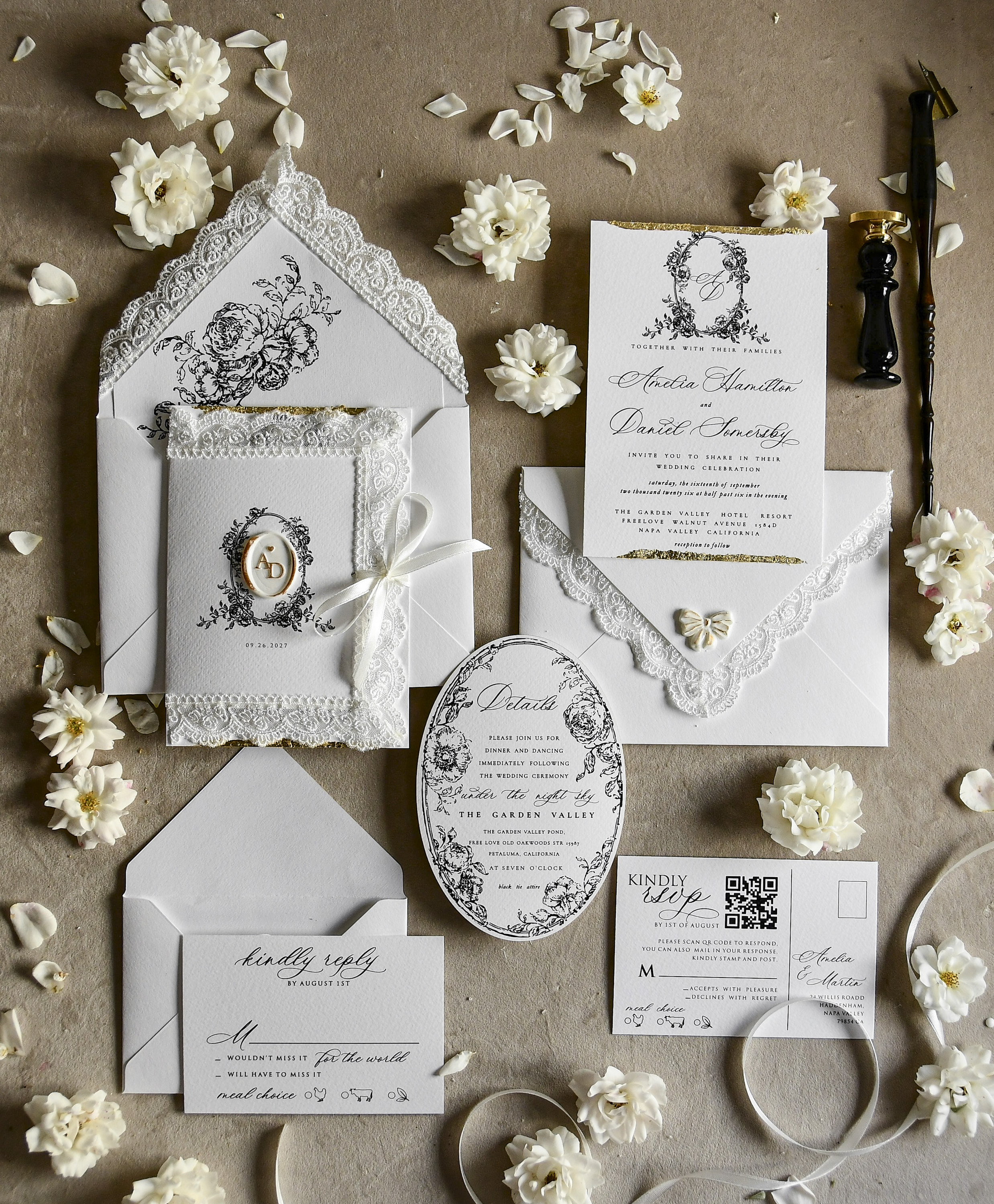
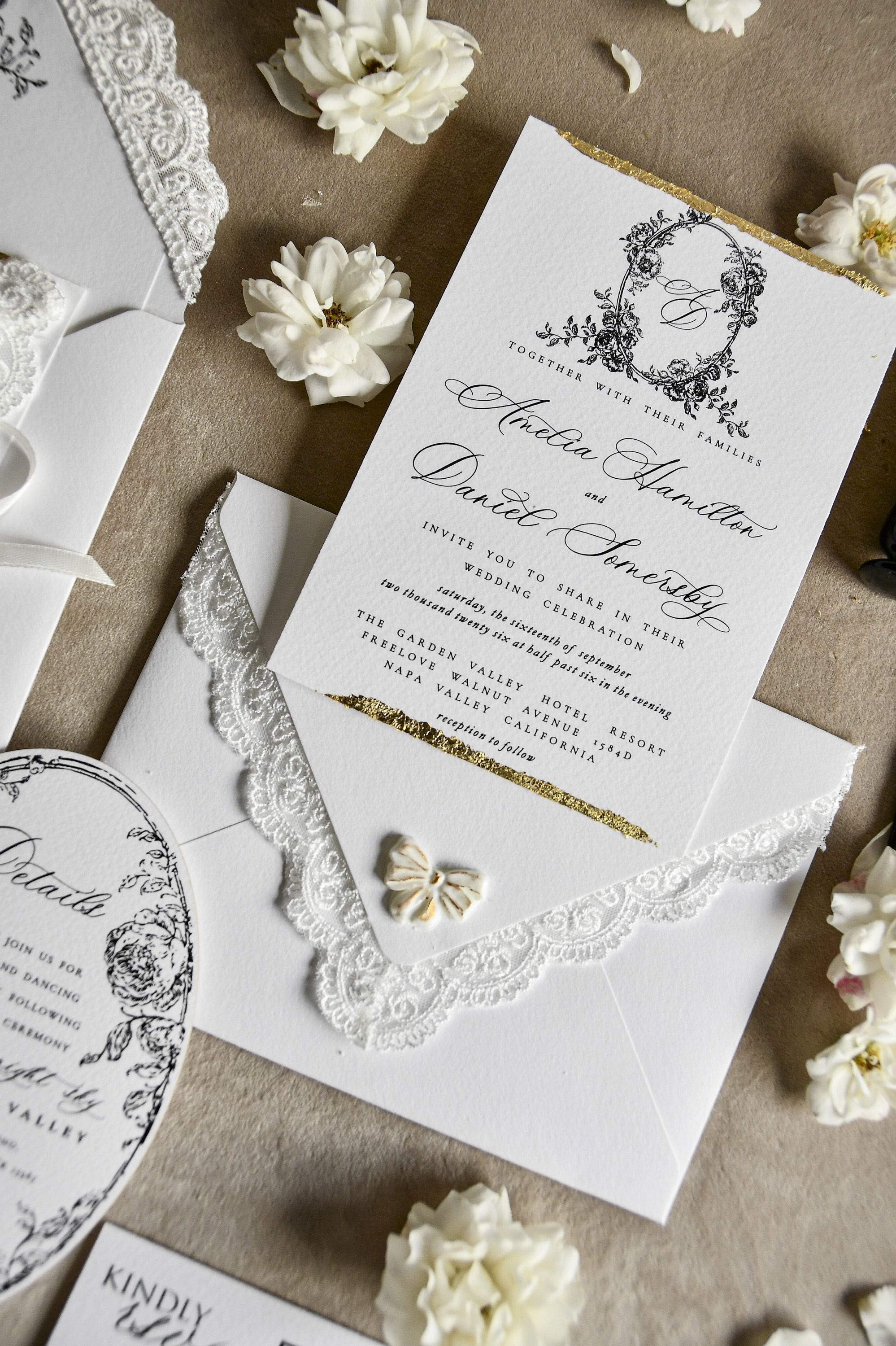
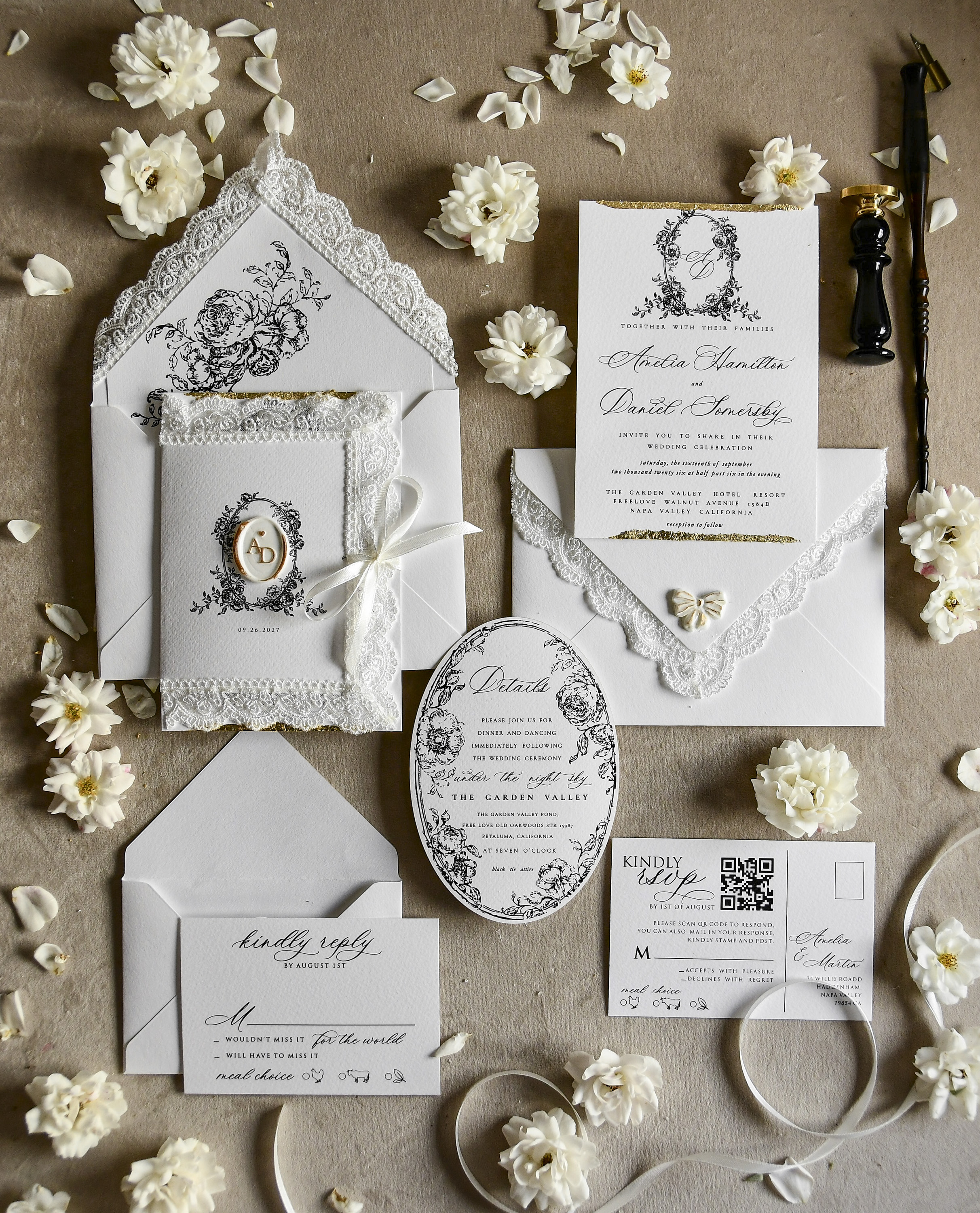
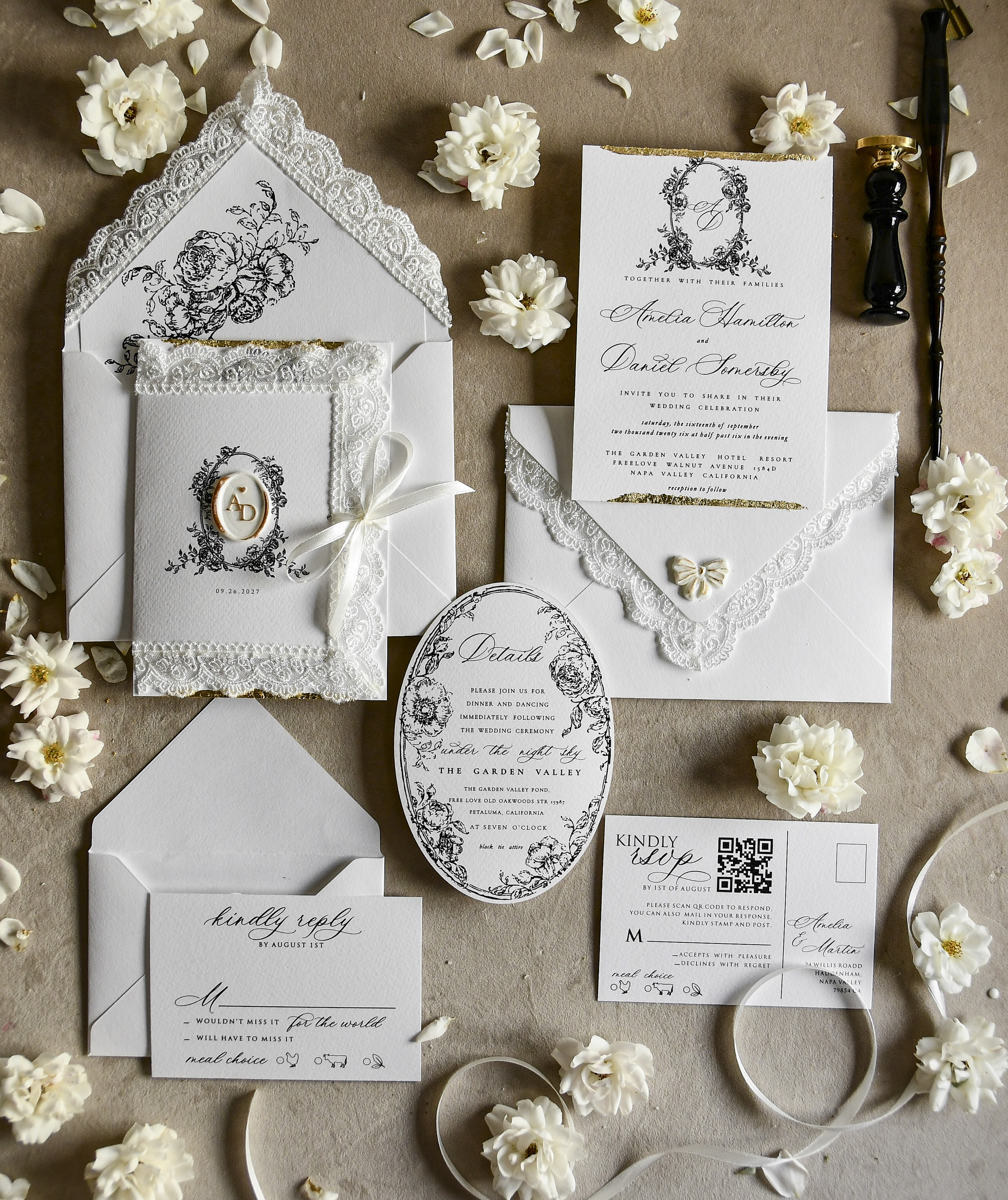
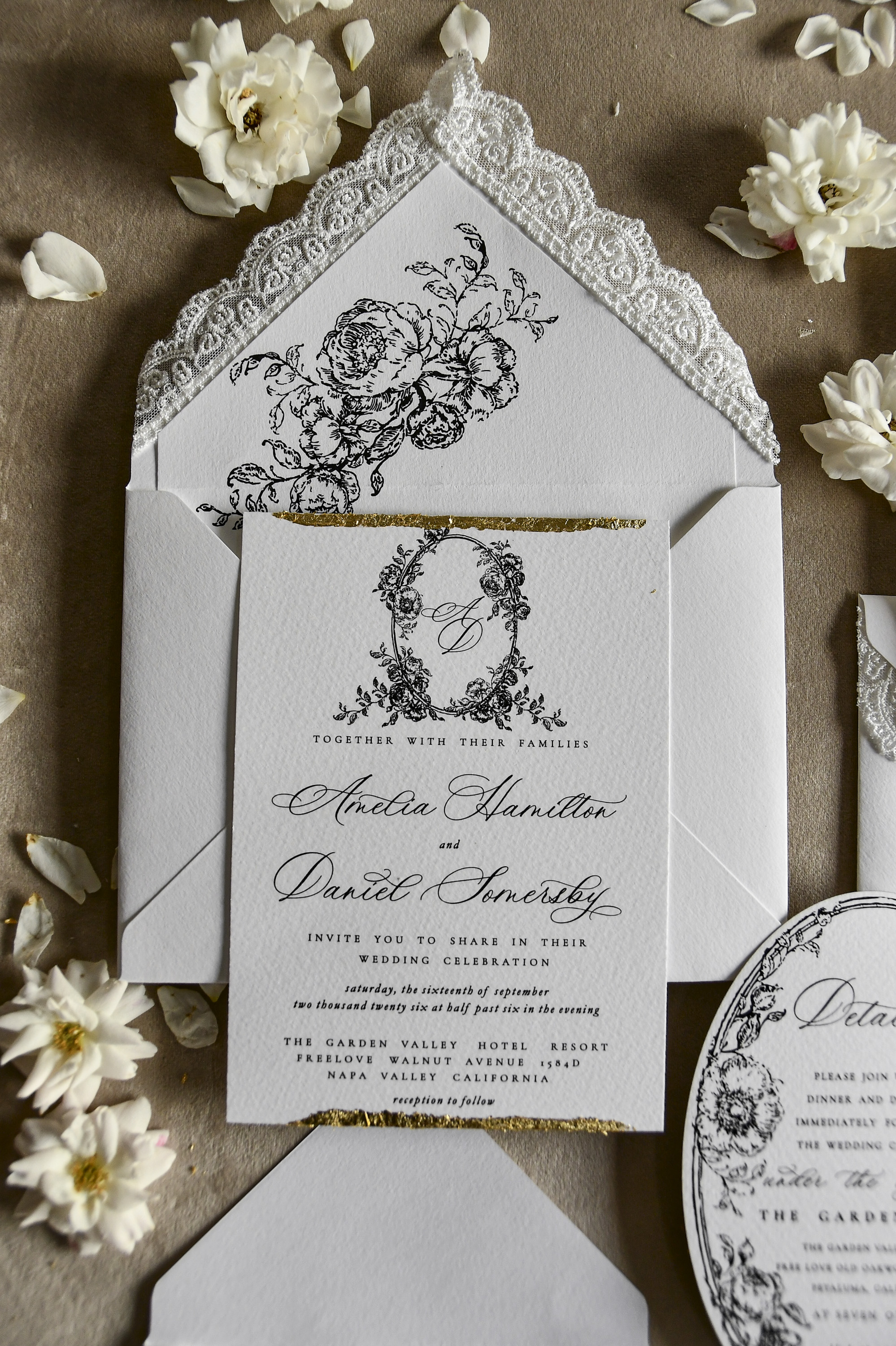
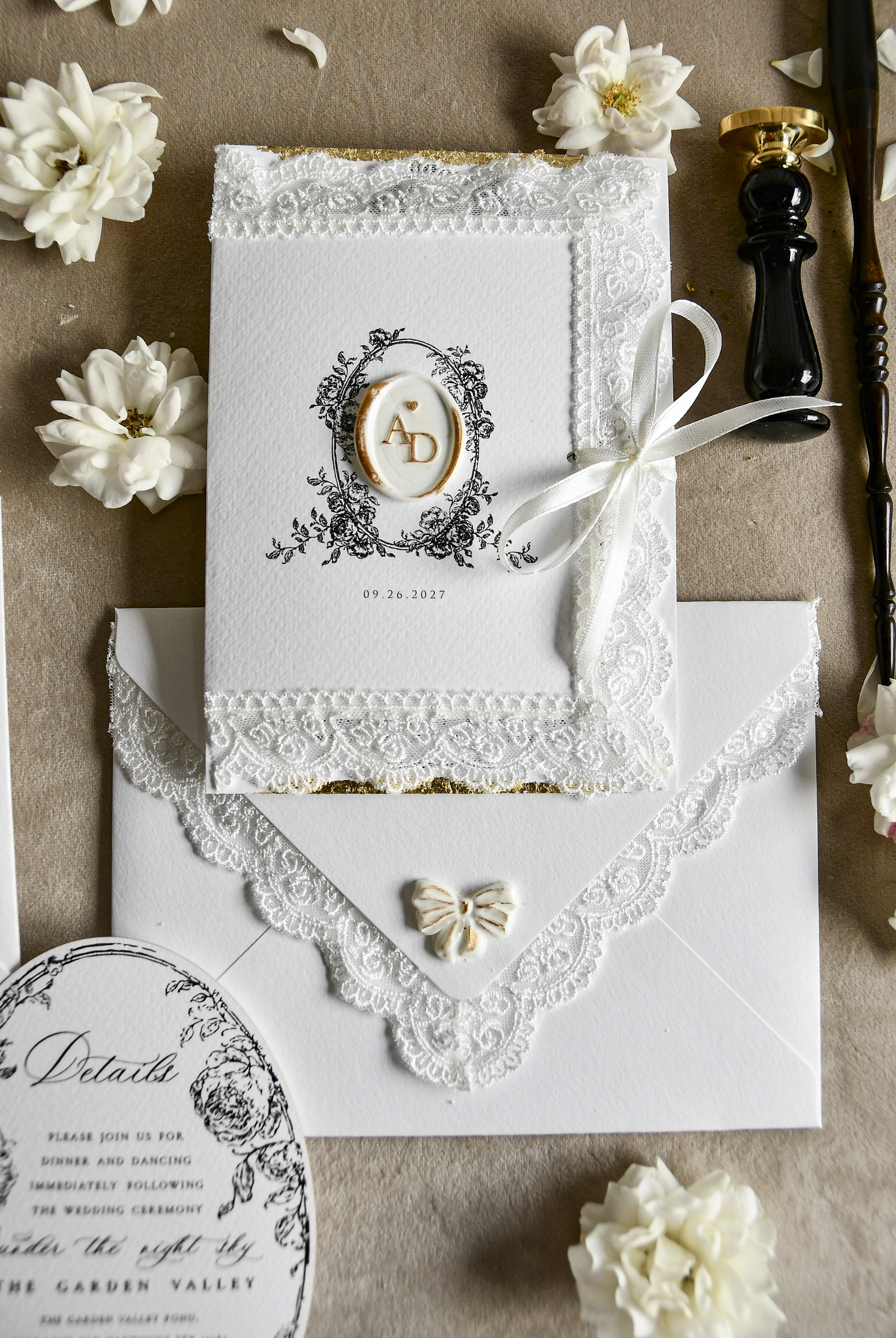
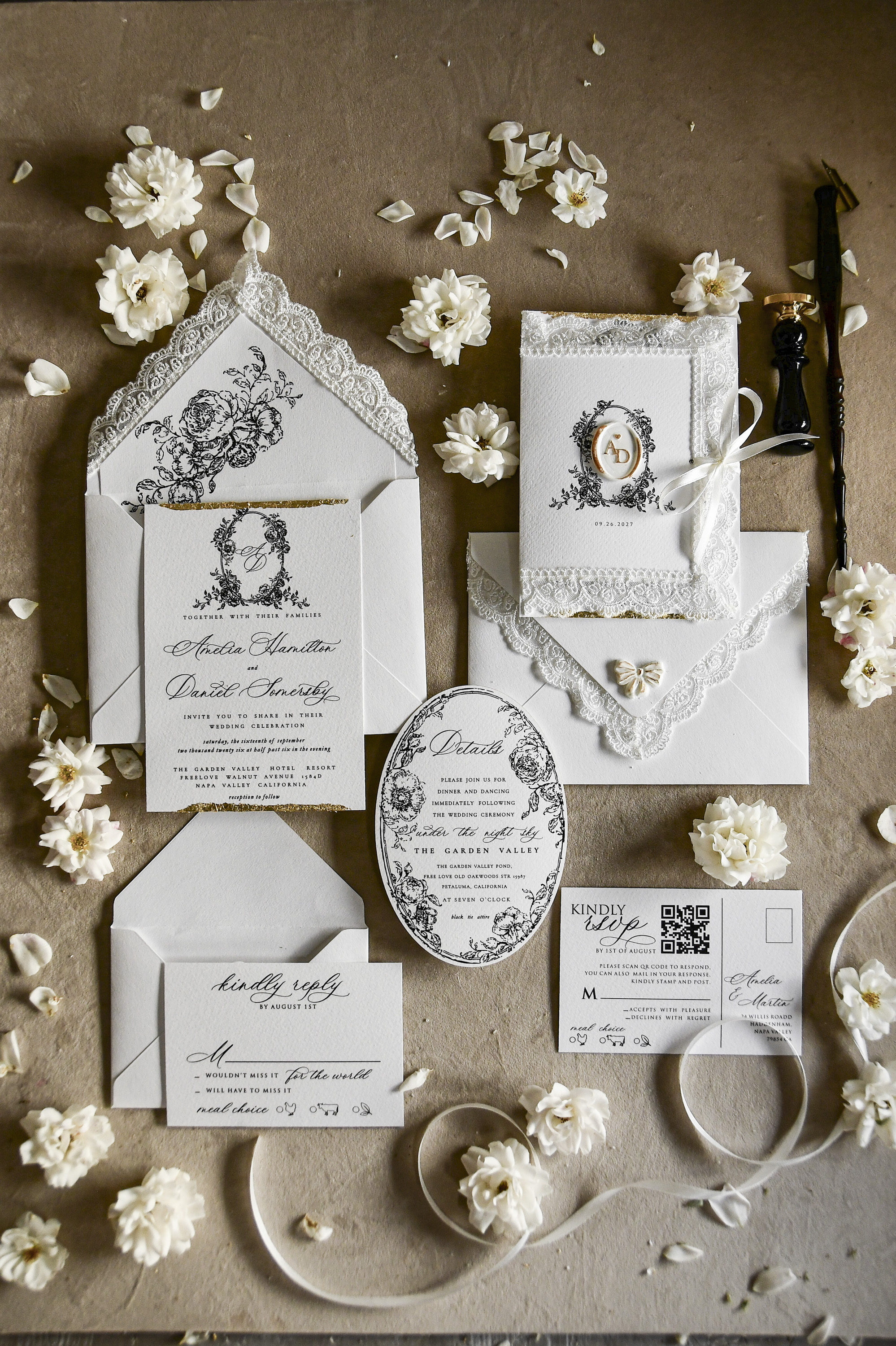
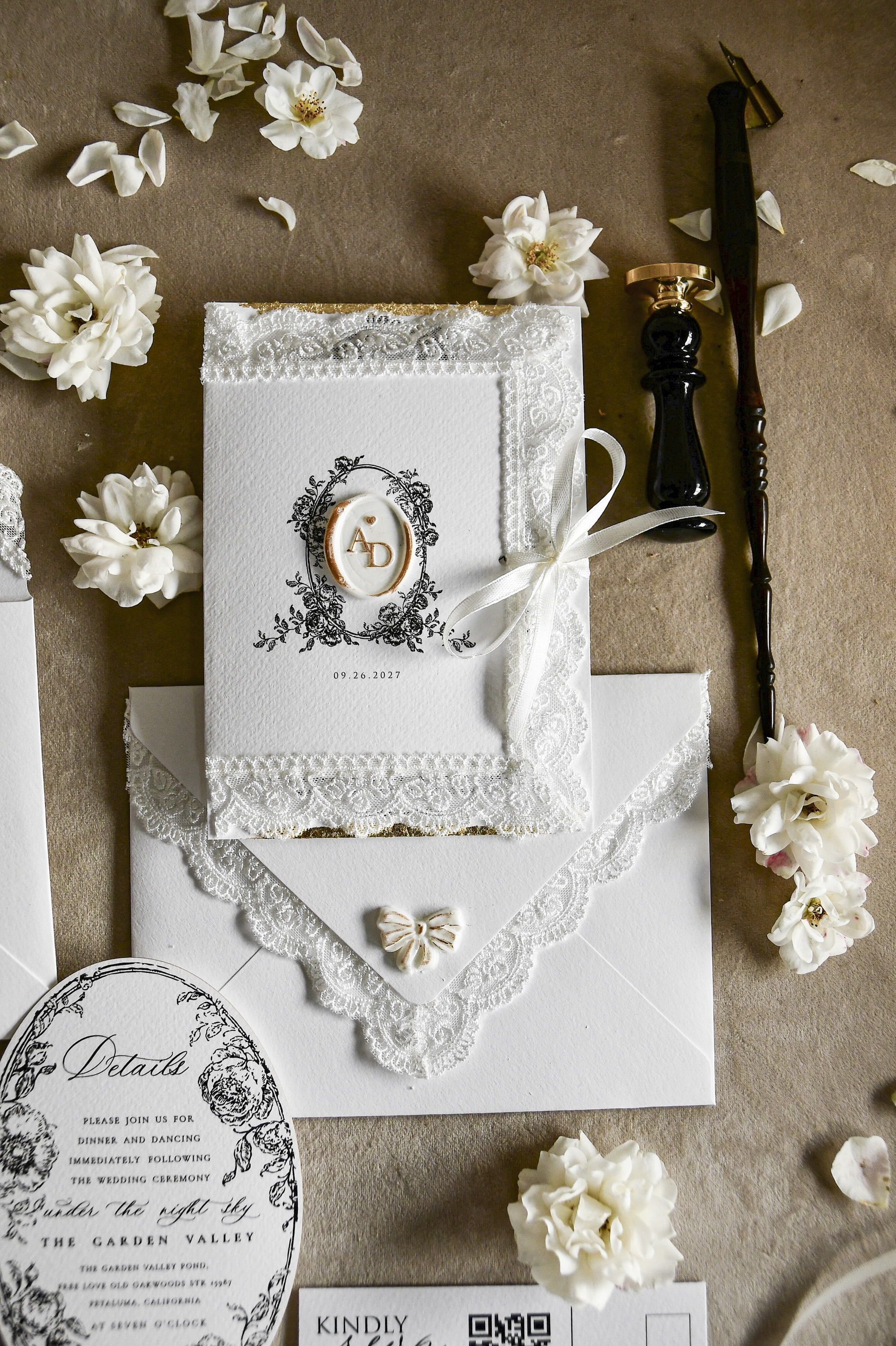
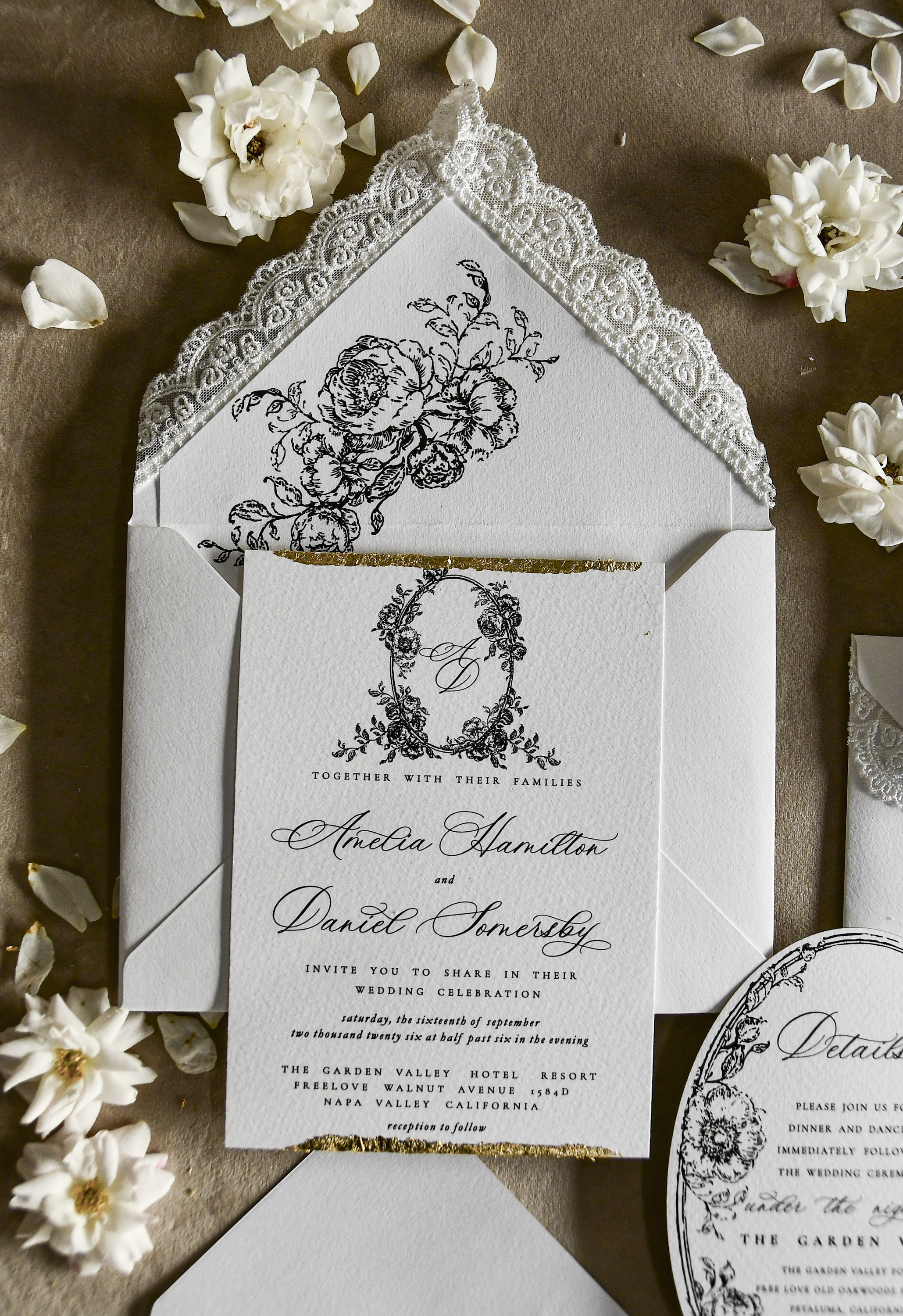
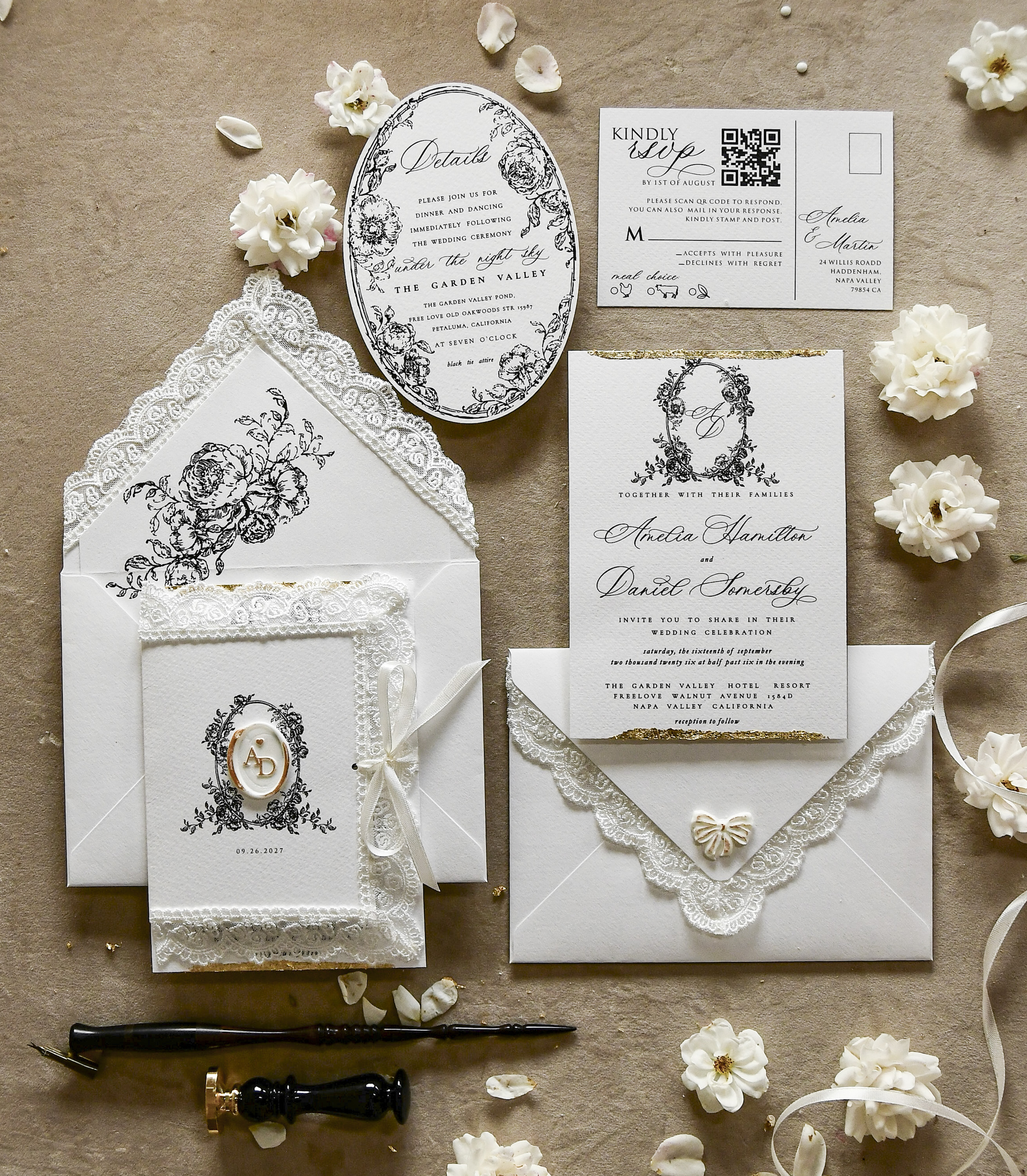
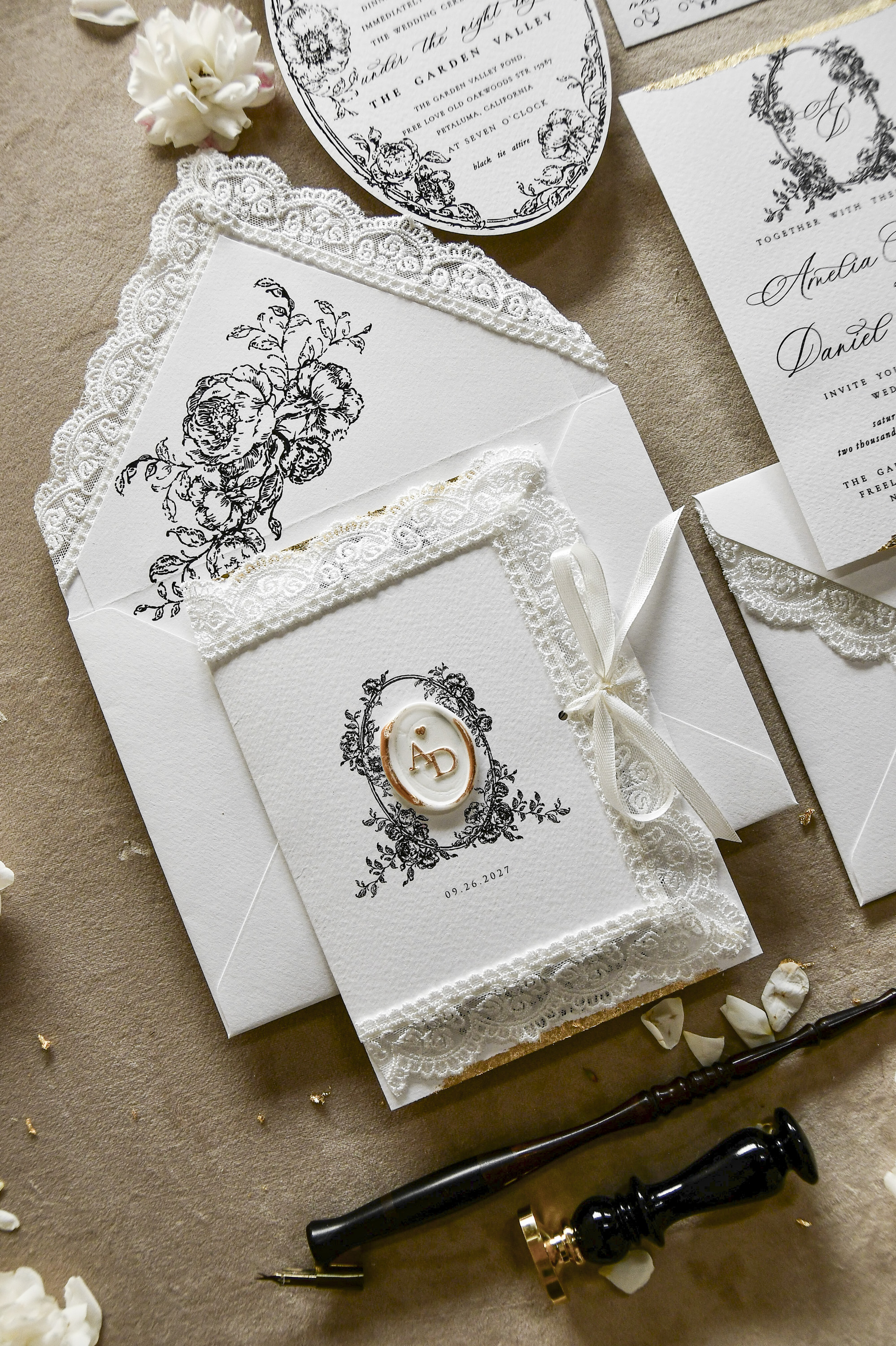
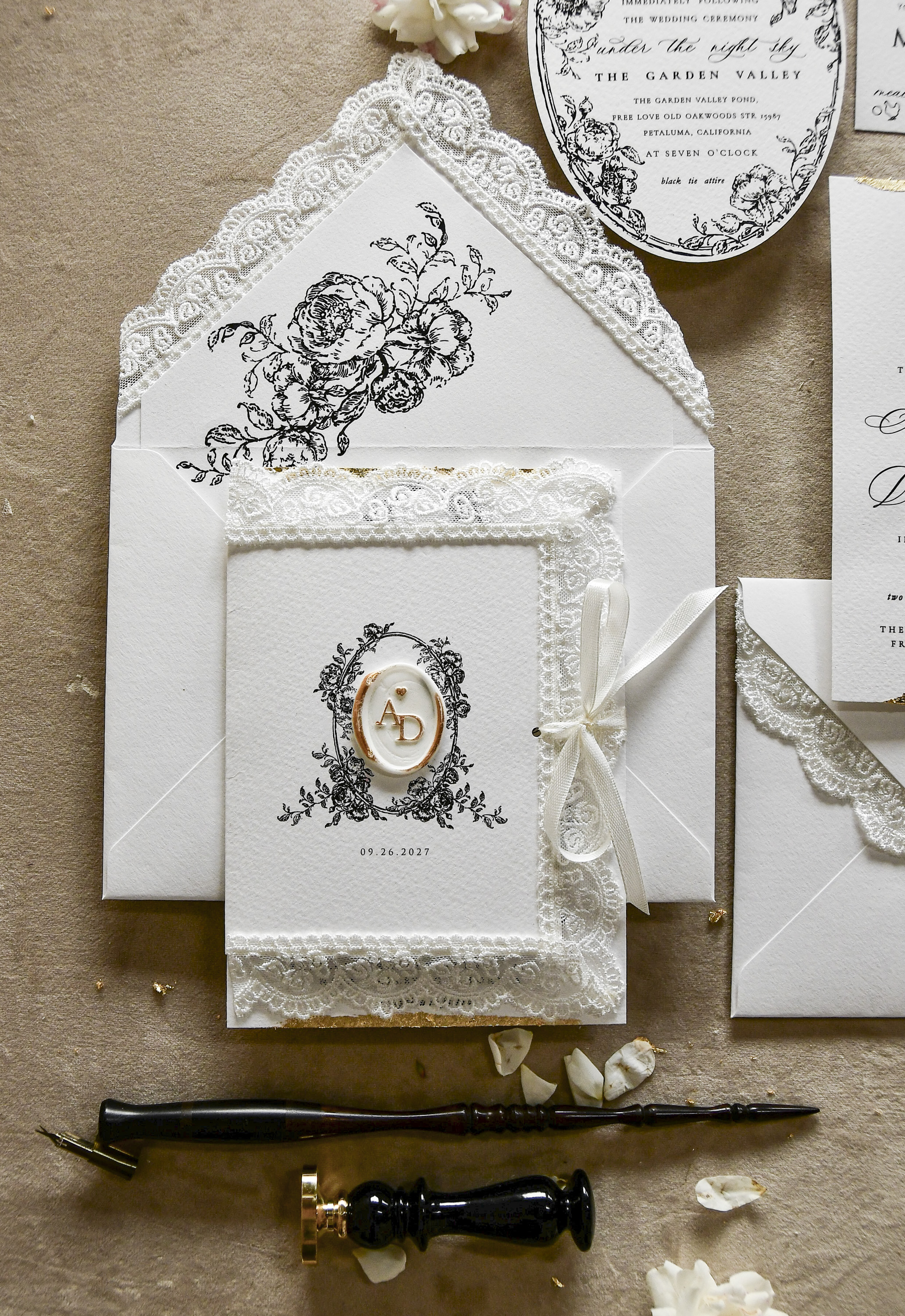
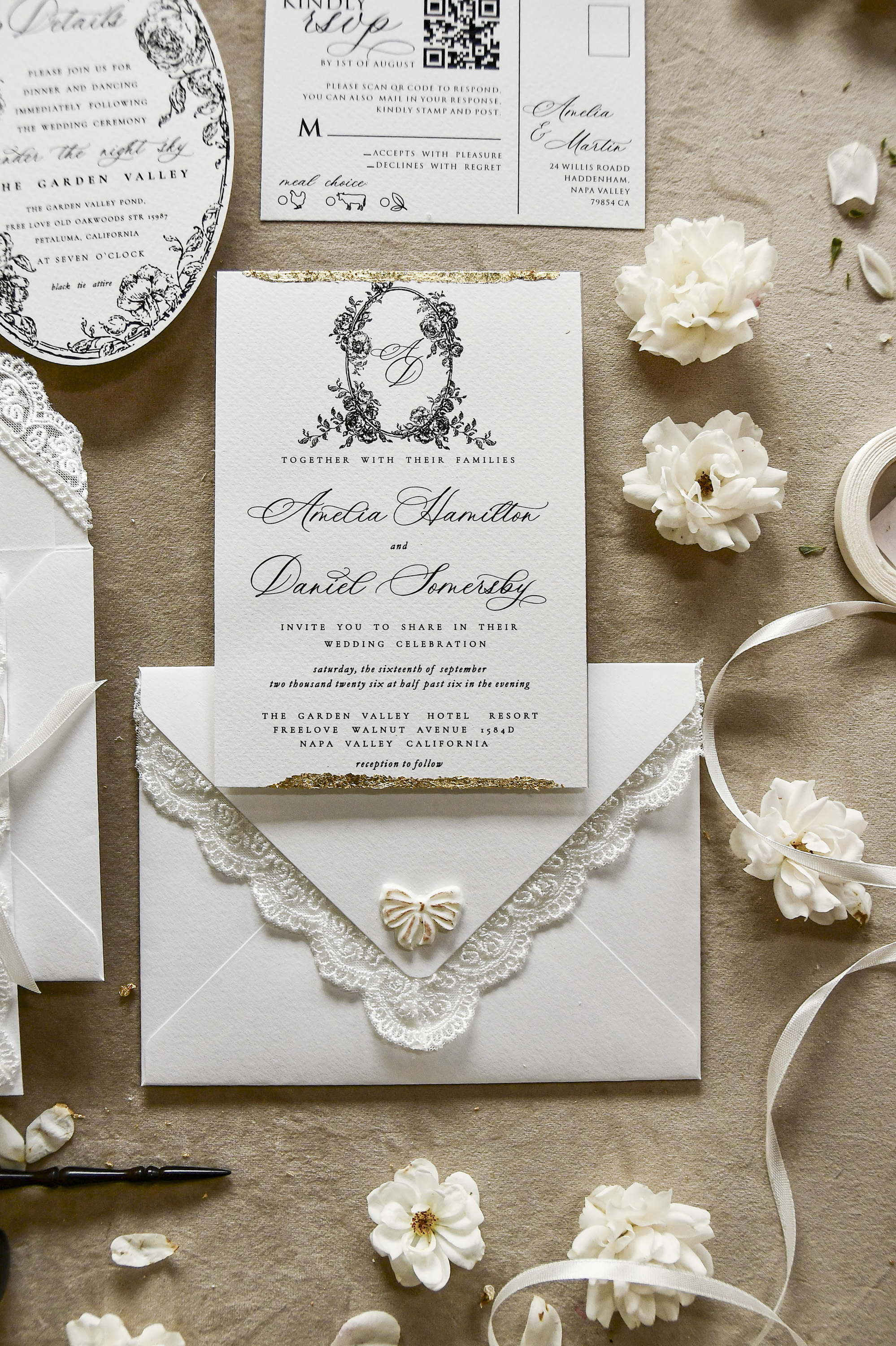
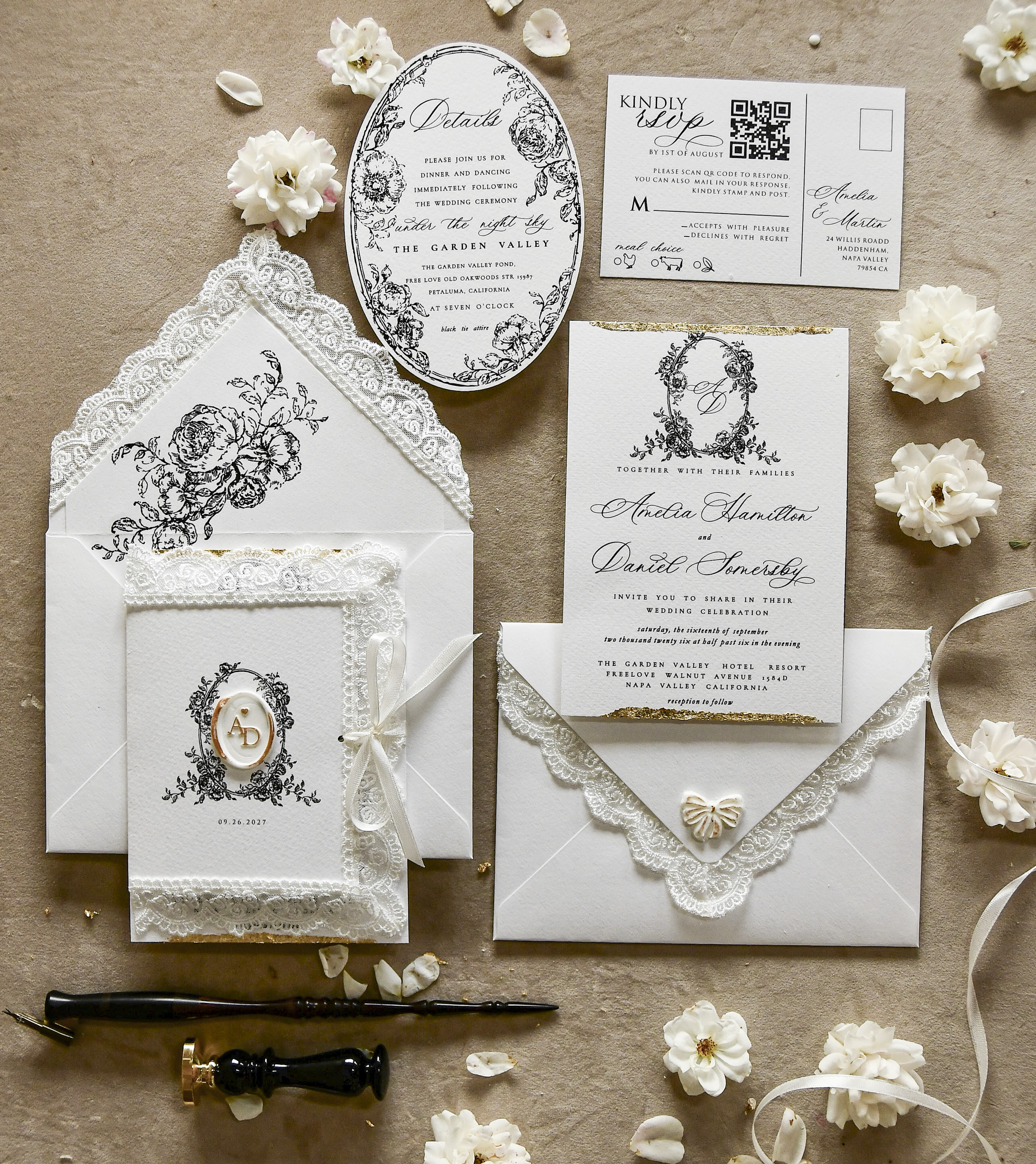
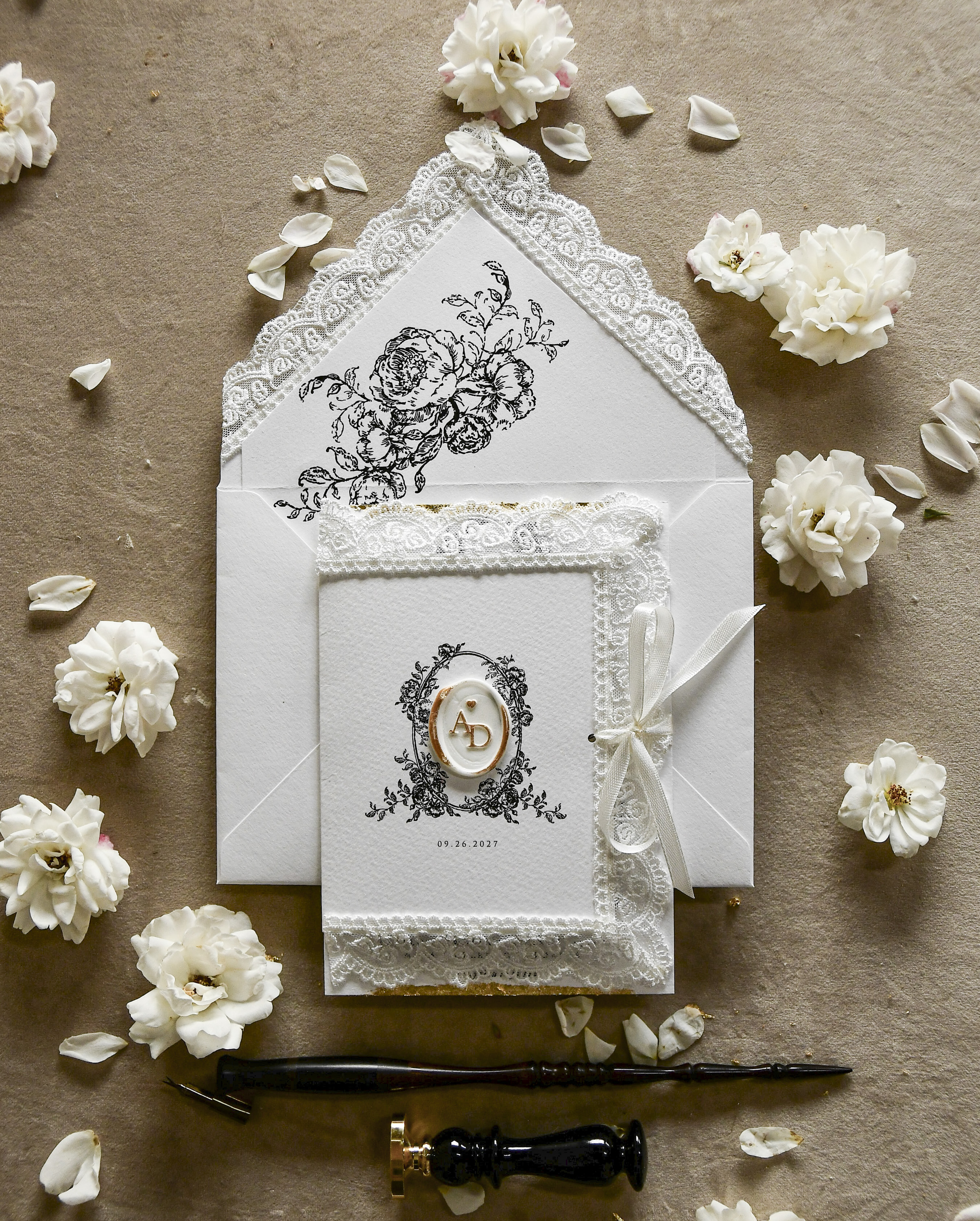
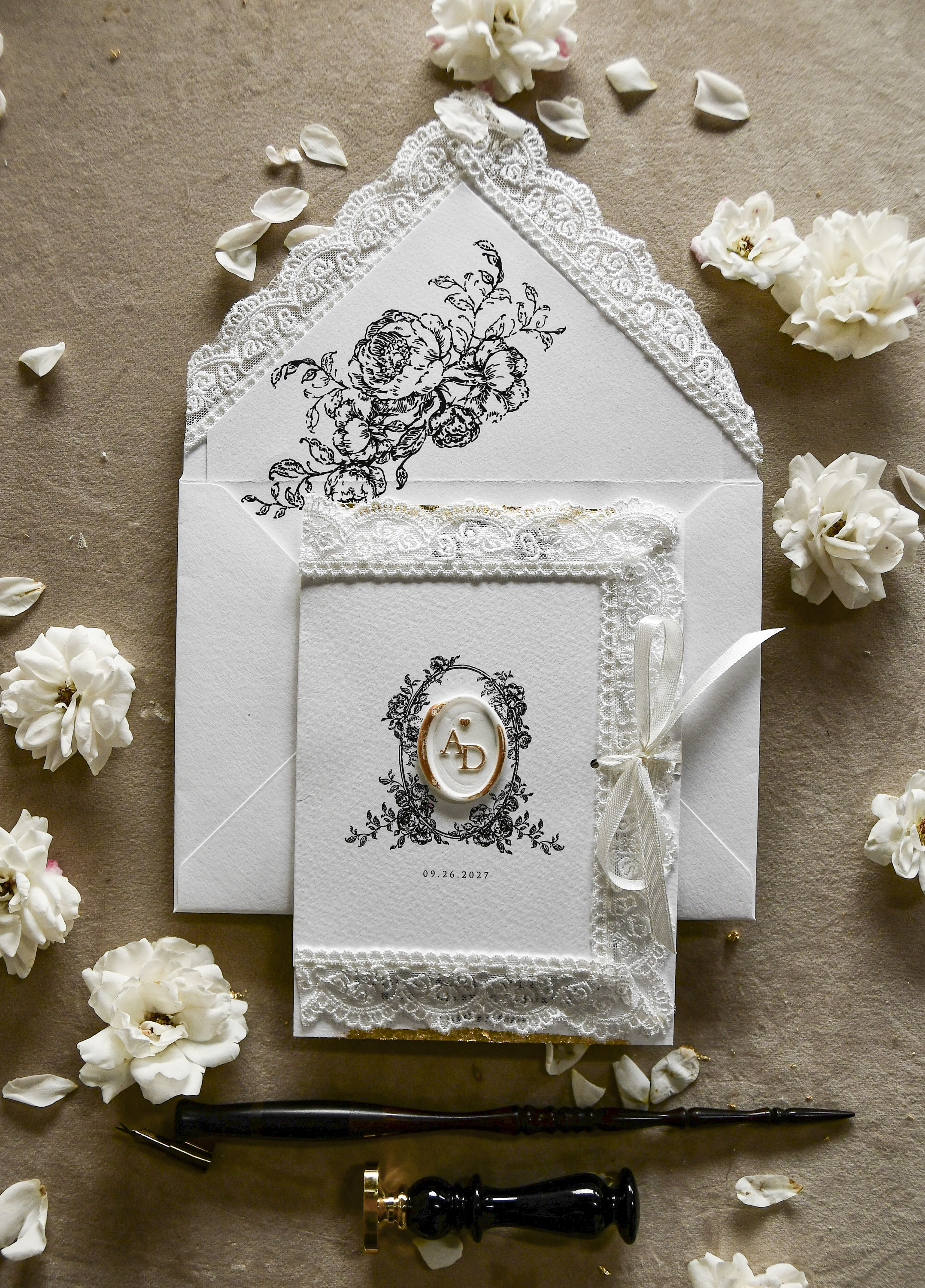
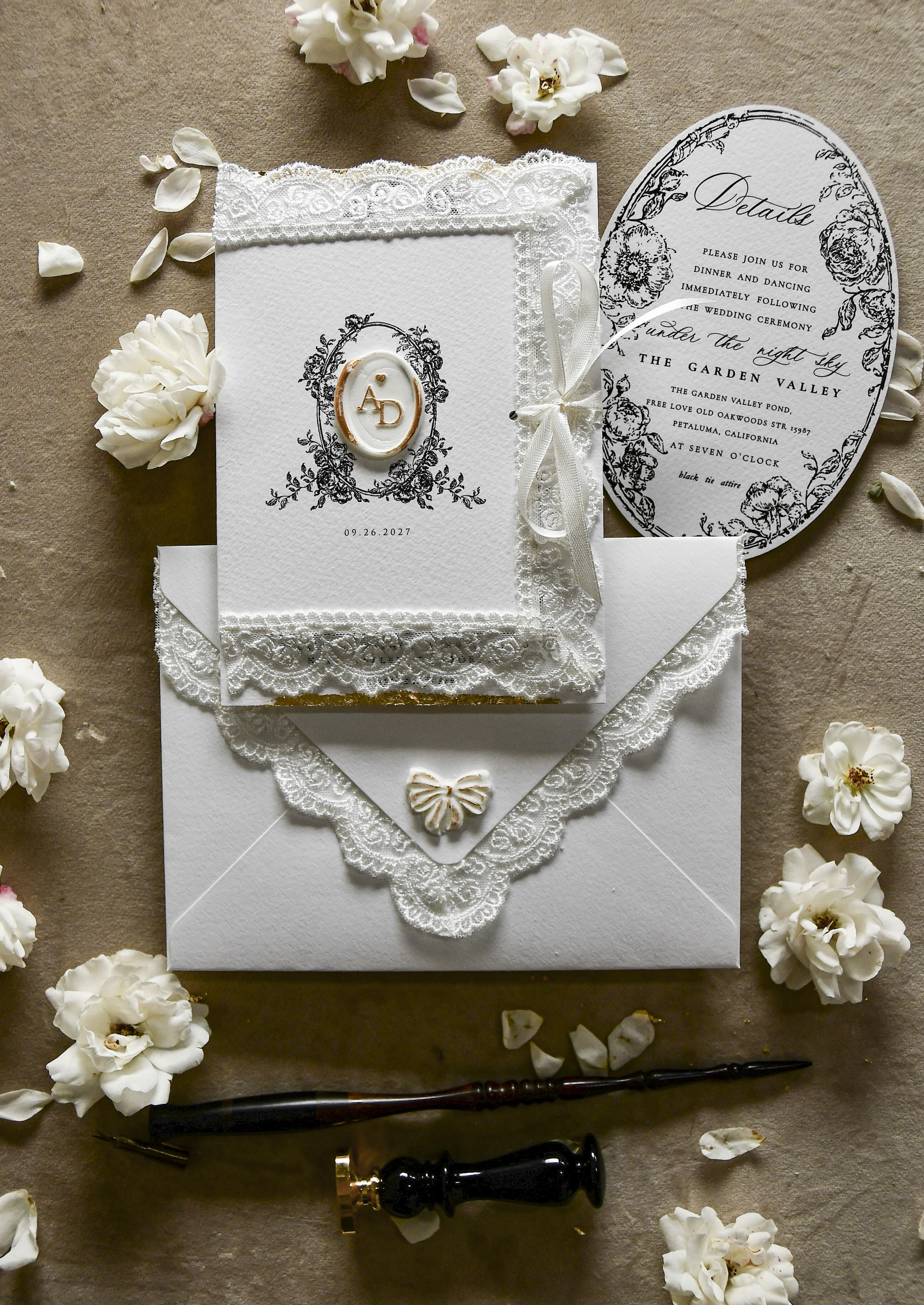
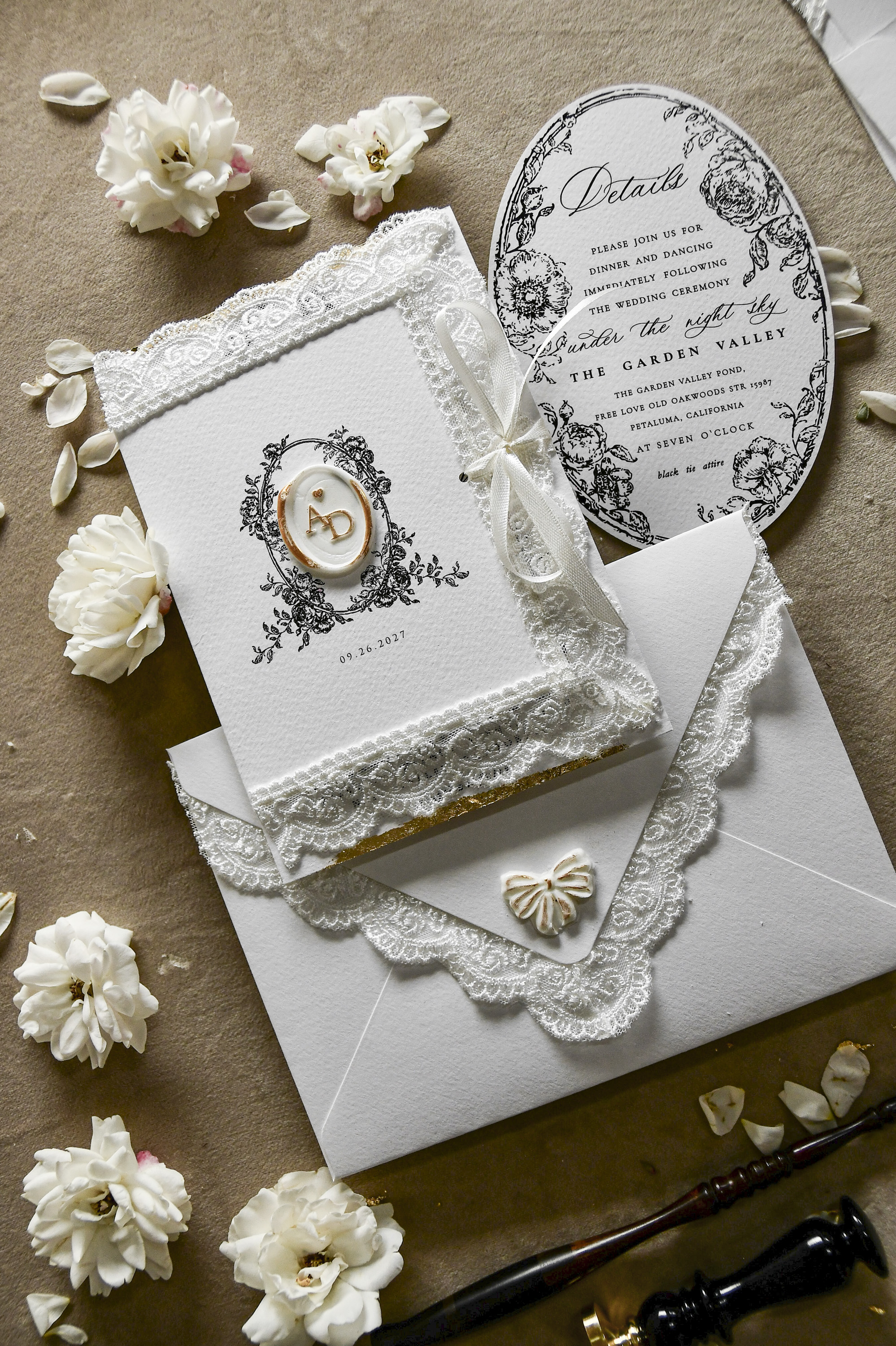
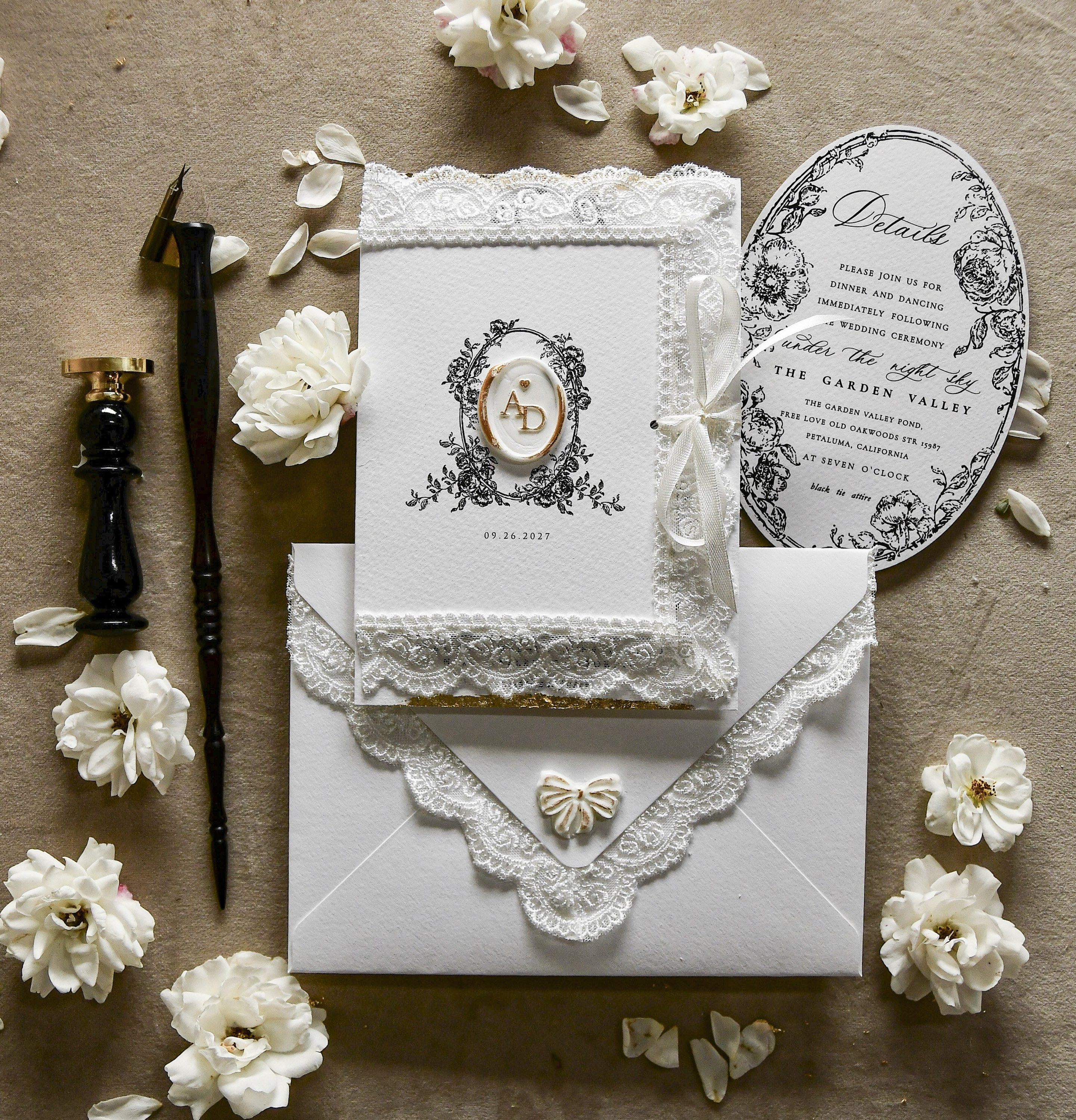
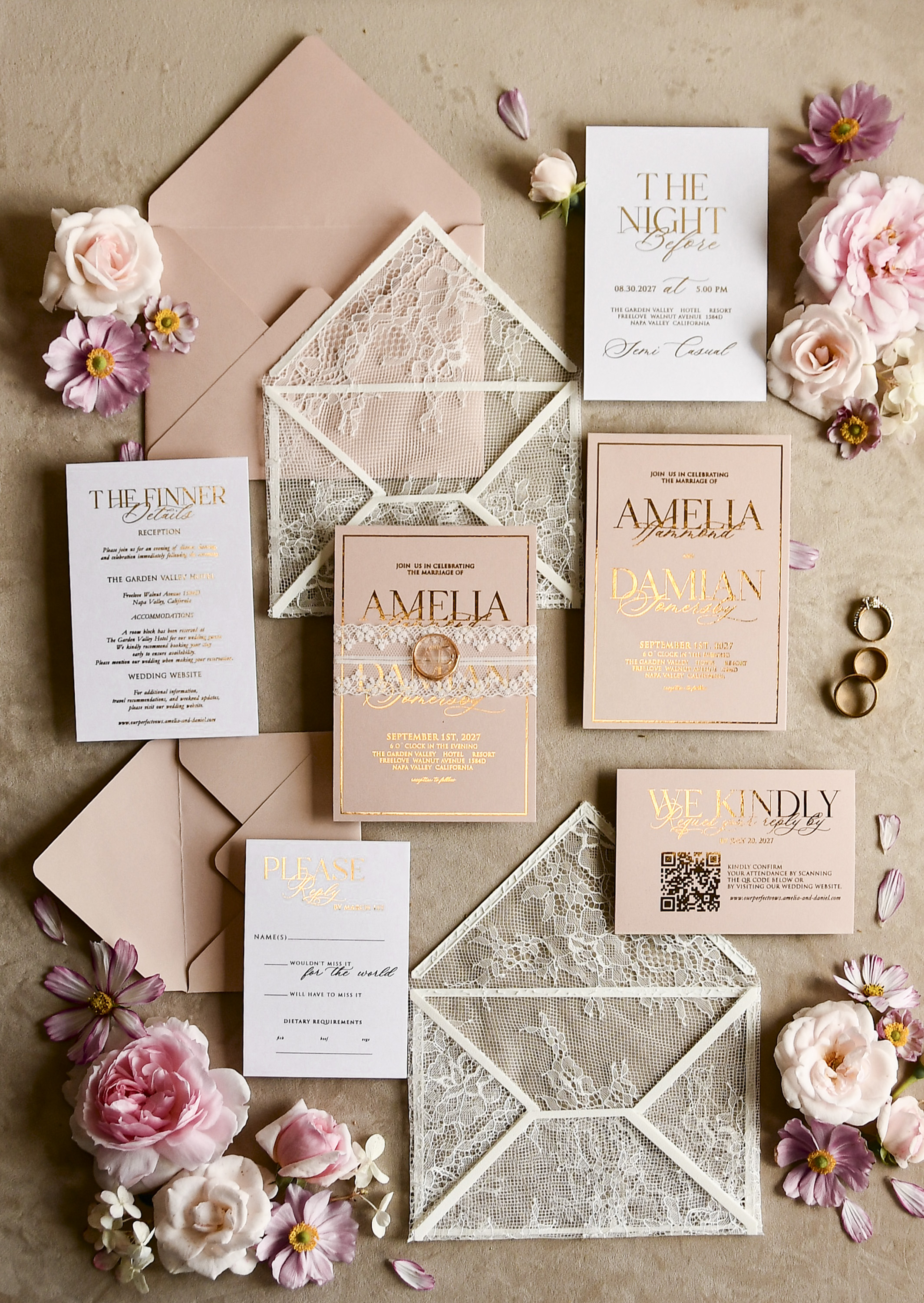
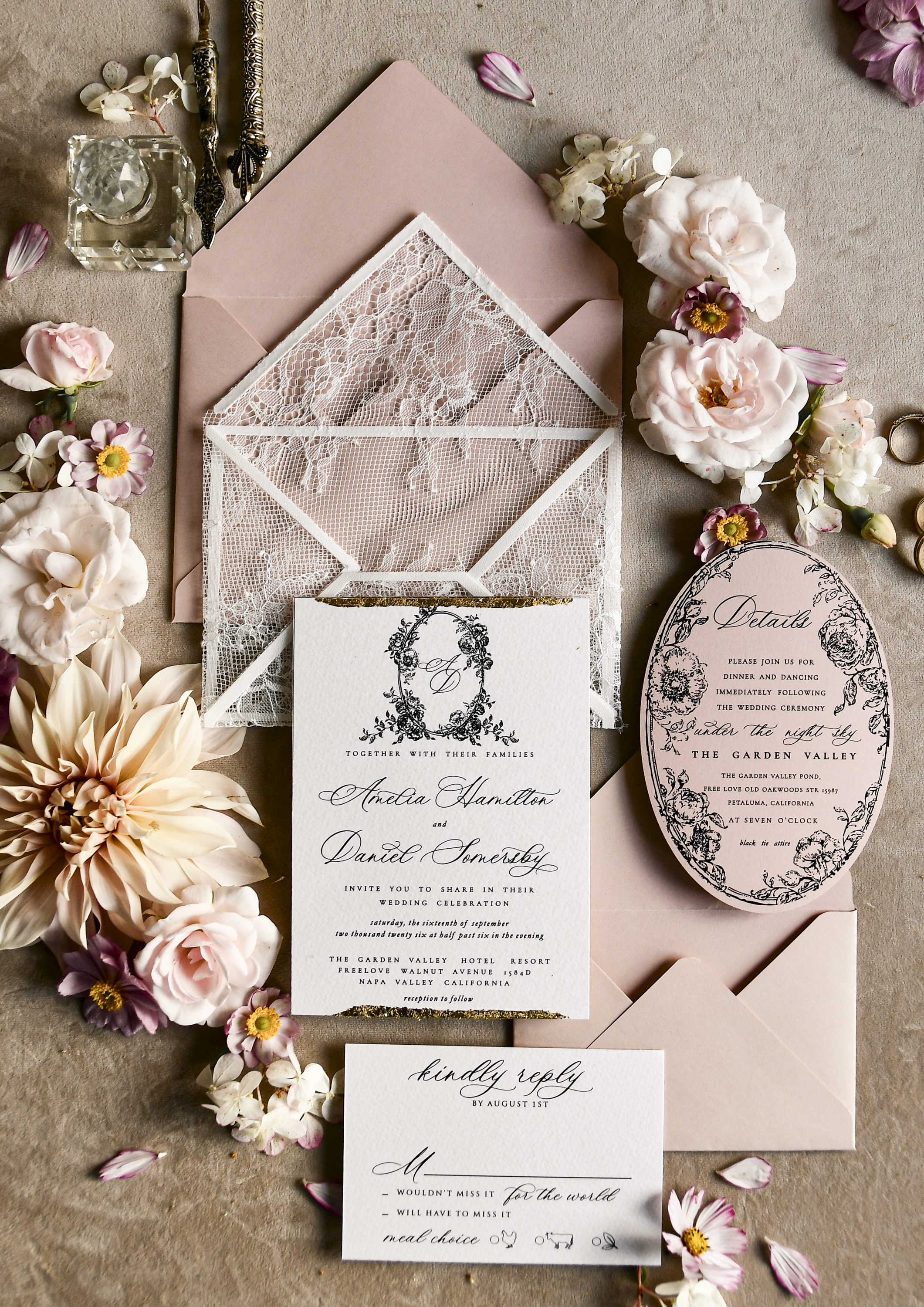
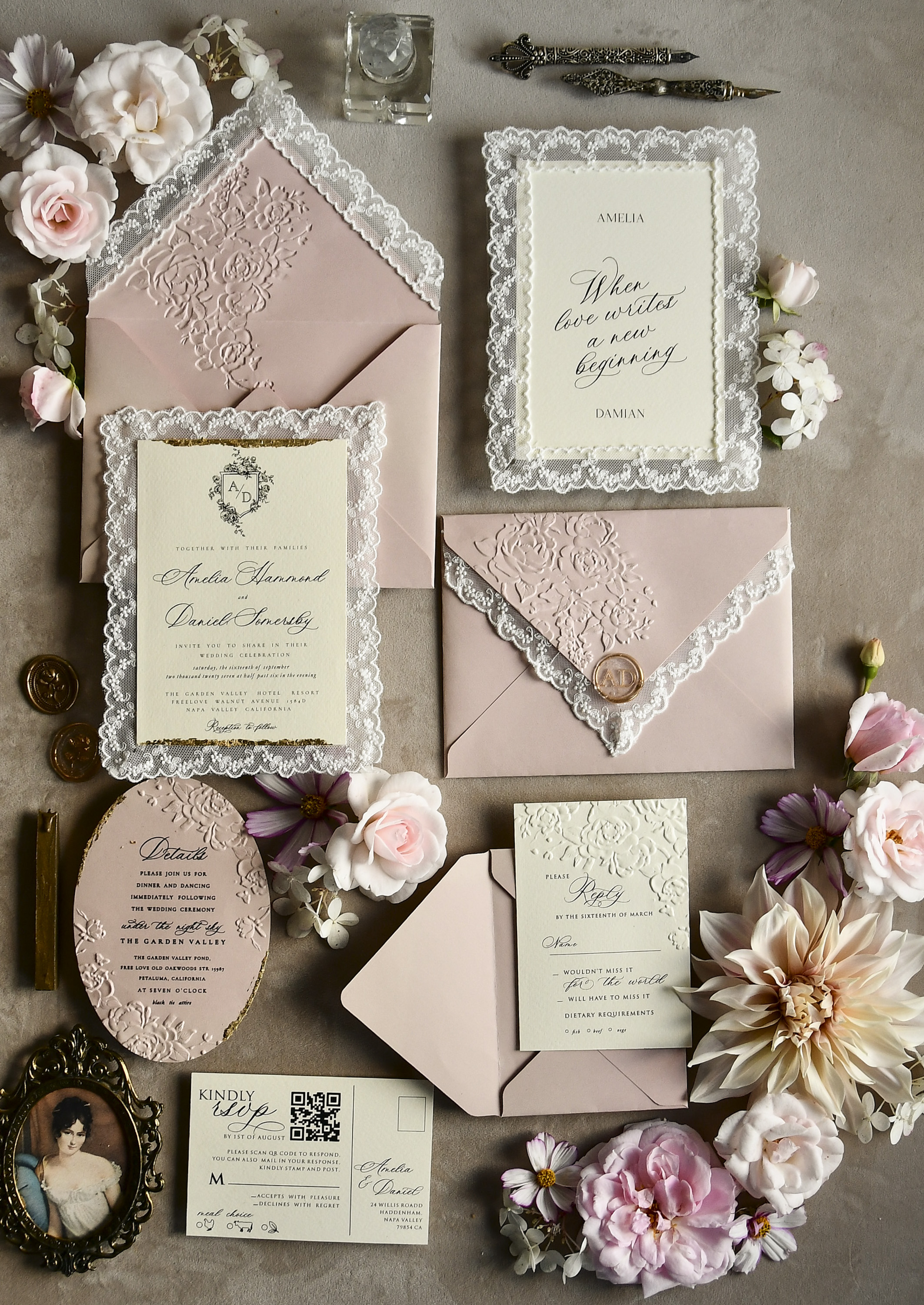
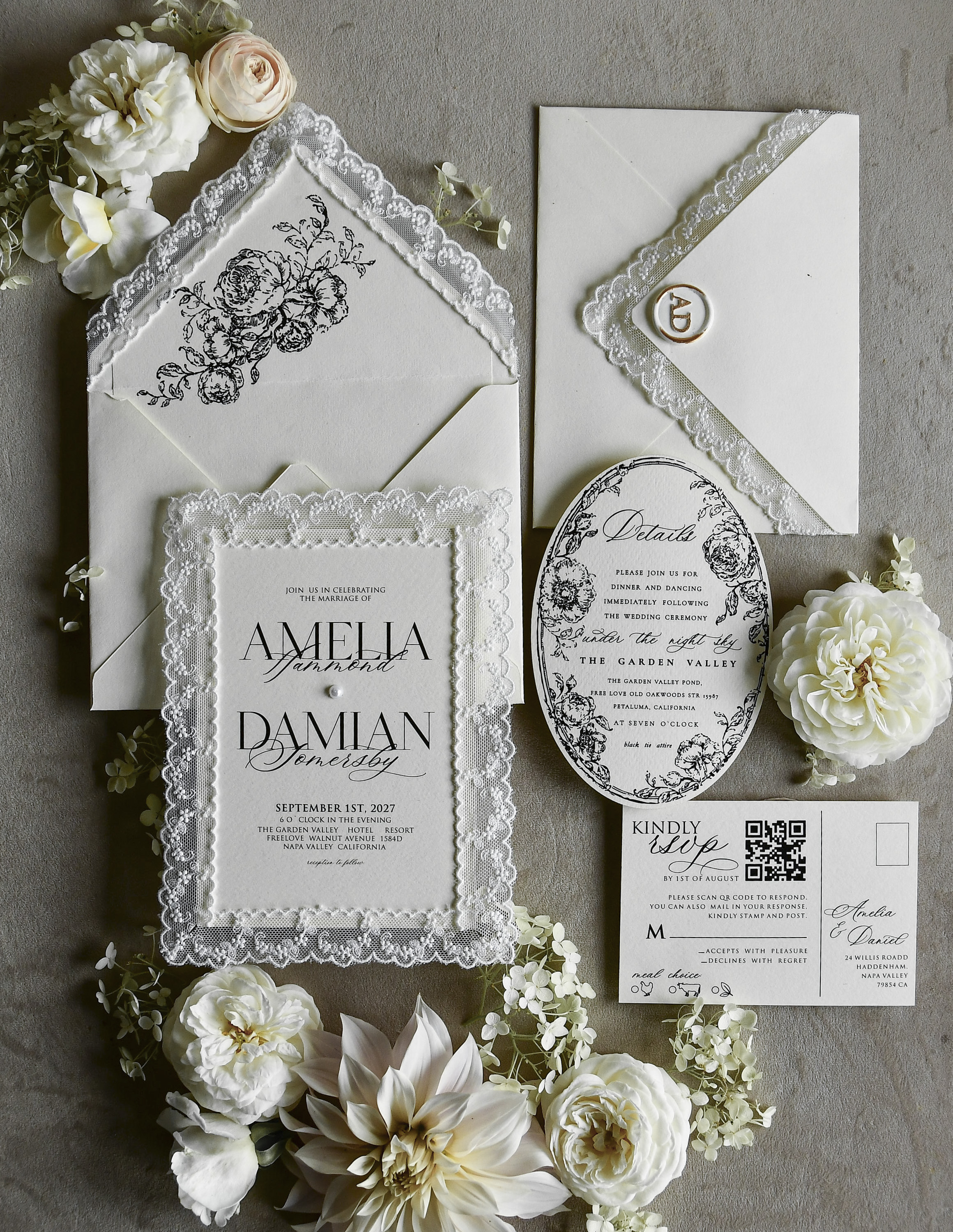
Keeping these details off the main invitation makes the overall design feel polished and intentional — something especially important if you have chosen a detailed design like the 03/laceTR/z from our vintage lace collection, where elegant typography and delicate motifs deserve room to breathe.
Dress Code and Other Helpful Cues
You are not required to include a dress code, but guests genuinely appreciate the guidance. Place it discreetly in the lower corner of the invitation or on a details card. Common options include:
- Black tie
- Black tie optional
- Cocktail attire
- Semi-formal
- Garden party attire
- Casual
If your wedding has a specific theme or takes place outdoors on grass or a beach, a gentle note — such as "outdoor ceremony, lawn-friendly footwear suggested" — is both thoughtful and practical. Small cues like this reduce guest anxiety and show you have considered their comfort.
A Note on What to Leave Off
Just as important as what you include is what you leave out. Avoid putting registry information on the invitation itself — it is considered impolite by traditional etiquette standards and should live on your wedding website instead. You also do not need to list every vendor, the full schedule of the day, or your personal love story. The invitation is a formal announcement, not a program. Keep it focused, and let the other elements of your suite — the details card, the website, the program — carry the rest of the information guests need.
If you are working with a design like the 03/laceTR/z, starting at $9.00, the classic structure of the invitation text pairs naturally with the timeless aesthetic, giving your wording the elegant frame it deserves.
Frequently Asked Questions
Only if the reception is at the same location as the ceremony — in that case, you can simply write "reception to follow" at the bottom. If the reception is elsewhere, include a separate reception card with the full address and start time.
For formal and semi-formal weddings, spelling out the date and time is traditional and looks more polished. Casual invitations can use a numeric format without any etiquette issue.
The dress code is typically placed in small print at the lower right corner of the invitation card. Alternatively, it can go on a separate details card or your wedding website.
Yes, traditional etiquette considers it impolite to include registry details on the invitation itself. Share that information on your wedding website or through word of mouth instead.
Most couples mail invitations six to eight weeks before the wedding. If you are hosting a destination wedding or your event falls on a holiday weekend, send them ten to twelve weeks out to give guests time to make travel arrangements.
You only need to list the ceremony start time on the main invitation. Reception timing can go on an enclosure card, especially if there is a gap between the two events or the reception is at a different venue.
See This Design Up Close
You May Also Like
More Wedding Planning Guides
- → Kids at Your Wedding: How to Decide What's Right for Your Celebration
- → Mailing vs. Hand-Delivering Wedding Invitations: What's the Right Call?
- → When Silence Speaks: How to Handle Guests Who Never RSVP'd
- → The Plus-One Dilemma: How to Handle Dates for Single Guests
- → Ceremony-Only Guests: The Honest Guide to Partial Wedding Invitations
- → Save the Dates and Wedding Invitations: What Each One Does and Why You Need Both
- → Navigating the Parent Guest List: How to Keep the Peace Without Losing Control
- → The Honest Guide to Trimming Your Wedding Guest List Without the Guilt
- → The Graceful Art of Telling Someone They're Not on the Guest List
- → Seating Your Divorced Parents at the Wedding: A Practical Guide
- → When Guests Ghost Your RSVP: What to Do Next
- → The Honest Guide to Deciding Who Gets a Plus One at Your Wedding
- → The Ex Factor: How to Decide Whether a Former Partner Belongs on Your Guest List
- → The Perfect Timing for Mailing Your Wedding Invitations
- → Digital vs. Paper Wedding Invitations: Which Is Right for You?
- → Child-Free Weddings: What's Rude and What's Perfectly Fine
- → Navigating Guest List Pressure: When Mom Wants to Invite Someone You Don't
- → When Your Partner Wants a Smaller Guest List Than You Do
- → Online RSVPs vs. Mailed Cards: What Every Couple Should Know
- → Uninvited Plus-Ones and Tag-Alongs: How to Keep Your Guest List Intact
- → When Family Feuds Threaten Your Wedding Plans: A Practical Peacekeeper's Guide
- → Inviting an Estranged Brother or Sister: Finding Clarity Before You Seal the Envelope
- → Cousins, Invites, and Hard Choices: A Practical Guest List Guide