
Digital vs. Paper Wedding Invitations: Which Is Right for You?
Yes, you absolutely can send digital wedding invitations — and plenty of couples do. But whether you should depends on your guest list, wedding style, and a few etiquette considerations worth thinking through before you hit send. Here's everything you need to know to make the right call for your celebration.
When Digital Invitations Make Perfect Sense
Digital invitations are a genuinely great fit for certain weddings and situations. Consider going digital if:
- Your wedding is casual or intimate. A backyard gathering, a micro-wedding, or a destination elopement with a small guest list translates naturally to a digital format.
- You're short on time. Digital invites can be designed and delivered within days, not weeks — a lifesaver if your engagement is short or you've already sent save-the-dates late.
- Your guests are tech-comfortable. A younger, digitally connected guest list will have no trouble RSVPing online and tracking event details via a wedding website.
- Sustainability matters to you. Eliminating paper, envelopes, and postage is a meaningful eco-friendly choice that many couples prioritize.
- Budget is a factor. Digital invitations cost a fraction of printed suites, freeing up budget for florals, food, or your honeymoon.
When You May Want to Stick with Paper
For all their convenience, digital invitations aren't always the right move. Here are situations where printed stationery is still the smarter — and more gracious — choice:
- Formal or black-tie weddings. A grand ballroom celebration signals a level of formality that a digital invite simply can't match. Guests expect something tangible that reflects the occasion's elegance.
- Older guests who aren't online. If a meaningful portion of your guest list includes grandparents or elderly relatives who don't use email or smartphones, digital invitations can feel exclusionary or get missed entirely.
- Large, traditional family expectations. In many families and cultures, a printed invitation is a sign of respect. Skipping it can unintentionally cause hurt feelings.
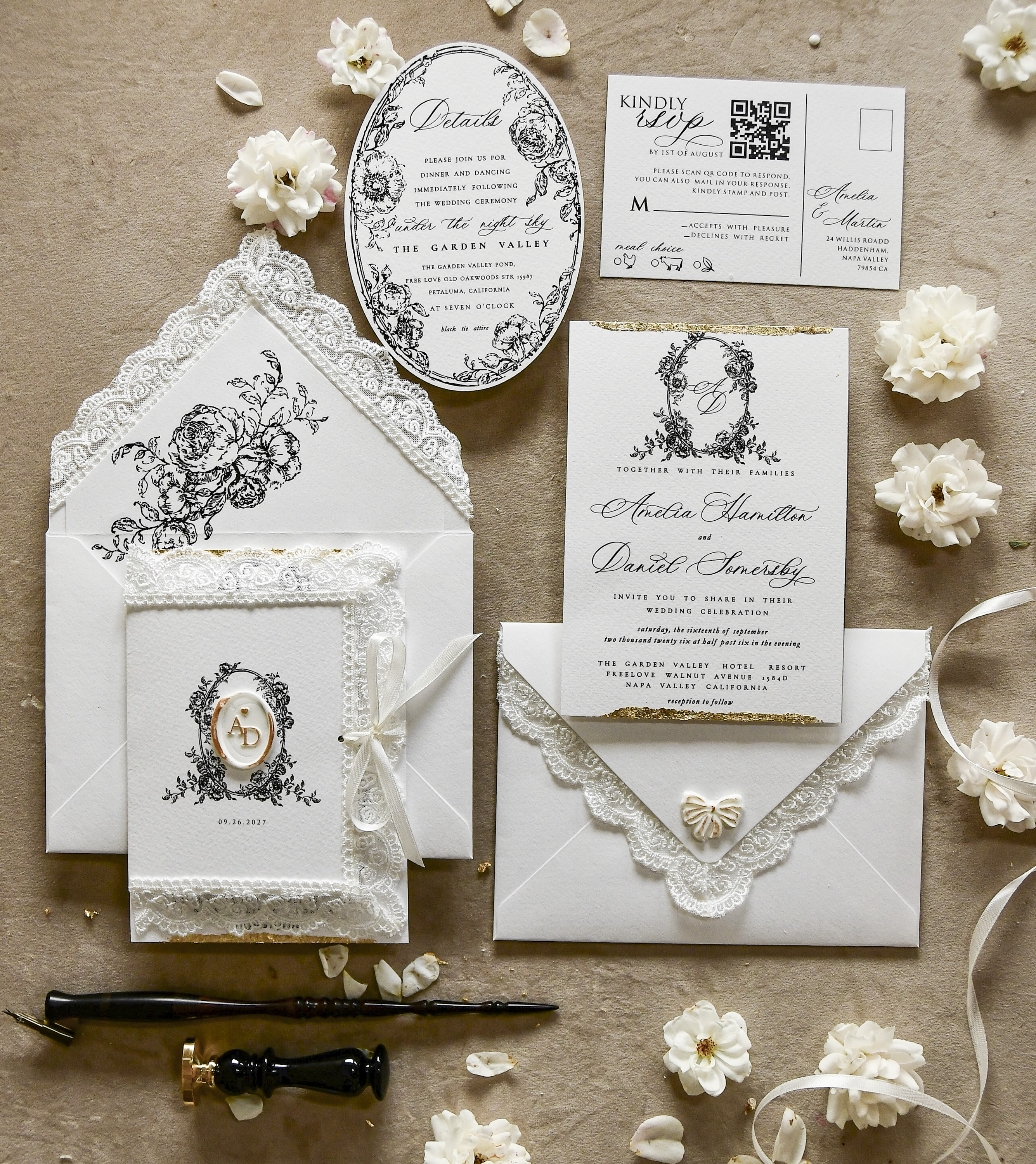
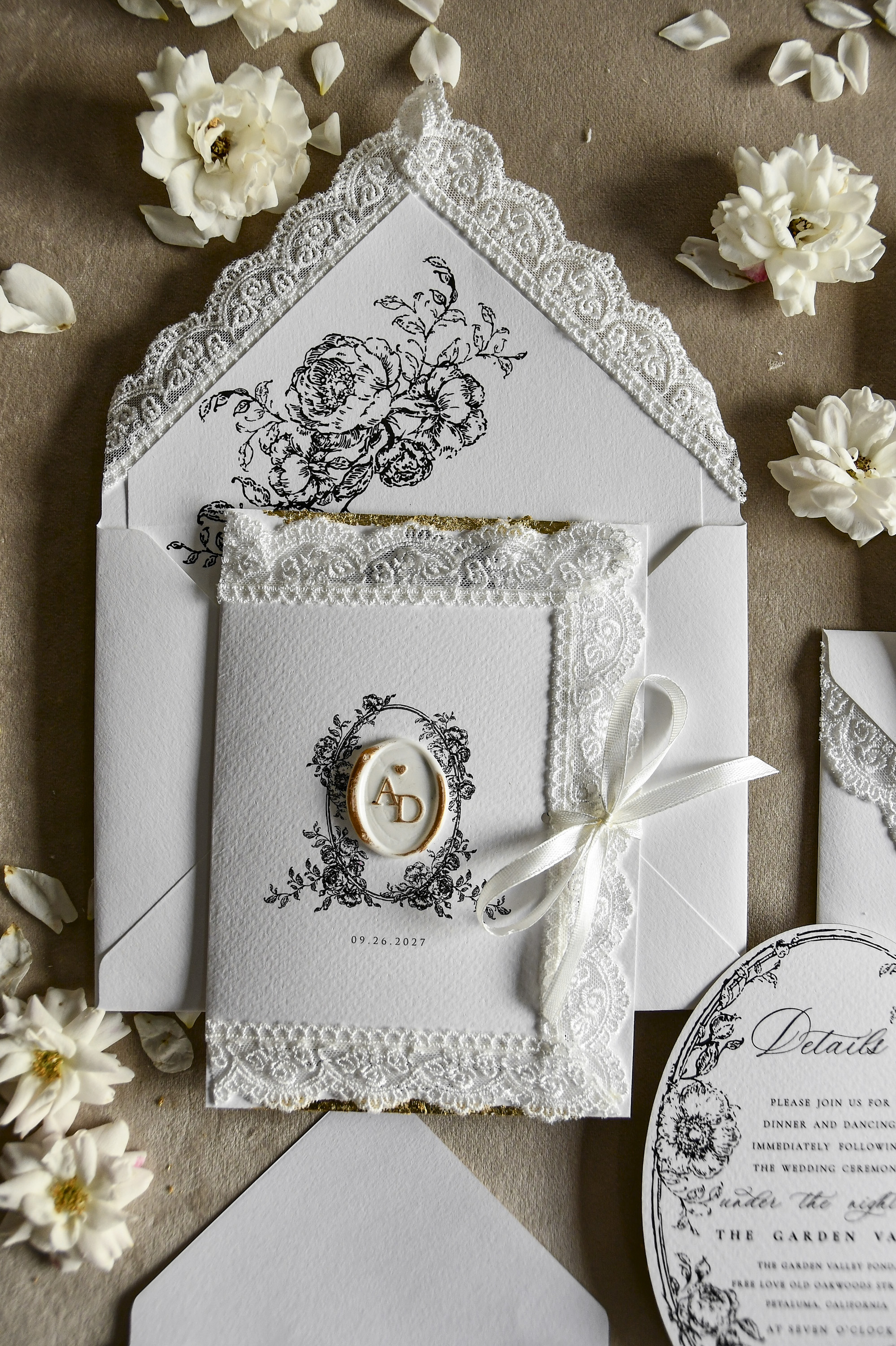
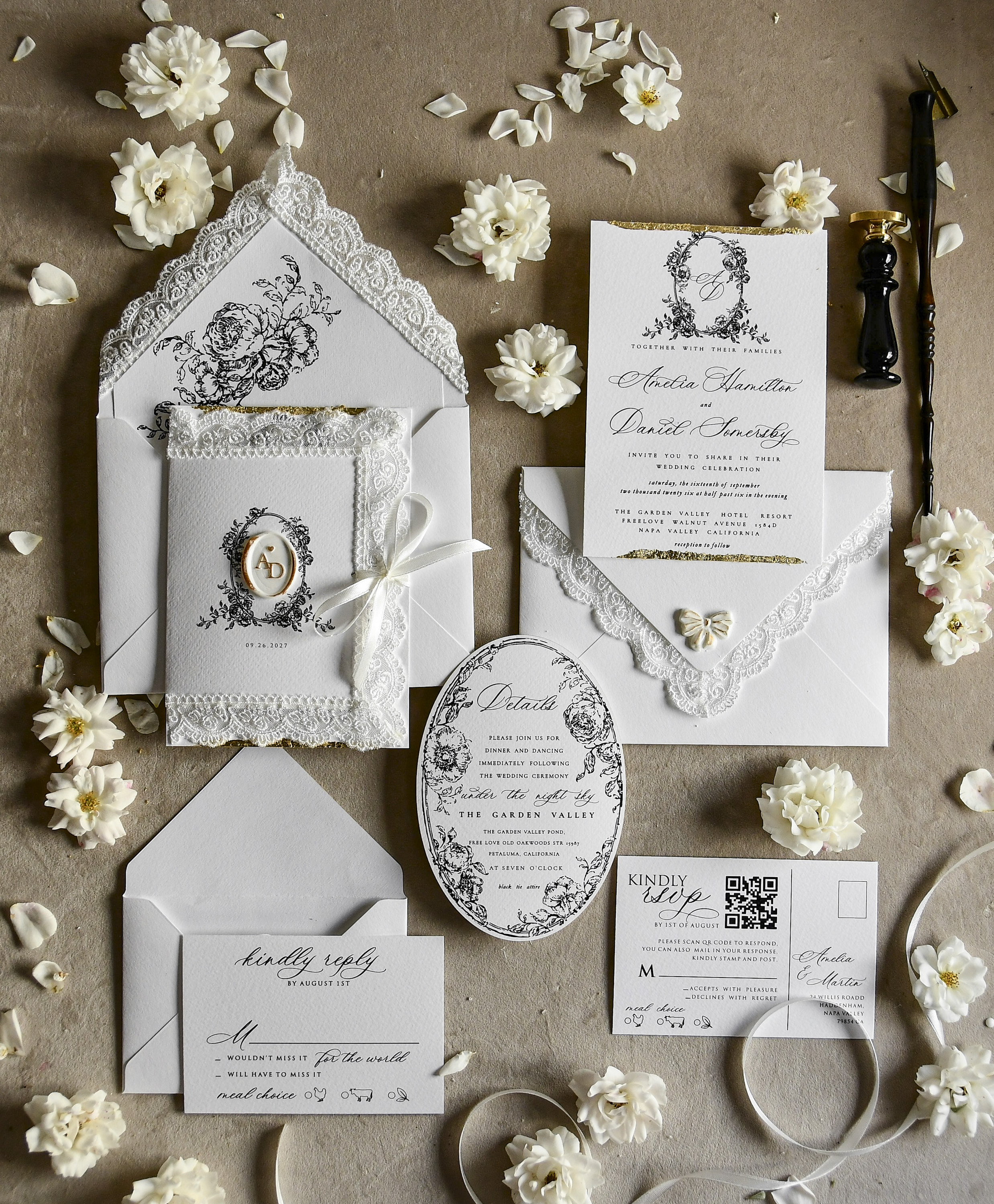
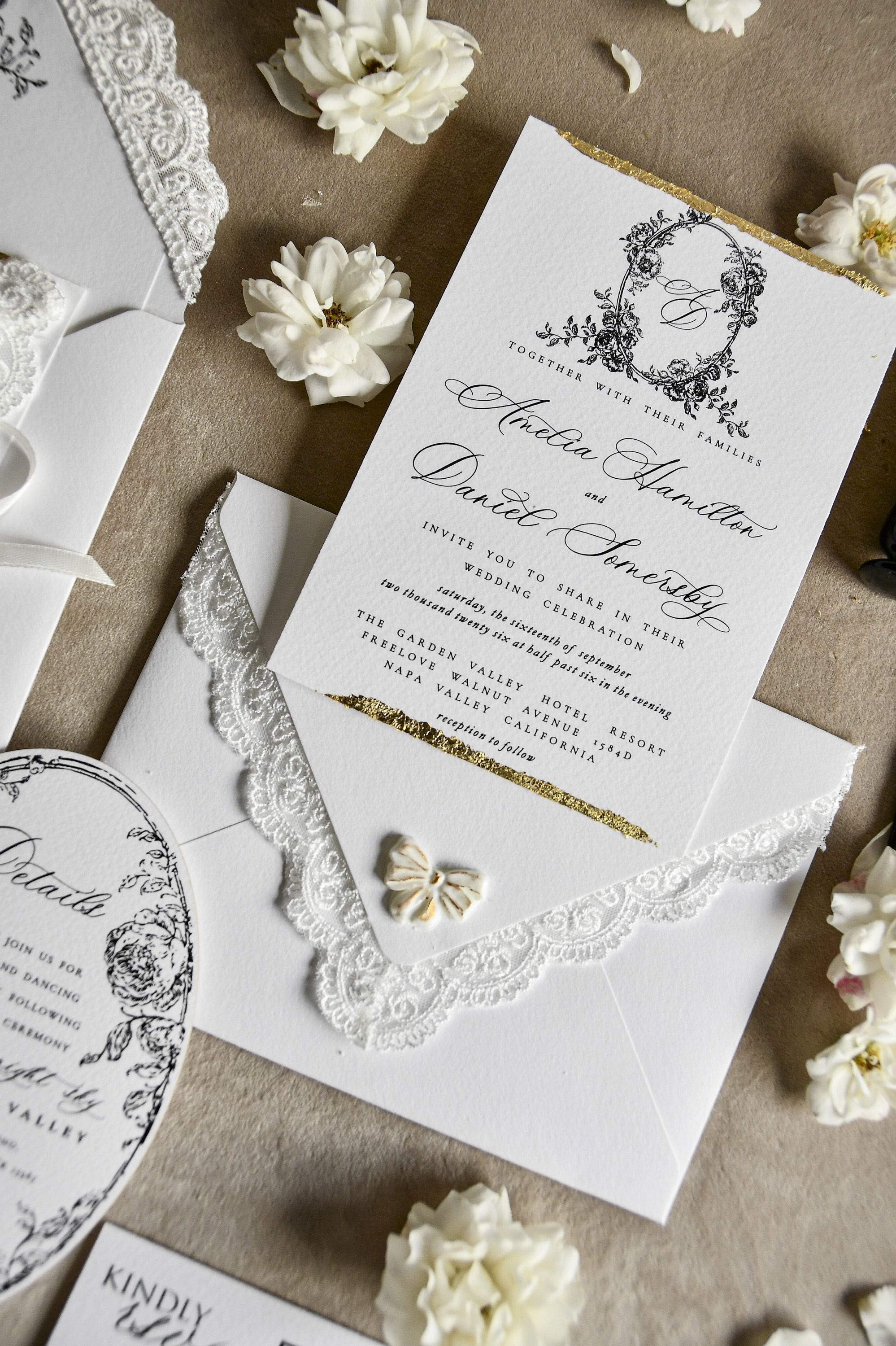
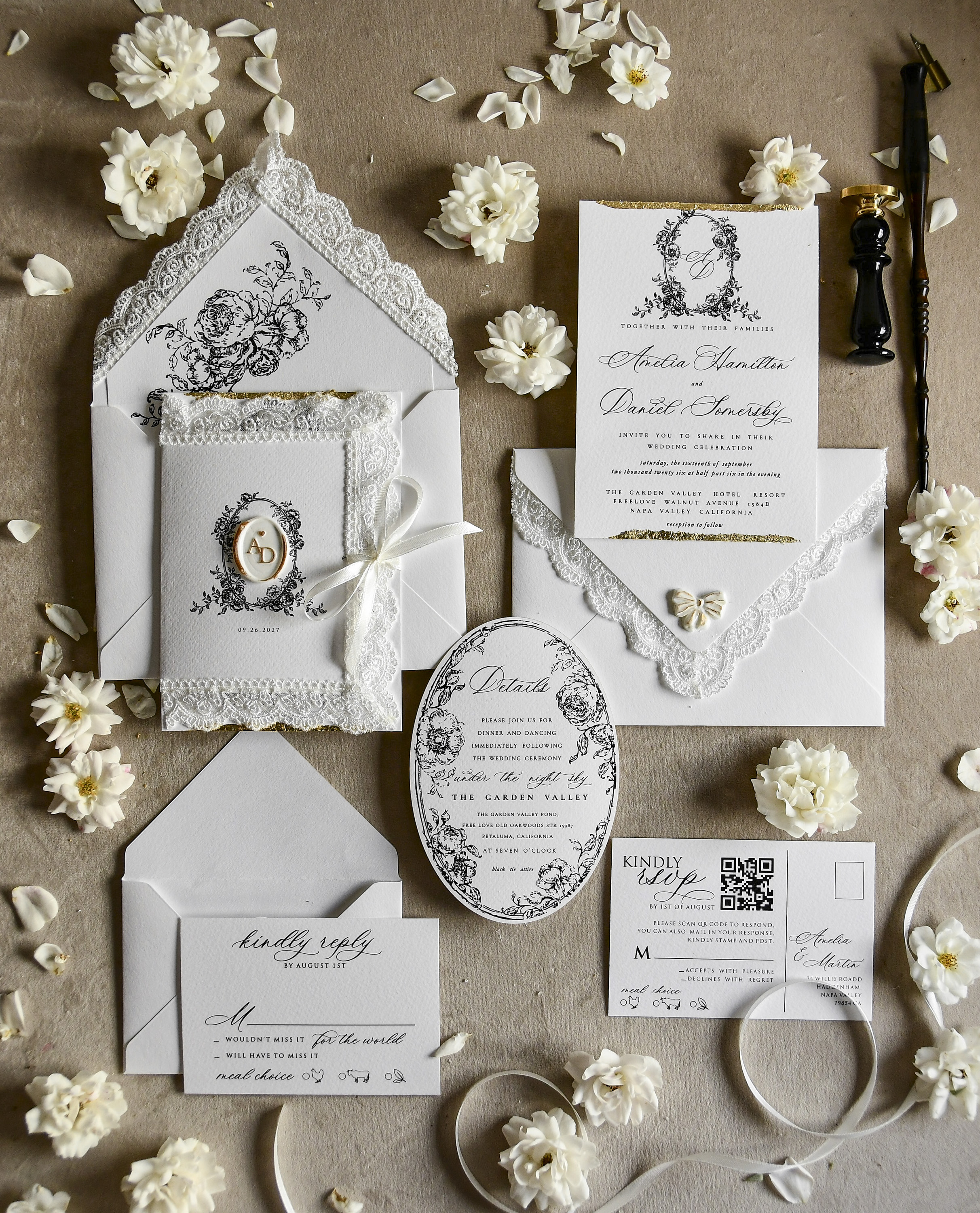
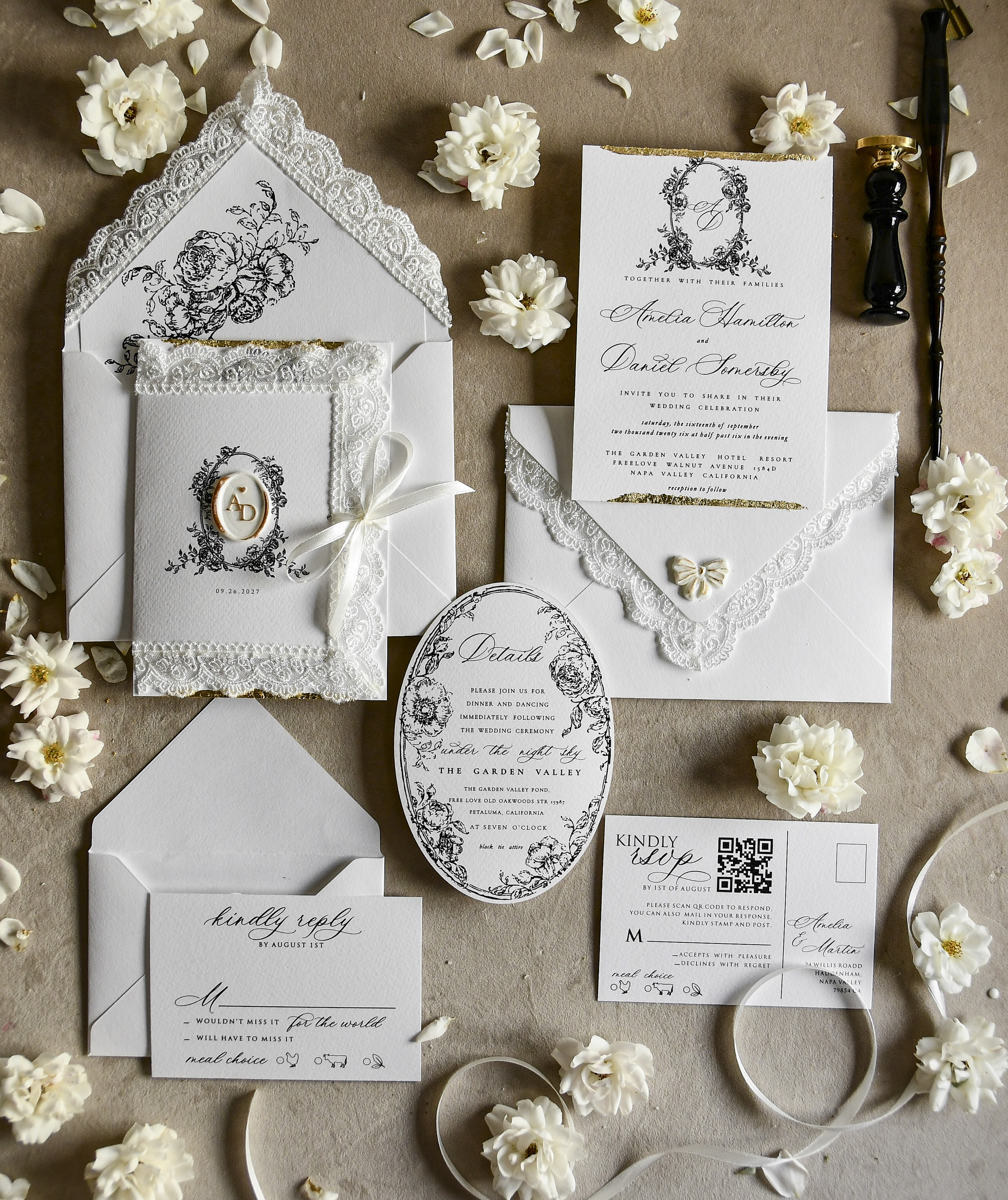
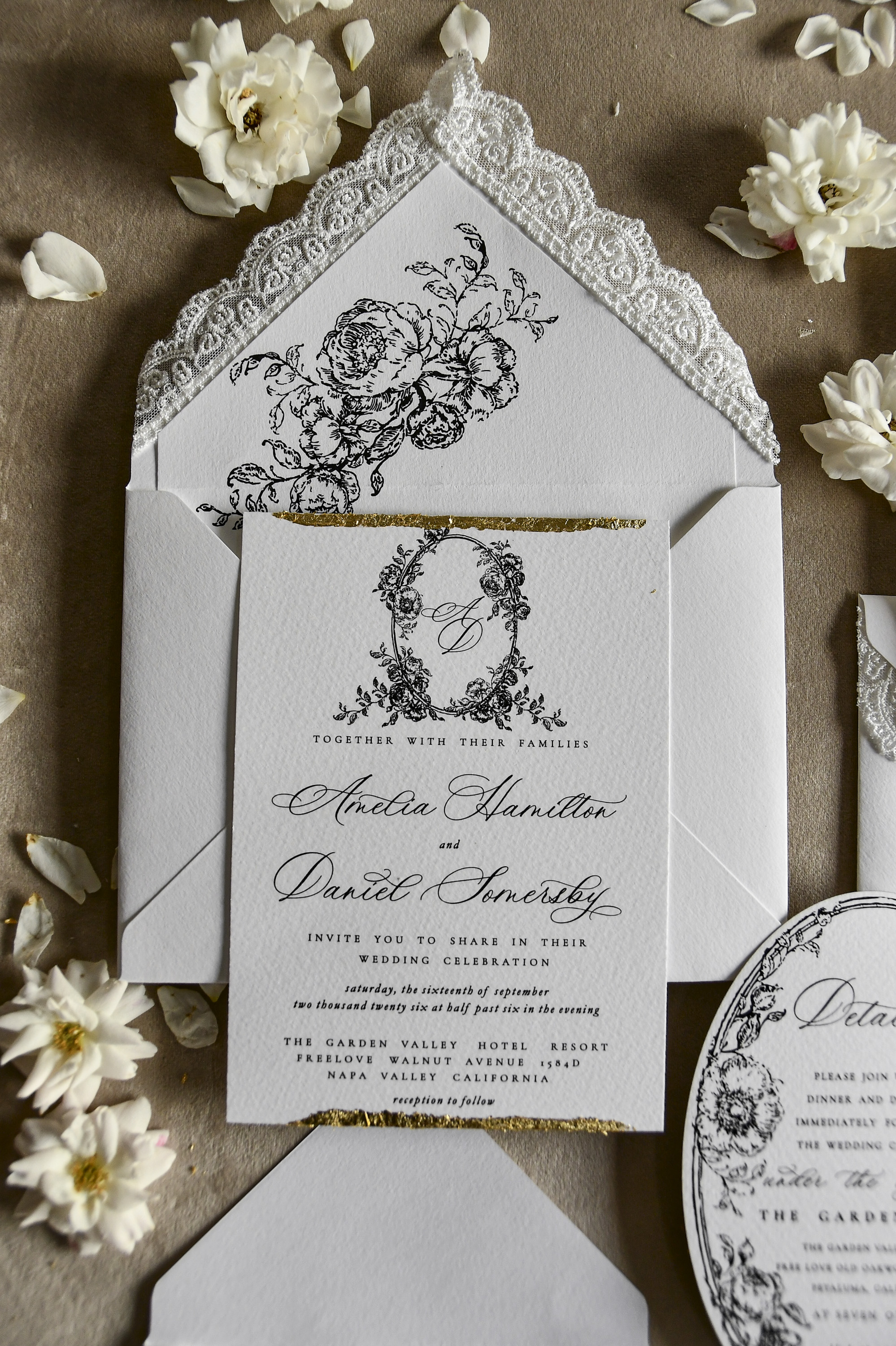
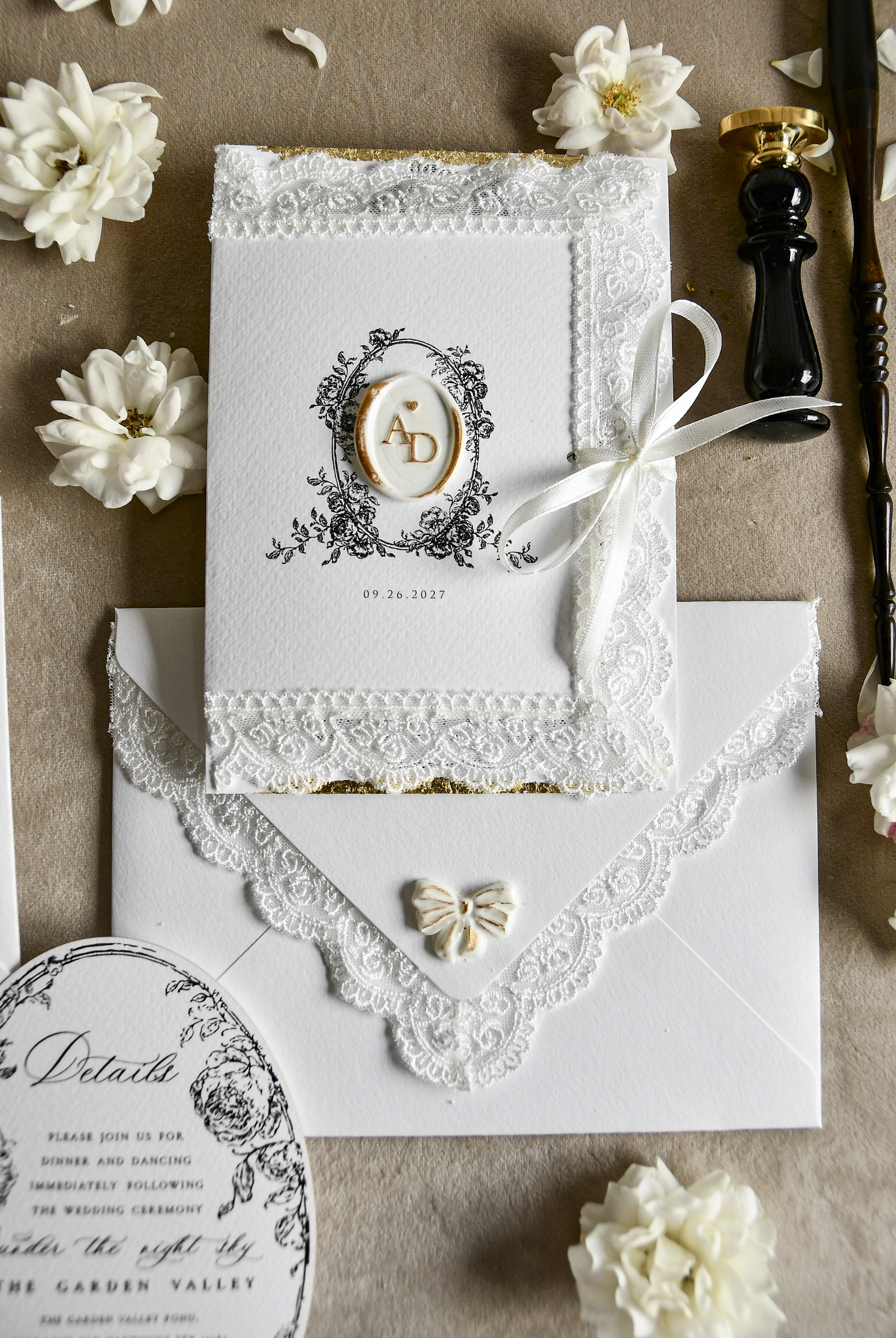
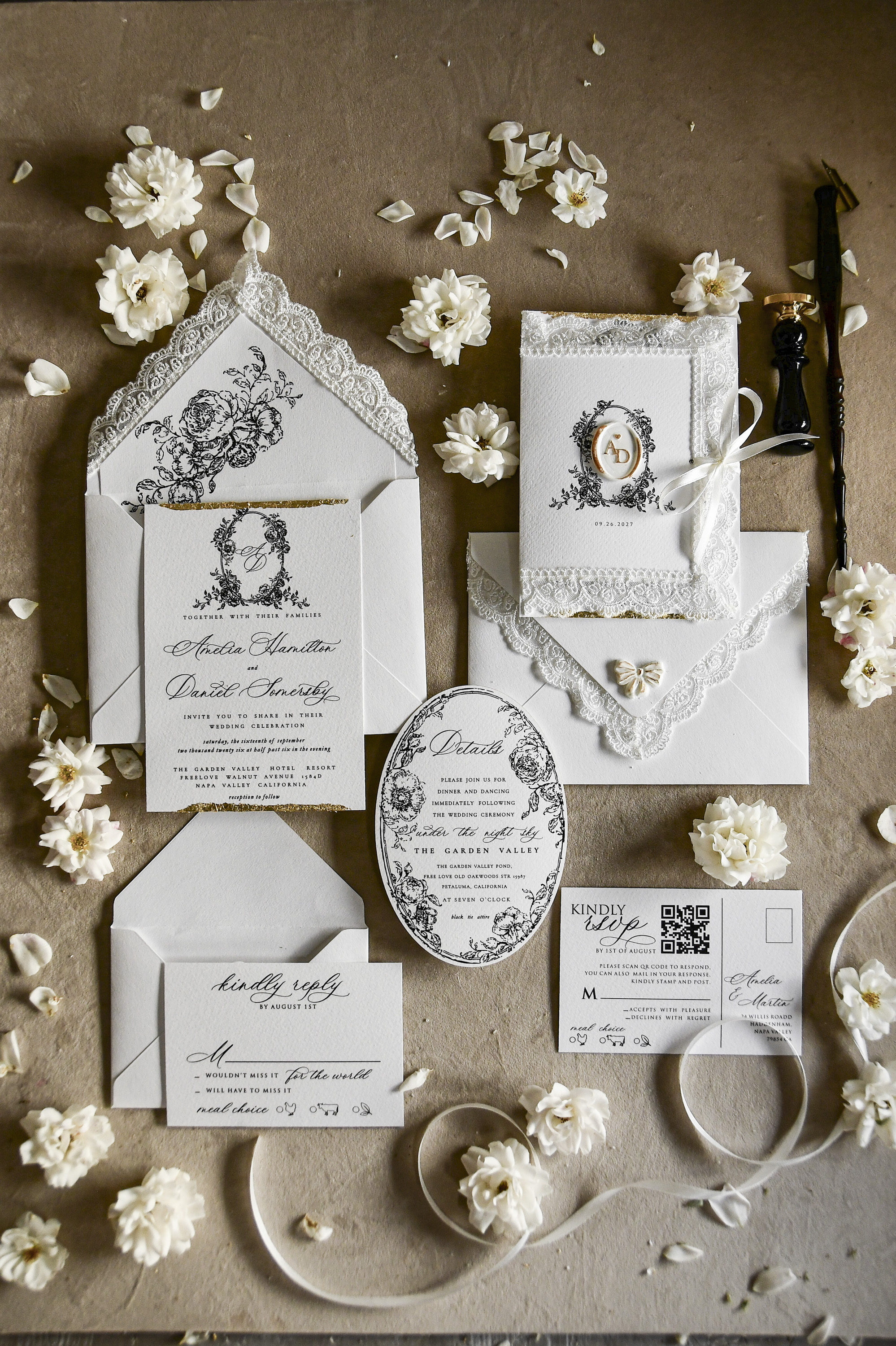
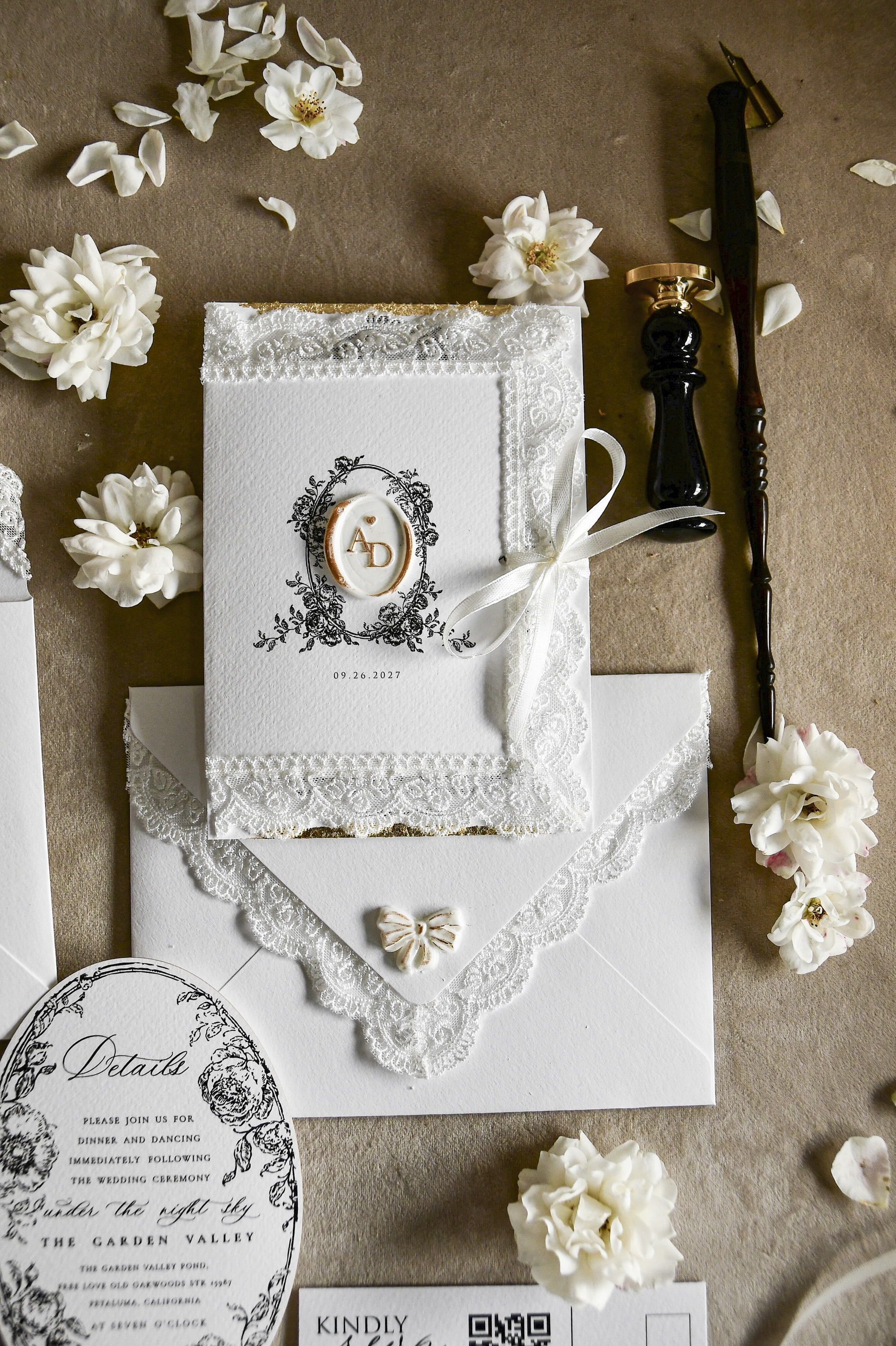
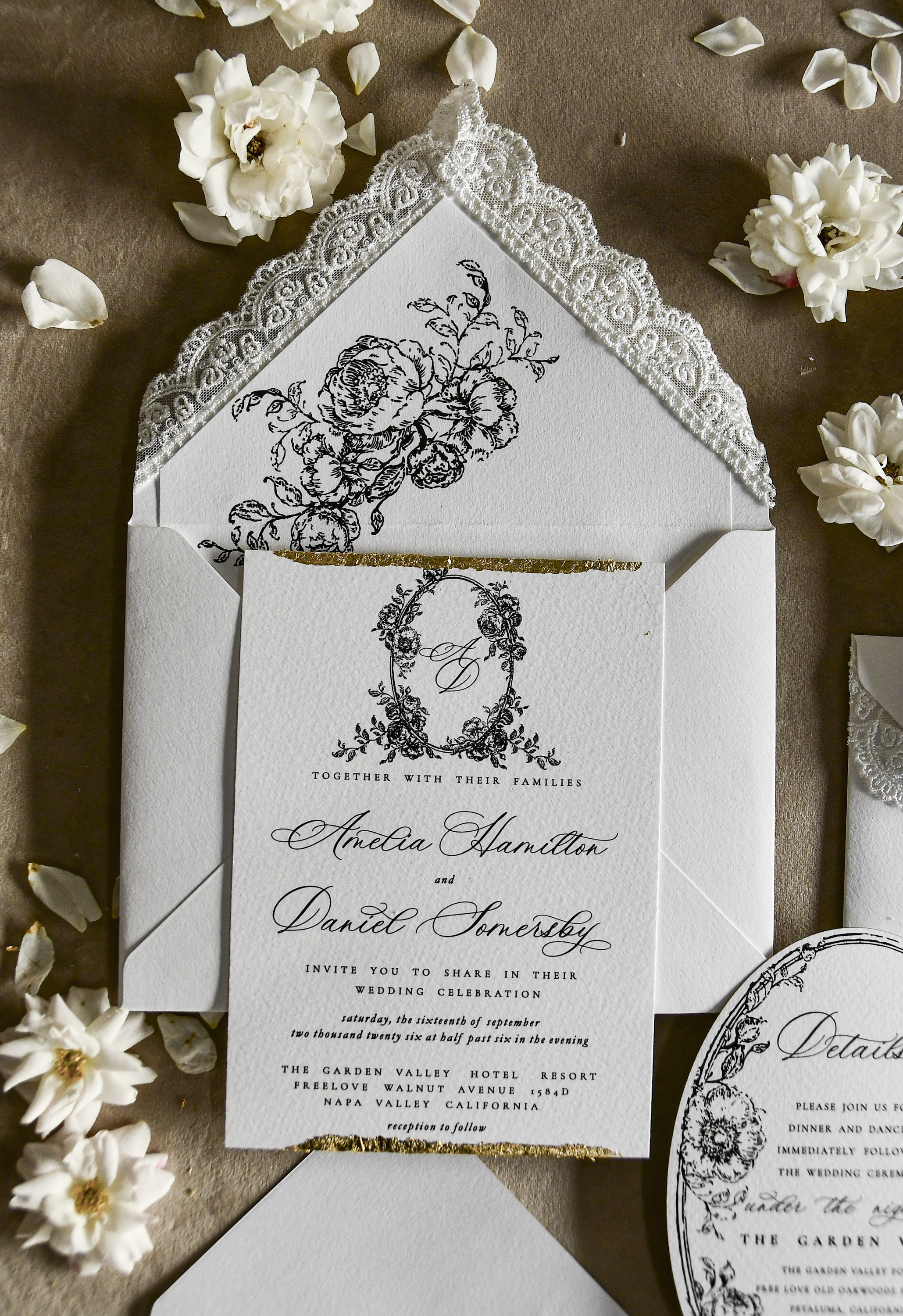
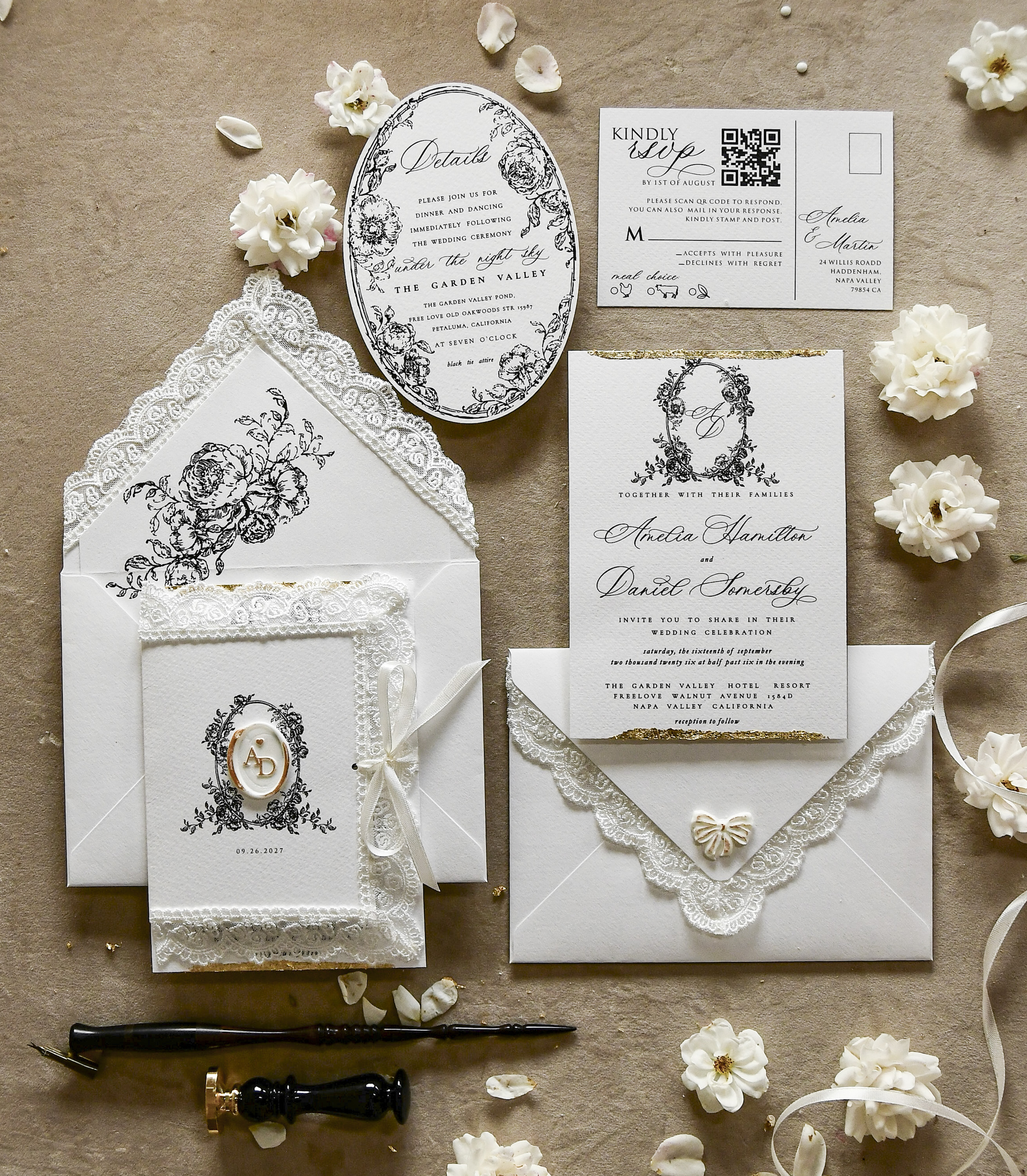
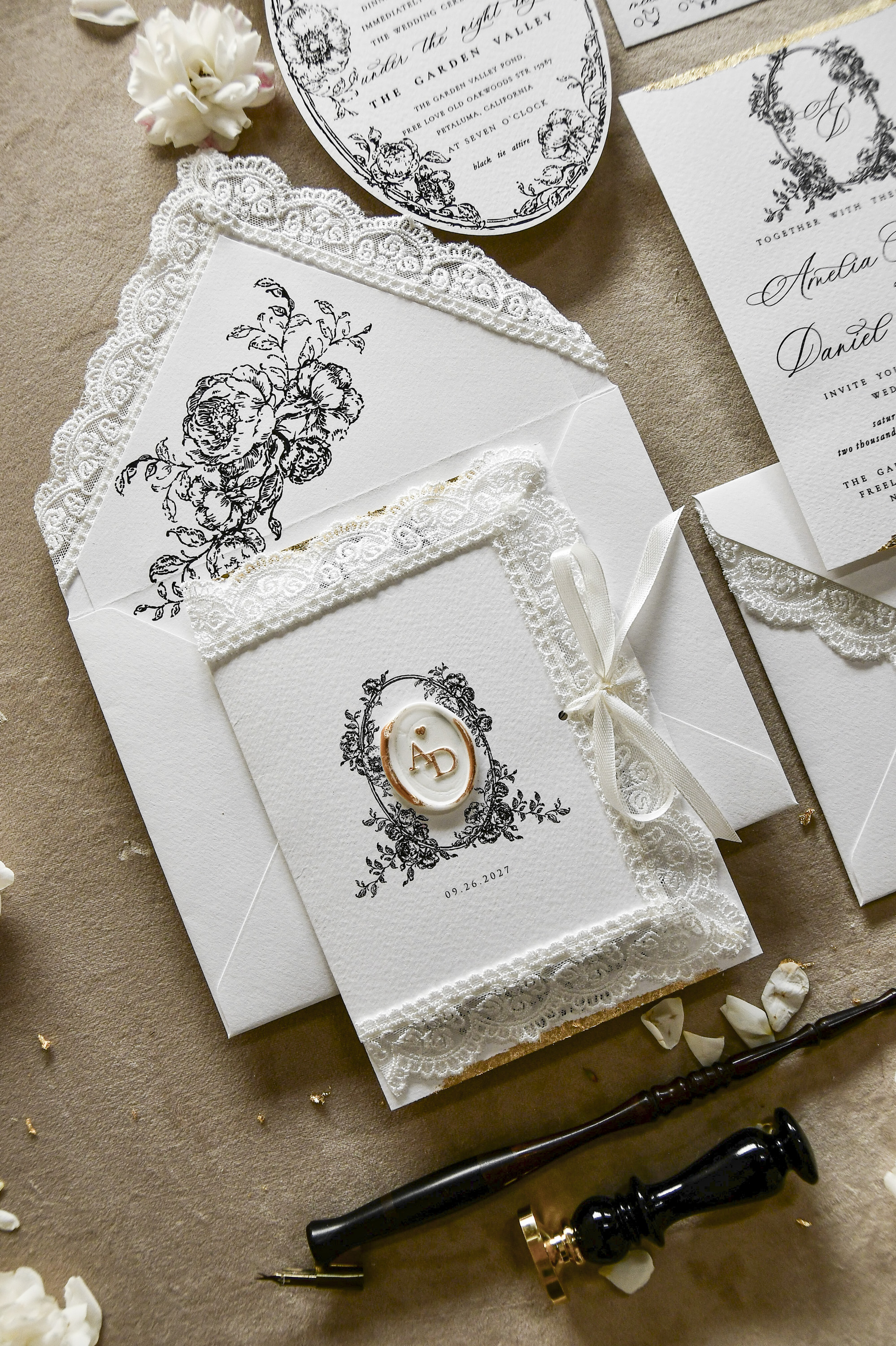
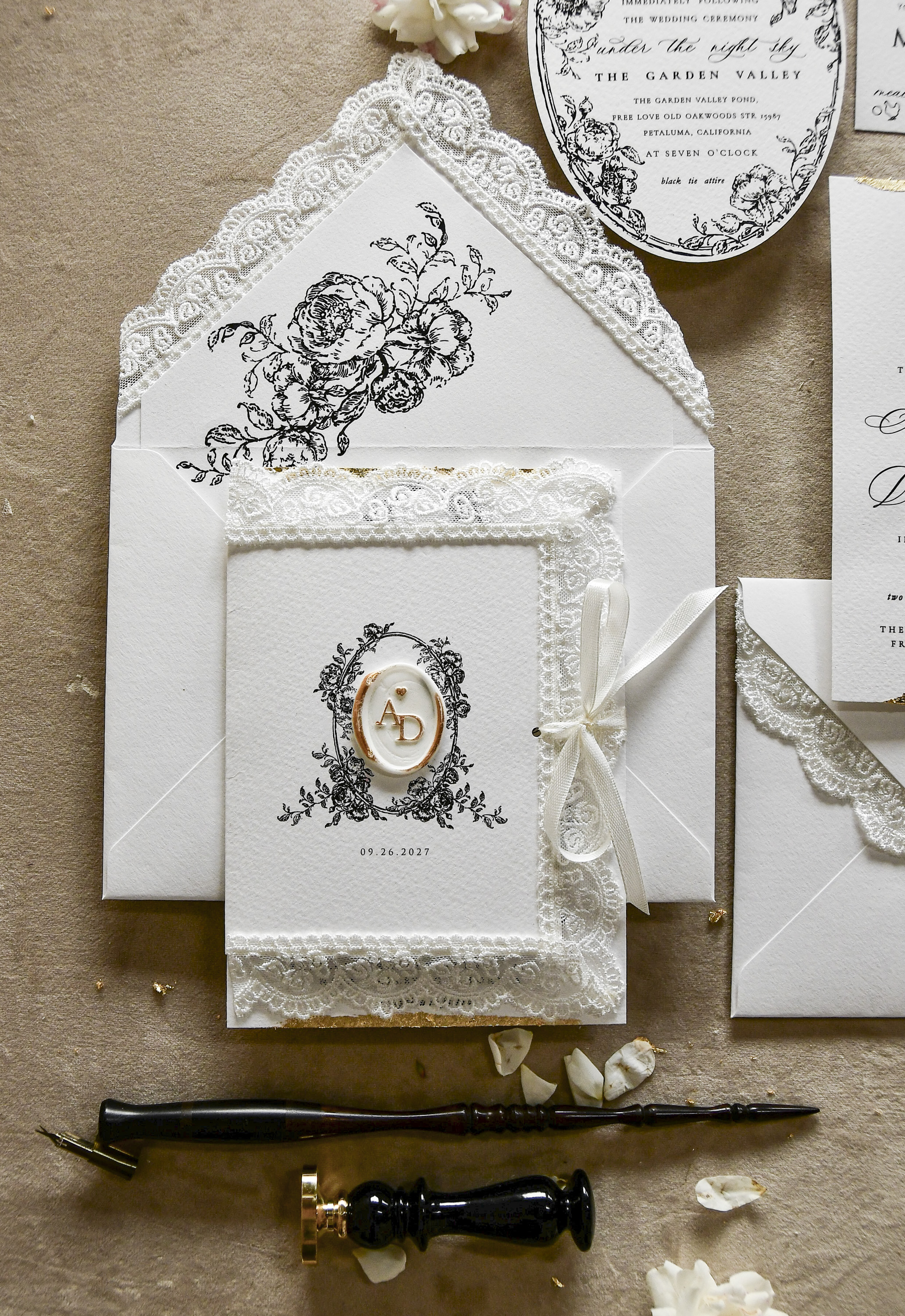
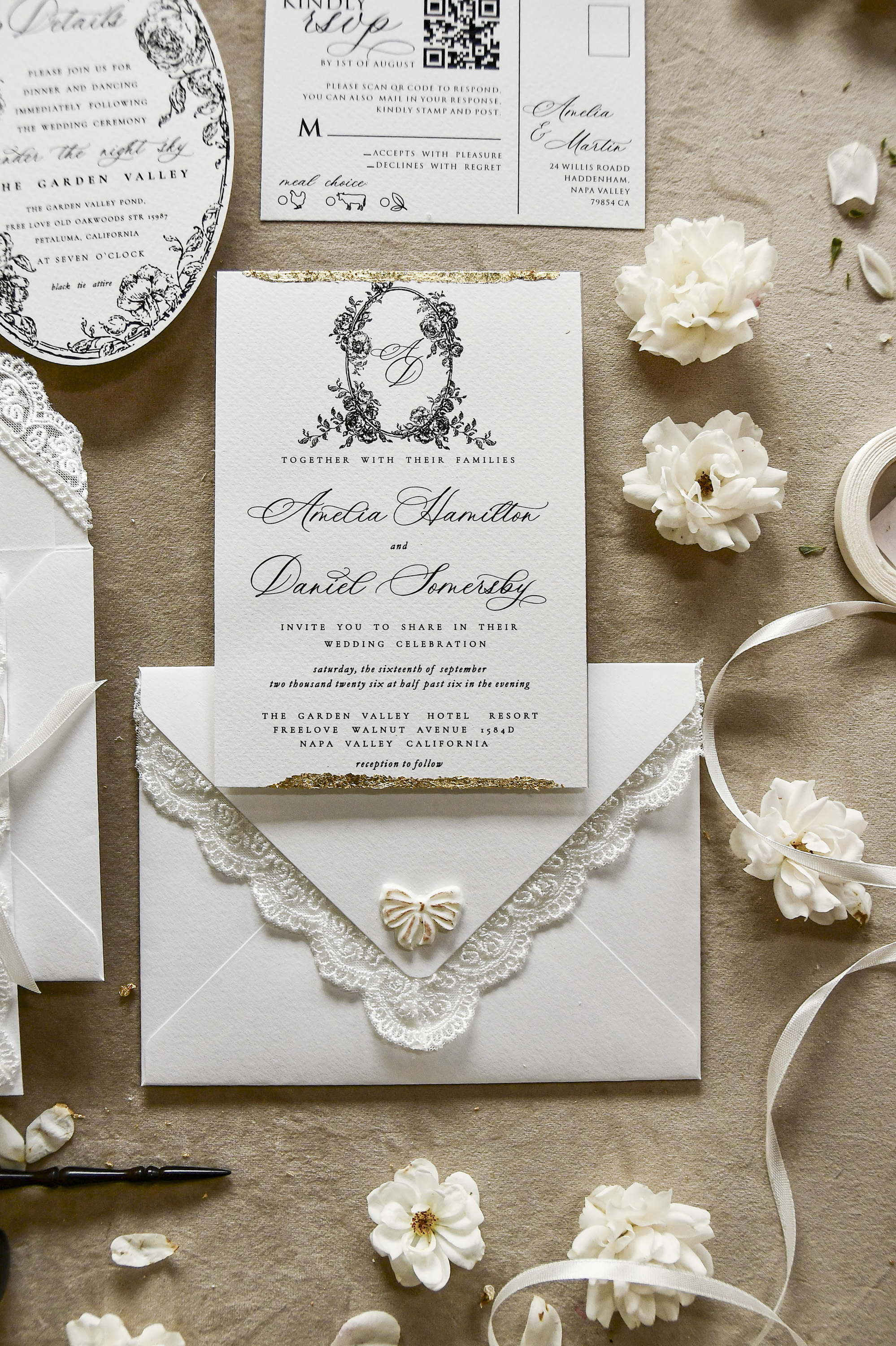
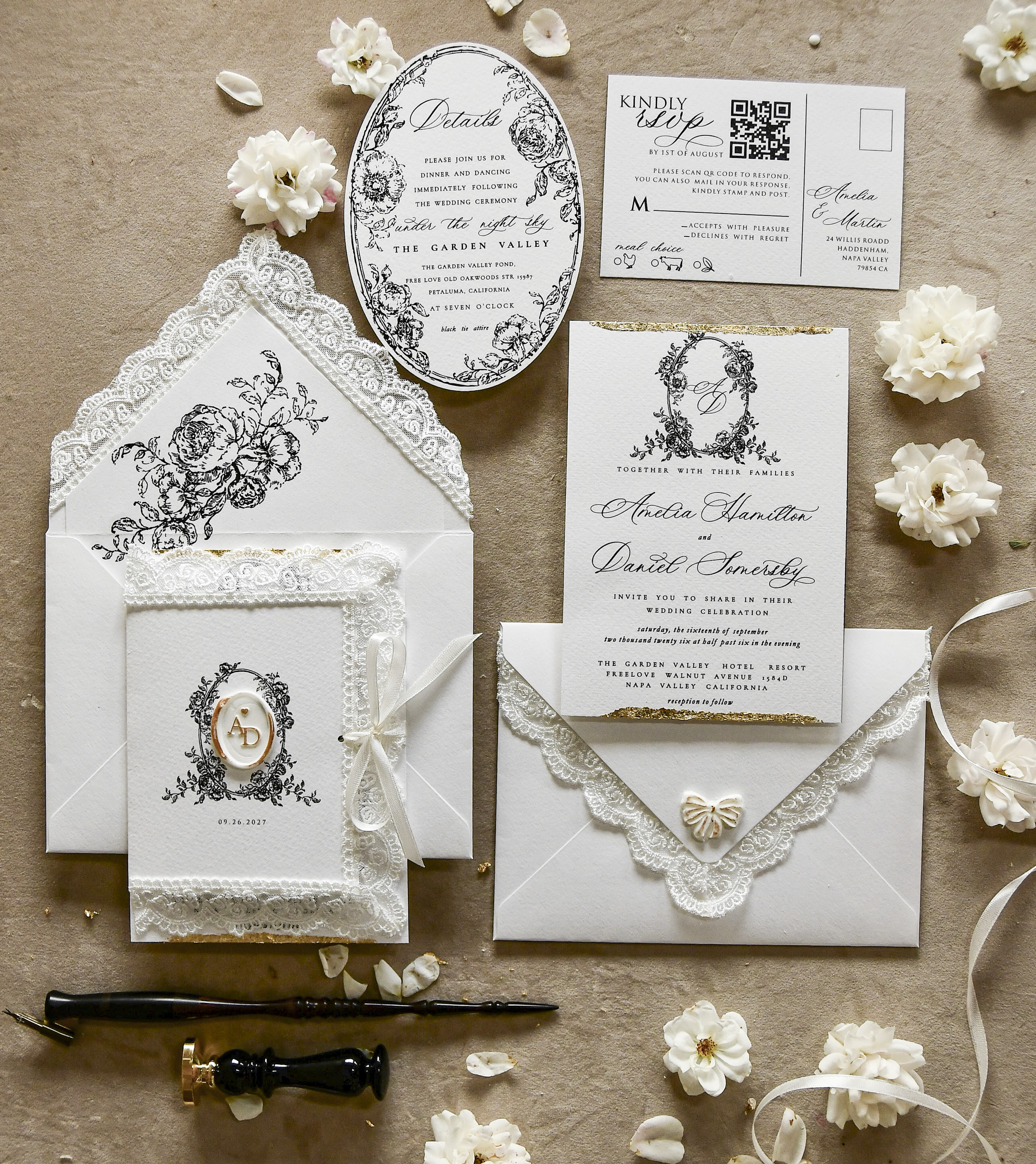
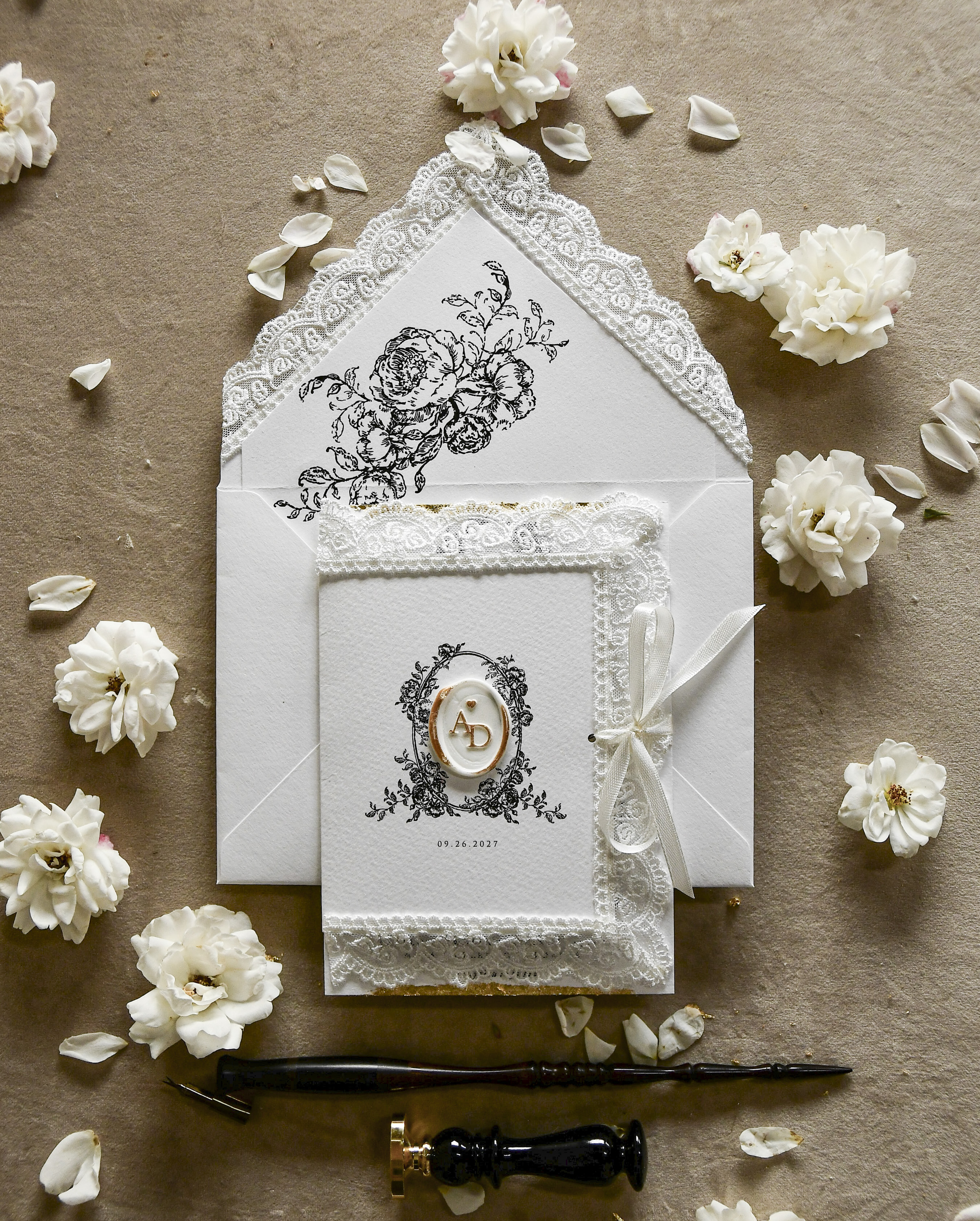
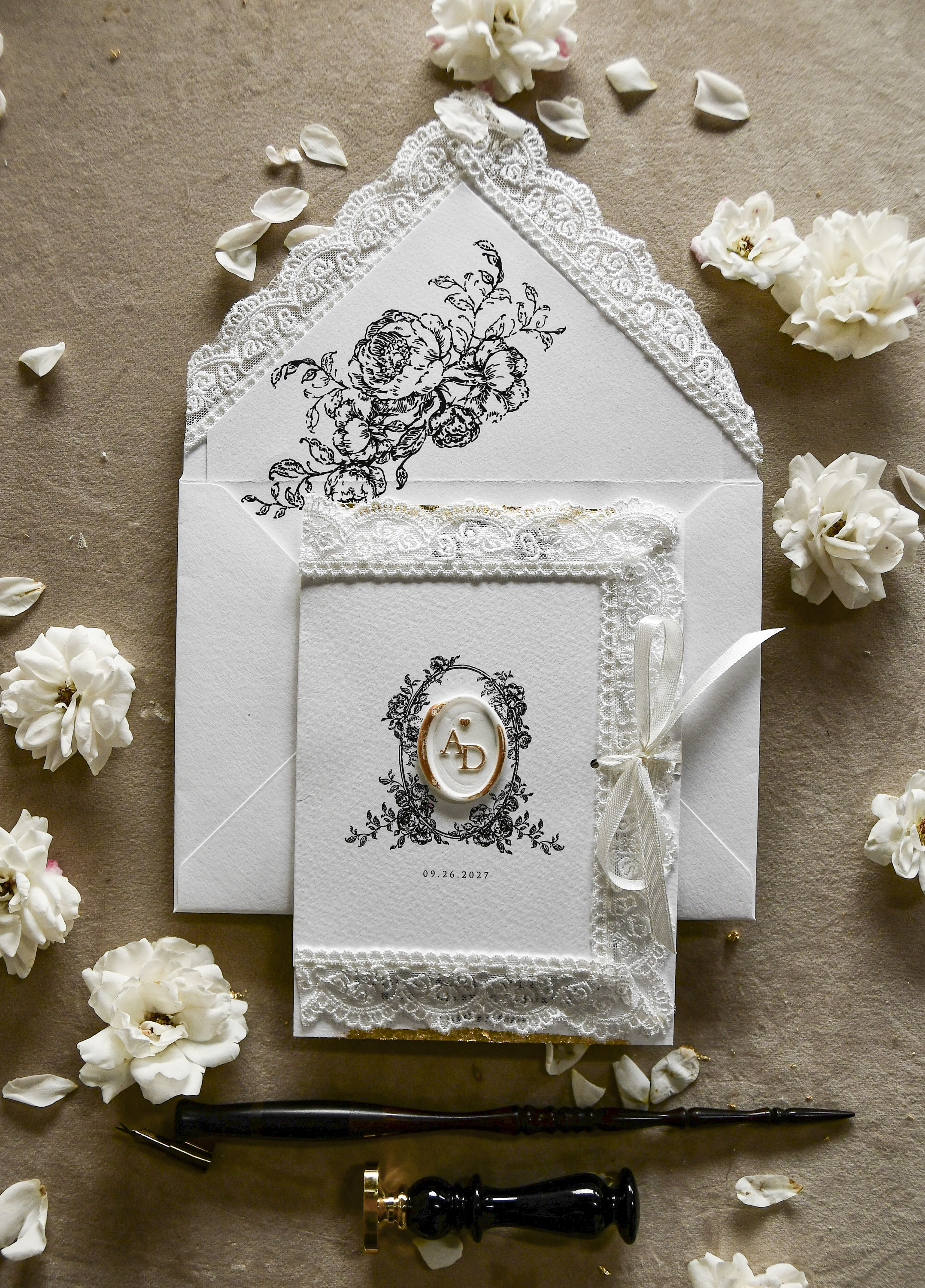
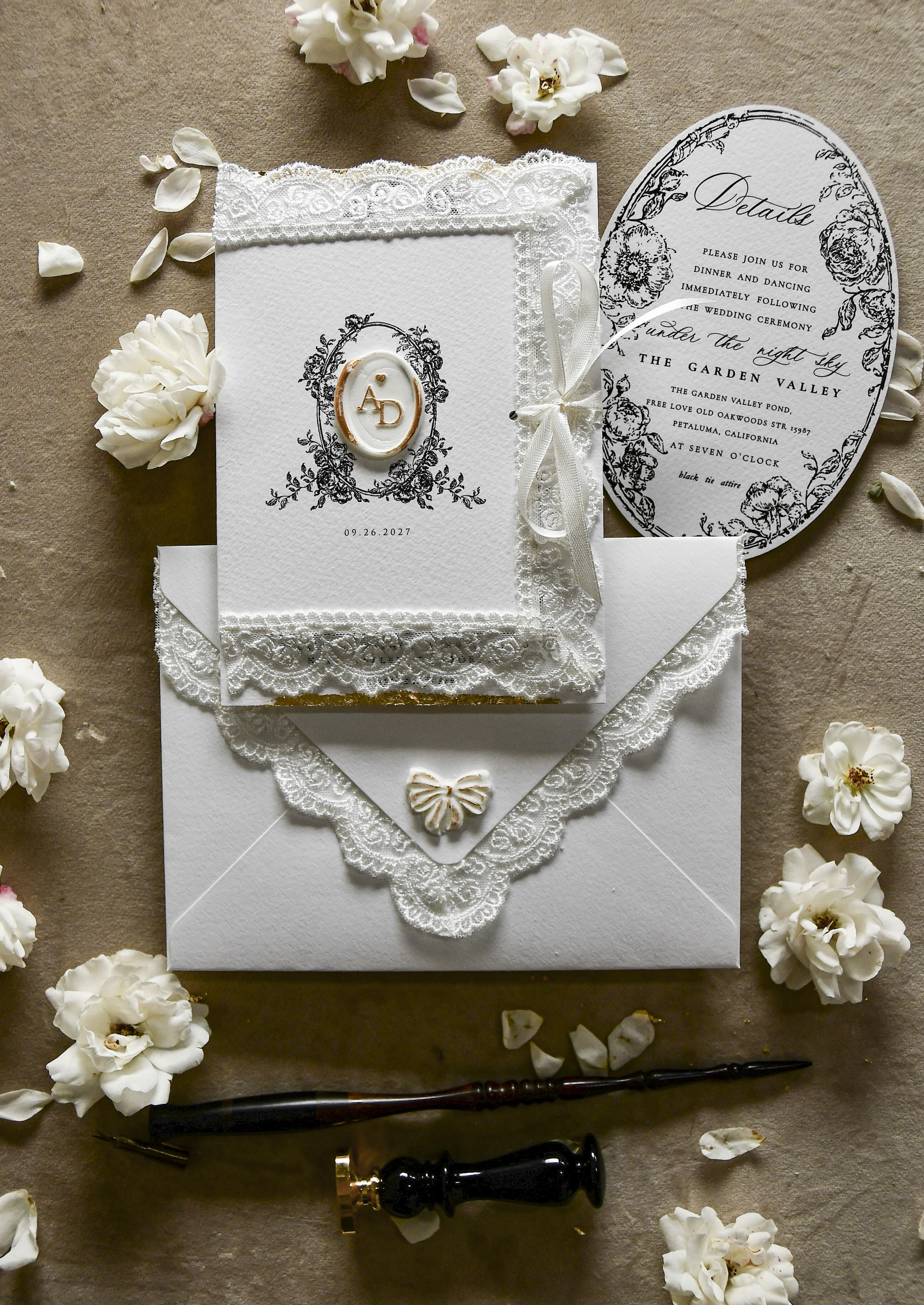
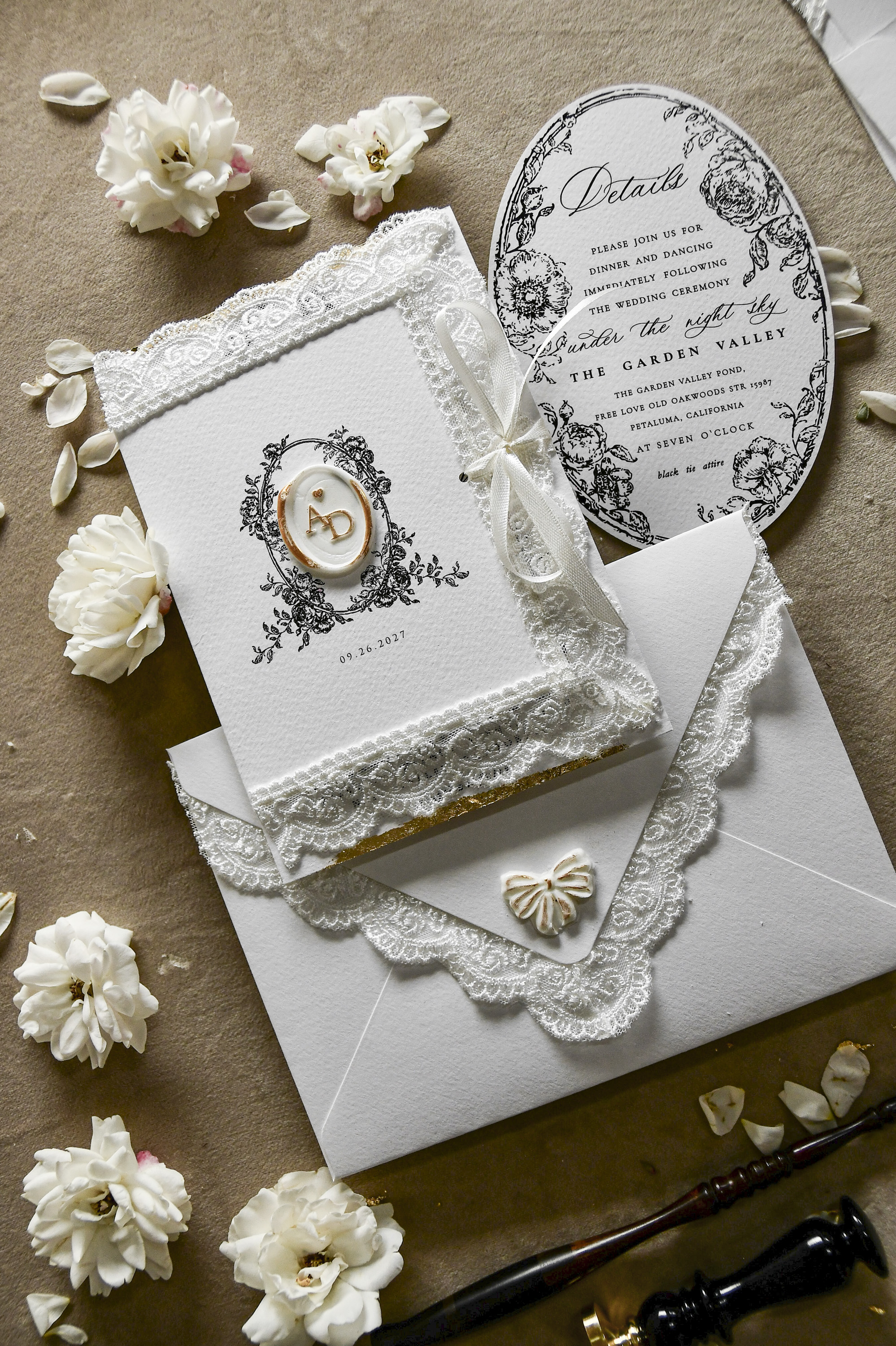
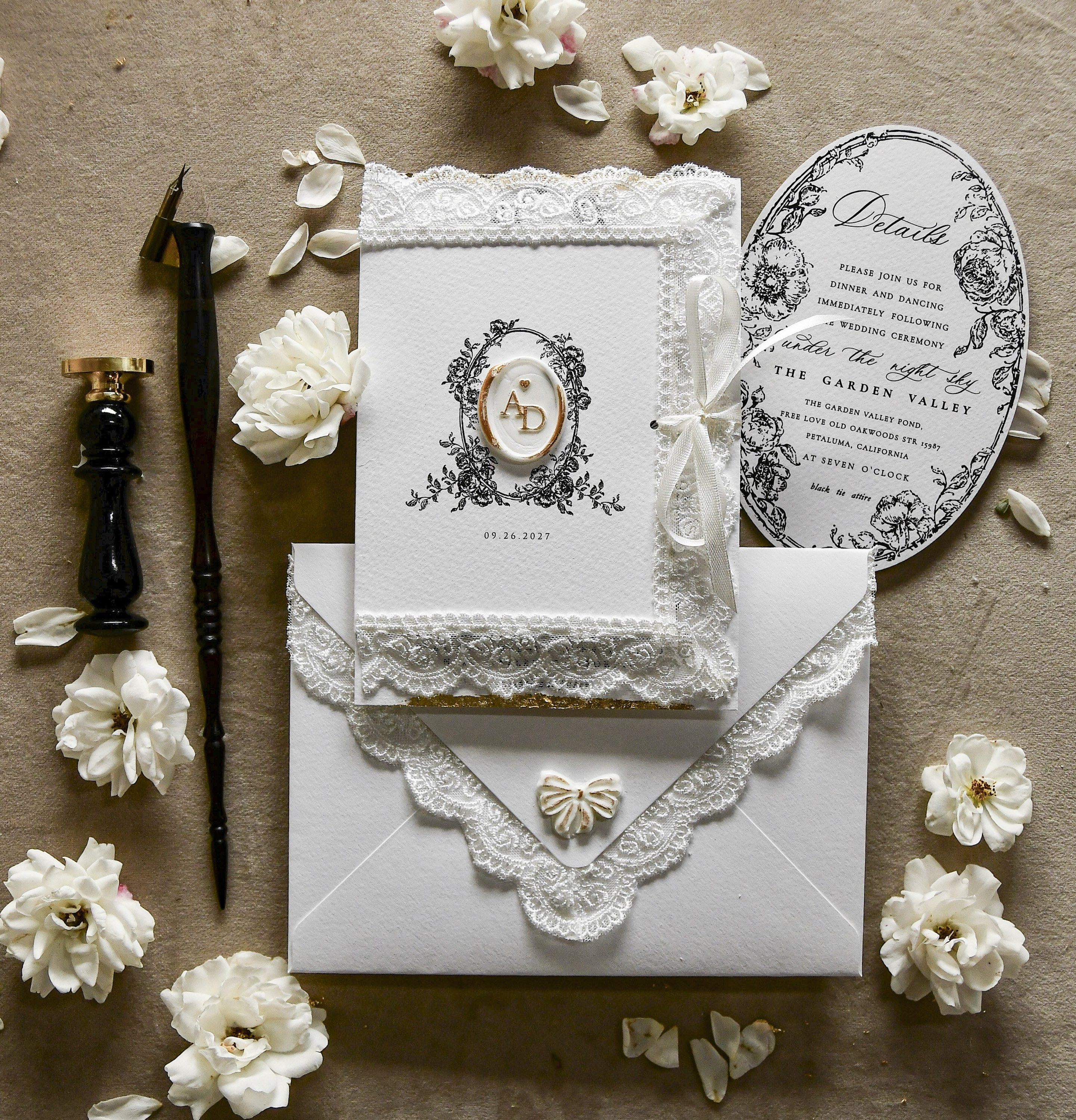
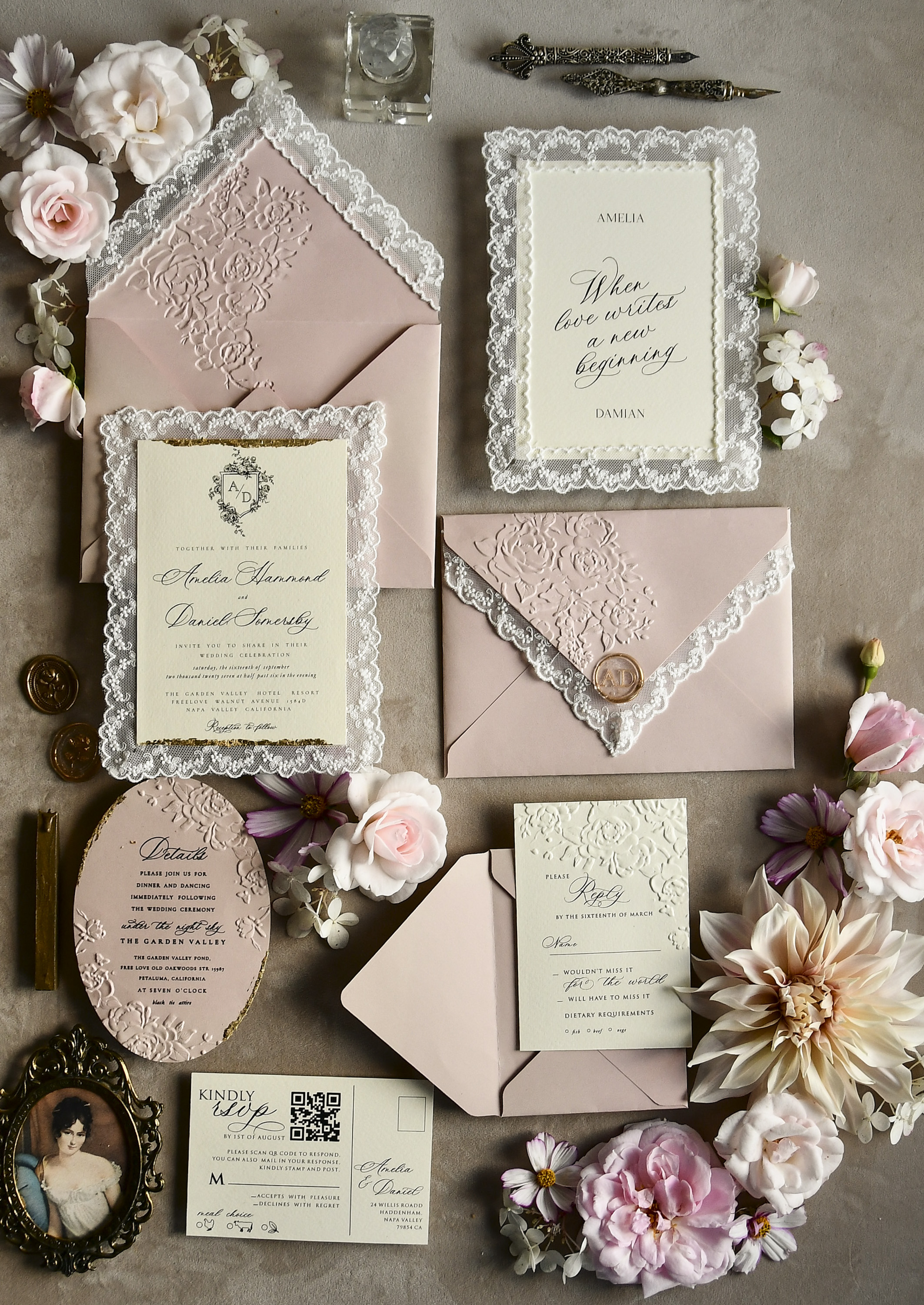
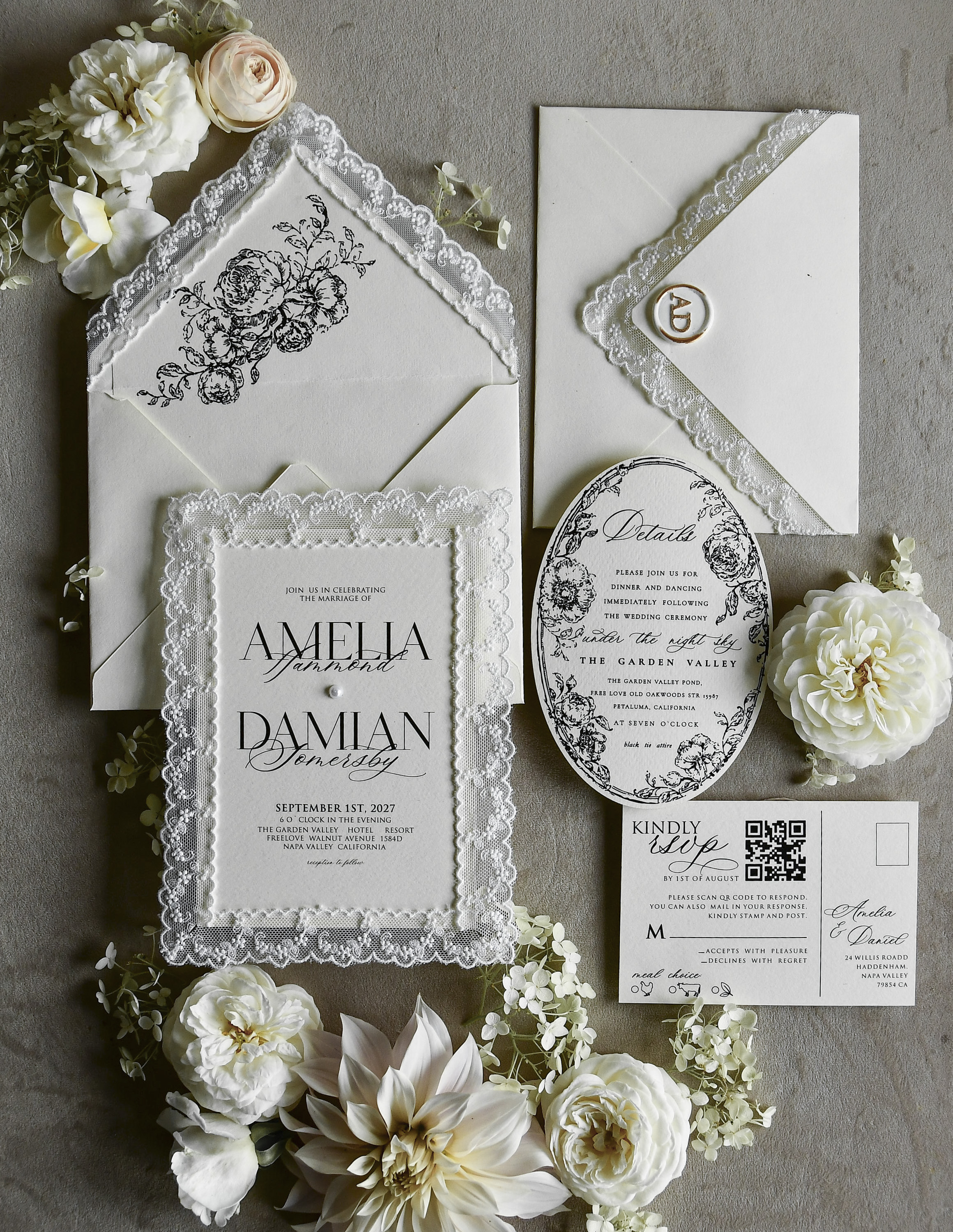
- You want an heirloom keepsake. A beautifully printed invitation is something guests actually keep. Our 03/laceTR/z vintage lace design, for example, doubles as a piece of art — the kind of thing that ends up framed or tucked into a memory box.
Digital Invitation Etiquette Rules to Follow
If you decide to go digital, a few etiquette guidelines will keep things polished and considerate:
- Use a reputable platform. Services like Paperless Post, Zola, or Joy offer designs that look intentional and professional — not like a generic email blast.
- Send from a personal address, not a no-reply. Your invitation should feel personal. Use your own email or a dedicated wedding email address so guests can reply directly with questions.
- Follow the same timeline as paper. Send digital invitations 6–8 weeks before the wedding (8–12 weeks for destination weddings). Earlier is always better.
- Make the RSVP process simple. Link directly to your wedding website RSVP page. The fewer clicks, the higher your response rate.
- Send paper to guests without reliable email access. There's no rule that says it has to be all-or-nothing. A hybrid approach — digital for most, paper for a handful of guests — is completely acceptable and thoughtful.
The Hybrid Approach: Best of Both Worlds
Many couples find that a hybrid strategy works beautifully. Send digital invitations to the majority of your guests, and reserve printed invitations for immediate family, elderly relatives, or anyone you know prefers something in hand. This keeps costs manageable while ensuring no one feels overlooked.
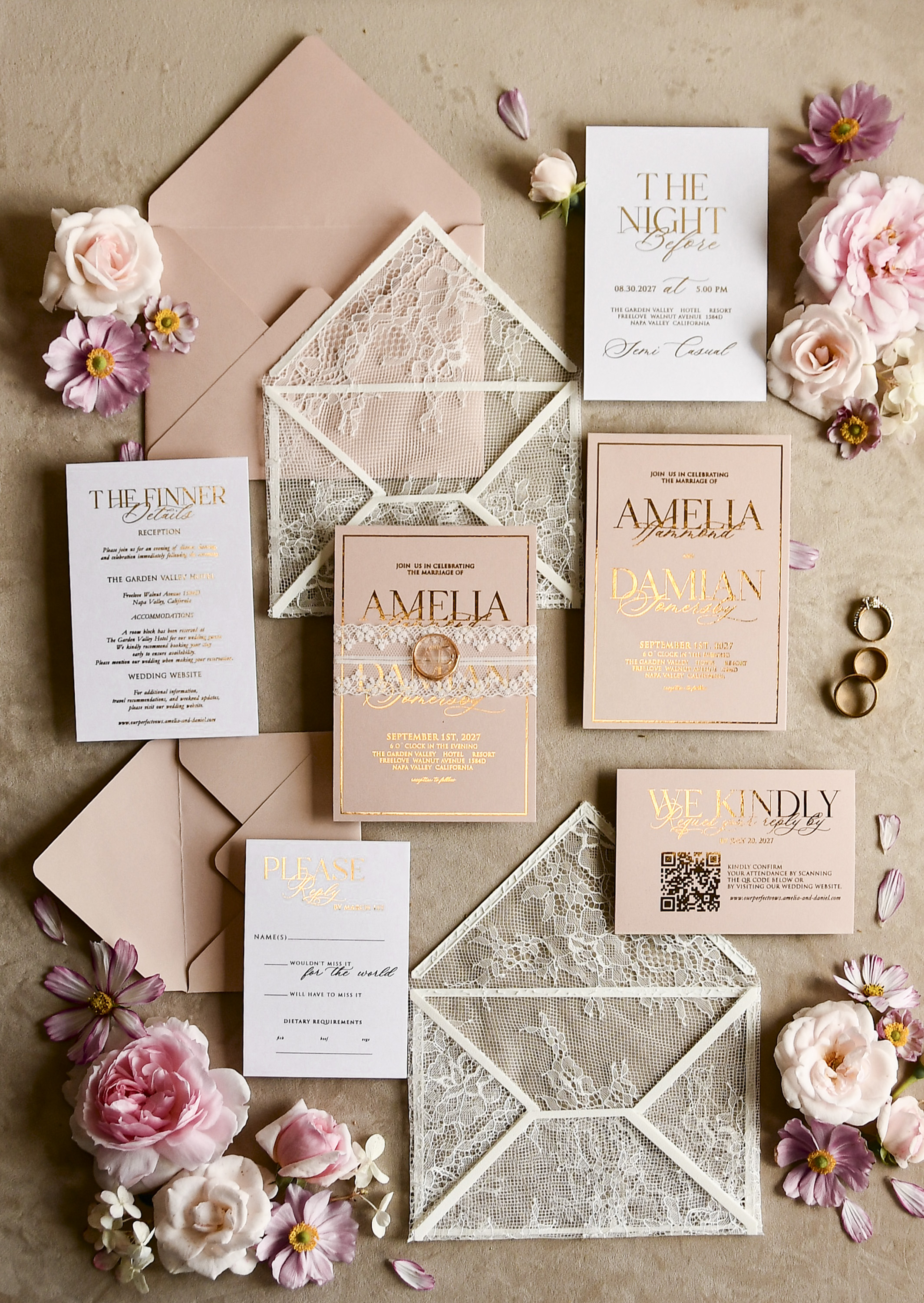
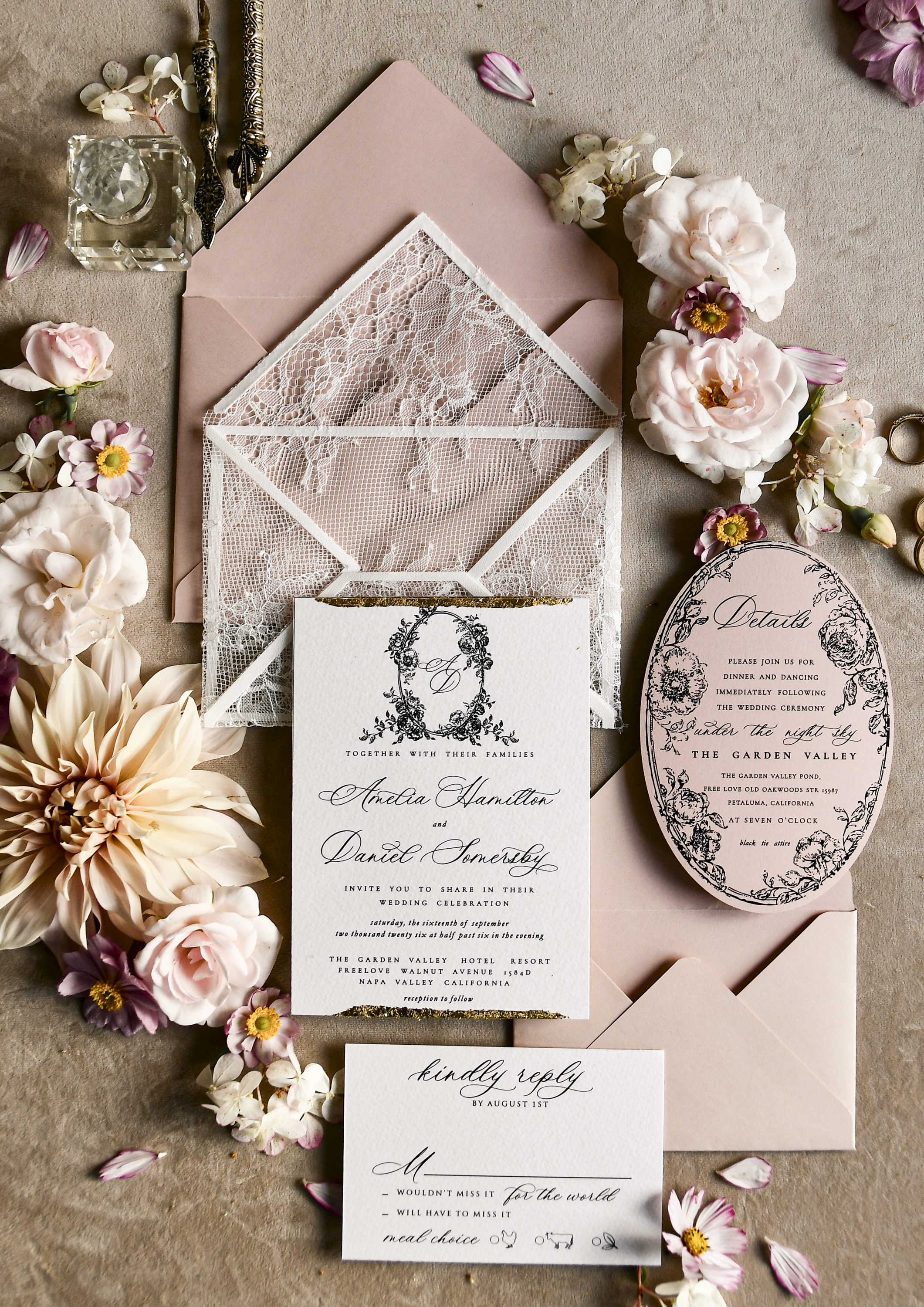
If you do go the printed route — even for just a portion of your list — it's worth investing in a design that reflects your wedding's personality. A vintage-inspired suite like the 03/laceTR/z lace collection (starting at just $9.00) brings warmth and elegance to rustic, garden, and romantic celebrations without breaking the budget. Mixing a few beautifully printed invitations with a digital send is a perfectly modern and practical solution.
Bottom Line: There's No Universal Right Answer
The "right" invitation format is the one that fits your wedding, your guests, and your values. Digital invitations are widely accepted today and carry no real social stigma for casual to semi-formal events. For formal affairs or guests who value tradition, printed stationery remains the gold standard. When in doubt, ask yourself: will every person on my guest list actually receive and be able to respond to a digital invite? If the answer is yes, you're good to go digital. If not, print for those guests and go digital for the rest.
Frequently Asked Questions
Not at all, for most modern weddings. Digital invitations are widely accepted, especially for casual, intimate, or destination celebrations. The main exception is very formal or black-tie events, where printed stationery is still the expected standard.
Follow the same timeline as paper invitations: 6–8 weeks before the wedding, or 8–12 weeks for destination weddings. Even though digital delivery is instant, giving guests enough notice to make travel and scheduling arrangements is just as important.
Popular options include Paperless Post, Zola, Joy, and Greenvelope. Look for platforms that offer RSVP tracking, guest management tools, and designs that match your wedding aesthetic. Many integrate directly with wedding websites.
Absolutely — this is one of the most popular hybrid approaches. Digital save-the-dates get the word out quickly and affordably, while printed invitations deliver the formal details with the elegance the occasion deserves. There's no etiquette rule against mixing formats.
Print paper invitations for those guests specifically. There's no obligation to send the same format to everyone, and a thoughtful hybrid approach ensures no one on your list is left out or confused. A quick phone call to confirm they received it is a nice touch too.
Generally, no — formal and black-tie weddings call for printed stationery as a signal of the occasion's significance. Guests attending a formal event expect an invitation that reflects the formality, and a digital invite can feel mismatched with the overall tone.
See This Design Up Close
You May Also Like
More Wedding Planning Guides
- → Kids at Your Wedding: How to Decide What's Right for Your Celebration
- → Mailing vs. Hand-Delivering Wedding Invitations: What's the Right Call?
- → When Silence Speaks: How to Handle Guests Who Never RSVP'd
- → The Plus-One Dilemma: How to Handle Dates for Single Guests
- → Ceremony-Only Guests: The Honest Guide to Partial Wedding Invitations
- → Save the Dates and Wedding Invitations: What Each One Does and Why You Need Both
- → Navigating the Parent Guest List: How to Keep the Peace Without Losing Control
- → The Honest Guide to Trimming Your Wedding Guest List Without the Guilt
- → The Graceful Art of Telling Someone They're Not on the Guest List
- → Seating Your Divorced Parents at the Wedding: A Practical Guide
- → When Guests Ghost Your RSVP: What to Do Next
- → The Honest Guide to Deciding Who Gets a Plus One at Your Wedding
- → The Ex Factor: How to Decide Whether a Former Partner Belongs on Your Guest List
- → The Perfect Timing for Mailing Your Wedding Invitations
- → Child-Free Weddings: What's Rude and What's Perfectly Fine
- → Everything Your Wedding Invitation Needs to Say
- → Navigating Guest List Pressure: When Mom Wants to Invite Someone You Don't
- → When Your Partner Wants a Smaller Guest List Than You Do
- → Online RSVPs vs. Mailed Cards: What Every Couple Should Know
- → Uninvited Plus-Ones and Tag-Alongs: How to Keep Your Guest List Intact
- → When Family Feuds Threaten Your Wedding Plans: A Practical Peacekeeper's Guide
- → Inviting an Estranged Brother or Sister: Finding Clarity Before You Seal the Envelope
- → Cousins, Invites, and Hard Choices: A Practical Guest List Guide