
Who Actually Gets a Say in Your Wedding Guest List?

One of the first real tests of wedding planning is the guest list — and one of the first sources of tension is almost always the same: your future in-laws want to invite their friends. Not your friends. Not mutual family. Their college roommates, their golf buddies, their neighbors from three houses ago. So do you have to say yes? The short answer is: it depends. The longer answer is what this guide is for.
Understand Where the Pressure Is Really Coming From
Before you dig your heels in, it helps to understand the why behind the ask. For many parents — on both sides — a wedding is also a social milestone for them. It's a moment they've likely been imagining for years, and inviting their close friends is part of how they celebrate it in their own community.
That doesn't mean you're obligated to hand over a chunk of your guest list, but recognizing the emotional weight behind the request makes the conversation much easier to navigate. They're not trying to hijack your day — they're excited and want to share it. Knowing that helps you respond with empathy instead of frustration.
The Money Question Changes Everything
Here's the clearest rule of thumb in wedding etiquette: financial contribution often comes with guest list input. If your future in-laws are contributing significantly to the cost of the wedding, it's reasonable — and traditional — to give them some say in who attends.
A common approach is to divide the guest list into thirds: one third for the couple, one third for the bride's family, one third for the groom's family. If the in-laws are covering part of the bill, a proportional share of seats is a fair exchange.
However, if you and your partner are funding the wedding yourselves, you have every right to set firm limits. You can say warmly but clearly: "We're keeping the guest list small and intimate, so we're only able to include immediate family and our closest friends." That's a complete sentence — no apology needed.
How to Set Limits Without Starting a Family Feud
If you decide to allow some in-law friends on the list, set a hard number upfront. Tell your future in-laws they have a specific number of spots — say, eight to ten — and let them choose who fills them. This gives them autonomy without opening the floodgates.
If you're declining altogether, timing and tone matter. Have the conversation early, before save-the-dates go out, so no one is blindsided. A few practical scripts that work well:
- "We're keeping our guest list under 80 people, so we've had to make some really tough cuts across the board."
- "We want the day to feel really personal — mostly people we both know well."
- "We'd love to host a separate celebration with your wider circle after the wedding."
That last option — a post-wedding dinner or backyard party — is genuinely underused and can dissolve a lot of tension. It lets the in-laws celebrate with their friends without crowding your ceremony or reception.
When You Do Invite Them: Make It Feel Intentional
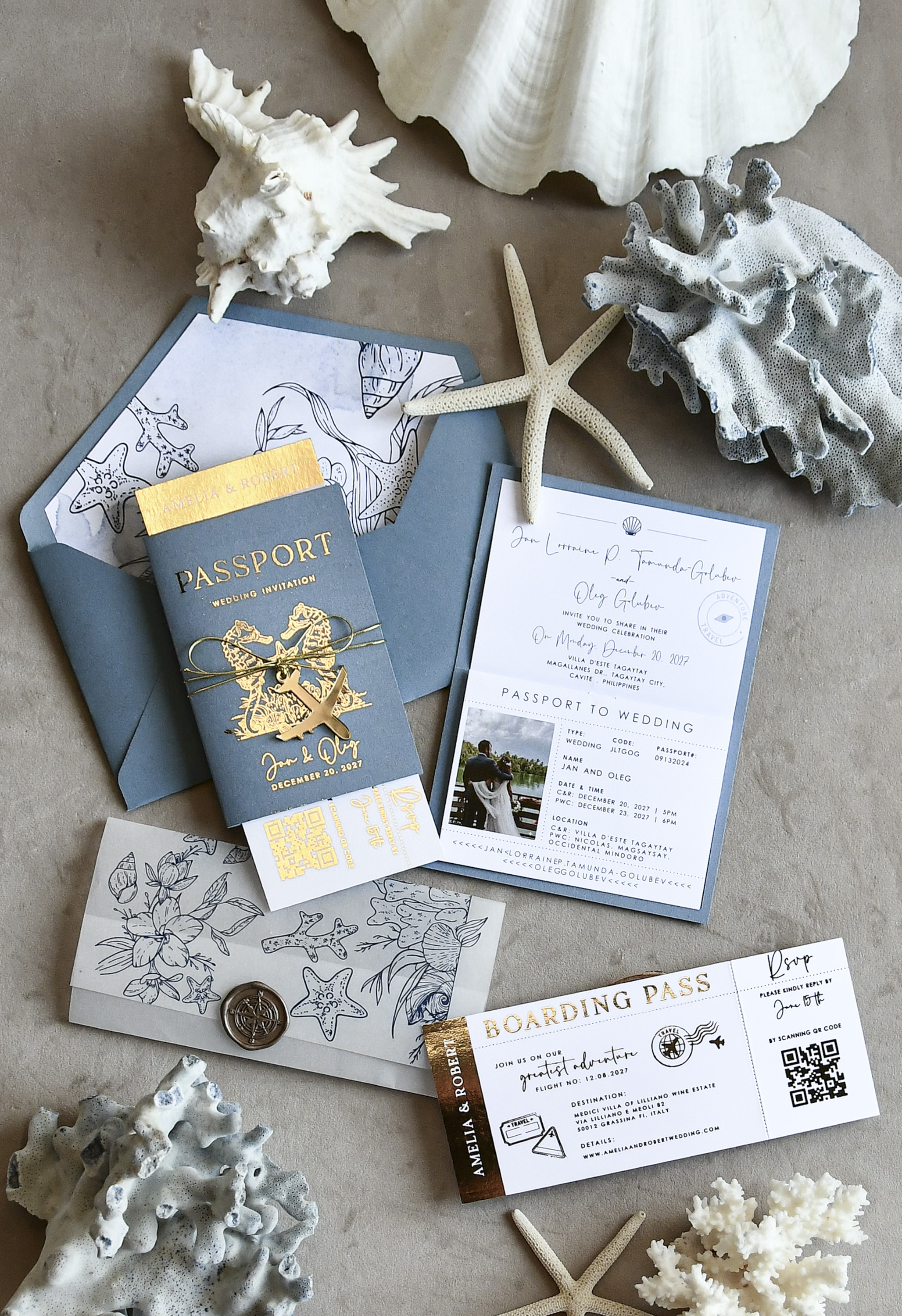
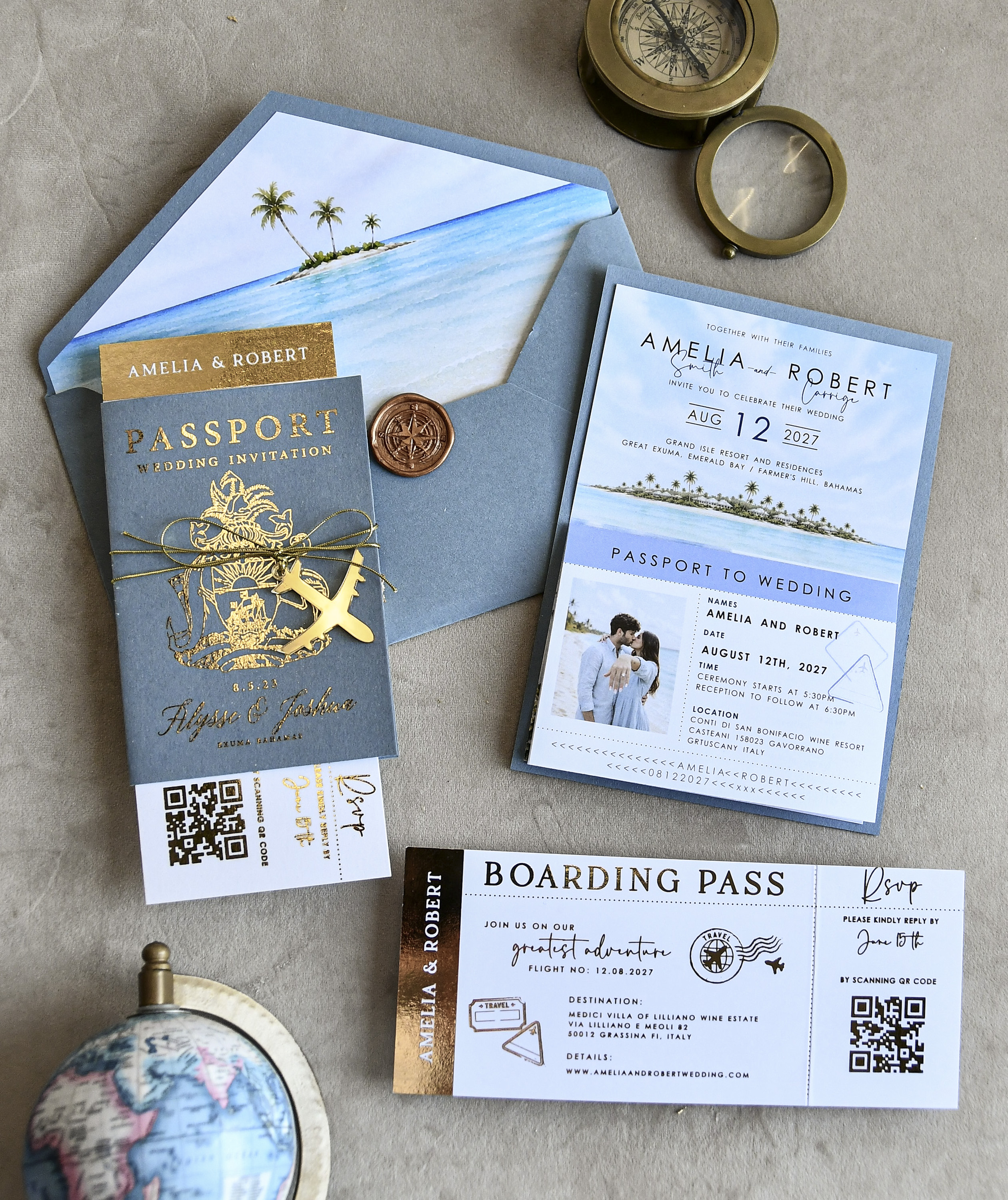
If you decide to include some of your future in-laws' friends, make sure they feel genuinely welcomed rather than like an afterthought. A thoughtful invitation goes a long way. For a relaxed, destination-style celebration, something like our 01/passBeach/z beach wedding invites — from the Passport to Love collection — sets a warm, festive tone that works beautifully for guests who may not know the couple well but are excited to celebrate.
Consider seating these guests near your in-laws so they feel comfortable and included. A brief mention in your wedding program — or even a warm welcome from the in-laws during toasts — helps integrate everyone into the celebration naturally.
The Bottom Line on Guest List Etiquette
There is no universal rule that says you must invite your future in-laws' friends. What matters most is that you and your partner are aligned, that you communicate your boundaries early and kindly, and that you're consistent — if you're saying no to their friends, make sure you're applying the same standard to your own extended circles.
The guest list is one of the few parts of wedding planning that directly affects your budget, your venue capacity, and the overall feel of your day. Protecting it isn't selfish — it's smart. Handle the conversation with warmth, offer alternatives where you can, and remember: you're building a marriage with this family. A little grace now goes a long way.

Frequently Asked Questions
Not at all, as long as you communicate your reasoning clearly and kindly. Guest list limits are a normal part of wedding planning, and most people understand when couples explain they're keeping things small or staying within a strict budget.
Generally, yes — financial contribution traditionally comes with some guest list input. A fair approach is to give them a set number of spots proportional to their contribution, so expectations are clear from the start.
Be honest, early, and consistent. Frame it around your overall guest count or budget rather than making it personal, and offer an alternative like a post-wedding celebration where they can include their wider circle.
Yes — as a general rule, each partner should lead difficult conversations with their own family. It feels less confrontational and keeps the future daughter- or son-in-law from being cast as the villain.
A common guideline is 8 to 15 spots for each set of parents, depending on your total guest count. Setting a firm number upfront prevents ongoing negotiation and helps everyone plan accordingly.
Tiered guest lists — where some guests attend the reception but not the ceremony — are becoming more common and can be a good compromise. Just make sure your invitations clearly distinguish between the two so no one shows up at the wrong time.
See This Design Up Close













You May Also Like



More Wedding Planning Guides
- → Should You Invite New Partners to Your Wedding? Here's How to Decide
- → The Right Age to Send Children Their Own Wedding Invitation
- → Hand Delivery vs. Mailing Your Wedding Invitations: A Practical Guide
- → Navigating the Cousin Question: Your Guest List, Your Rules
- → Navigating the Office Guest List: Who at Work Deserves a Wedding Invite?
- → No RSVP, No Problem? How to Handle Guests Who Go Silent
- → Extra Wedding Guests: Who Foots the Bill?
- → Adults-Only Wedding: The Right Words to Tell Guests, Kindly and Clearly
- → Online RSVPs Are Totally Valid — Here's How to Pull It Off Gracefully
- → Parents Want to Invite Their Friends to Your Wedding? Here's How to Set Boundaries and Stay Sane
- → How to Handle Kids at Your Wedding: Childcare vs. Entertainment Explained
- → Child-Free Weddings: The Honest Etiquette Guide for Couples
- → RSVP Silence: How Long to Wait and What to Do Next
- → To Invite or Not: Making the Kids-at-Your-Wedding Decision With Confidence
- → Surprise Plus-Ones: How to Protect Your Guest List Without Losing Your Cool
- → Uninvited Plus-Ones and Tag-Alongs: How to Keep Your Guest List Intact
- → When Family Feuds Threaten Your Wedding Plans: A Practical Peacekeeper's Guide
- → Inviting an Estranged Brother or Sister: Finding Clarity Before You Seal the Envelope
- → Cousins, Invites, and Hard Choices: A Practical Guest List Guide