
Plus-Ones for Single Guests: Making the Right Call for Your Wedding
One of the trickiest RSVPs-season decisions you'll face is whether to let single guests bring a date. There's no universal right answer — it depends on your budget, venue capacity, and how close you are to each guest. But there is a way to think it through clearly so you feel confident in whatever you decide, and so your guests feel respected either way.
Why This Decision Is Harder Than It Looks
On the surface it seems simple: either everyone gets a plus-one or they don't. In reality, most couples end up somewhere in the middle — and that middle ground is where the confusion starts. Giving some single guests a plus-one but not others can feel inconsistent, and guests talk. If your college roommate gets to bring a date but your coworker doesn't, word will get around.
That said, a blanket "no plus-ones" policy for all single guests is completely acceptable and increasingly common, especially at intimate or destination weddings. The key is applying your rule consistently within clear categories so no one feels singled out.
How to Set a Fair Plus-One Policy
The most stress-free approach is to define tiers and stick to them. Here are the most common frameworks couples use:
- Committed partners only: Anyone in a long-term relationship (typically living together or together 1+ year) gets a plus-one. Single guests do not. This is the most budget-friendly option.
- Wedding party gets plus-ones: All members of your bridal party receive a plus-one regardless of relationship status. Everyone else follows the committed-partners rule.
- Everyone gets a plus-one: The most generous option — and the most expensive. Best suited for smaller guest lists or when budget allows.
- Destination wedding exception: If guests are traveling far, some couples extend plus-ones more broadly so no one feels stranded alone at a far-off venue.
Once you pick a tier system, apply it uniformly. If your cousin gets a plus-one, your college friend at the same level of closeness should too.
The Budget Reality Check
Every plus-one adds a real cost — typically between $75 and $200 per head depending on your catering, bar package, and venue. If you have 20 single guests and grant all of them a plus-one, you could be adding $1,500 to $4,000 to your budget before flowers or photography enter the conversation. Run the numbers before you commit to a policy.
A good rule of thumb: if saying yes to all plus-ones would push you over budget or over venue capacity, it's completely reasonable — and socially acceptable — to say no. Most guests understand. What they don't understand is inconsistency, so make your decision early and hold the line.
How to Communicate Your Policy on Invitations
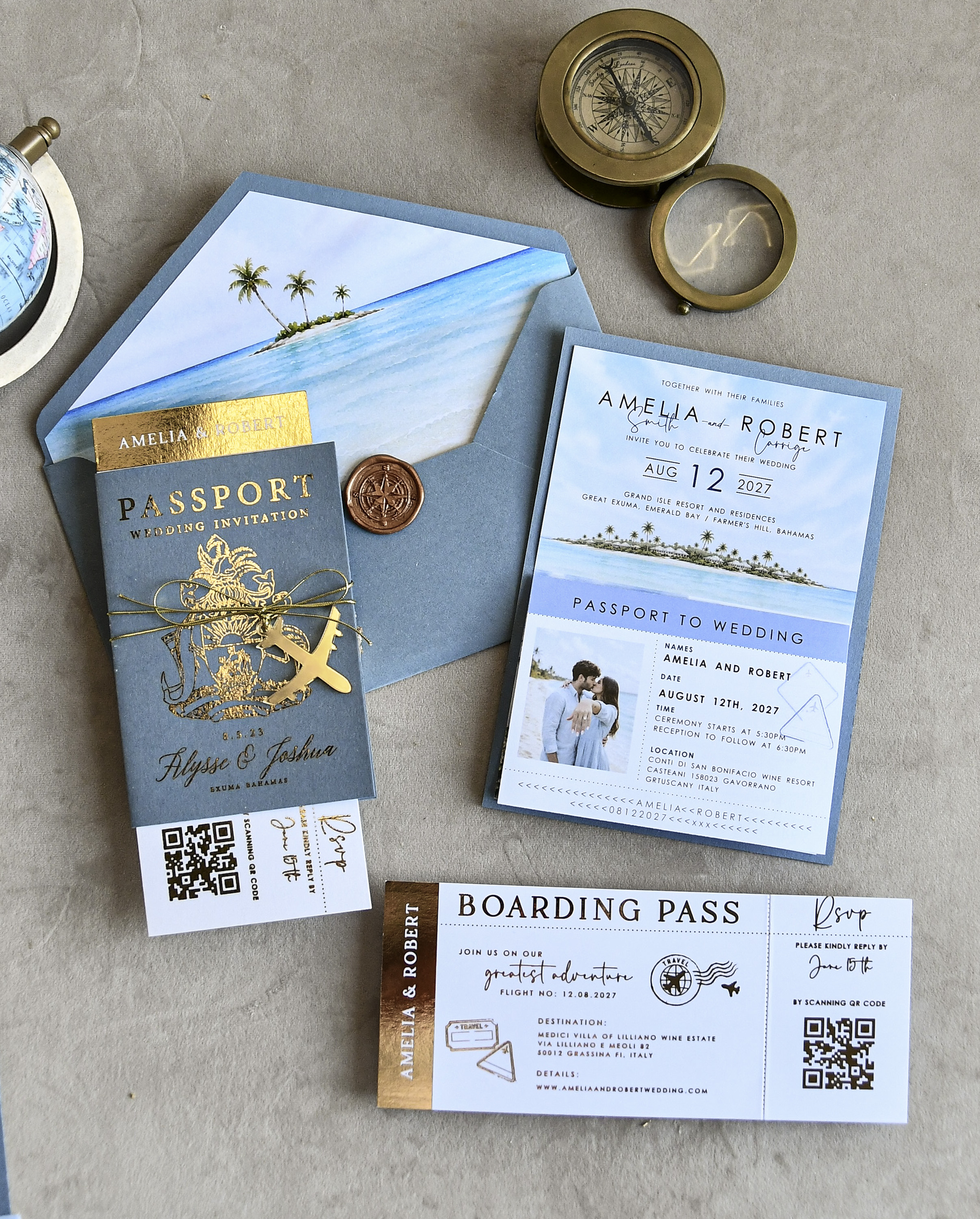
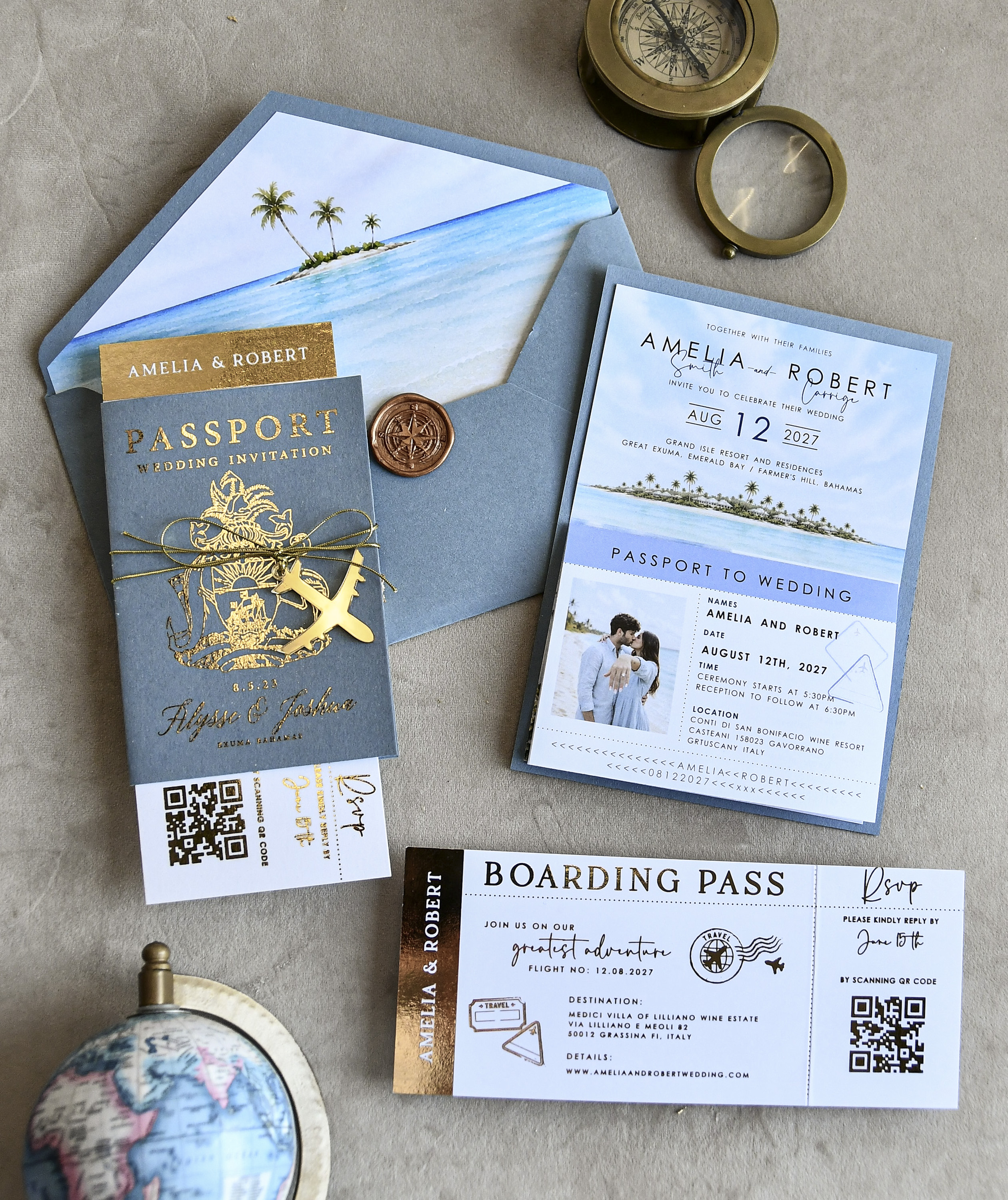
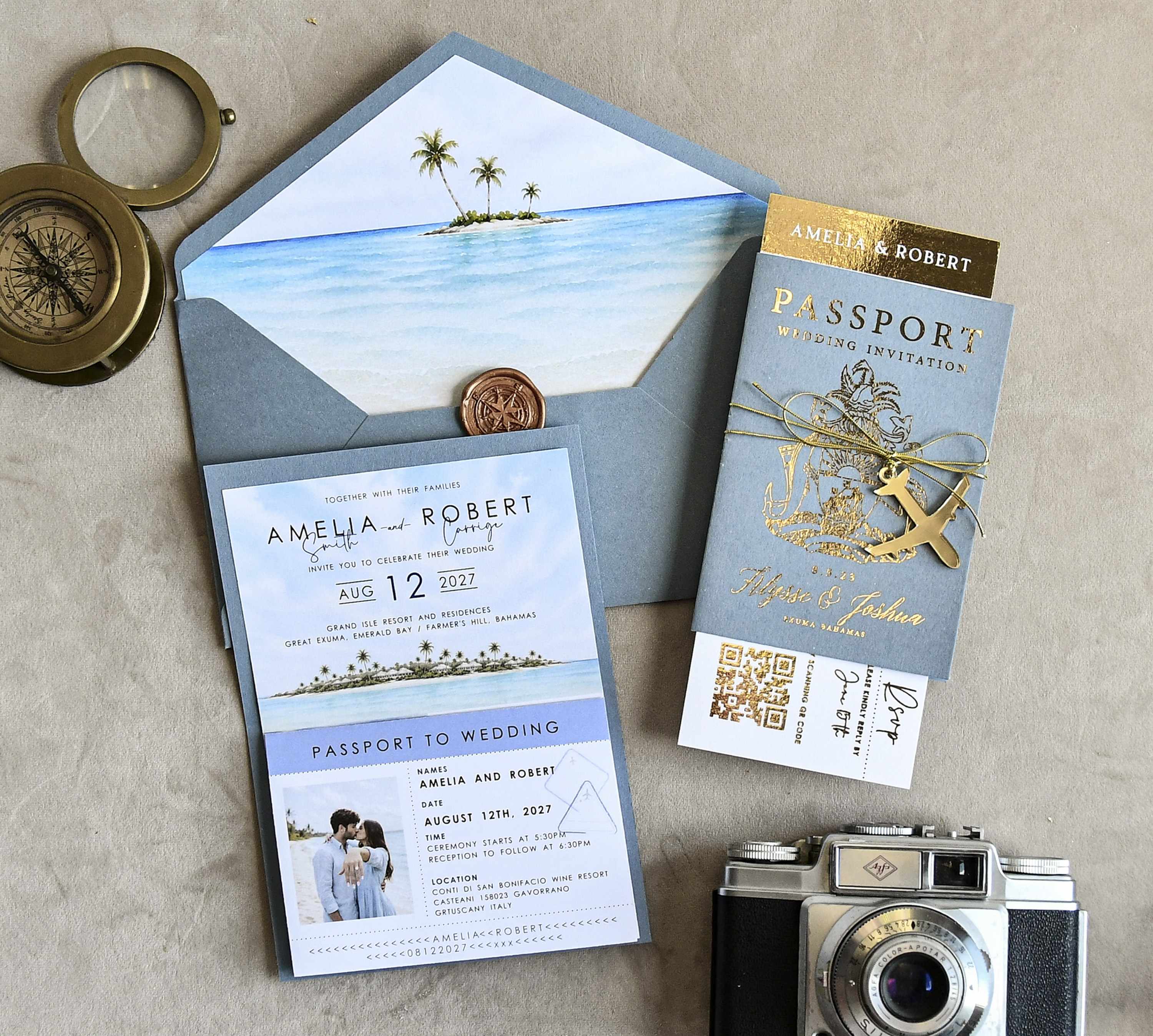
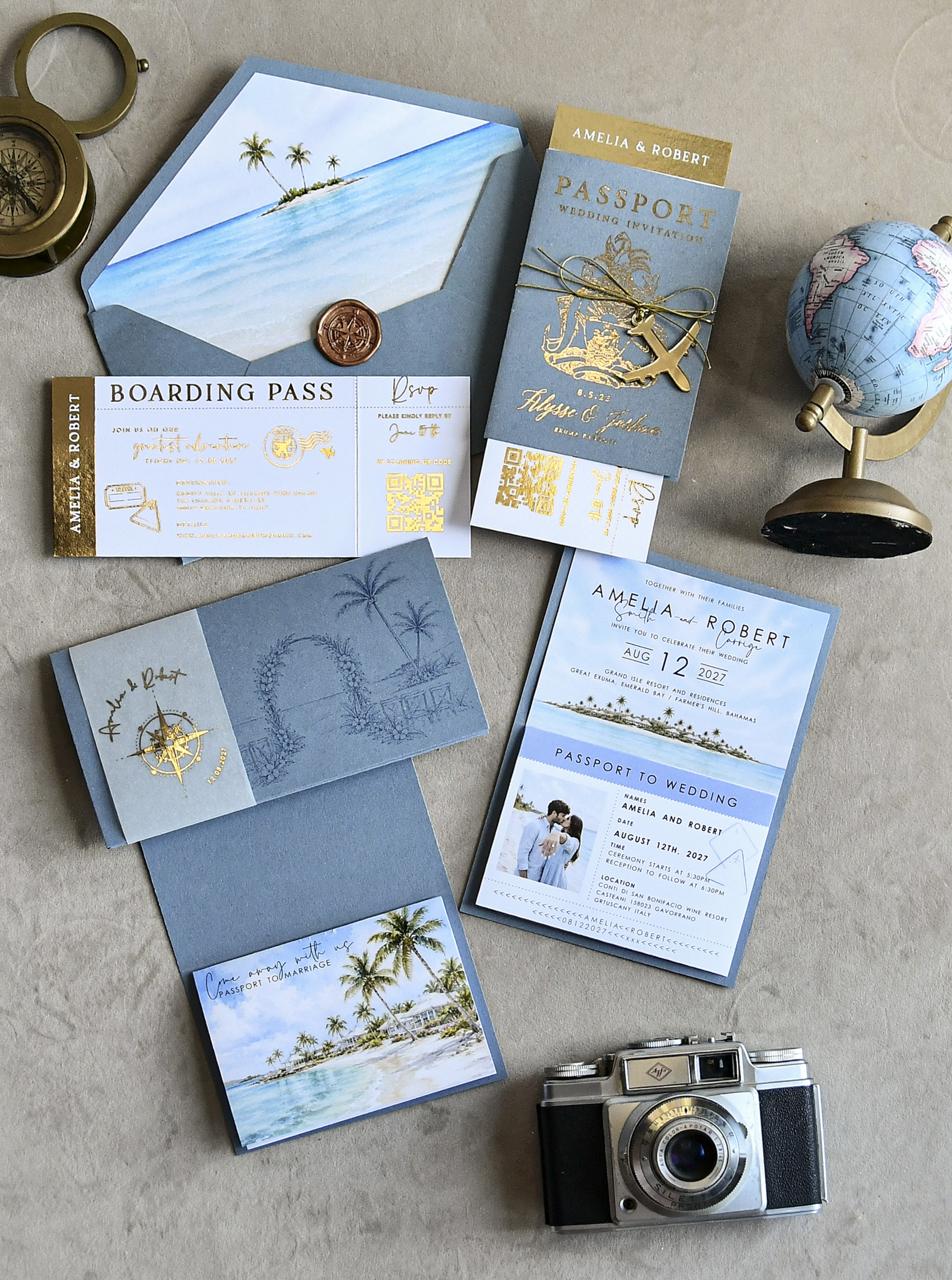
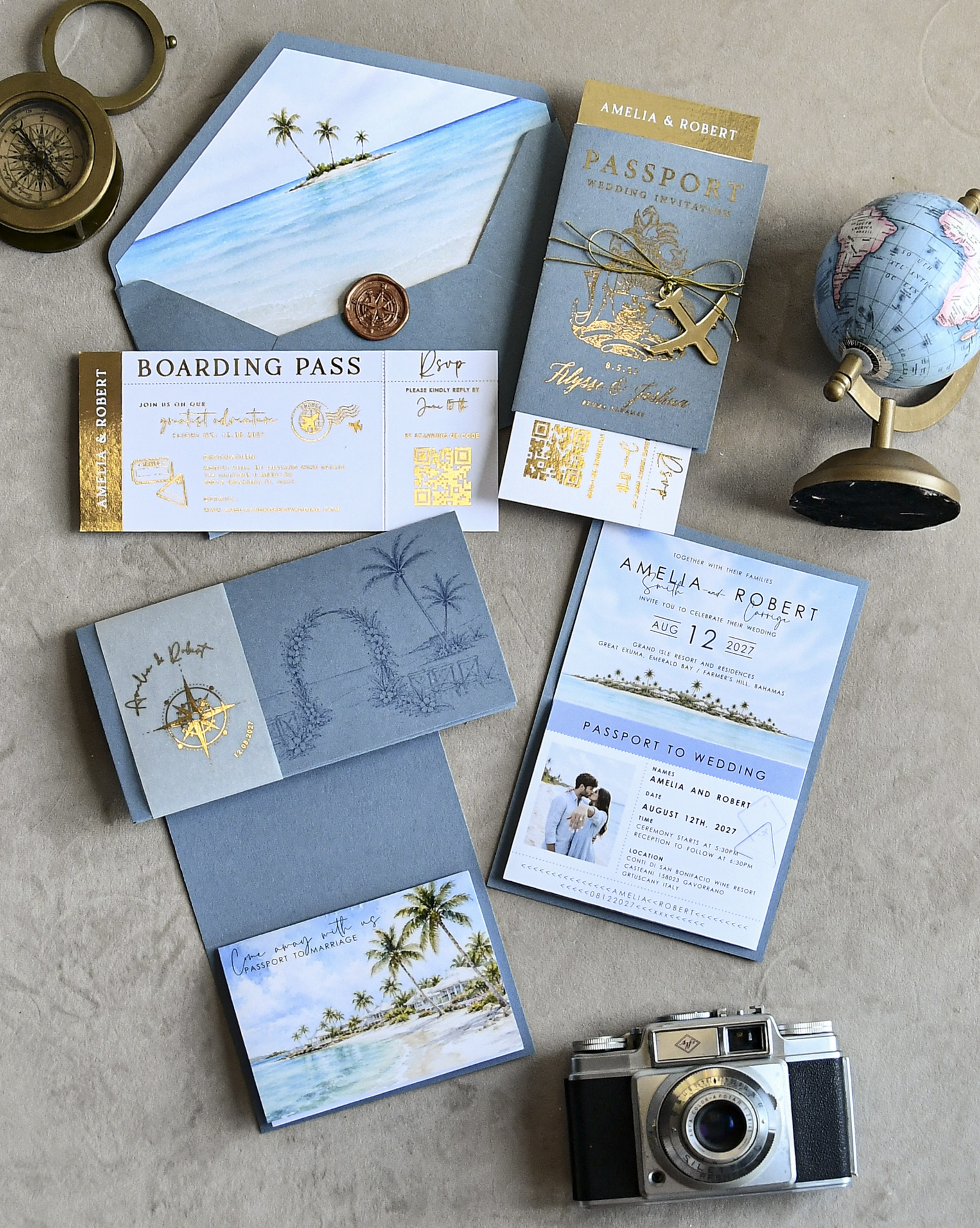
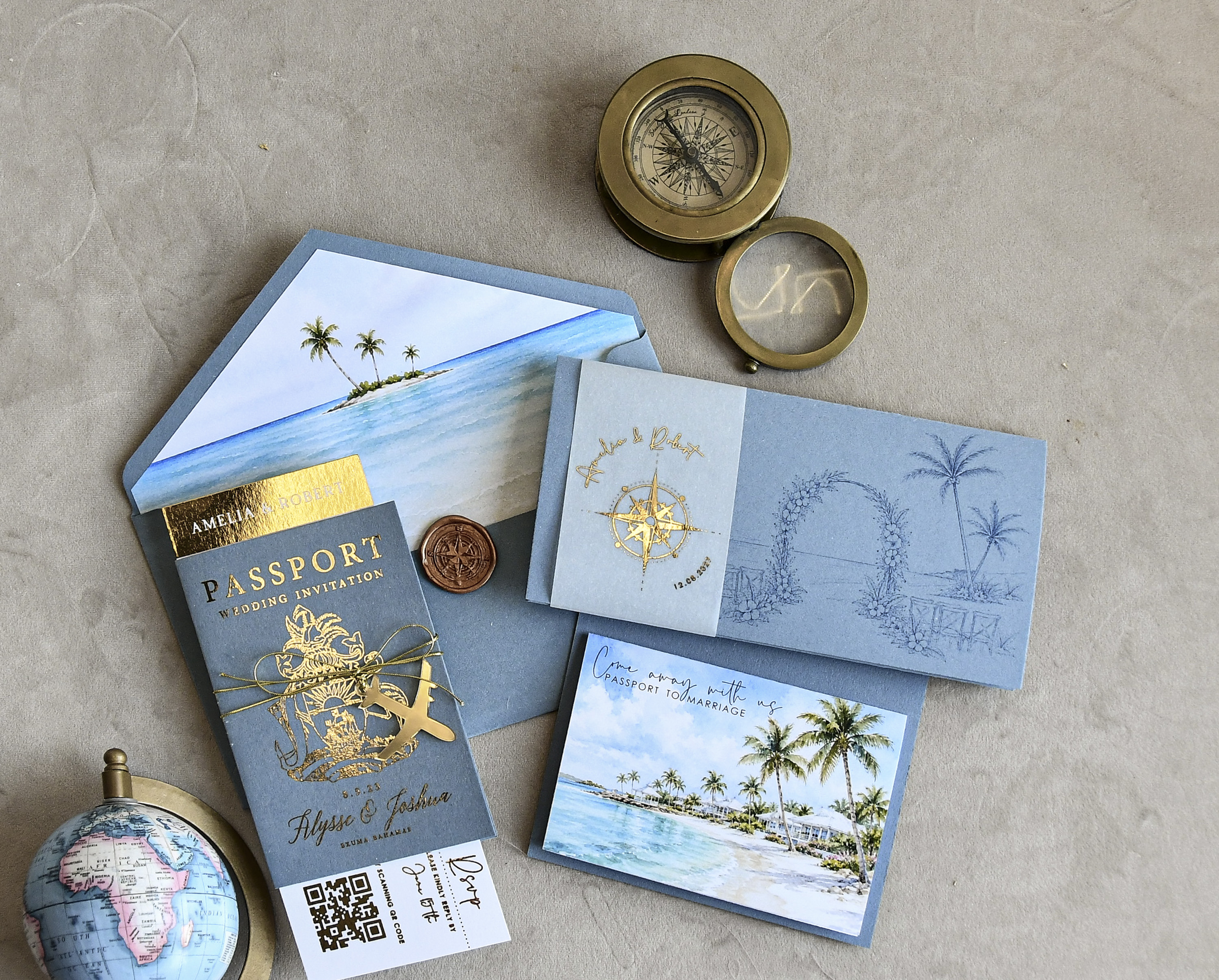
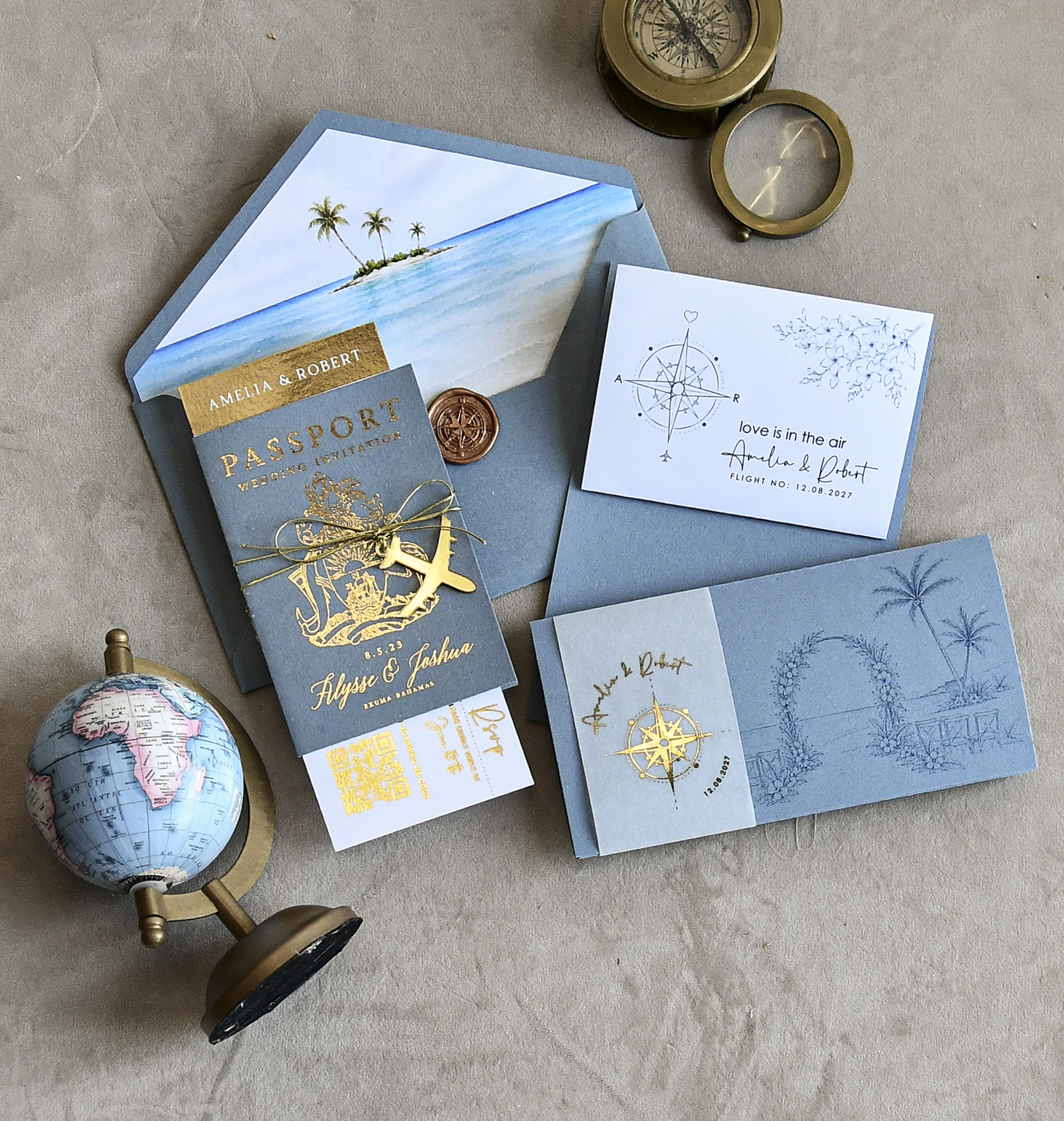
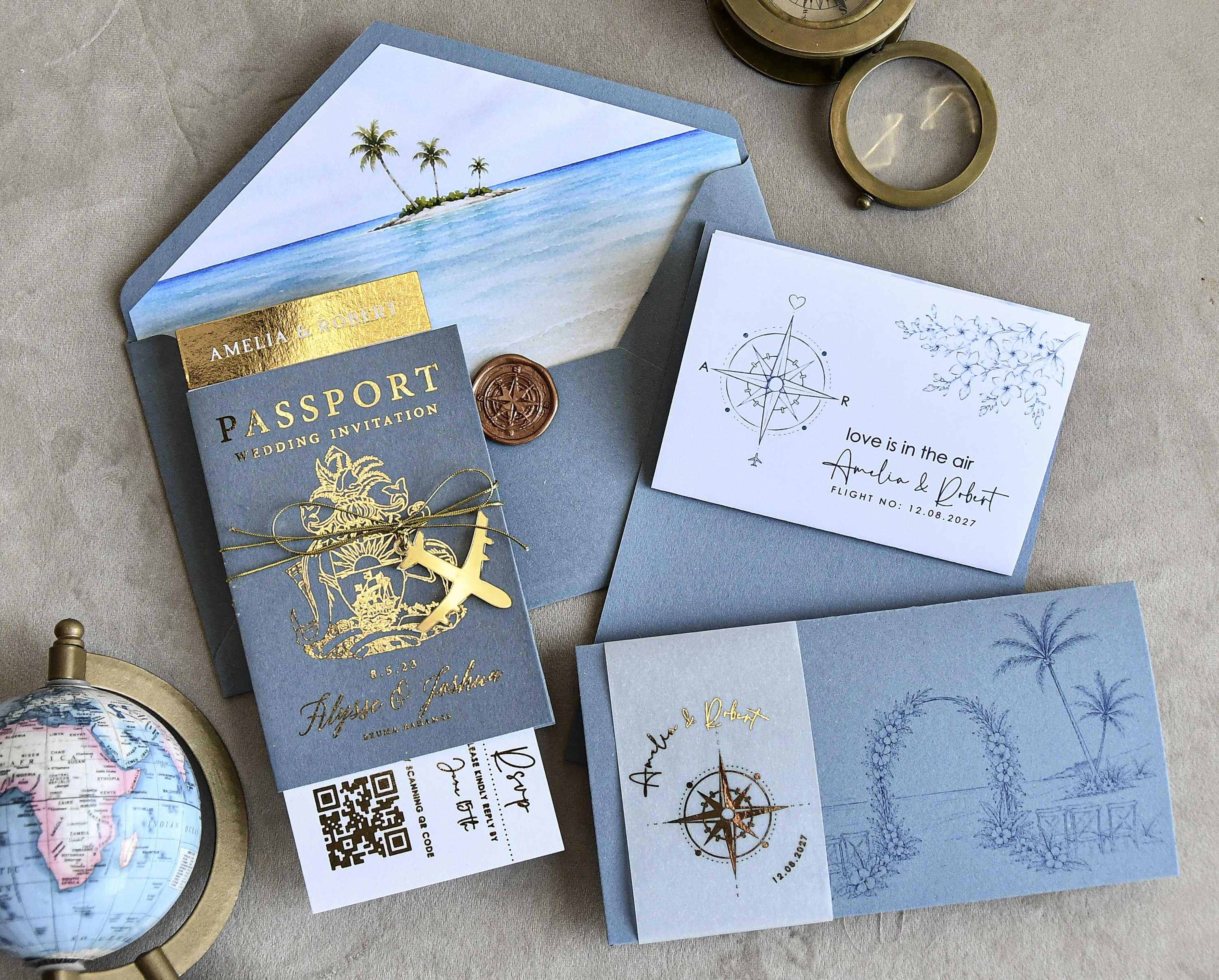
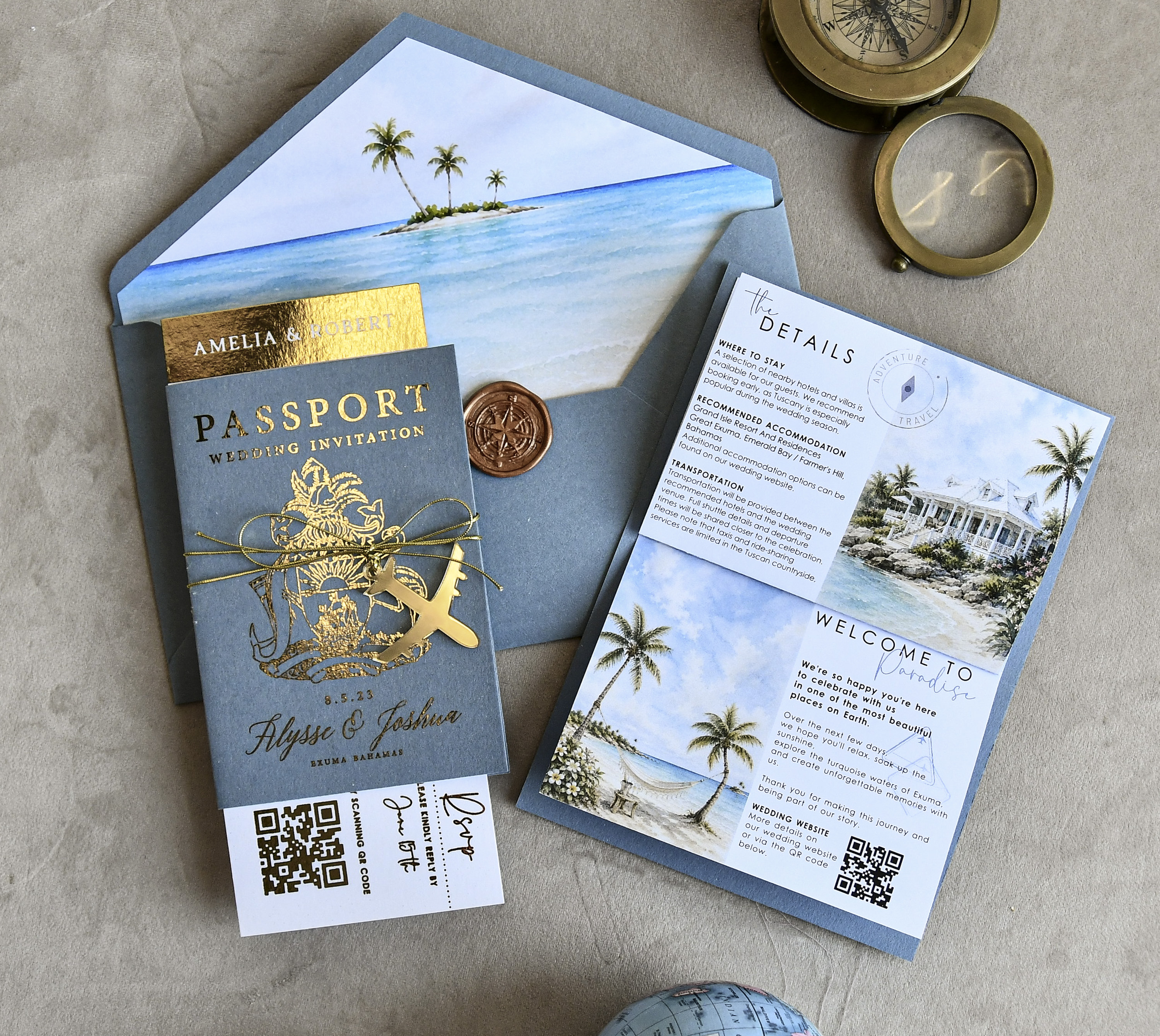
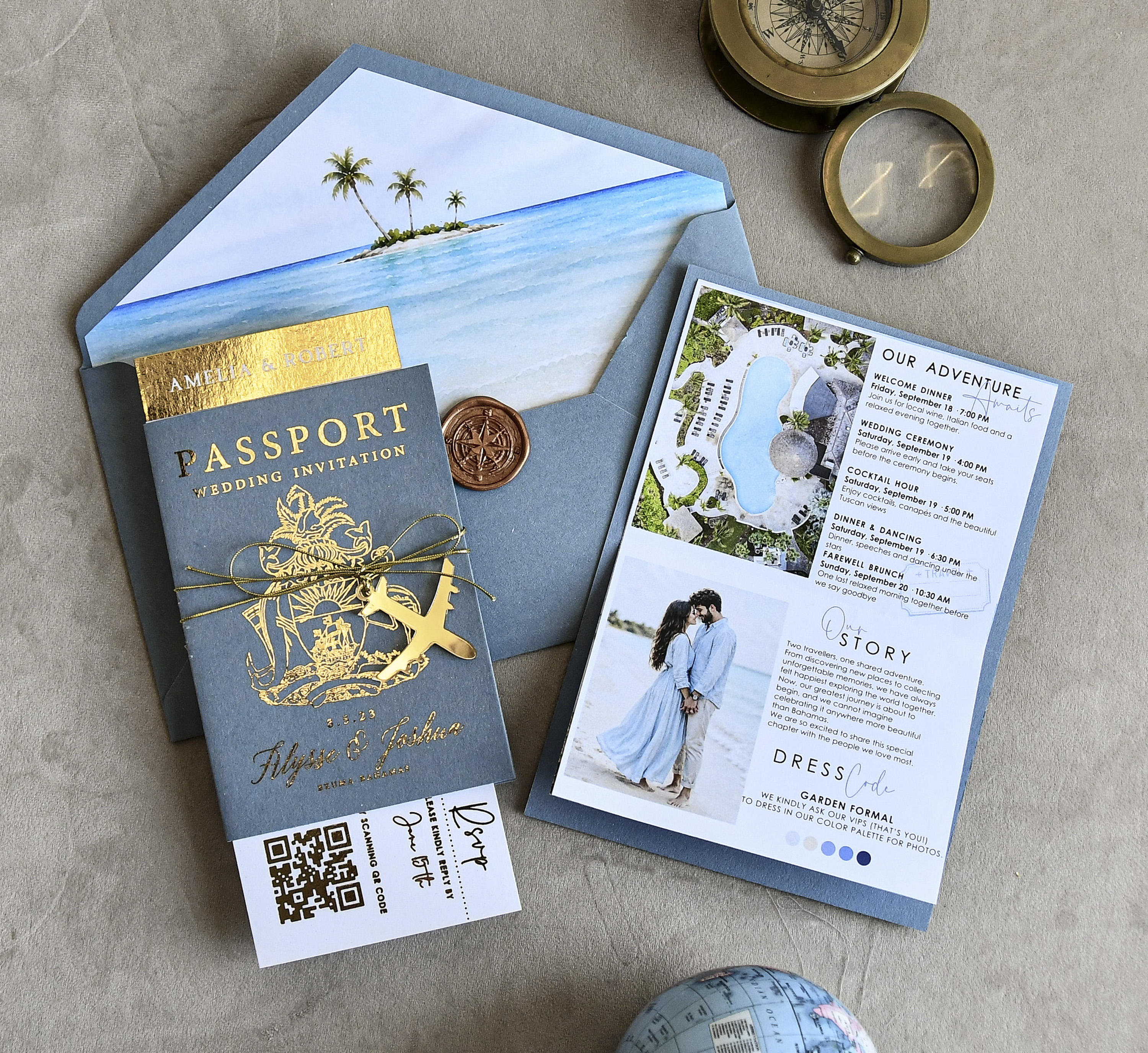
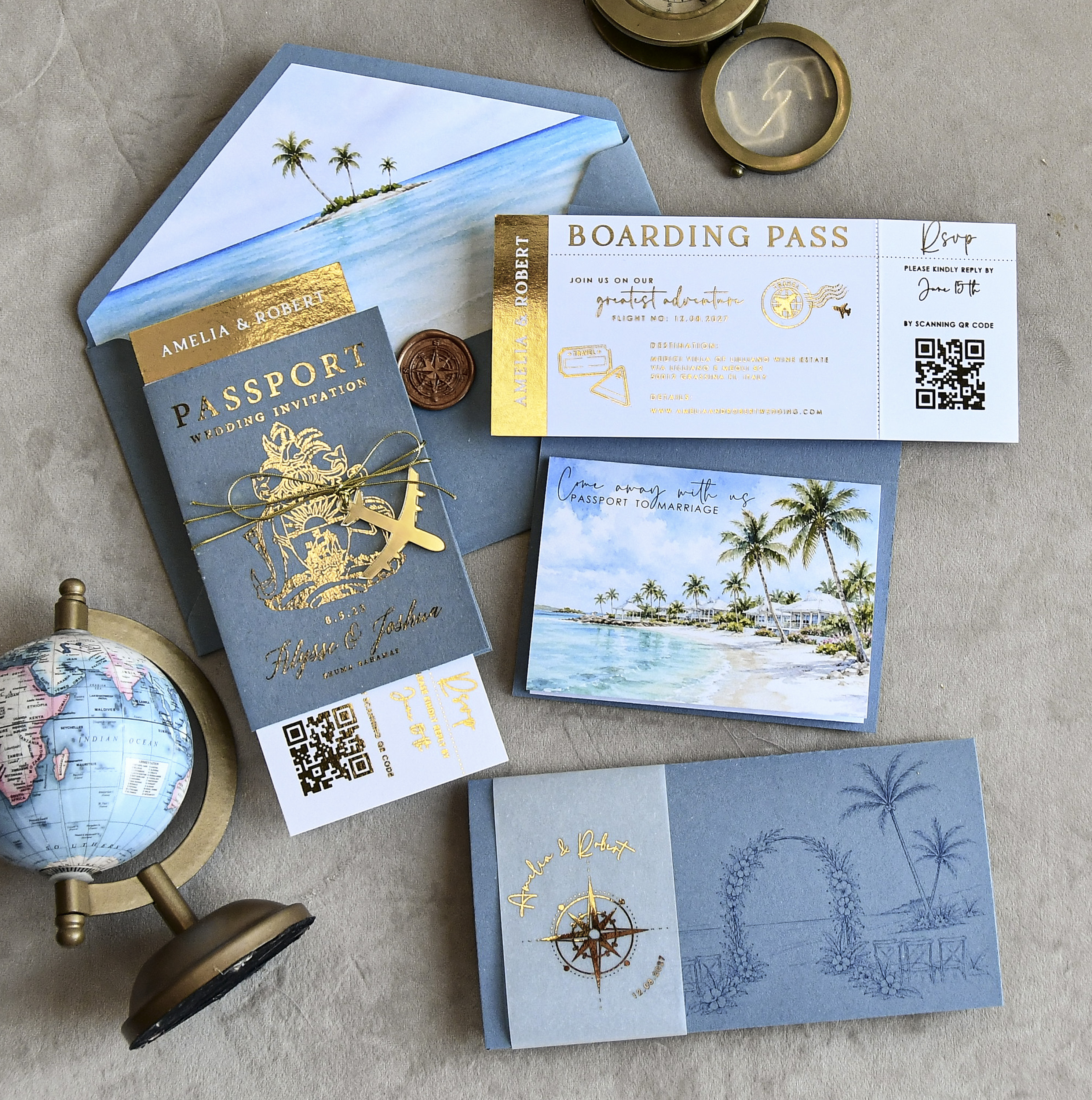
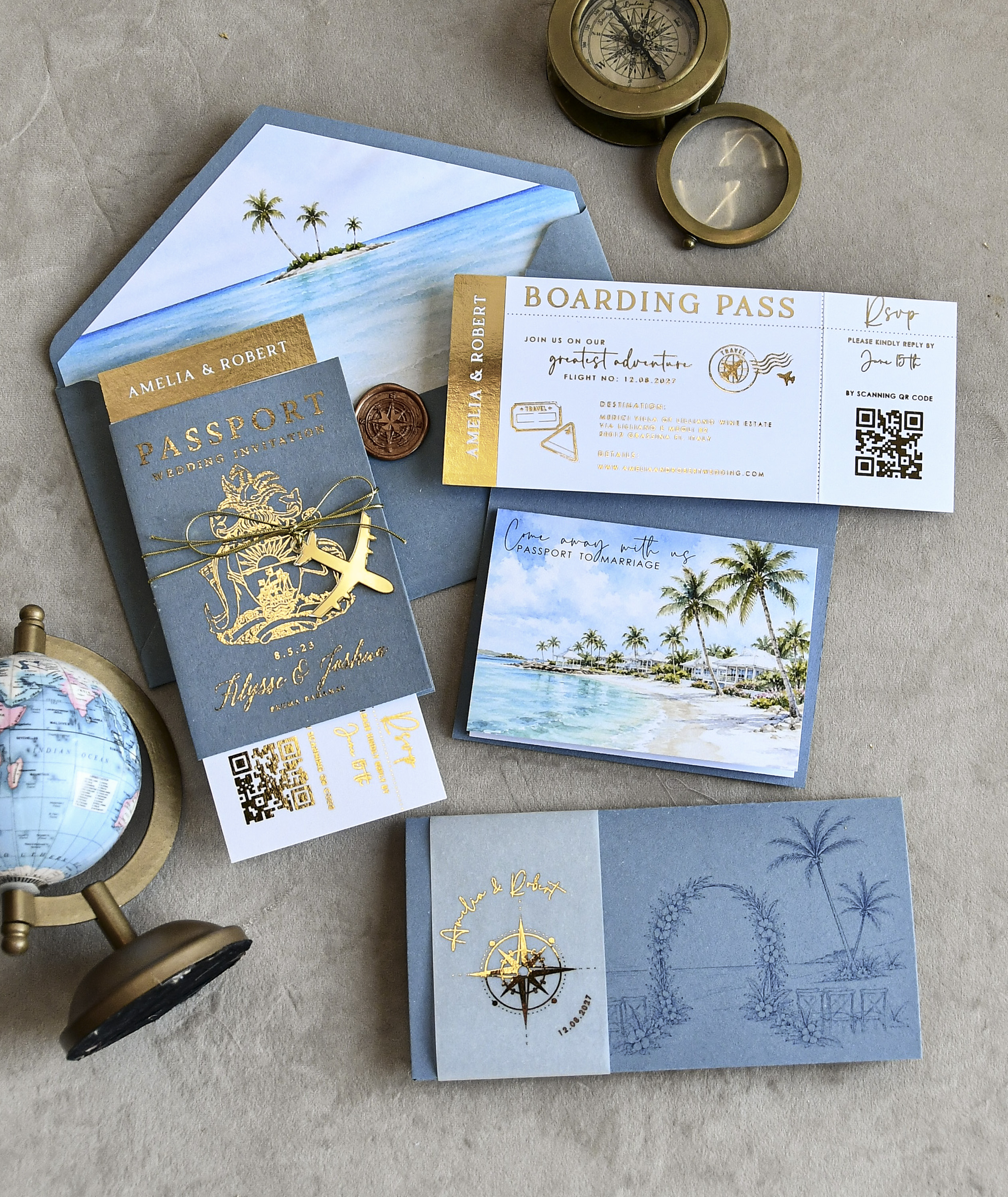
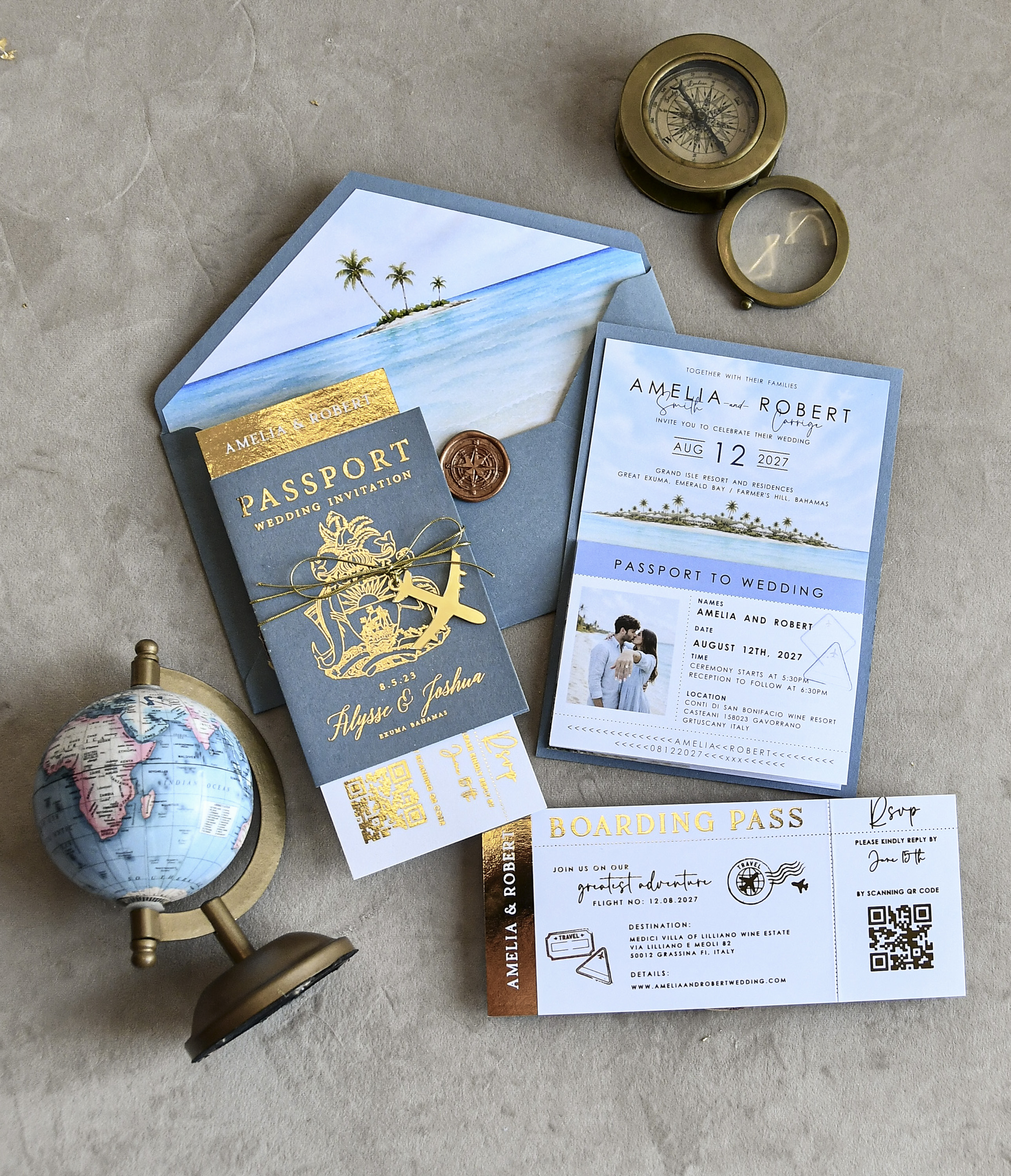
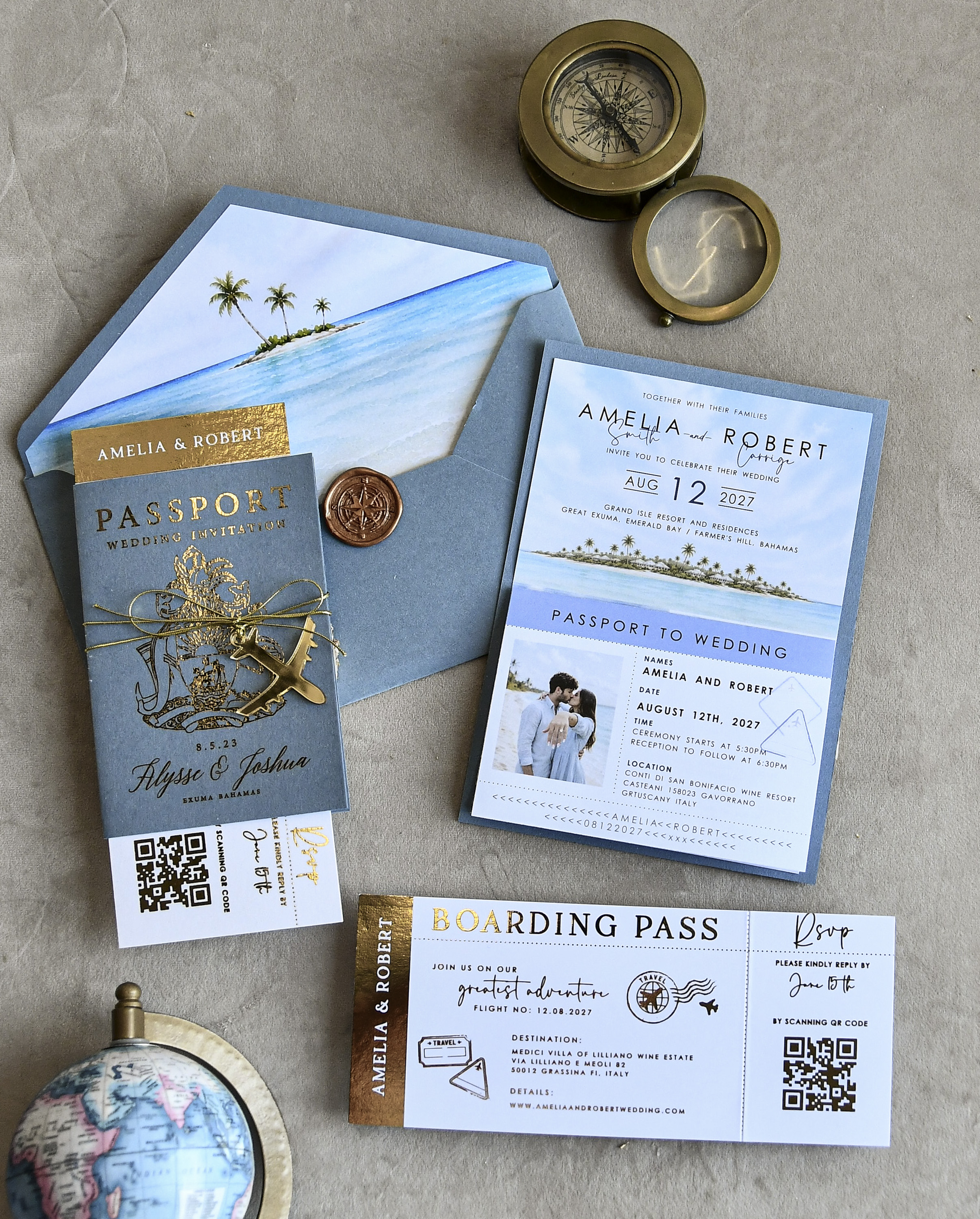
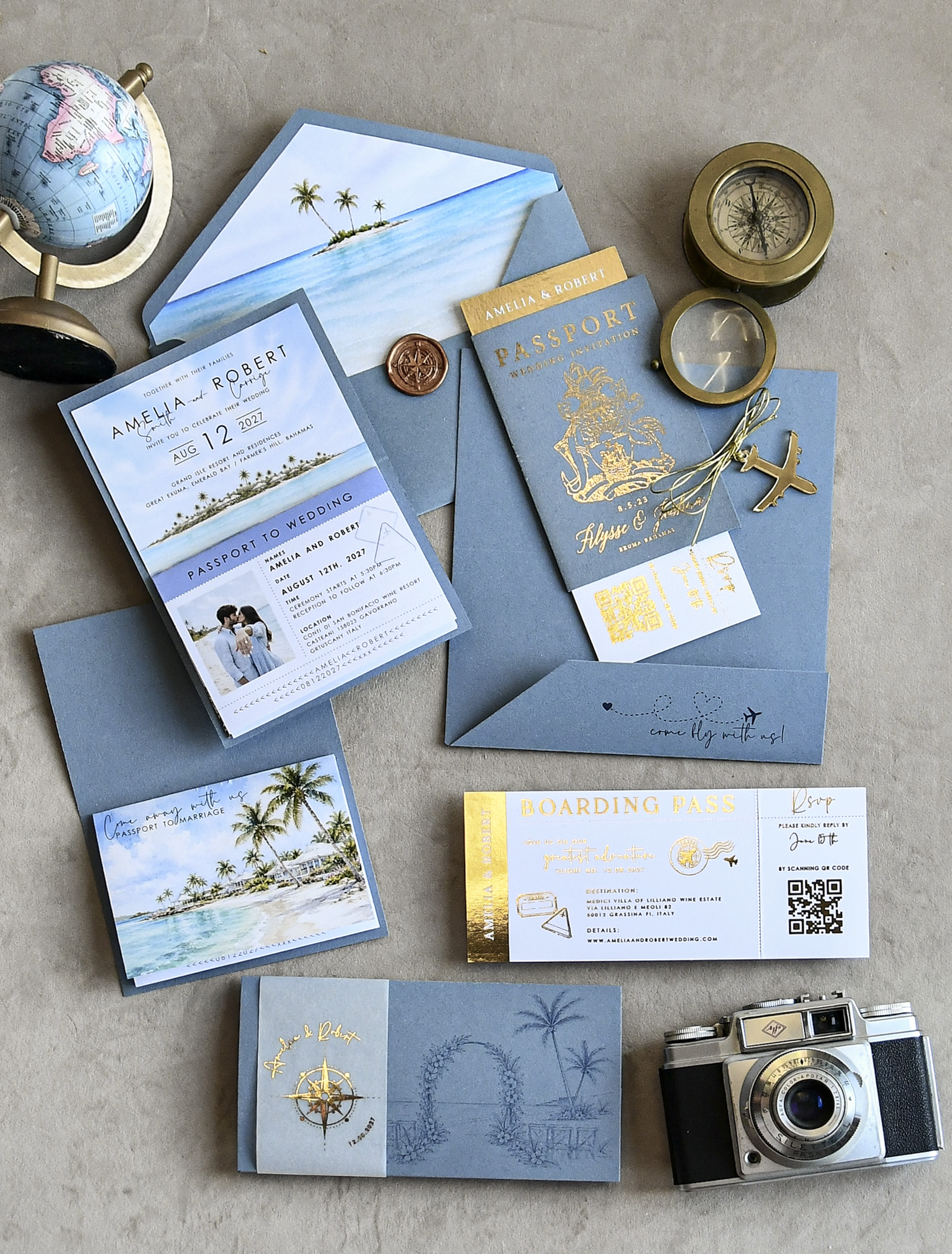
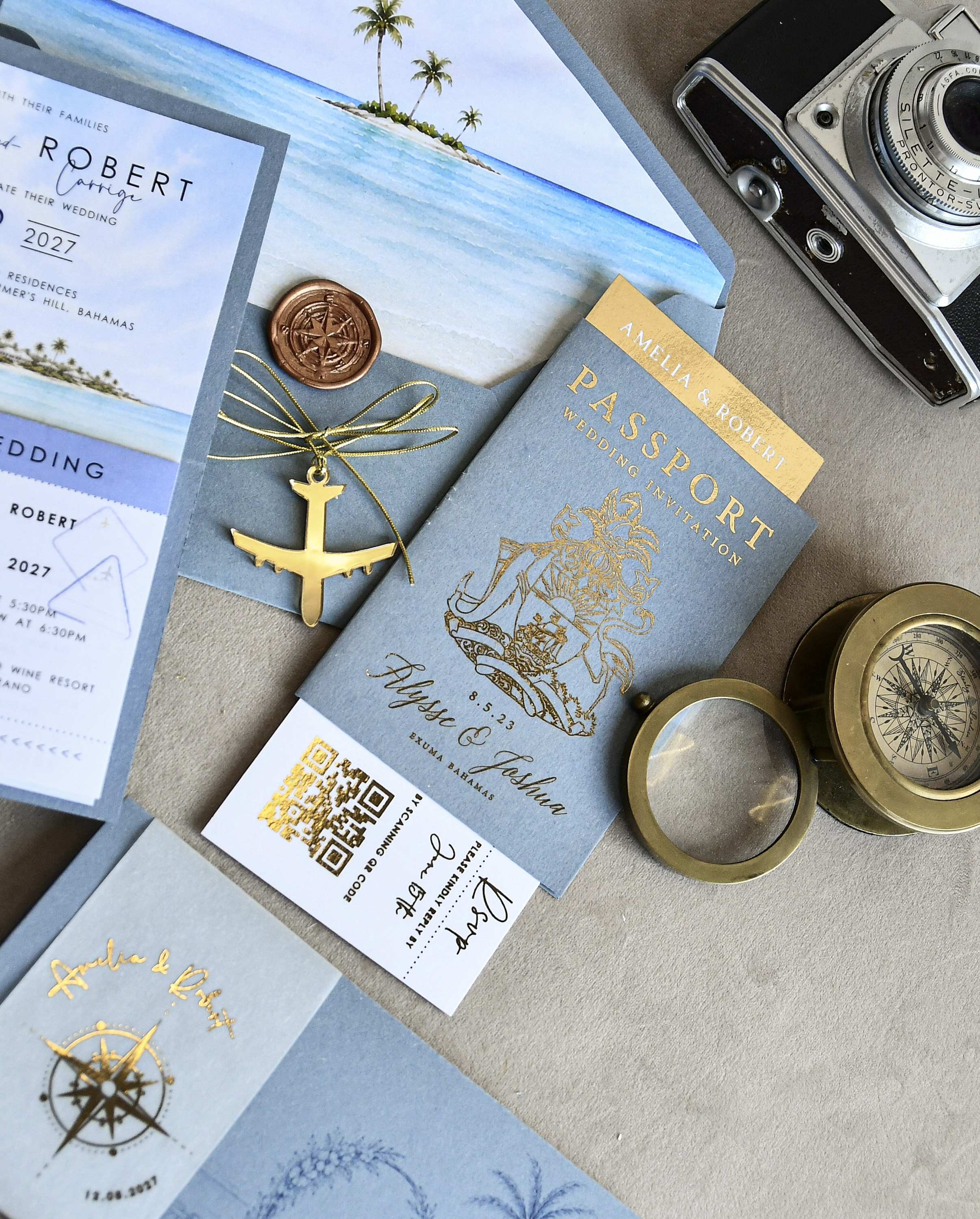
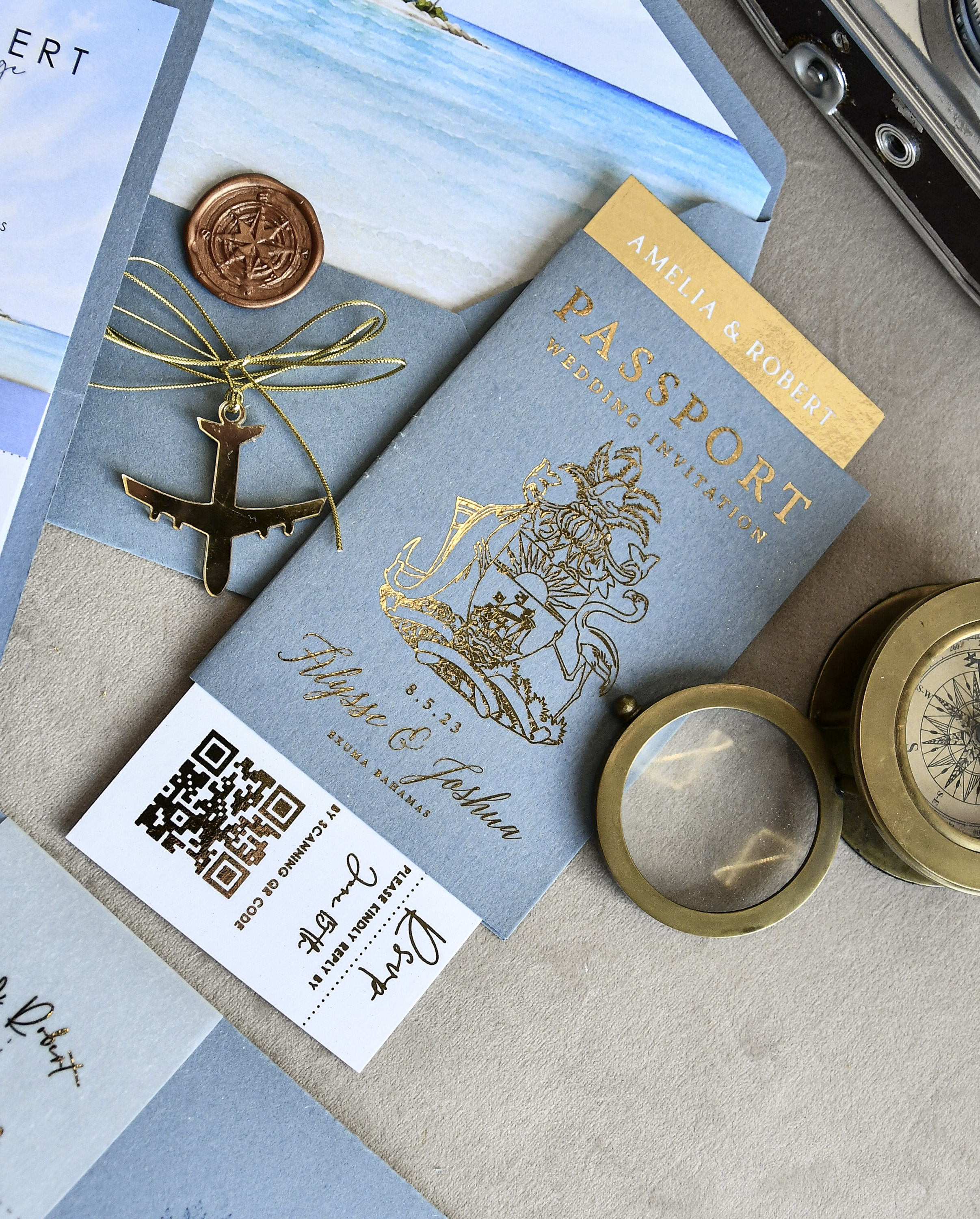
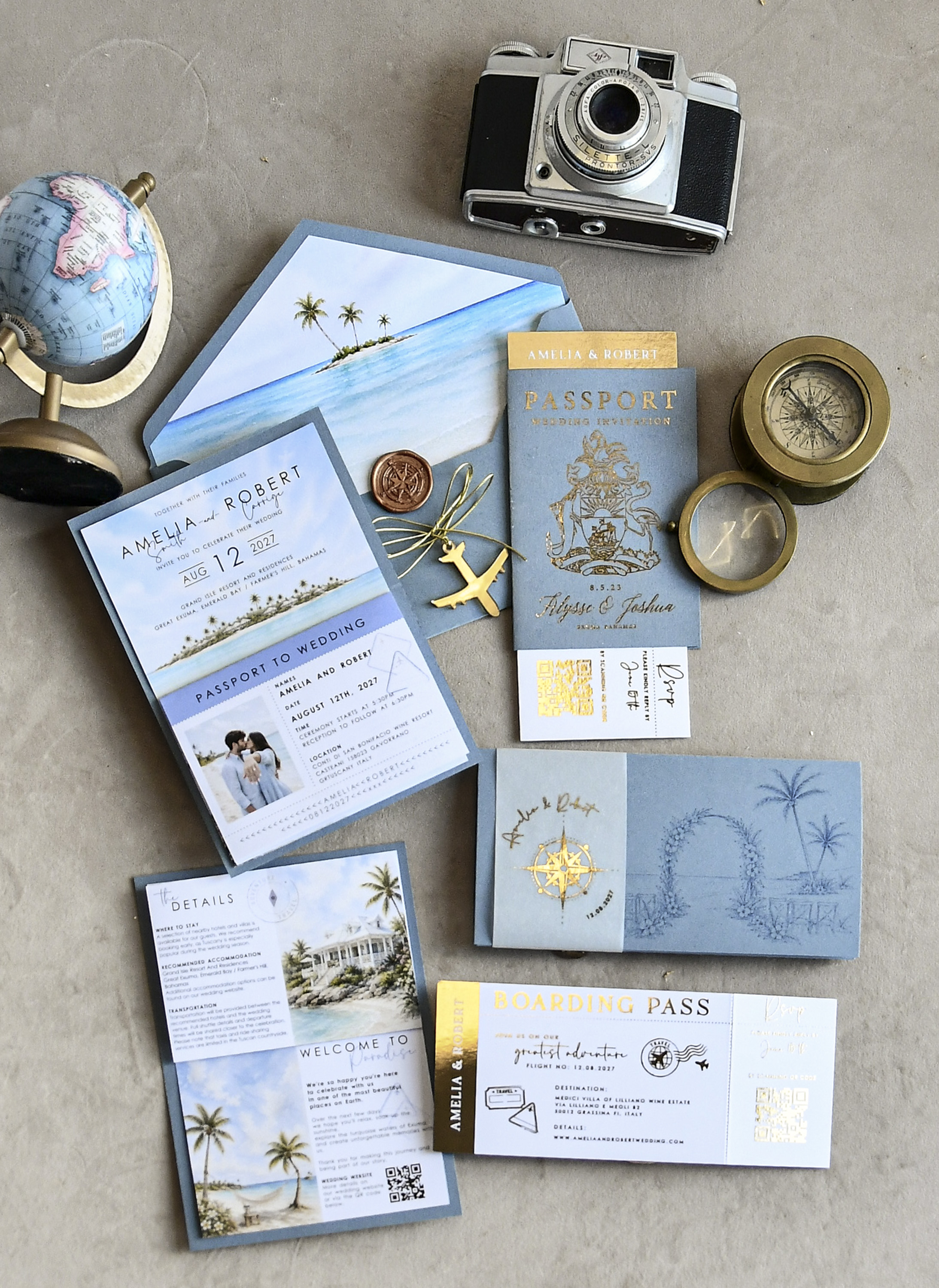
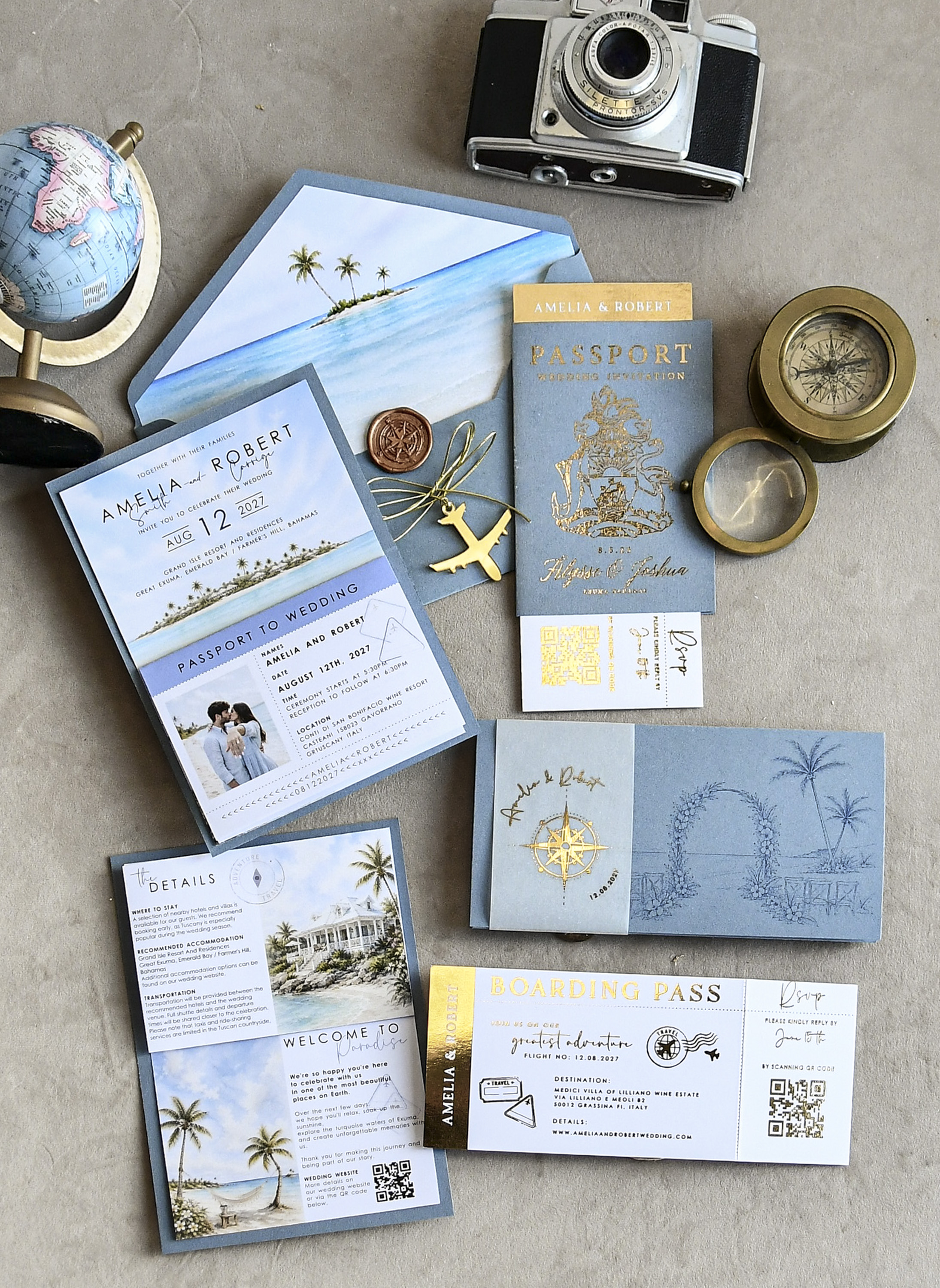
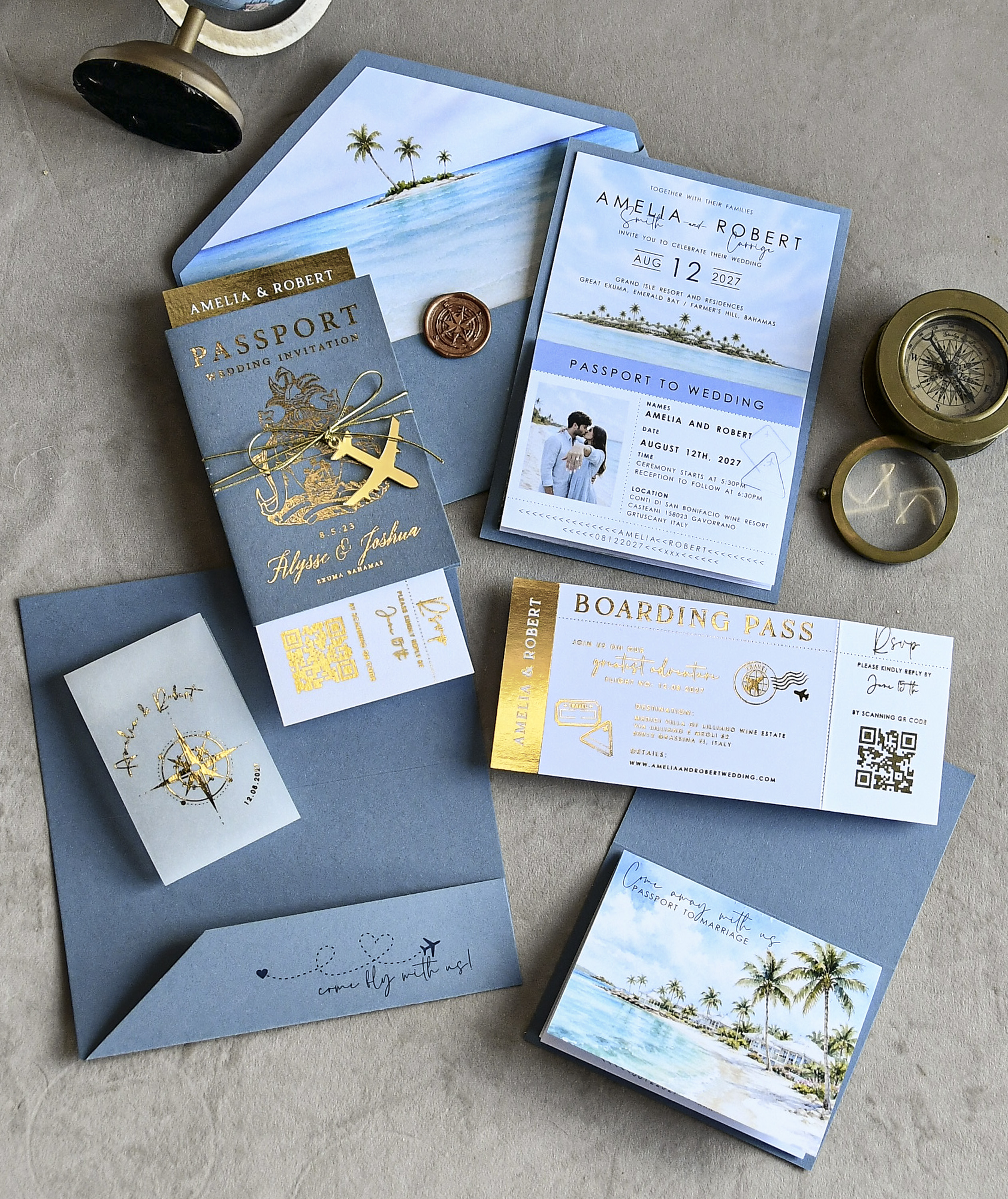
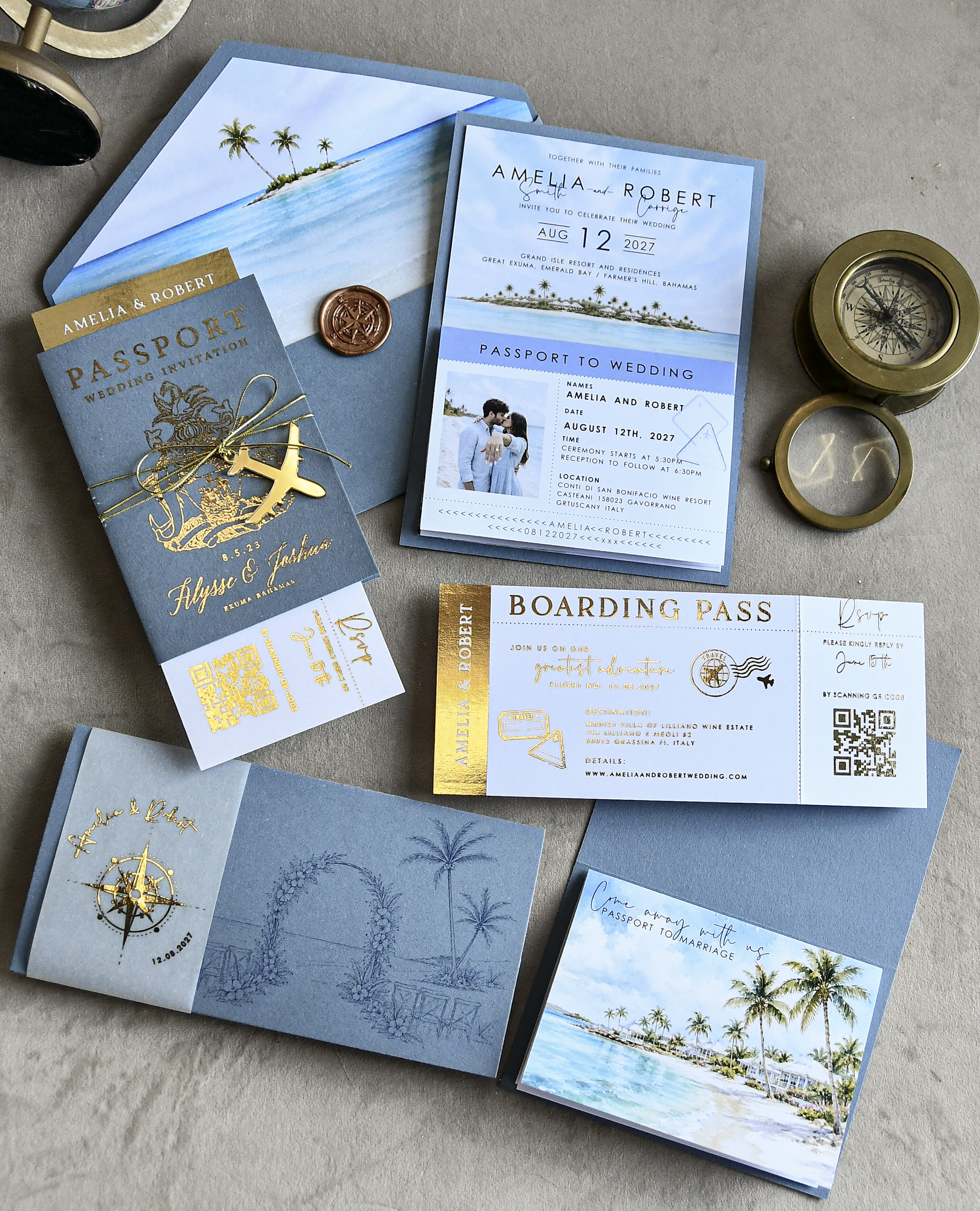
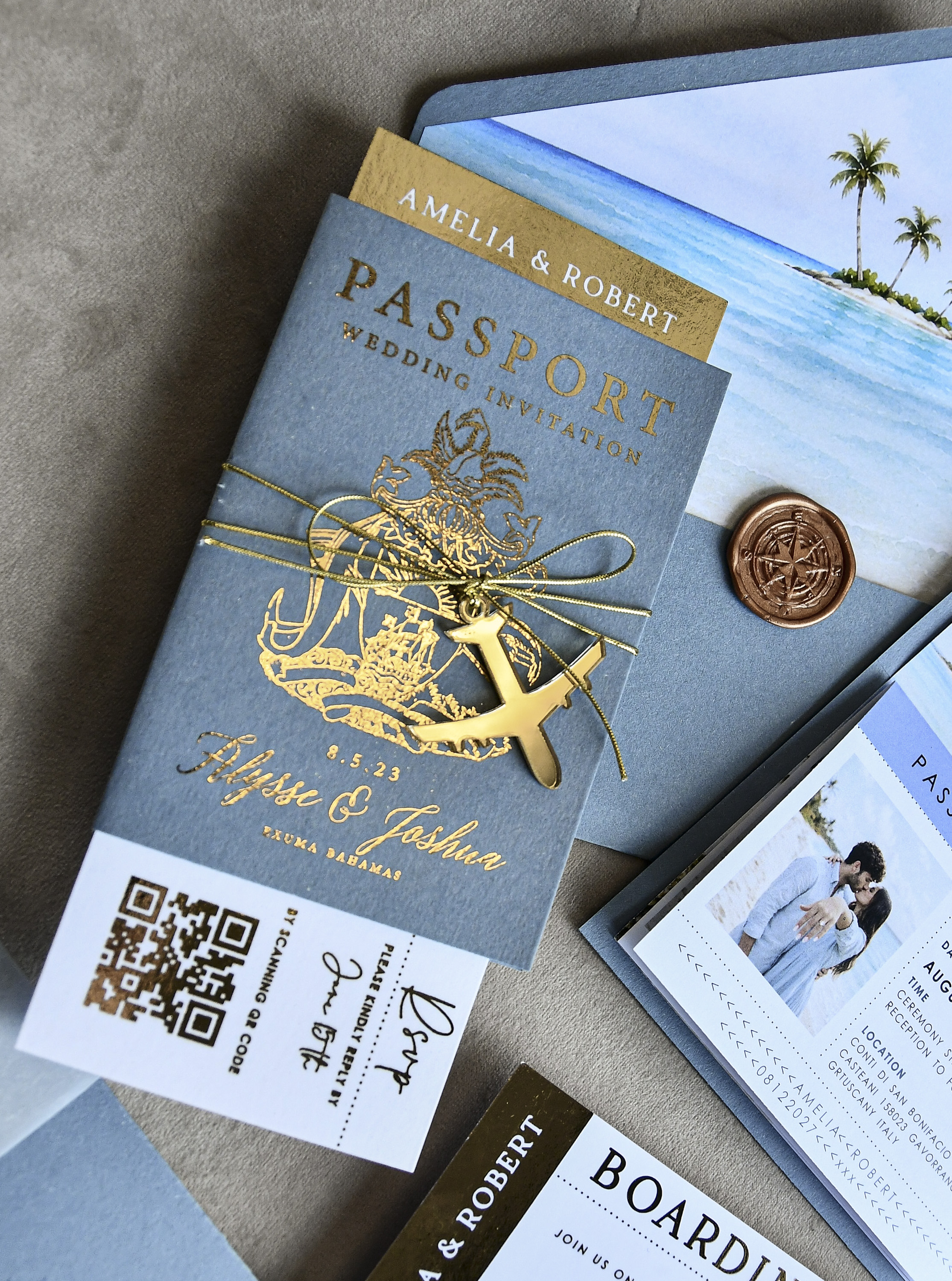
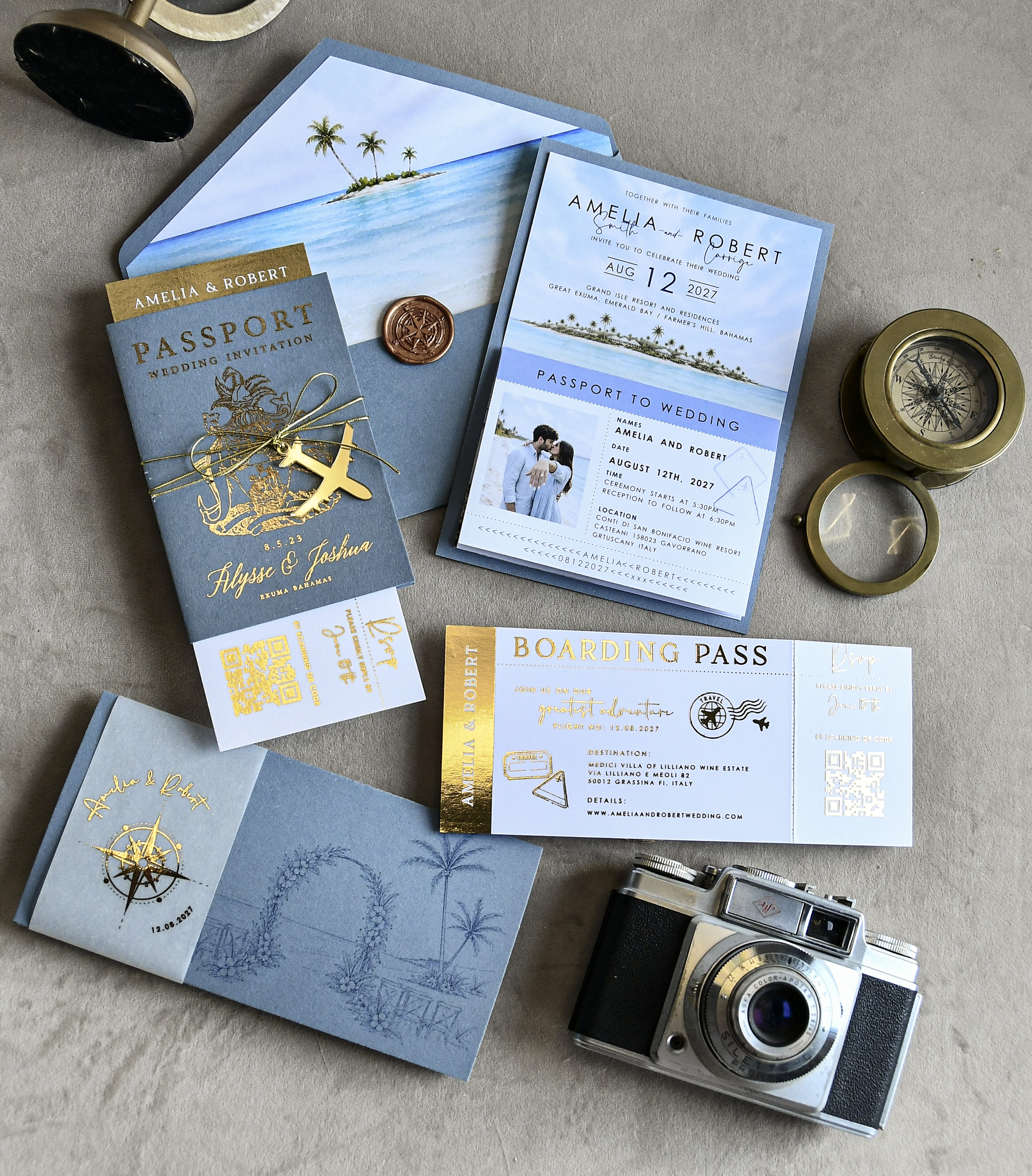
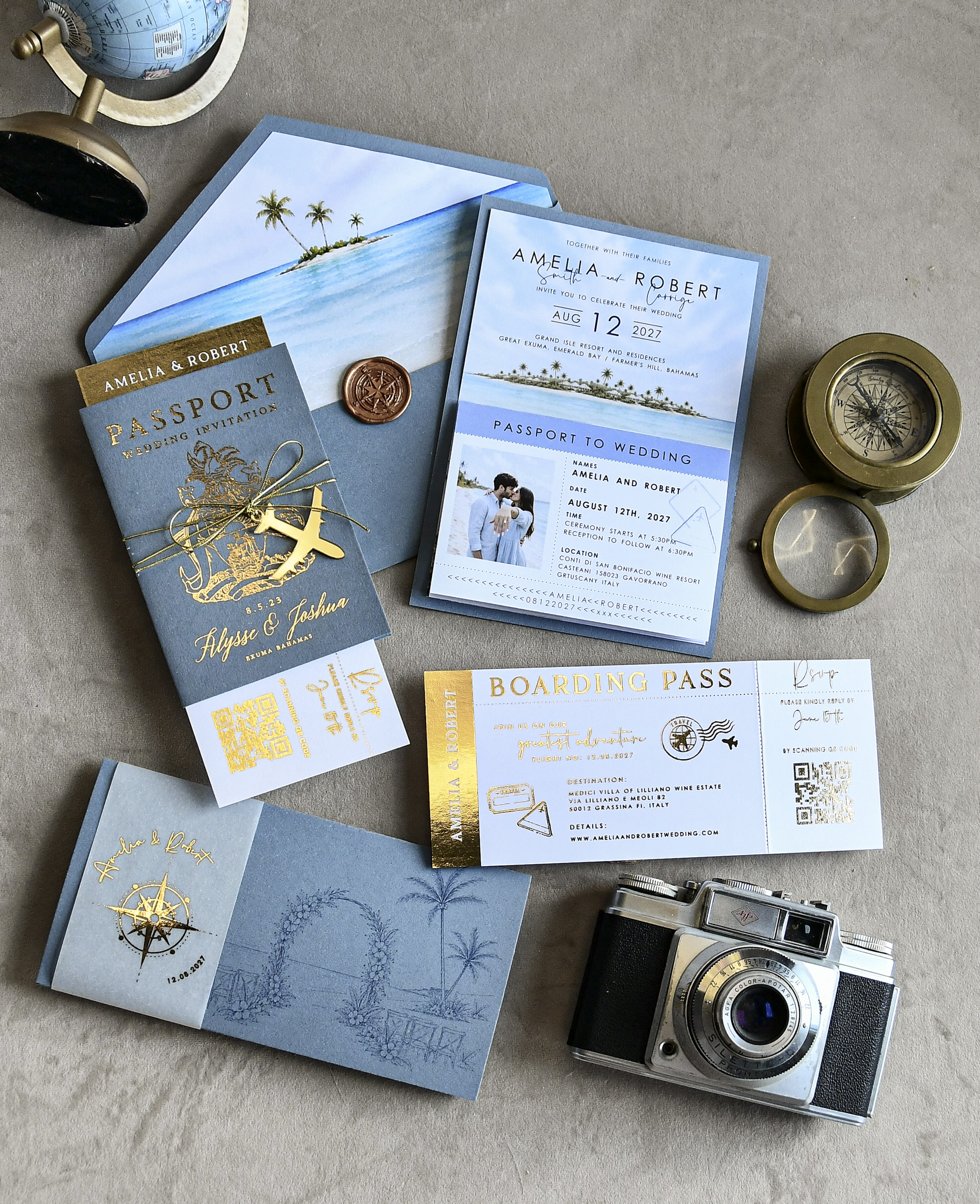
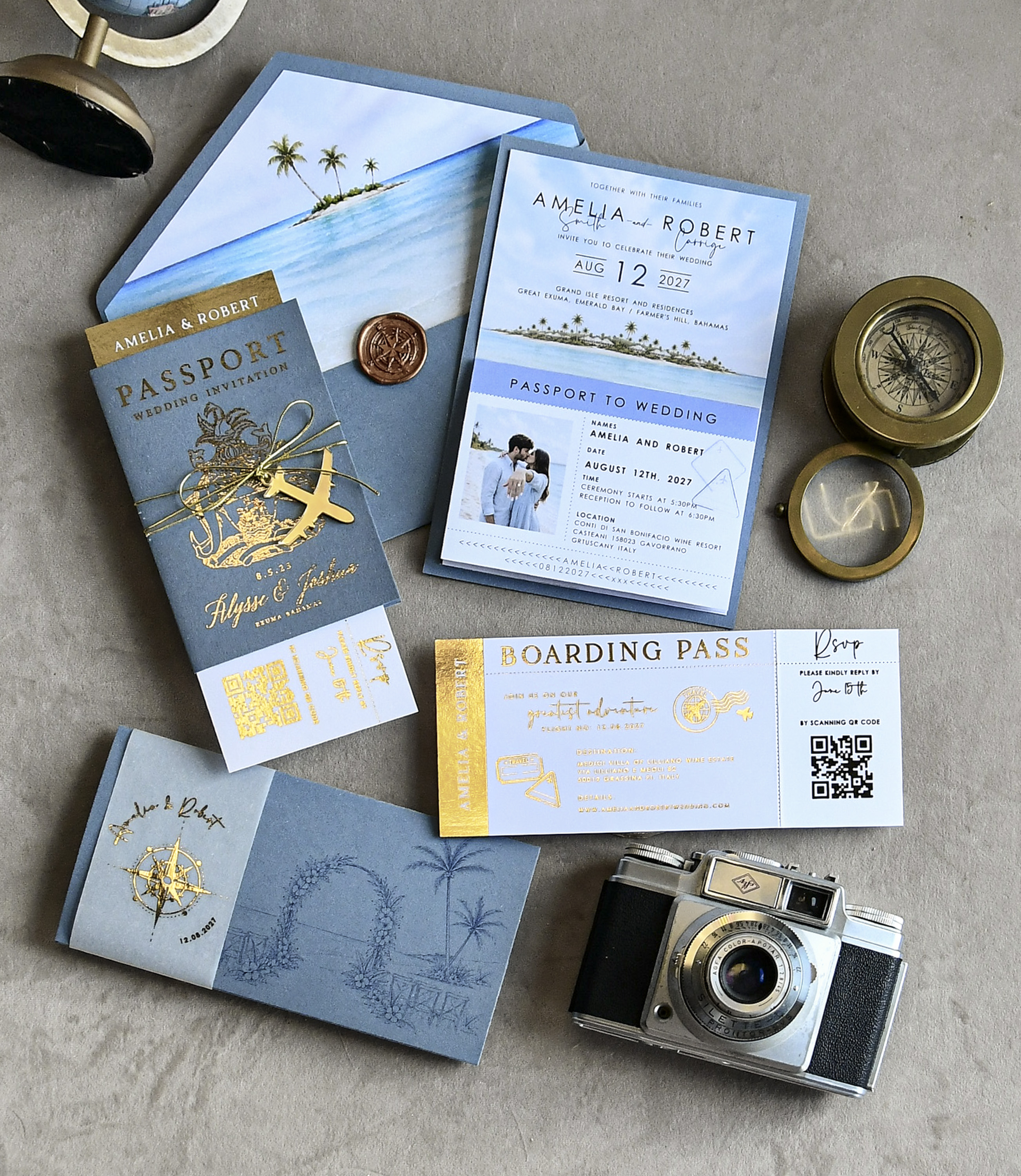
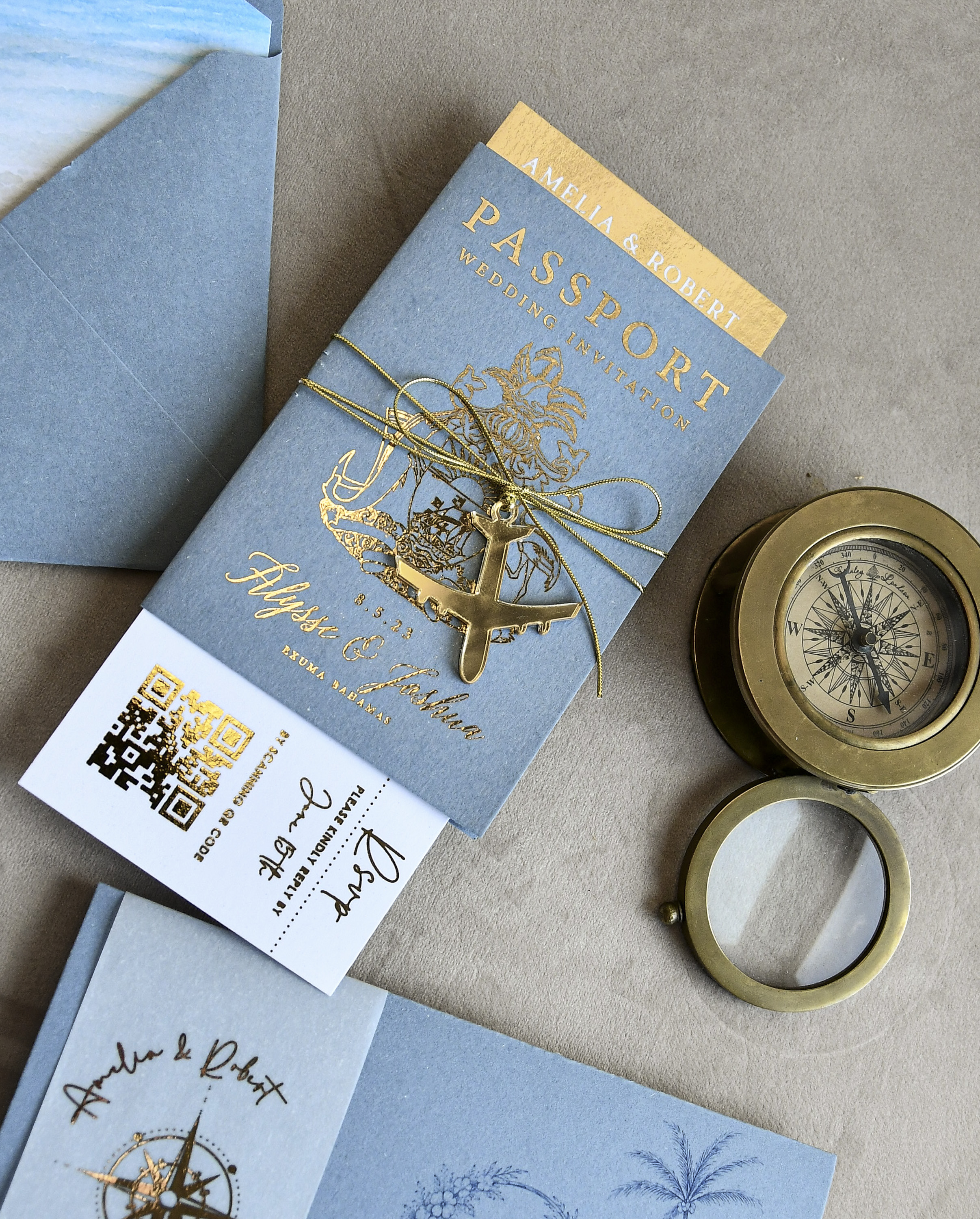
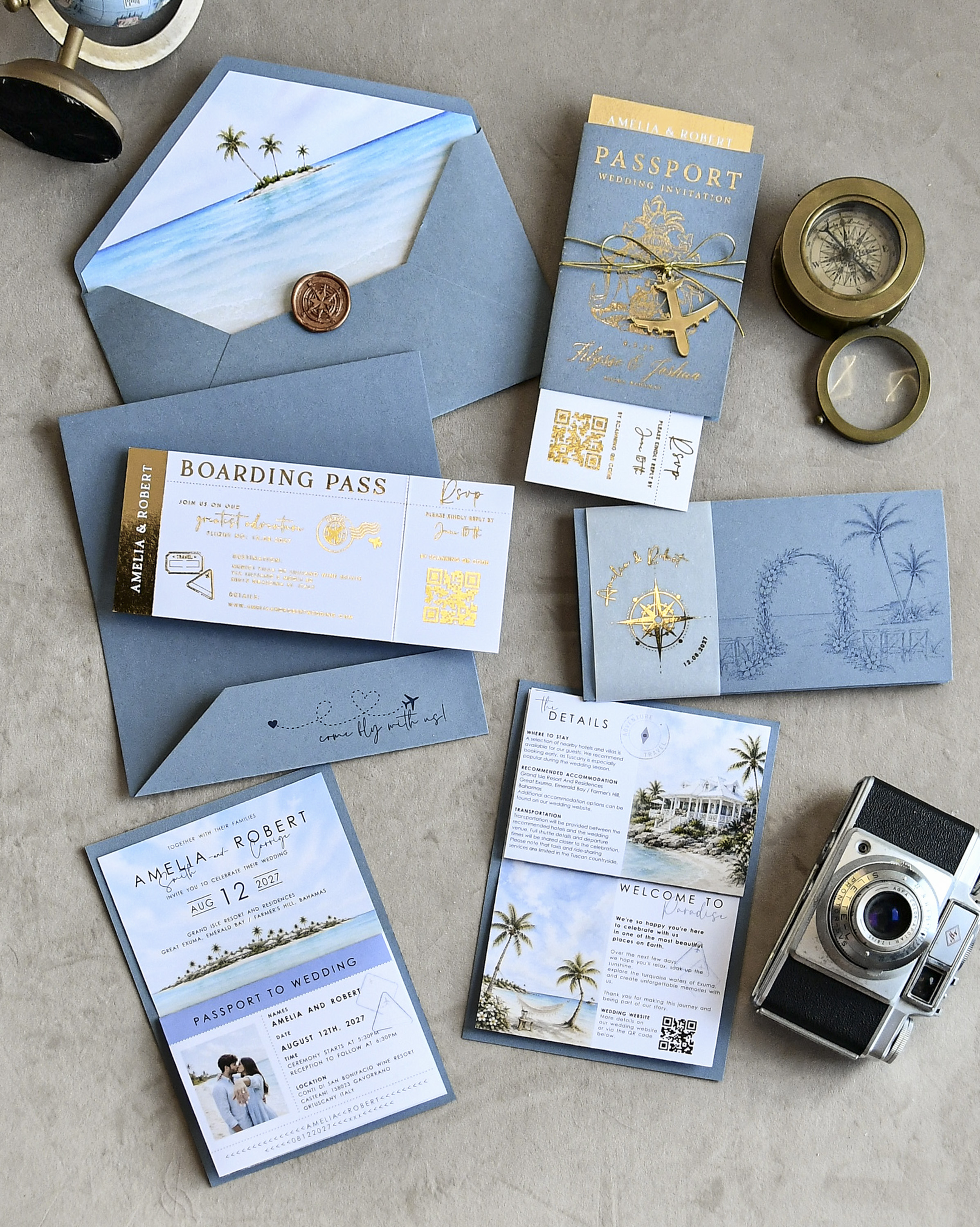
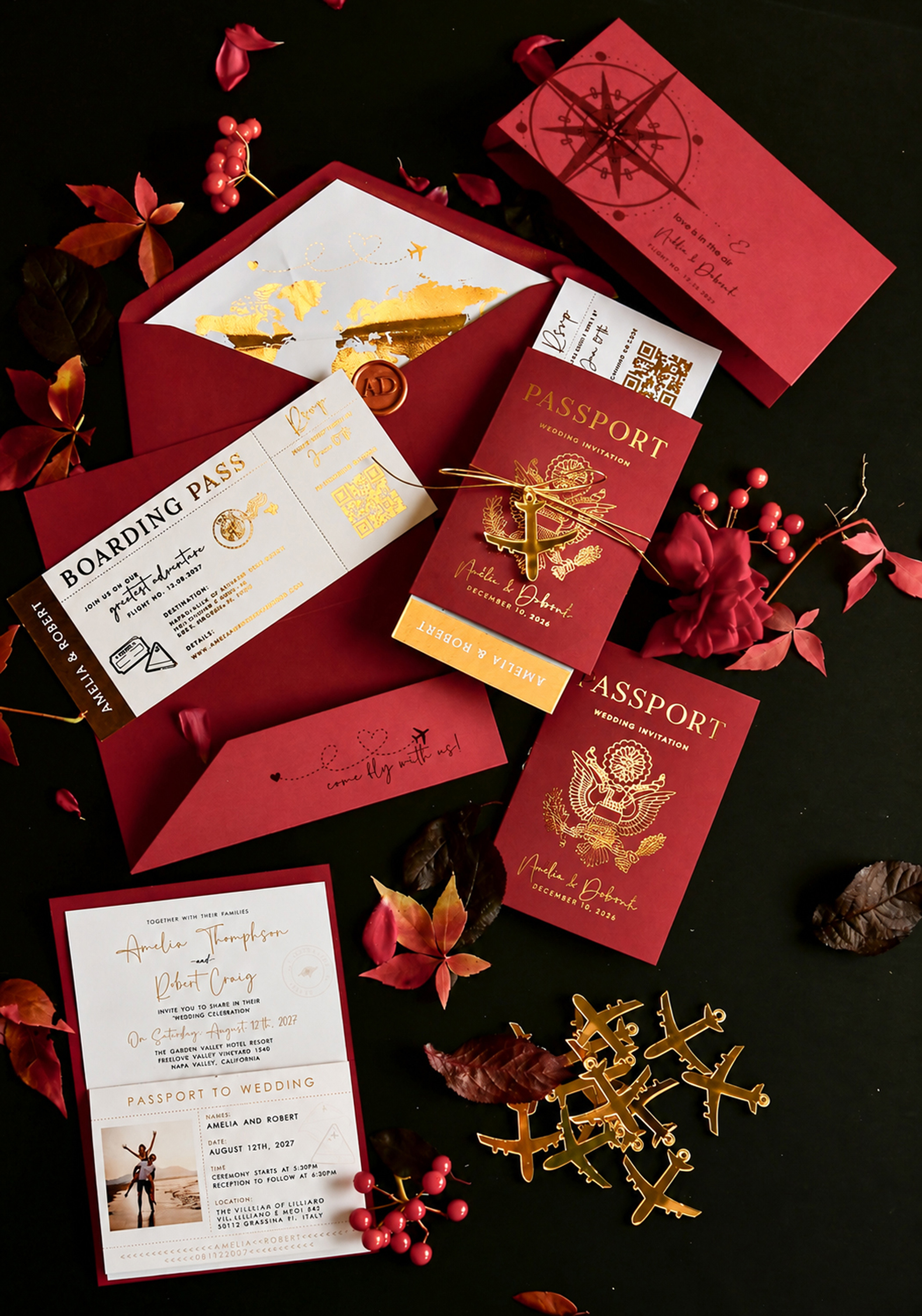
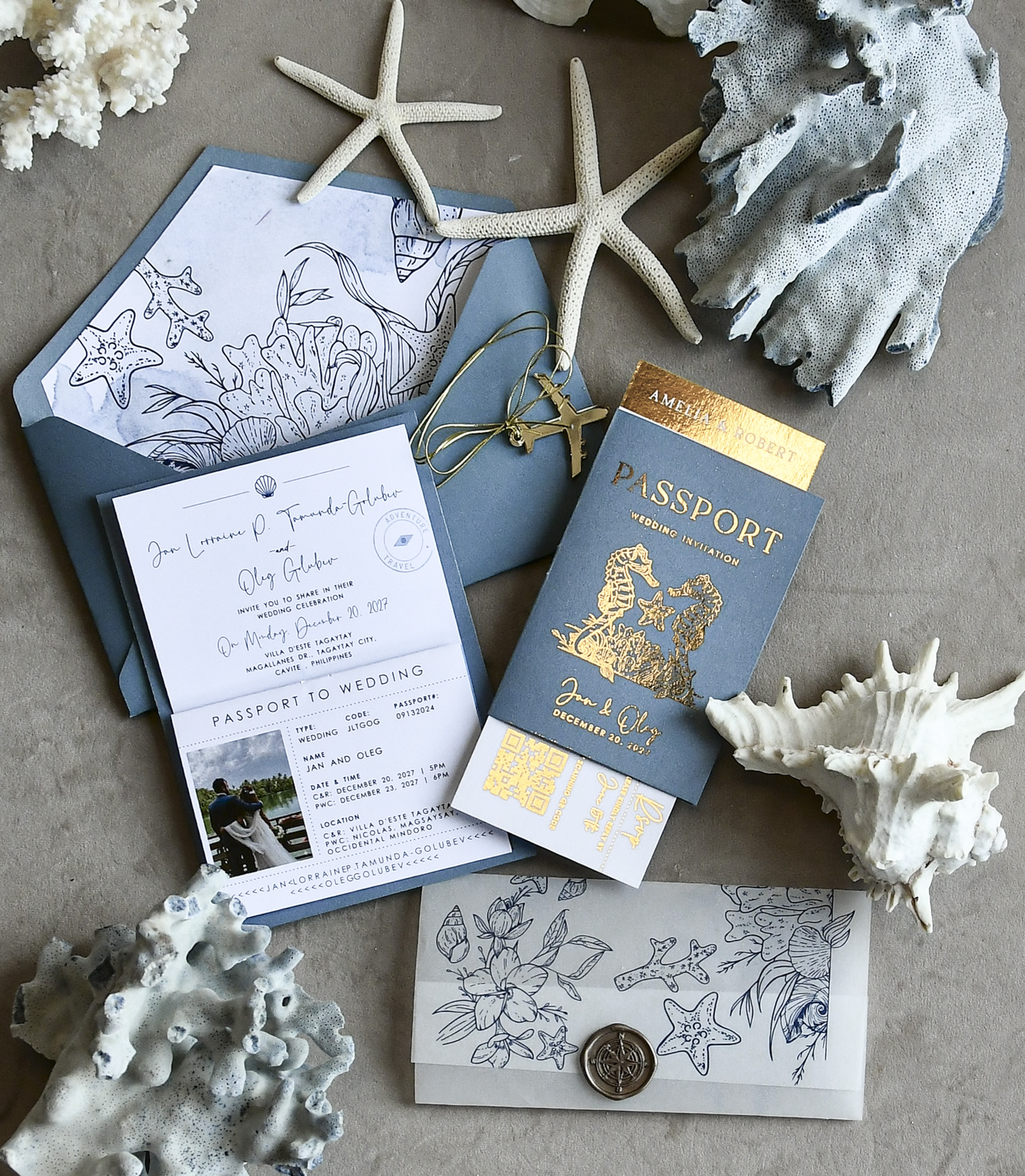
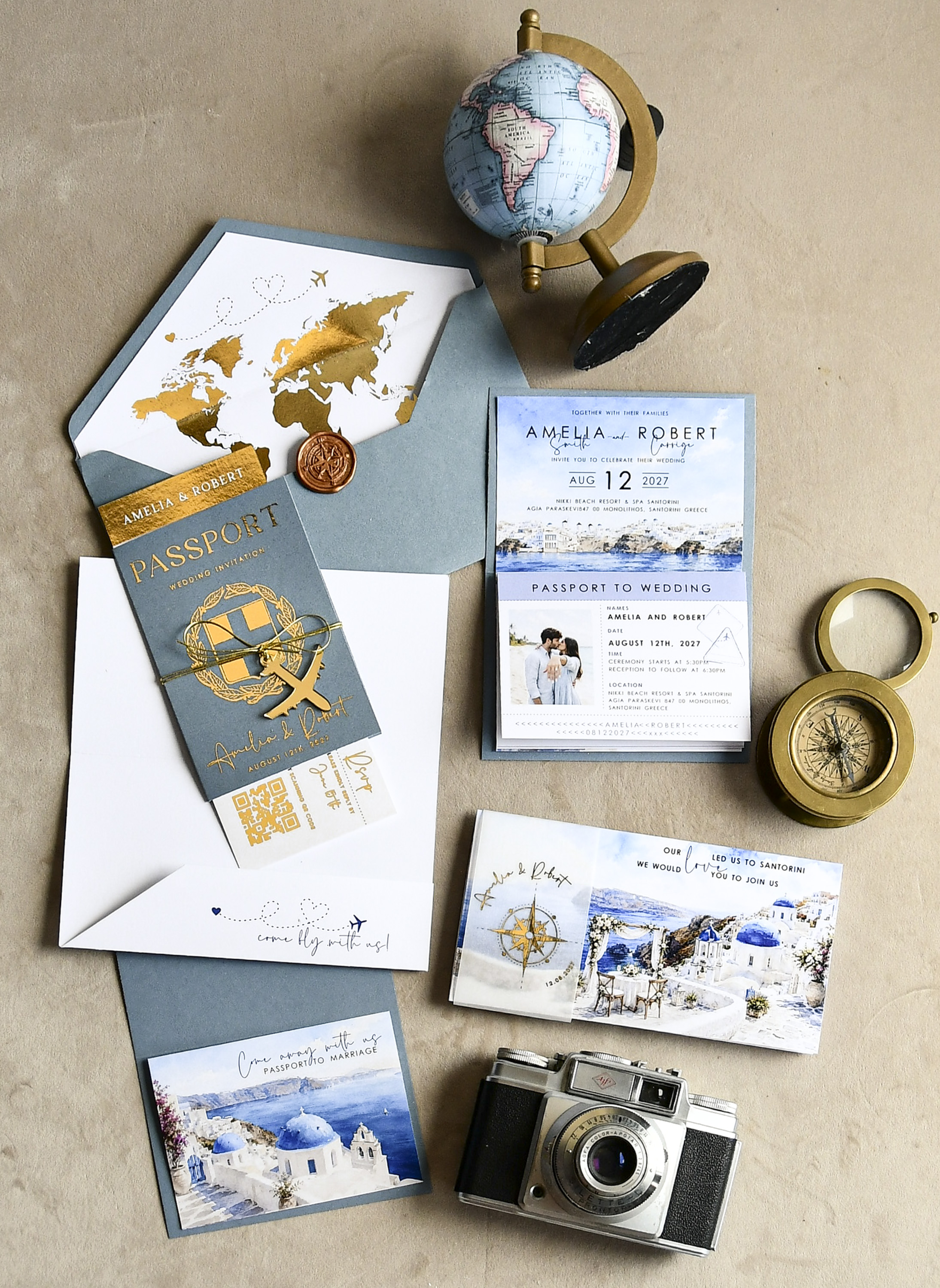
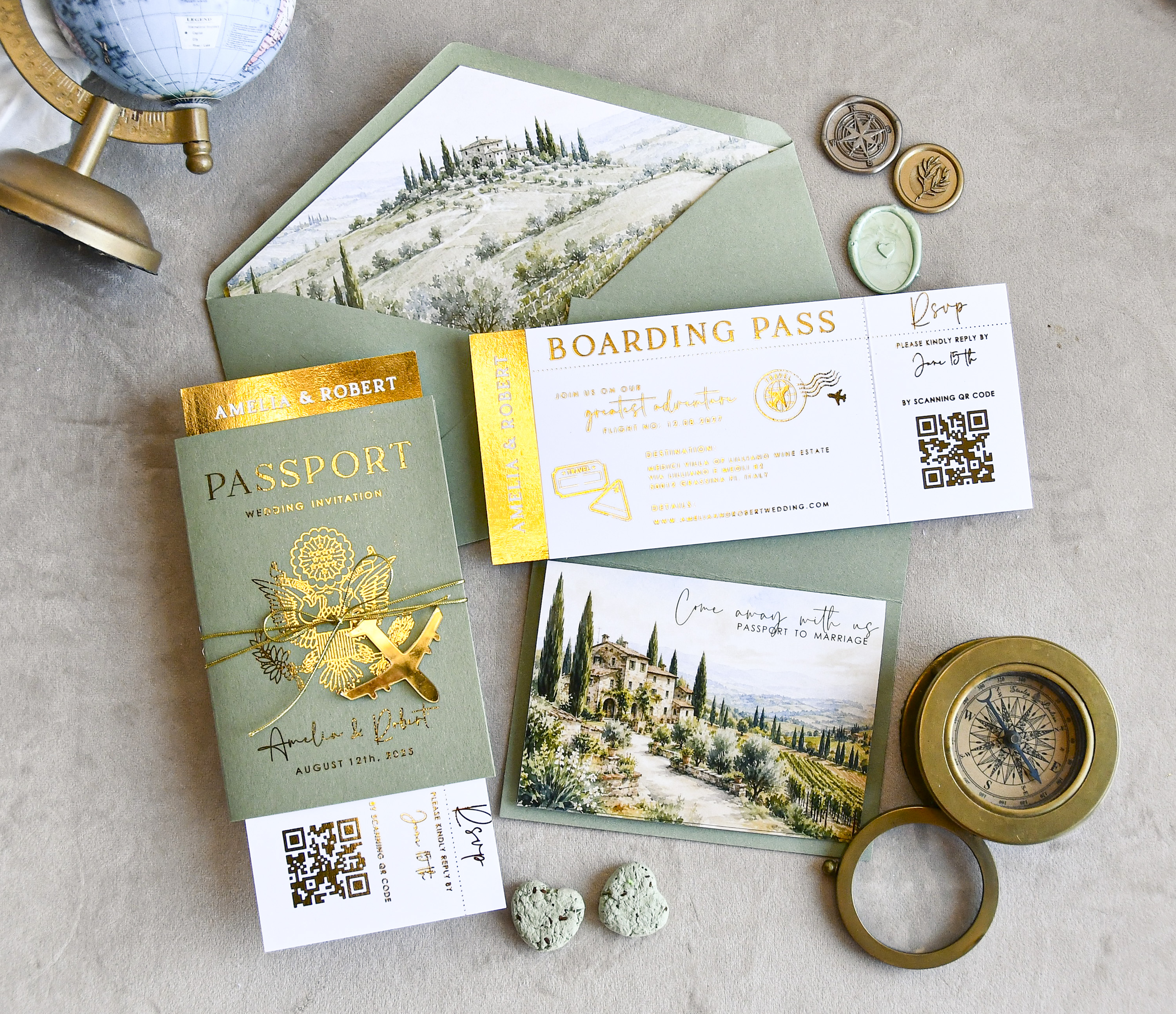
Your wedding invitation does the heavy lifting here. Address each envelope specifically — "Ms. Jordan Rivera" signals one seat; "Ms. Jordan Rivera and Guest" signals two. Never leave it ambiguous. When guests receive a beautifully designed invite like the passport-style 02/passDest/z beach wedding invitation from Margo&Bees, they're already in a celebratory mindset — a clearly addressed envelope simply sets the expectation without any awkwardness.
If you're worried about pushback, add a note on your wedding website: "Due to venue capacity, we are only able to accommodate the guests named on your invitation. We appreciate your understanding." This handles the question before it's asked and removes you from having one-on-one conversations about it.
Pro tip: Send invitations 8–10 weeks before the wedding (12 weeks for destination weddings) so guests have enough time to make travel plans — especially those attending solo.
Making Solo Guests Feel Welcome
If single guests aren't getting a plus-one, go the extra mile to make sure they have a great time anyway. Thoughtful seating is everything — place solo guests next to people they already know or next to other single guests who are likely to click. Avoid seating them at a table of couples where they'll feel like the odd one out all night.
You can also prime the situation: introduce solo guests to each other before the reception, or ask a social, outgoing friend to keep an eye out for anyone who looks adrift. Small gestures like a personal note tucked into their place setting — especially easy to coordinate when you're already ordering stationery from a suite like the 02/passDest/z collection — go a long way toward making someone feel genuinely welcomed rather than just accommodated.
Frequently Asked Questions
No — it's a widely accepted practice, especially when budget or venue size is a factor. As long as your policy is applied consistently across your guest list, single guests are unlikely to take offense. Most people understand that weddings involve real logistical constraints.
Generally, yes. If a guest has a fiancé, spouse, or long-term partner, etiquette strongly suggests including them. Excluding a known significant other can feel like a deliberate slight and may cause the guest to decline altogether.
It's okay to hold your boundary politely. You can say: "We'd love to have them at a future celebration, but our venue capacity is set and we can't make changes at this point." Having a firm policy in place from the start makes this conversation much easier.
This is a thoughtful consideration, especially for destination weddings. Many couples do extend plus-ones to guests traveling long distances who won't know other attendees. If you go this route, apply it to all out-of-town single guests equally, not just select individuals.
Write "[Guest Name] and Guest" on the outer envelope. On your RSVP card, include a line like "___ of 2 seats reserved" so the guest knows exactly how many seats they have. This removes all ambiguity and prevents awkward follow-up calls.
You can, but only if the distinction is based on a clear, consistent rule — such as wedding party members receiving plus-ones while other single guests do not. Avoid making exceptions based on personal preference for individual guests, as this can create hurt feelings if it comes to light.
See This Design Up Close


You May Also Like
More Wedding Planning Guides
- → Kids at Your Wedding: Should You Hire a Babysitter or Full Entertainment?
- → The Right Time to Chase Down Missing RSVPs (And How to Do It Gracefully)
- → The Graceful Way to Let Guests Know Your Wedding Is Adults Only
- → Wedding Guest List Dilemma: Should Your Boss and Coworkers Make the Cut?
- → When Guests RSVP Yes But Never Arrive: What to Do Before, During, and After
- → Planning Your Wedding When Your Divorced Parents Can't Stand Each Other
- → Navigating Wedding Invitations When a Sibling Relationship Is Complicated
- → Your Guest List, Your Rules: Navigating In-Law Friend Invites
- → Big Guest List vs. Better Wedding Experience: Which Should You Prioritize?
- → Save the Date Cards vs. Wedding Invitations: Know the Difference Before You Order
- → Extra Wedding Guests: Who Picks Up the Tab?
- → No RSVP? Here's Exactly How to Handle It
- → What to Say When Someone Asks Why They Didn't Make the Guest List
- → How to Kindly Let Someone Know They Didn't Make the Guest List
- → My Fiancé Wants to Exclude My Family From the Wedding: Now What?
- → Should You Give Teenage Guests a Plus One at Your Wedding?
- → Adults-Only or Family-Friendly? How to Make the Right Call on Kids at Your Wedding
- → When Guests Bring Unexpected Plus-Ones: What to Do Before and After the Wedding
- → How Late Is Too Late for Wedding Invitations? A Realistic Timeline
- → Aunt Has a New Husband: Here's How to Handle the Invitation
- → The RSVP No-Show: Should You Actually Call Guests Who Never Responded?
- → Wedding Invitations: Mail Them or Hand Deliver? Here's How to Decide
- → What to Do When a Relative Says They Won't Come If Someone Else Is Invited
- → Extra Names on Your RSVP Card: What to Do When Guests Add Themselves
- → Your Guest List, Your Call: How to Handle Mom's Must-Invite Requests
- → Yes, You Can Say No to a Plus One — Here's How to Do It Right
- → Adults-Only Weddings: Are You Being Rude by Leaving Kids Off the Guest List?
- → How to Handle Seating for Divorced Parents at Your Wedding
- → Uninvited Plus-Ones and Tag-Alongs: How to Keep Your Guest List Intact
- → When Family Feuds Threaten Your Wedding Plans: A Practical Peacekeeper's Guide
- → Inviting an Estranged Brother or Sister: Finding Clarity Before You Seal the Envelope
- → Cousins, Invites, and Hard Choices: A Practical Guest List Guide