
Save the Date Cards vs. Wedding Invitations: Know the Difference Before You Order
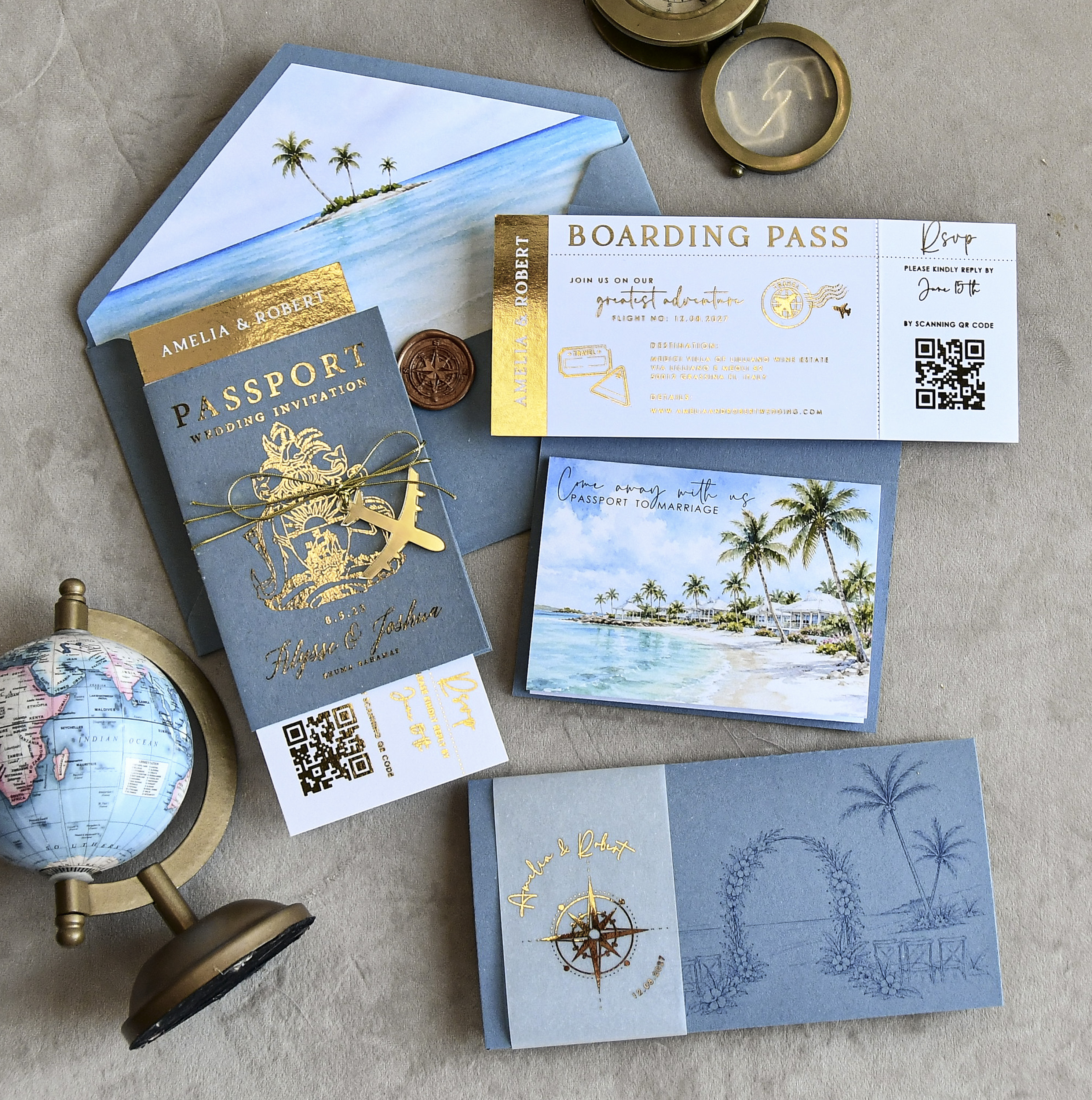
If you're newly engaged and starting to think about wedding stationery, you've probably already asked yourself: do I really need both a save the date and a wedding invitation? The short answer is yes — and they serve very different purposes. Understanding what each piece does will help you plan your stationery timeline, manage your budget, and make sure every guest shows up informed and excited.
What a Save the Date Actually Does
A save the date is a heads-up, plain and simple. It goes out early — typically 6 to 12 months before your wedding — to claim space on your guests' calendars before they make other plans. It is not a formal invitation, and it doesn't need to include every detail about your wedding day.
At minimum, a save the date should include:
- Your names
- The wedding date
- The city and state (or general location)
- A note that a formal invitation will follow
- Your wedding website URL, if you have one
Save the dates are especially important for destination weddings, holiday weekends, or any event where guests need extra lead time to book travel and accommodations. If you're planning a beach celebration, for example, sending a save the date 10 to 12 months out gives out-of-town guests plenty of time to arrange flights and hotels.
What a Wedding Invitation Does — and Why It's Different
Your wedding invitation is the official, formal request for your guests to attend. It carries the full logistical details of your wedding day and sets the tone for the entire event. Where a save the date is casual and brief, the invitation suite is comprehensive and considered.
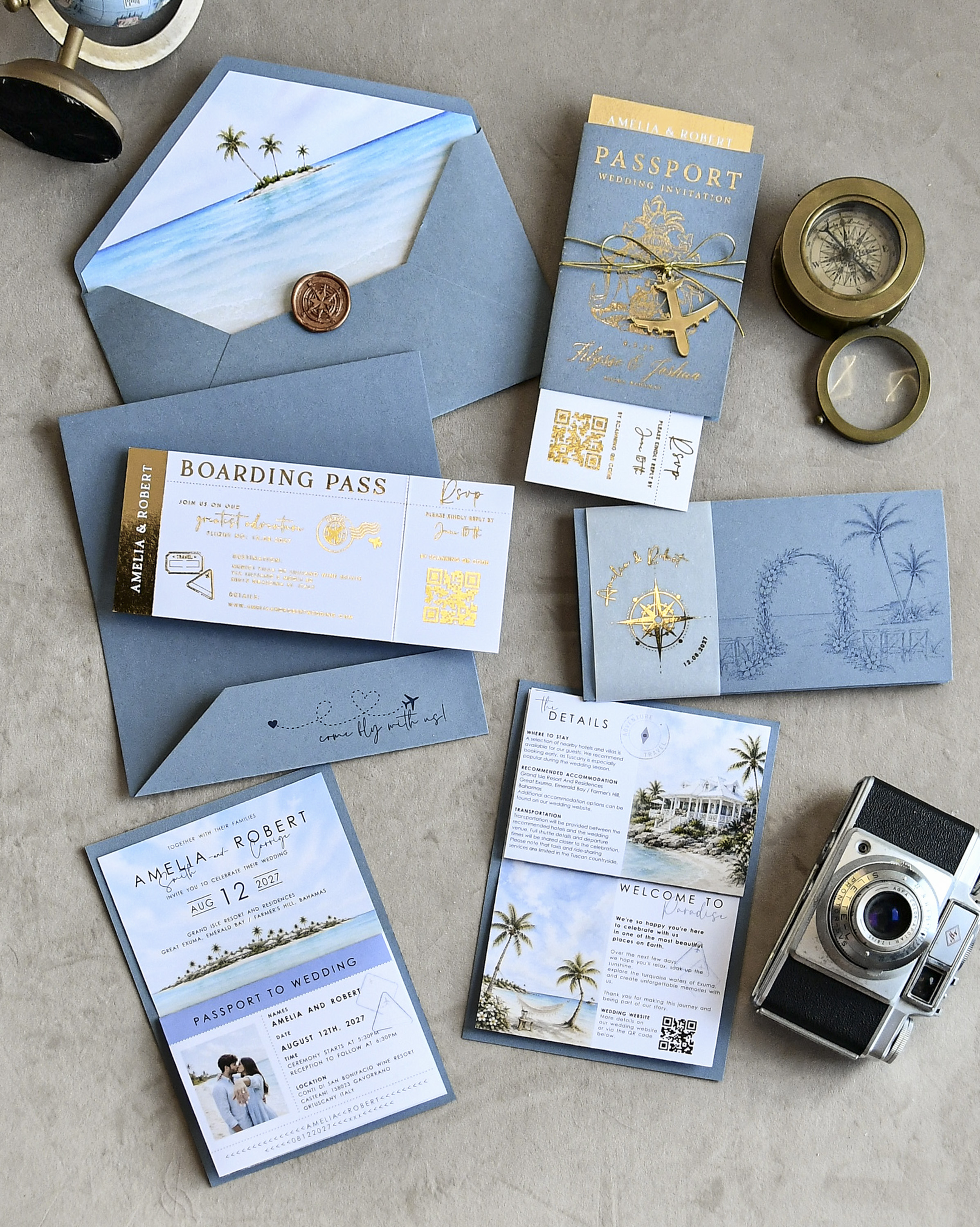
A complete wedding invitation suite typically includes:
- The invitation itself — with the formal wording, full venue name and address, date, and ceremony time
- RSVP card and envelope — so guests can confirm attendance
- Details card — covering the reception location (if different), dress code, parking, or shuttle information
- Outer and inner envelopes — addressed to each household
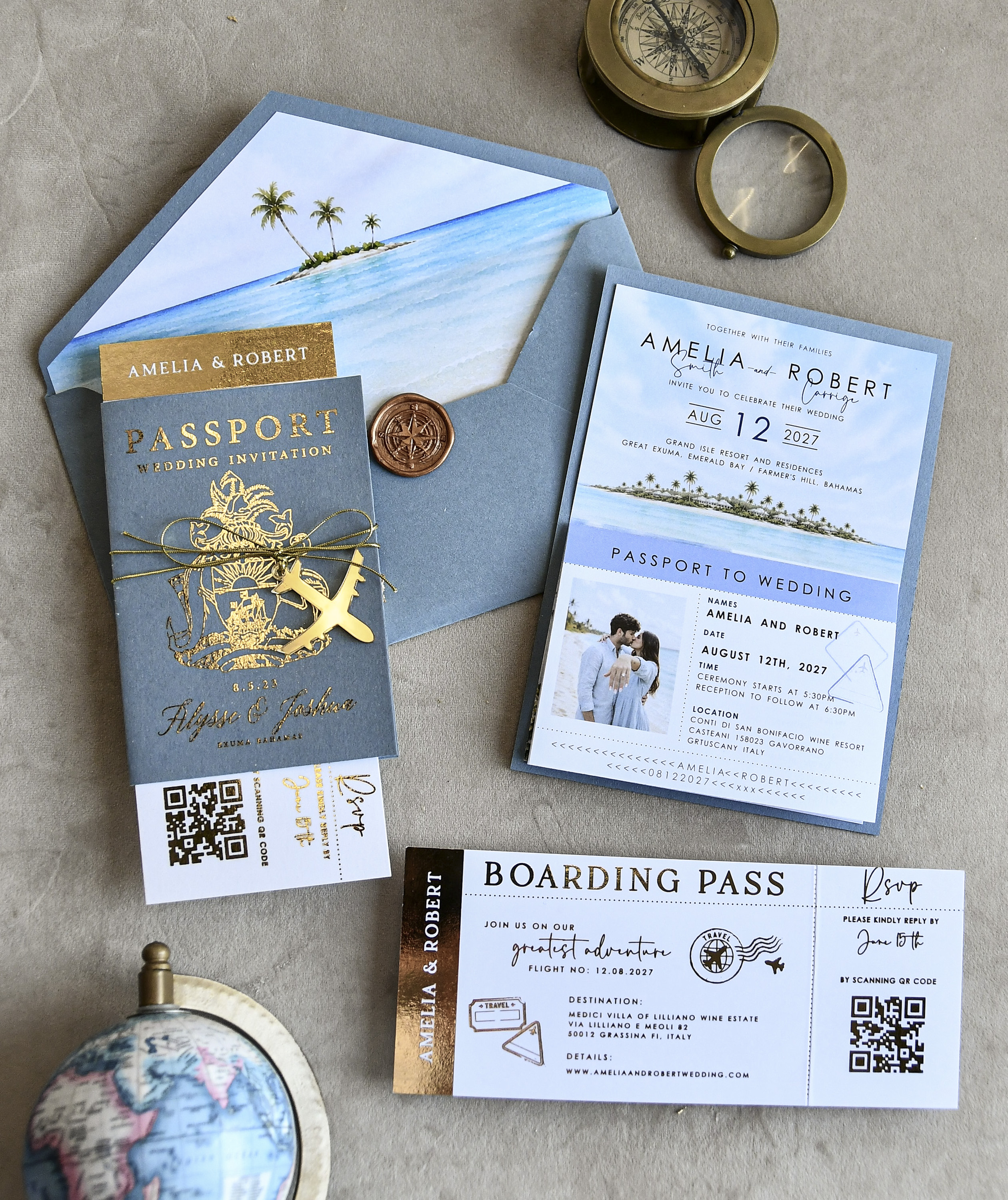
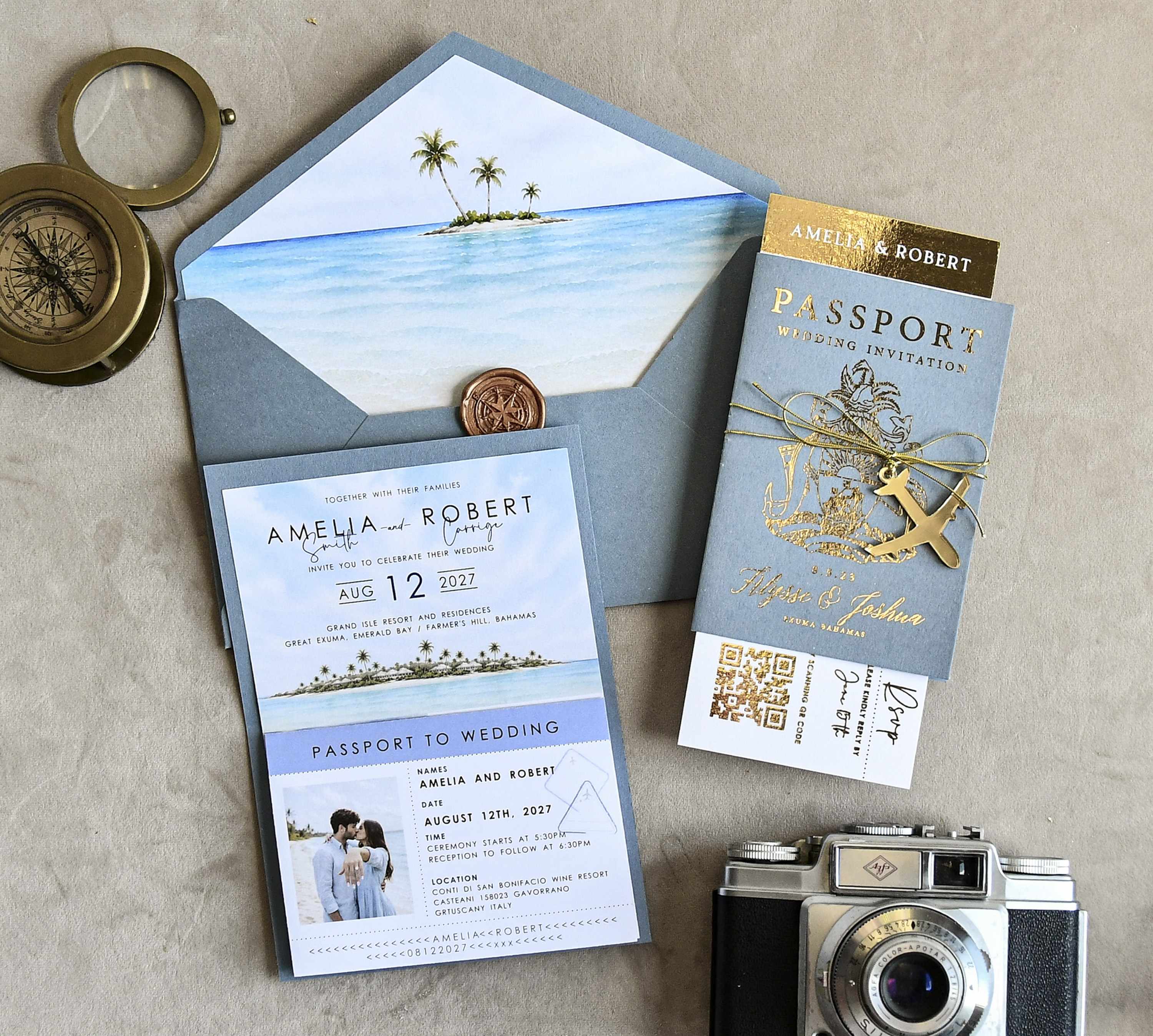
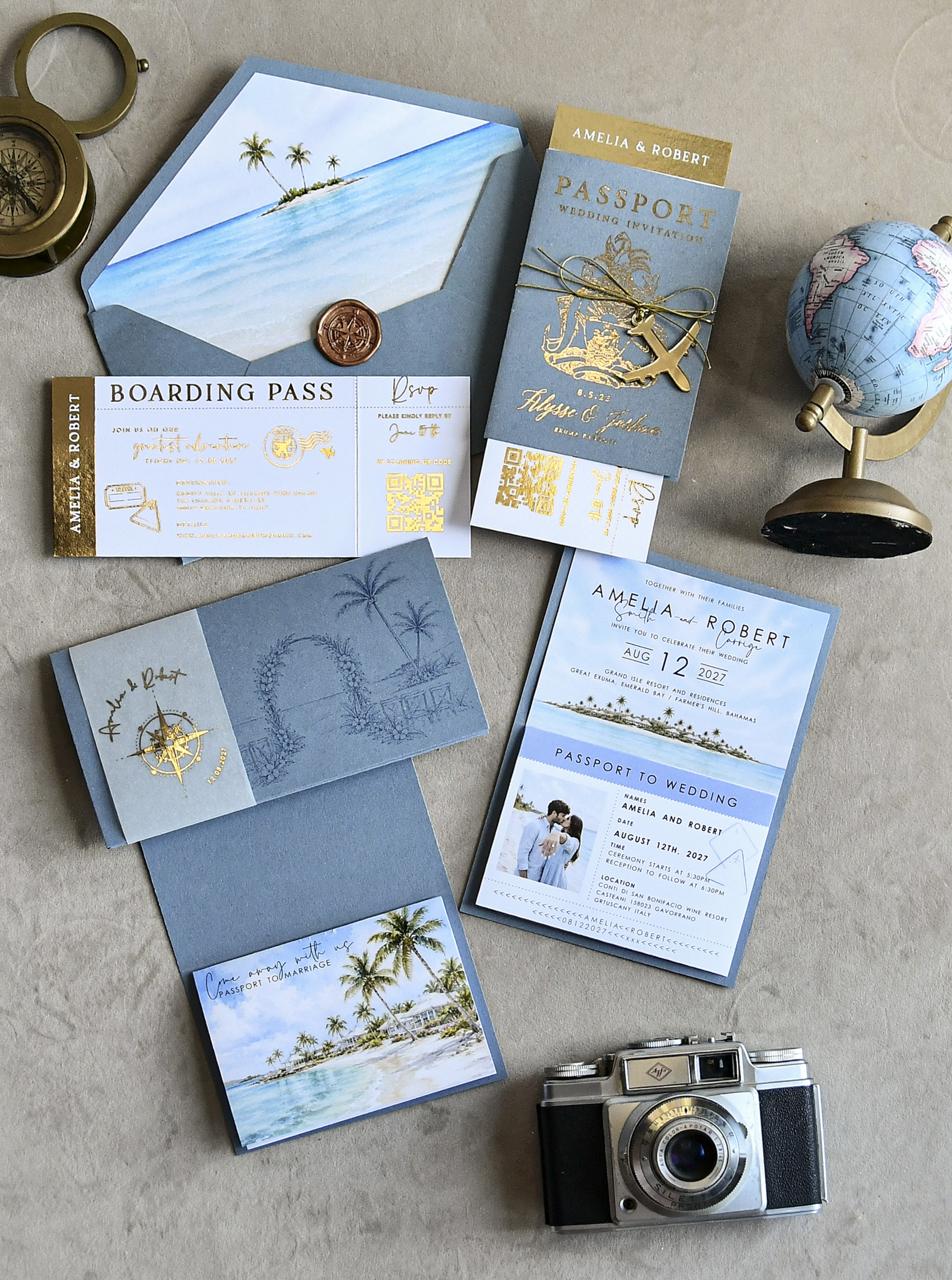
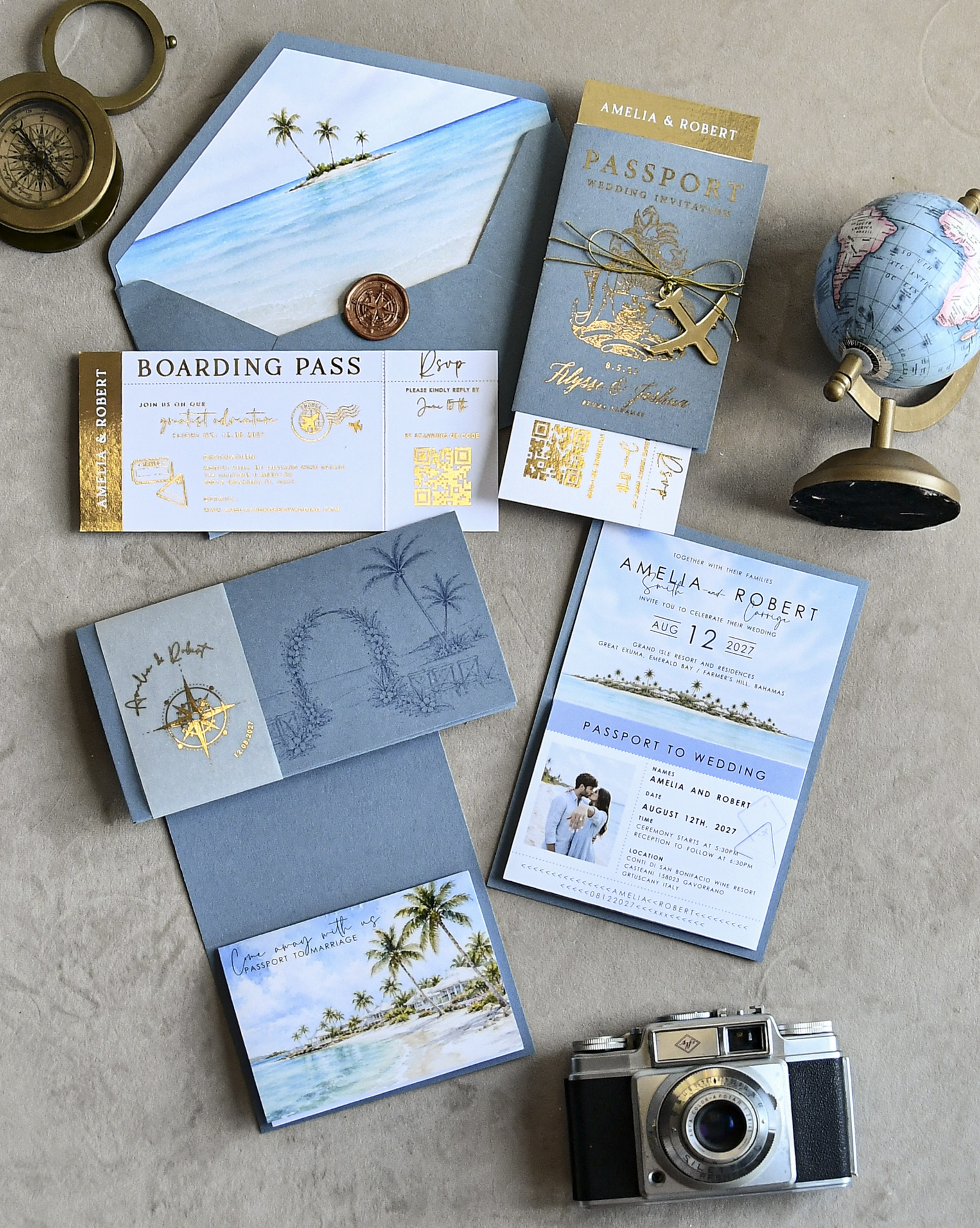
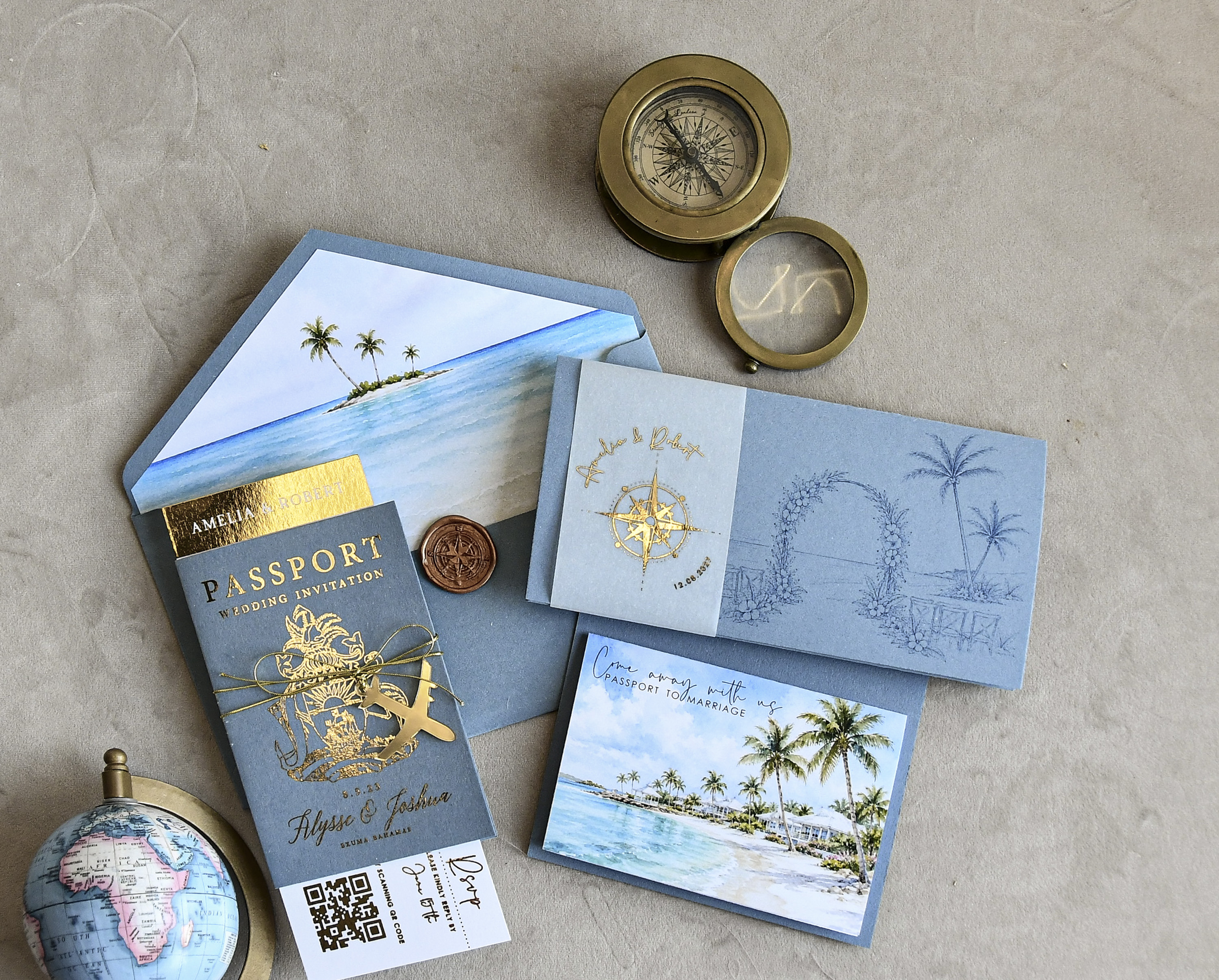
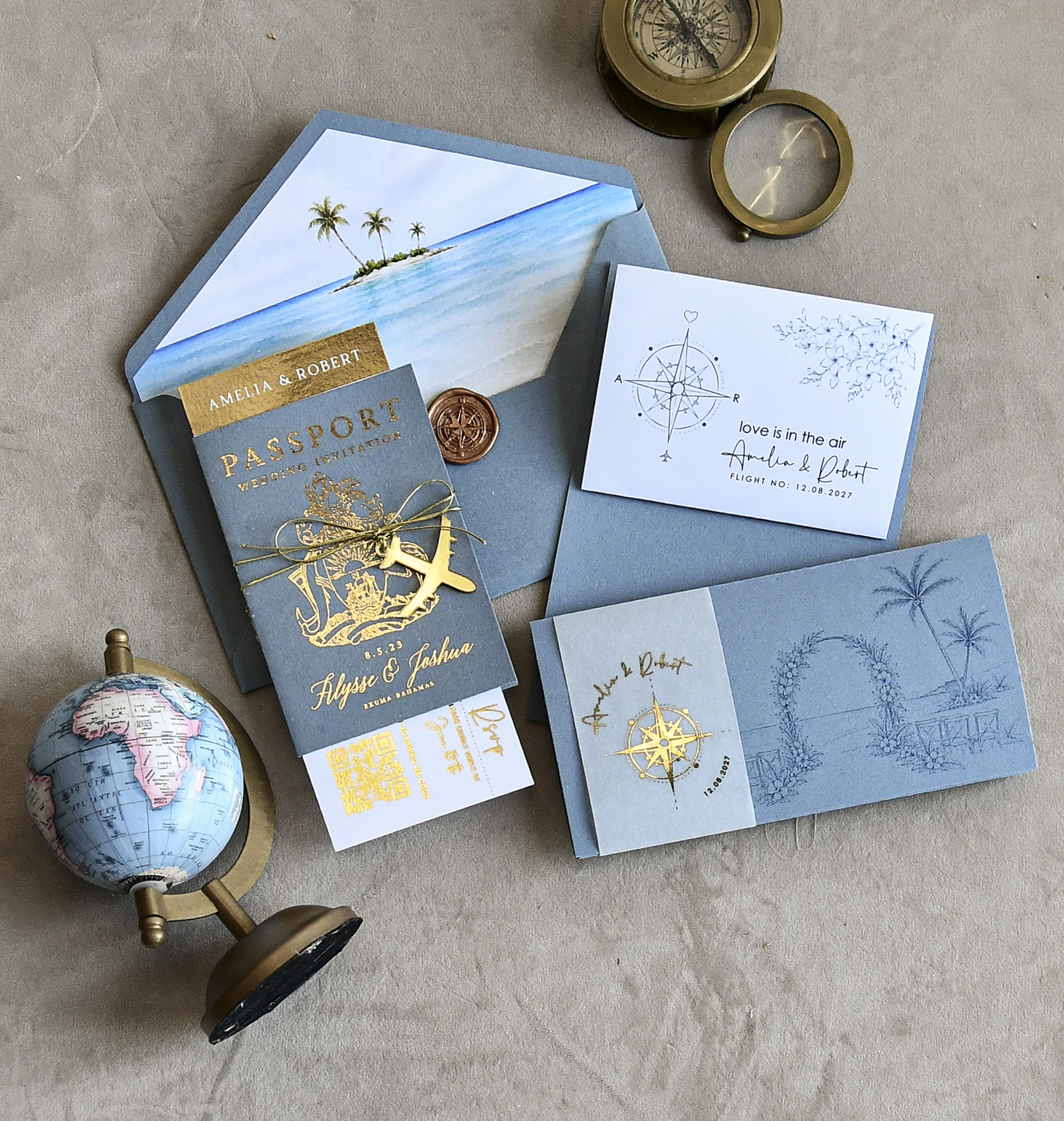
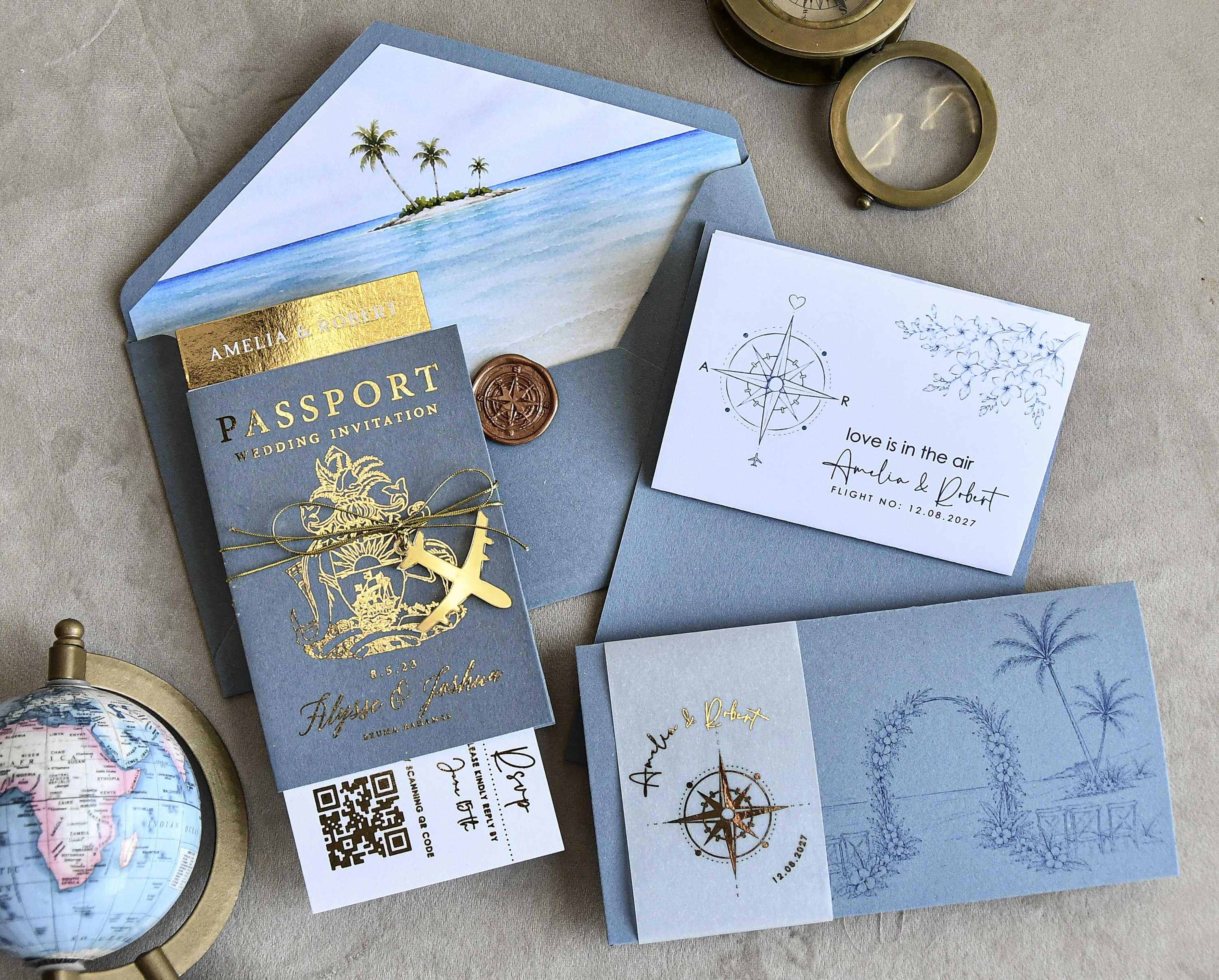
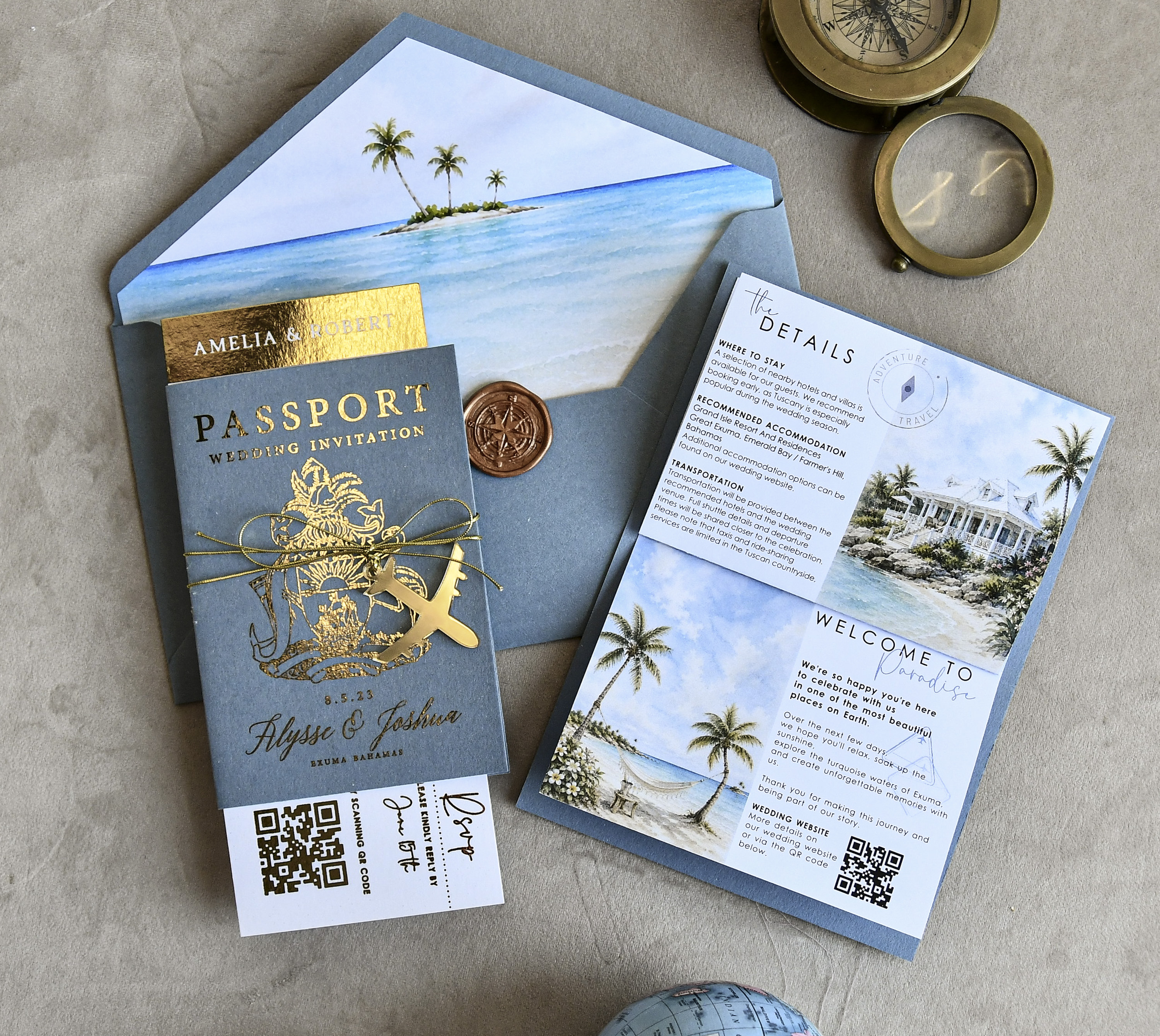
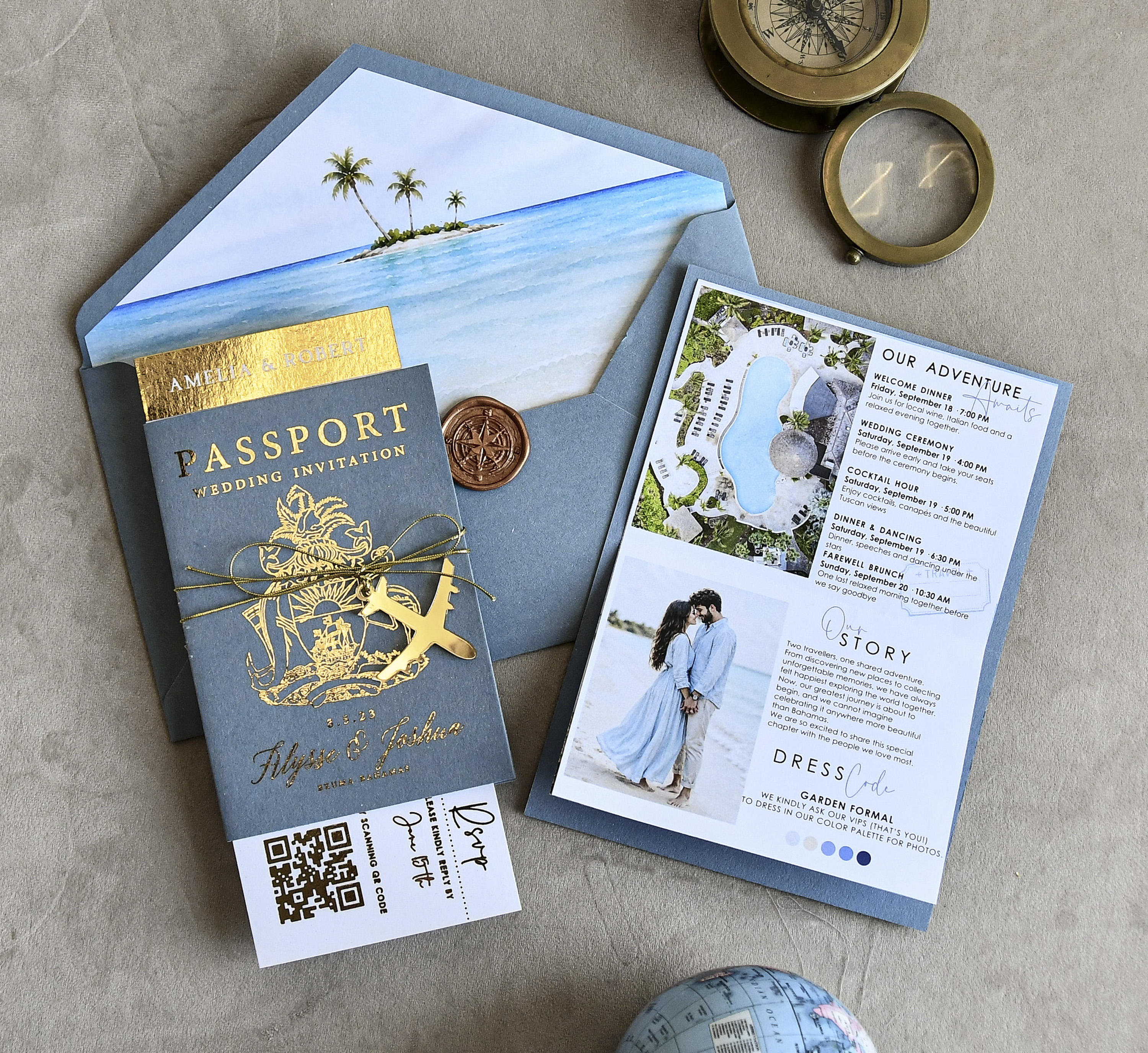
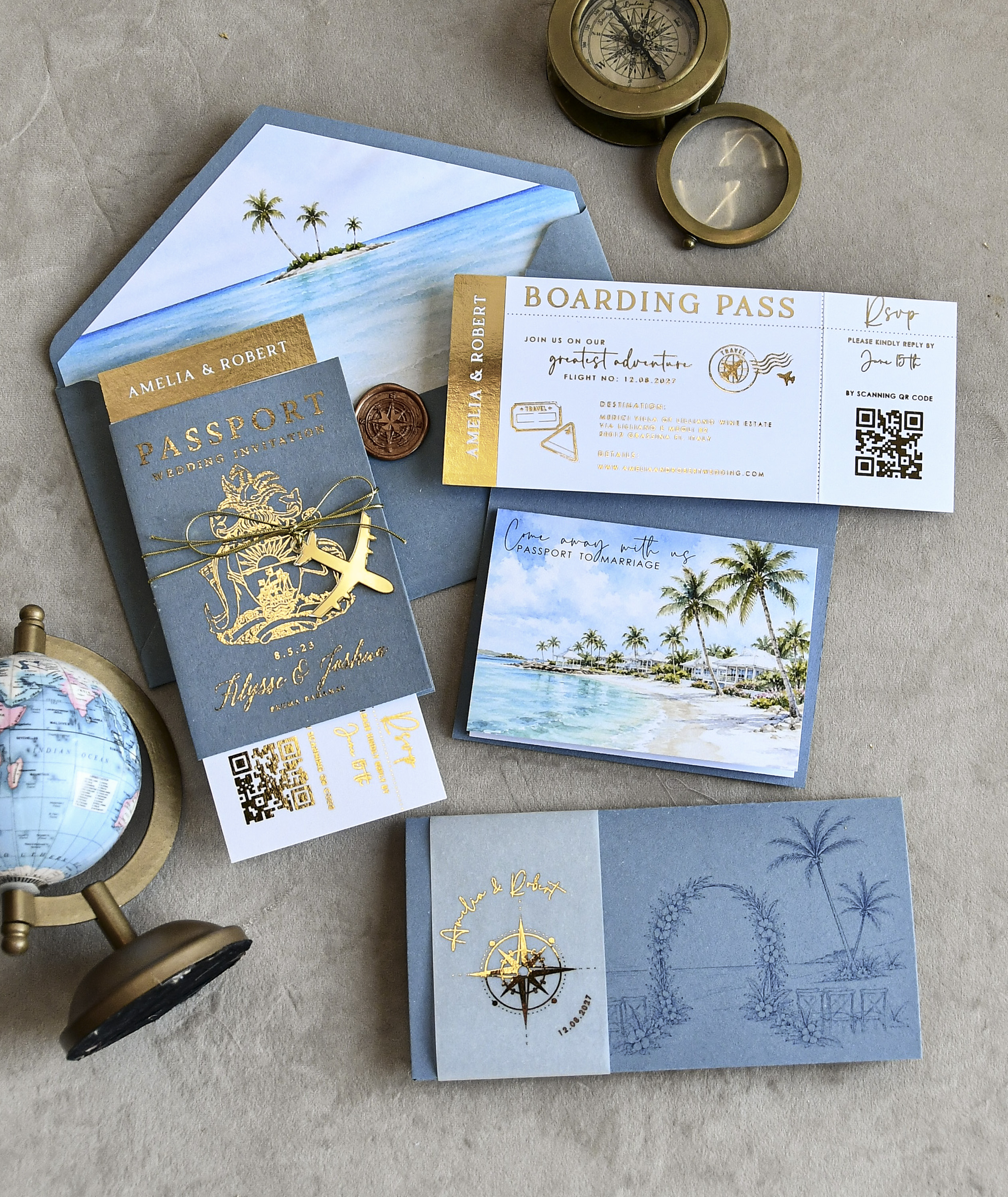
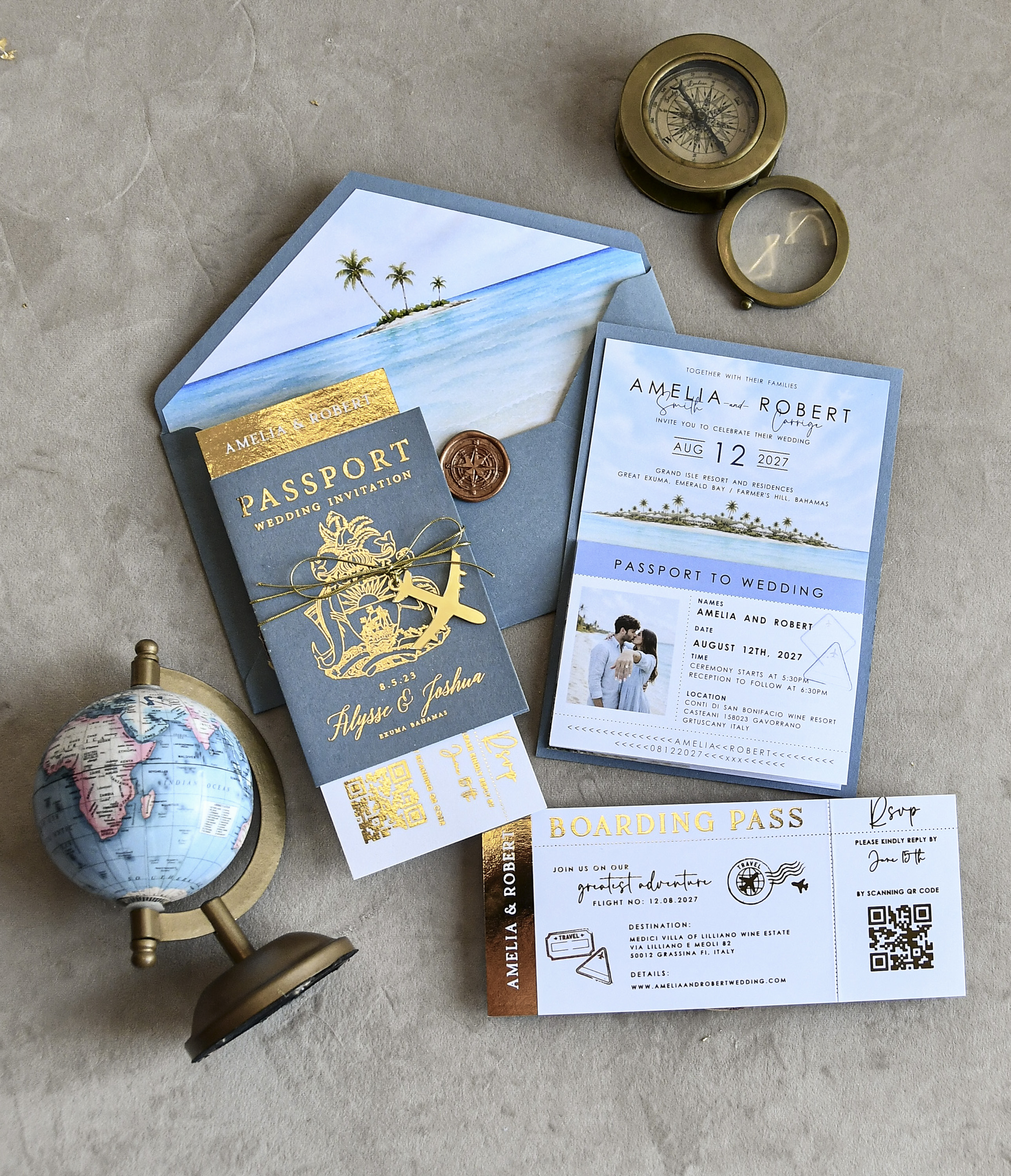
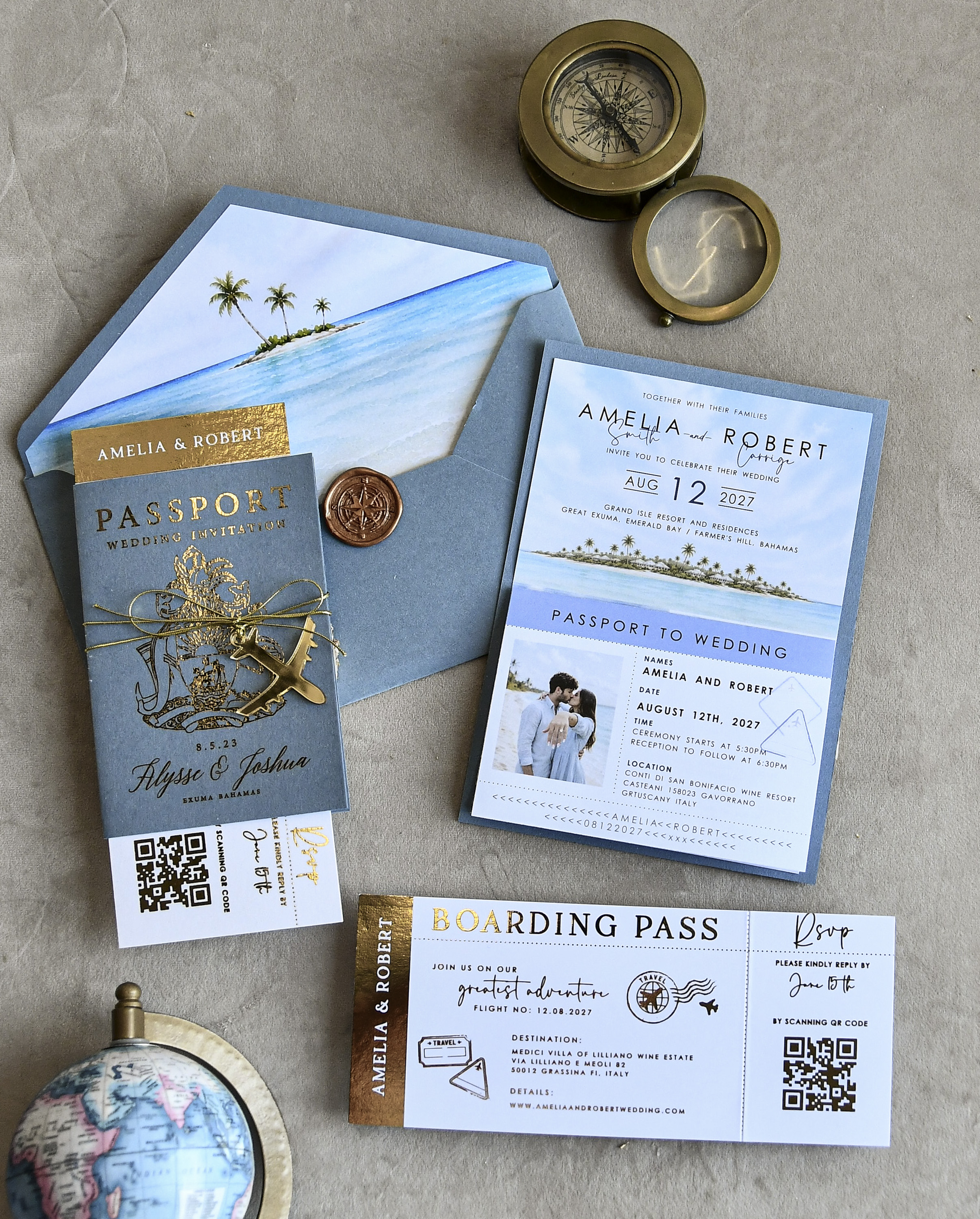
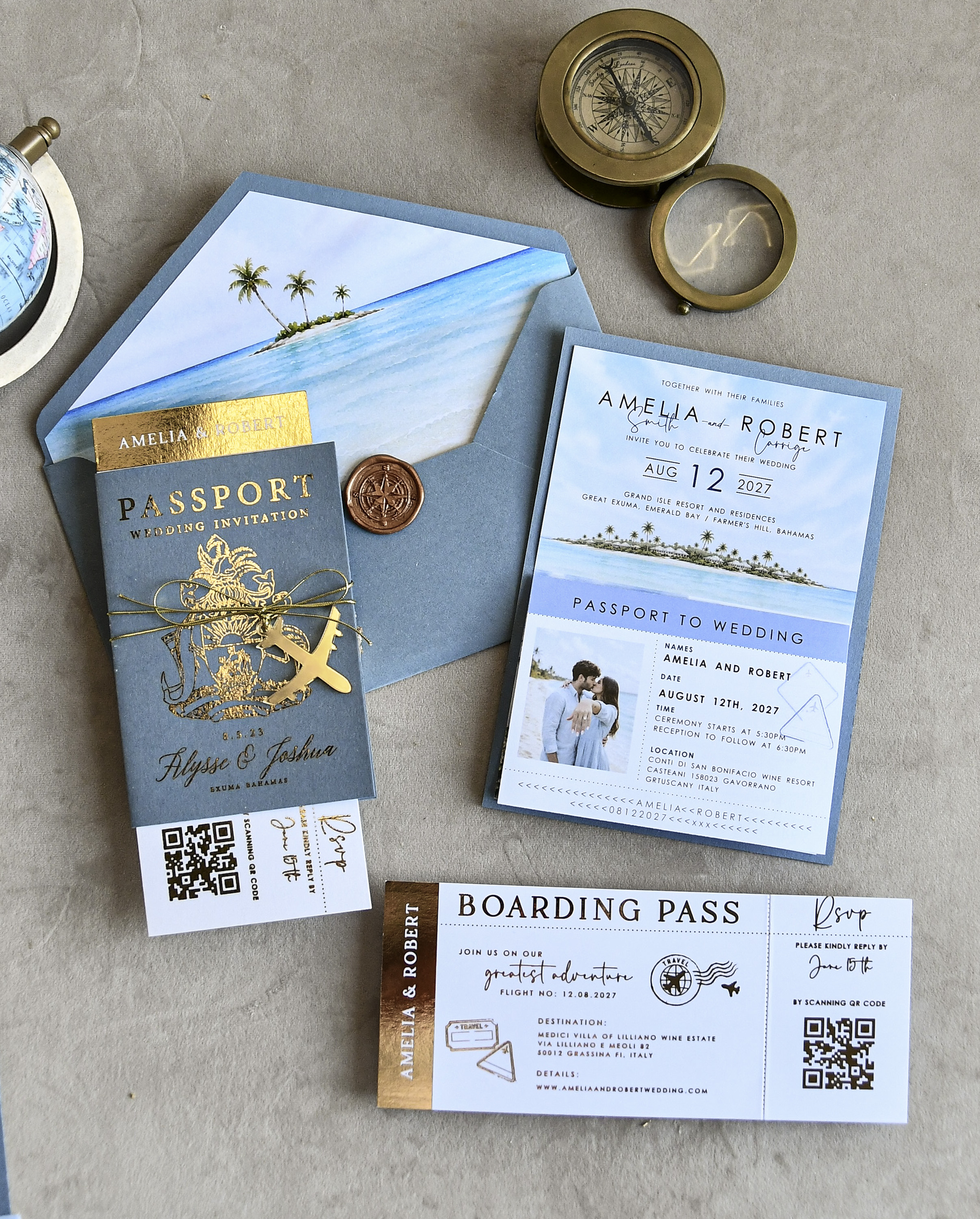
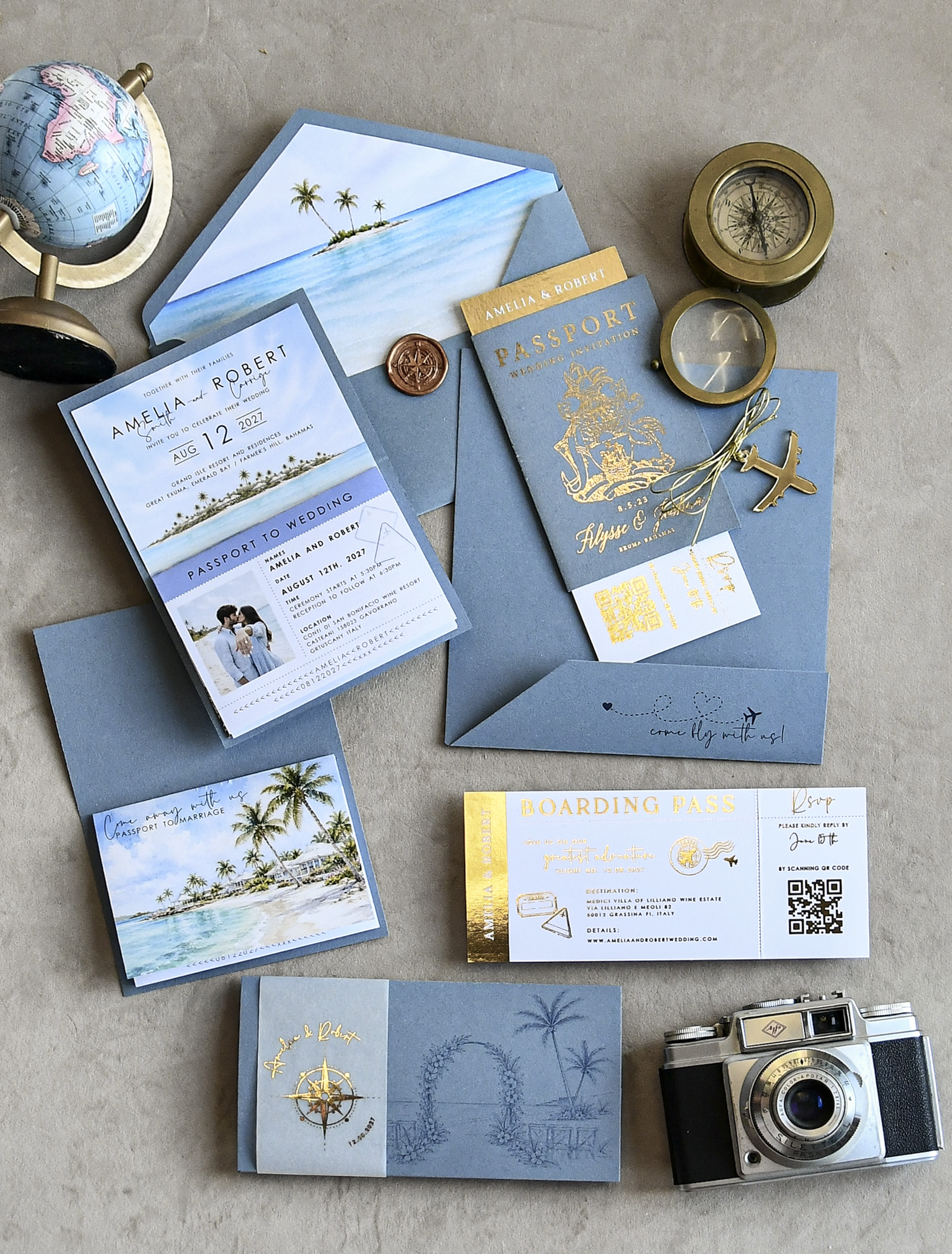
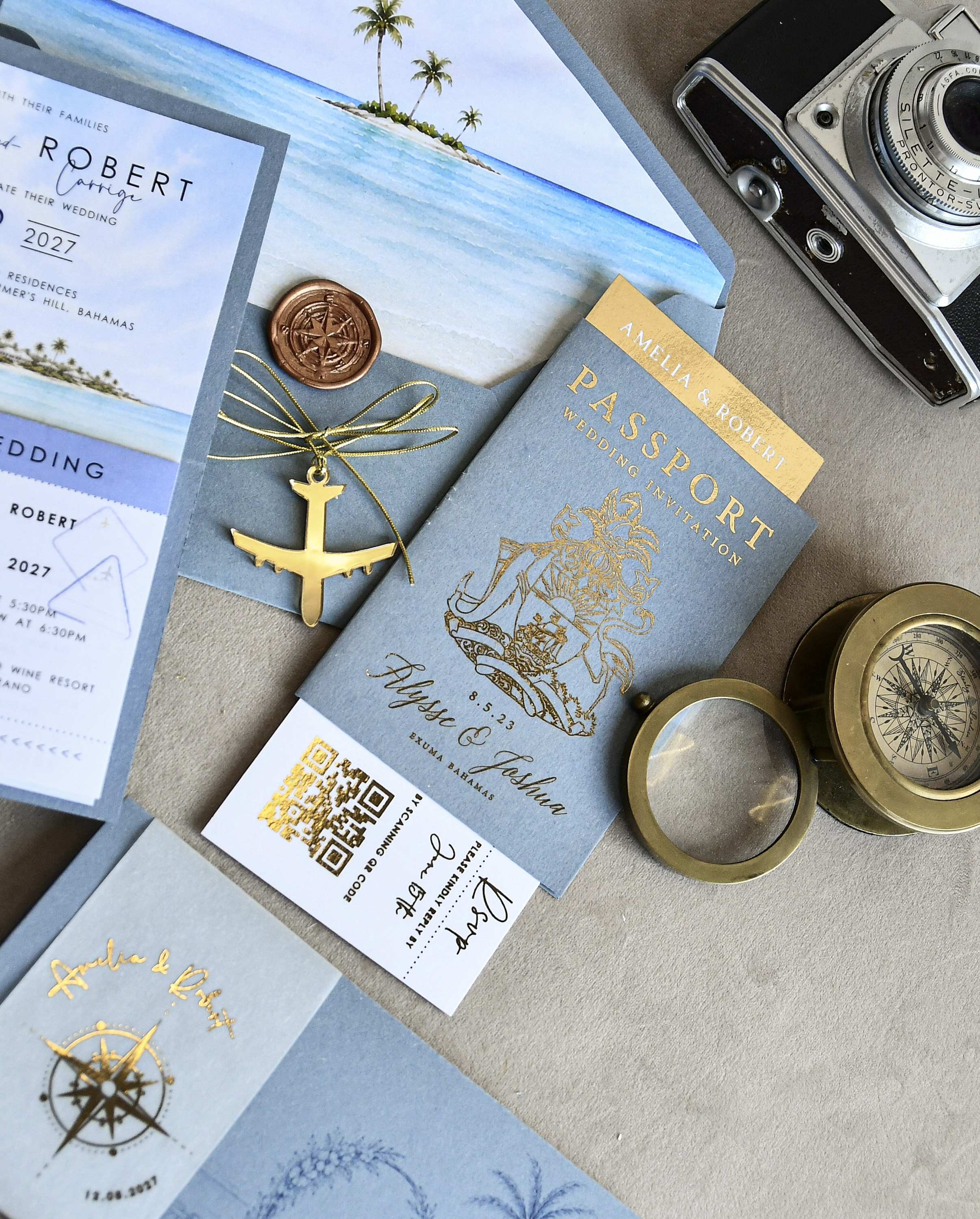
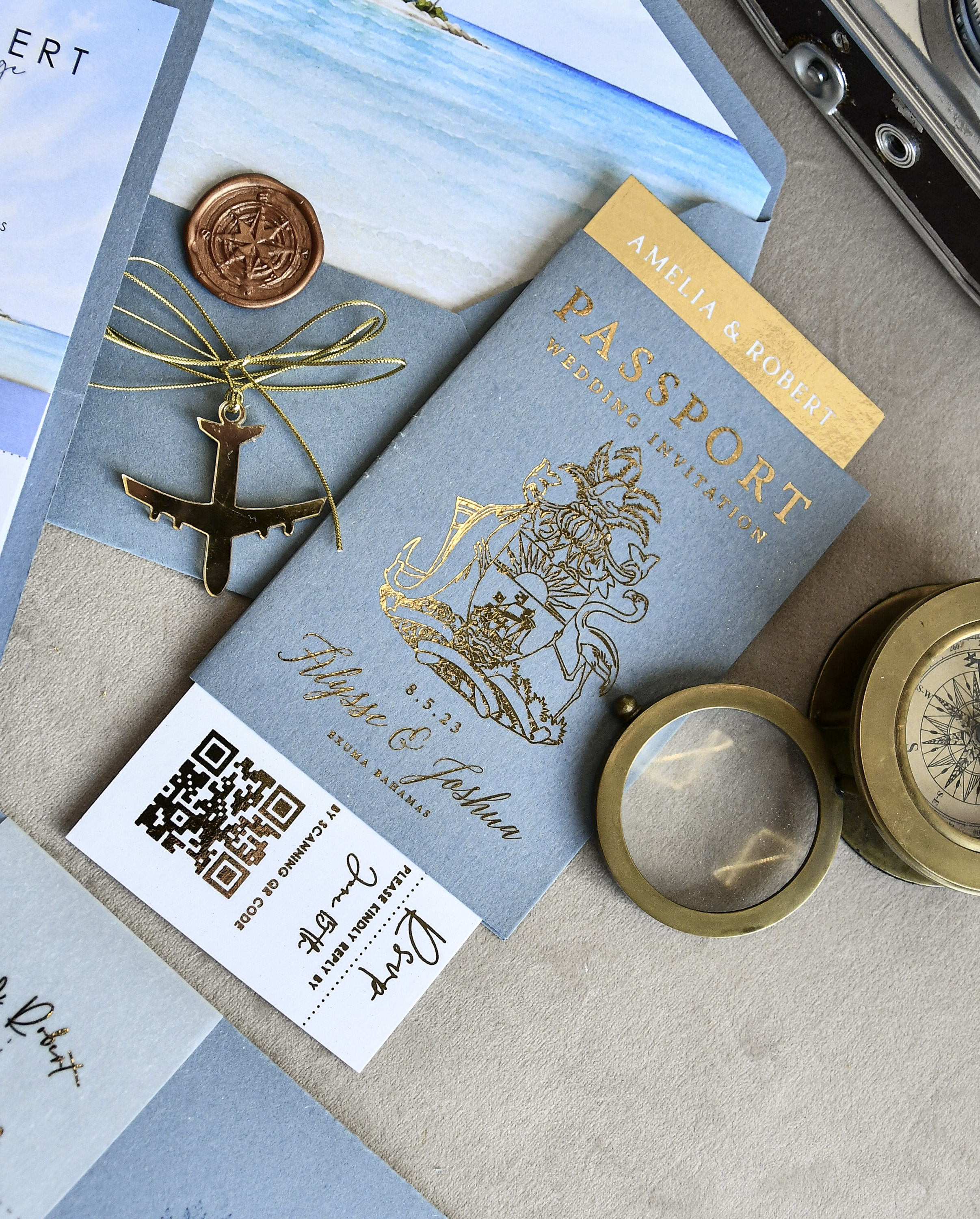
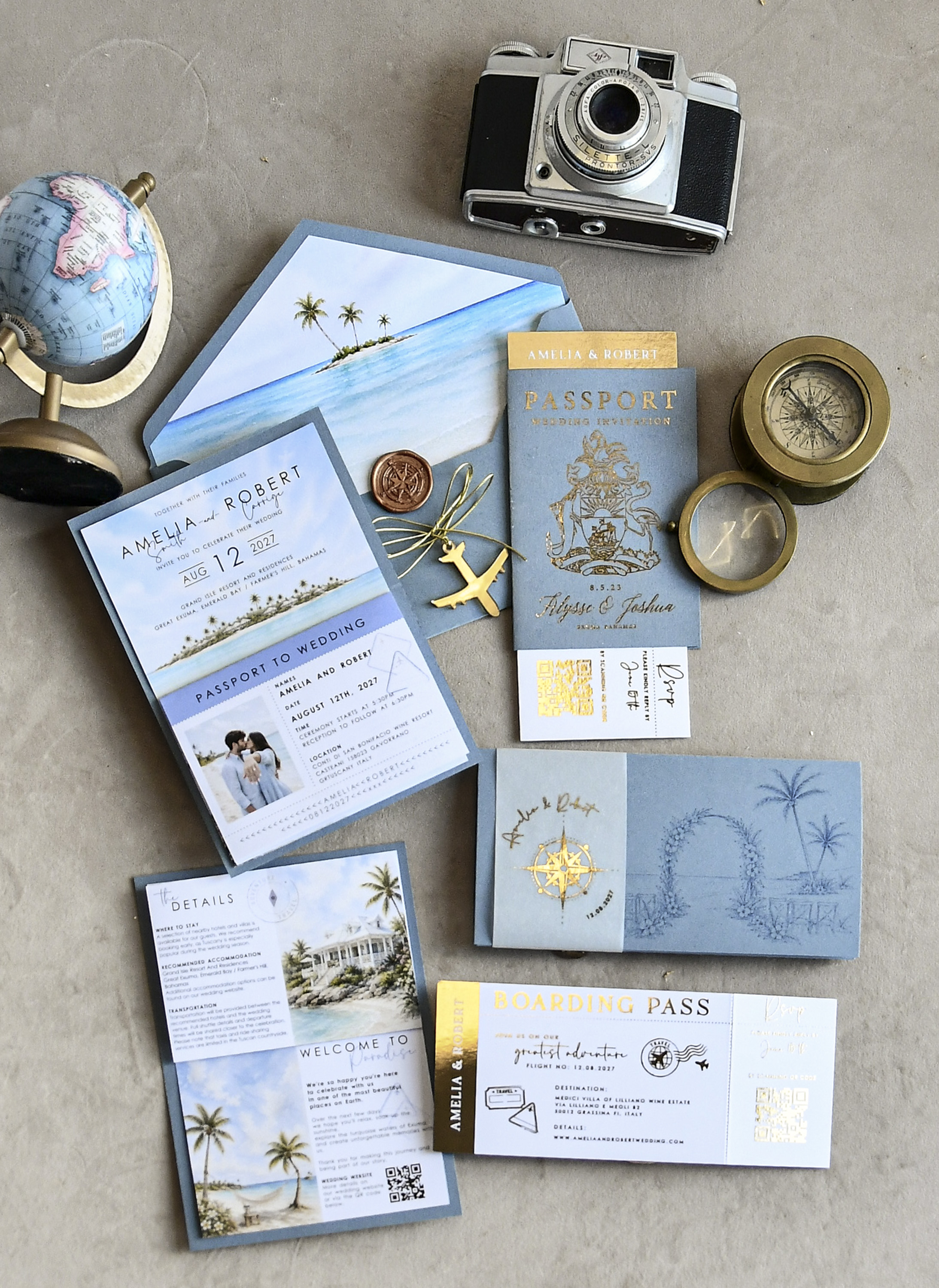
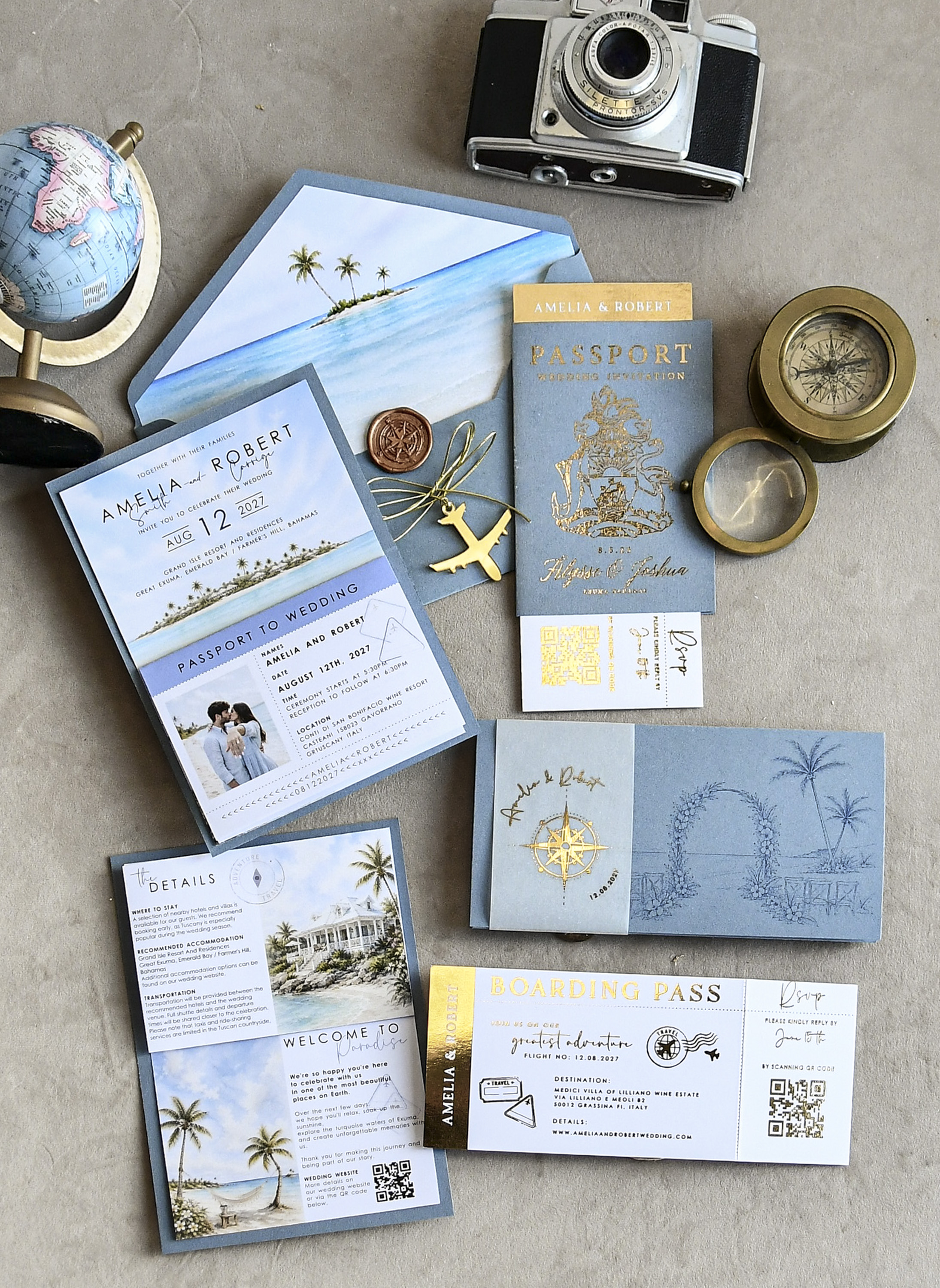
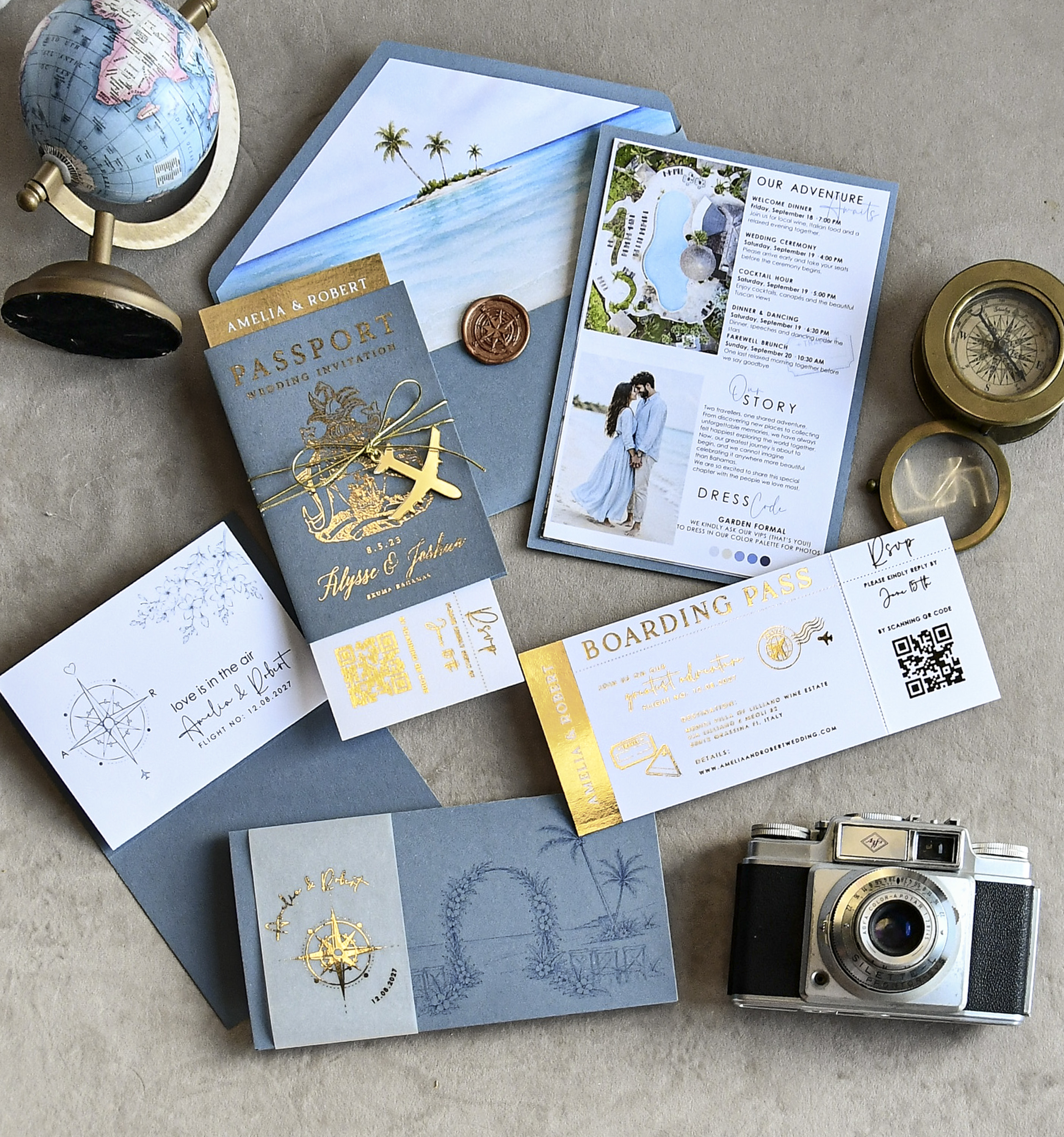
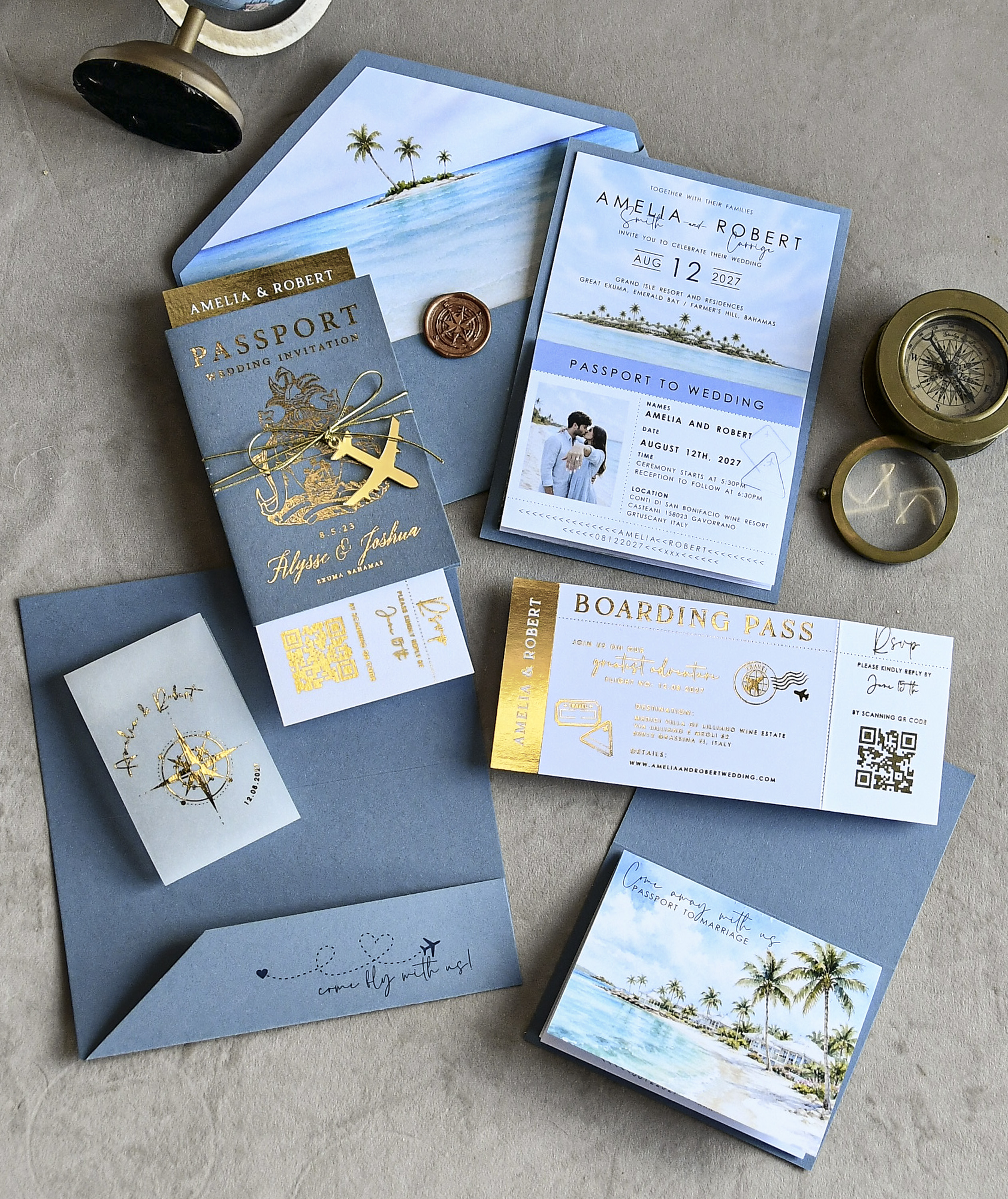
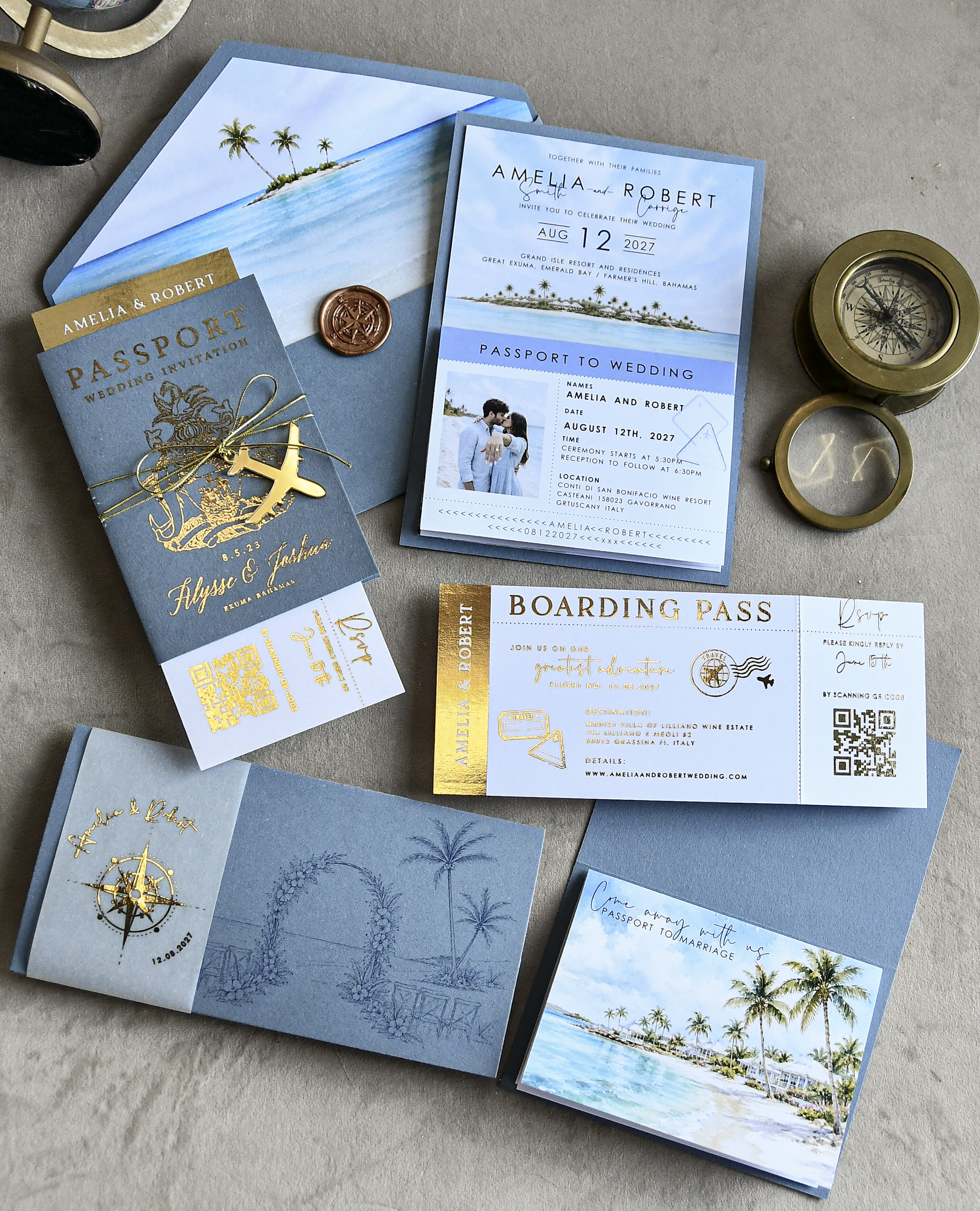
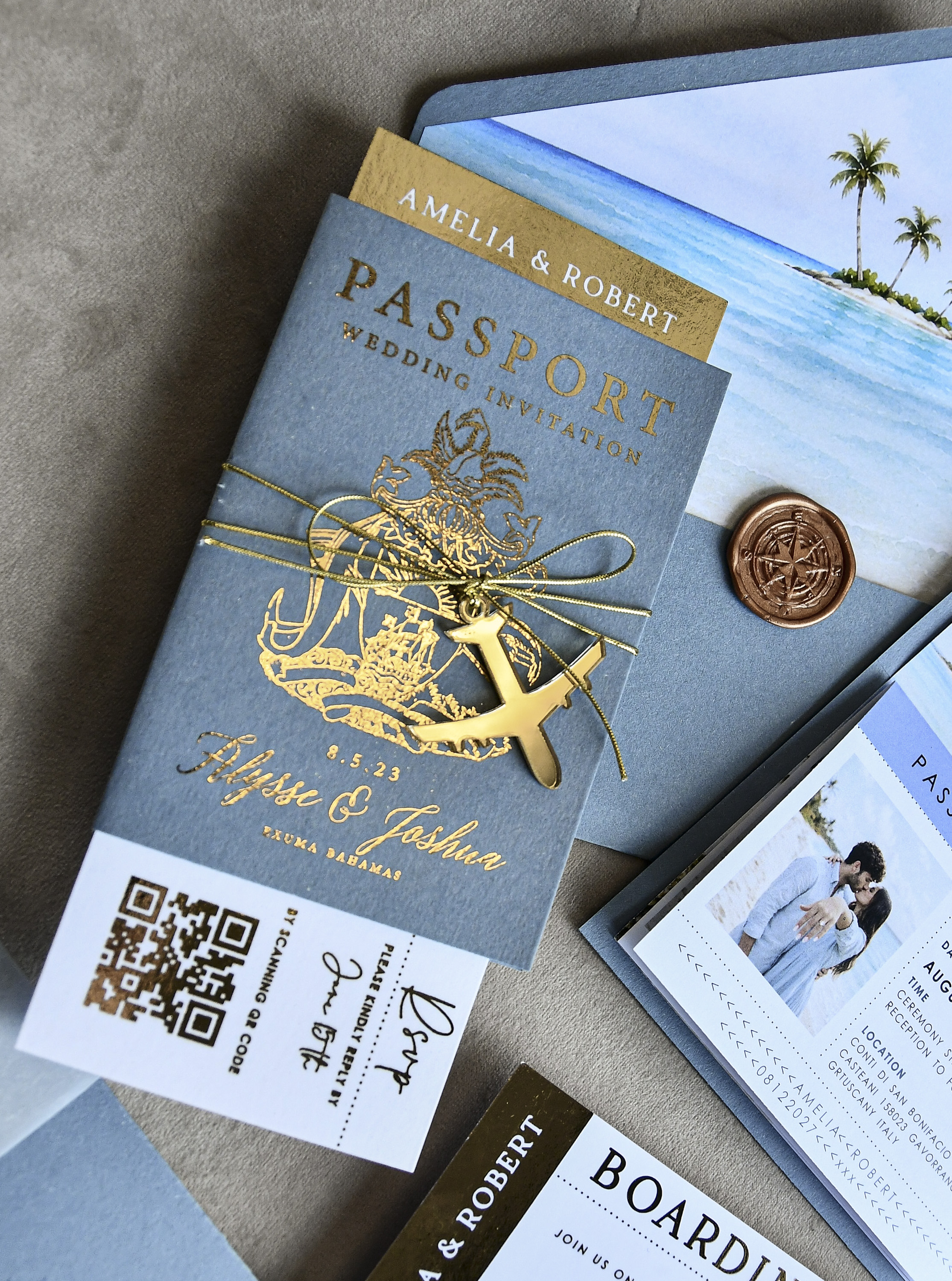
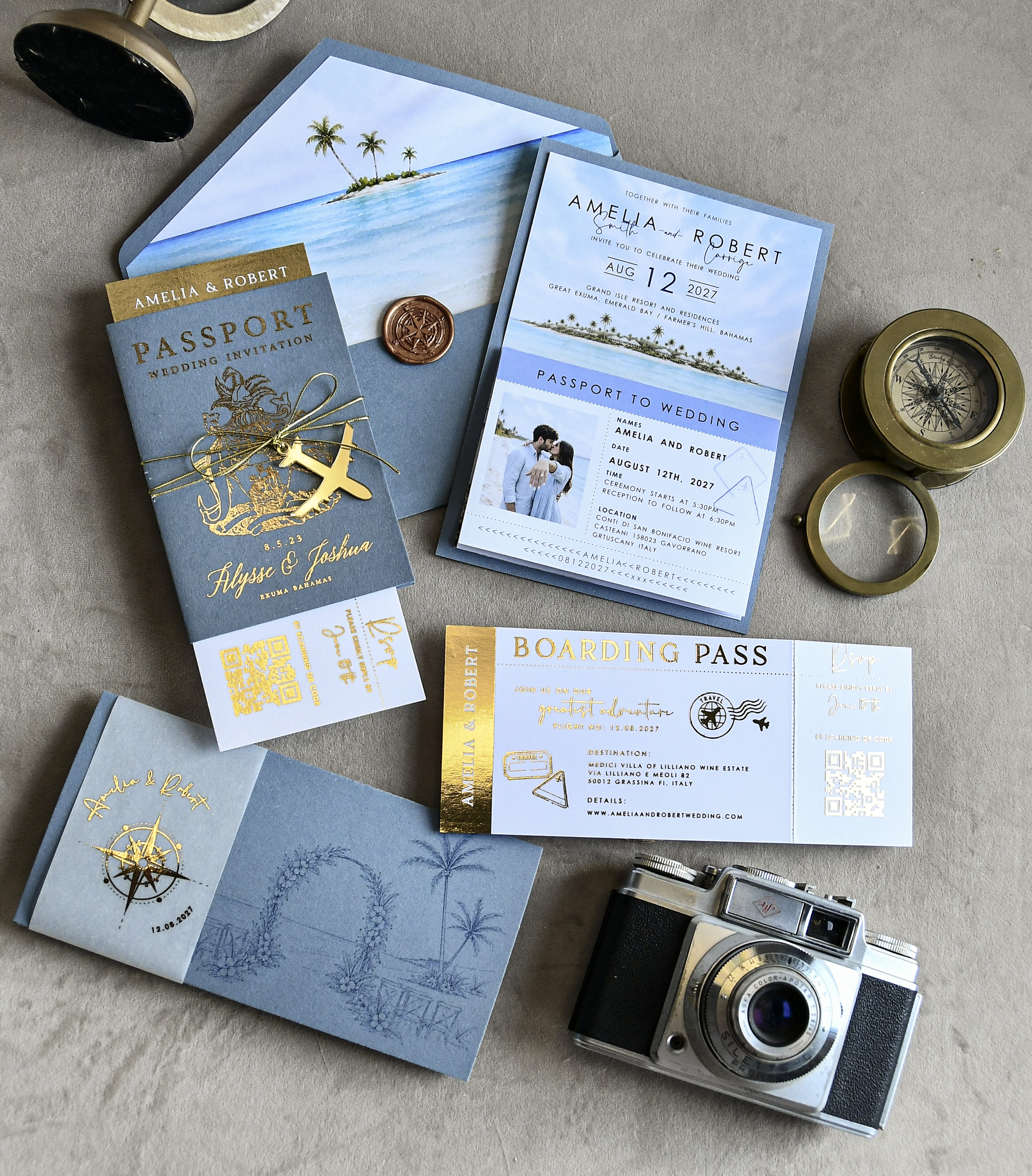
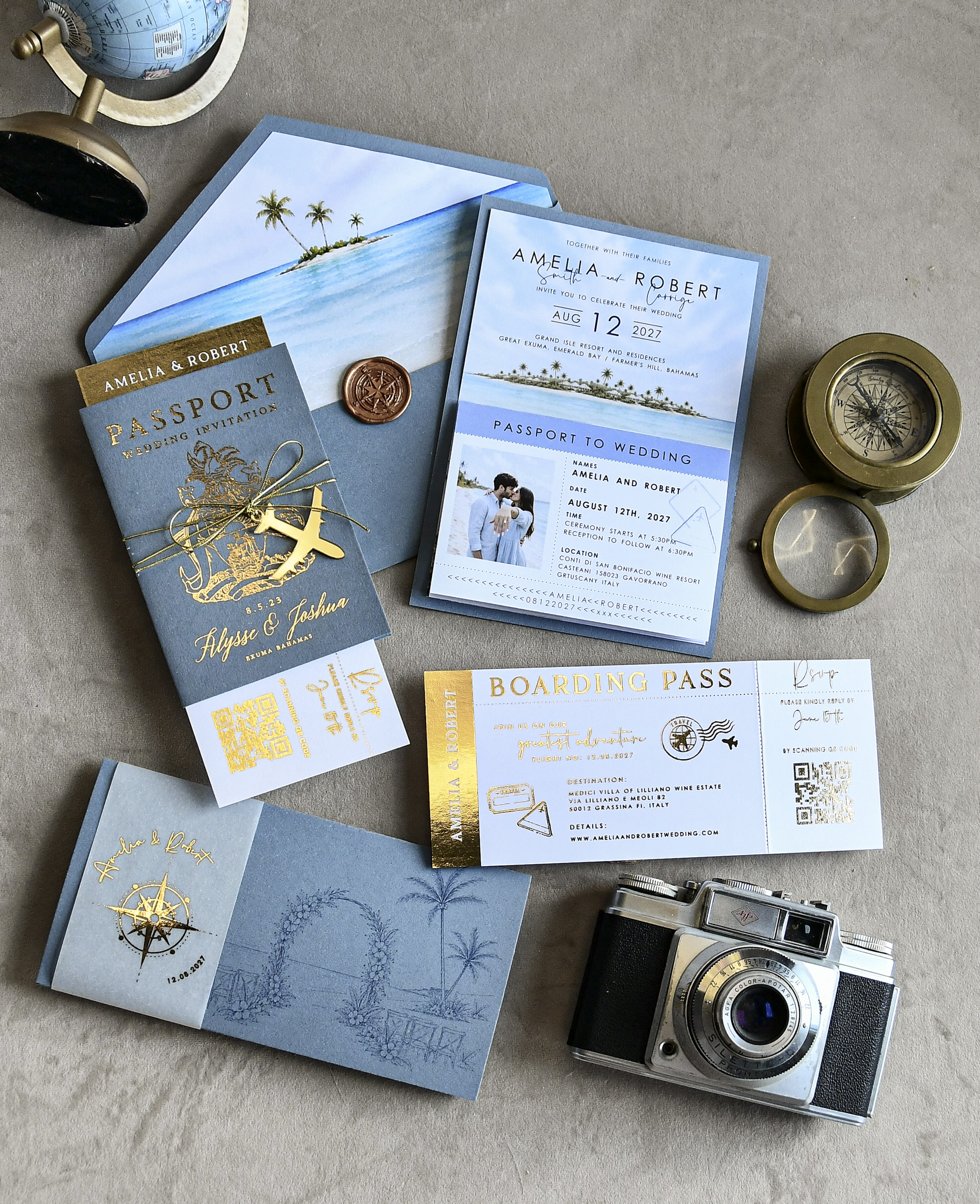
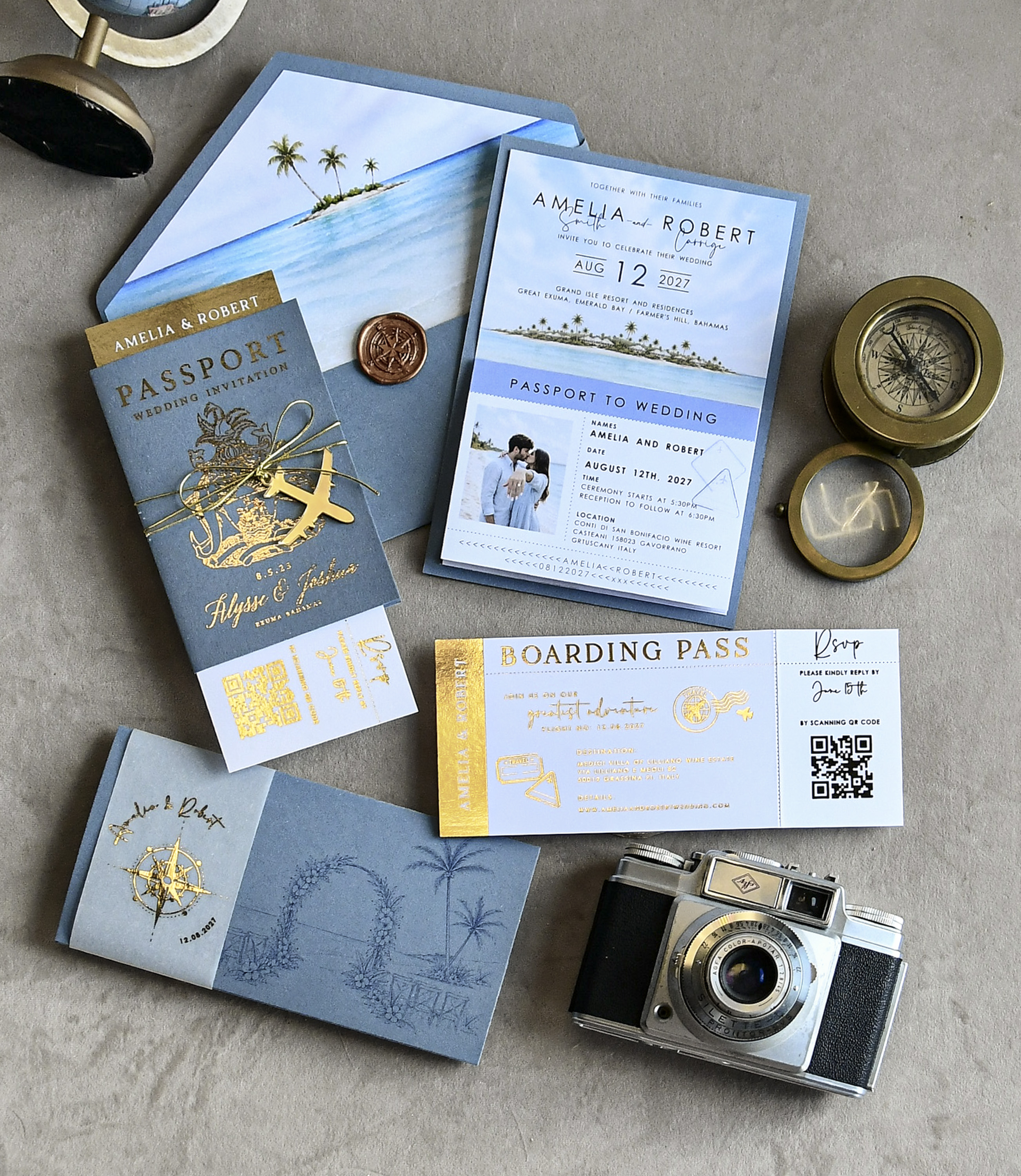
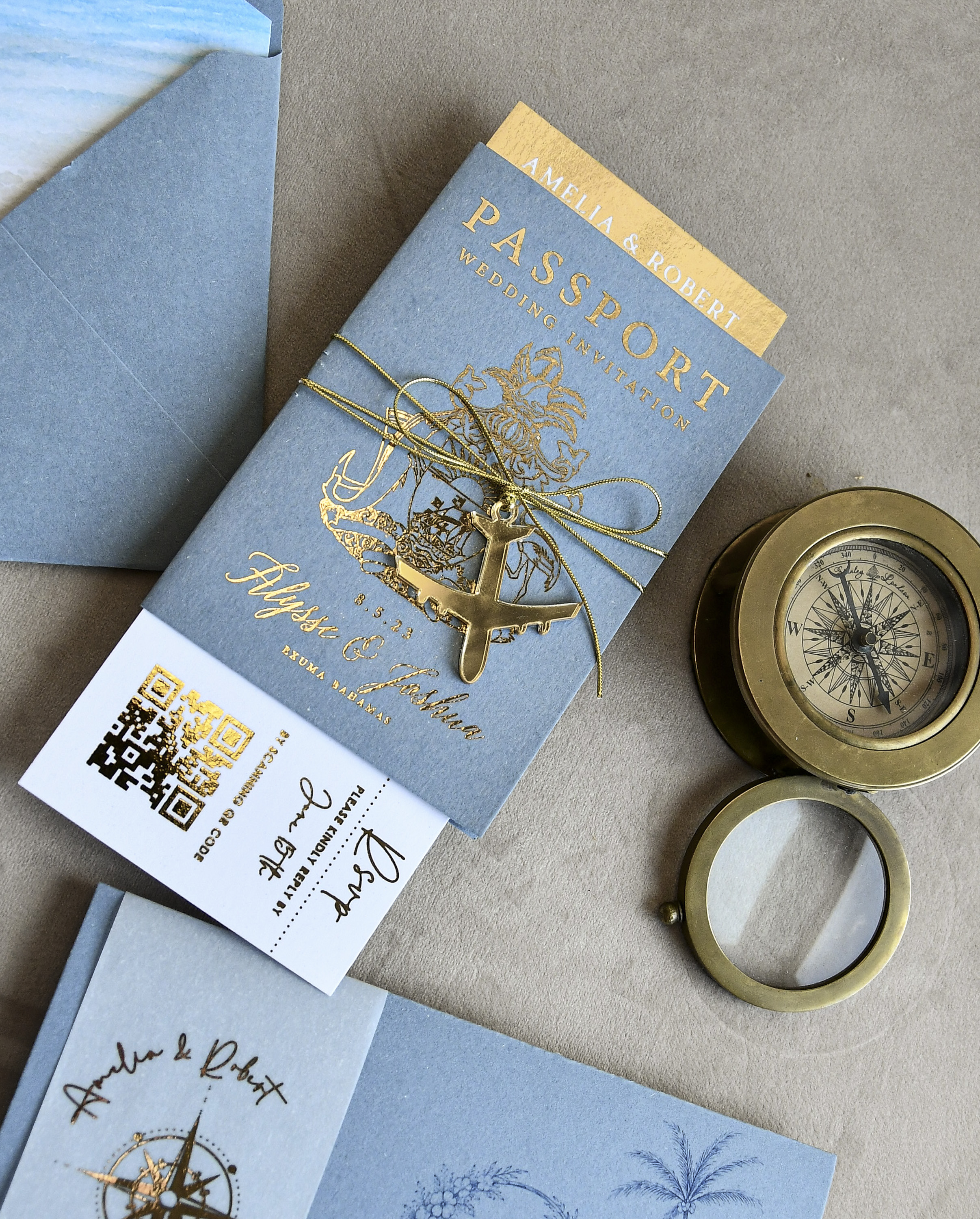
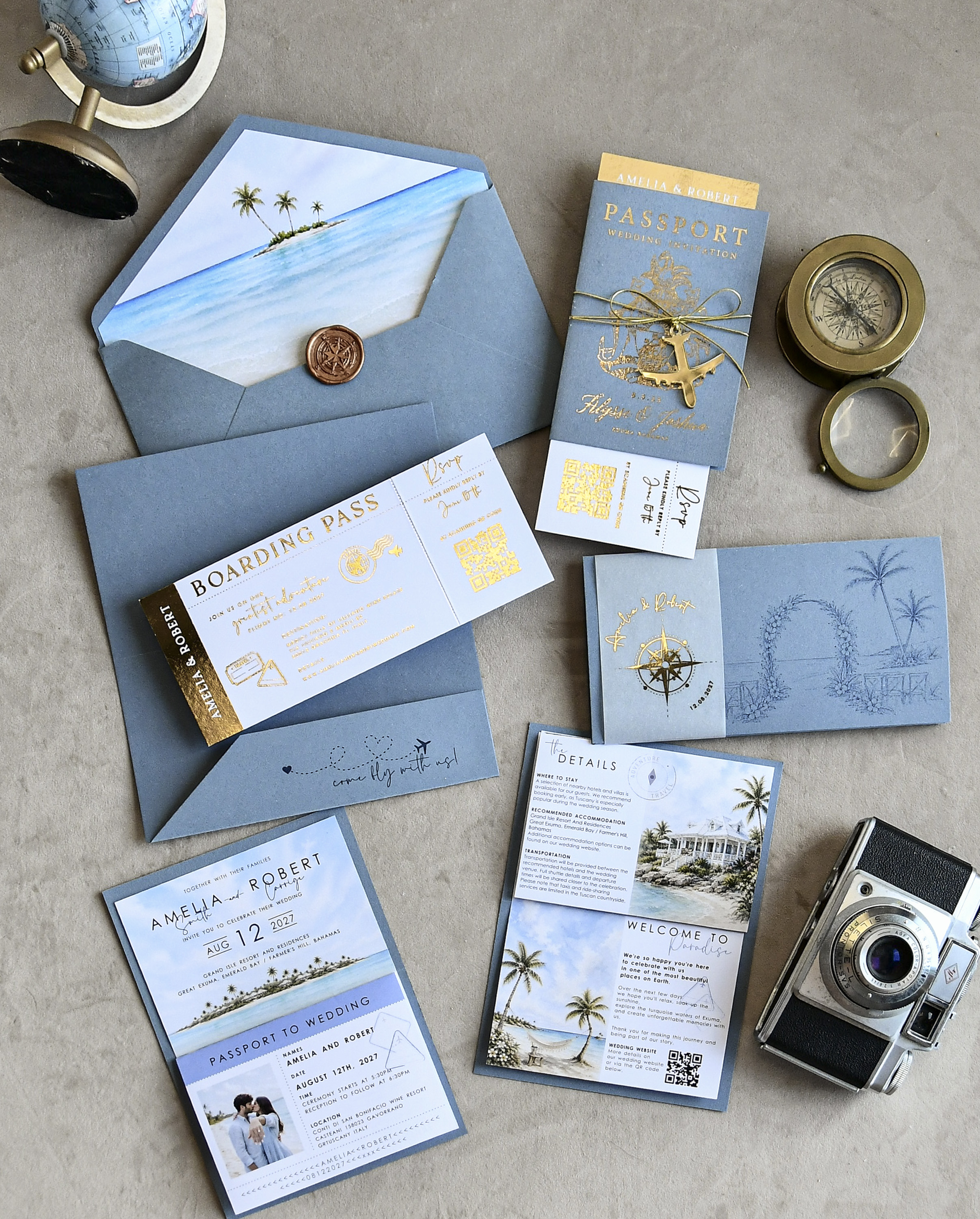
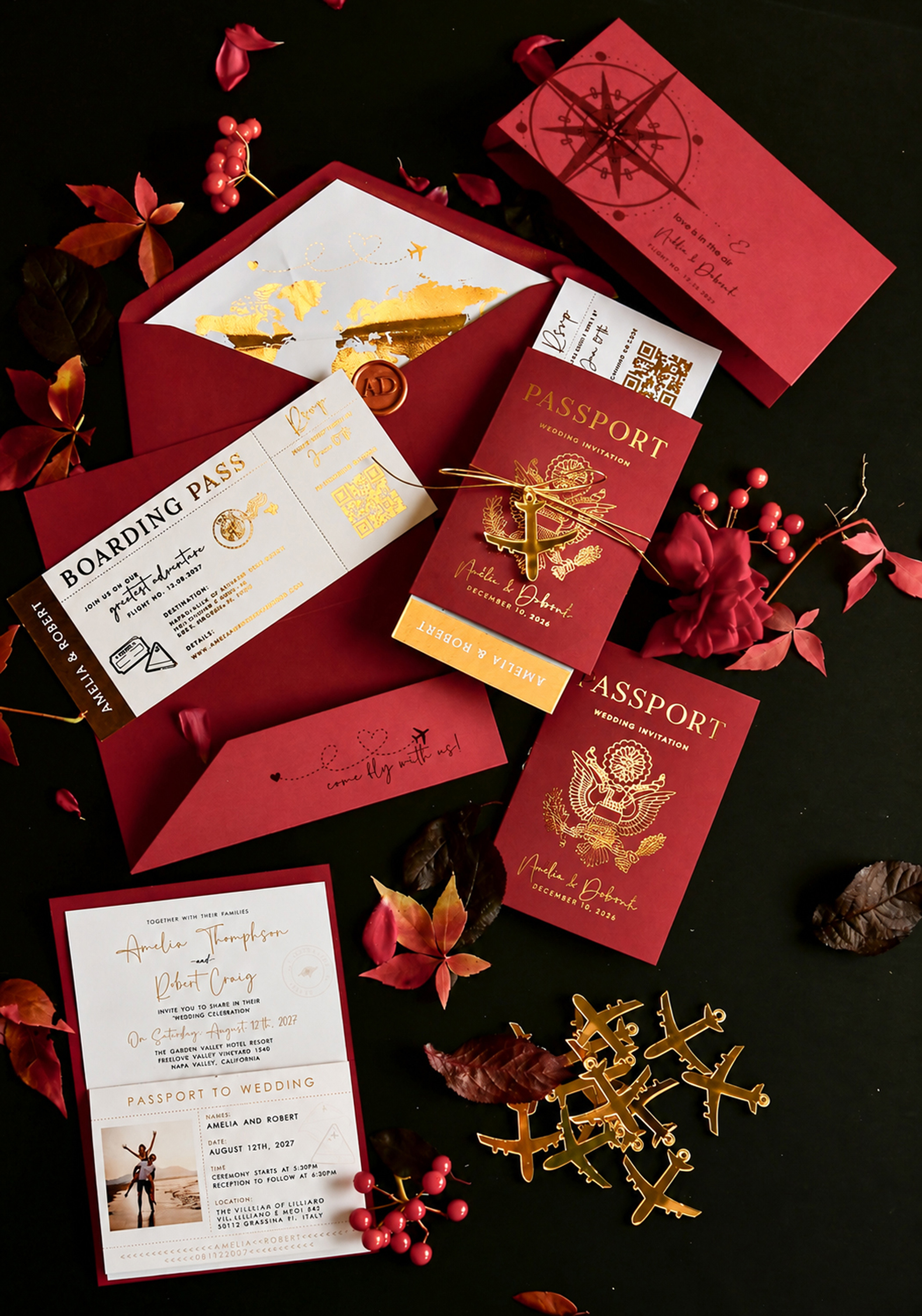
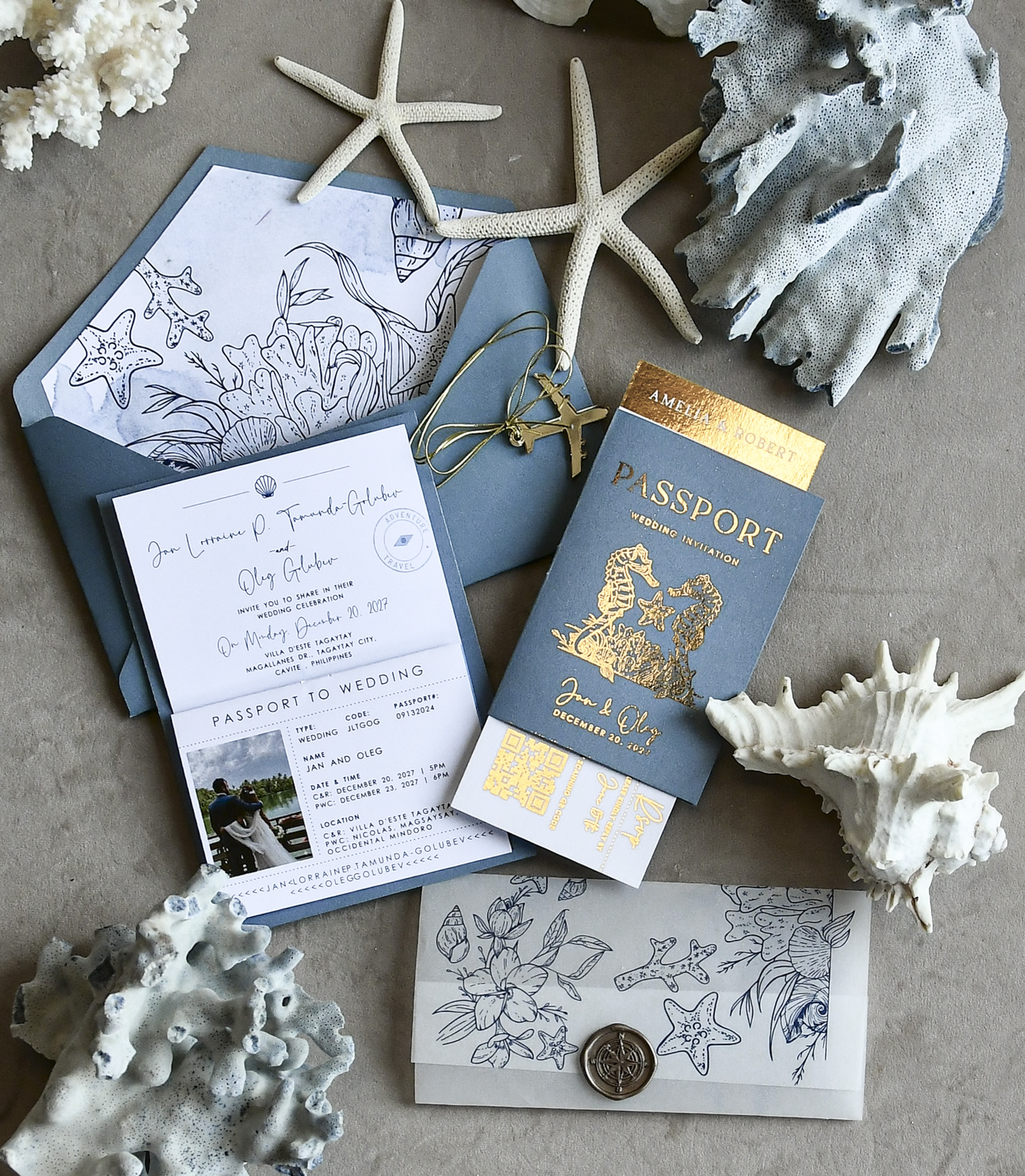
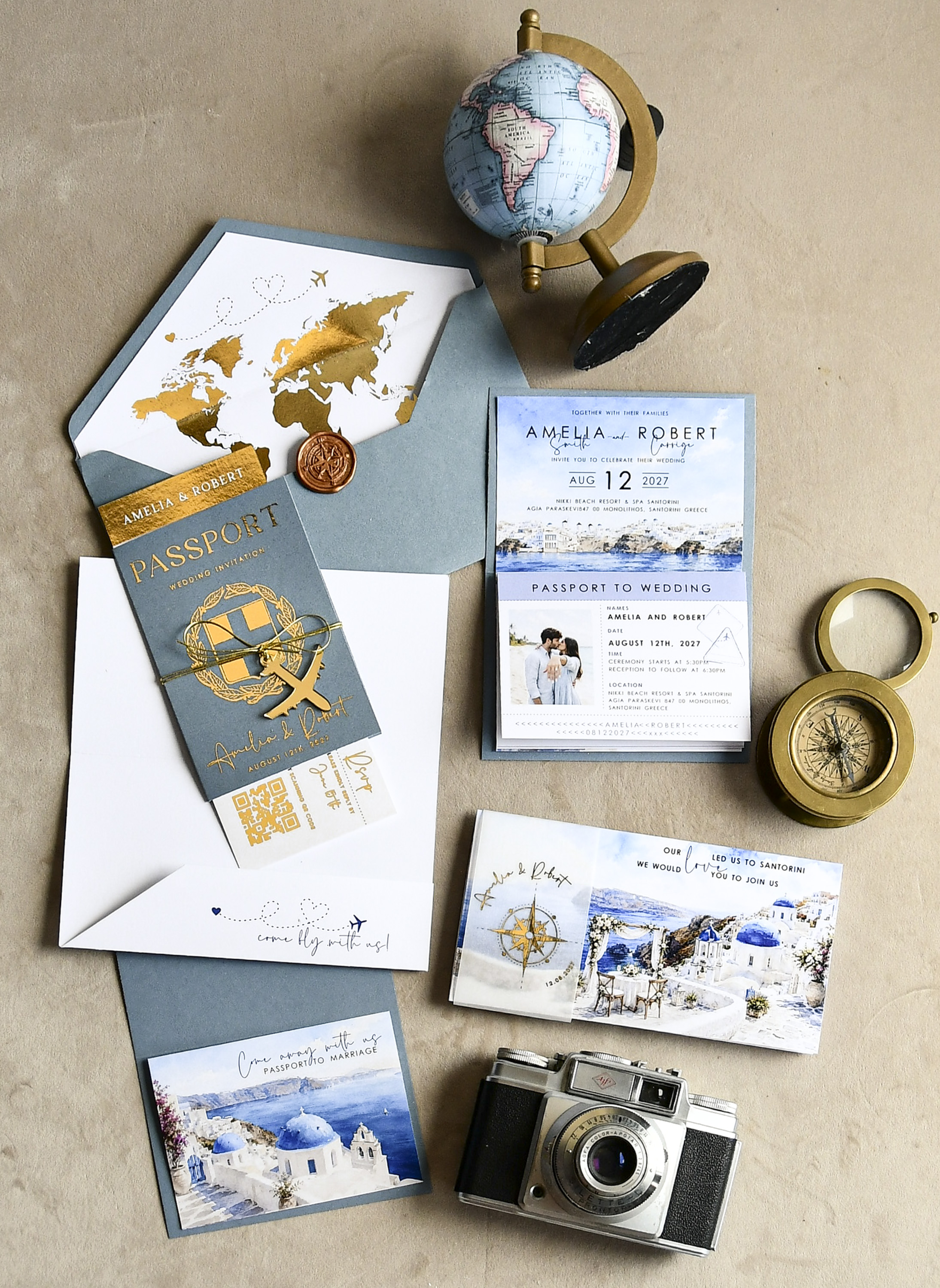
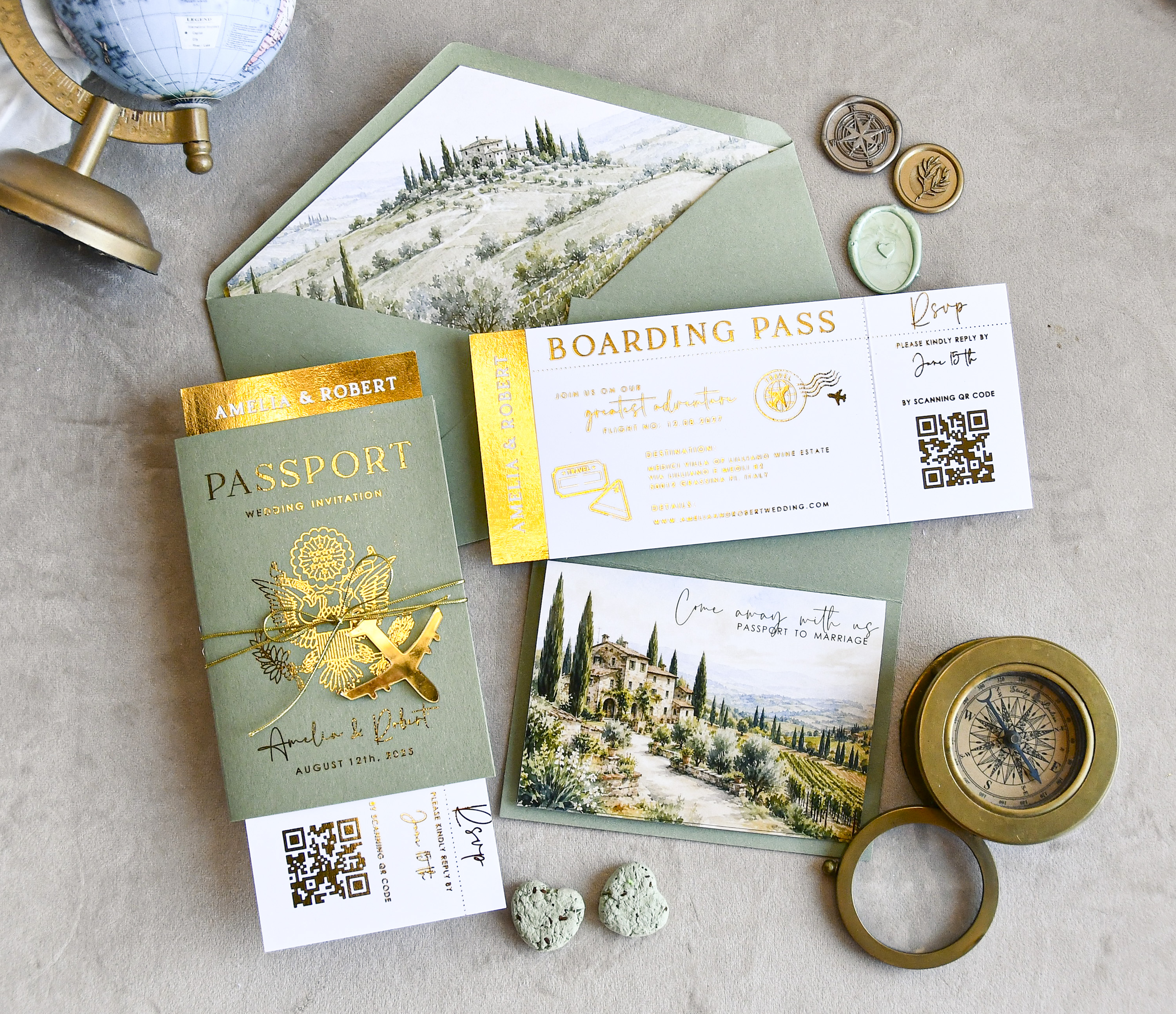
The invitation is also where your wedding's visual identity really shines. Whether you choose a classic letterpress design or something playful like a passport-style invite — the way our Passport to Love beach wedding invitations are designed — your suite should reflect the personality and theme of your celebration.
When to Send Each One
Timing is everything with wedding stationery. Sending too early can cause guests to lose track of details; sending too late leaves them scrambling. Here's a practical timeline to follow:
- Save the dates: 6 to 8 months before the wedding for local or regional guests; 10 to 12 months out for destination weddings or holiday weekends
- Wedding invitations: 6 to 8 weeks before the wedding date for most weddings; 10 to 12 weeks out for destination events
- RSVP deadline: Set it 2 to 3 weeks before the wedding so you have time to finalize your headcount with the caterer and venue
One important rule: only send save the dates to people you are certain you want to invite. Once someone receives a save the date, they expect a formal invitation to follow. Removing them from the guest list afterward is a serious etiquette misstep.
What They Have in Common — and Where They Differ
Both pieces should share a consistent visual style — same color palette, fonts, and overall aesthetic — so your stationery feels cohesive from the first mailer to the last. That said, here's a quick side-by-side of how they differ:
- Purpose: Save the date = reserve the date; Invitation = formal request to attend
- Detail level: Save the date = minimal; Invitation = complete logistics
- Timing: Save the date = months in advance; Invitation = 6 to 8 weeks out
- RSVP: Save the dates do not include RSVP cards; invitations always do
- Formality: Save the dates can be playful and casual; invitations tend to be more formal and structured
Think of the save the date as the teaser trailer and the wedding invitation as the full feature. Together, they build anticipation and ensure your guests arrive prepared. For couples planning a destination or beach wedding, a themed invitation suite — like our Passport to Love beach wedding invites — can make that second touchpoint feel truly special and memorable.
Frequently Asked Questions
Save the dates are not strictly required, but they are strongly recommended — especially if your wedding involves travel, falls on a holiday weekend, or is a destination event. Skipping them can result in key guests having prior commitments when your invitations finally arrive.
No — this is a significant etiquette violation. Once someone receives a save the date, they are considered invited and should receive a formal invitation. Only send save the dates to guests who are firmly on your final list.
Ideally, yes. Consistent fonts, colors, and design elements across both pieces create a polished, cohesive look. It also helps guests immediately recognize the correspondence as coming from you.
Absolutely — many couples do this to save on costs or reduce environmental impact. Just be mindful that digital save the dates may be missed or filtered as spam, so follow up with guests who haven't acknowledged them.
You should have your date and general location locked in before sending. Guests need at minimum the date and city to make travel plans. Sending before these are confirmed risks having to send corrections, which can cause confusion.
Traditionally, registry details are not included on save the dates or invitations — they're shared via your wedding website. You can include your website URL on the save the date, which naturally points guests toward your registry without appearing gift-focused.
See This Design Up Close
You May Also Like
More Wedding Planning Guides
- → Kids at Your Wedding: Should You Hire a Babysitter or Full Entertainment?
- → The Right Time to Chase Down Missing RSVPs (And How to Do It Gracefully)
- → The Graceful Way to Let Guests Know Your Wedding Is Adults Only
- → Wedding Guest List Dilemma: Should Your Boss and Coworkers Make the Cut?
- → When Guests RSVP Yes But Never Arrive: What to Do Before, During, and After
- → Planning Your Wedding When Your Divorced Parents Can't Stand Each Other
- → Navigating Wedding Invitations When a Sibling Relationship Is Complicated
- → Your Guest List, Your Rules: Navigating In-Law Friend Invites
- → Big Guest List vs. Better Wedding Experience: Which Should You Prioritize?
- → Extra Wedding Guests: Who Picks Up the Tab?
- → No RSVP? Here's Exactly How to Handle It
- → What to Say When Someone Asks Why They Didn't Make the Guest List
- → Plus-Ones for Single Guests: Making the Right Call for Your Wedding
- → How to Kindly Let Someone Know They Didn't Make the Guest List
- → My Fiancé Wants to Exclude My Family From the Wedding: Now What?
- → Should You Give Teenage Guests a Plus One at Your Wedding?
- → Adults-Only or Family-Friendly? How to Make the Right Call on Kids at Your Wedding
- → When Guests Bring Unexpected Plus-Ones: What to Do Before and After the Wedding
- → How Late Is Too Late for Wedding Invitations? A Realistic Timeline
- → Aunt Has a New Husband: Here's How to Handle the Invitation
- → The RSVP No-Show: Should You Actually Call Guests Who Never Responded?
- → Wedding Invitations: Mail Them or Hand Deliver? Here's How to Decide
- → What to Do When a Relative Says They Won't Come If Someone Else Is Invited
- → Extra Names on Your RSVP Card: What to Do When Guests Add Themselves
- → Your Guest List, Your Call: How to Handle Mom's Must-Invite Requests
- → Yes, You Can Say No to a Plus One — Here's How to Do It Right
- → Adults-Only Weddings: Are You Being Rude by Leaving Kids Off the Guest List?
- → How to Handle Seating for Divorced Parents at Your Wedding
- → Uninvited Plus-Ones and Tag-Alongs: How to Keep Your Guest List Intact
- → When Family Feuds Threaten Your Wedding Plans: A Practical Peacekeeper's Guide
- → Inviting an Estranged Brother or Sister: Finding Clarity Before You Seal the Envelope
- → Cousins, Invites, and Hard Choices: A Practical Guest List Guide