
Save the Date vs. Wedding Invitation: Two Very Different Jobs, One Beautiful Paper Trail
If you're newly engaged and staring at a stationery website wondering whether you need a save the date and an invitation—or just one of them—you're not alone. These two pieces of paper look similar but serve completely different purposes in your wedding communication timeline. Understanding the difference helps you spend your budget wisely, keep guests informed, and avoid last-minute scrambles. Here's everything you need to know.
What a Save the Date Actually Does
A save the date has one job: claim a spot on your guests' calendars before they make other plans. That's it. It's an early heads-up, not a formal invitation, and it intentionally leaves out details you may not have finalized yet.
A typical save the date includes:
- Your names
- The wedding date
- The city and state (venue name optional)
- A note that a formal invitation will follow
- Your wedding website URL, if you have one
What it does not include: RSVP instructions, ceremony times, venue addresses, dress code, or meal choices. Those belong on the invitation. Sending a save the date is a promise that more information is coming—not a request for a response.
What a Wedding Invitation Must Include
The wedding invitation is the official, formal request for your guests to attend. It carries all the logistical details they need to show up at the right place at the right time. Once guests receive it, they should be able to plan their entire attendance without asking you a single question.
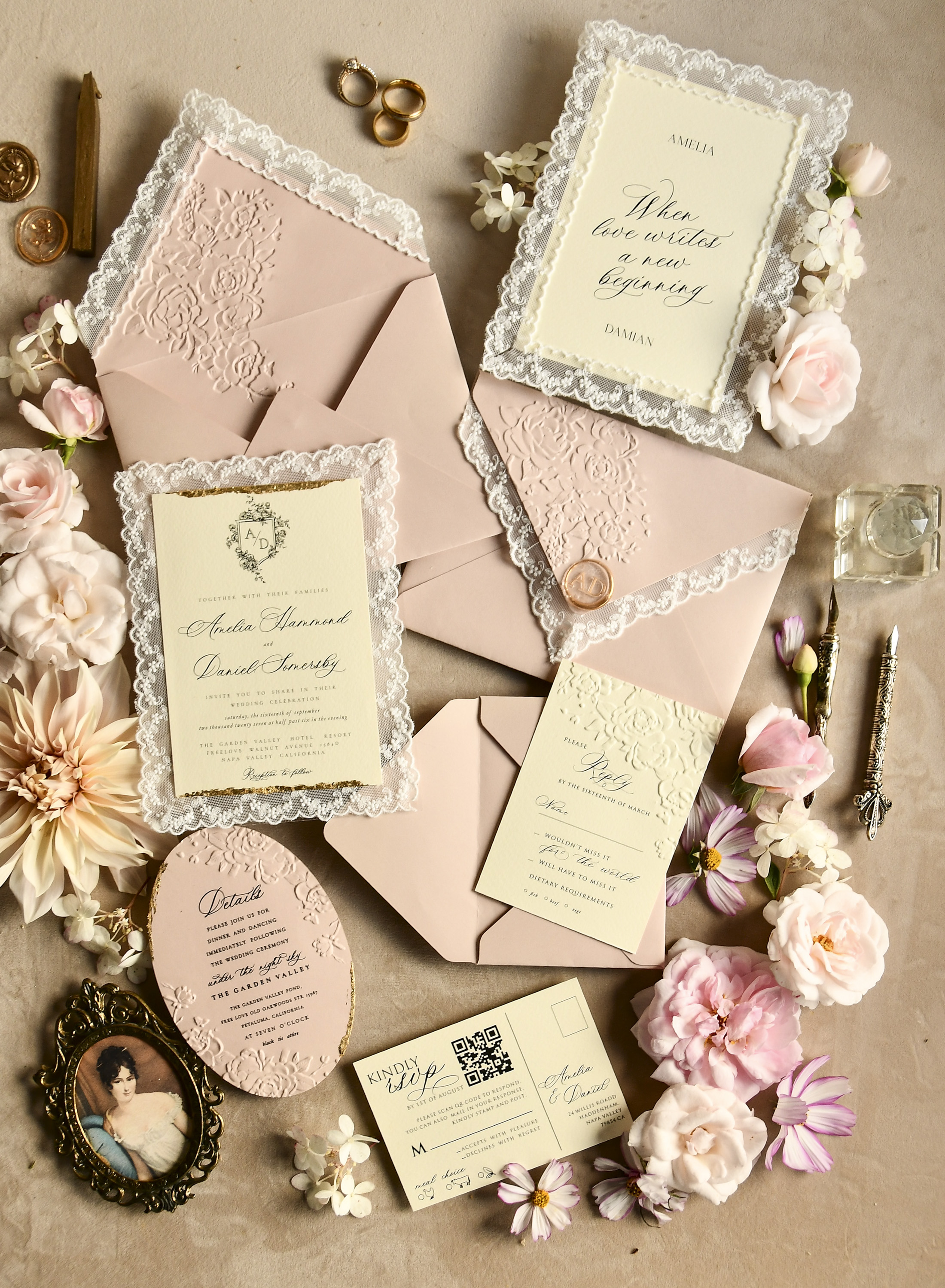
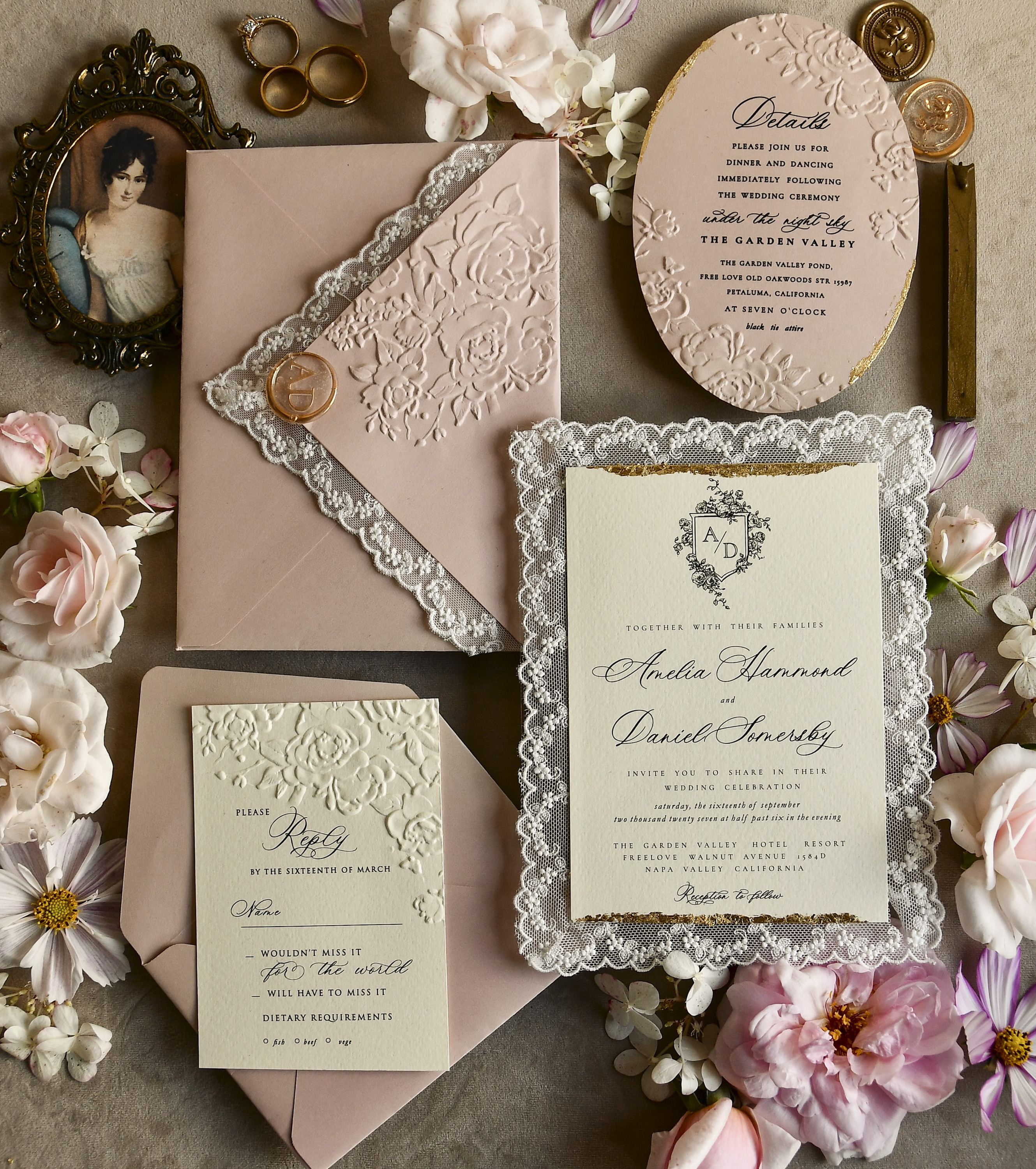
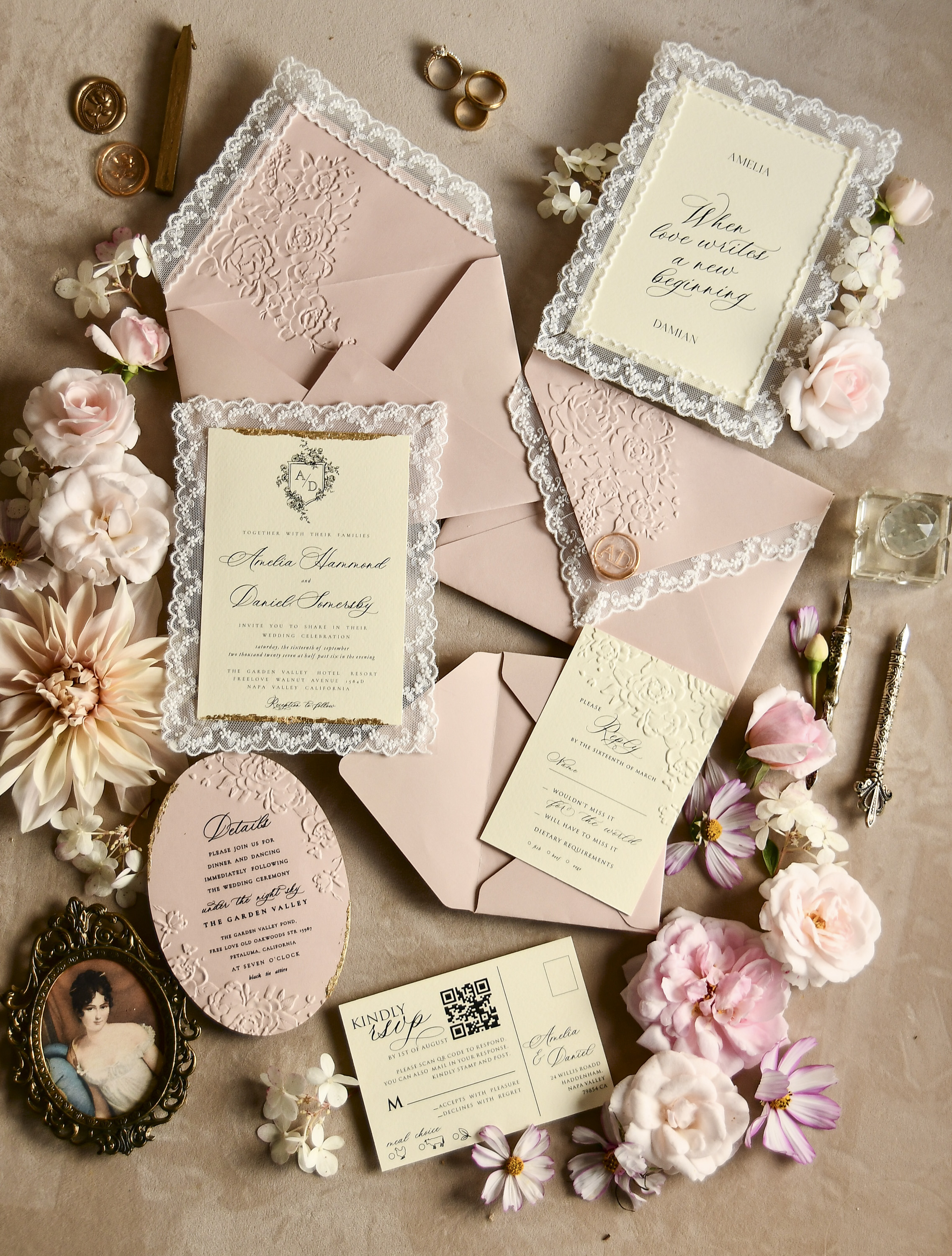
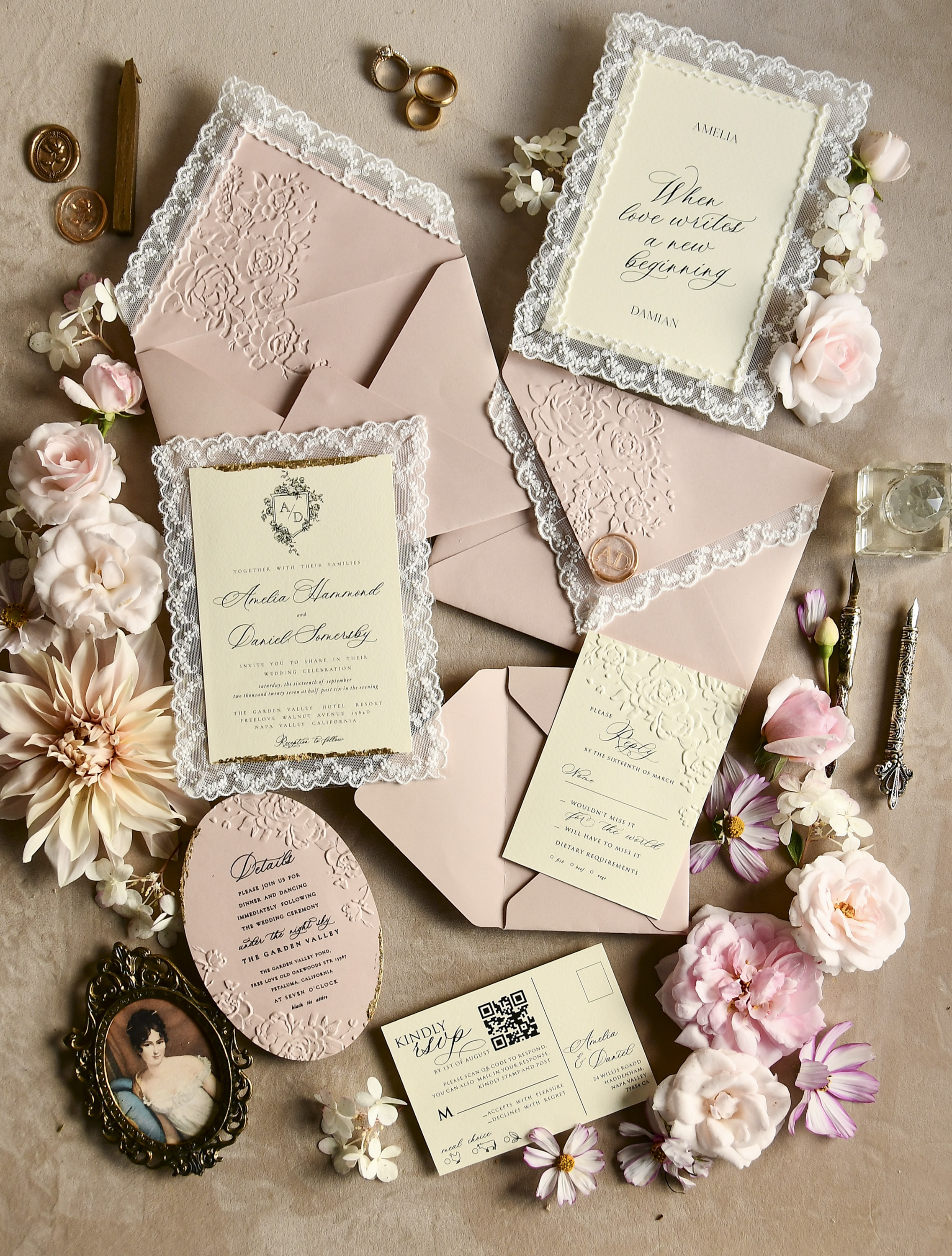
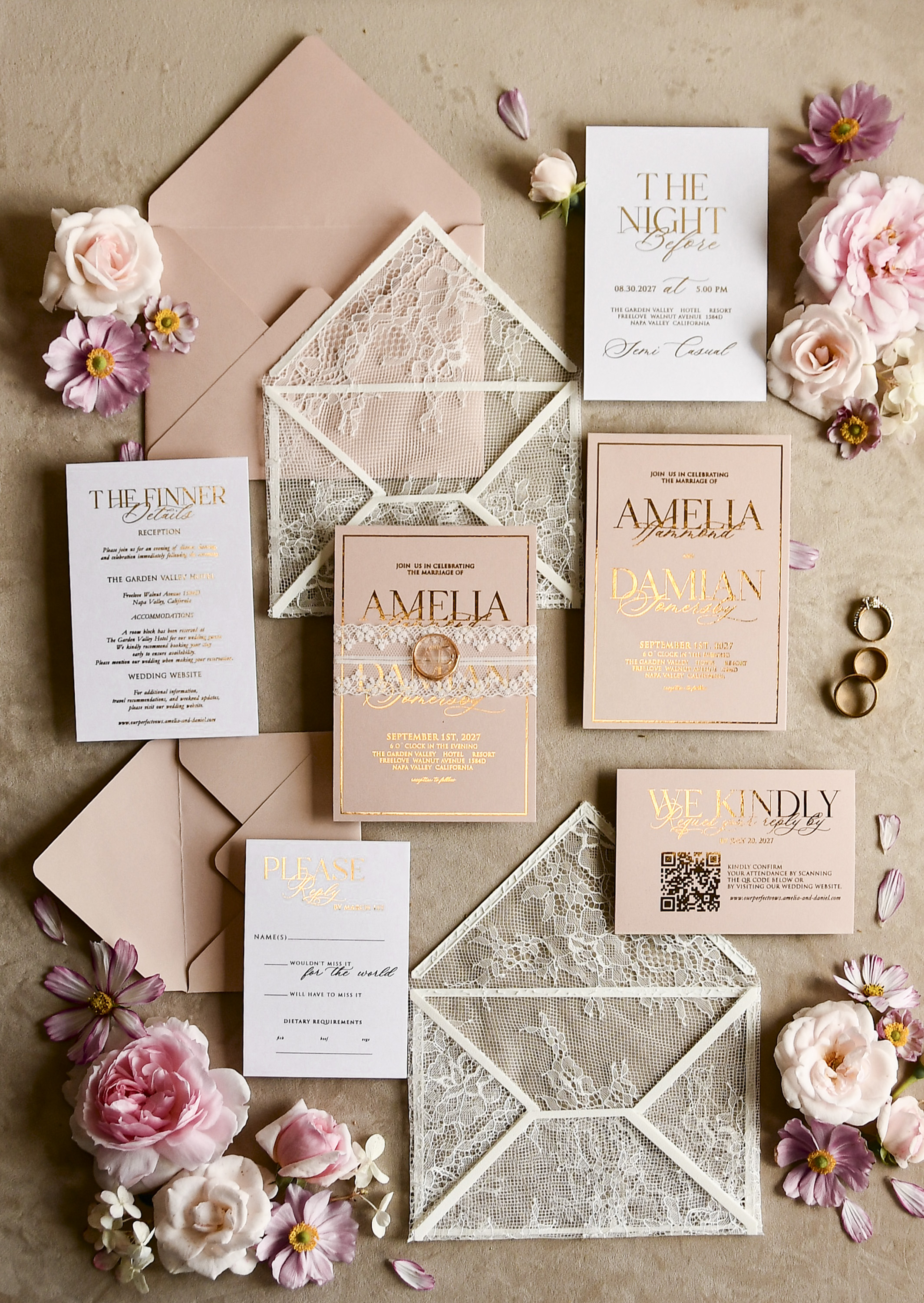
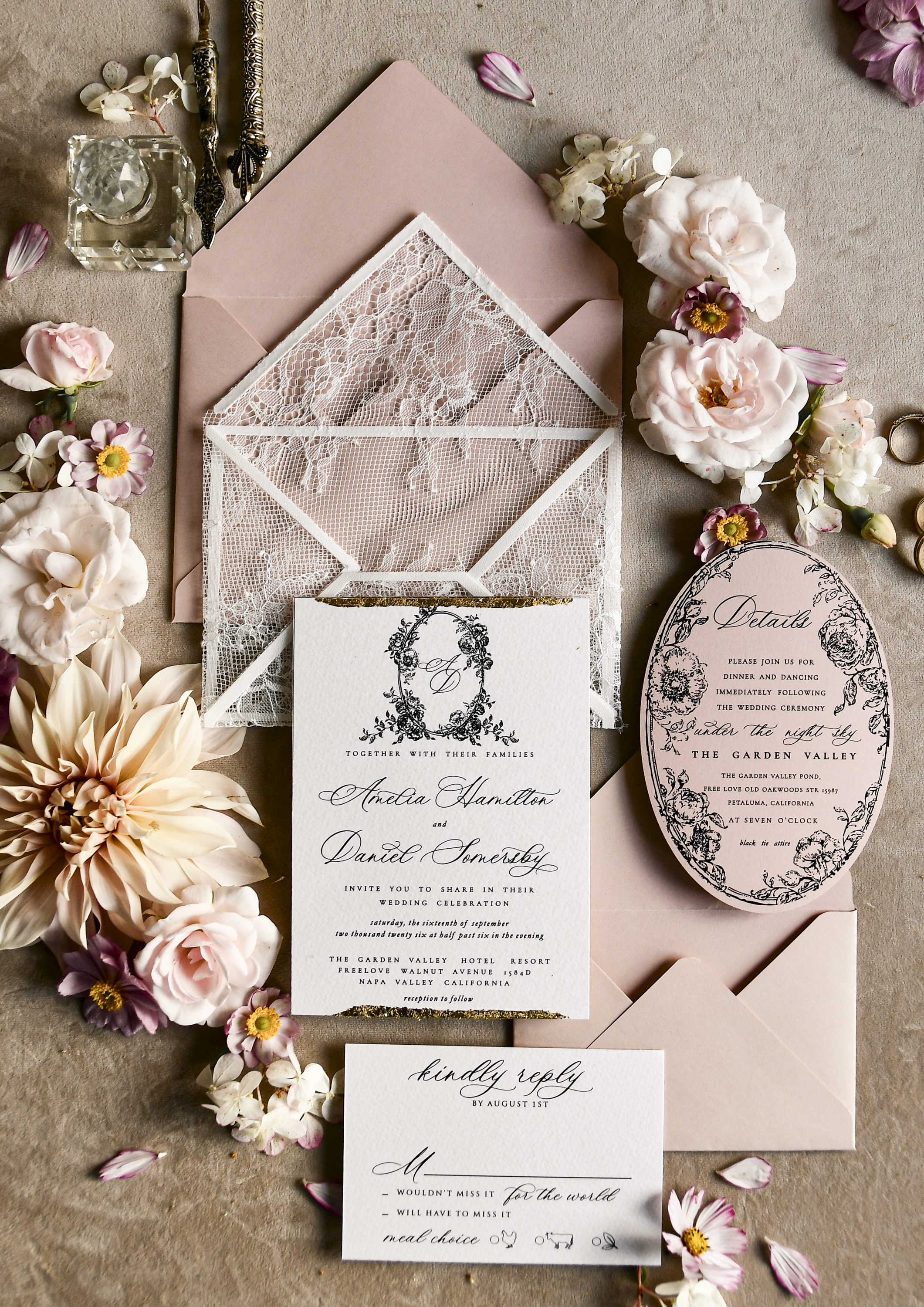
A complete wedding invitation suite typically includes:
- The invitation card – names, date, time, full venue name and address, and the hosting line
- RSVP card and envelope – with a clear deadline (usually 3–4 weeks before the wedding)
- Details card – hotel room blocks, parking, shuttle info, dress code
- Reception card – if the reception is at a different location than the ceremony
- Outer and inner envelopes – addressed to each specific guest or household
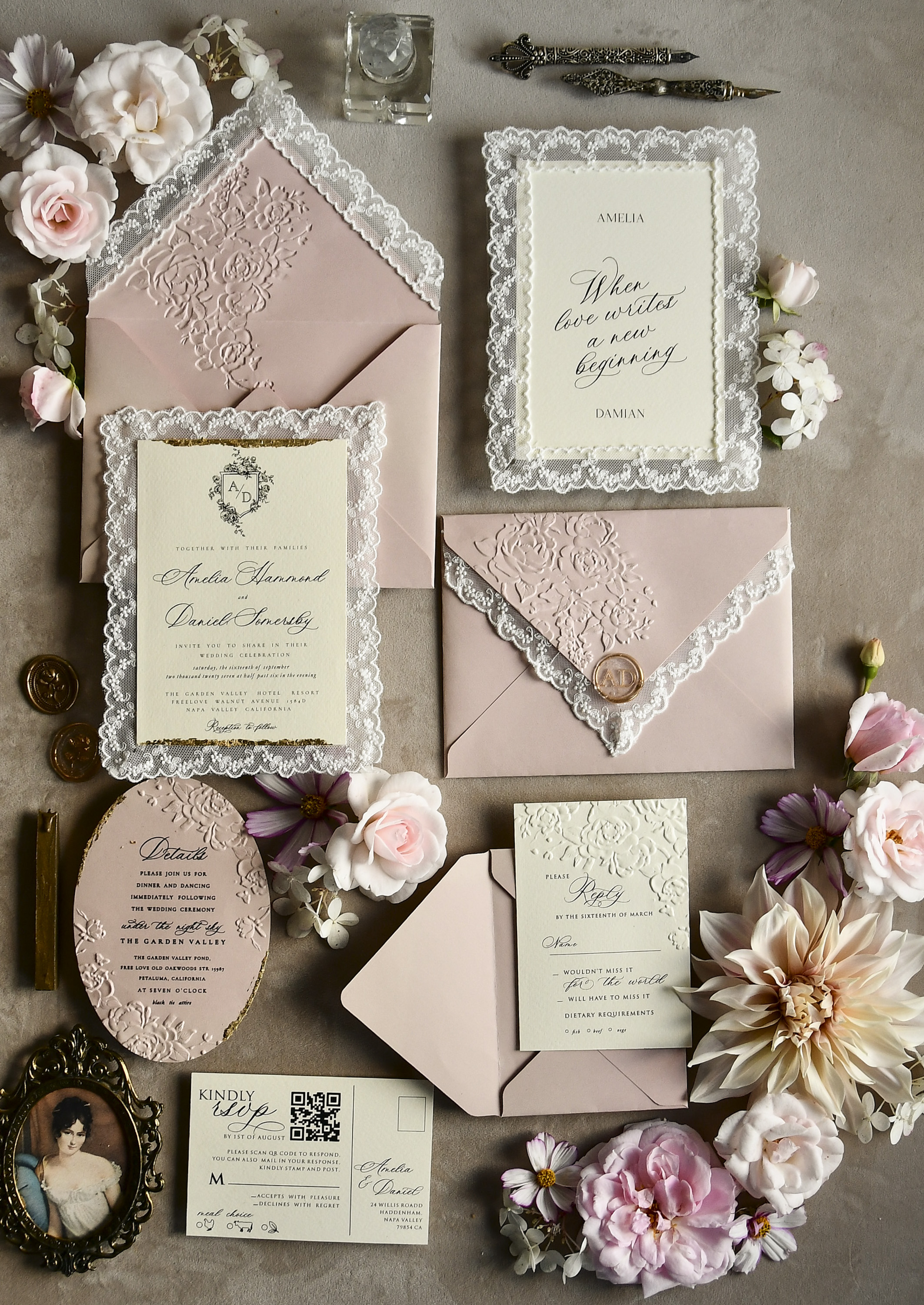
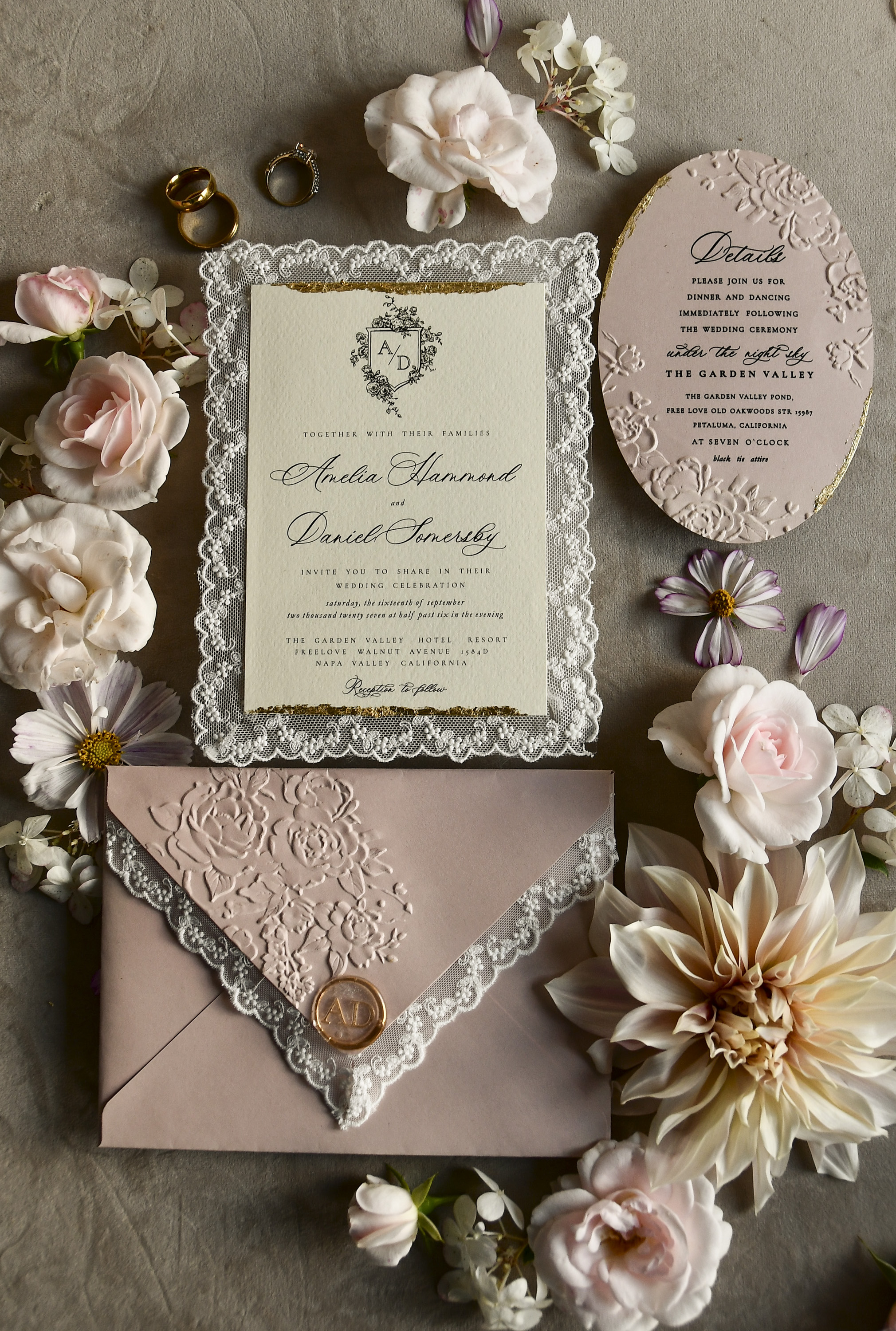
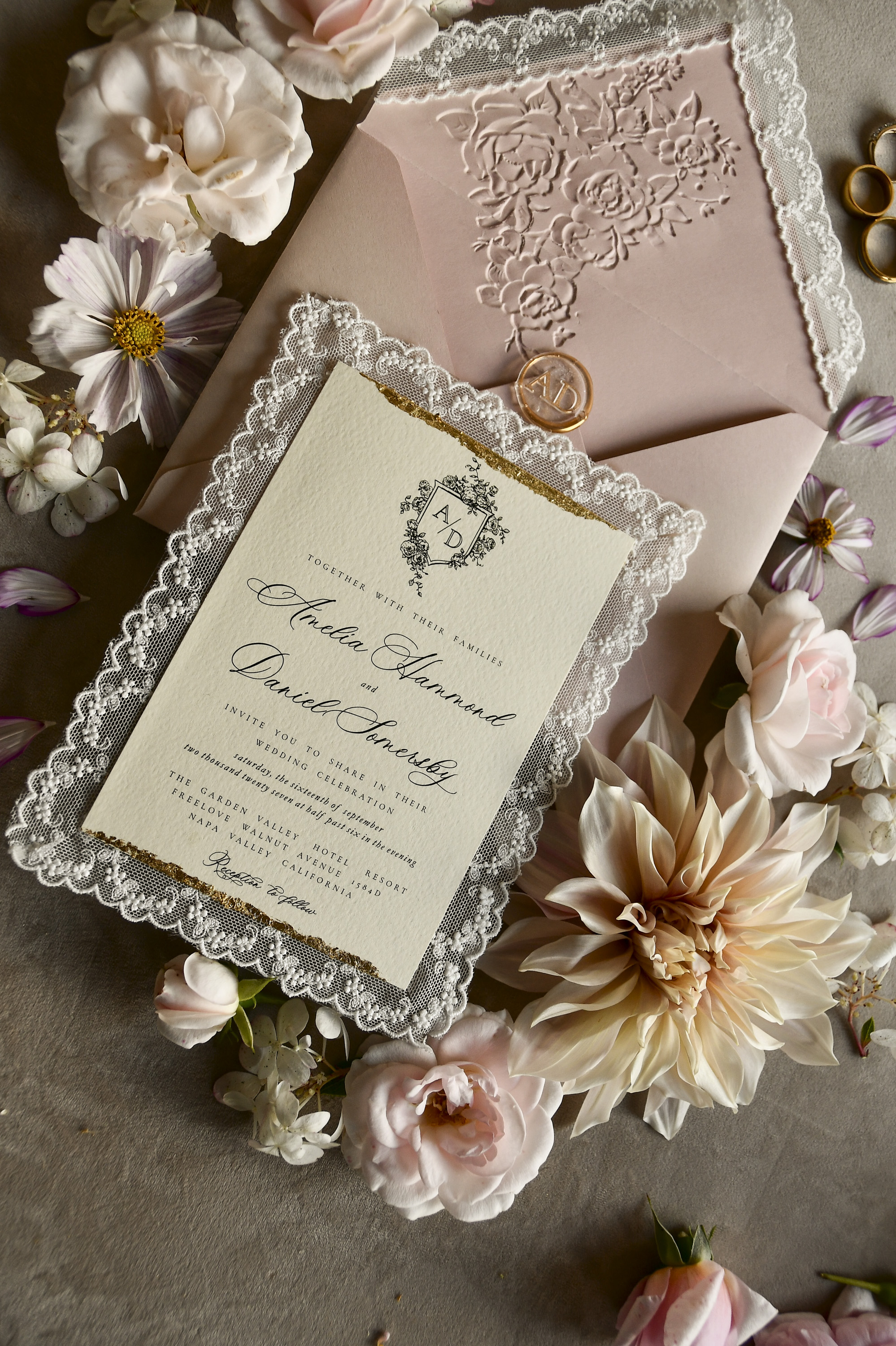
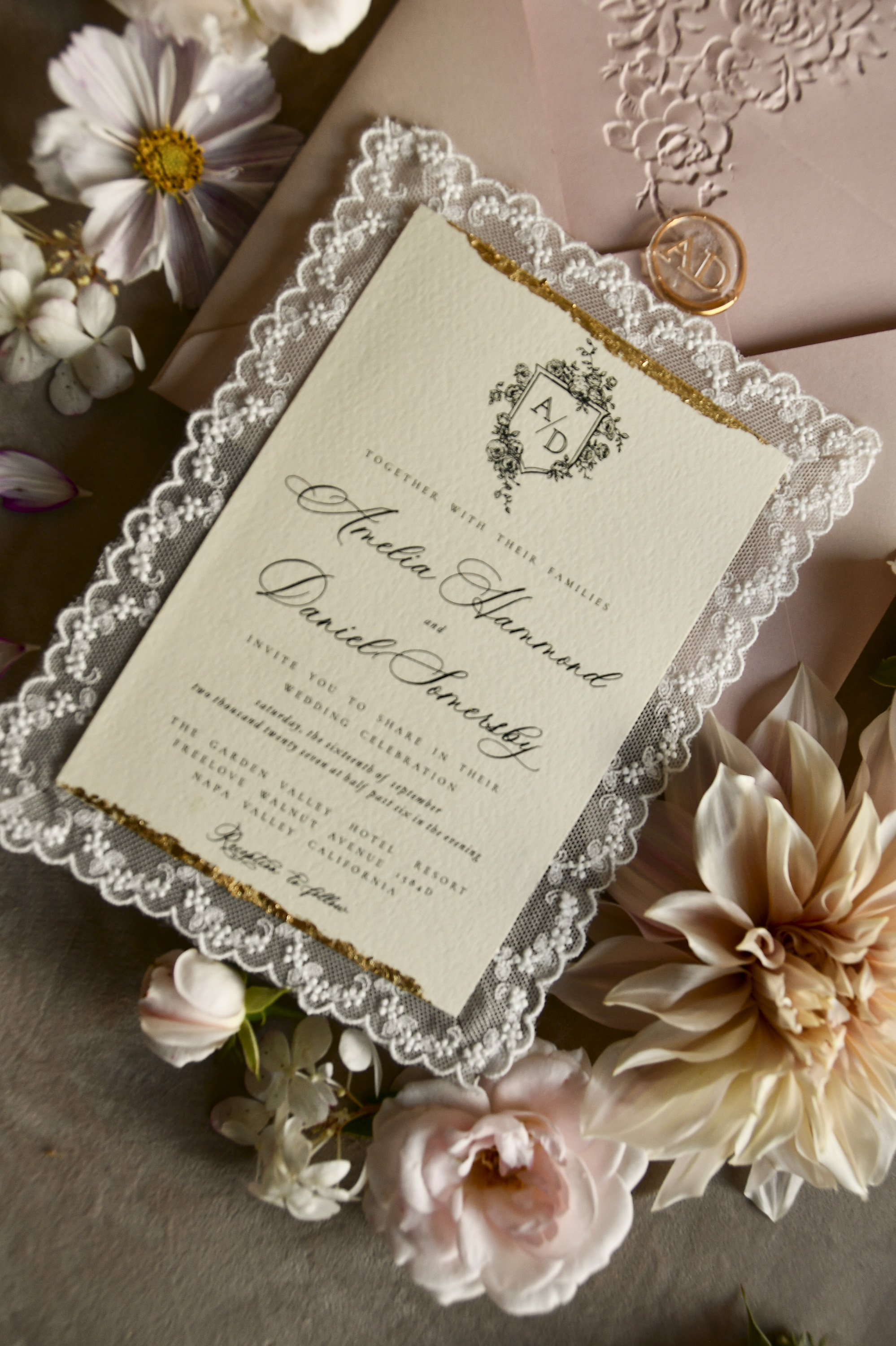
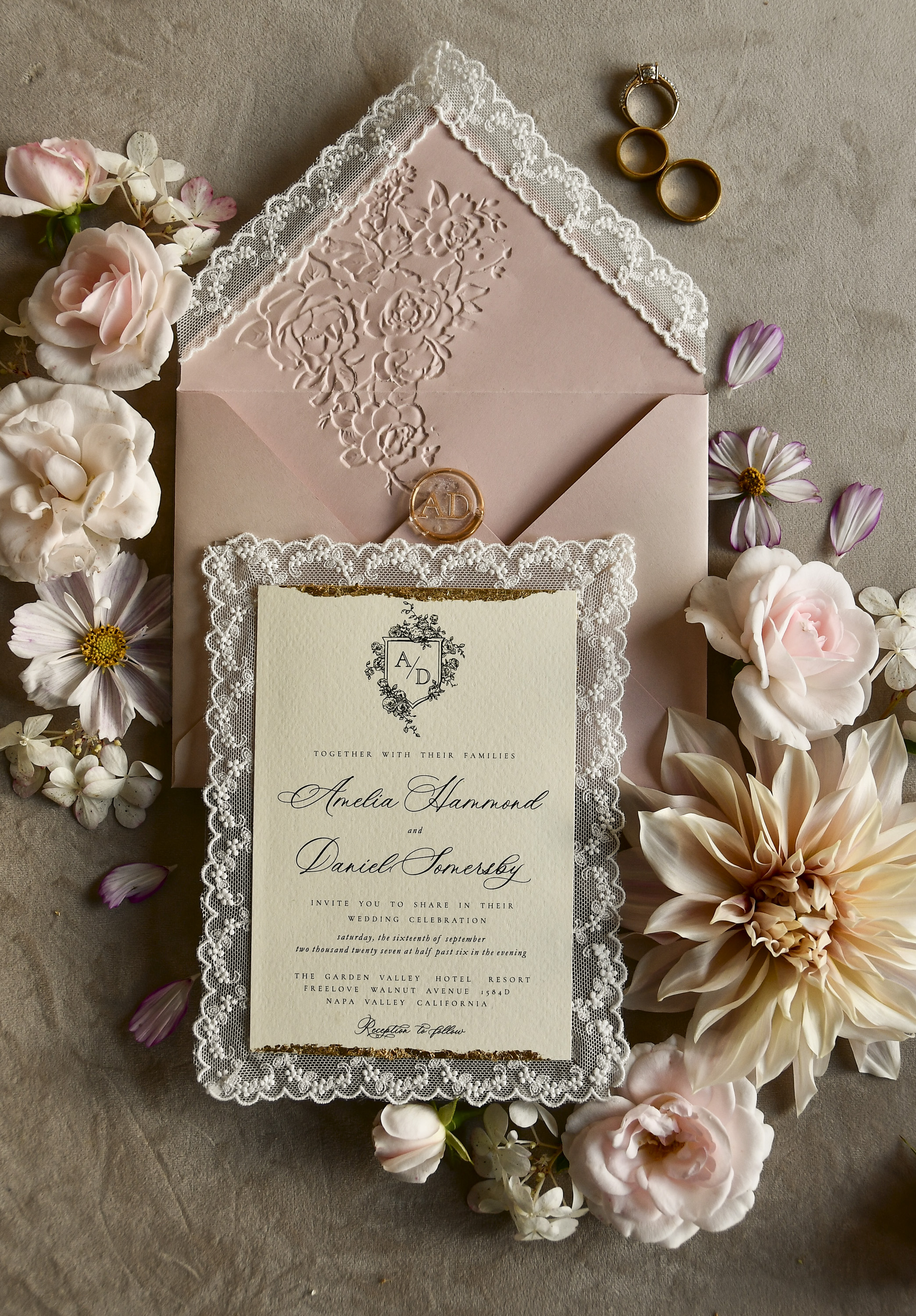
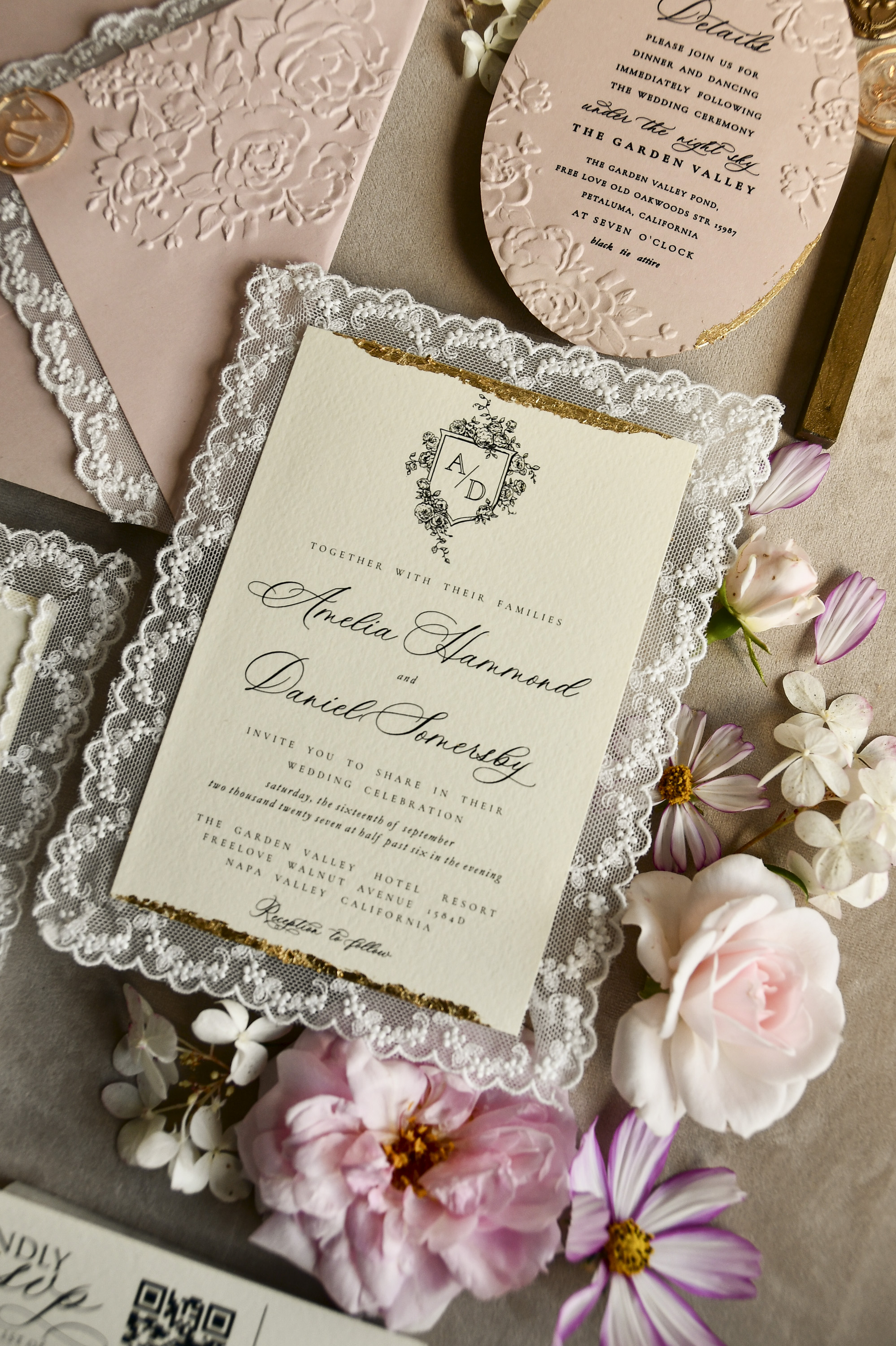
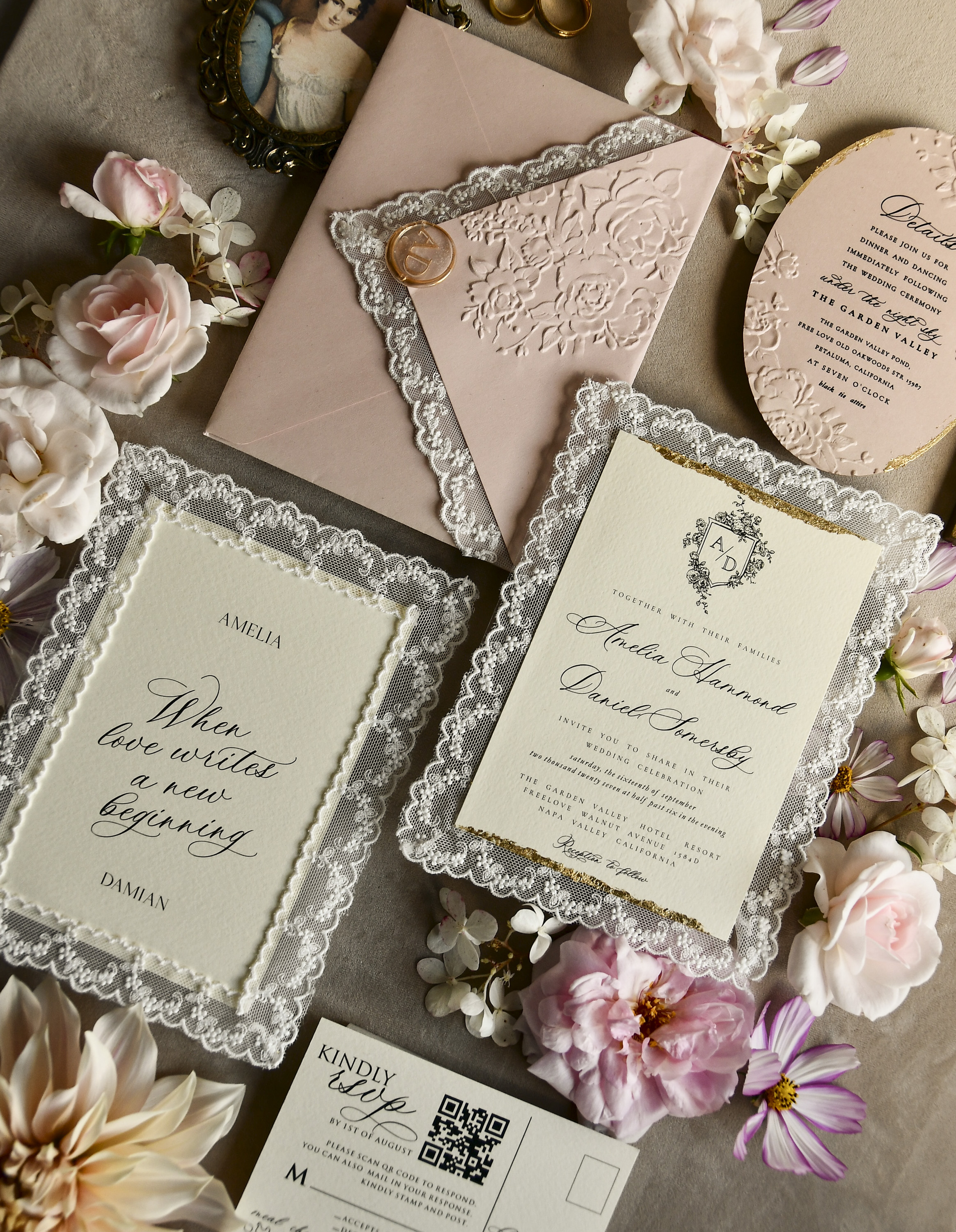
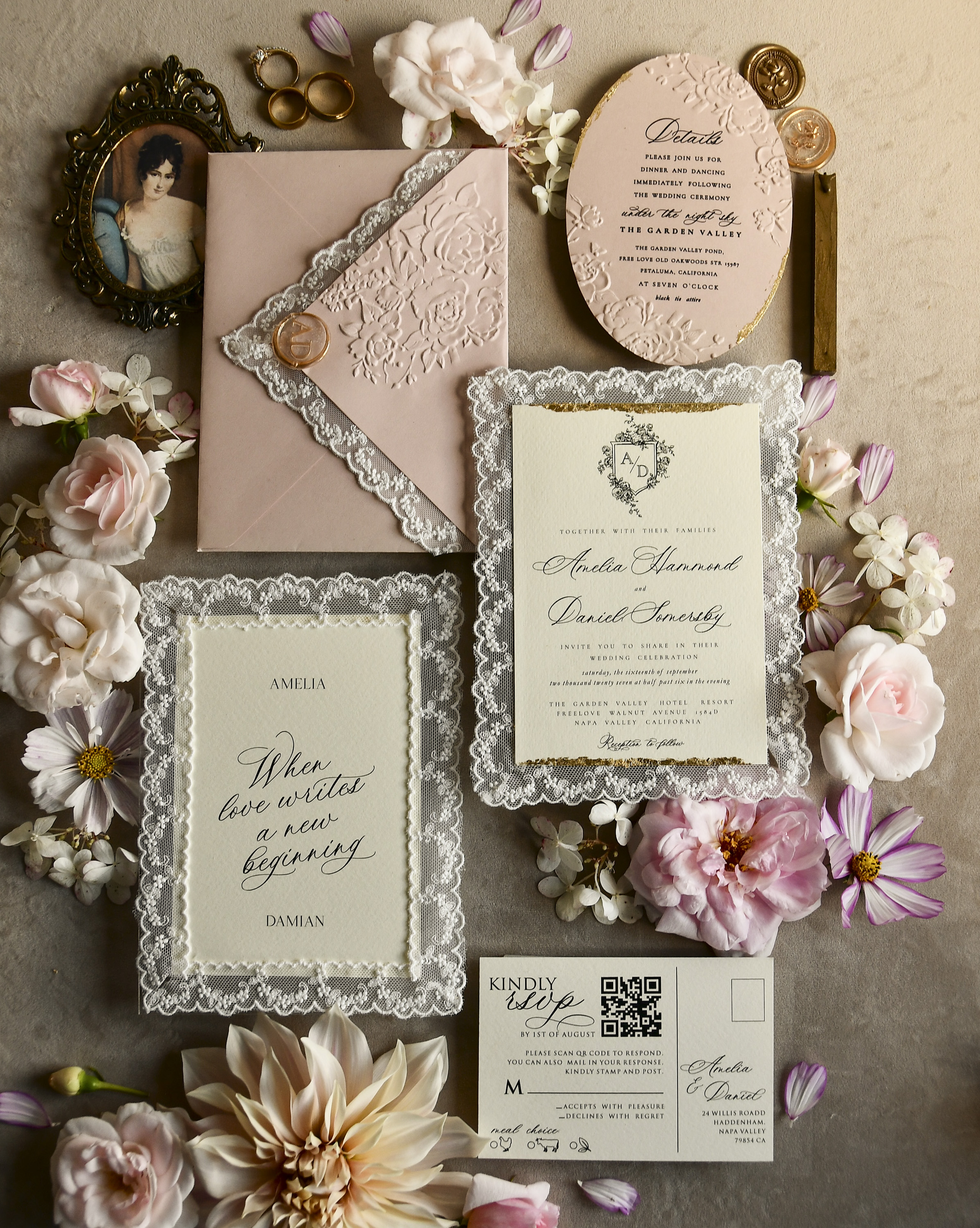
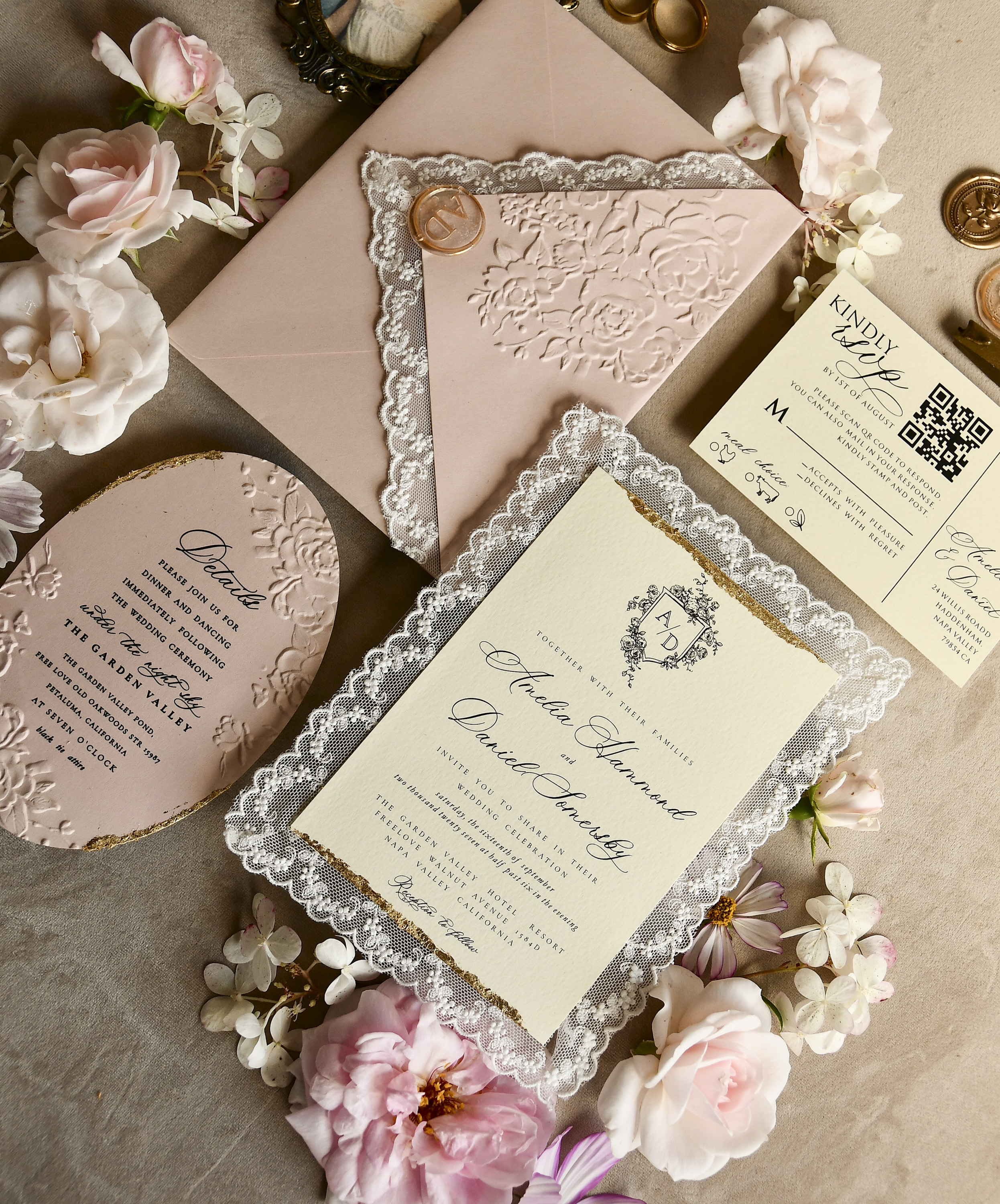
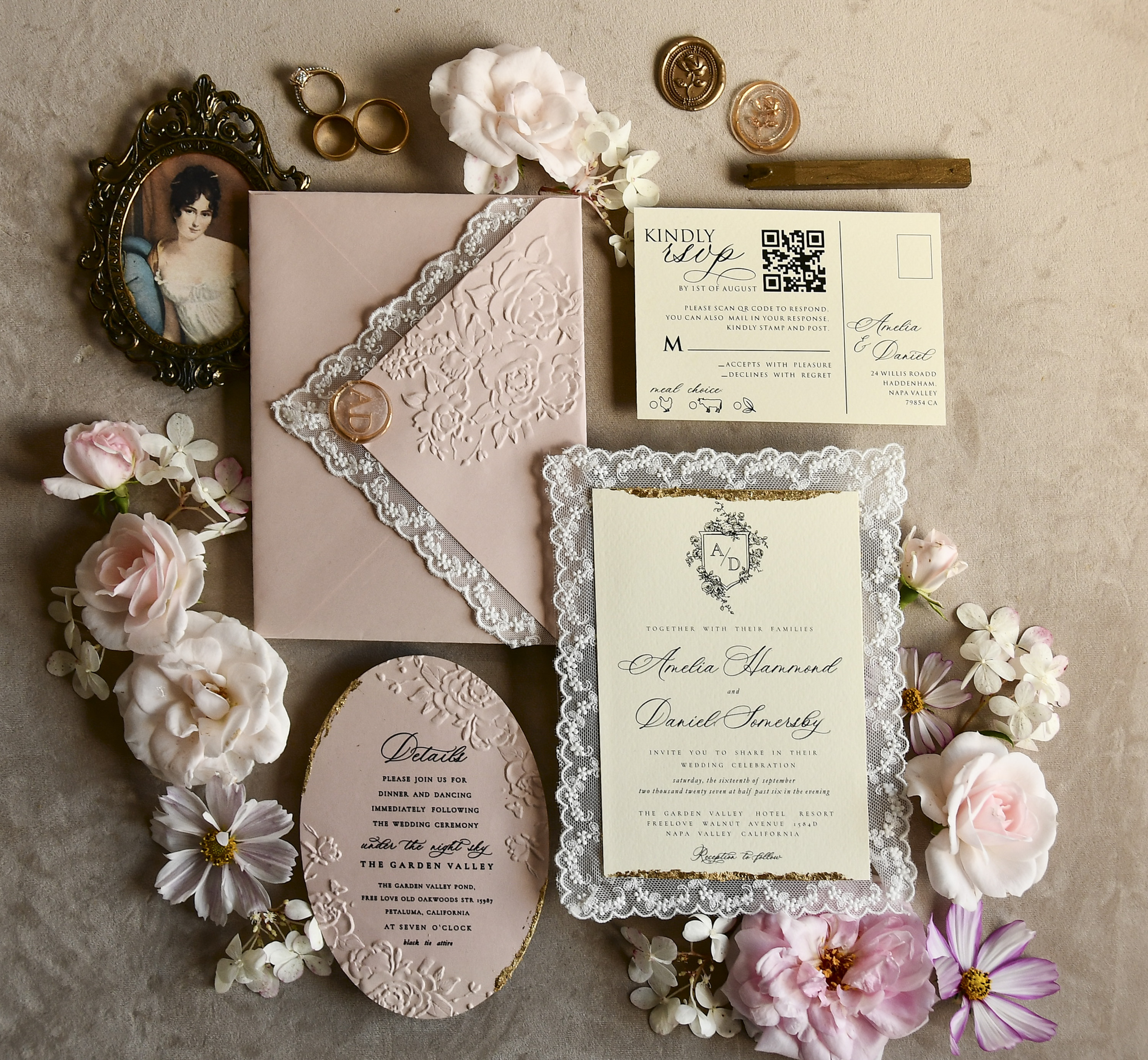
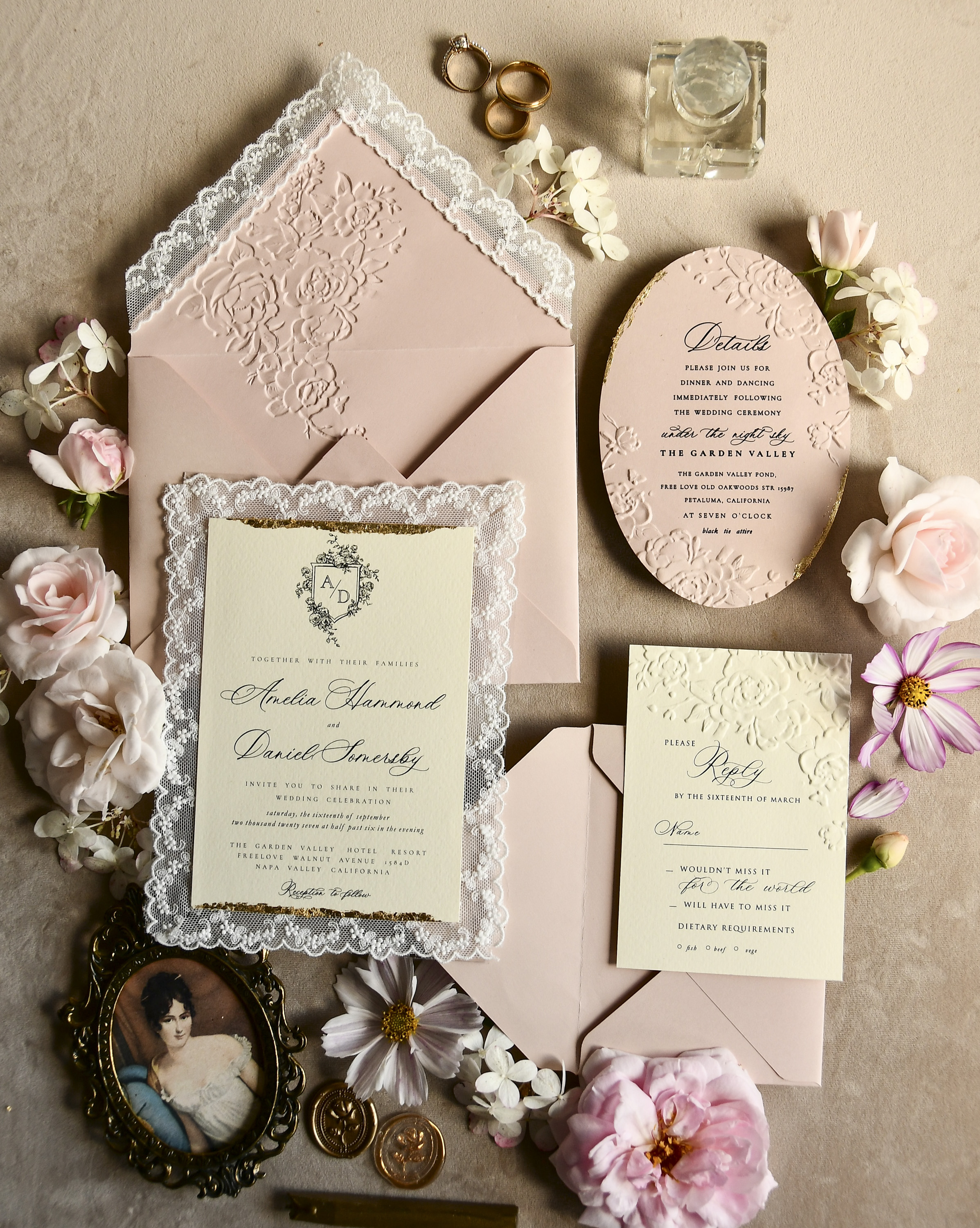
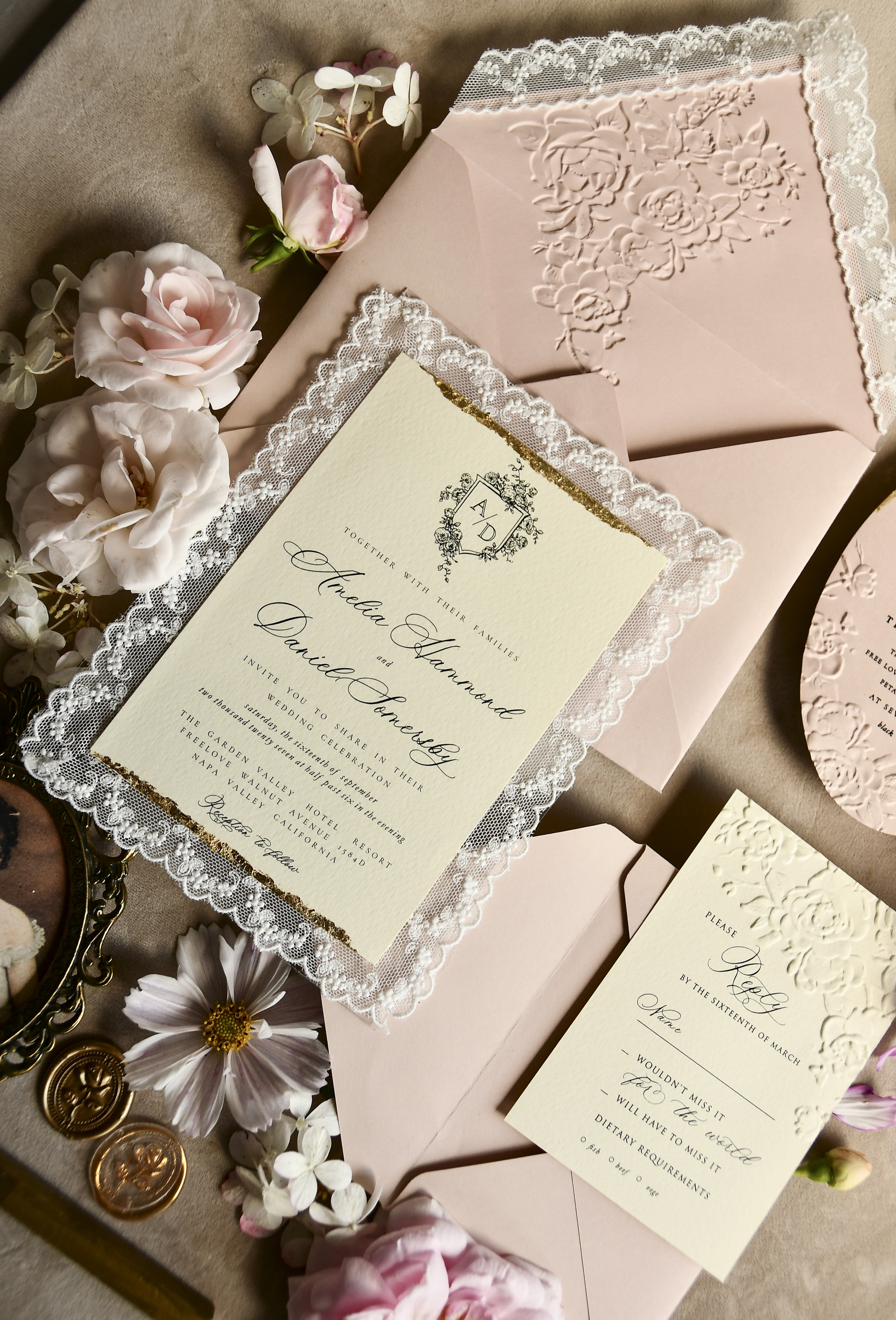
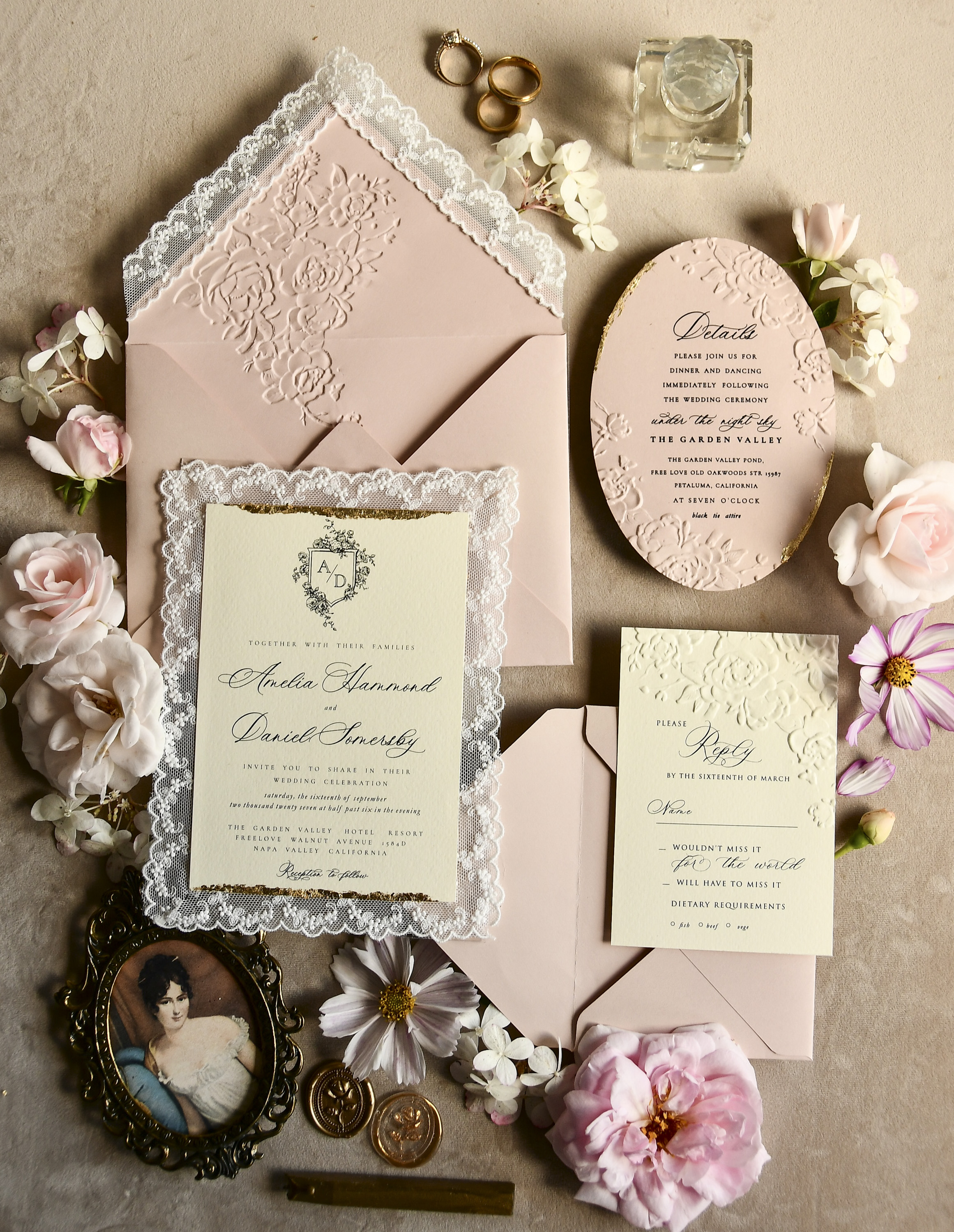
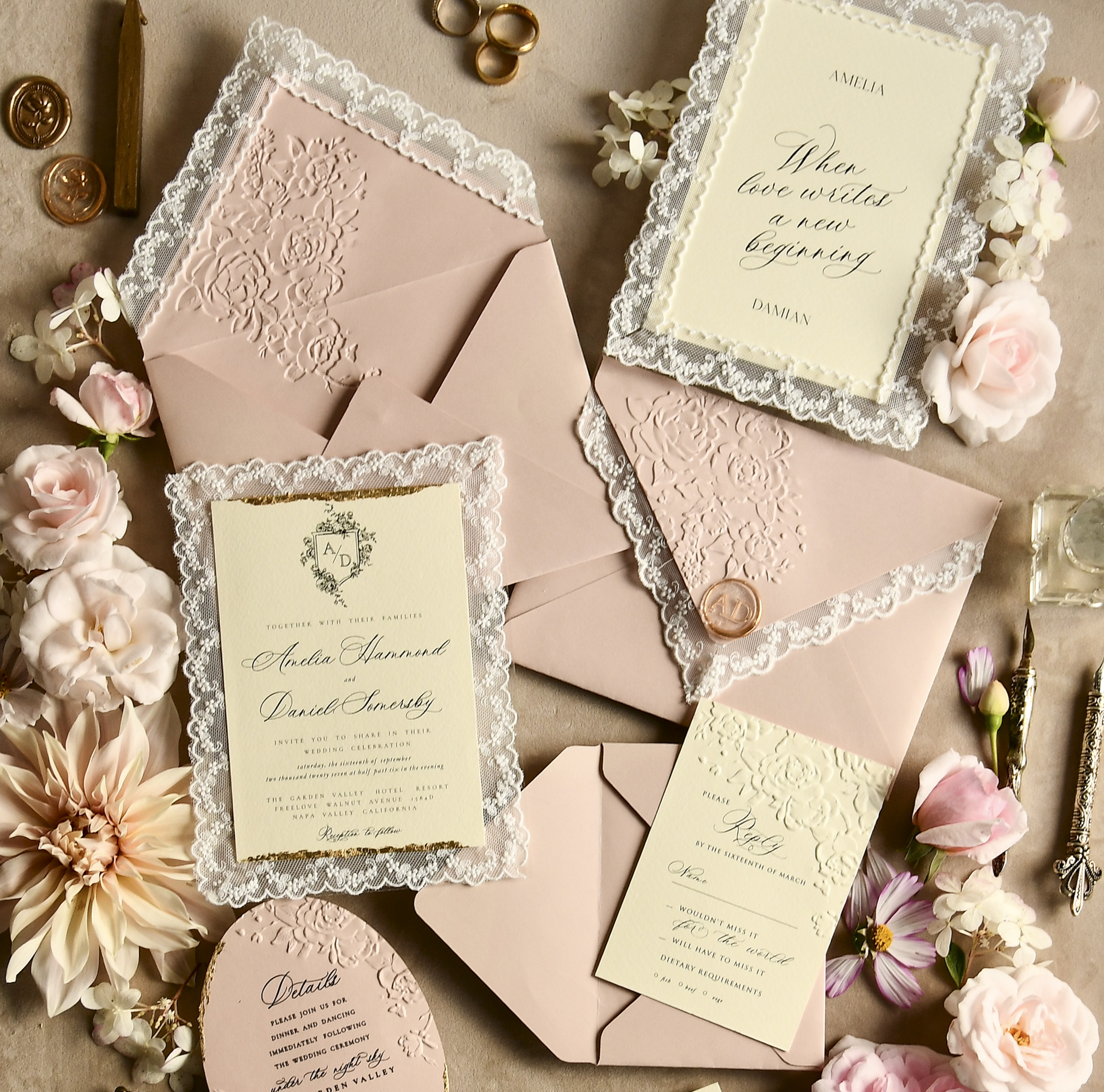
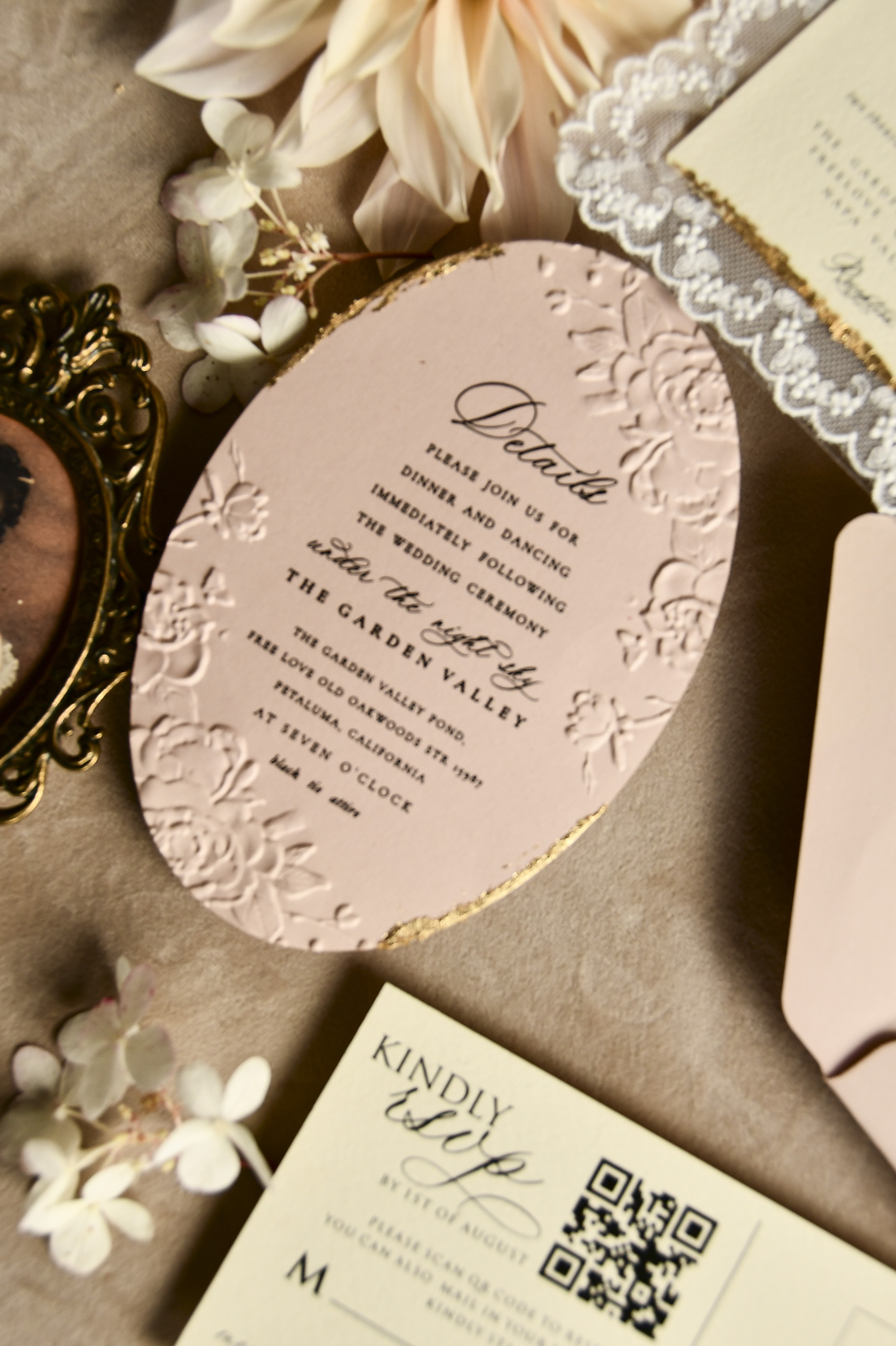
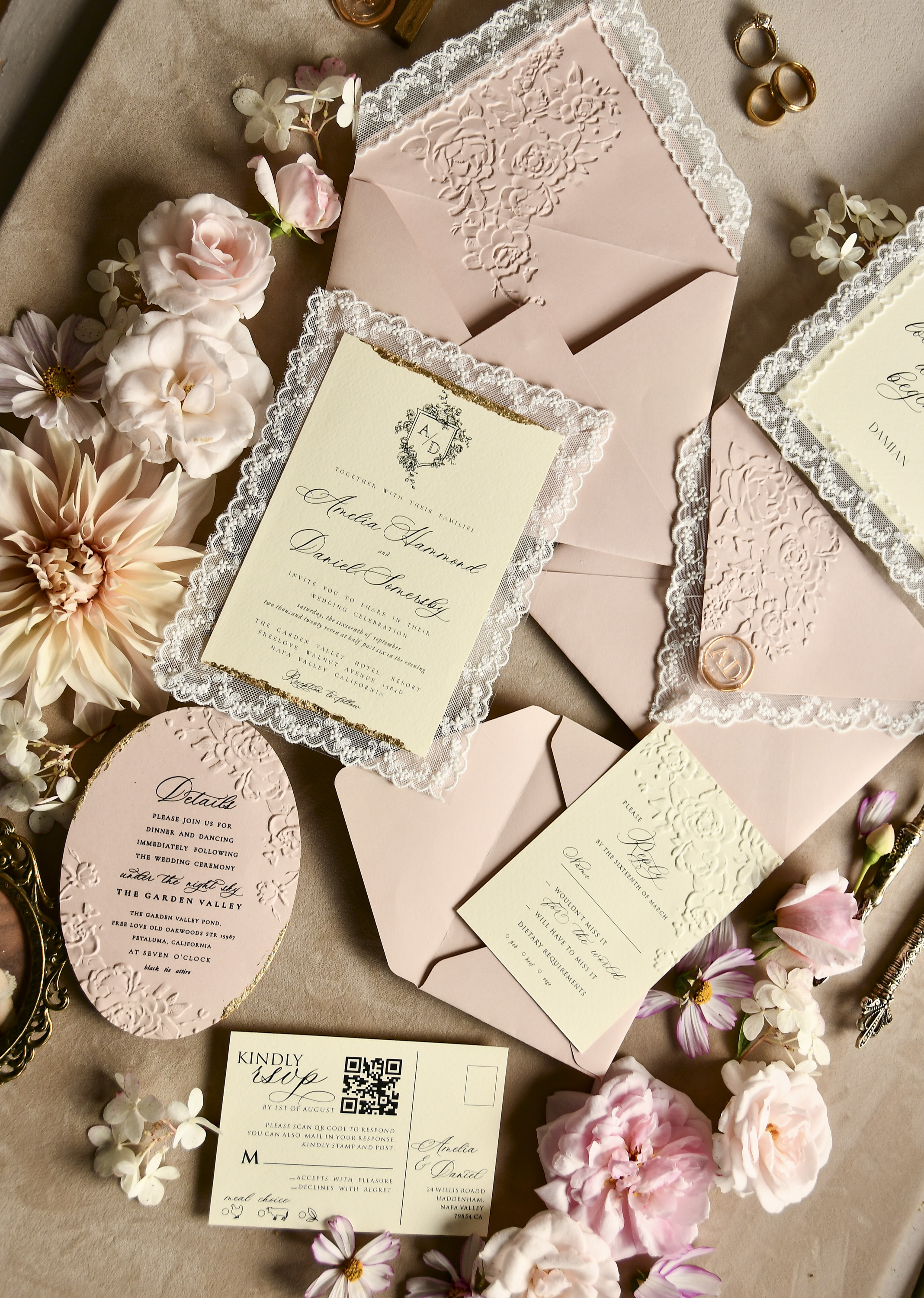
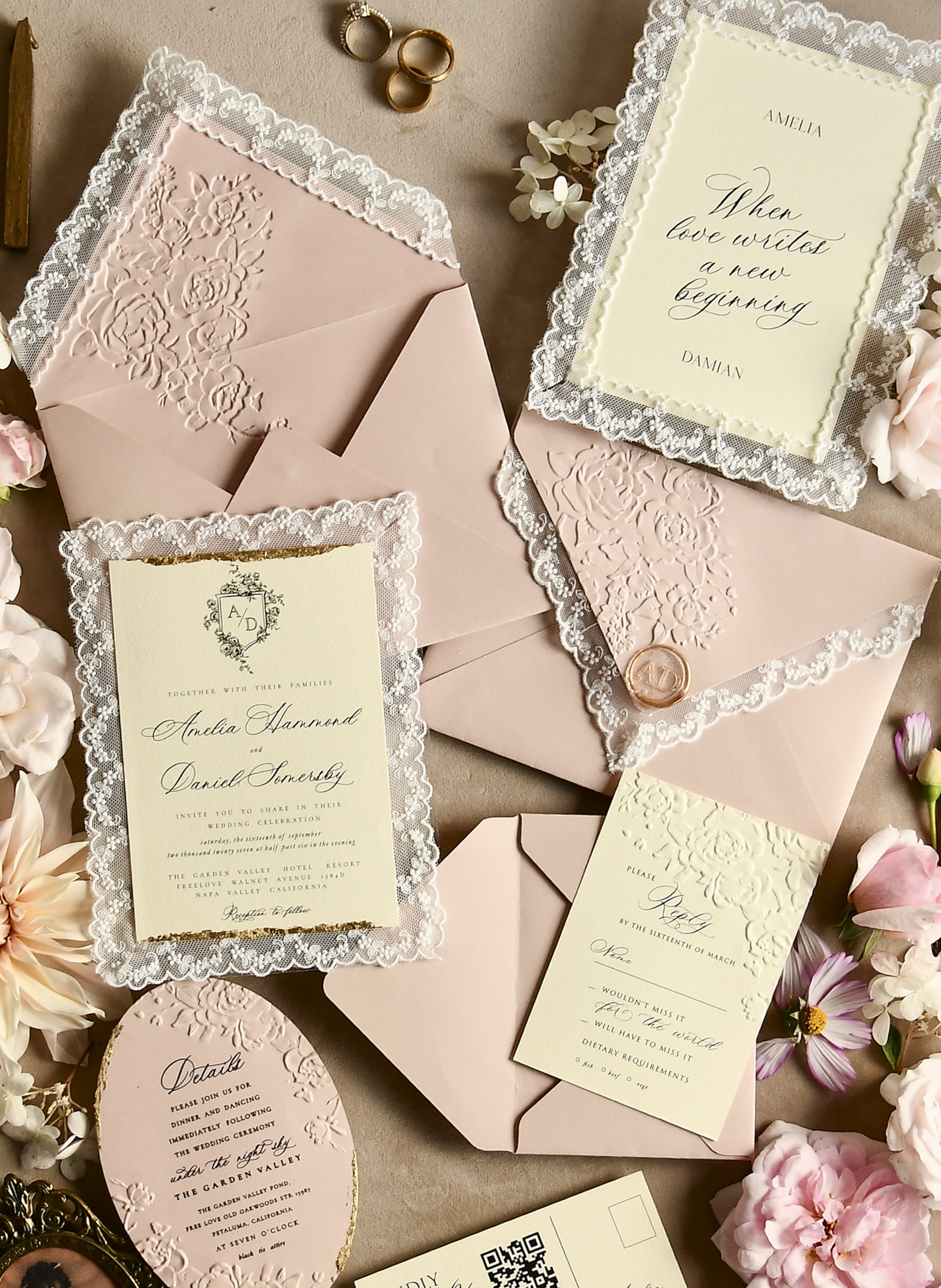
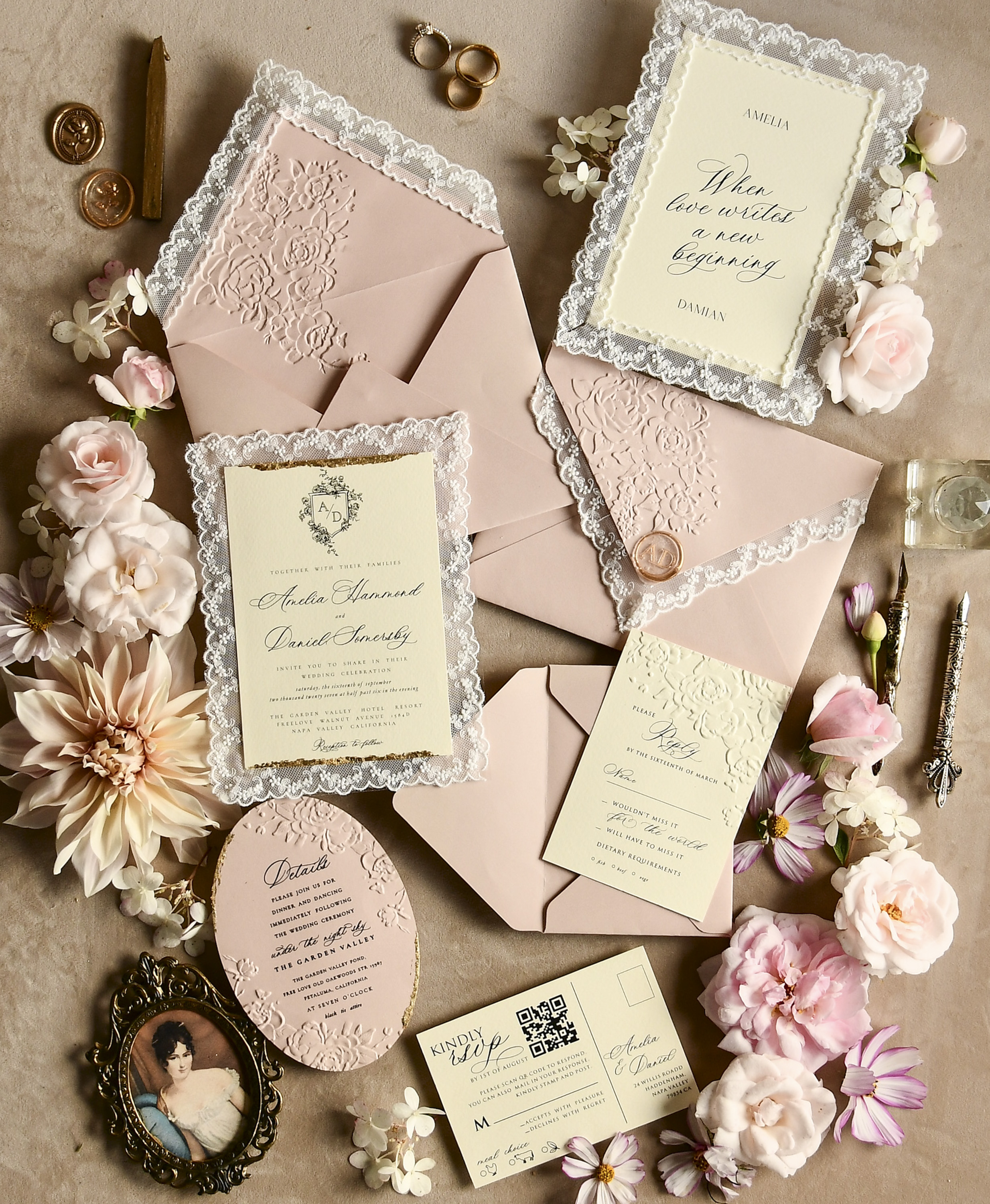
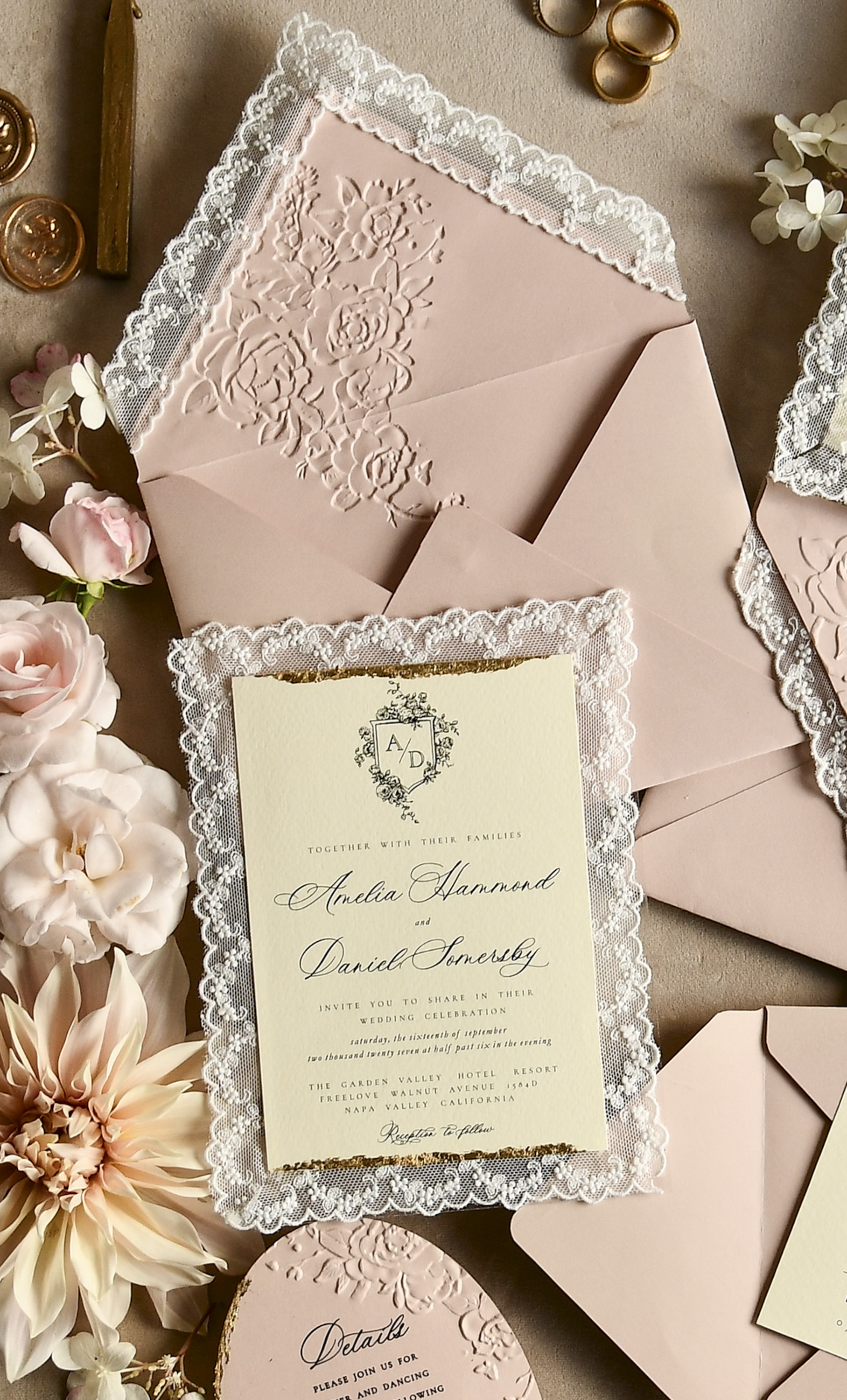
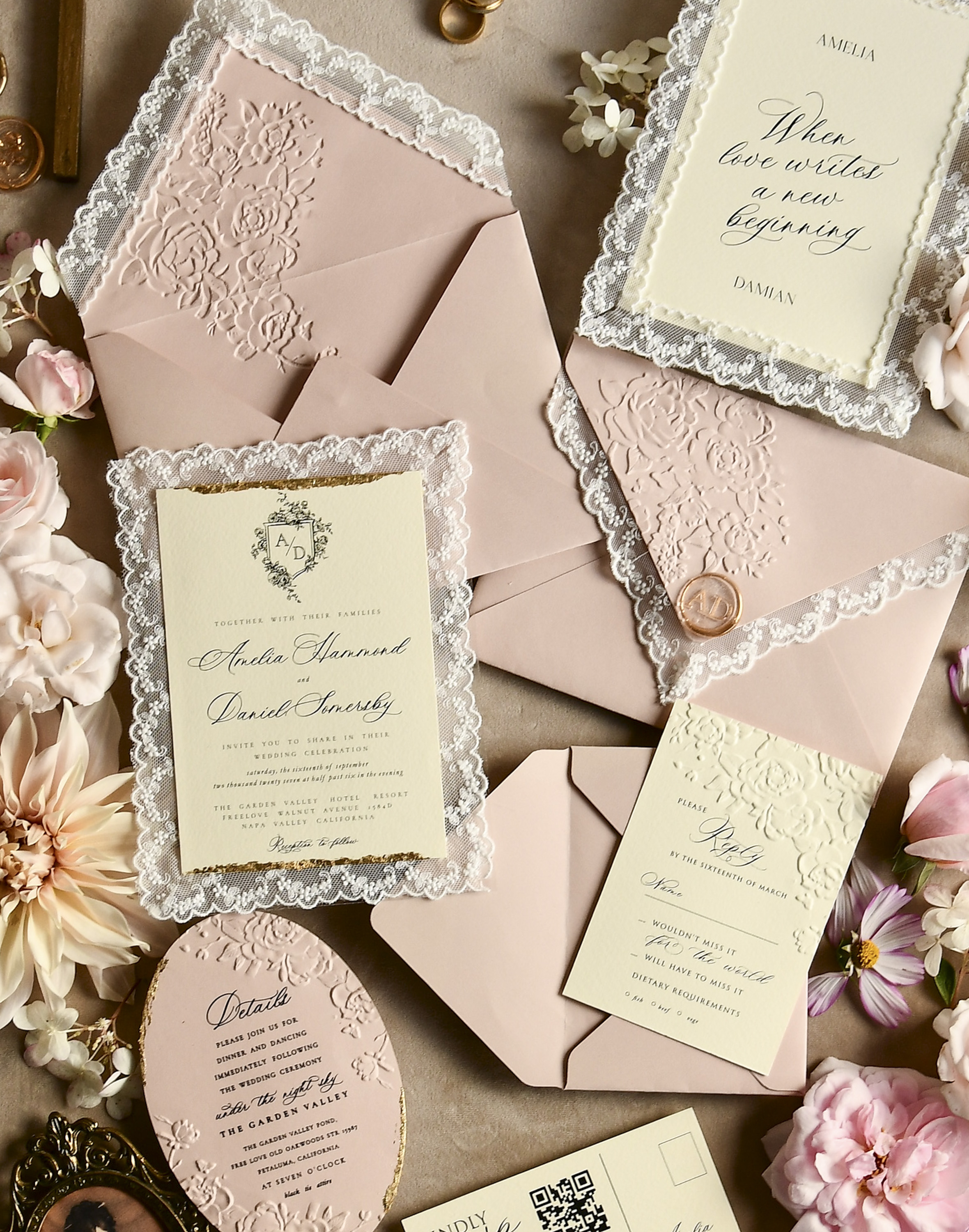
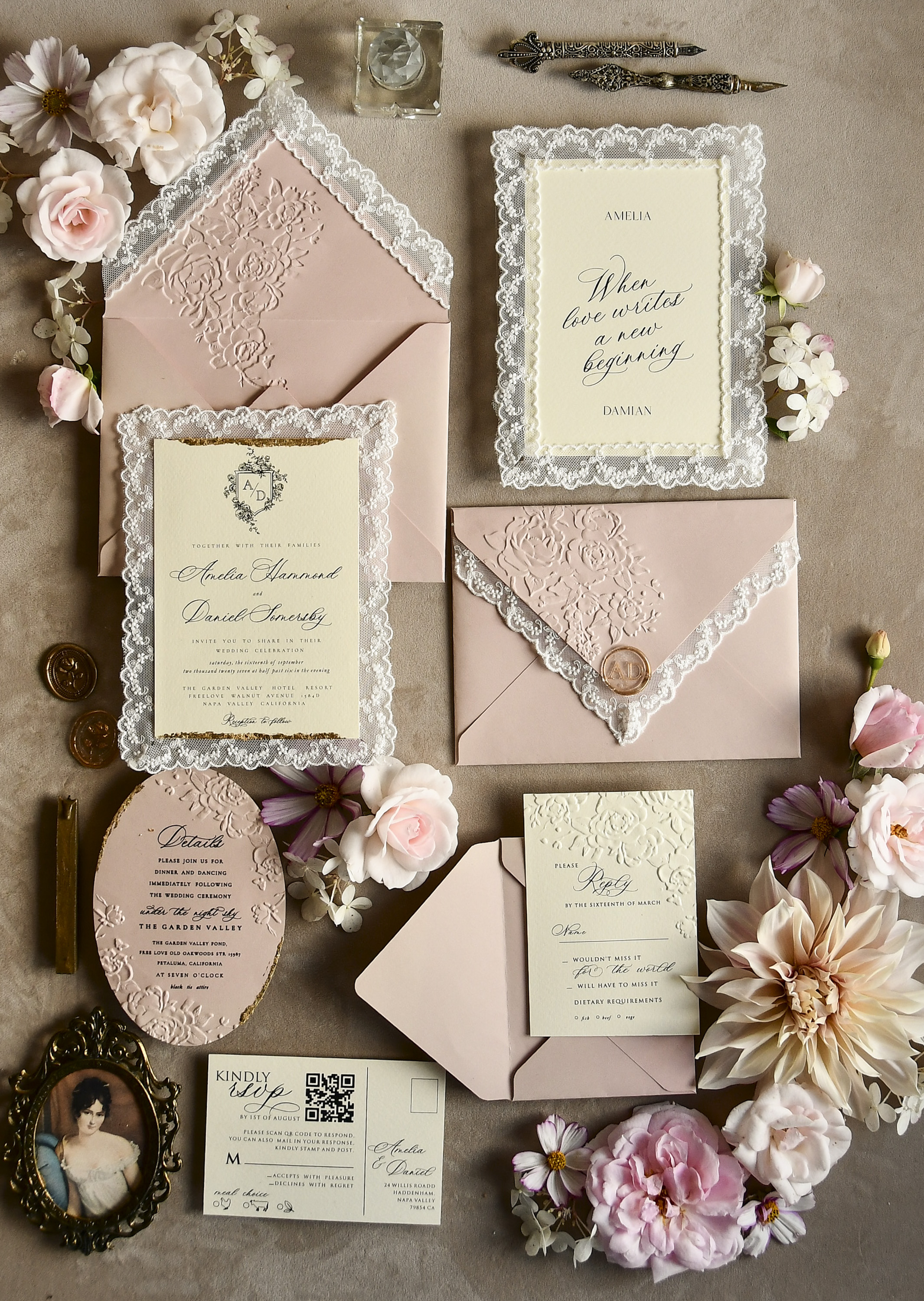
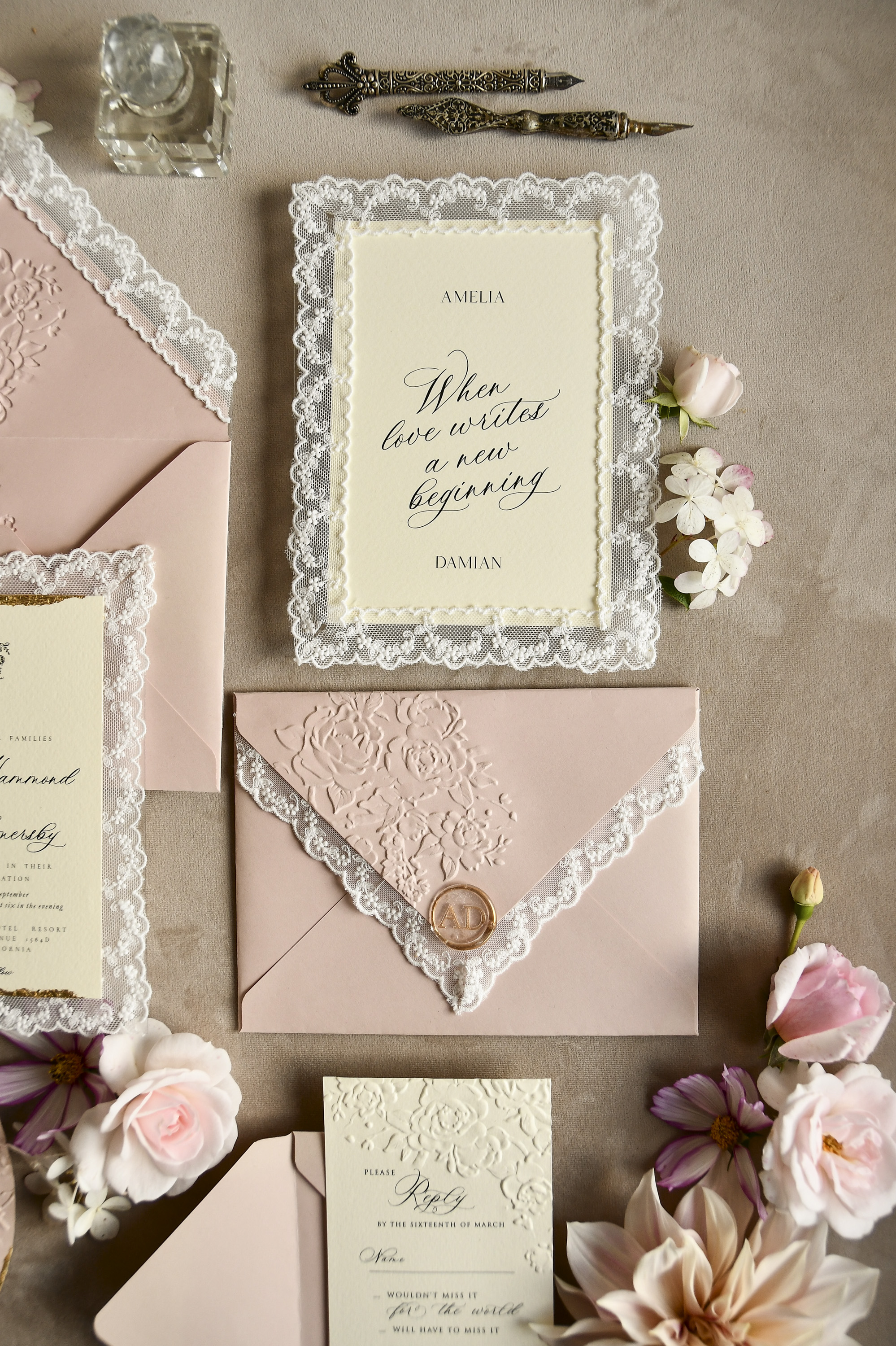
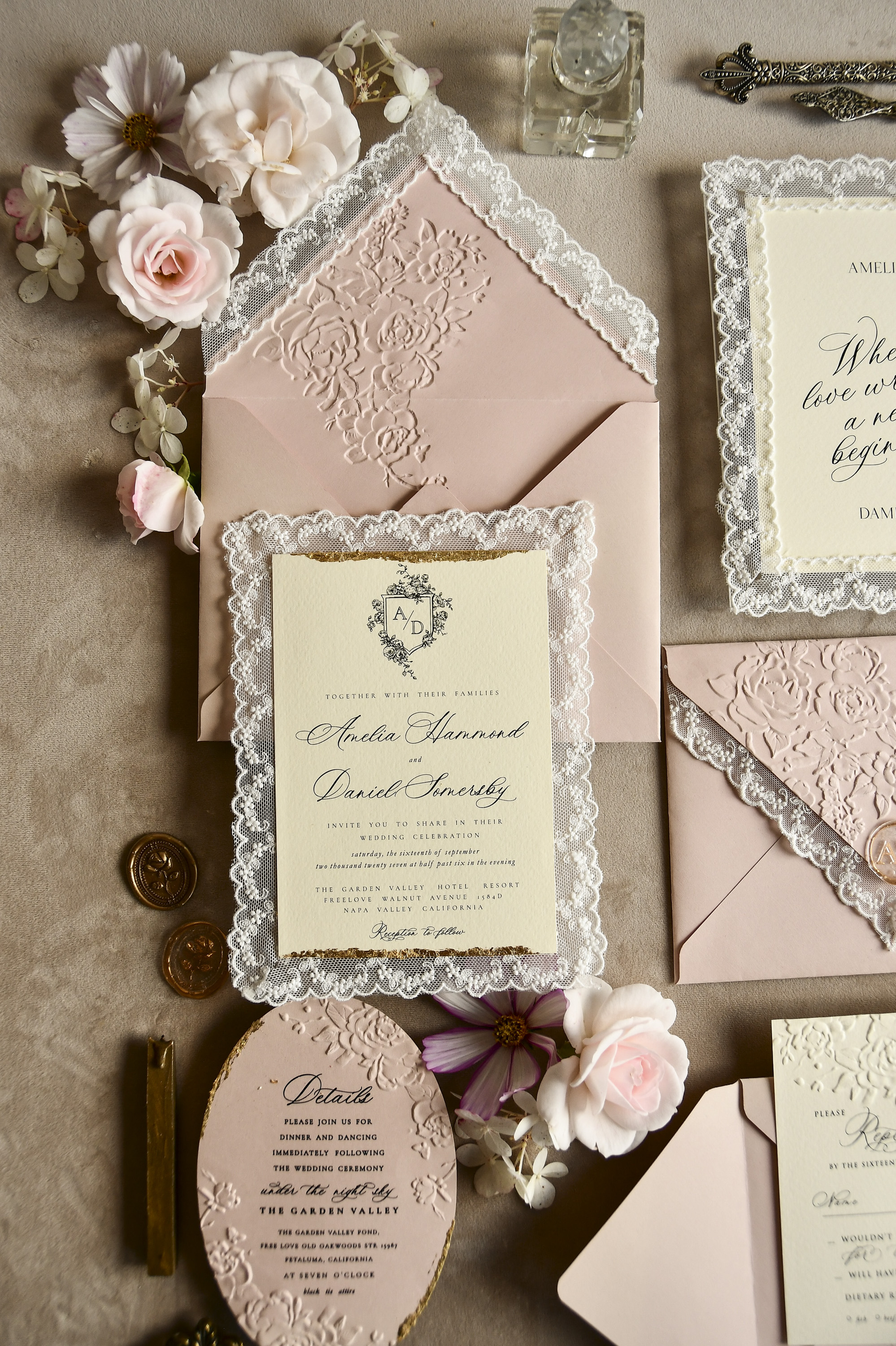
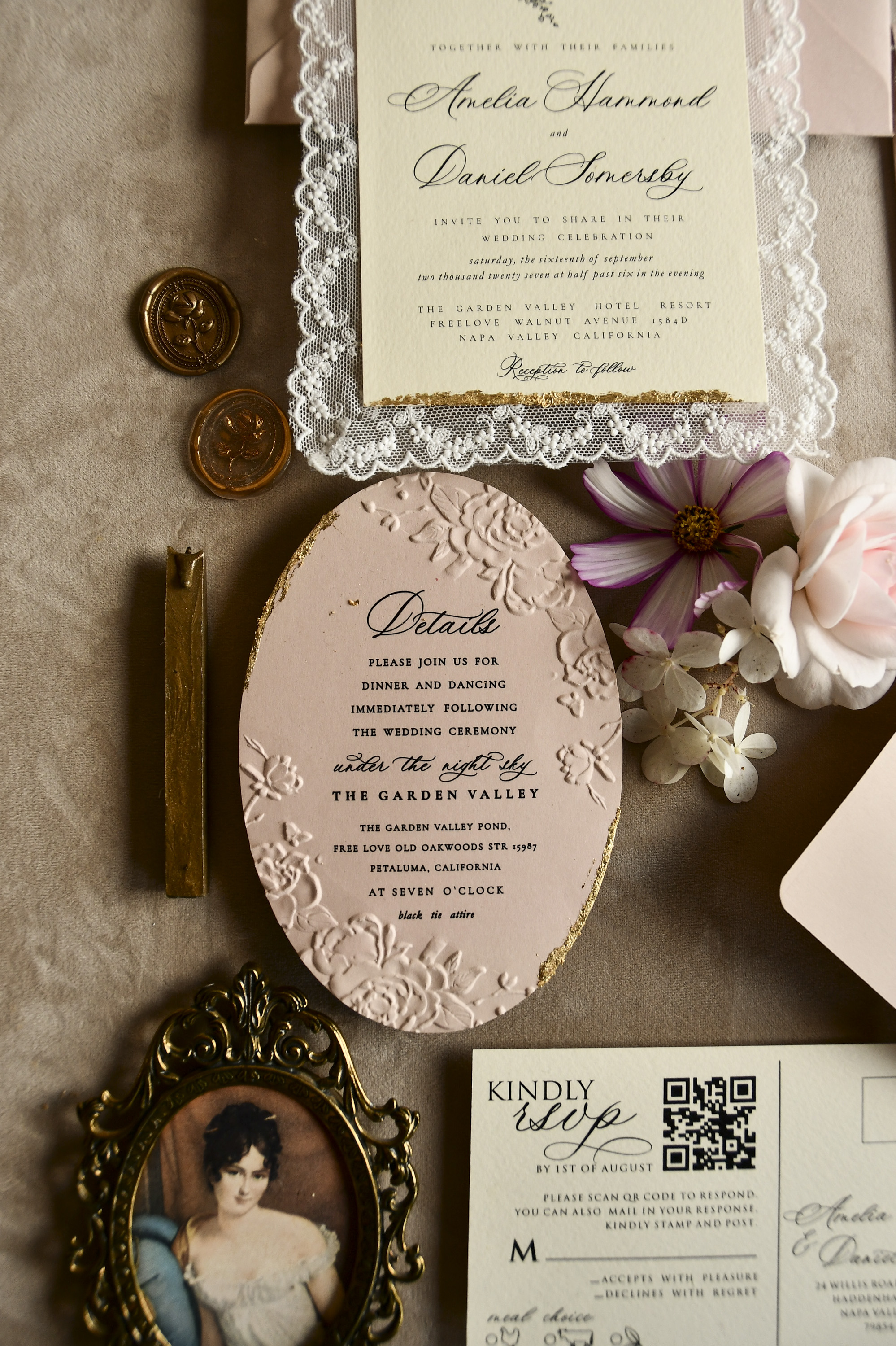
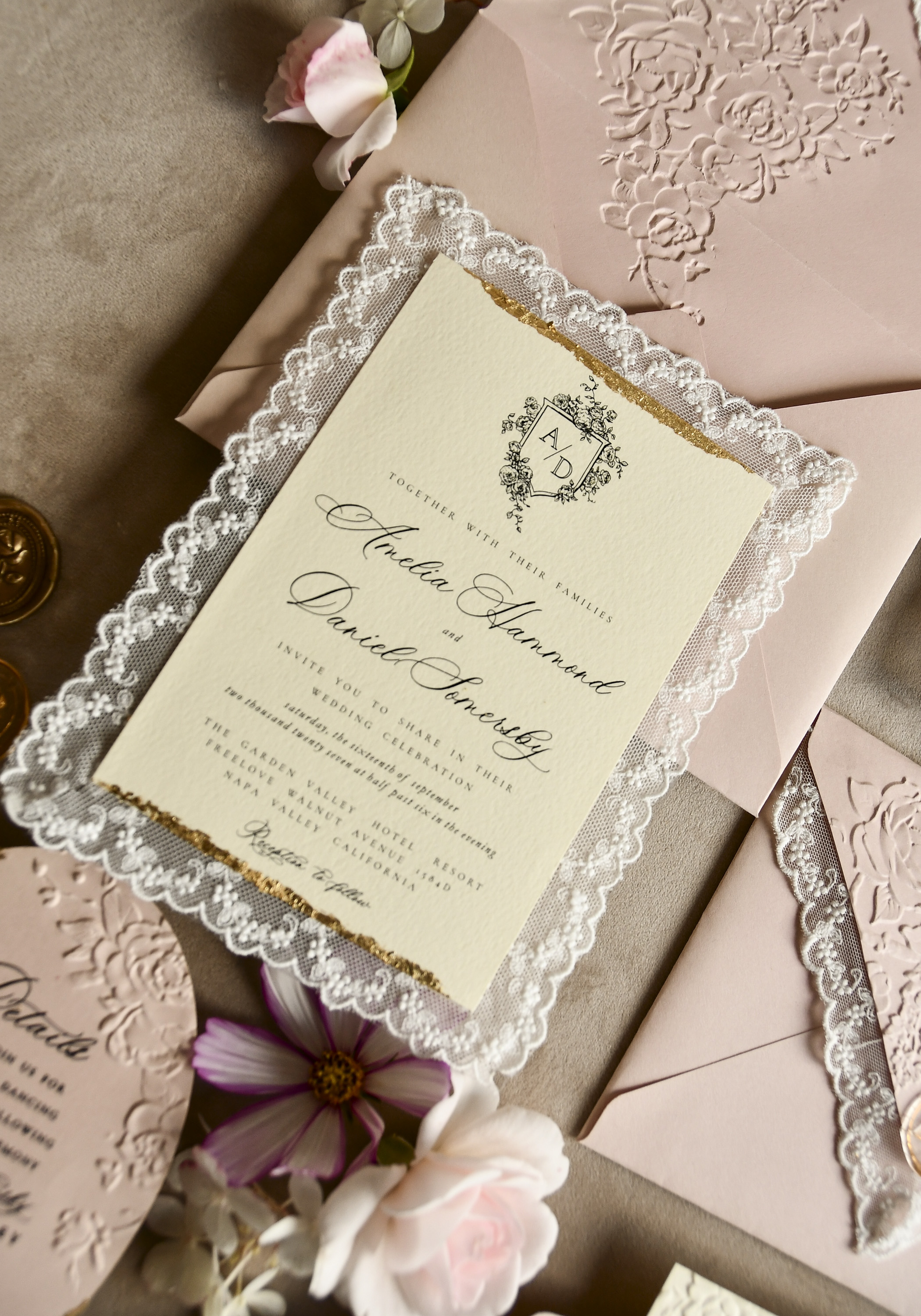
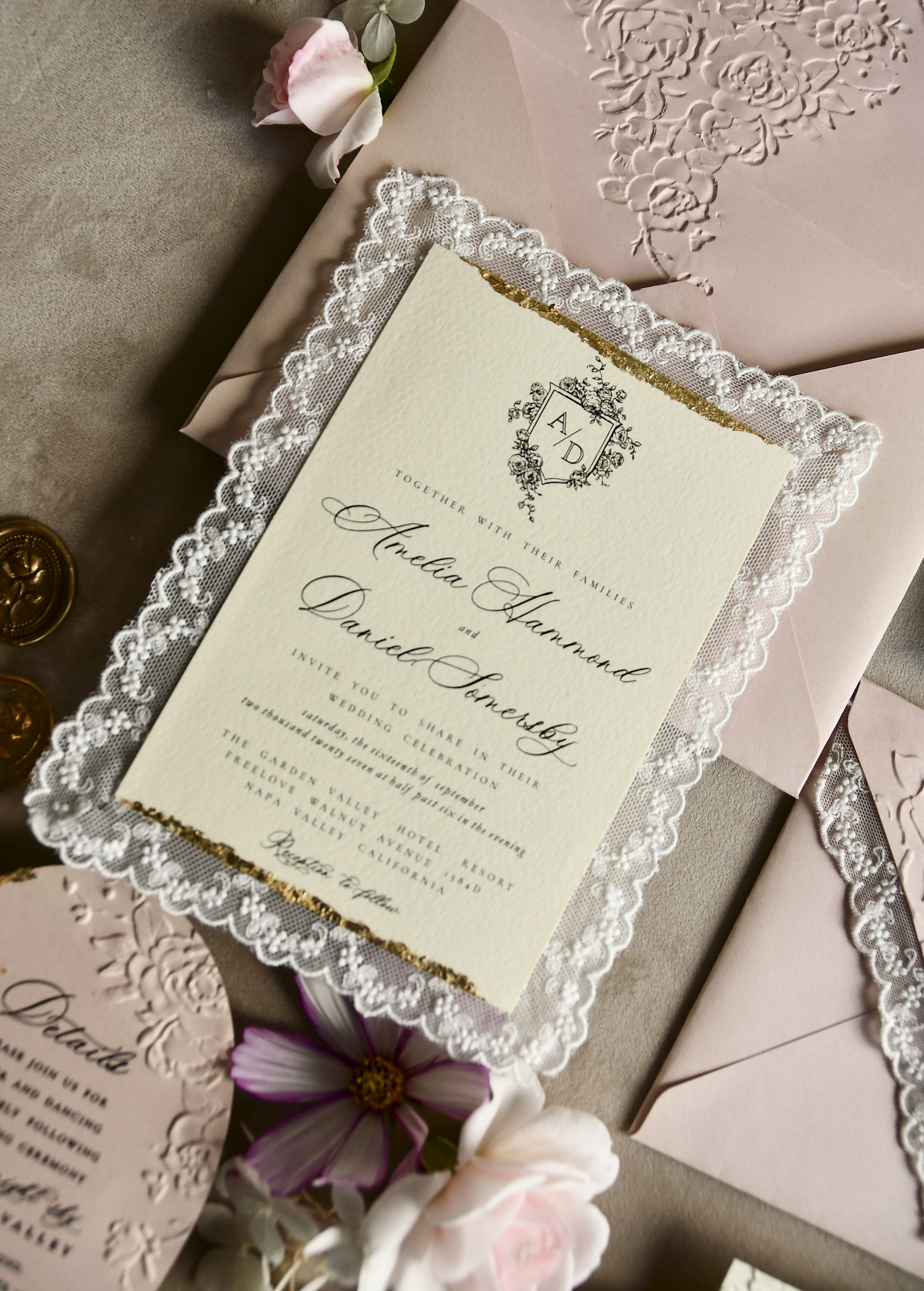
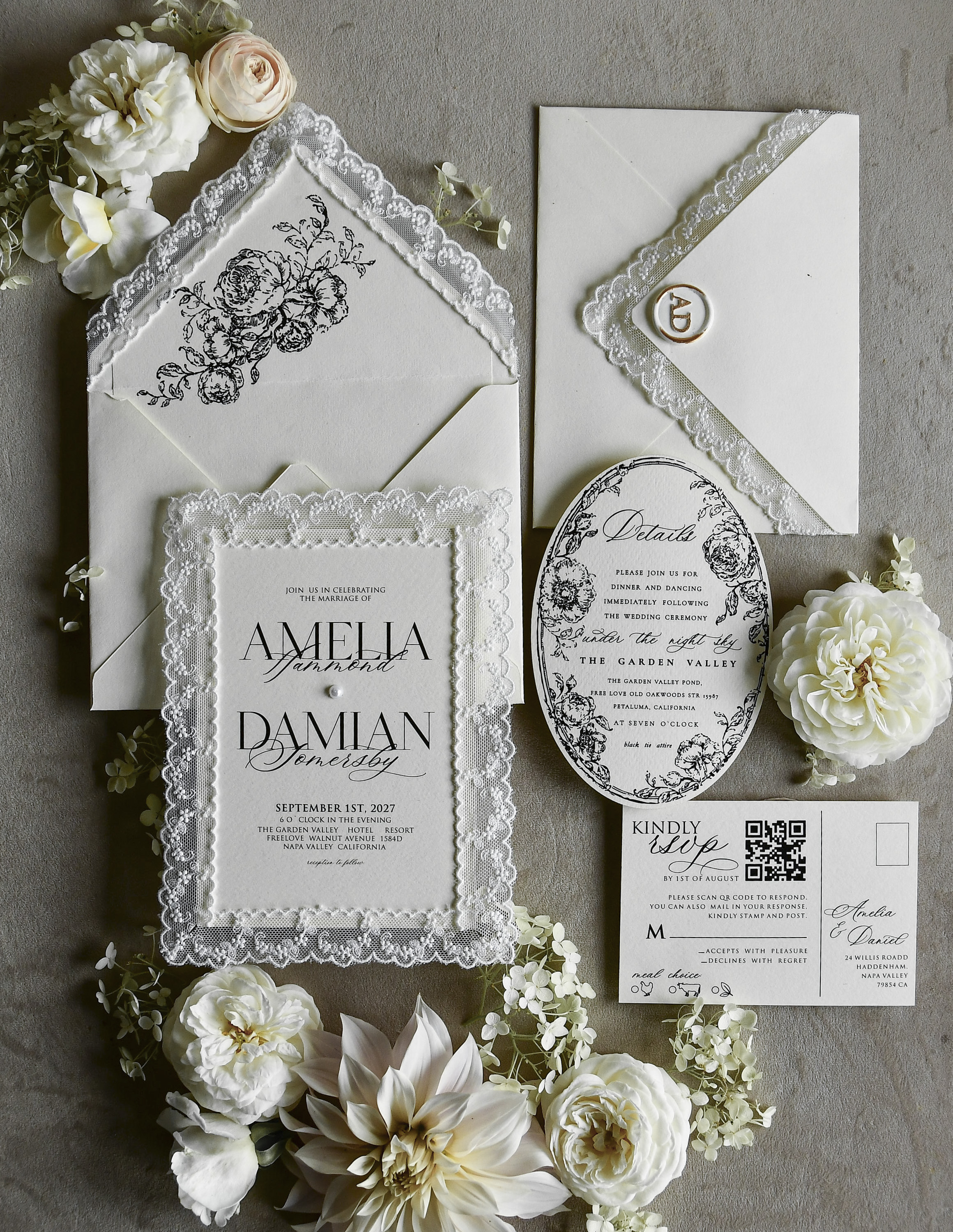
If you love classic, romantic aesthetics, our 01/laceembos/z wedding invitation—part of the vintage and rustic lace collection starting from $9.00—brings an heirloom feel to every detail above. The formal weight of a beautifully designed invitation signals to guests that this is the real thing.
When to Send Each One
Timing is where most couples get tripped up. Here's a simple framework:
- Save the dates: Send 6–8 months before the wedding for a local or regional event. For destination weddings or holidays, push that to 10–12 months out so guests can book travel and request time off work.
- Wedding invitations: Mail 6–8 weeks before the wedding date. This gives guests enough time to RSVP, make travel arrangements, and buy a gift without feeling rushed.
There should always be a gap between the two mailings—typically several months. Sending them too close together defeats the purpose of the early heads-up. And never send your formal invitation before your save the date; that creates confusion about which piece to act on.
Do You Need Both?
Not always—but usually yes. Here's a quick guide:
- You definitely need both if your wedding is more than 4 months away, if you have guests traveling from out of state, or if your date falls around a major holiday.
- You may skip the save the date if you're planning a small, local wedding with a short engagement (under 3 months) and can reach guests quickly by phone or email.
- You always need the formal invitation regardless of wedding size. Even an elopement with a backyard reception deserves a proper invitation—it's the legal and social record of the event.
When budget is tight, prioritize the invitation suite. If you can only do one piece of printed stationery, make it the invitation. Save the dates can go digital in a pinch; the formal invitation should always be a physical card.
Key Differences at a Glance
Still fuzzy? Here's the short version:
- Purpose: Save the date = reserve the date. Invitation = request attendance with full details.
- Timing: Save the date goes first (6–12 months out); invitation follows (6–8 weeks out).
- Content: Save the date is minimal; invitation is comprehensive.
- RSVP: Save the dates never ask for a response. Invitations always do.
- Formality: Save the dates can be casual (magnets, postcards, digital). Invitations should always feel polished and intentional.
Choosing designs that complement each other—same color palette, similar typography or motifs—creates a cohesive experience for your guests and sets the tone for your wedding aesthetic from the very first piece of mail they open. Our 01/laceembos/z vintage lace invitation is a great anchor piece to build your full stationery suite around.
Frequently Asked Questions
Absolutely. Save the dates are helpful but not required. If your engagement is short or your guest list is small and local, you can go straight to mailing formal invitations 8 weeks before the wedding.
It can feel awkward, but it's not inherently rude—life happens and guest lists evolve. Just make sure the formal invitation arrives with enough lead time (at least 6–8 weeks) so they don't feel like an afterthought.
No—and you should not include RSVP instructions on a save the date. It's purely an informational heads-up. All response requests belong on the formal invitation's RSVP card.
Update your wedding website immediately and note the change there. When your formal invitations go out, the correct venue information will be front and center, and guests will naturally defer to the most recent communication.
They don't have to match exactly, but a cohesive look—shared colors, fonts, or motifs—creates a polished brand for your wedding. Think of your stationery as a suite that tells a visual story from first contact to the big day.
Order by household, not by individual guest. A couple counts as one, a family with kids at home counts as one. Add 10–15 extras beyond your final count for keepsakes, last-minute additions, and addressing mistakes.
See This Design Up Close
You May Also Like
More Wedding Planning Guides
- → When to Address a Wedding Invitation Directly to a Child
- → Mailed Card or Website Link? How to Handle RSVPs the Modern Way
- → Wedding Invitation Delivery: When to Mail and When to Hand Them Off
- → Navigating a Wedding Guest List When Your Fiancé Wants to Leave Your Family Out
- → Wedding Invitation Wording: Every Essential Detail Couples Need to Include
- → When Your Divorced Parents Can't Be in the Same Room: A Wedding Planning Guide
- → Adults-Only Weddings: Is Leaving Kids Off the List Actually Rude?
- → Wedding Invitation Addressing: Names, Titles, and Every Tricky Situation Solved
- → How to Decide Who Gets a Plus One at Your Wedding
- → Wedding Invitations: How to Count What You Actually Need
- → Yes, You Can Invite Ceremony-Only Guests — Here's How to Do It Gracefully
- → Extra Wedding Guests: Who Pays and How to Handle It Gracefully
- → Big Wedding or Better Wedding: How to Choose What Truly Matters
- → Your Wedding, Your Guest List: The Honest Truth About Inviting Cousins
- → Uninvited Extras: How to Handle Guests Who Bring Someone You Didn't Invite
- → Plus-One or No? How to Decide If Single Guests Can Bring a Date
- → How to Embrace a Small Wedding and Make It Unforgettable
- → Where Do Divorced Parents Sit at Your Wedding? Here's What Actually Works
- → To Invite or Not to Invite: Navigating the Ex Question for Your Wedding Guest List
- → Stepparents and Your Wedding Guest List: Making the Right Call
- → Setting Plus-One Boundaries Without Losing Sleep (or Friends)
- → Should Work Friends Come to Your Wedding? A No-Stress Guide to Inviting Colleagues
- → Guests Who Don't RSVP: Your Step-by-Step Plan
- → When Someone Asks Why They Weren't Invited: Your Honest, Kind Playbook
- → To Call or Not to Call: Tracking Down Guests With Missing RSVPs
- → When the Guest List Must Shrink: The Right People to Remove First
- → Digital Wedding Invitations: When They Work and When to Think Twice
- → How to Handle the Parent Friend Dilemma on Your Wedding Guest List
- → Your Wedding Invitation Deadline: When the Window Officially Closes
- → Uninvited Plus-Ones and Tag-Alongs: How to Keep Your Guest List Intact
- → When Family Feuds Threaten Your Wedding Plans: A Practical Peacekeeper's Guide
- → Inviting an Estranged Brother or Sister: Finding Clarity Before You Seal the Envelope
- → Cousins, Invites, and Hard Choices: A Practical Guest List Guide