
Inviting Family You've Lost Touch With: A Practical Guide for Your Wedding Guest List
One of the trickiest parts of building your wedding guest list isn't deciding between your college roommates — it's figuring out what to do about the aunt you haven't spoken to in eight years or the cousin you only recognize from old holiday photos. You're not alone. Nearly every couple wrestles with this question, and there's no single right answer. What matters is making a deliberate choice that protects your peace and reflects the celebration you actually want.
Start With the 'Why' Behind Each Name
Before you add or cut anyone, ask yourself one honest question: Why are they on the list in the first place? There are really only a few reasons a distant family member ends up in consideration:
- Family pressure — a parent insists it would be rude not to invite them.
- Obligation — you feel guilty leaving them out even though there's no real relationship.
- Genuine hope — you'd actually like to reconnect and your wedding feels like a natural moment to do it.
Be honest about which category applies. Guilt and social pressure are real, but they're not great foundations for a guest list — or a seating chart. If you genuinely want to rebuild a relationship, an invitation can be a meaningful olive branch. If you're only inviting someone to avoid a family argument, you may be creating a bigger one at the reception.
Consider the Ripple Effects on Your Day
Think practically about what their presence actually means. Will inviting a family member you don't speak to create tension with other guests — a divorced parent, a sibling with unresolved conflict, or a side of the family with old grievances? A wedding is a high-emotion environment, and unresolved dynamics tend to surface, not disappear.
On the flip side, not inviting someone can also create ripples. If you're inviting their sibling but not them, or if they'll hear about it through the family grapevine, be prepared for some fallout. In that case, weigh whether the fallout from excluding them is worse than the discomfort of including them.
A helpful rule of thumb: if you genuinely wouldn't recognize this person if you passed them on the street, it's completely reasonable to leave them off the list.
Set a Consistent Rule and Apply It Fairly
One of the cleanest ways to handle distant family is to set a clear, consistent threshold and apply it across the board. For example:
- We're only inviting family we've had a real conversation with in the last five years.
- We're keeping the wedding to immediate family and close friends only — no extended family on either side.
- We're inviting all first cousins, but no second cousins or beyond.
Having a rule makes it much easier to say no without it feeling personal. You can tell your mom, 'We made a policy — no one we haven't spoken to in the last few years, on either side.' It removes the appearance of favoritism and gives you a neutral framework to stand behind.
If You Do Invite Them, Set Yourself Up for Success
If you decide to extend an invitation to a family member you've lost touch with, a few practical steps will make the day smoother. Send their invitation with enough lead time — ideally 8 weeks before the wedding — so there's no last-minute scramble. A brief, warm note tucked inside acknowledging the distance can go a long way: "We'd love to have you there and hope we can catch up properly."
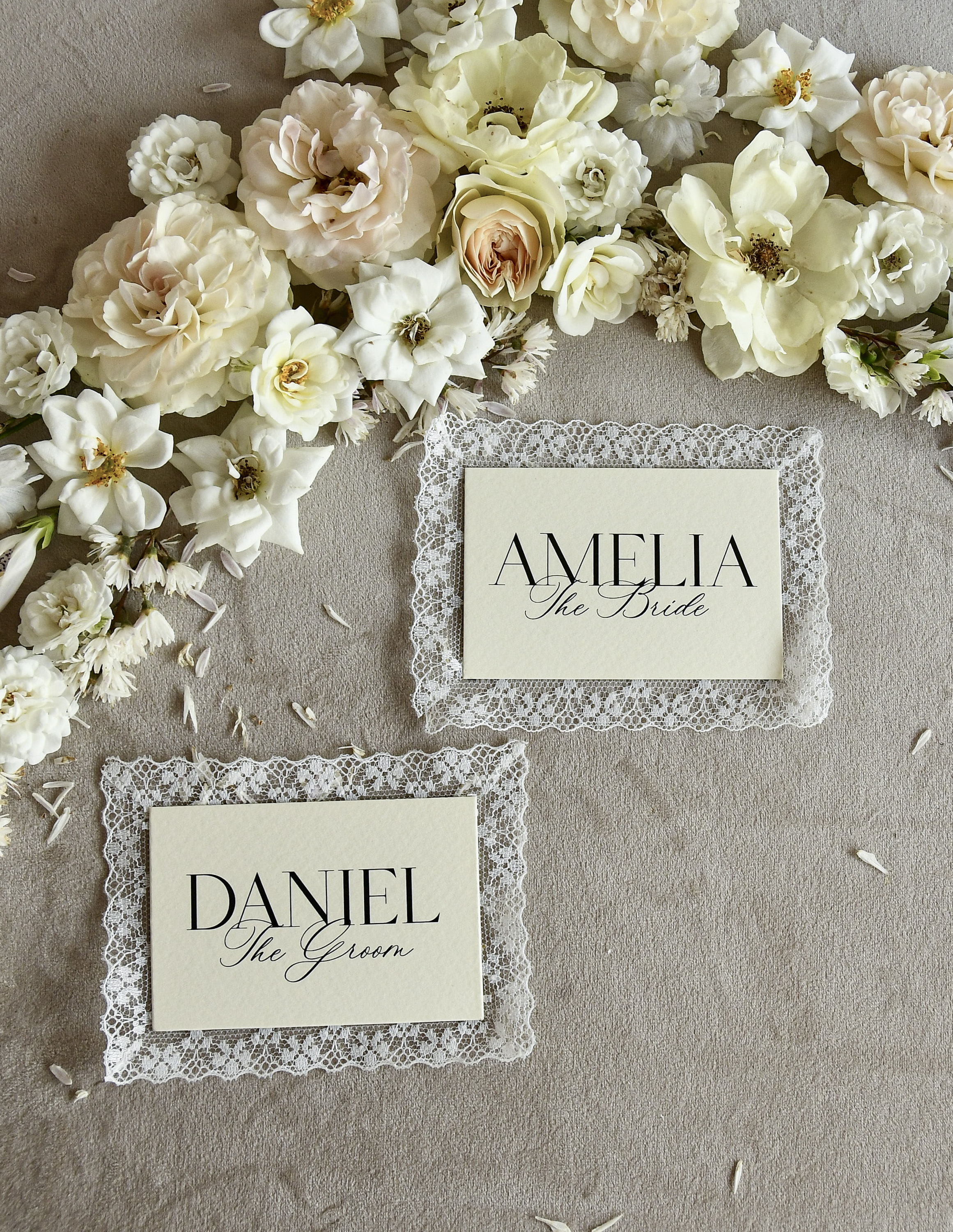
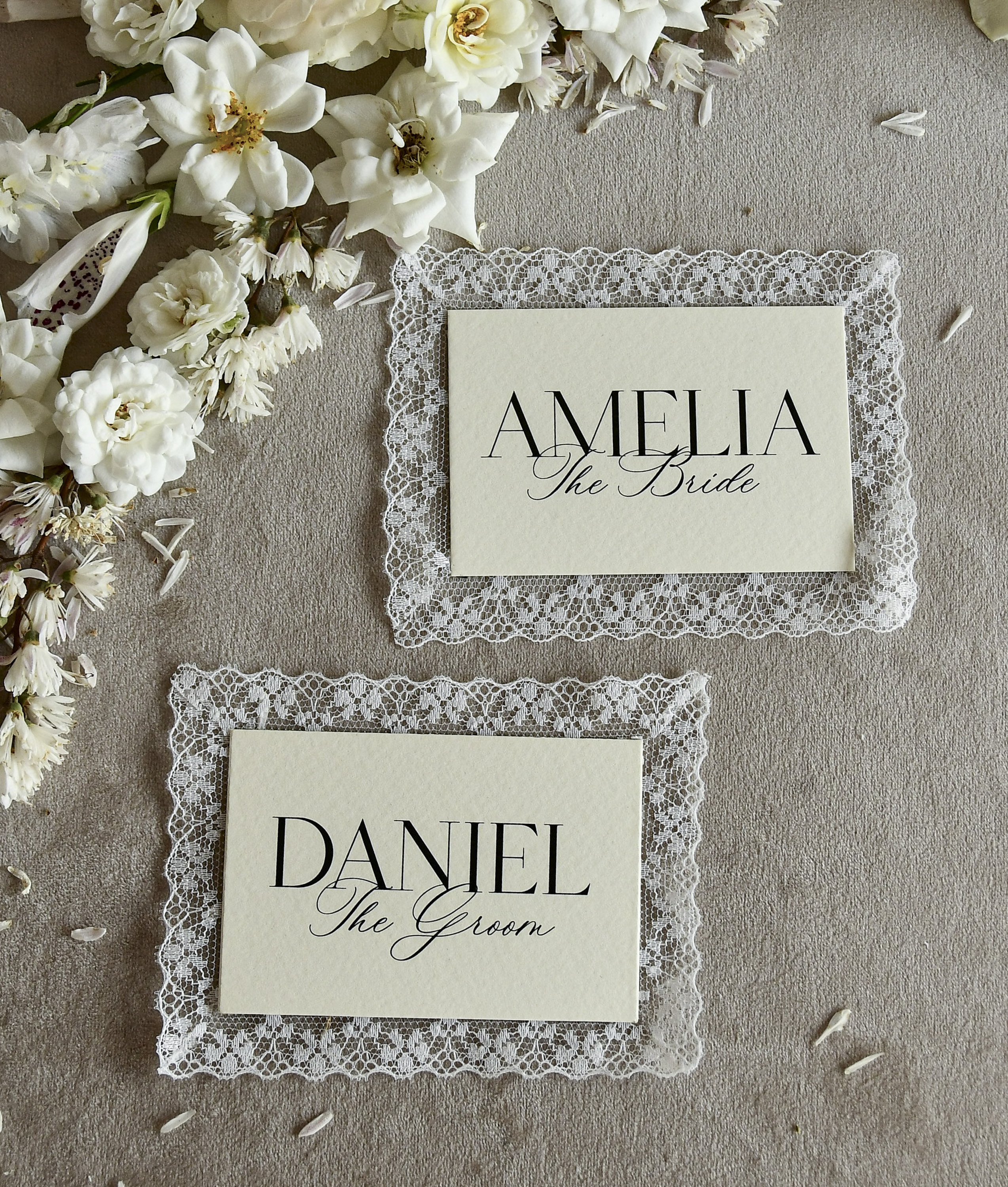
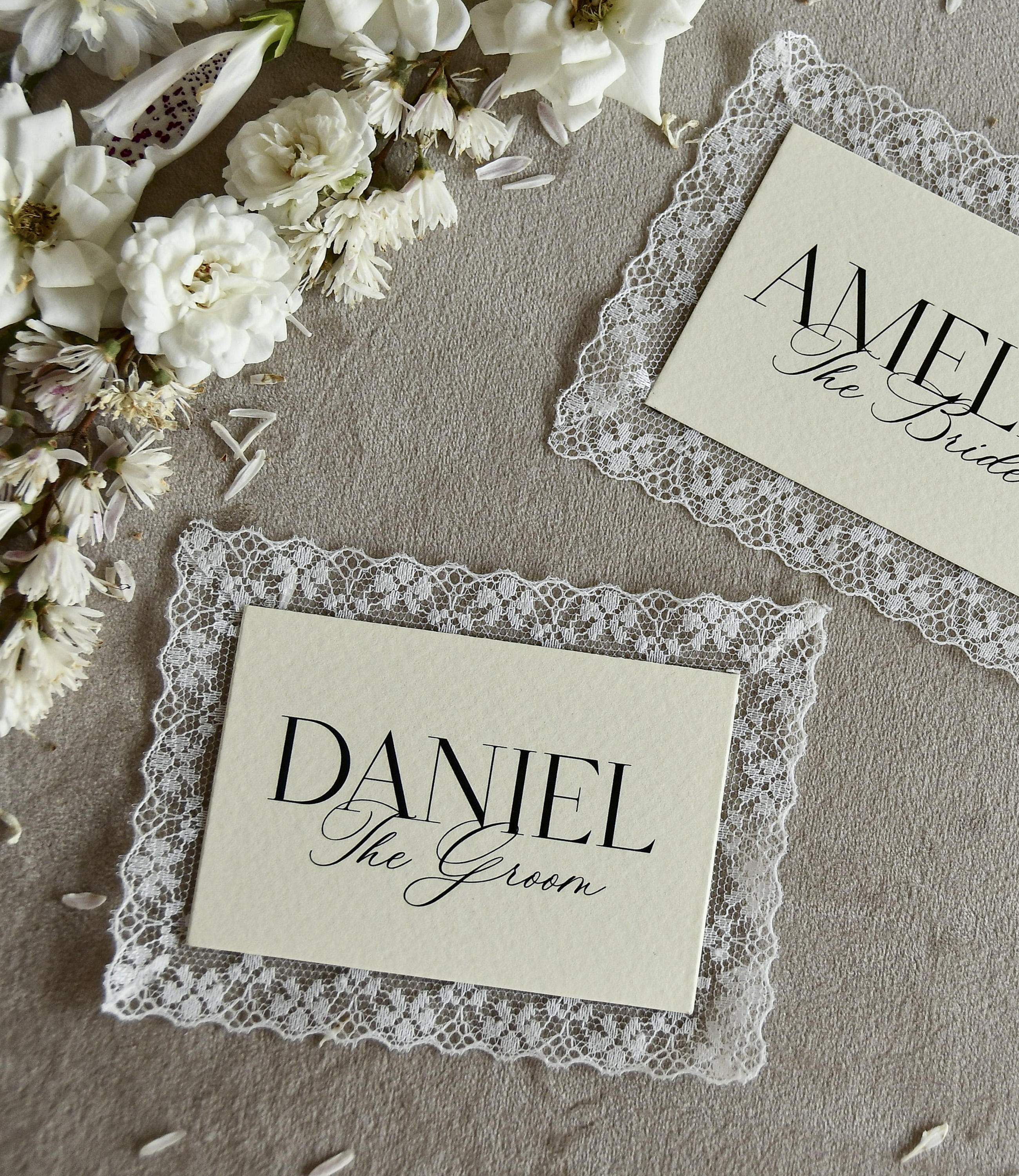
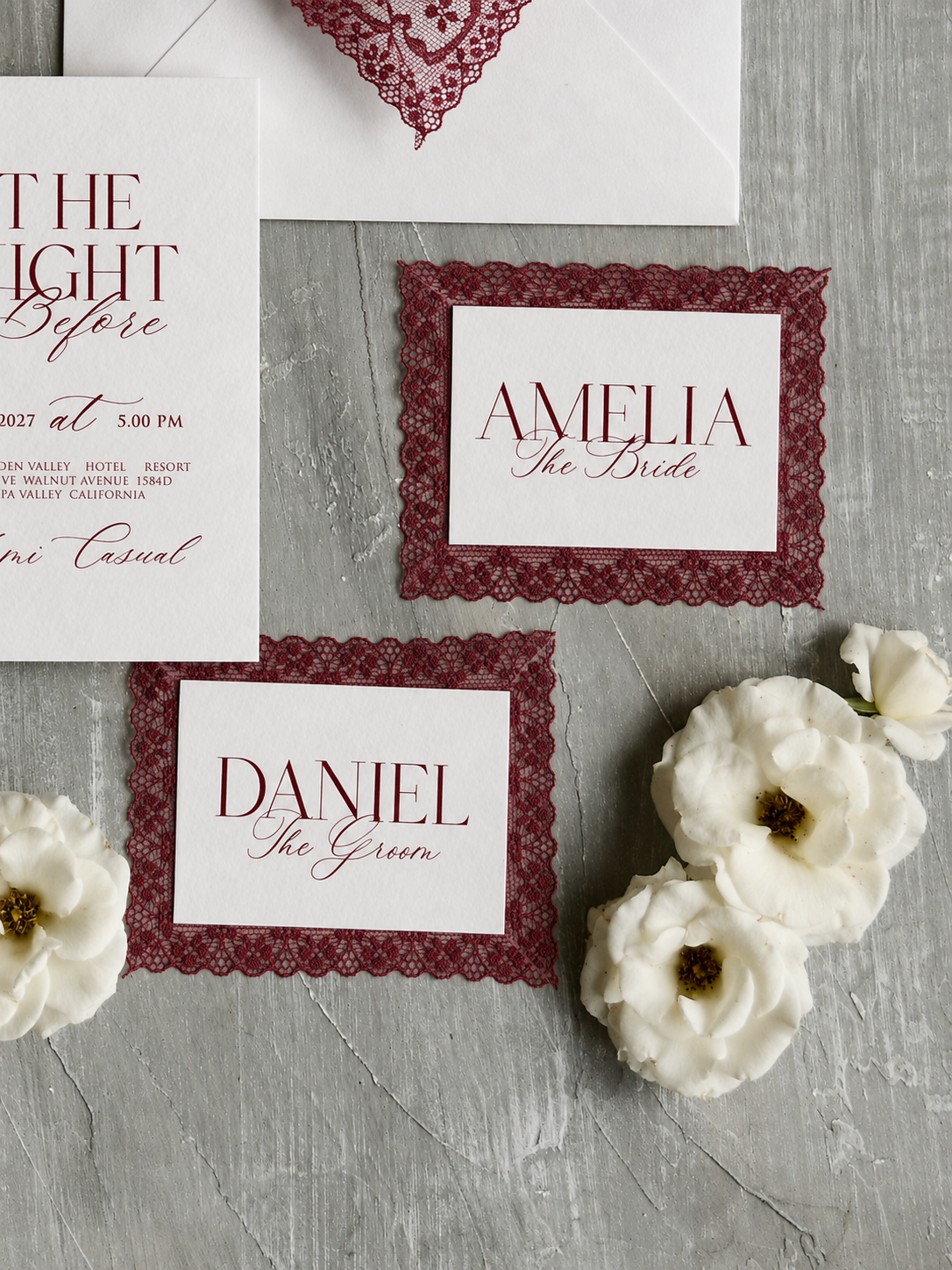
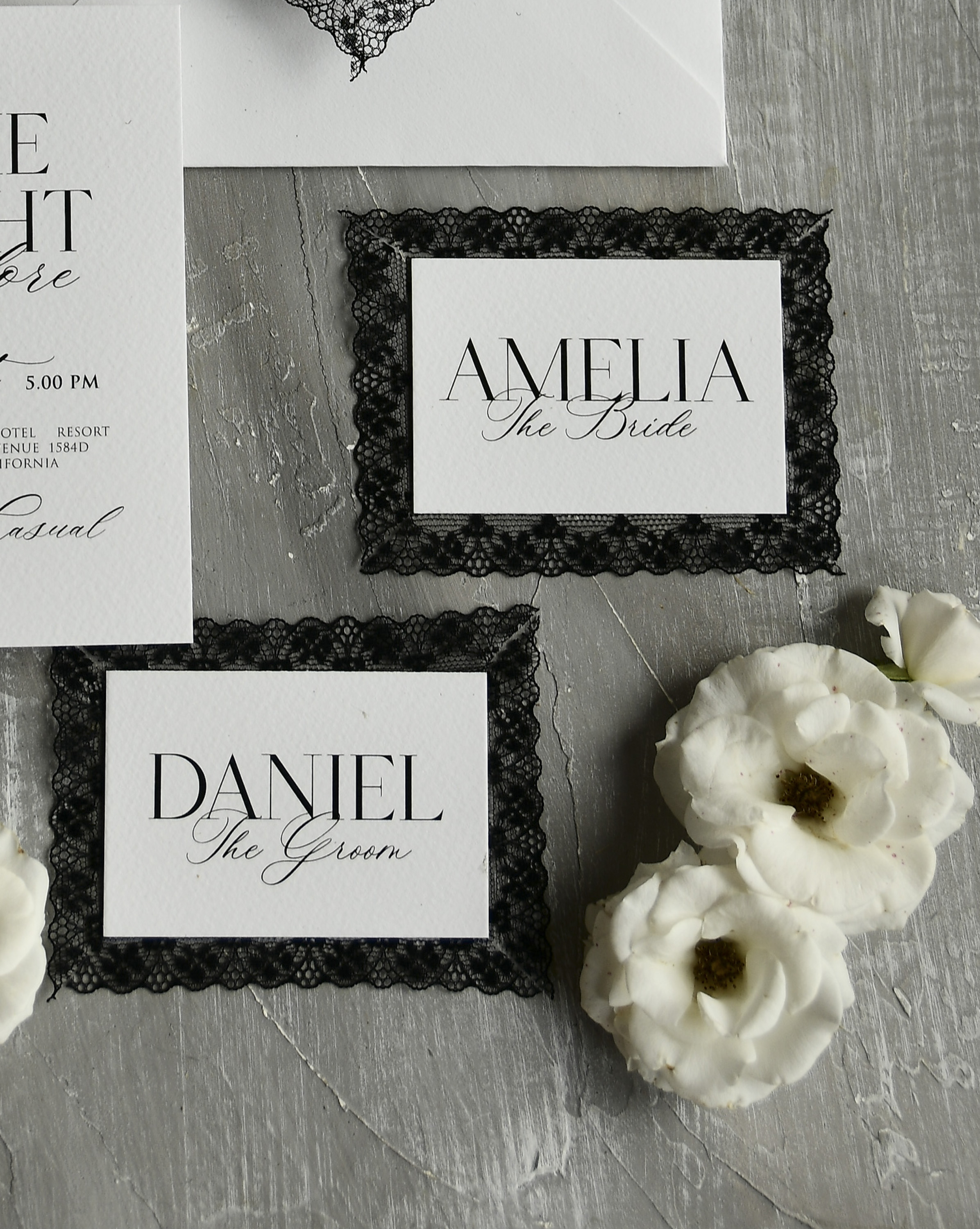
Think carefully about seating. Place them near family members they do know and feel comfortable with, rather than at a table where they'll feel isolated. Thoughtful details like personalized place cards — our 03/laceD/W place cards are a beautiful, elegant option — help every guest feel genuinely welcomed, even those who are newer to your inner circle.
Don't assign yourself the job of managing their experience all evening. Seat them well, greet them briefly, and let the event do the rest.
When It's Okay to Simply Say No
There are situations where declining to invite distant family is not just acceptable — it's the right call. If there's a history of harmful behavior, addiction issues that could affect the atmosphere, or a genuine estrangement following a serious conflict, your wedding is not the venue for reconciliation. It's your celebration, and protecting the emotional safety of you, your partner, and your closest guests is a legitimate priority.
If you're worried about the fallout, keep your response simple and consistent: "We kept the guest list very small and intimate." You don't owe anyone a detailed explanation. Most people, even if disappointed, will understand a size-based limitation far better than a selective one.
Frequently Asked Questions
Have a calm, direct conversation about why you've made your choices and what criteria you're using. Offering a consistent rule — like only inviting people you've spoken to in recent years — makes it easier to hold your ground without it feeling like a personal attack on their family.
It can feel awkward, but it's not inherently rude if you have a clear, consistent rule. If you're inviting all first cousins, leave out second cousins entirely — drawing the line at a recognized family tier is easier to explain and defend than individual selections.
It's a thoughtful gesture but not required. A warm, handwritten note inside the invitation itself can acknowledge the distance without requiring a pre-wedding phone call. Keep it simple and sincere rather than over-explaining.
Take a breath — this is manageable. Focus on seating them near people they're comfortable with and greeting them briefly on the day. You don't need to have a deep reconciliation conversation at your wedding; a warm hello is enough.
Place them at a table with family members they already have a connection to, rather than isolating them at a miscellaneous table. Elegant, personalized place cards like the 03/laceD/W style help signal that every guest was thoughtfully considered, which goes a long way with guests who may already feel uncertain about their place in the room.
Keep it brief and consistent: 'We kept the wedding very small and had to make some really hard cuts.' Avoid over-explaining or offering comparisons to other guests. A simple, kind response is far less likely to escalate than a detailed justification.
See This Design Up Close



You May Also Like

More Wedding Planning Guides
- → How to Tell Guests Your Wedding Is Adults Only (Without the Awkwardness)
- → Should Your Stepparent Get a Wedding Invitation? Here's How to Decide
- → How to Cut Your Wedding Guest List Without the Drama
- → Family Drama Before the Wedding? Here's How to Actually Handle It
- → New Boyfriends and Girlfriends at Your Wedding: What Couples Need to Know
- → Uninvited Plus-Ones and Tag-Alongs: How to Keep Your Guest List Intact
- → When Family Feuds Threaten Your Wedding Plans: A Practical Peacekeeper's Guide
- → Inviting an Estranged Brother or Sister: Finding Clarity Before You Seal the Envelope
- → Cousins, Invites, and Hard Choices: A Practical Guest List Guide