
New Boyfriends and Girlfriends at Your Wedding: What Couples Need to Know

One of the trickiest guest-list decisions you'll face is figuring out what to do about new partners — the boyfriend your sister just started dating, or the girlfriend your college friend brought to one party. There's no single rule that works for every situation, but there are clear guidelines that can help you make a fair, thoughtful decision without drama.
The General Rule: How Long Is Long Enough?
Most etiquette experts and experienced planners suggest using a six-month relationship threshold as your starting point. If a guest has been with their partner for at least six months by the time your wedding date arrives, it's generally considered considerate to extend an invitation to that partner. Shorter than that, and you're well within your rights to keep the guest list to people you've actually met or who have a meaningful presence in your guests' lives.
That said, the six-month rule is a guideline, not a law. Use your judgment — a three-month relationship that's clearly serious and committed deserves more consideration than a six-month casual situationship.
Apply Your Policy Consistently Across All Guests
Whatever threshold you choose, the most important thing is to apply it equally to everyone. If you invite your maid of honor's new boyfriend of four months, you'll need to extend the same courtesy to your future mother-in-law's new partner of four months. Inconsistency is where hurt feelings and family conflict are born.
A good practice is to write down your policy before you finalize invitations — something like: "We're inviting partners of six months or more, and any partners who are engaged or living together regardless of timeline." Having it in writing helps you explain your reasoning calmly if anyone pushes back.
When to Make Exceptions
Some situations call for flexibility:
- Engaged or cohabitating couples should almost always be invited together, even if the engagement is recent.
- Long-distance relationships can be harder to assess — a couple dating for five months who live in different cities may be less serious than a local couple at the same stage.
- Guest comfort matters too. If a close friend or family member won't know anyone else at the reception, inviting their partner — even a newer one — is a kind gesture that makes for a more relaxed, joyful guest.
- Venue capacity is a real constraint. If you're genuinely limited on seats, it's acceptable to explain that warmly and honestly.
Seating New Partners Thoughtfully
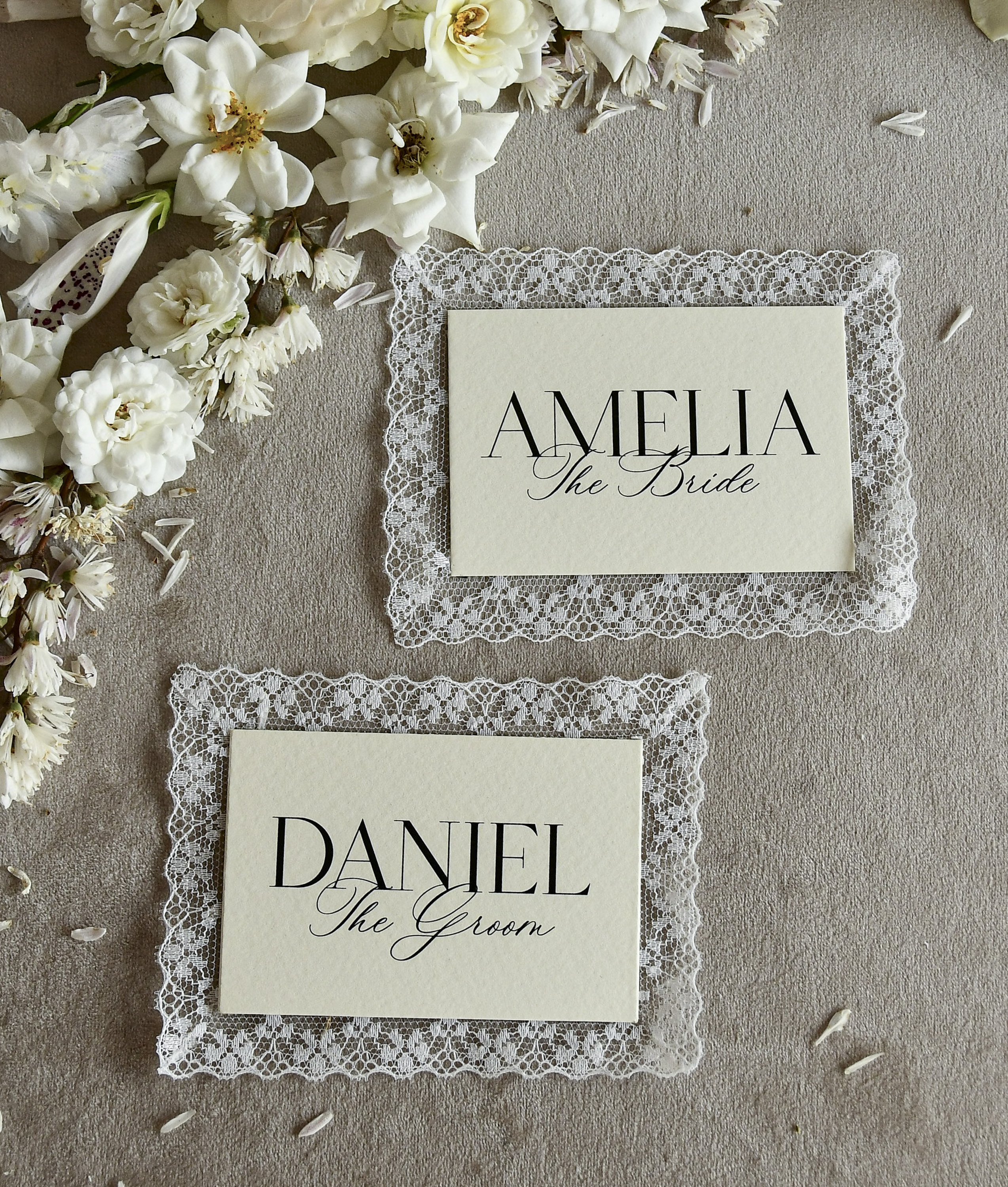
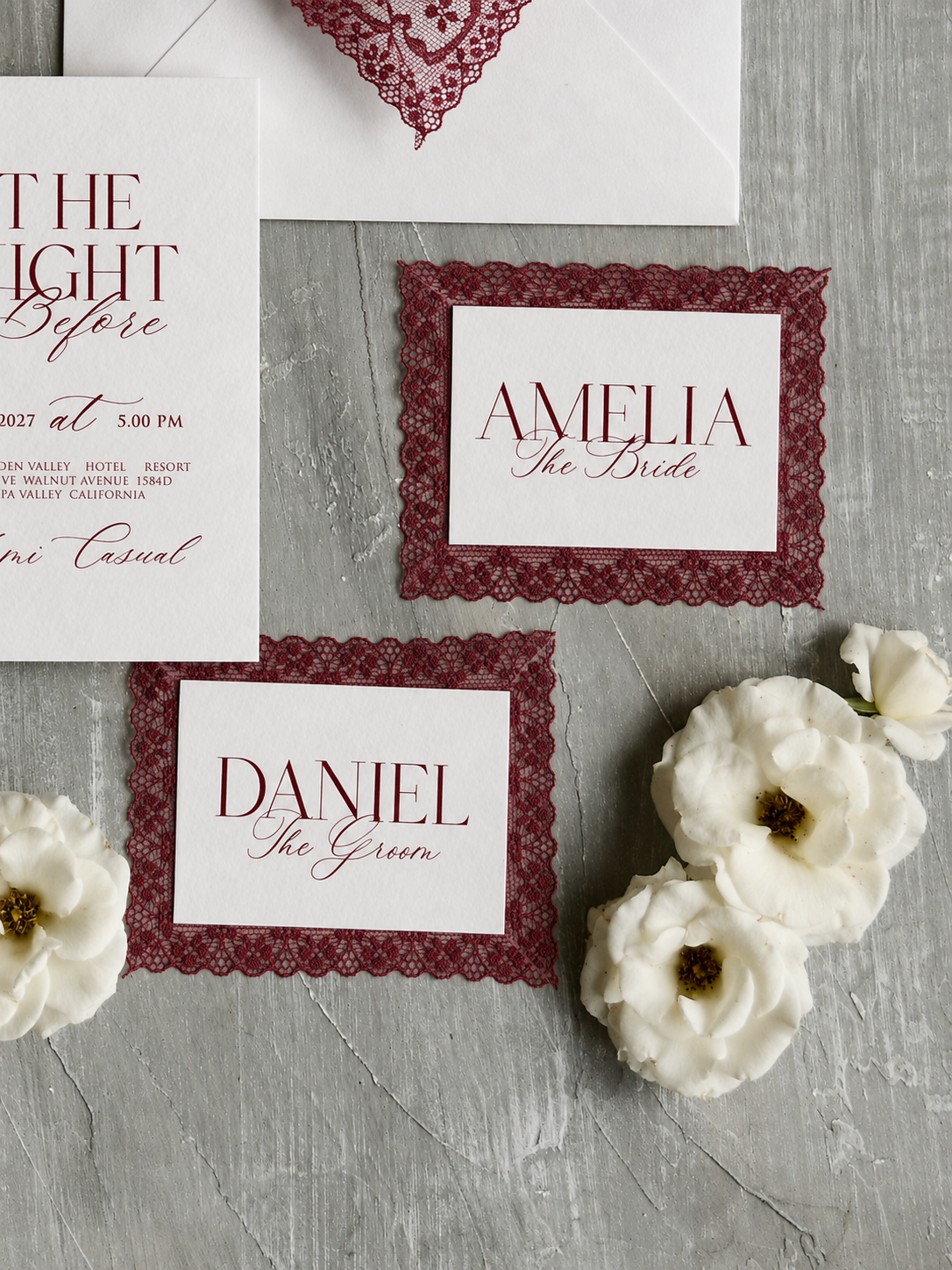
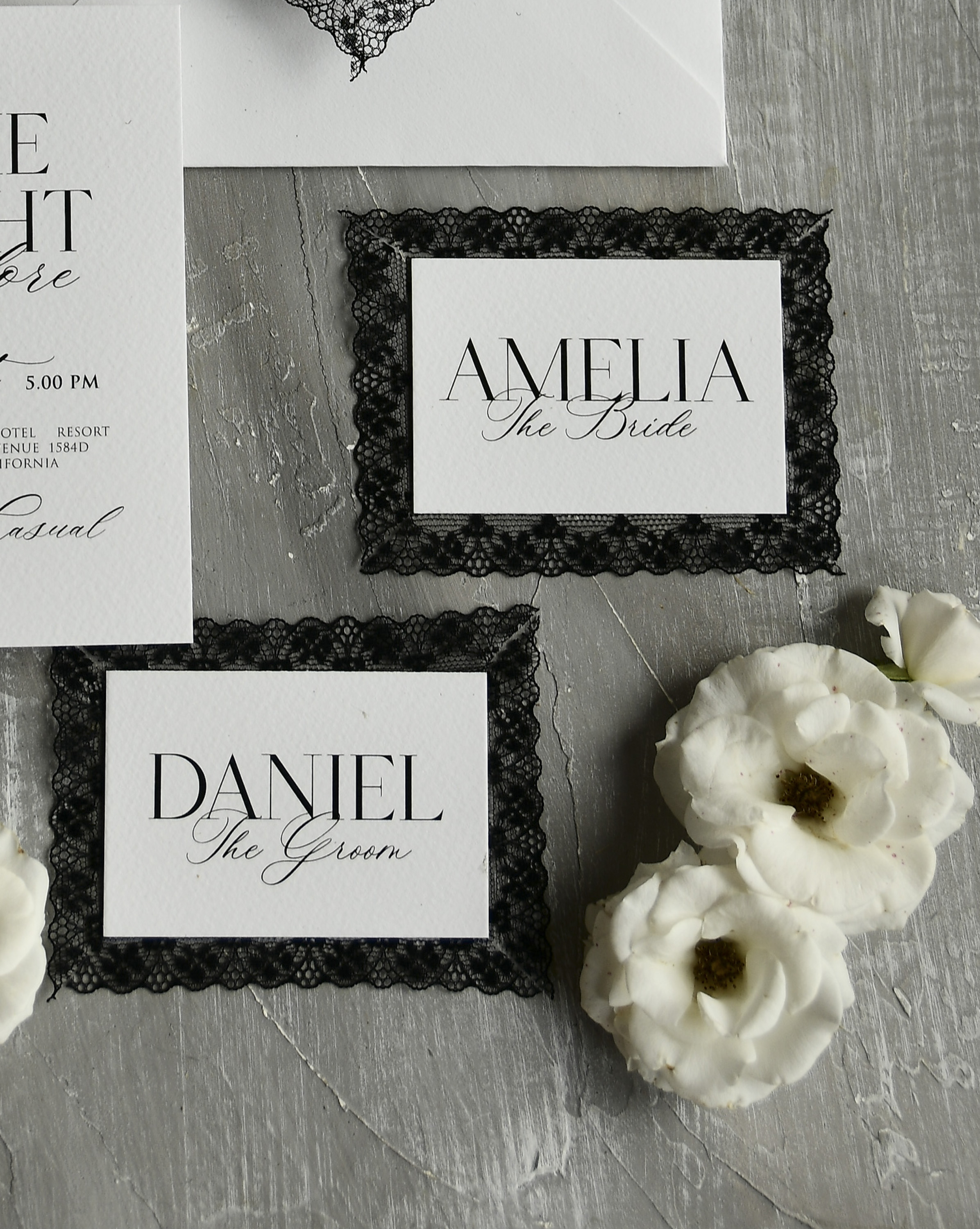
Once you've decided to include new partners, make them feel genuinely welcome rather than like an afterthought. Seat them with people their partner knows well, so they have a natural social anchor. A beautifully designed place card — like the 03/laceD/W place card from Margo&Bees — is a small but meaningful touch that signals a new guest was expected, considered, and welcomed. Nothing says "you were an afterthought" like a handwritten sticky note on a random chair.
Brief introductions at the rehearsal dinner, if there is one, can also go a long way toward making newer partners feel included before the big day.
How to Communicate Your Decision
If you decide not to invite a guest's new partner, tell that guest directly and kindly before they receive their invitation — don't let them find out from the envelope. A simple, honest message works best:
"We're keeping our guest list really tight and have a policy of inviting partners of six months or more — we hope you understand, and we can't wait to celebrate with you!"
Most reasonable guests will accept this gracefully. If someone is truly upset, that's worth a conversation, but stand firm on the policy you've applied fairly. Your wedding guest list is one of the few places where a consistent, clearly communicated rule is genuinely the kindest approach.
Frequently Asked Questions
Not necessarily — especially if the relationship is under six months old. However, if the guest would be sitting alone all night not knowing anyone, it's worth reconsidering out of hospitality. Meeting someone at your wedding for the first time isn't unusual and can be a lovely introduction.
Acknowledge their feelings, then calmly explain the consistent policy you applied to all guests. If it's a truly serious relationship and you have any flexibility on numbers, this might be a case where an exception is worth making to preserve family harmony.
If the ex is invited, their new partner falls under the same rules as everyone else's partner — apply your threshold consistently. If the situation feels complicated, that's a reason to reconsider whether the ex themselves should be on the guest list.
These are two different decisions. A plus-one is an open invitation for any guest to bring someone of their choosing. Inviting a known partner by name is more personal and deliberate. You don't have to offer both — be clear in your invitations about which you're extending.
Use their full name if you know it, or their first name and the phrase "Guest of [Partner's Name]" if you're unsure of spelling or don't have their last name. Elegant place cards like the 03/laceD/W style from Margo&Bees look polished and intentional either way.
It depends on the relationship length and your policy. If you've applied a consistent rule and communicated it kindly, most guests will understand. What feels rude is inconsistency — inviting some new partners but not others with no clear reasoning.
See This Design Up Close




You May Also Like

More Wedding Planning Guides
- → How to Tell Guests Your Wedding Is Adults Only (Without the Awkwardness)
- → Should Your Stepparent Get a Wedding Invitation? Here's How to Decide
- → How to Cut Your Wedding Guest List Without the Drama
- → Family Drama Before the Wedding? Here's How to Actually Handle It
- → Inviting Family You've Lost Touch With: A Practical Guide for Your Wedding Guest List
- → Uninvited Plus-Ones and Tag-Alongs: How to Keep Your Guest List Intact
- → When Family Feuds Threaten Your Wedding Plans: A Practical Peacekeeper's Guide
- → Inviting an Estranged Brother or Sister: Finding Clarity Before You Seal the Envelope
- → Cousins, Invites, and Hard Choices: A Practical Guest List Guide