
Navigating Divorced Parent Seating at Your Wedding Reception
Planning a wedding when your parents are divorced adds an extra layer of logistics — and emotions — to your seating decisions. The good news? There is no single rule you have to follow, and most couples find a solution that works beautifully once they understand their options. This guide walks you through the ceremony, the reception, and the sticky in-between moments so you can seat everyone with confidence.
Ceremony Seating: The Front-Row Question
Traditionally, the bride's parents sit in the first row on the left (or the couple's left), and the groom's parents sit in the first row on the right. When parents are divorced, the question becomes: who sits in that front row, and what happens to stepparents?
- If the divorce is amicable: Both biological parents can share the front row. If stepparents are in the picture, they sit directly beside their spouse in the same pew or row. This is increasingly common and widely accepted.
- If the relationship is tense: Give the parent who raised you (or the one you're closer to) the front row. The other parent sits in the second row. This is not a slight — it's a practical, respectful solution that most guests won't even notice.
- If both parents remarried: Row one might seat Parent A + Stepparent A. Row two seats Parent B + Stepparent B. Clear, simple, drama-free.
Brief your ceremony coordinator or a trusted family member on the plan ahead of time so ushers seat guests correctly without any last-minute confusion.
Reception Seating: Tables, Not Rows
The reception gives you more flexibility because you're working with round or rectangular tables rather than a single aisle. Here's how most couples handle it:
- Separate tables, same honor: Give each divorced parent their own table near the front of the venue. Label them something neutral like "Family Table" rather than "Parents' Table" (plural tables, same prestige). Each parent can be surrounded by their own friends, siblings, or new spouse — people who make them feel comfortable.
- One parents' table if truly civil: If your parents genuinely get along, one shared table works. Seat them at opposite ends with their respective partners or closest friends as buffers. This signals unity to guests without forcing awkward proximity.
- Distance as a tool: If there's real animosity, a table on opposite sides of the room is completely acceptable. What matters is that both parents feel honored, not that they're physically close.
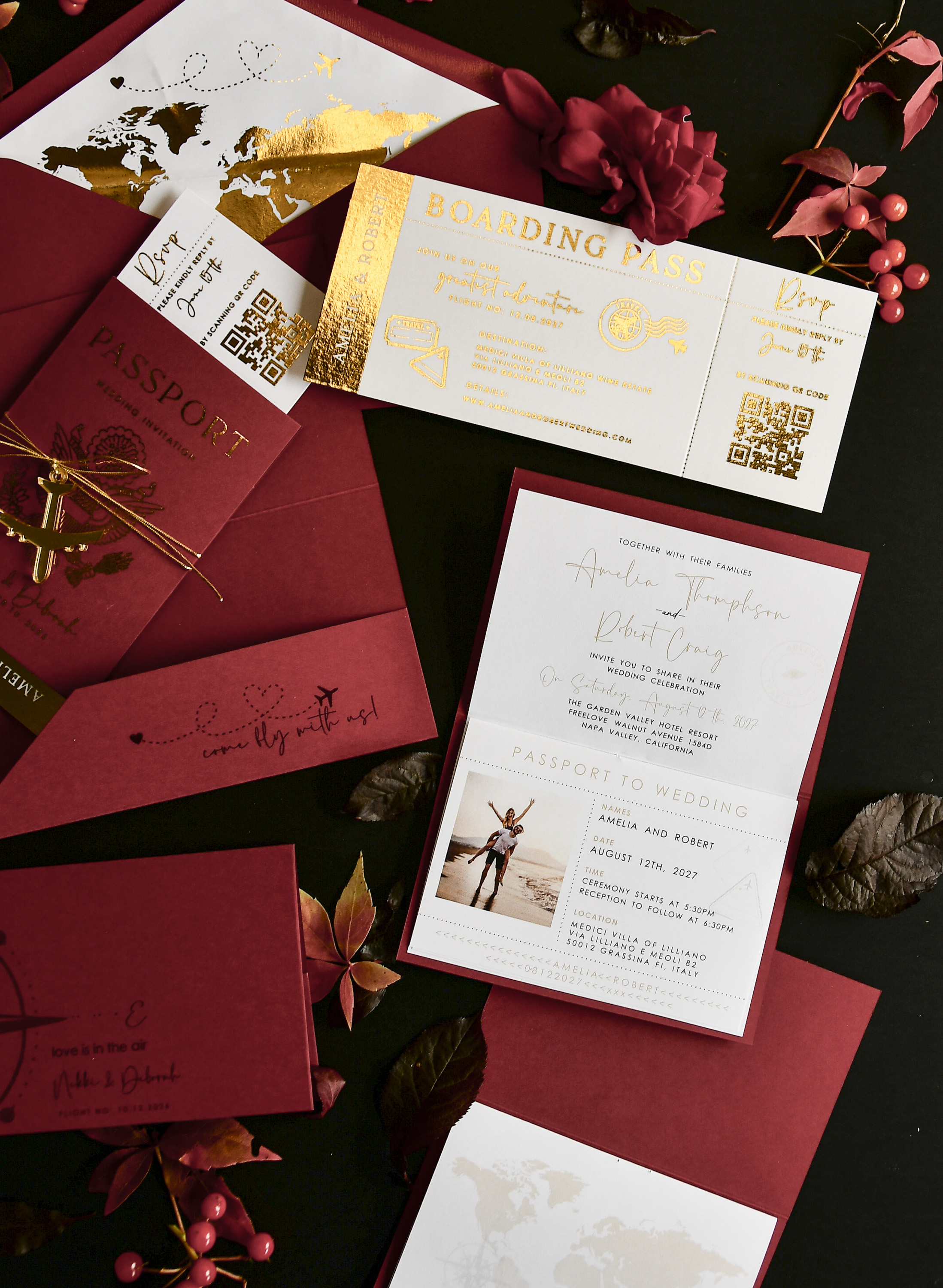
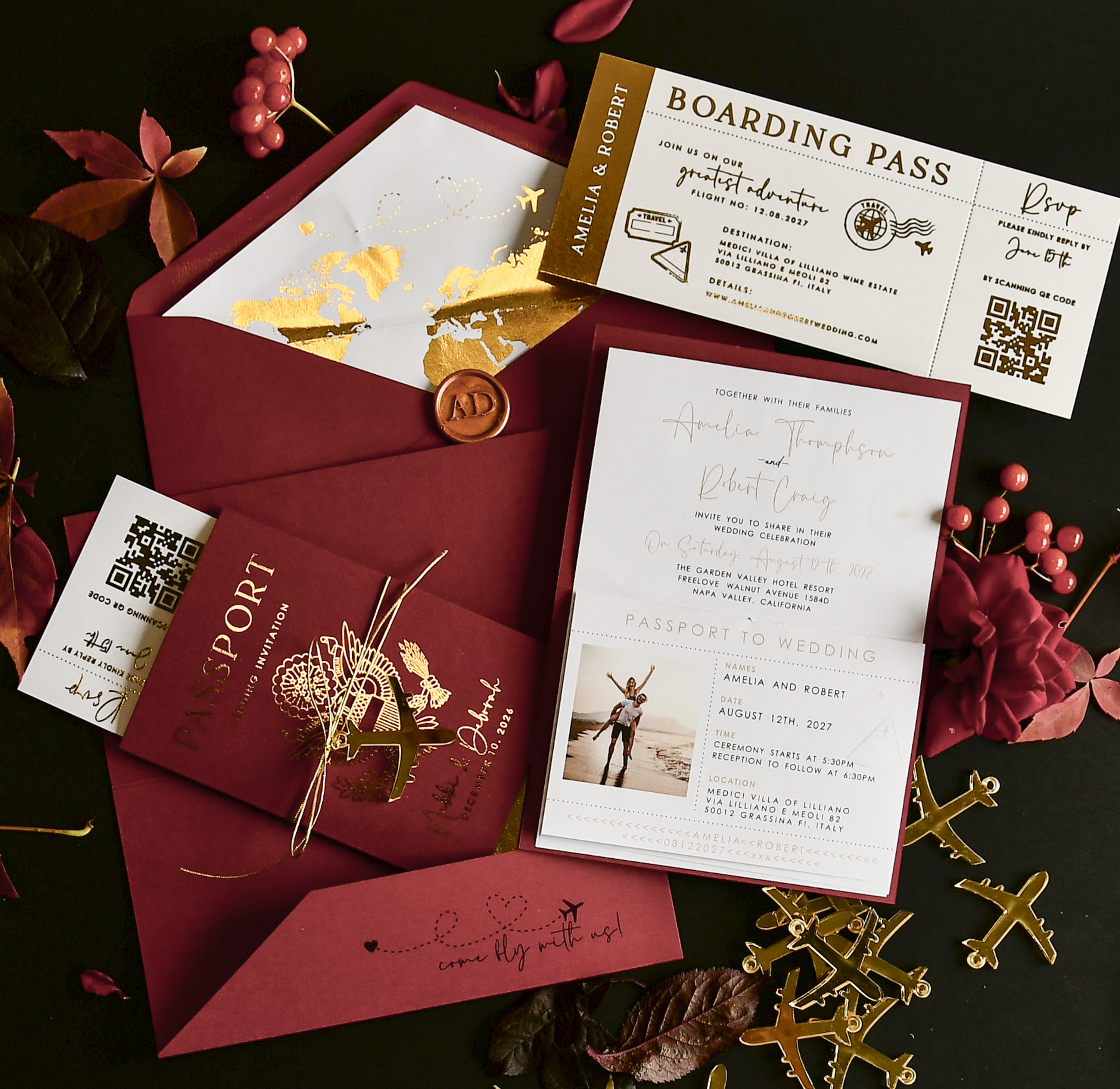
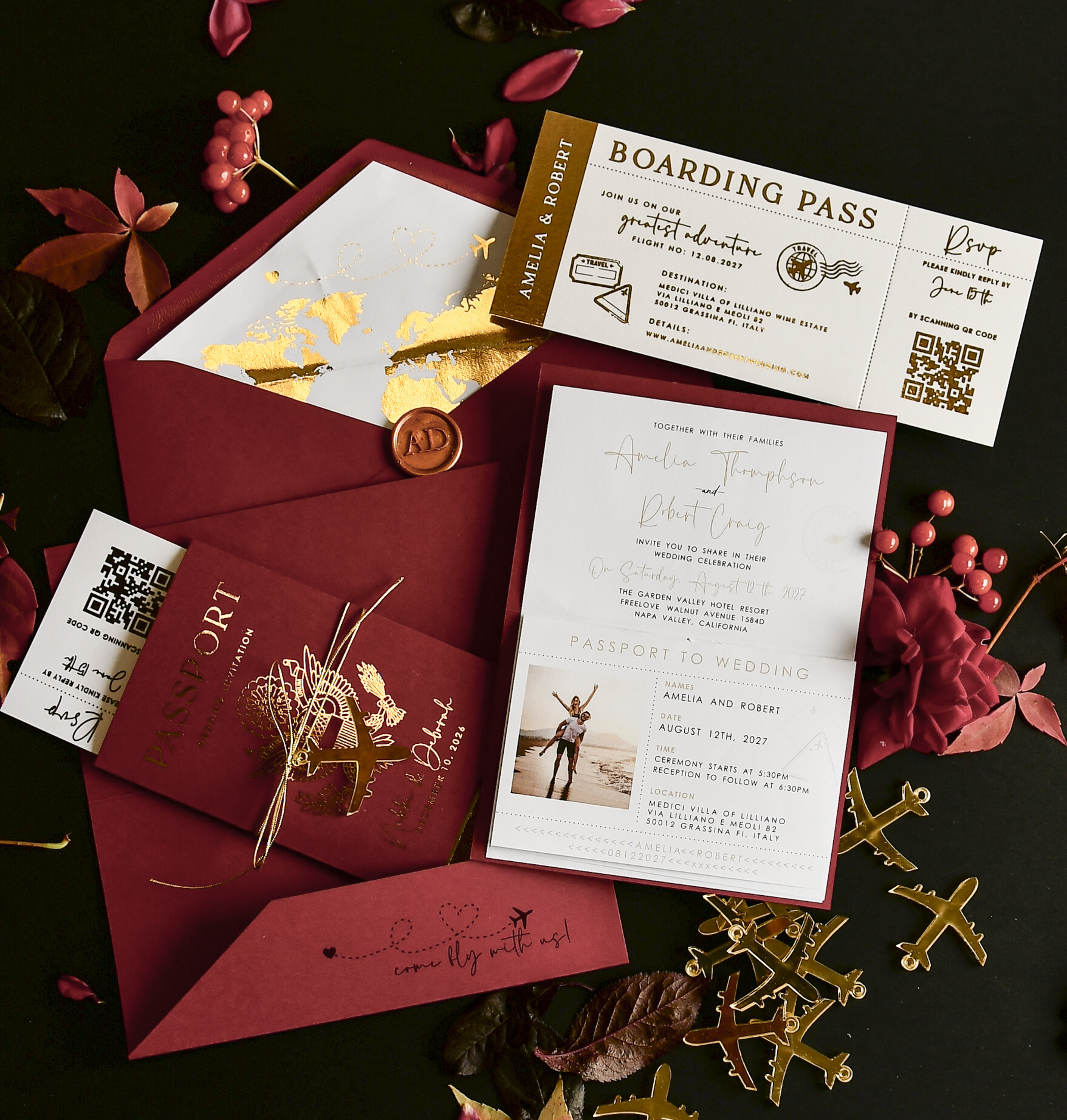
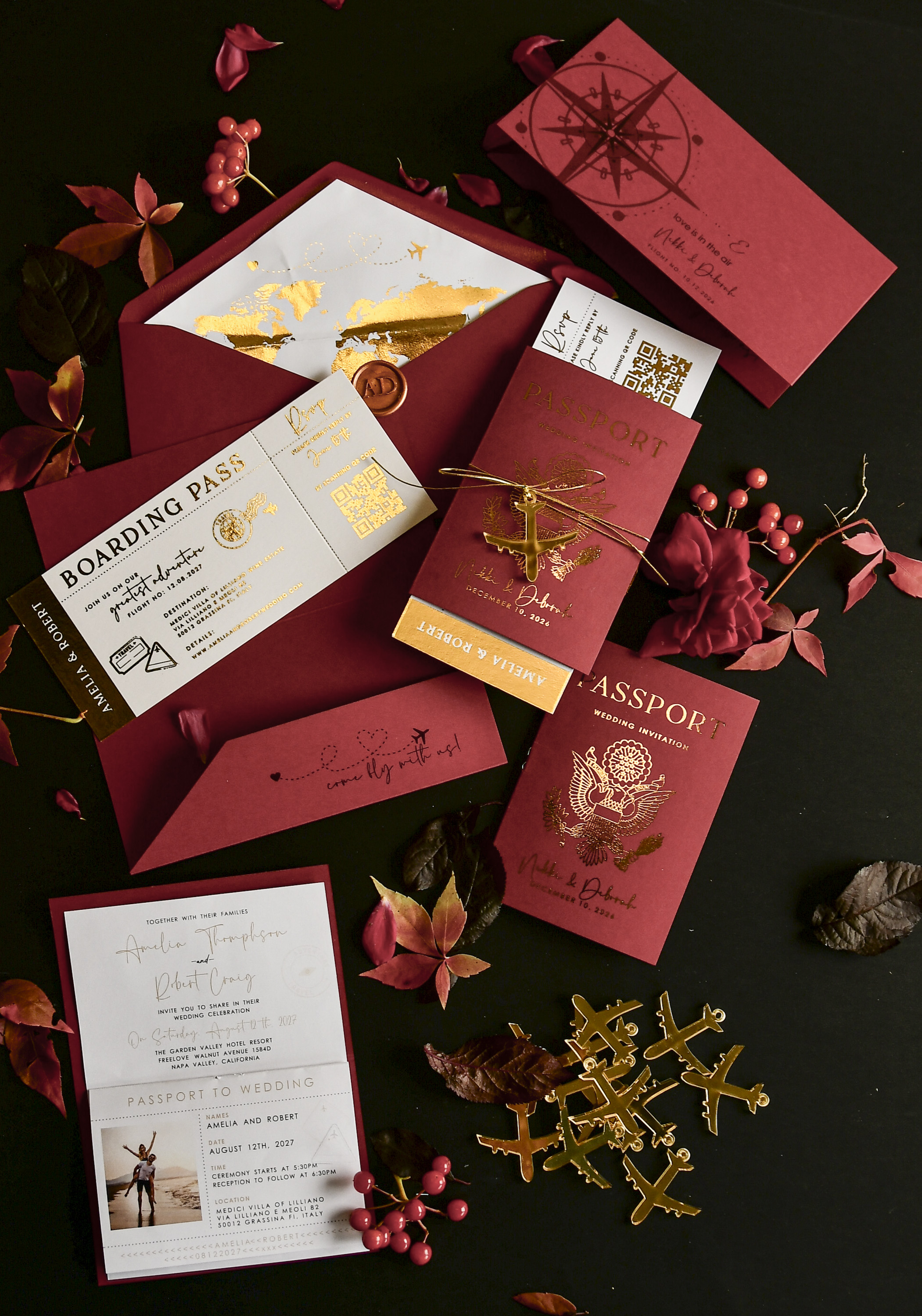
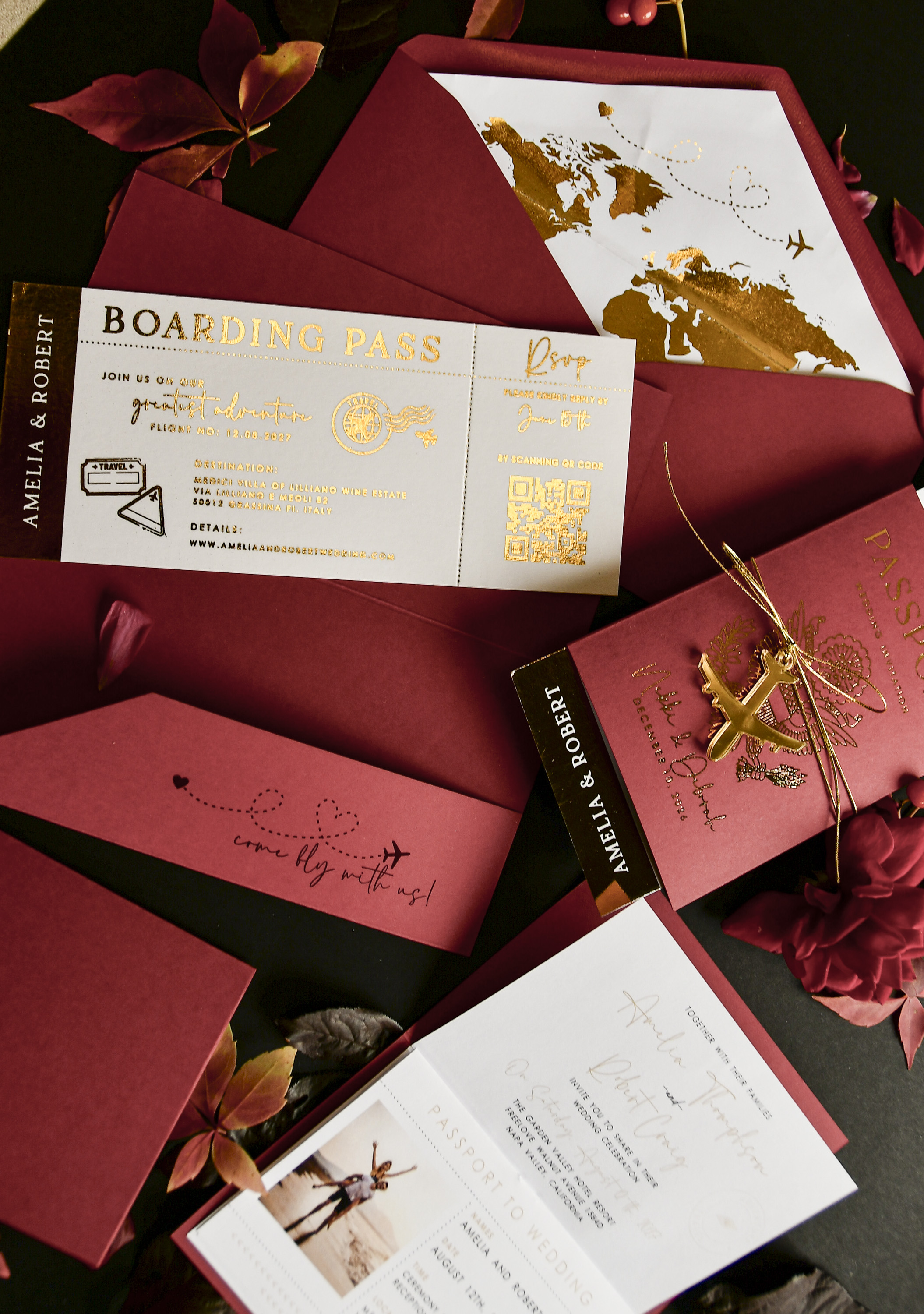
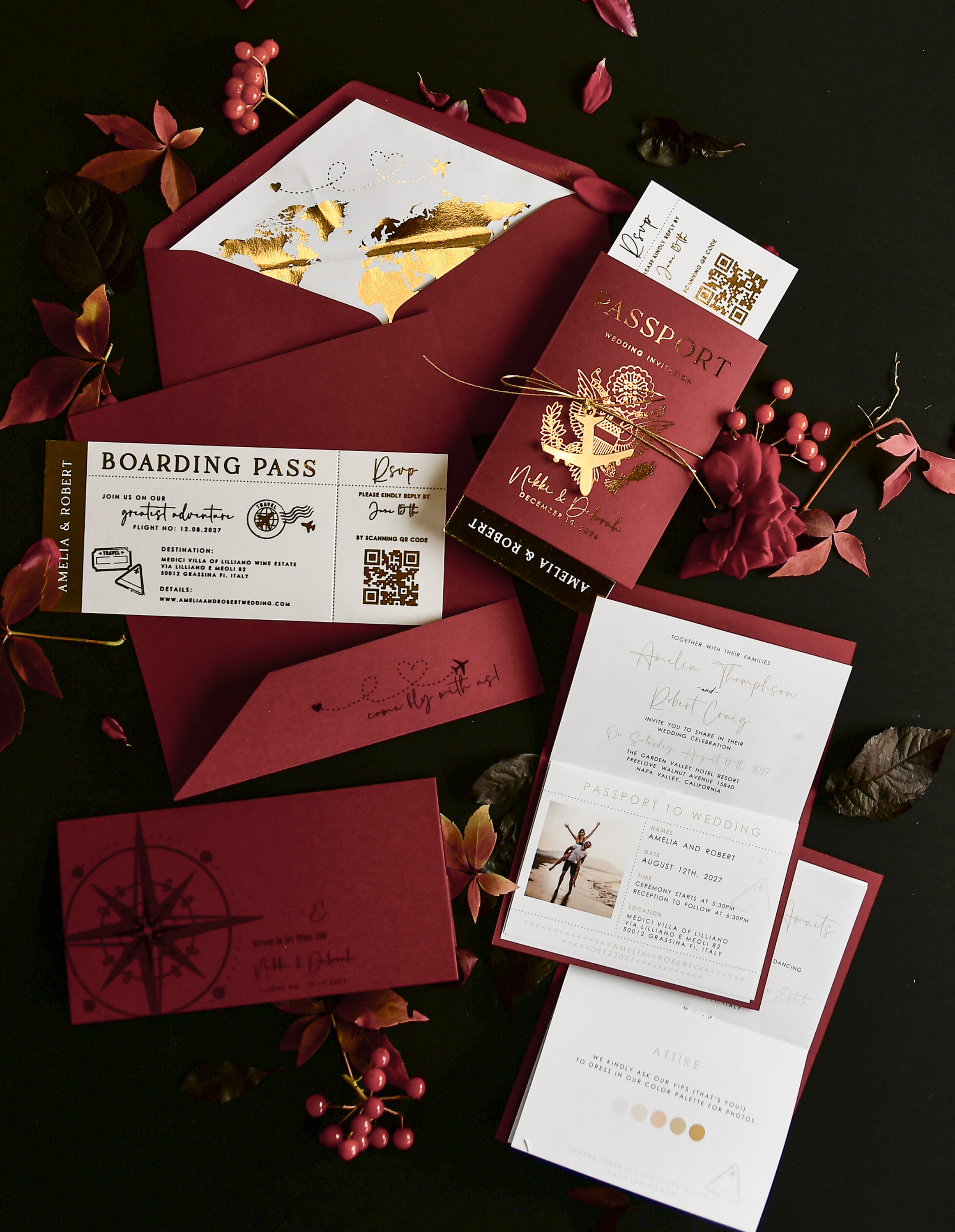
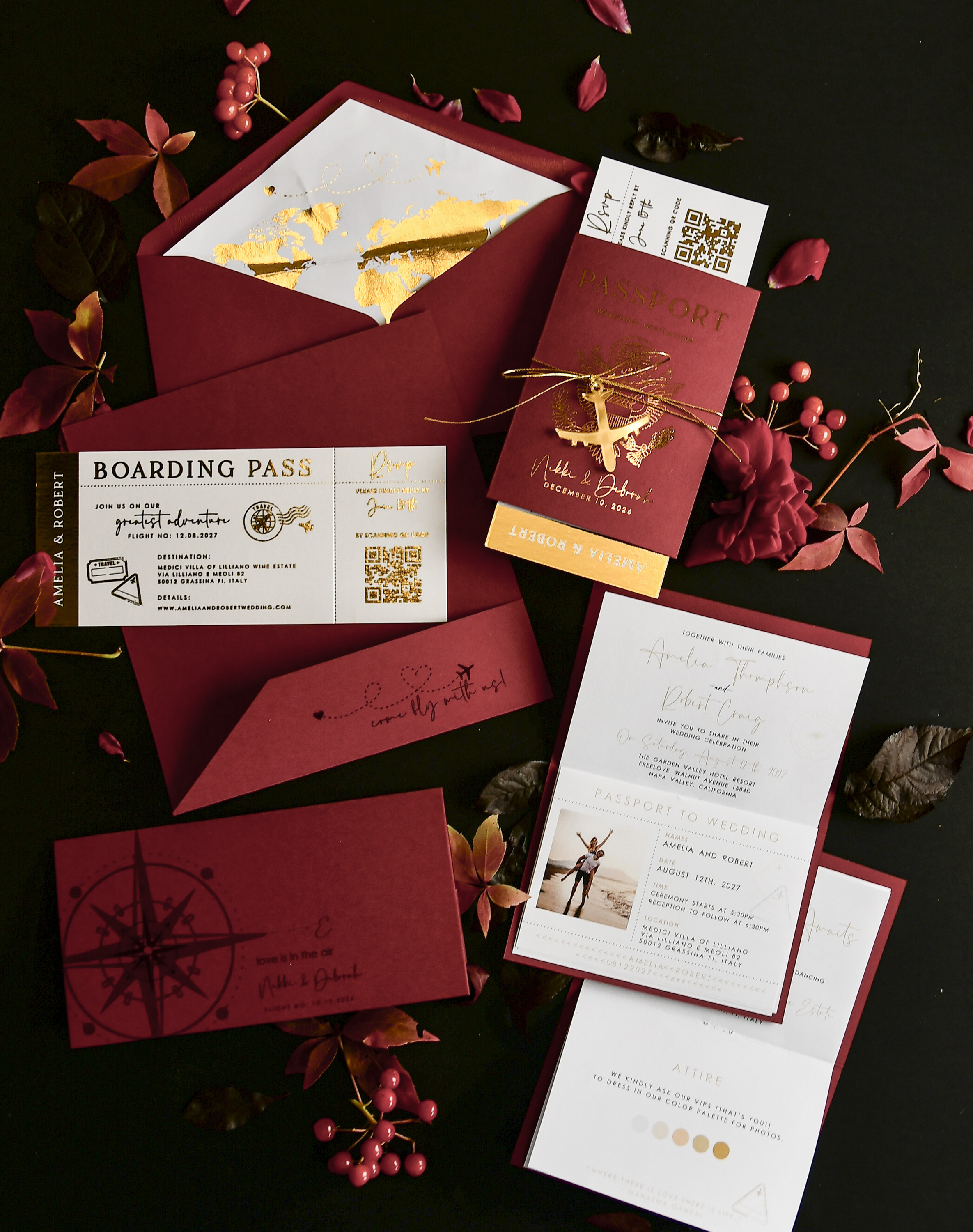
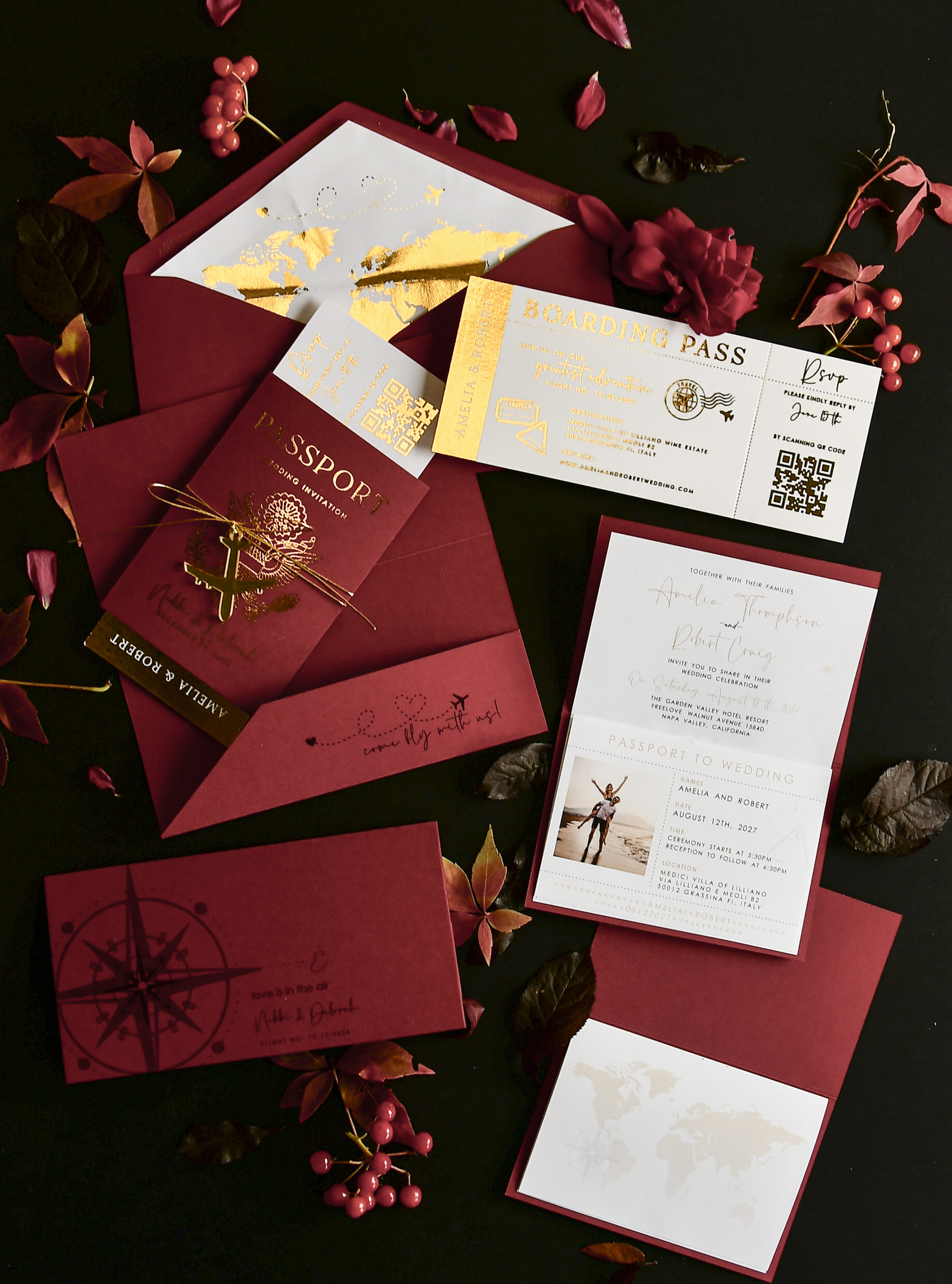
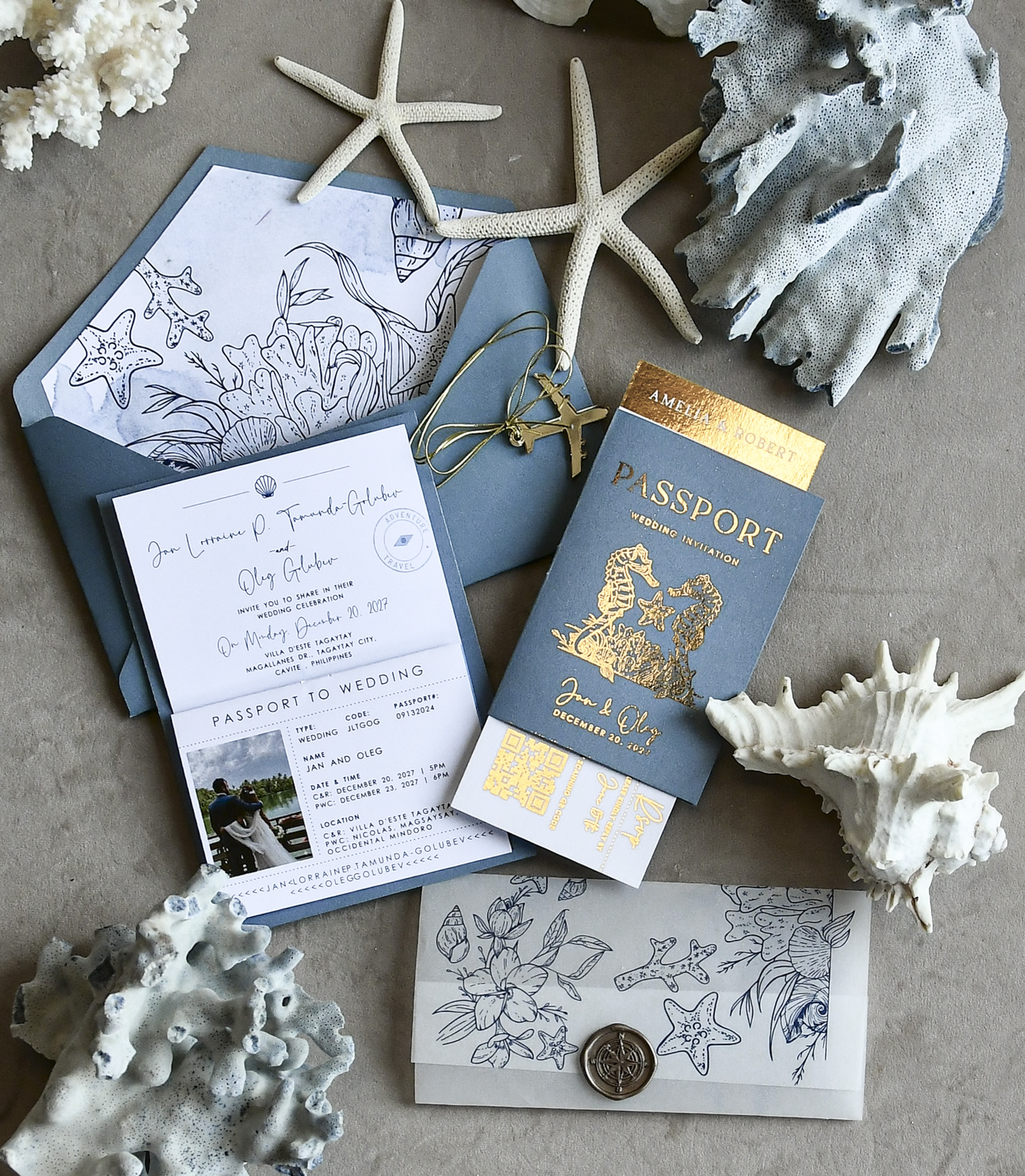
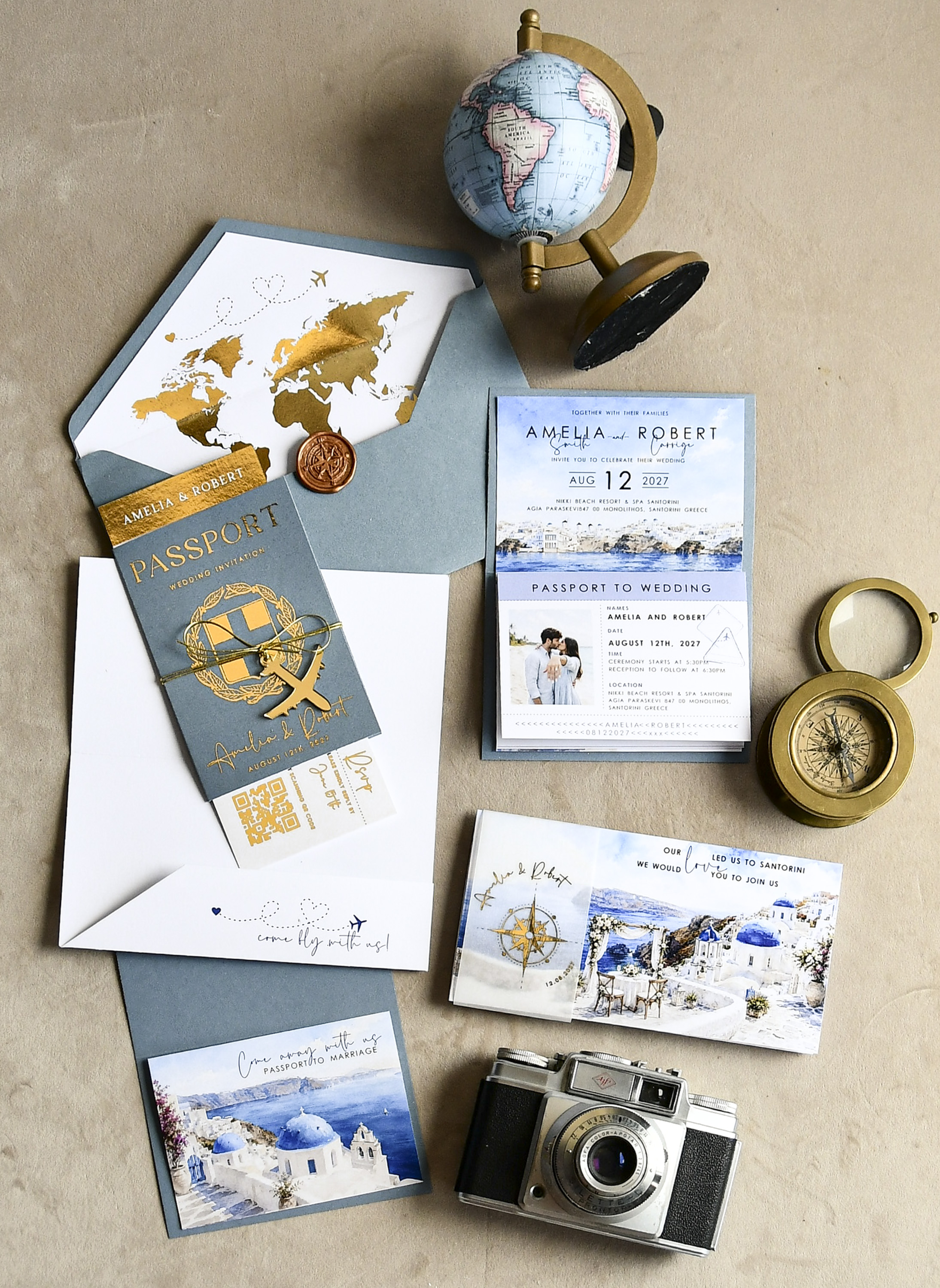
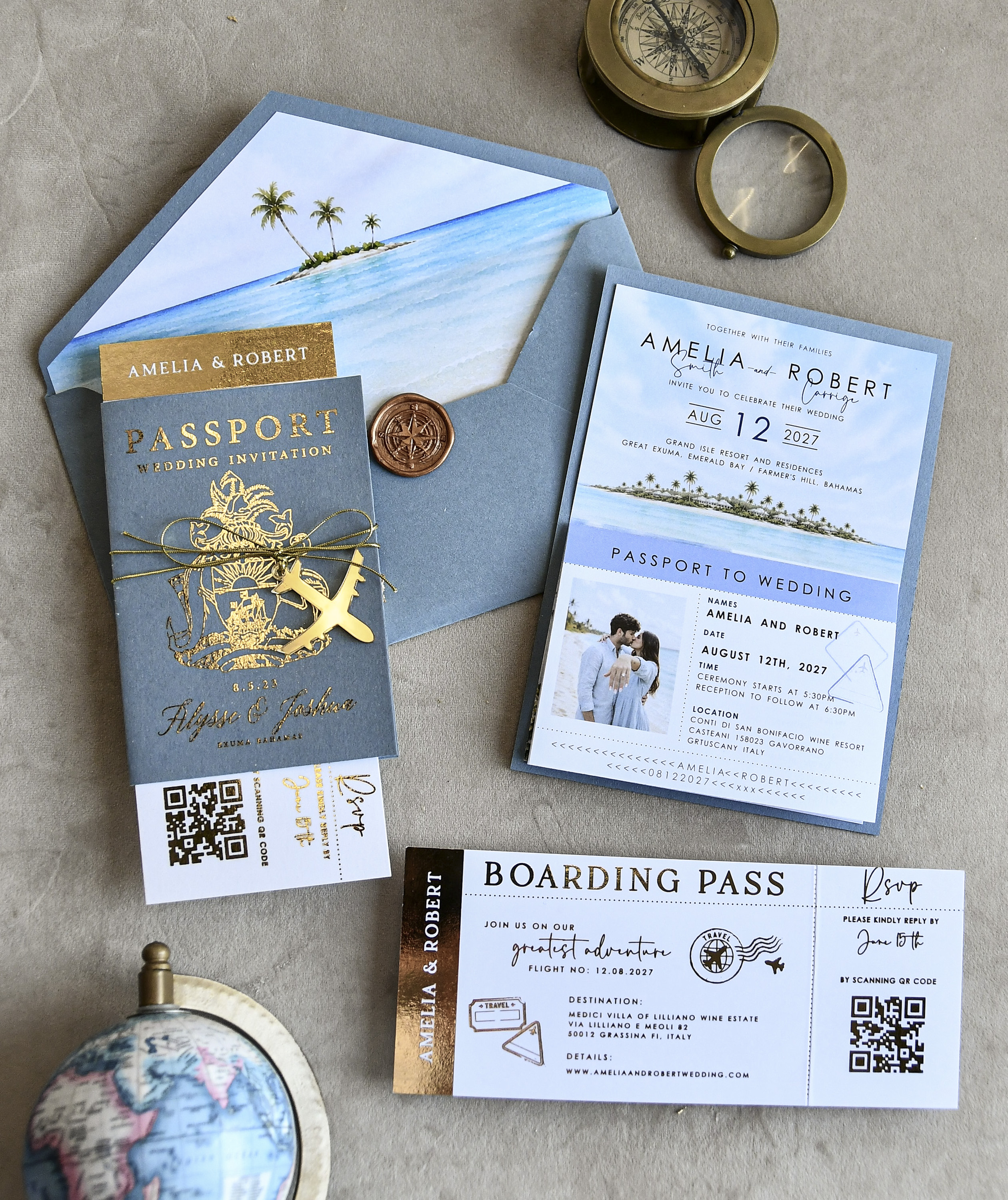
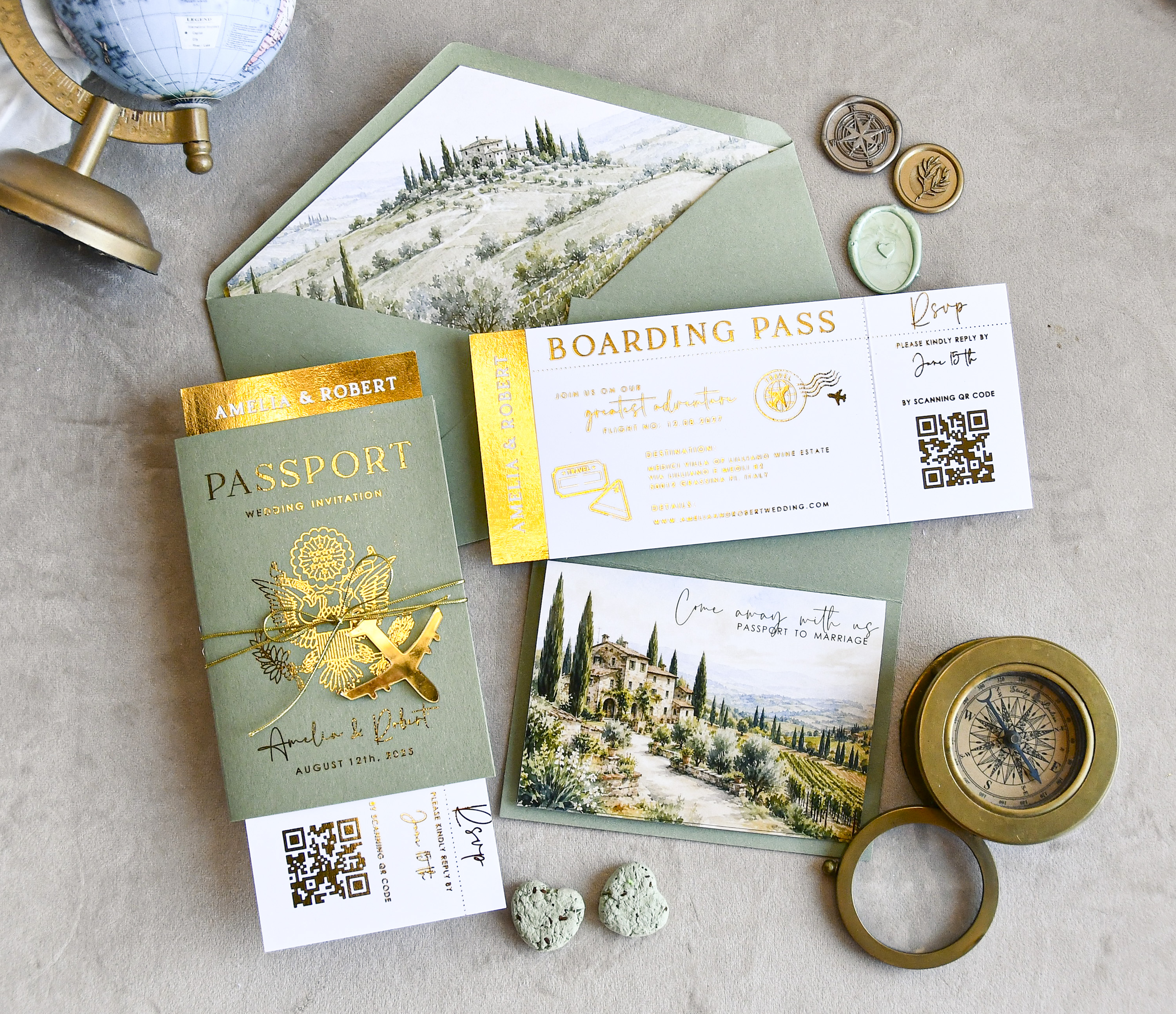
When you're working on your invitation suite — whether it's a classic style or something like the travel-themed 14/passFG/z passport invitations for a destination or beach wedding — keep the same thoughtful energy when addressing envelopes. Send each divorced parent their own invitation to their own address. Never combine them on one envelope.
Stepparents: How Much Recognition Is Right?
Stepparents often fall into an uncomfortable gray zone. Here's a practical framework:
- Stepparent who helped raise you: Treat them nearly the same as a biological parent — front row at the ceremony, seat of honor at the reception, possible mention in the program.
- Stepparent who came into the picture later: Seat them beside your parent as a natural plus-one. They don't need a special title in the program, but they should never be hidden at a back table.
- New partner (not yet married): Same approach as a stepparent who came in later. Acknowledge them warmly; no need for ceremony-level recognition unless you genuinely feel it.
If you're unsure, have a quiet, private conversation with each parent before finalizing the seating chart. Asking shows respect and often prevents hurt feelings before they start.
Timeline: When to Finalize and Communicate the Plan
Getting your seating sorted early reduces stress for everyone involved.
- 6–8 weeks before the wedding: Decide on your general approach (shared table vs. separate tables, front row vs. second row). Don't wait for RSVPs to close before thinking this through.
- 4–6 weeks before: Have individual conversations with each parent if you anticipate any friction. A quick phone call — "Mom, here's where we're thinking of seating you and David" — prevents surprises on the day.
- 1–2 weeks before: Finalize the seating chart and brief your wedding coordinator, day-of planner, or a reliable family member (not a sibling who might take sides).
- Day of: Have your coordinator or usher captain hold a physical copy of the plan. If a parent asks about seating, they have a clear, confident answer ready.

Frequently Asked Questions
No — this is entirely your call. Many couples have one parent escort them down the aisle and seat the other parent beforehand. If you want both parents involved, they can each escort you for part of the aisle or stand on either side of you during the processional.
In extreme cases, some couples hold separate small gatherings — like a pre-wedding dinner — so each parent gets meaningful time without conflict. On the wedding day itself, physical distance, separate tables, and a trusted coordinator who knows the situation can prevent most flare-ups.
No. Always send each divorced parent their own invitation to their own address, even if they happen to live nearby. This is standard etiquette and signals that both are individually honored guests.
Schedule photos with each parent's family unit separately — it takes an extra 10–15 minutes but eliminates tension entirely. Your photographer has almost certainly done this before and can guide the flow.
Listen calmly, acknowledge their feelings, and then explain your reasoning briefly. Remind them that the seating reflects logistics, not love. Most parents, when approached with kindness and a clear plan, will ultimately respect your decision.
You can simply list each parent's name separately under "Parents of the Bride" or "Parents of the Groom" — no need to label anyone as divorced or remarried. If stepparents warrant a mention, add a second line such as "and [Stepparent Name]" beneath the biological parent's name.
See This Design Up Close






You May Also Like
More Wedding Planning Guides
- → The Complete Plus One Rulebook for Your Wedding Guest List
- → When Family Feels Like Strangers: Navigating Distant Relatives on Your Guest List
- → Adults-Only Wedding: How to Let Guests Know Without the Drama
- → Ordering Wedding Invitations: The Smartest Way to Get Your Numbers Right
- → Adding More Guests to Your Wedding: Who Owes What?
- → Your Pre-Wedding Survival Guide to Family Conflict
- → What to Do When a Guest Shows Up With Someone You Didn't Invite
- → In-Laws Want to Invite Their Friends? Here's How to Handle It
- → Navigating Plus-Ones for Single Guests: A Couples' Guide to Getting It Right
- → Extra Names on Your RSVP Card: How to Respond Without the Stress
- → The Honest Guide to Including a Stepparent on Your Wedding Guest List
- → When Saying No to a Plus One Is Perfectly Okay
- → Should Kids Come to Your Wedding? How to Think It Through and Decide
- → Inviting Your Boss and Coworkers to Your Wedding: What You Actually Need to Know
- → Uninvited Plus-Ones and Tag-Alongs: How to Keep Your Guest List Intact
- → When Family Feuds Threaten Your Wedding Plans: A Practical Peacekeeper's Guide
- → Inviting an Estranged Brother or Sister: Finding Clarity Before You Seal the Envelope
- → Cousins, Invites, and Hard Choices: A Practical Guest List Guide