
The Honest Guide to Including a Stepparent on Your Wedding Guest List
Blended families are beautifully common — and wonderfully complicated. When you sit down with your guest list, the question of whether to invite a stepparent can bring up a tangle of loyalty, history, and emotion. There's no single right answer, but there is a thoughtful way to work through it. Here's how to make a decision you'll feel good about long after the cake is cut.
Start With the Relationship, Not the Title
The word "stepparent" covers an enormous range of relationships. Someone who helped raise you from age five is a very different figure than a parent's new spouse you met at last Thanksgiving. Before you default to including or excluding based on family obligation alone, ask yourself honestly:
- Do we have a genuine, ongoing relationship?
- Would their absence feel like a missing piece, or would it go largely unnoticed?
- Have they been a positive presence in your life or in your parent's life?
If the relationship is warm and real, the answer is almost always yes — invite them. If it's distant or strained, you have more room to make a different call without guilt.
Factor In Your Biological Parent's Feelings (Without Letting Them Decide)
This is where things get delicate. If your parents are divorced, inviting one parent's new spouse can feel like a statement to the other parent — even when you don't mean it that way. Here's how to navigate it:
- Have the conversation early. Don't let your parent find out about the invitation through the grapevine. A direct, private conversation shows respect and gives everyone time to adjust.
- Be clear about seating and roles. You don't have to seat a stepparent in the front row or include them in formal family portraits. Thoughtful logistics can honor everyone without creating a scene.
- Hold your ground kindly. You can listen to a parent's concerns without letting those concerns make the final call. It's your wedding, and your guest list reflects your relationships — not old grievances.
Remind yourself: including a stepparent is not a betrayal of your biological parent. It's simply an acknowledgment of your own life as it actually is.
When You're on the Fence: Practical Tests to Try
Still unsure? Run through these quick gut-checks:
- The five-years-from-now test. Will you regret the exclusion in half a decade? Relationships with stepparents often deepen over time, especially after you have children of your own.
- The photo test. When you picture your wedding photos, does it feel strange that this person isn't in them?
- The announcement test. When you told people you were engaged, did you call or text this stepparent? If yes, that tells you something.
If most of these point toward inclusion, err on the side of inviting them. A seat at a wedding is a generous gesture — and it costs far less than a damaged relationship.
Sending the Invitation Thoughtfully
Once you've decided to include a stepparent, how you address and send the invitation matters. Address the envelope to both your parent and their spouse by name — for example, "Mr. David Reyes and Ms. Karen Reyes" — rather than using a vague "and guest." It's a small detail that signals genuine welcome.
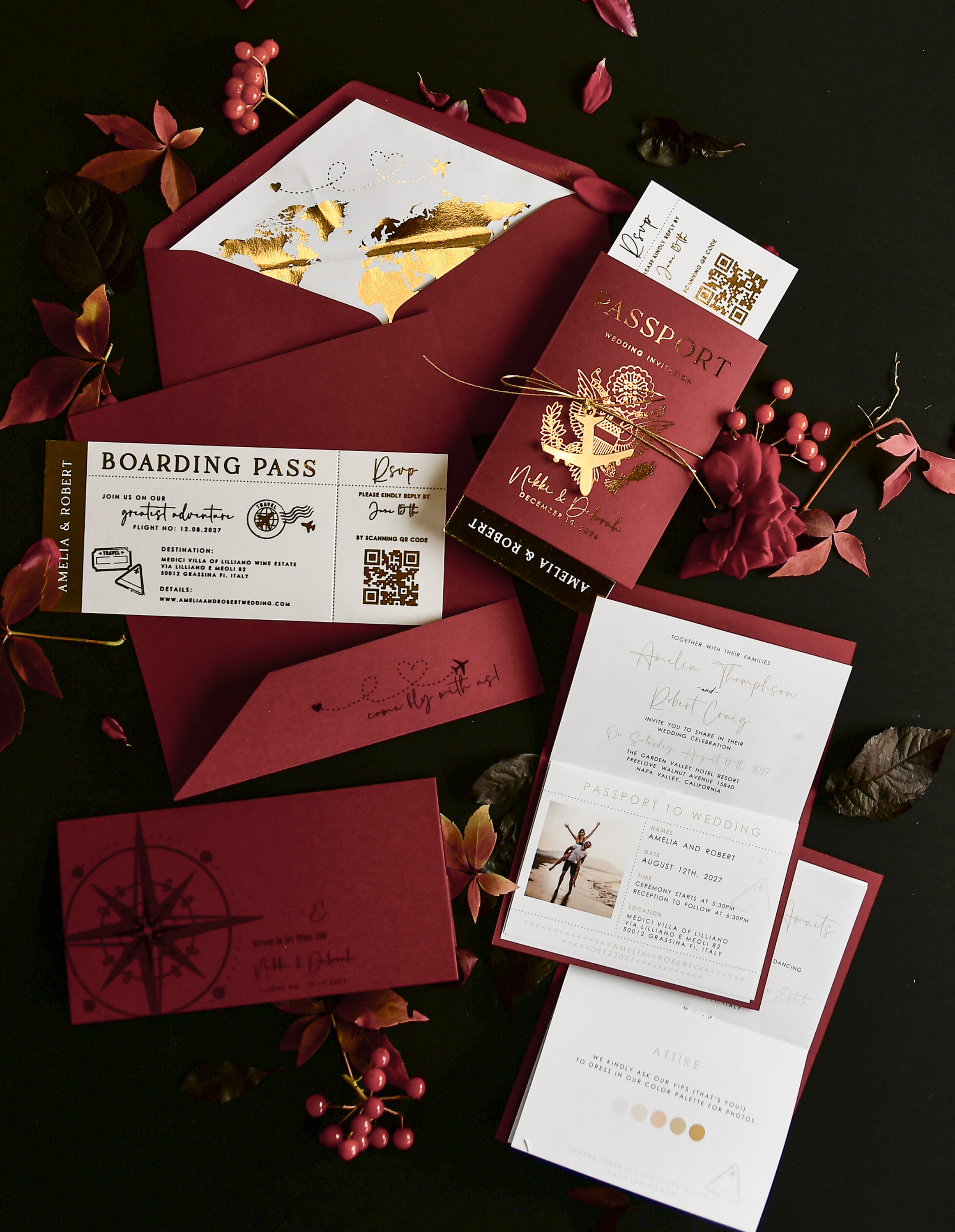
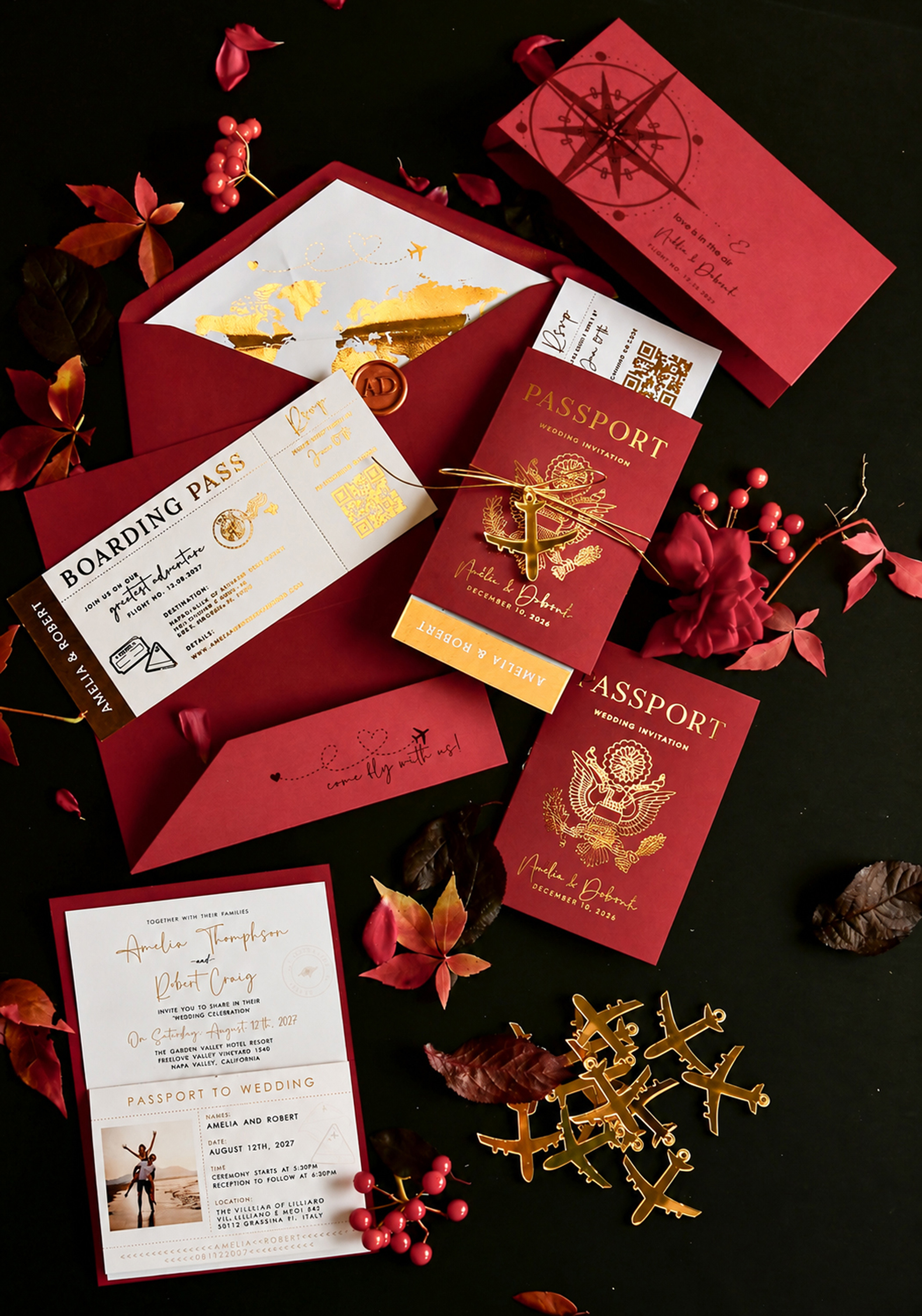
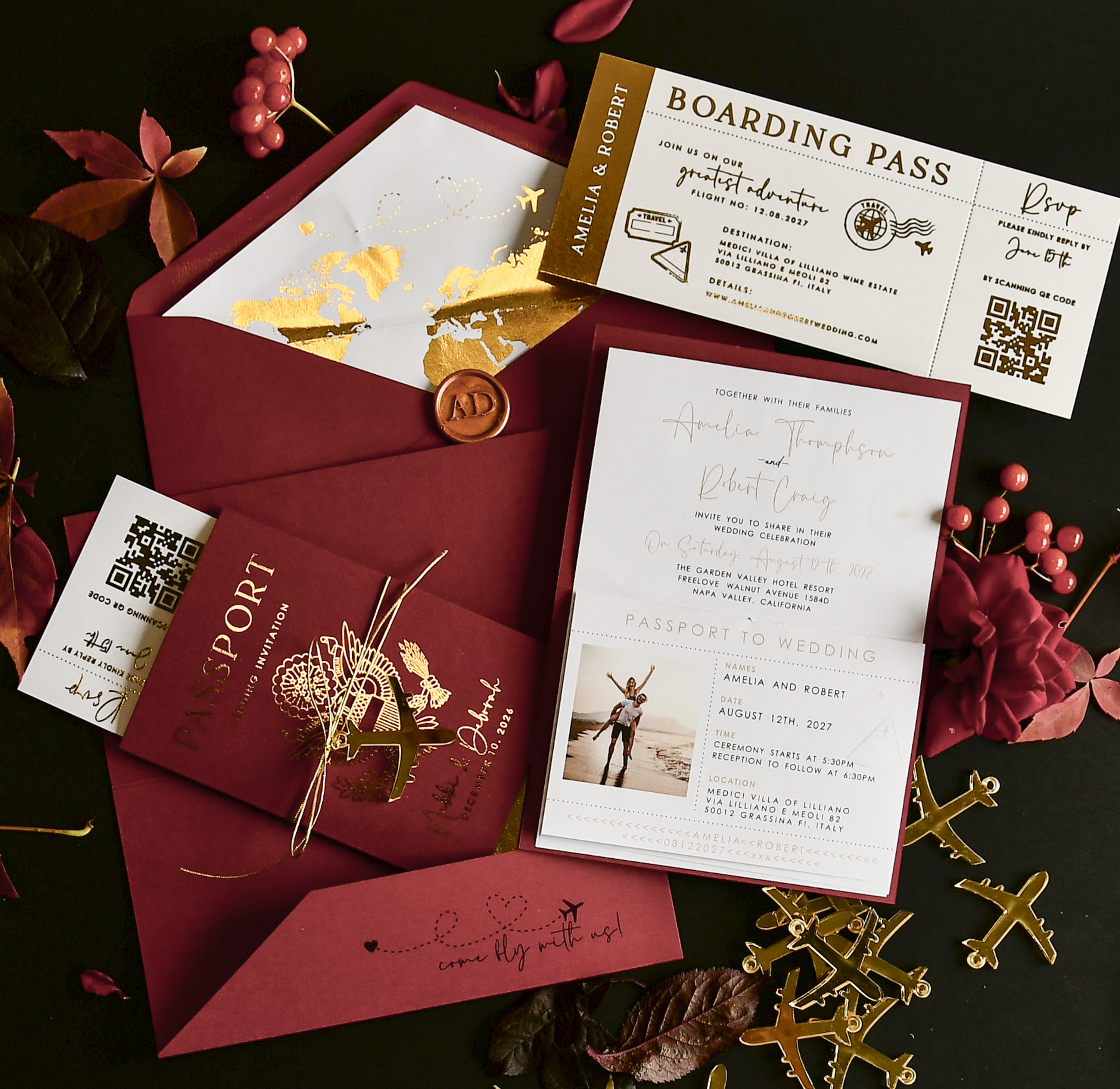
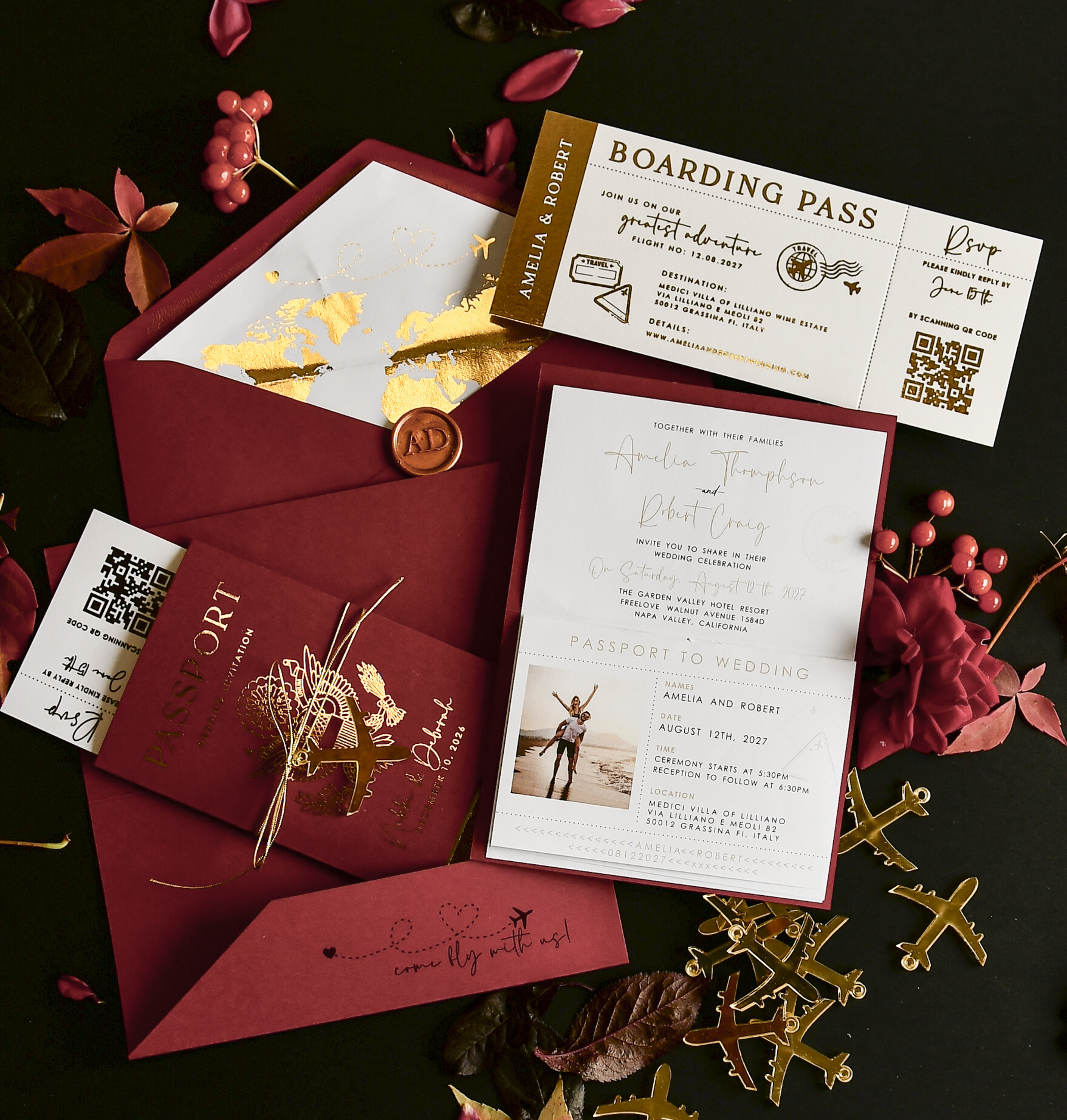
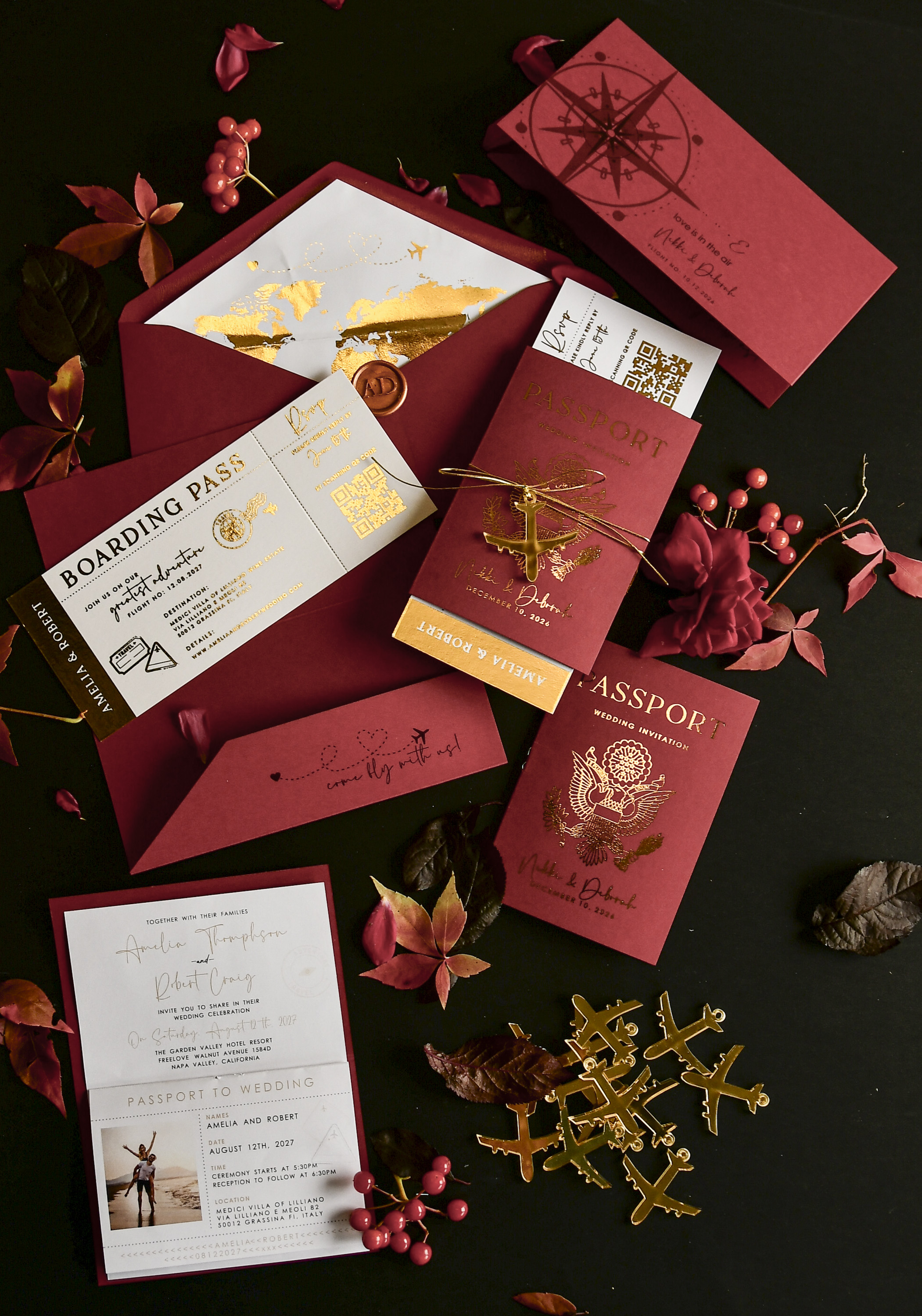
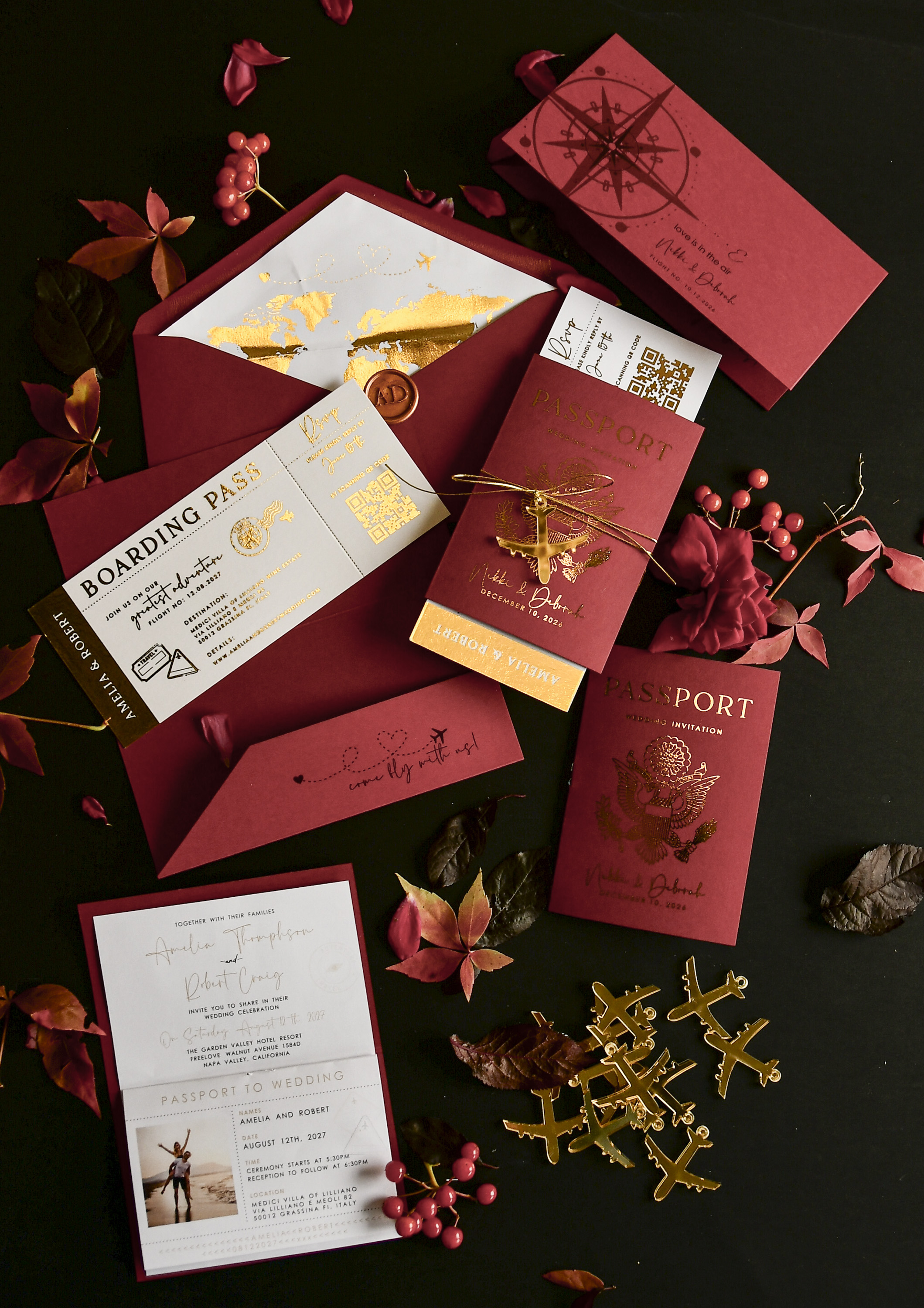
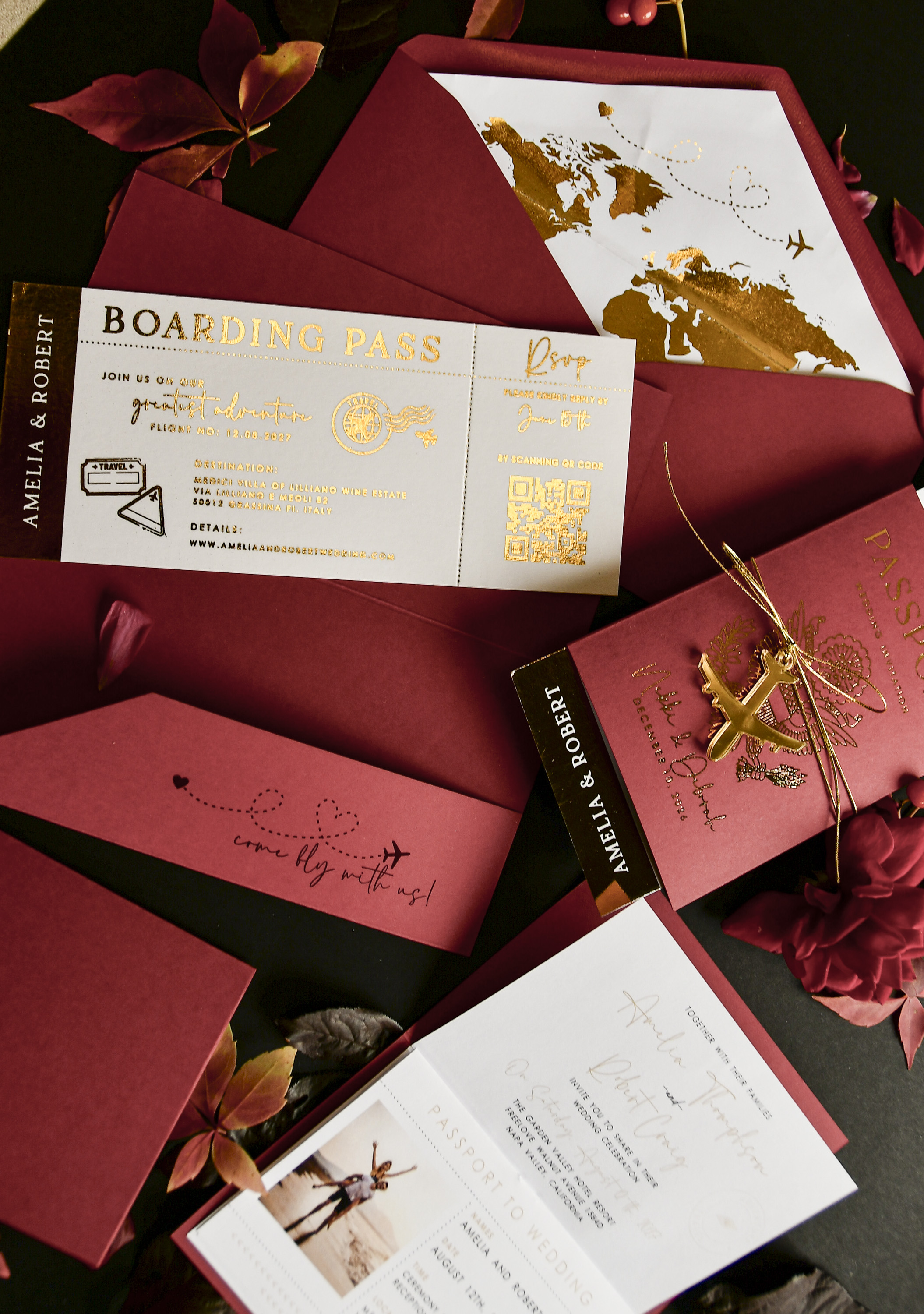
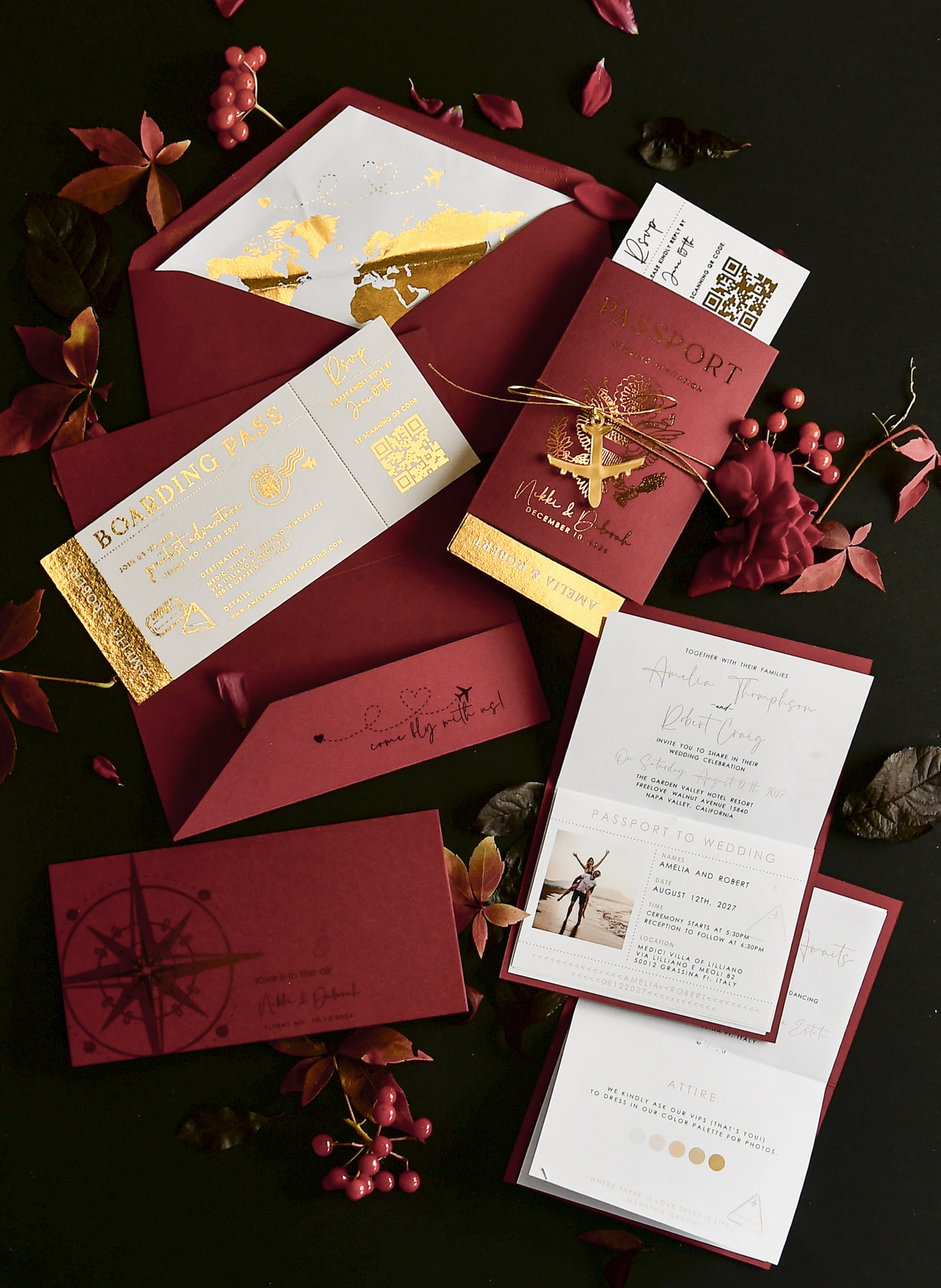
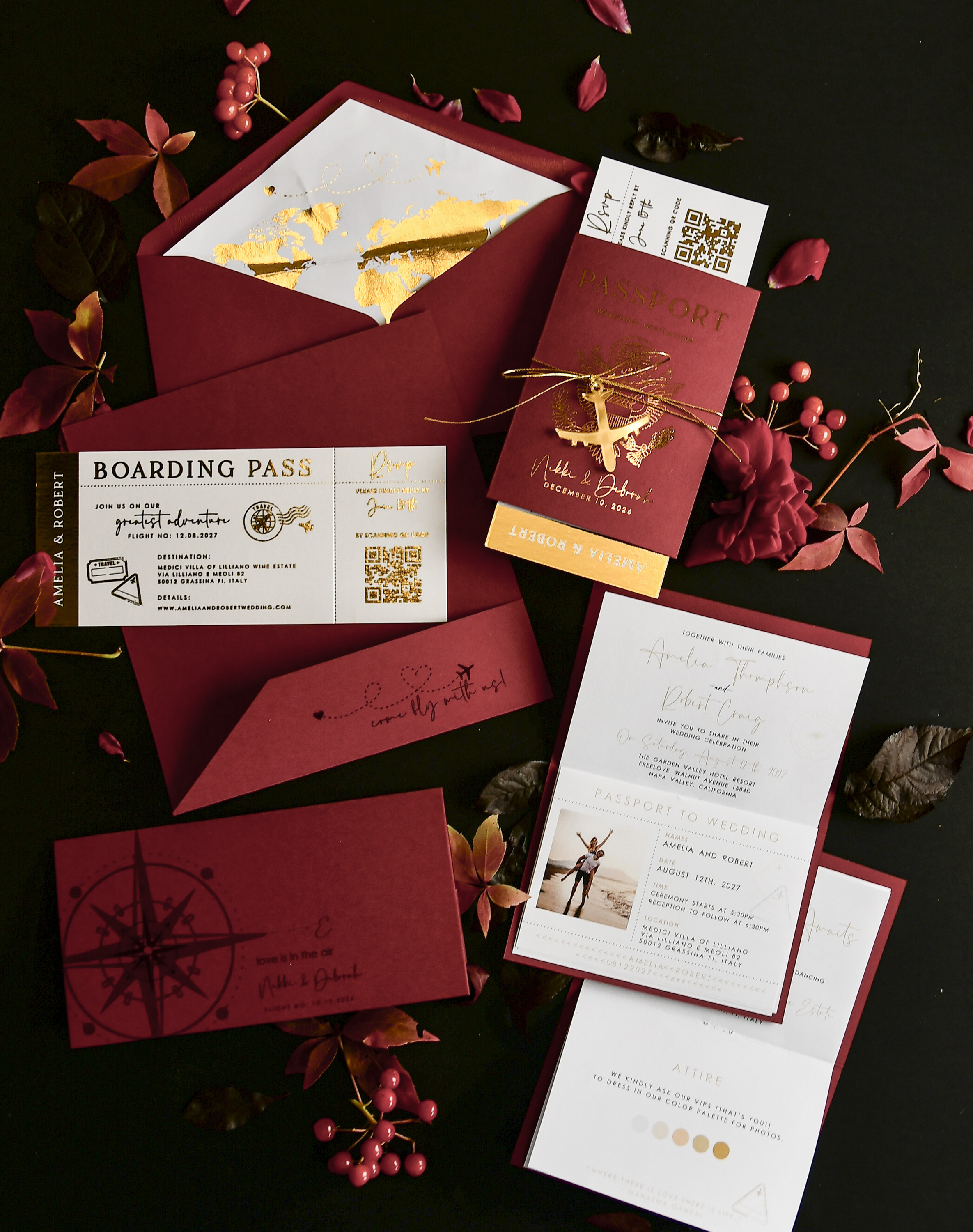
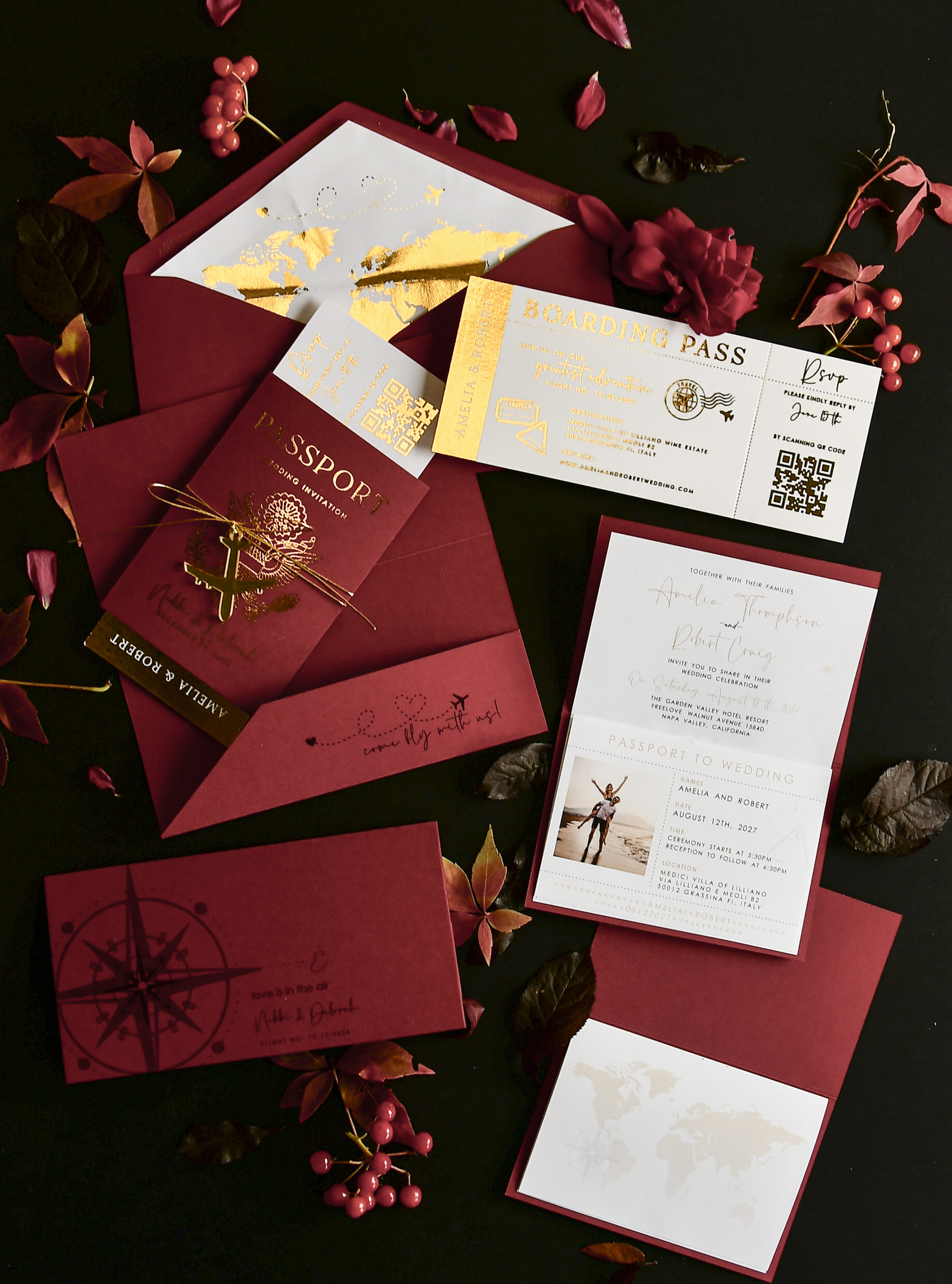
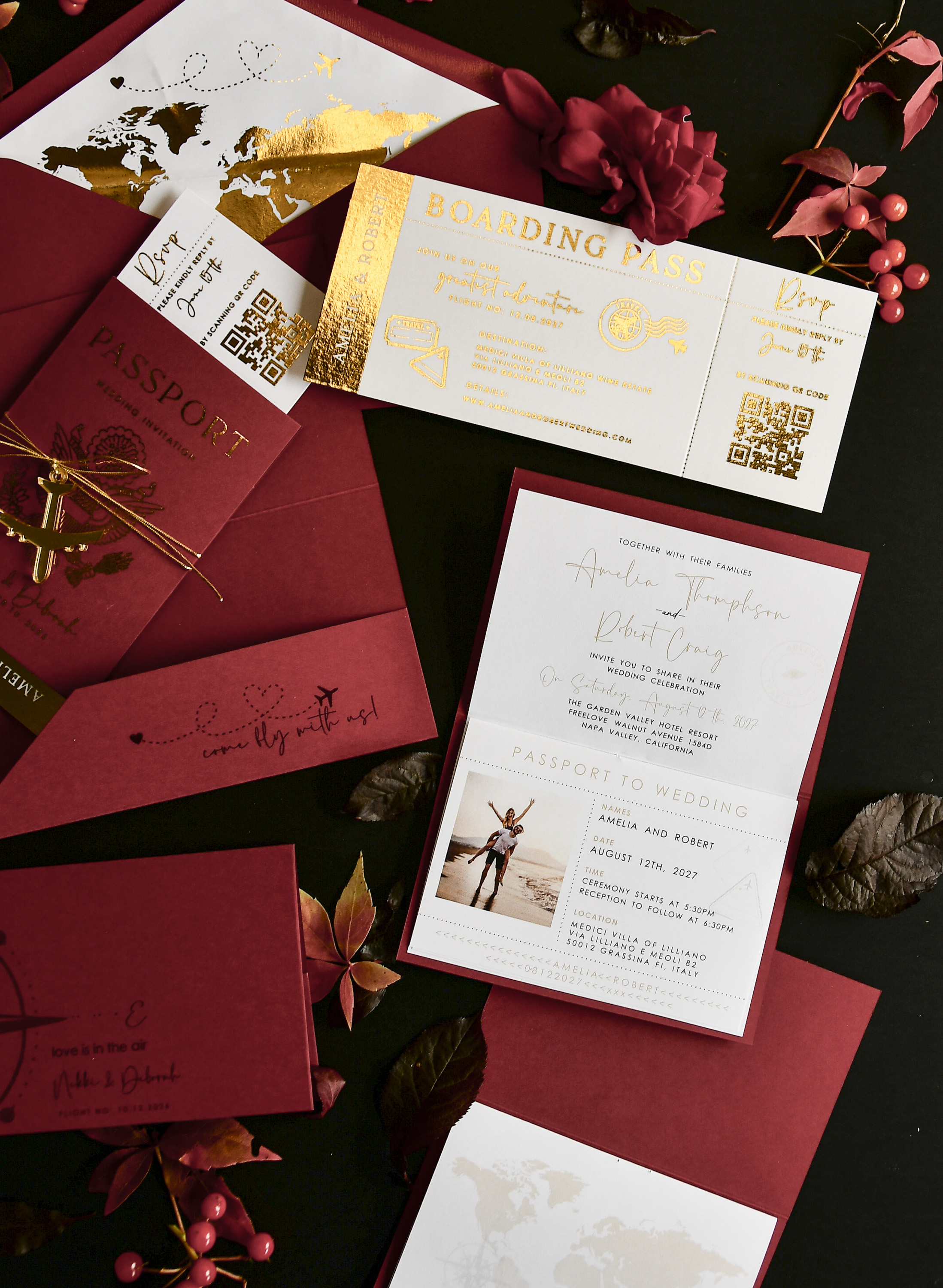
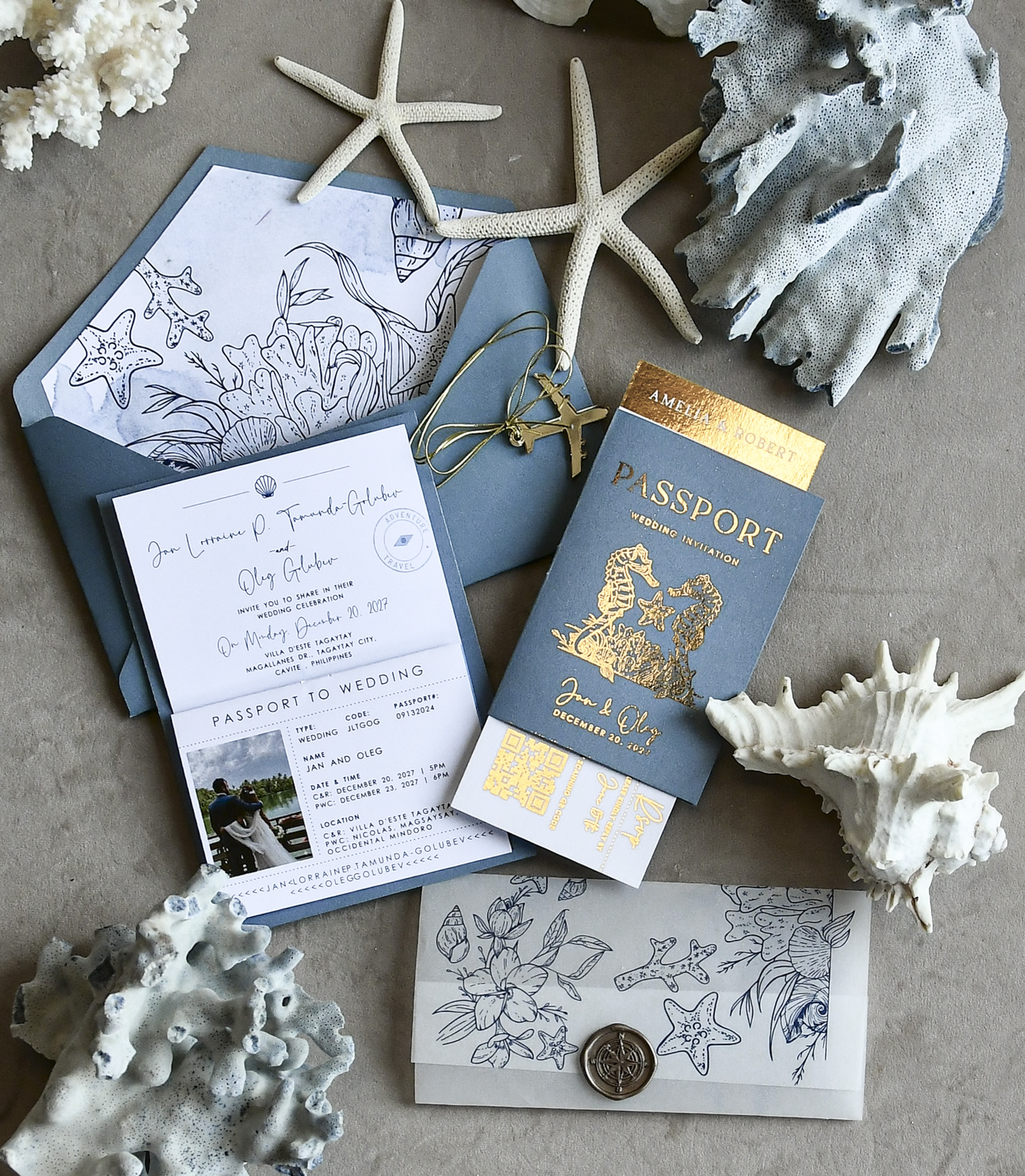
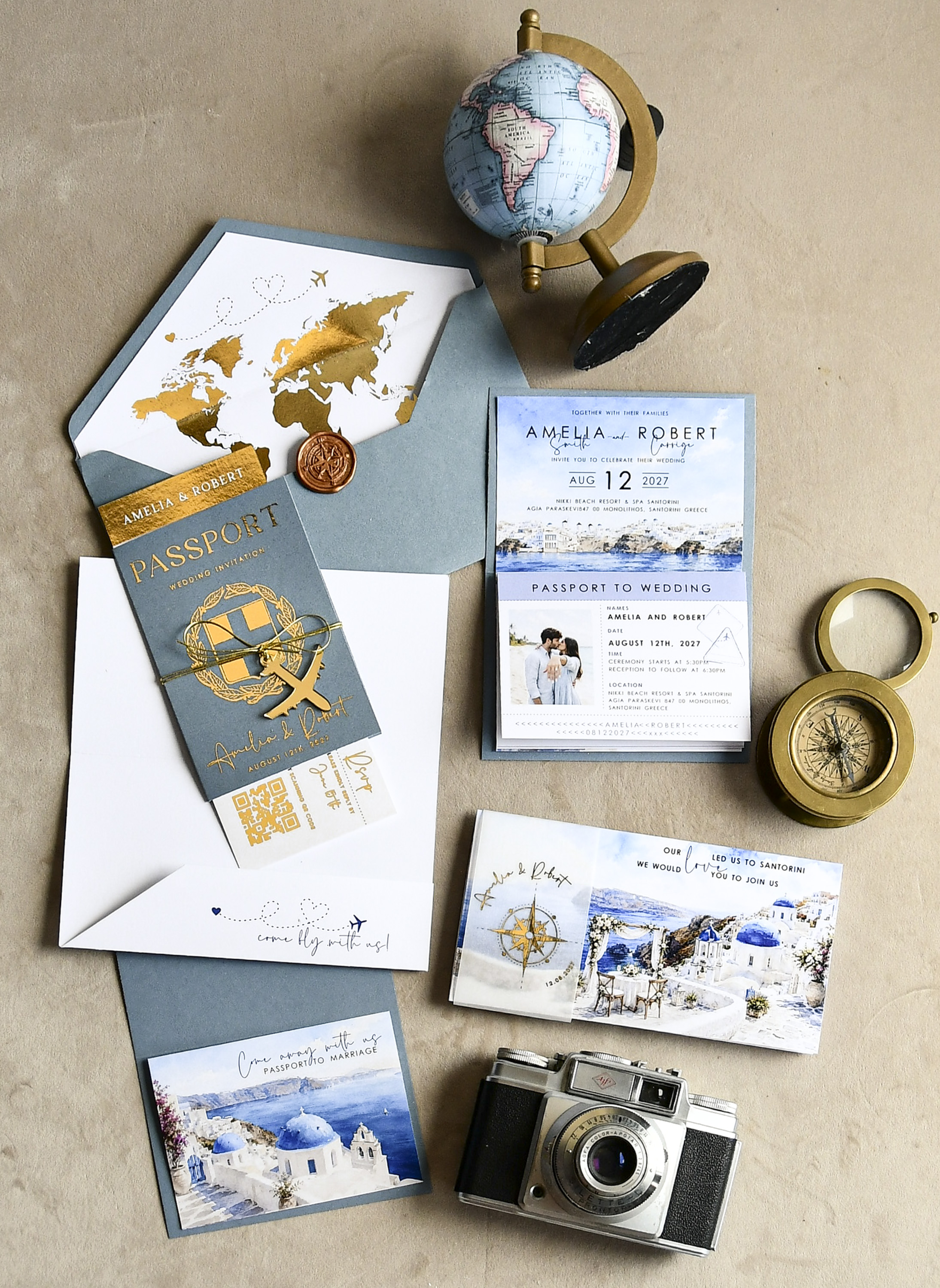
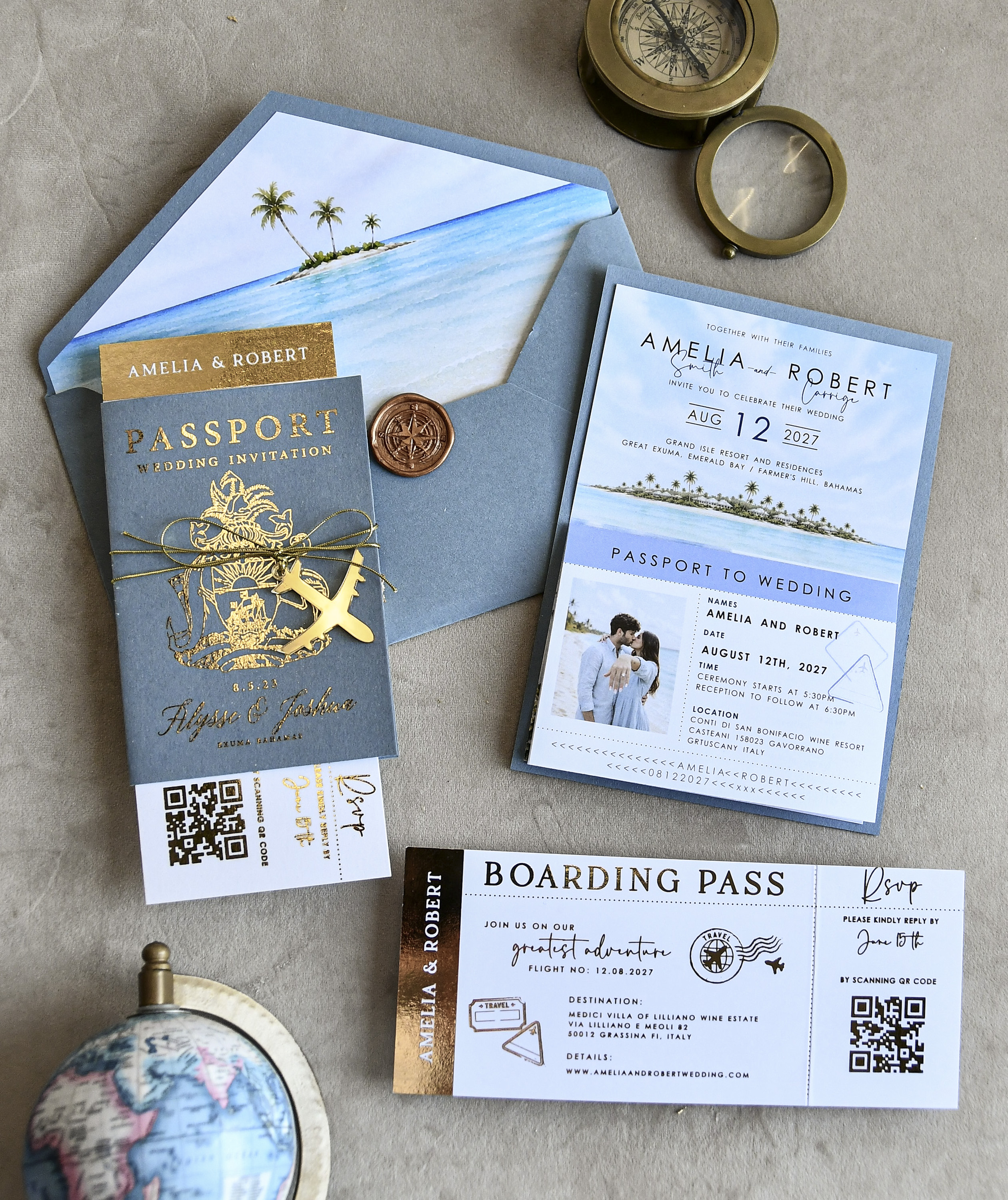
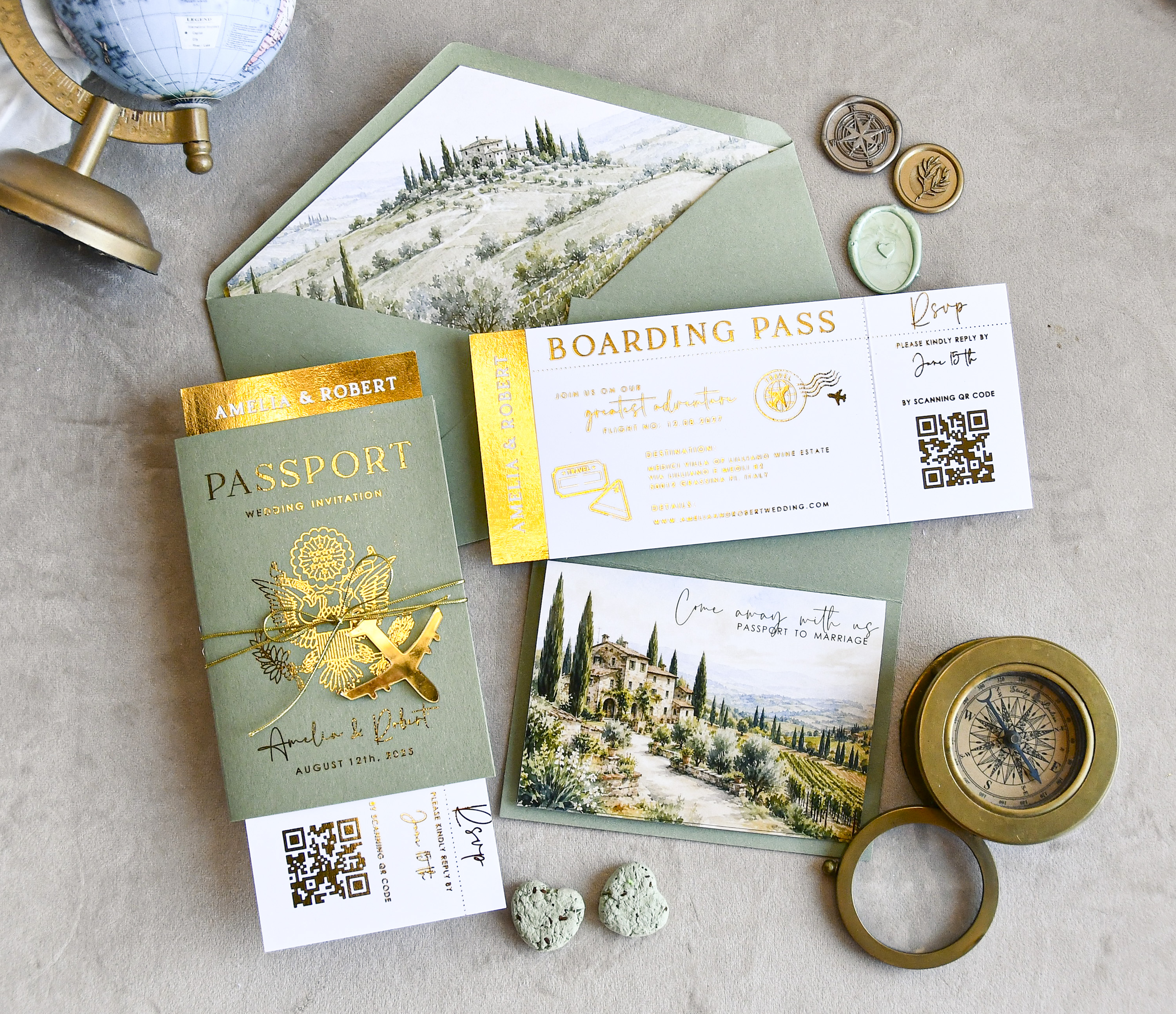
If your wedding has a destination or beach theme, a fun travel-inspired design like the 14/passFG/z passport-style wedding invitation from our Passport to Love collection sets a warm, adventurous tone that feels inclusive right from the moment the envelope is opened. The invite itself becomes a conversation starter, easing any lingering awkwardness before the big day.
Send invitations six to eight weeks before the wedding for local events, or ten to twelve weeks for destination celebrations. If you're worried about seating dynamics, send a brief personal note along with the formal invite — a few handwritten lines go a long way toward making a stepparent feel genuinely welcomed rather than grudgingly included.
When the Answer Is No: How to Decline With Integrity
Sometimes, not inviting a stepparent is the right call — particularly if the relationship is genuinely harmful, very new, or if the stepparent's presence would cause serious distress to others in attendance. If that's your situation:
- Keep your reasoning private. You don't owe anyone a public explanation.
- Let your parent know your decision directly and gently before invitations go out.
- Avoid framing it as a permanent judgment — circumstances and relationships change.
Whatever you decide, make peace with it before the wedding day. The energy you spend second-guessing is better spent enjoying the celebration you've planned.
Frequently Asked Questions
Not at all. An invitation is simply a welcome to witness and celebrate your marriage — it doesn't obligate you to assign a reading, escort role, or place in the processional. Keep roles reserved for people whose participation feels natural and meaningful to you.
Generally yes, especially if your parent's marriage is happy and stable. Excluding a new spouse can put your parent in an awkward position and may feel like a slight against their relationship. A warm invitation signals that you respect your parent's life, even if you're still getting to know their spouse.
Place each parent's group on opposite sides of the venue or at separate tables with people they know and like. Brief your wedding coordinator or a trusted friend so they can help guide guests smoothly. A little advance planning prevents almost all awkward encounters.
Yes — if a stepparent contributed financially, it's both polite and appropriate to include their name in the hosting line. Work with your stationer to word it in a way that feels natural, such as listing all parents and stepparents together.
This is an incredibly difficult situation, and it's okay to feel upset by it. Have a calm, private conversation with that parent and explain that your guest list reflects your own relationships, not a political stance. Most parents ultimately choose to attend — but if they don't, that's a choice they're making, not one you're making for them.
As soon as your guest list is finalized — ideally several months before invitations go out. Early conversations give everyone time to process feelings and make arrangements before the logistics of the wedding day are locked in.
See This Design Up Close




You May Also Like
More Wedding Planning Guides
- → The Complete Plus One Rulebook for Your Wedding Guest List
- → When Family Feels Like Strangers: Navigating Distant Relatives on Your Guest List
- → Adults-Only Wedding: How to Let Guests Know Without the Drama
- → Ordering Wedding Invitations: The Smartest Way to Get Your Numbers Right
- → Adding More Guests to Your Wedding: Who Owes What?
- → Your Pre-Wedding Survival Guide to Family Conflict
- → What to Do When a Guest Shows Up With Someone You Didn't Invite
- → In-Laws Want to Invite Their Friends? Here's How to Handle It
- → Navigating Plus-Ones for Single Guests: A Couples' Guide to Getting It Right
- → Extra Names on Your RSVP Card: How to Respond Without the Stress
- → When Saying No to a Plus One Is Perfectly Okay
- → Should Kids Come to Your Wedding? How to Think It Through and Decide
- → Navigating Divorced Parent Seating at Your Wedding Reception
- → Inviting Your Boss and Coworkers to Your Wedding: What You Actually Need to Know
- → Uninvited Plus-Ones and Tag-Alongs: How to Keep Your Guest List Intact
- → When Family Feuds Threaten Your Wedding Plans: A Practical Peacekeeper's Guide
- → Inviting an Estranged Brother or Sister: Finding Clarity Before You Seal the Envelope
- → Cousins, Invites, and Hard Choices: A Practical Guest List Guide