
Divorced Parents at Your Wedding: Who Sits Where (and How to Keep the Peace)
Planning a wedding when your parents are divorced adds a layer of logistics that no one really warns you about. Where do they sit during the ceremony? What about the reception? Do new partners get front-row seats? Take a breath — this is more common than you think, and there are clear, gracious solutions for every scenario. Here's how to handle divorced parent seating with confidence and kindness.
The Ceremony: Understanding the Traditional Front-Row Setup
Traditionally, the couple's immediate family sits in the first two rows on each side of the aisle. The bride's family sits on the left (from the guests' perspective) and the groom's family on the right — though many modern couples skip this entirely and seat everyone together.
When parents are divorced, the standard approach is:
- Biological mother takes the front row (first pew or row), along with her current spouse or partner if she has one.
- Biological father sits in the second row, also with his partner if applicable.
- If both parents have remarried and get along well, it's perfectly acceptable to seat them both in the front row on the same side — just be thoughtful about spacing.
The most important rule: seat them so they don't have to interact unless they choose to. A row of separation is a small but meaningful buffer.
What If the Relationships Are Complicated?
Not all divorces are equal. Some divorced parents co-parent beautifully; others haven't spoken in years. Here's how to navigate both extremes:
- Amicable divorce: Parents can sit in the same row or even walk down the aisle together if they're comfortable. Many couples love this — it signals unity and puts everyone at ease.
- High-conflict divorce: Keep them on opposite sides of the ceremony space if possible. If your venue doesn't have a traditional aisle layout, assign clearly separated seating sections and brief your ushers so they escort each parent to the correct area without confusion.
- Stepparents involved: Stepparents who raised you or have a close relationship with you absolutely deserve front-row recognition. Those who are newer to the family can sit in the second or third row — no hurt feelings need to result from a thoughtful, quiet decision.
Whatever you decide, communicate it clearly before the wedding day. A quick phone call or note to each parent explaining the seating plan prevents awkward surprises at the altar.
Reception Seating: Tables, Placement, and New Partners
The reception gives you more flexibility than the ceremony. Here are the most common approaches:
- Separate tables near the head table: Give each divorced parent their own table close to the couple. This honors both equally and gives each a natural social anchor — their own friends, siblings, and extended family grouped around them.
- Same table (only if truly amicable): If your parents genuinely get along, seating them together can simplify things. But be honest with yourself — if there's any tension, this can become a distraction on your wedding day.
- Parents at the head table: Some couples include parents at the sweetheart or head table. If you do this, seat them at opposite ends to create natural distance.
New partners and spouses should always be seated with the parent they came with. Separating couples at the reception is considered poor etiquette and will create more tension, not less.
Setting Expectations Early — and Putting It in Writing
One of the kindest things you can do for your parents — and yourself — is to communicate the plan well in advance. Once you've finalized your seating layout, send a brief, warm note to each parent explaining where they'll be seated and why. Keep the tone positive and focus on how excited you are to have them there.
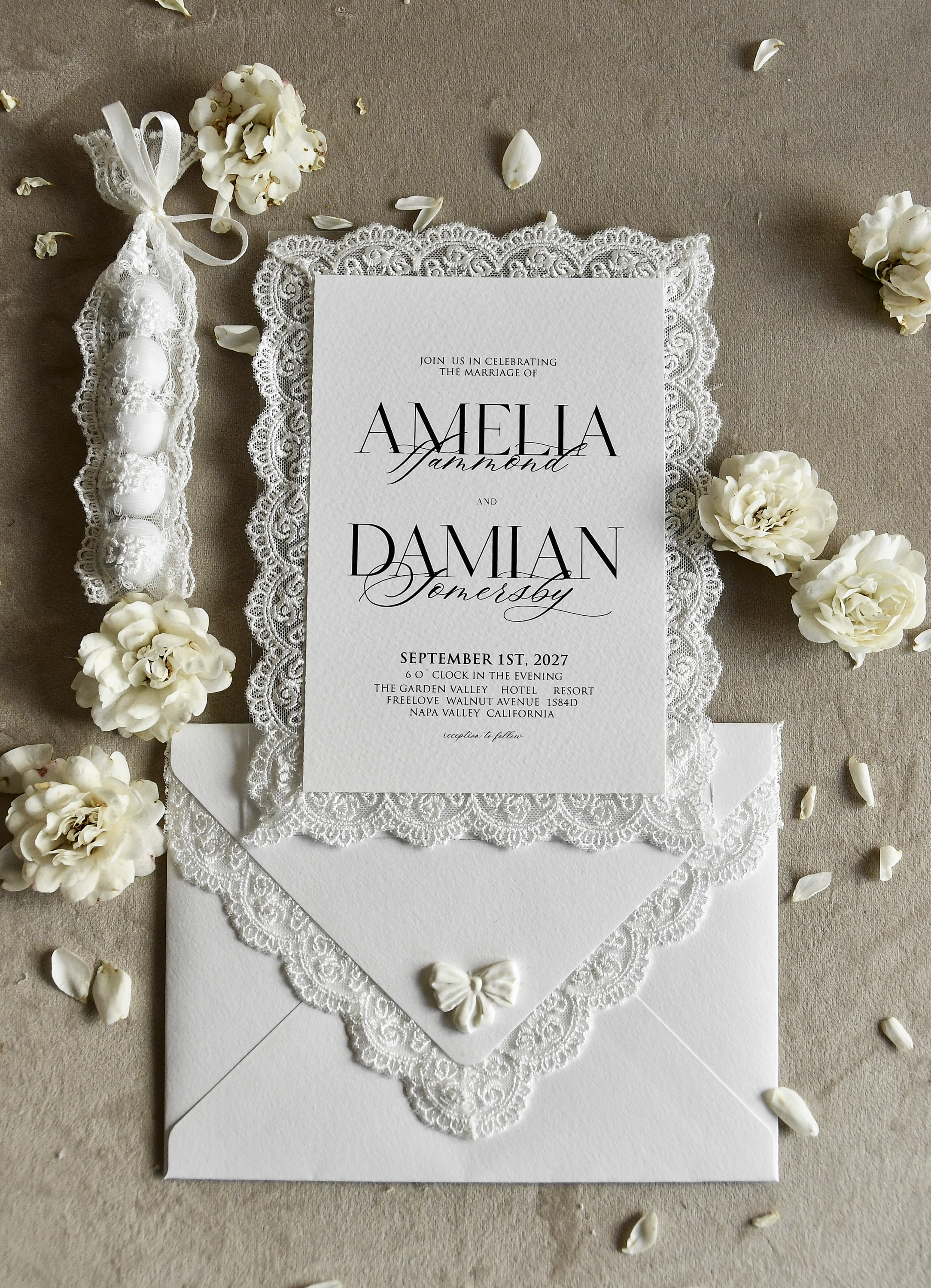
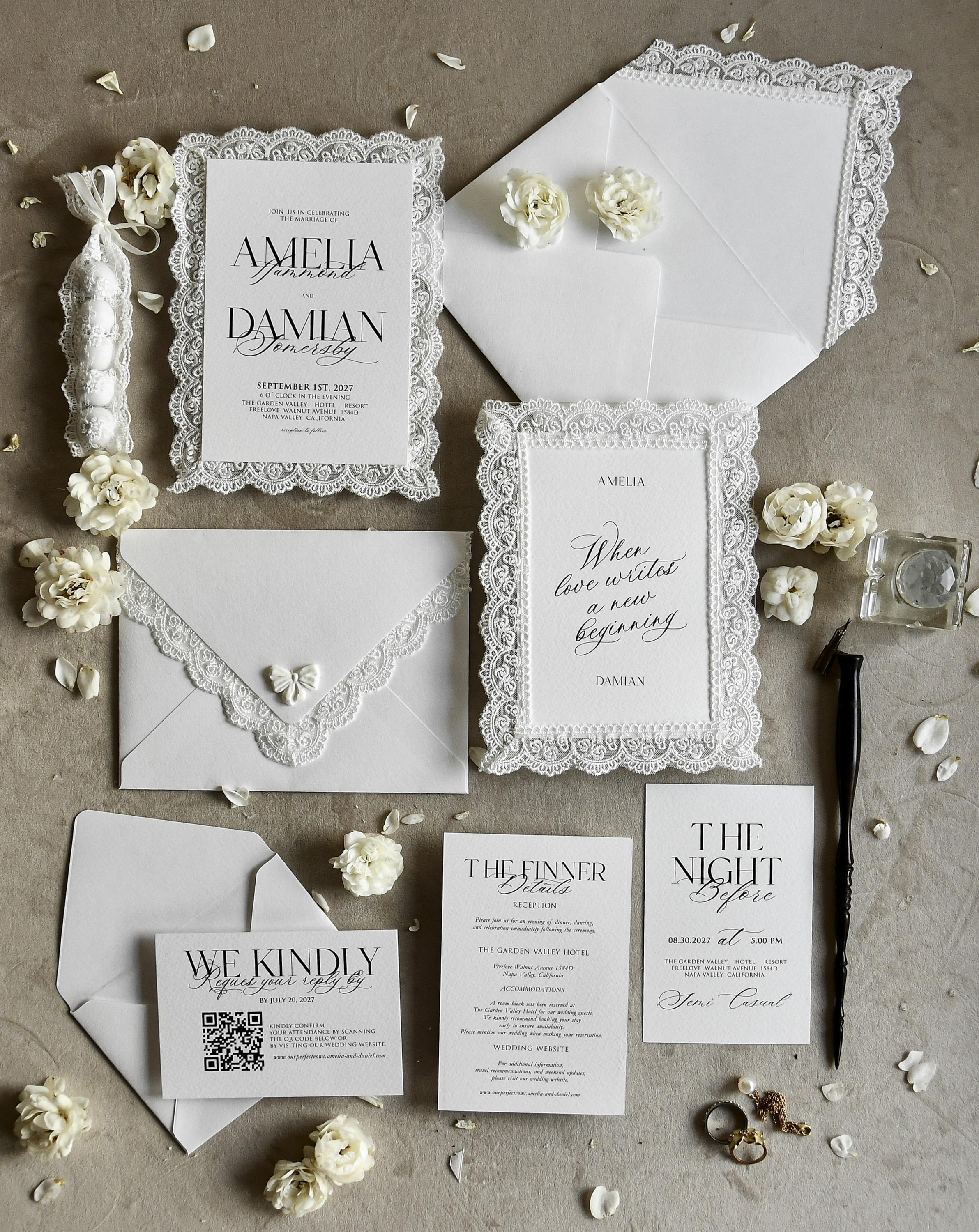
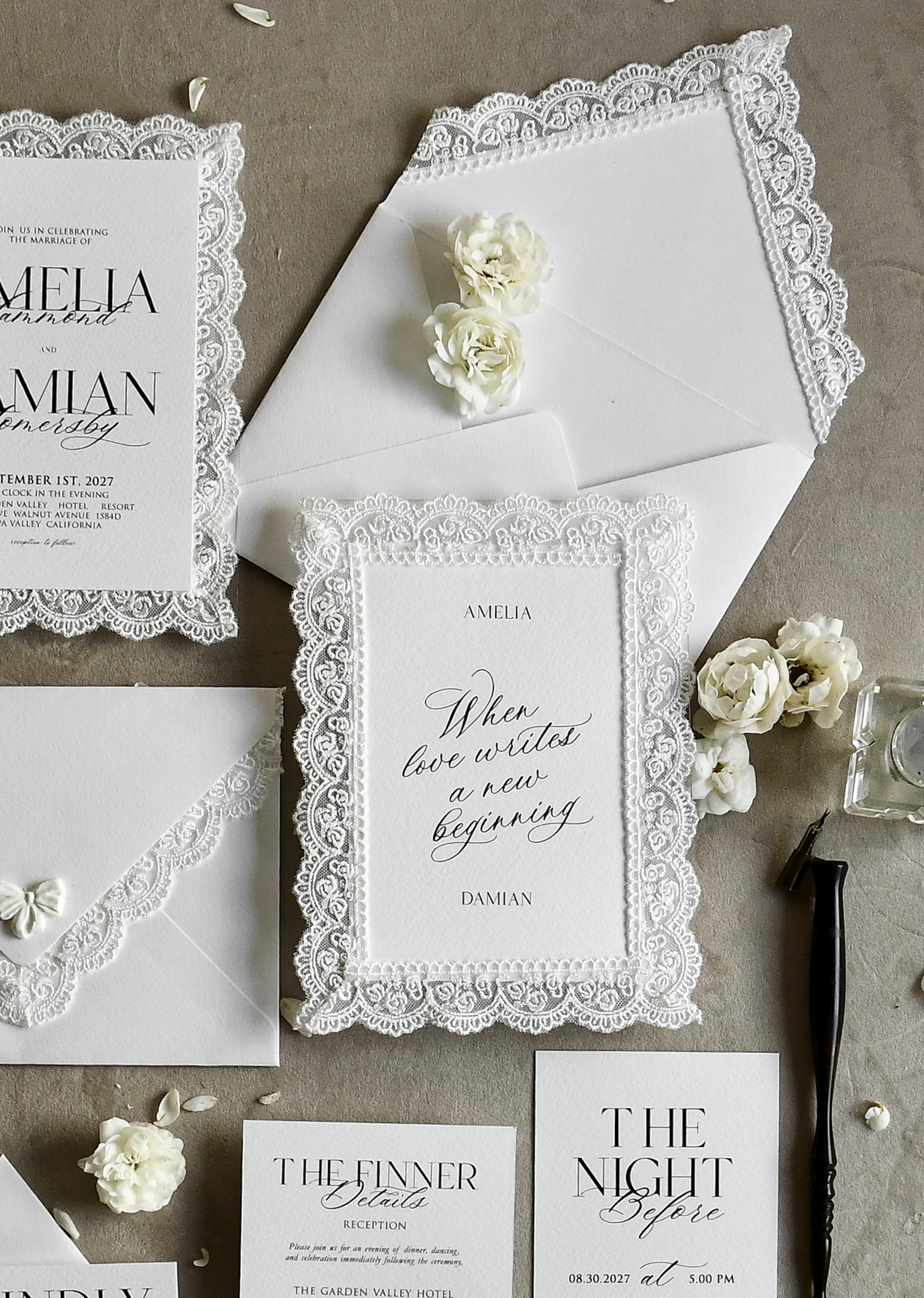
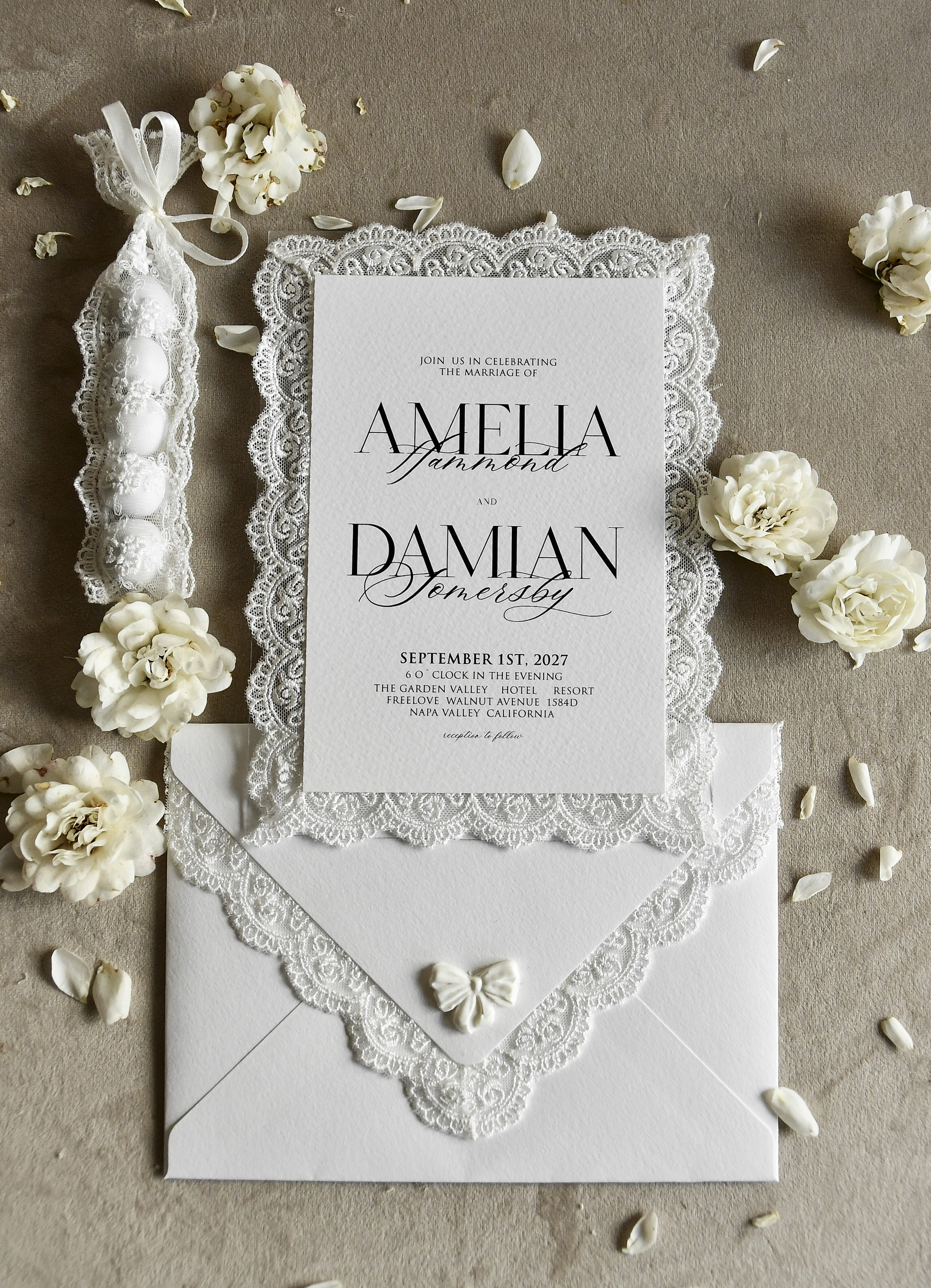
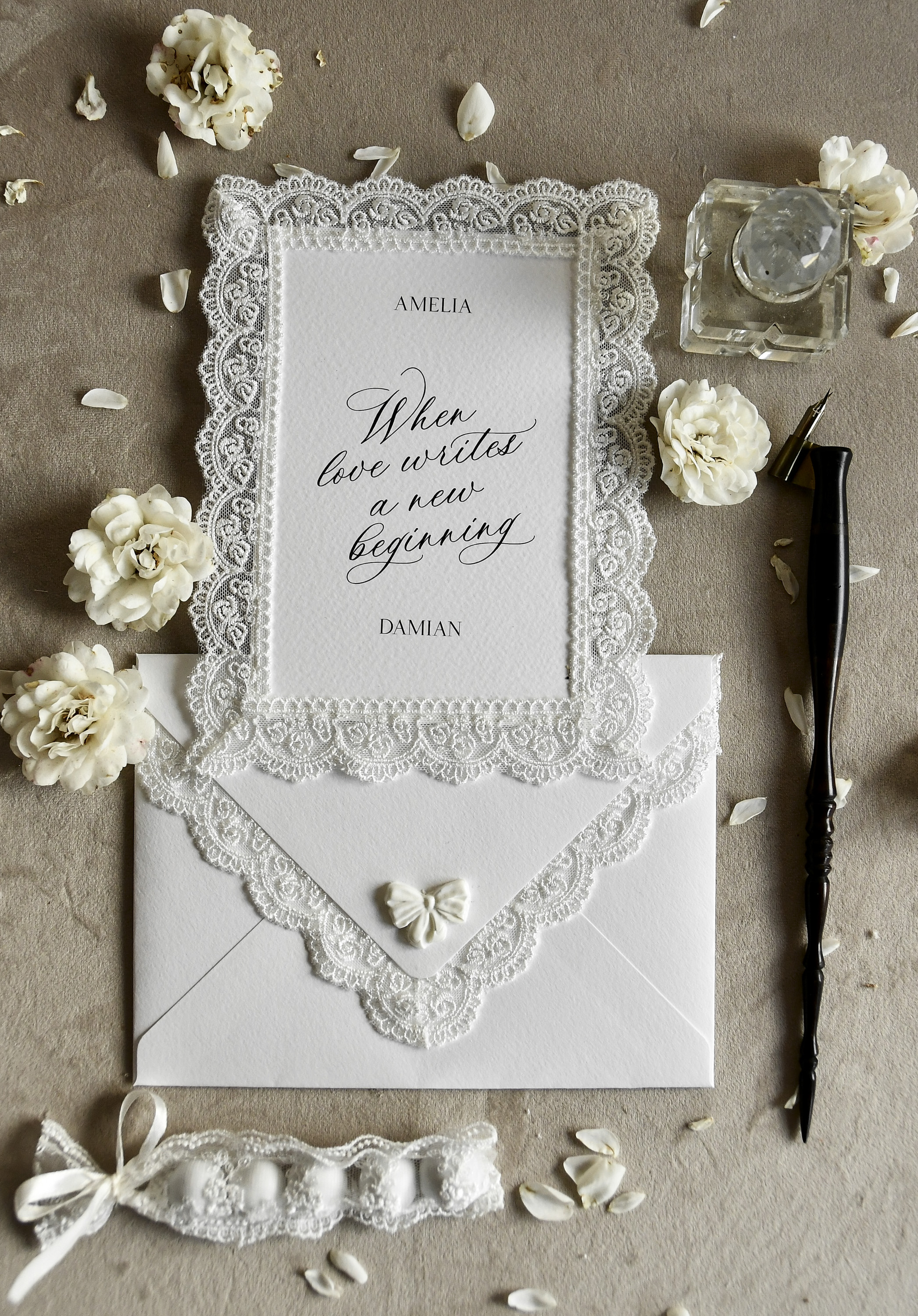
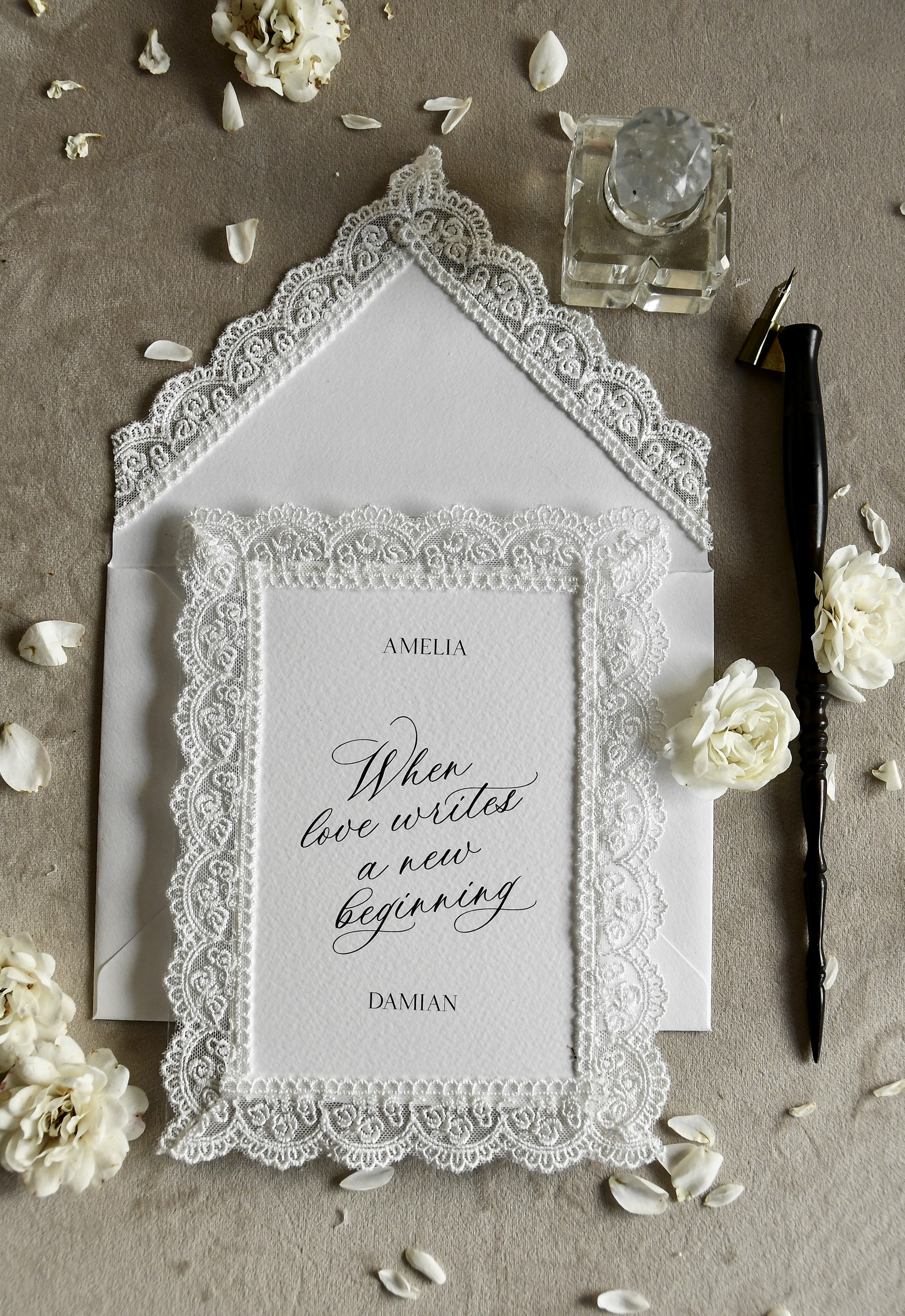
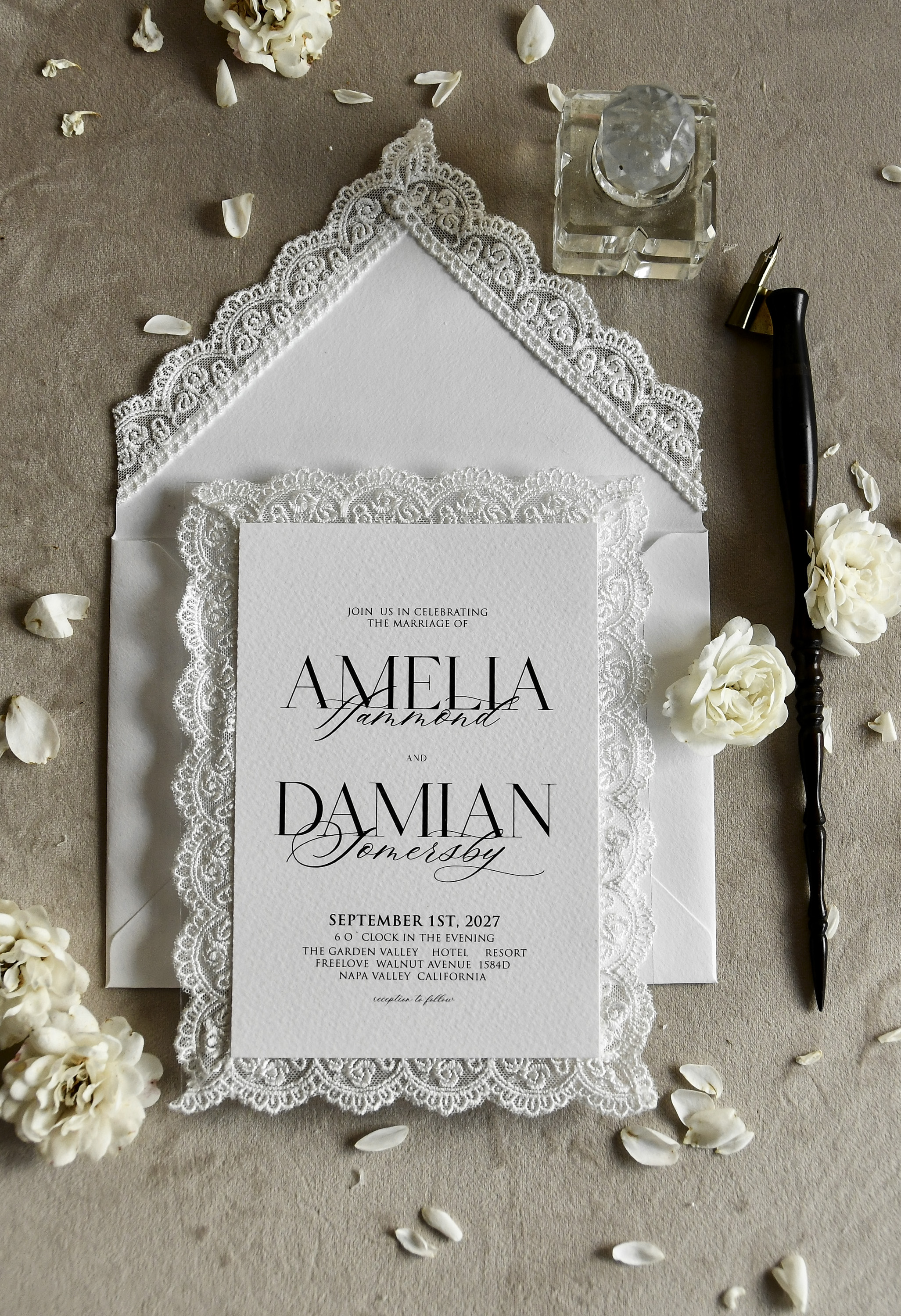
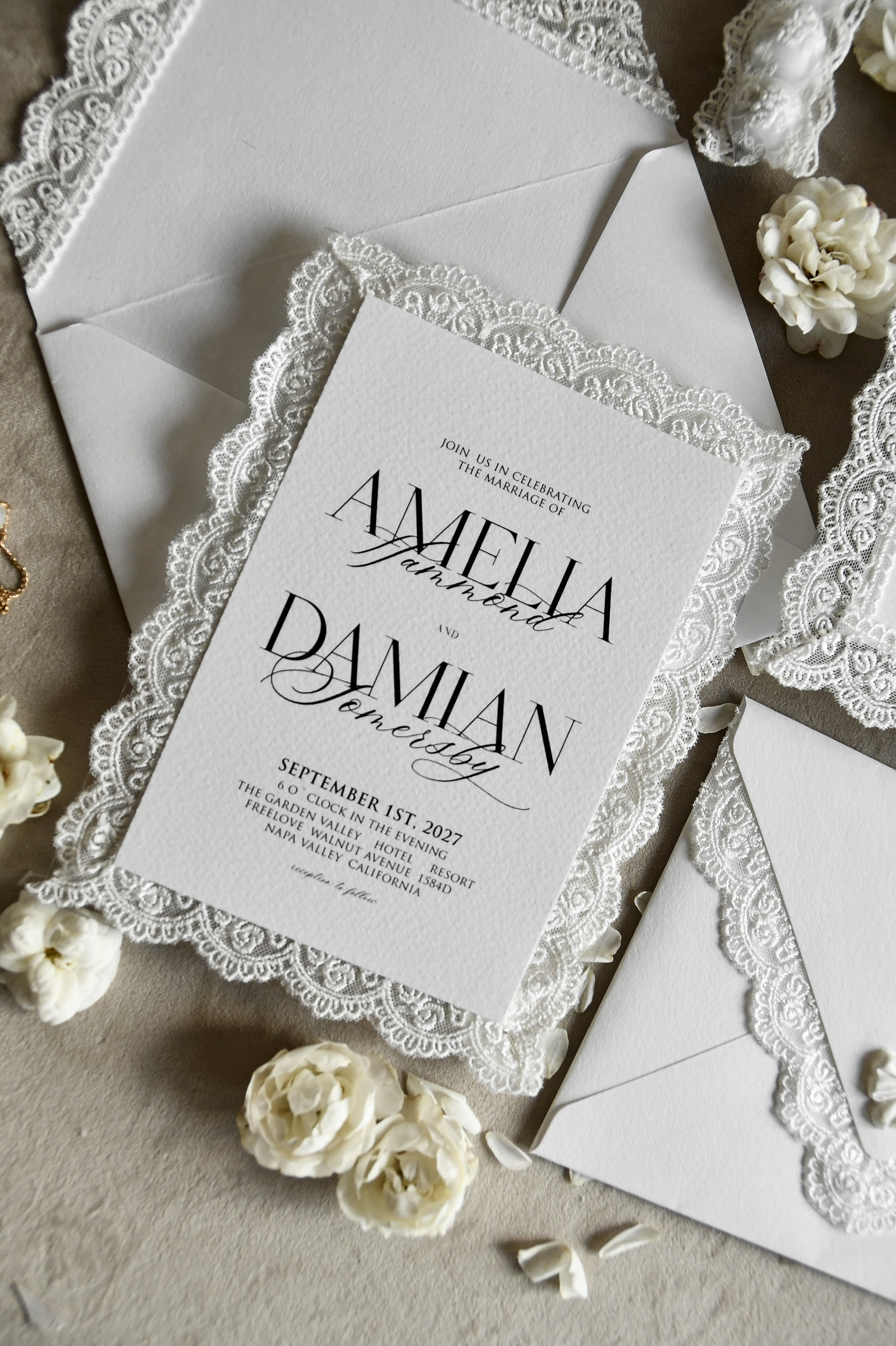
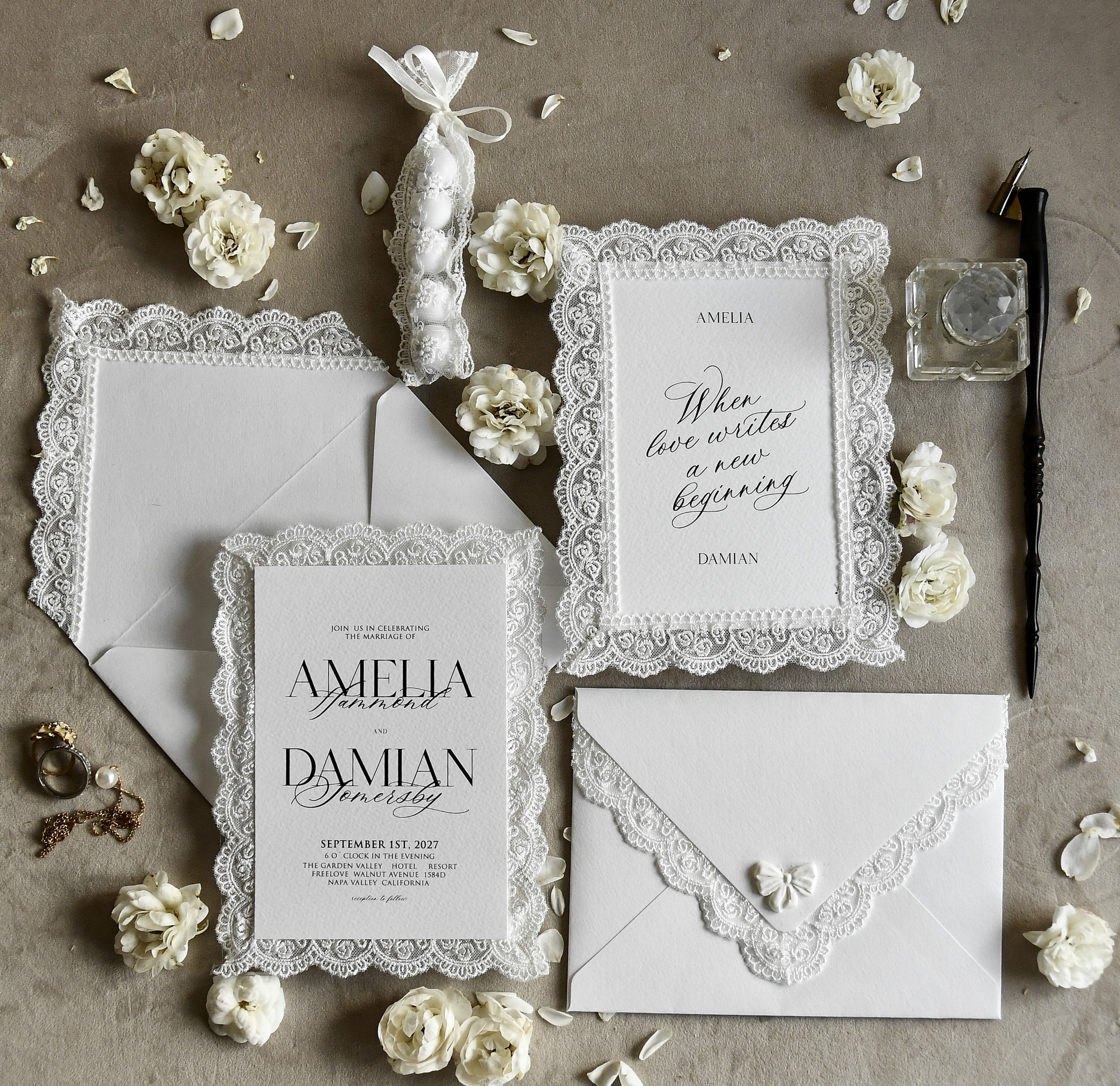
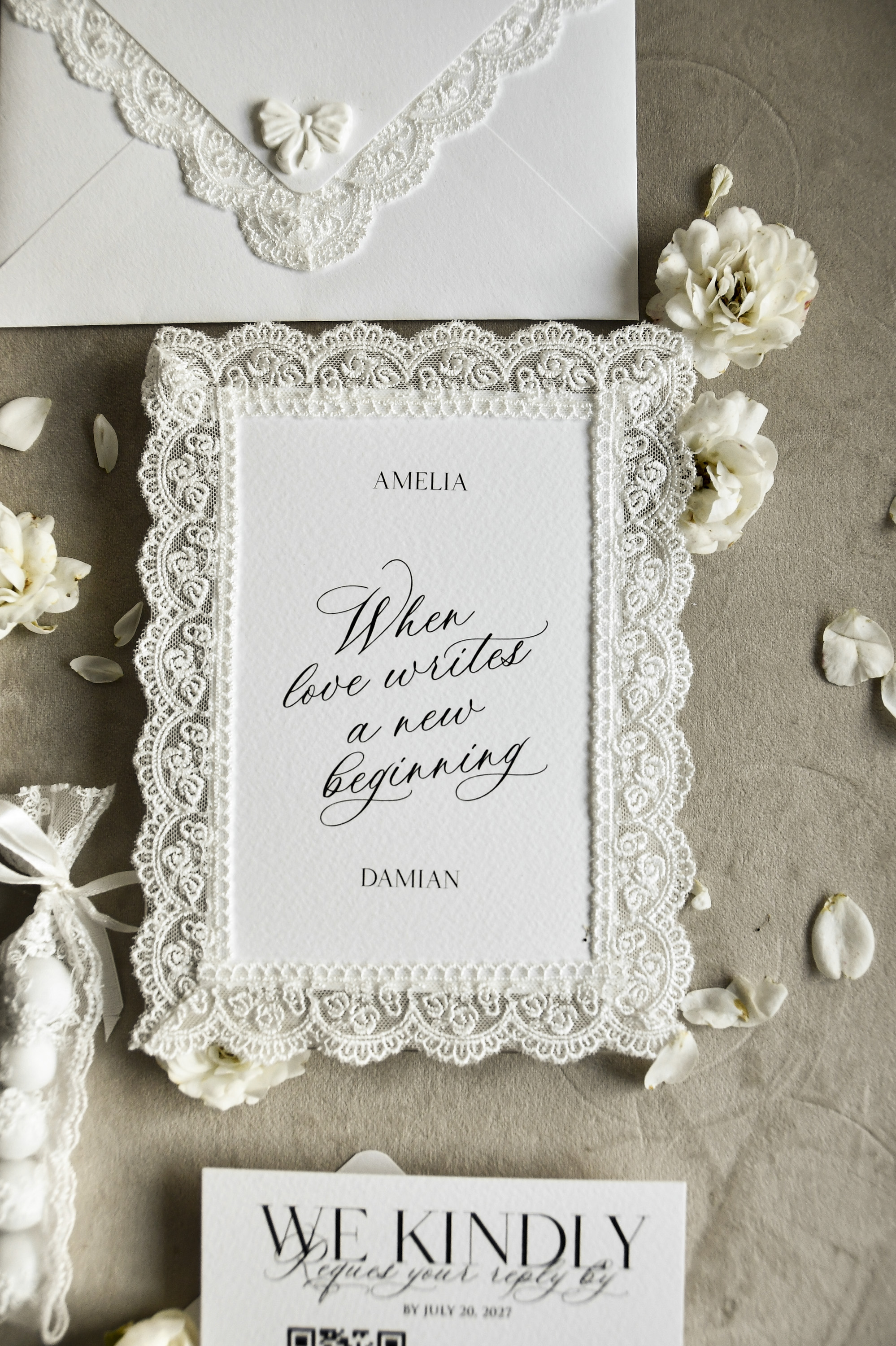
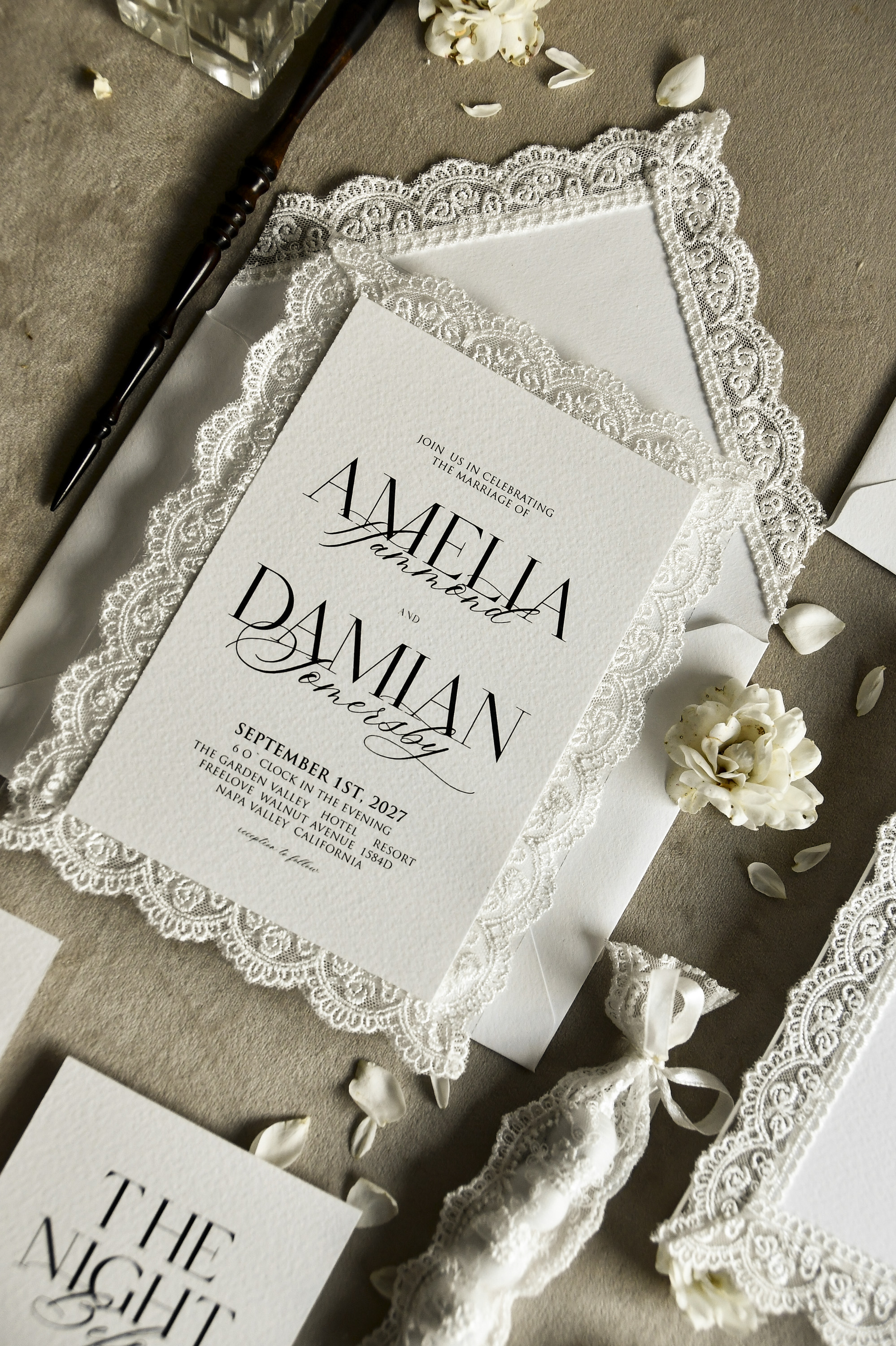
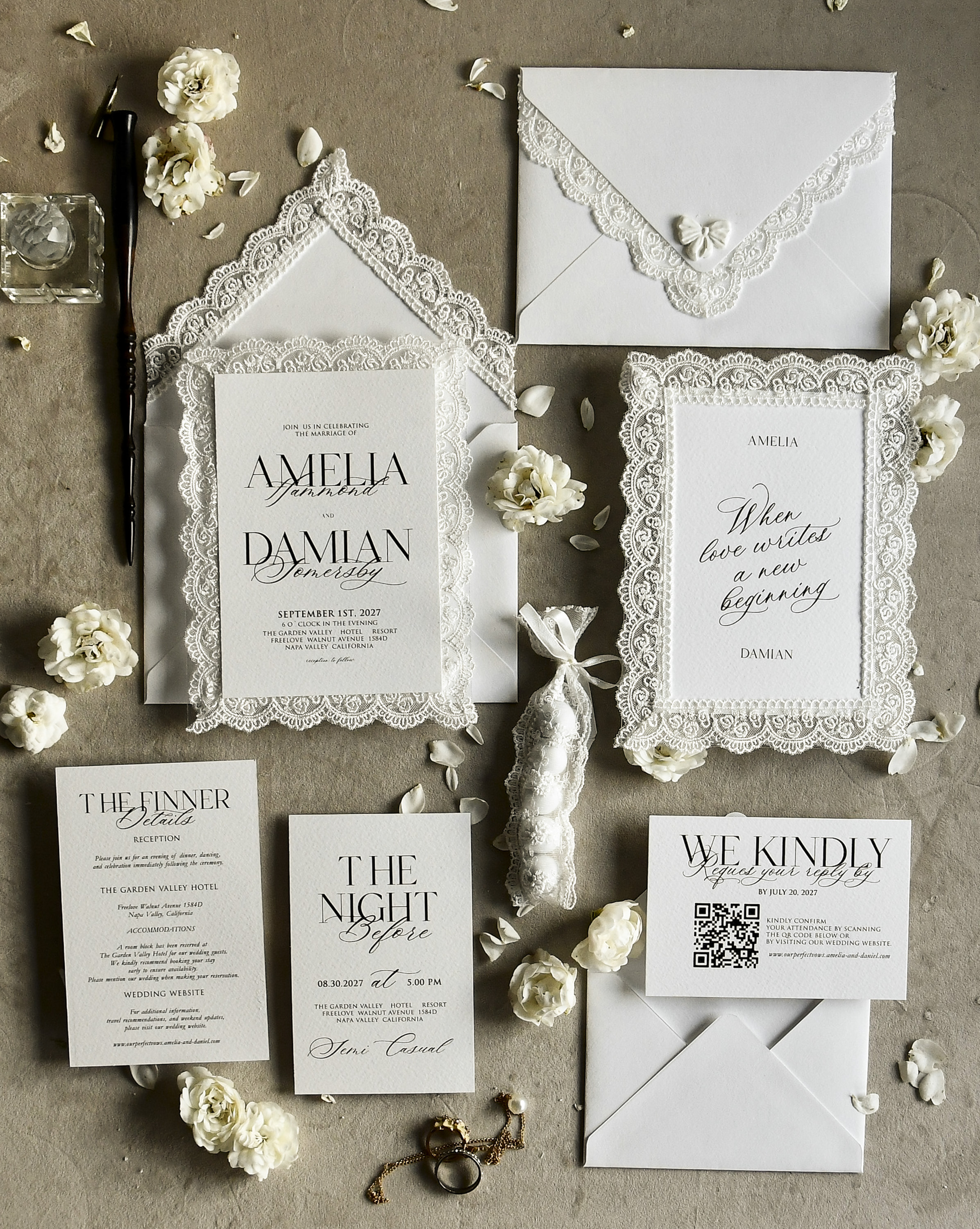
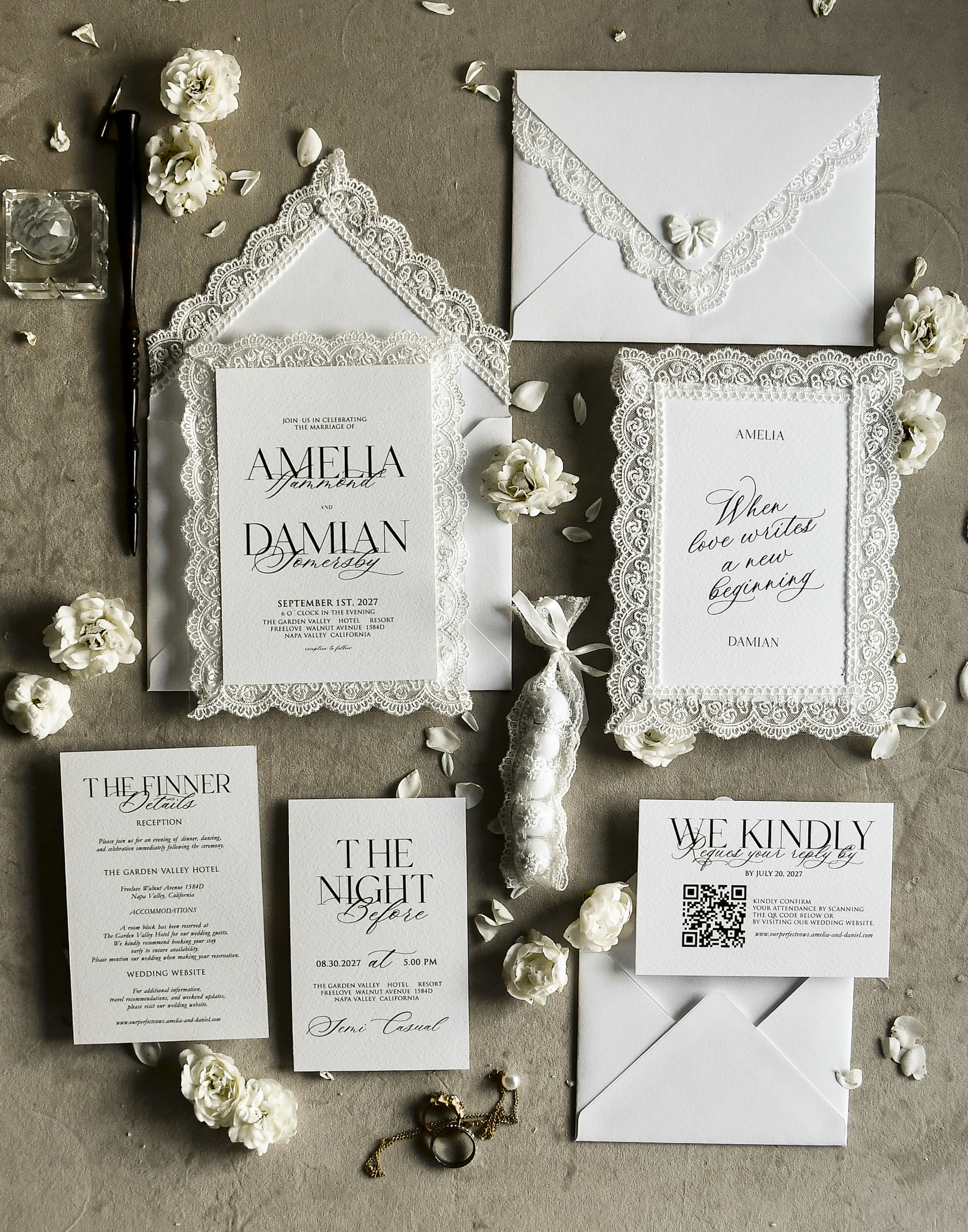
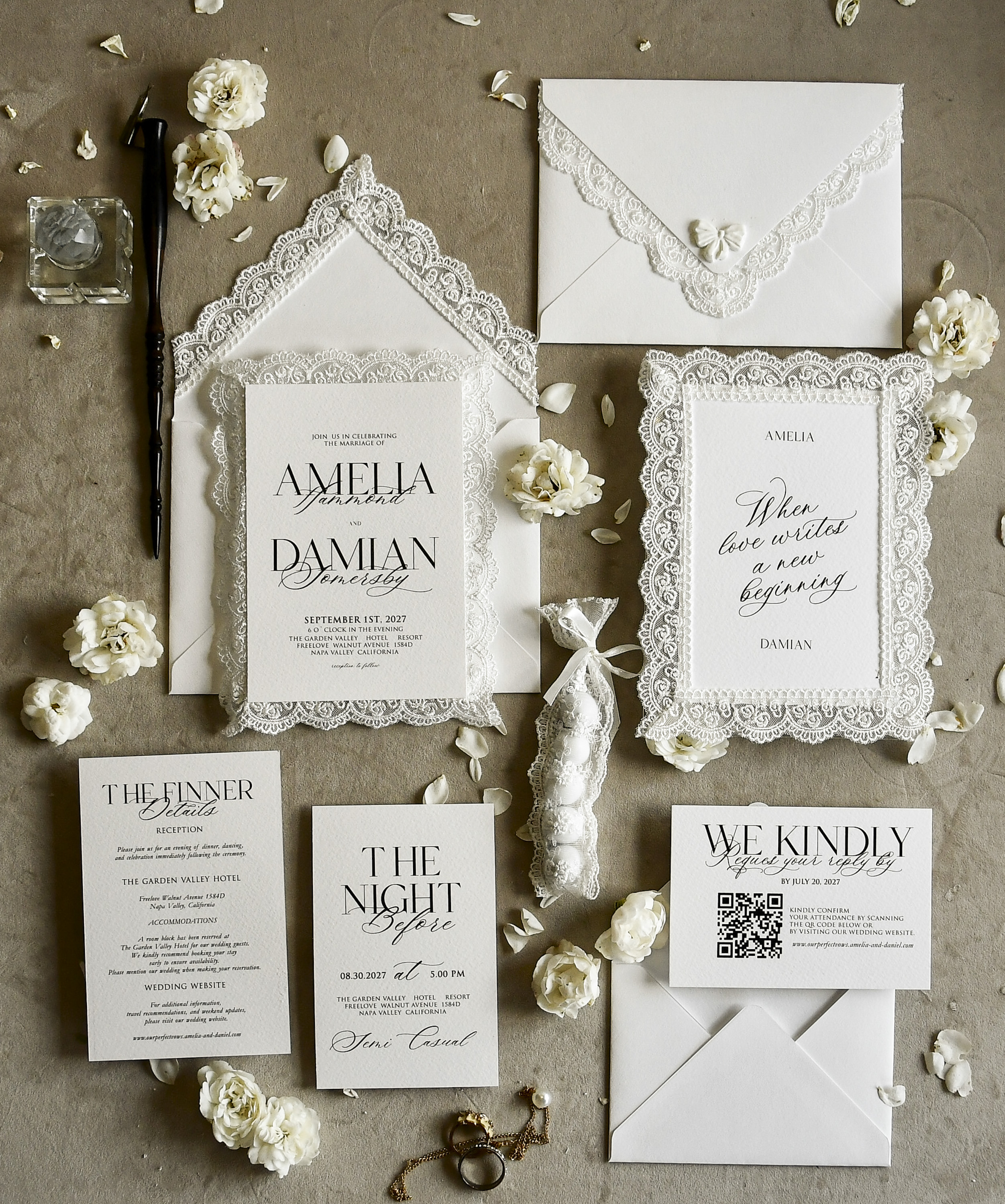
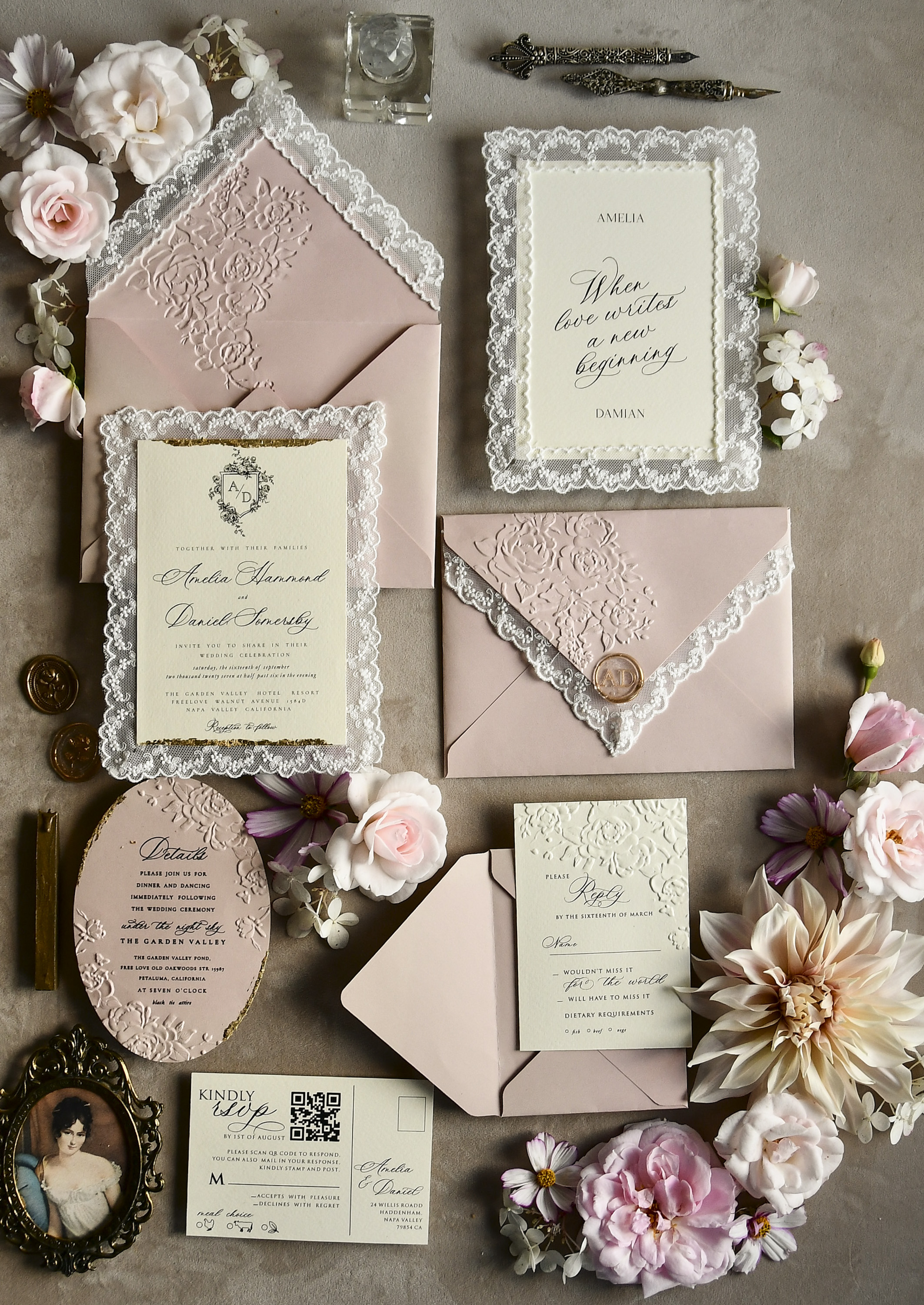
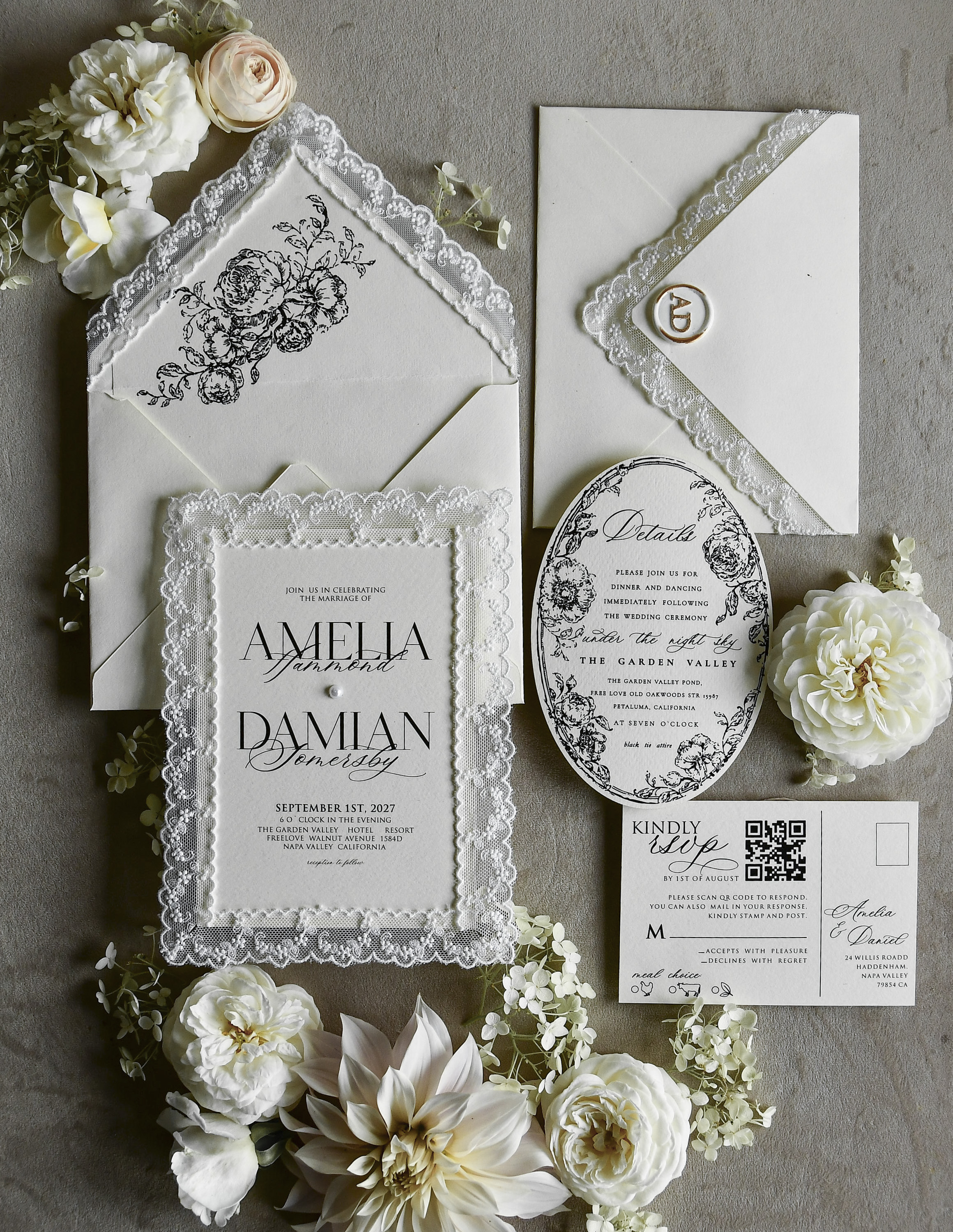
Your wedding invitations set the tone for the whole event, and details matter. If you're working on a classic, elegant look, our 08/laceD/z vintage lace wedding invitations are a beautiful starting point — the refined design signals the thoughtful, gracious event you're creating. When guests (and family) receive a beautifully crafted invitation, it establishes warmth and care from the very first impression.
Beyond the note, consider looping in your wedding coordinator or a trusted usher who can gently guide parents to their seats on the day. Having a point person removes you from any last-minute logistics and lets you focus on getting married.
A Few Final Etiquette Reminders
Before you finalize your plan, keep these principles in mind:
- You are not the mediator. Your job is to make reasonable, fair decisions — not to fix your parents' relationship. Set the plan and hold it.
- Equal visibility matters. Both parents should feel honored and visible. Avoid arrangements where one parent is clearly more prominent than the other unless there's a specific reason (like one parent being estranged).
- Brief your wedding party. Your maid of honor, best man, and ushers should all know the seating plan so they can redirect gracefully if needed.
- Trust your instincts. You know your family better than any etiquette guide does. If a standard rule doesn't fit your situation, adapt it. What matters most is that everyone feels respected and that you enjoy your day.
Frequently Asked Questions
Typically, the parent with the lesser role in the ceremony is seated first, and the parent with the greater role (often the mother of the bride or groom) is seated last, just before the processional begins. If both parents are escorting you down the aisle, they walk together as a trio — this is a beautiful and increasingly common choice.
Yes, if your stepparent played a meaningful role in raising you or has a close relationship with you, front-row seating is entirely appropriate. If the relationship is newer or more distant, the second row is a respectful and perfectly acceptable alternative.
In high-conflict situations, seat them on opposite sides of the ceremony space and at separate tables during the reception. Brief your ushers so they can guide each parent smoothly — this removes the burden from you on your wedding day.
Yes — absolutely. Surprises on the wedding day can escalate quickly. A brief, kind message a few weeks before the wedding explaining the seating arrangement prevents misunderstandings and gives everyone time to adjust their expectations.
Only if they are genuinely on good terms and you're confident it won't create tension. When in doubt, give each parent their own table surrounded by their own guests — this is actually the more comfortable and generous option for everyone involved.
Not significantly. The remarried parent sits with their spouse, and the single parent sits with close family or friends you've grouped with them. Focus on making each parent feel equally celebrated rather than worrying about symmetry.
See This Design Up Close
You May Also Like
More Wedding Planning Guides
- → Navigating Uninvited Guests: What to Say and How to Say It
- → Chasing Down Missing RSVPs: When and How to Follow Up With Guests
- → He Said No to Your Family on the Guest List: How to Handle It
- → The Plus-One Question: How to Handle Teenage Guests at Your Wedding
- → Mom's Must-Invite List vs. Your Vision: How to Find the Middle Ground
- → The Cousin Dilemma: How to Handle Extended Family on Your Guest List
- → RSVP 'Yes' With a No-Show: How to Protect Your Day and Your Relationships
- → Your Ex, Your Wedding, Your Call: A Clear-Headed Guide to the Decision
- → Ditch the Return Envelope? How Online RSVPs Fit Into Modern Wedding Invitations
- → Wedding Invitation Deadlines: What 'Too Late' Actually Means
- → Your Guest List, Your Rules: Navigating the Plus-One Decision
- → Who Really Deserves a Plus One at Your Wedding (and Who Doesn't)
- → Uninvited Plus-Ones and Tag-Alongs: How to Keep Your Guest List Intact
- → When Family Feuds Threaten Your Wedding Plans: A Practical Peacekeeper's Guide
- → Inviting an Estranged Brother or Sister: Finding Clarity Before You Seal the Envelope
- → Cousins, Invites, and Hard Choices: A Practical Guest List Guide