
Adults-Only Wedding: How to Communicate the Message Clearly and Kindly
Choosing an adults-only wedding is a completely valid, increasingly common decision—but telling guests about it can feel like walking a tightrope. Say it too vaguely and parents will assume their kids are welcome. Say it too bluntly and feelings get hurt. The good news: with the right timing, clear wording, and a warm tone, you can communicate the policy gracefully and keep your relationships intact.
Start with the Invitation Addressing
The single most effective way to signal an adults-only event is through how you address your envelopes and inner envelopes. List only the names of the adults who are invited—never write "and family" or "and guests" unless you mean it. For example:
- Outer envelope: Mr. and Mrs. Daniel Reyes
- Inner envelope: Daniel and Sofia
When parents see only their own names on both envelopes, the message is clear before they even open the card. This is traditional etiquette doing the heavy lifting for you, so lean on it. If you're skipping inner envelopes, make sure the outer addressing is precise—no shortcuts like "The Reyes Family."
Add a Line on Your Wedding Website
Your wedding website is the perfect low-pressure place to spell out the policy in plain language. Dedicate a short paragraph to it under your FAQ or Accommodations section. Keep the tone warm and practical. Here's a sample:
"We've decided to host an adults-only celebration. We love your little ones, but we hope this gives you a fun night out! If you need help finding childcare, please reach out and we'll do our best to point you in the right direction."
Offering to help with childcare resources—local sitter agencies, hotel babysitting services, or even a group nanny arrangement nearby—shows you've thought about the inconvenience and genuinely care about your guests' comfort.
When and How to Use Your Invitations and Day-Of Stationery
While the invitation envelope addressing does the main work, you can reinforce the message subtly on enclosure cards. A details card or accommodations card can include a brief, friendly note: "This is an adults-only event (18+). We appreciate your understanding." Keep it short—one sentence is enough.
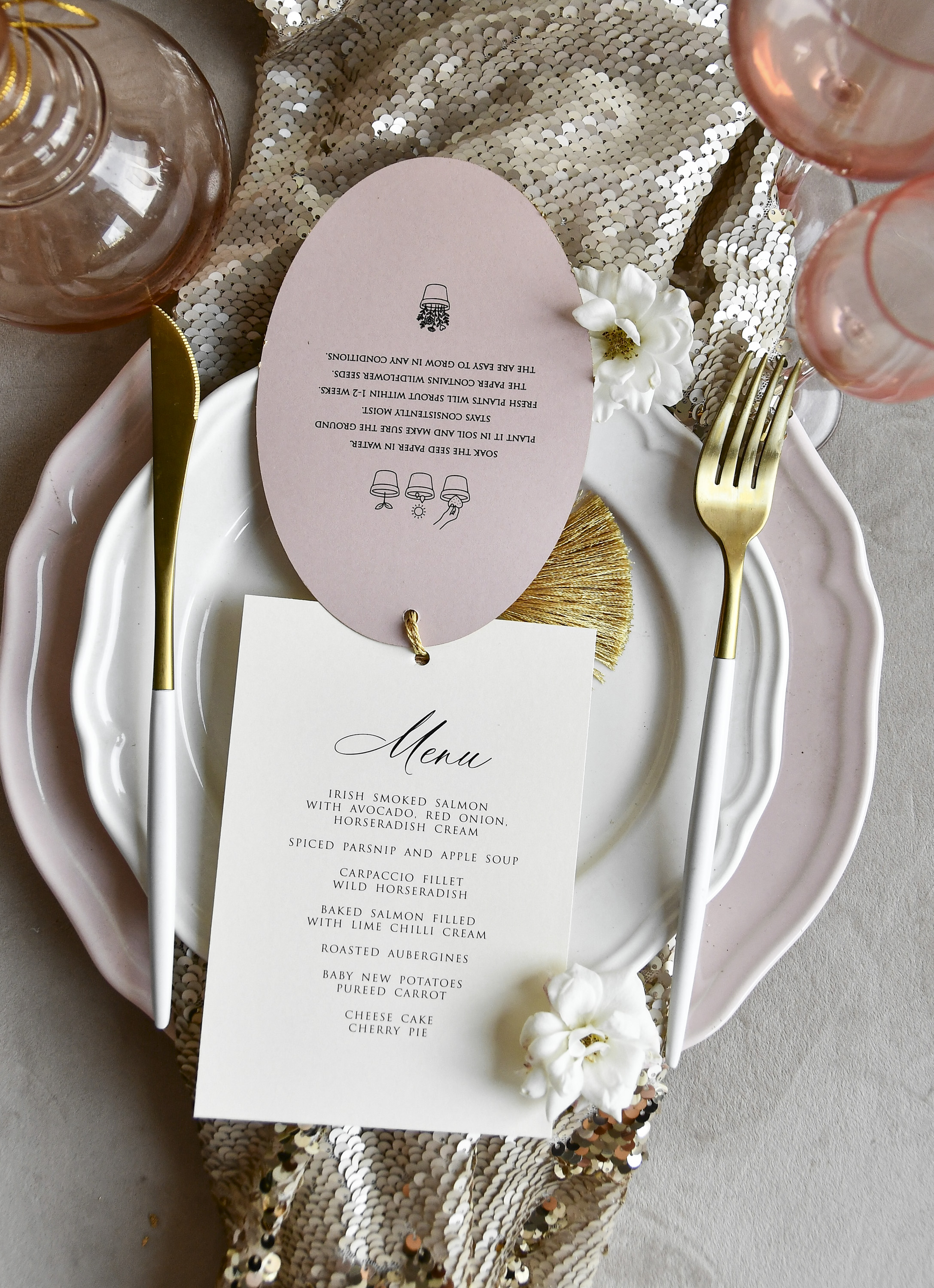
On the wedding day itself, your printed programs and menus help set the tone of a sophisticated, intentional celebration. A beautifully designed menu like the 06/3in1/m from Margo&Bees' romantic collection signals the kind of elevated, grown-up atmosphere you've curated—reinforcing for guests that this evening was planned with adults in mind from start to finish.
How to Handle Direct Questions from Guests
Even with clear addressing and a website note, some guests will call or text to ask. Don't panic—this is normal. Keep your response short, warm, and consistent:
- Script 1: "We're keeping it adults only to keep the guest count manageable and the vibe a little more relaxed for everyone. We'd love to celebrate with you!"
- Script 2: "It's an adults-only event—we hope you can find a sitter and join us, because we really want you there."
Avoid over-explaining or apologizing excessively, which can make the conversation more awkward than it needs to be. A confident, kind tone signals that this is a firm decision, not a negotiation. If a close family member pushes back, it's okay to acknowledge the inconvenience while holding the boundary: "I know it's an adjustment, and I'm sorry for the extra planning—we really hope you can make it work."
Exceptions: When to Make Them (and When Not To)
If you plan to make exceptions—say, for a nursing infant or a flower girl—think carefully before you do. Every exception you make risks creating hurt feelings among guests who were told no. If you do allow exceptions, keep them truly limited (for example, babies under six months who are still nursing) and communicate privately with those families rather than announcing it broadly.
Whatever you decide, be consistent. Allowing one cousin's toddler but not another's sends a message you don't want to send. Decide your rule early, apply it evenly, and you'll avoid the bulk of potential friction.
Frequently Asked Questions
It's generally considered more elegant to communicate the policy through precise envelope addressing and your wedding website rather than printing it on the formal invitation itself. If you want it in print, an enclosure card or details card is the right place for a brief, friendly note.
Most couples set the cutoff at 18, but some choose 16 or 21 depending on the event. Whatever you choose, apply it consistently to all guests so no one feels singled out.
Ideally, guests should know as soon as save-the-dates go out—typically 6 to 8 months before the wedding. This gives parents plenty of time to arrange childcare, especially if they need to travel.
Assign a trusted point of contact—your wedding planner, coordinator, or a reliable family member—to handle the situation calmly on your behalf so you're not dealing with it on your wedding day. Having a plan in advance prevents you from being caught off guard.
Not at all—it's a personal choice that many couples make for reasons ranging from venue capacity to budget to atmosphere. As long as you communicate the policy clearly and kindly well in advance, most guests will respect it.
You don't owe anyone a detailed explanation. A simple, warm acknowledgment is enough—"We've decided to keep it adults only" is a complete answer. Offering to help with childcare logistics shows goodwill without requiring you to justify your decision.
See This Design Up Close
You May Also Like
More Wedding Planning Guides
- → Save the Date or Wedding Invitation? Here's Exactly What Each One Is For
- → Children at Your Wedding: A Practical Guide to Making the Call
- → Last-Minute RSVP Flip-Flops: Your Practical Game Plan
- → Uninvited Plus-Ones and Tag-Alongs: How to Keep Your Guest List Intact
- → When Family Feuds Threaten Your Wedding Plans: A Practical Peacekeeper's Guide
- → Inviting an Estranged Brother or Sister: Finding Clarity Before You Seal the Envelope
- → Cousins, Invites, and Hard Choices: A Practical Guest List Guide