
Small Weddings: Permission Granted (and Here's How to Do It Right)
Short answer: yes, absolutely, one hundred percent. A small wedding is not a compromise — it is a deliberate, meaningful choice that millions of couples make every year. Whether you are keeping it to immediate family, hosting a backyard dinner for thirty, or eloping with a handful of witnesses, your wedding is valid the moment you decide it is. What follows is everything you need to feel confident, plan well, and silence any doubt — from yourself or anyone else.
What Counts as a Small Wedding?
There is no official threshold, but most wedding planners consider anything under 50 guests to be a small or intimate wedding. Micro-weddings typically land between 10 and 25 guests, and elopements usually mean just the couple plus a witness or two. The label matters far less than your intention: you want the people in that room to be people you truly cannot imagine the day without.
Common reasons couples choose small include:
- Budget: Fewer guests almost always means lower catering, venue, and stationery costs.
- Personality: Introverts often find large receptions exhausting rather than joyful.
- Logistics: Destination weddings, short engagements, or blended-family dynamics can make a tight guest list the practical choice.
- Meaning: Some couples simply want depth over breadth — real conversations, not a receiving line.
Navigating the Guest List Without Guilt
The hardest part of a small wedding is usually not the planning — it is the guest list conversation. Here is a framework that helps:
- Set a firm number first. Decide on your maximum before you start naming names. Once the number is set, it becomes a rule, not a personal slight.
- Use consistent tiers. For example: immediate family only, or immediate family plus college friends. Consistency is your best defense against hurt feelings.
- Communicate early and kindly. If close friends or extended family will not be invited, a personal phone call or note before invitations go out goes a long way. Something like, "We are keeping our wedding very small — just immediate family — but we would love to celebrate with you at a dinner afterward" is warm and clear.
- Consider a post-wedding celebration. A casual party a few weeks later lets you include a wider circle without inflating your wedding-day guest count.
Making an Intimate Wedding Feel Special (Not Small)
A smaller guest list actually unlocks details that large weddings cannot pull off. Lean into them:
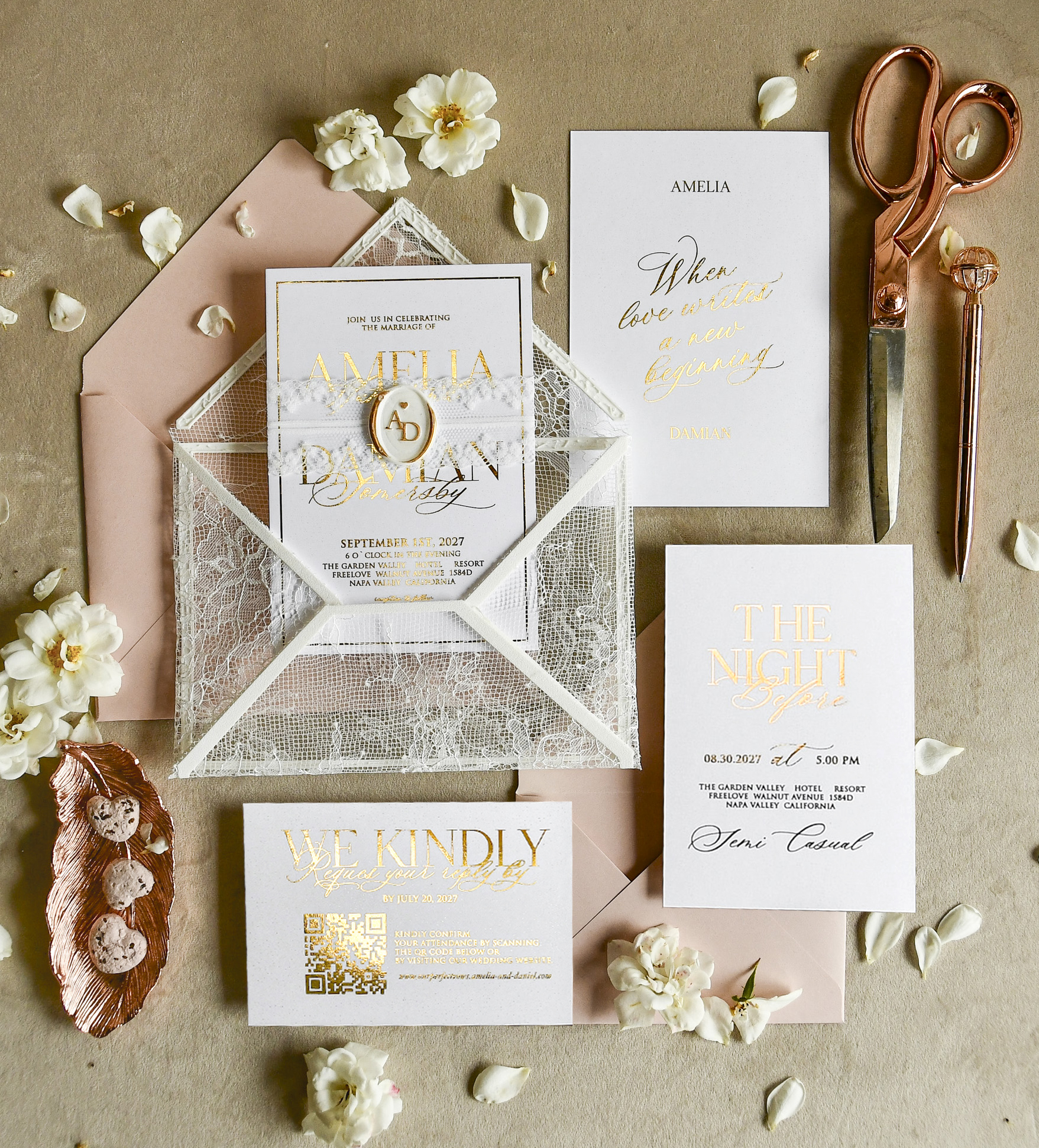
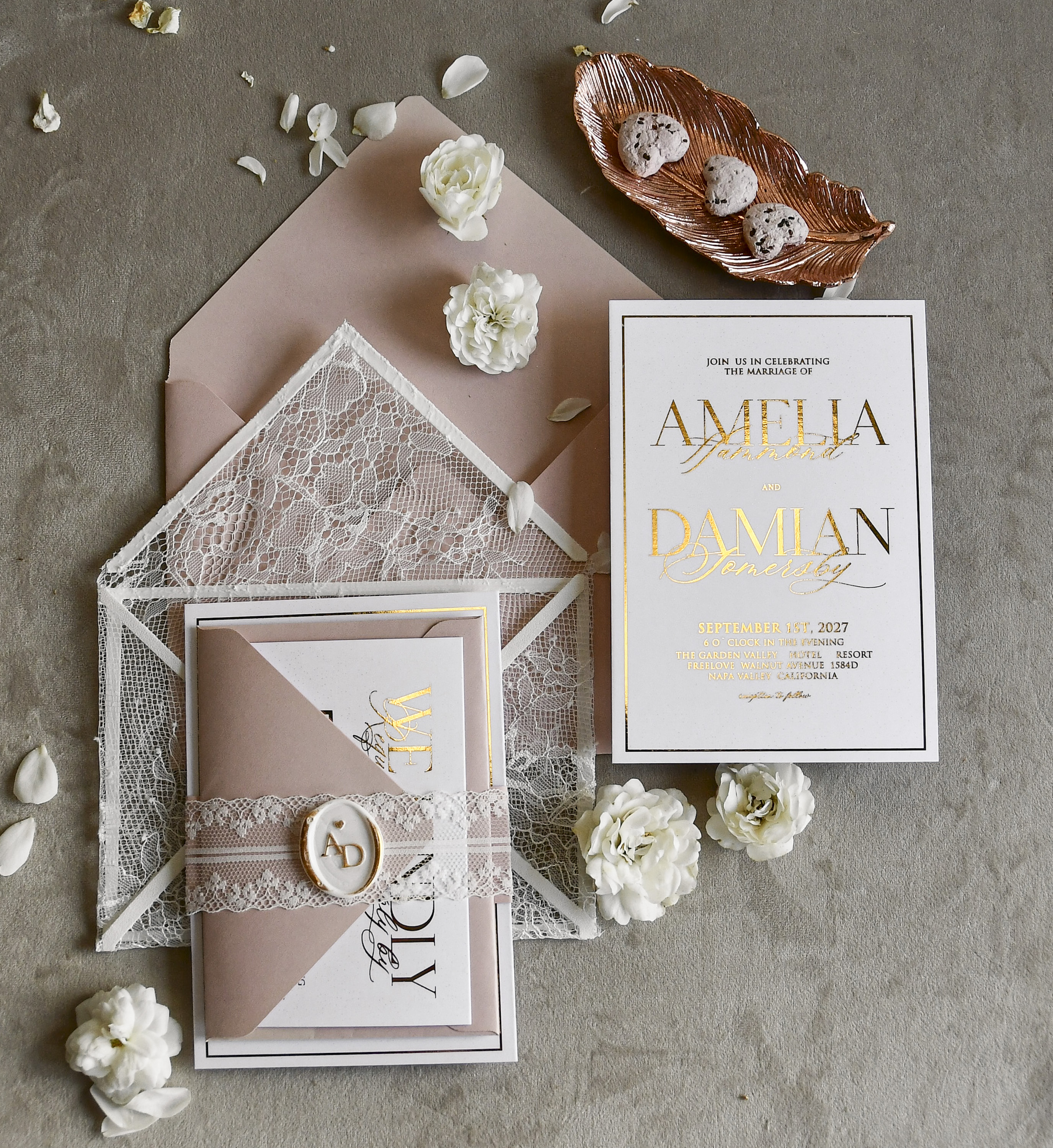
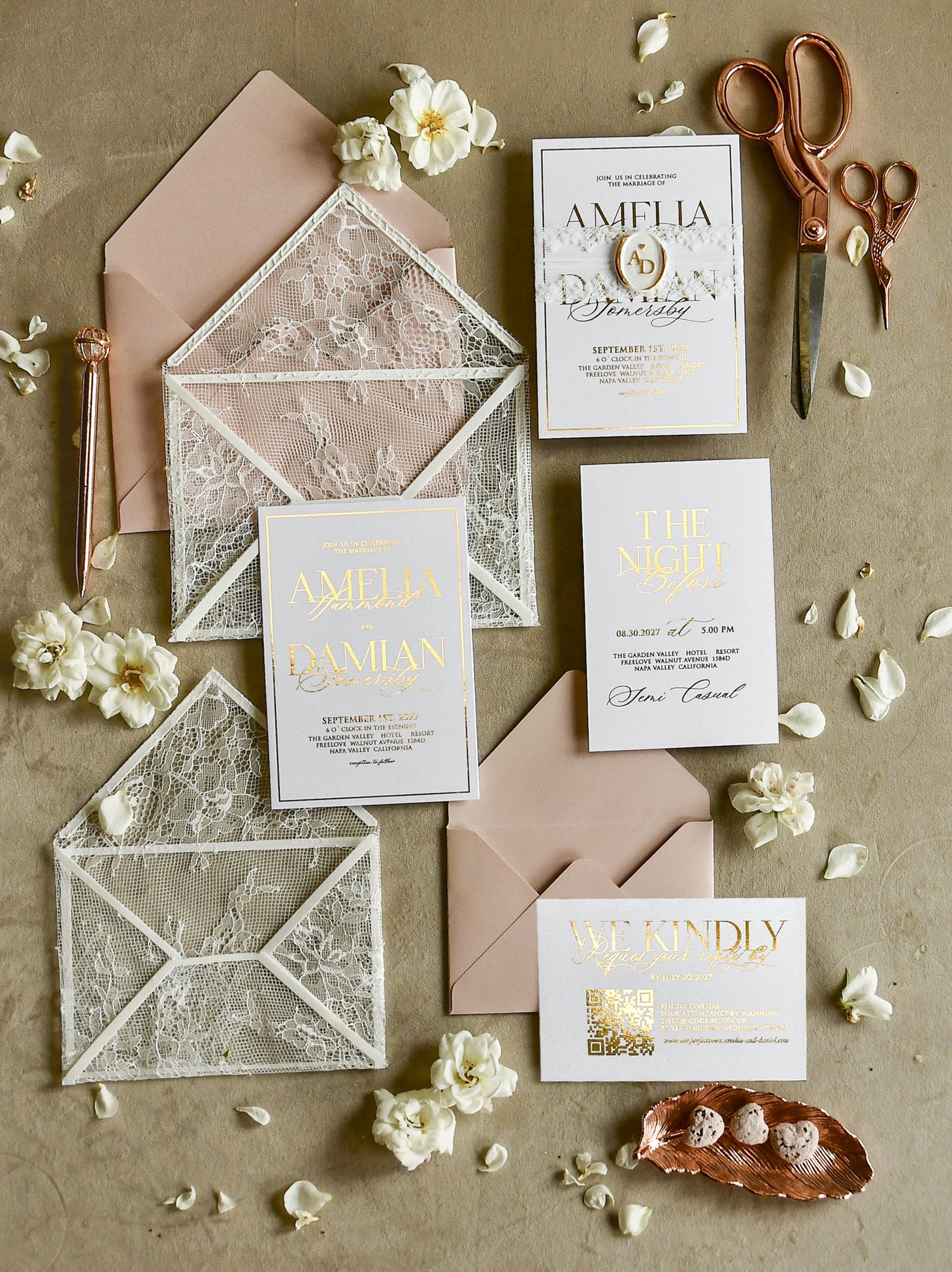
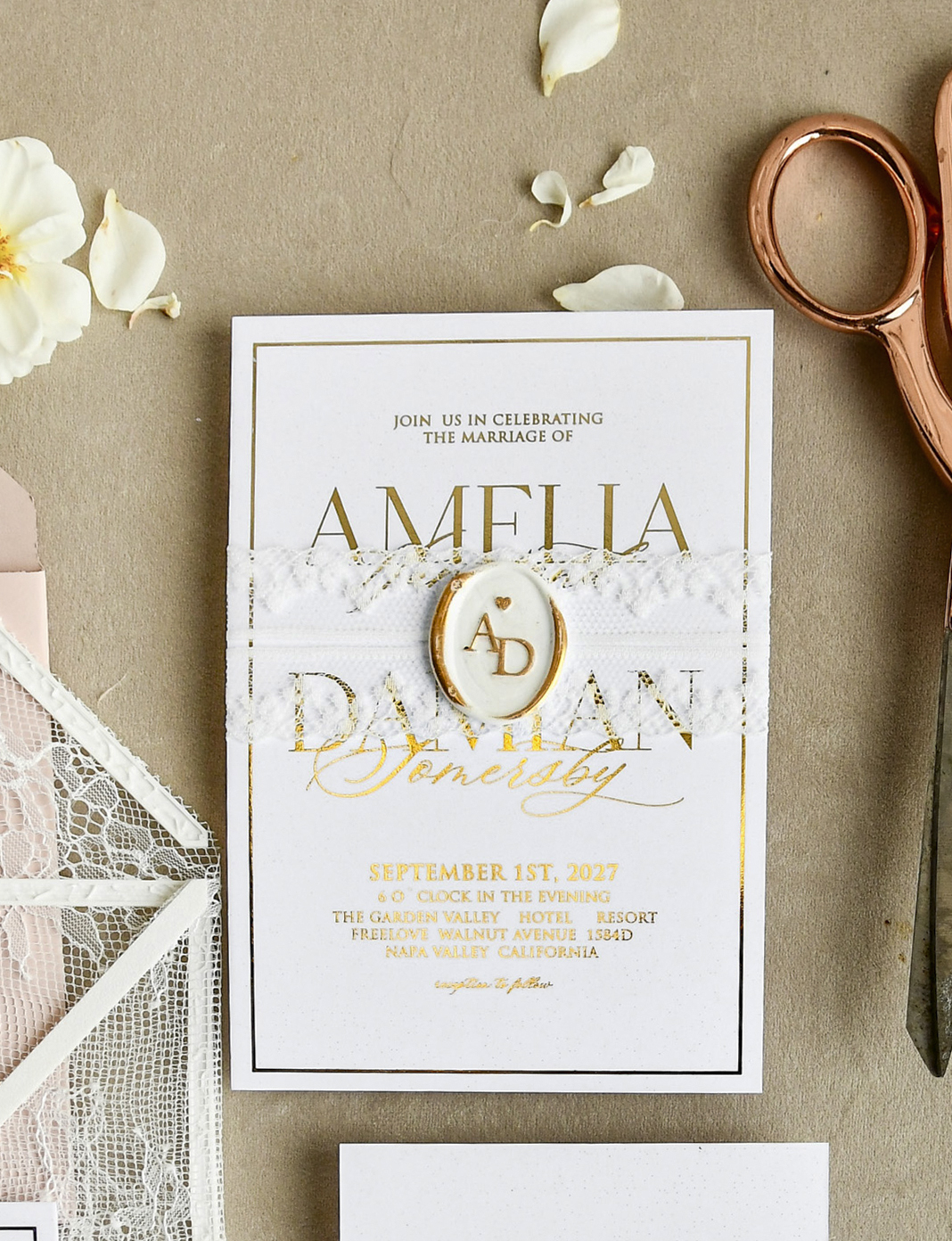
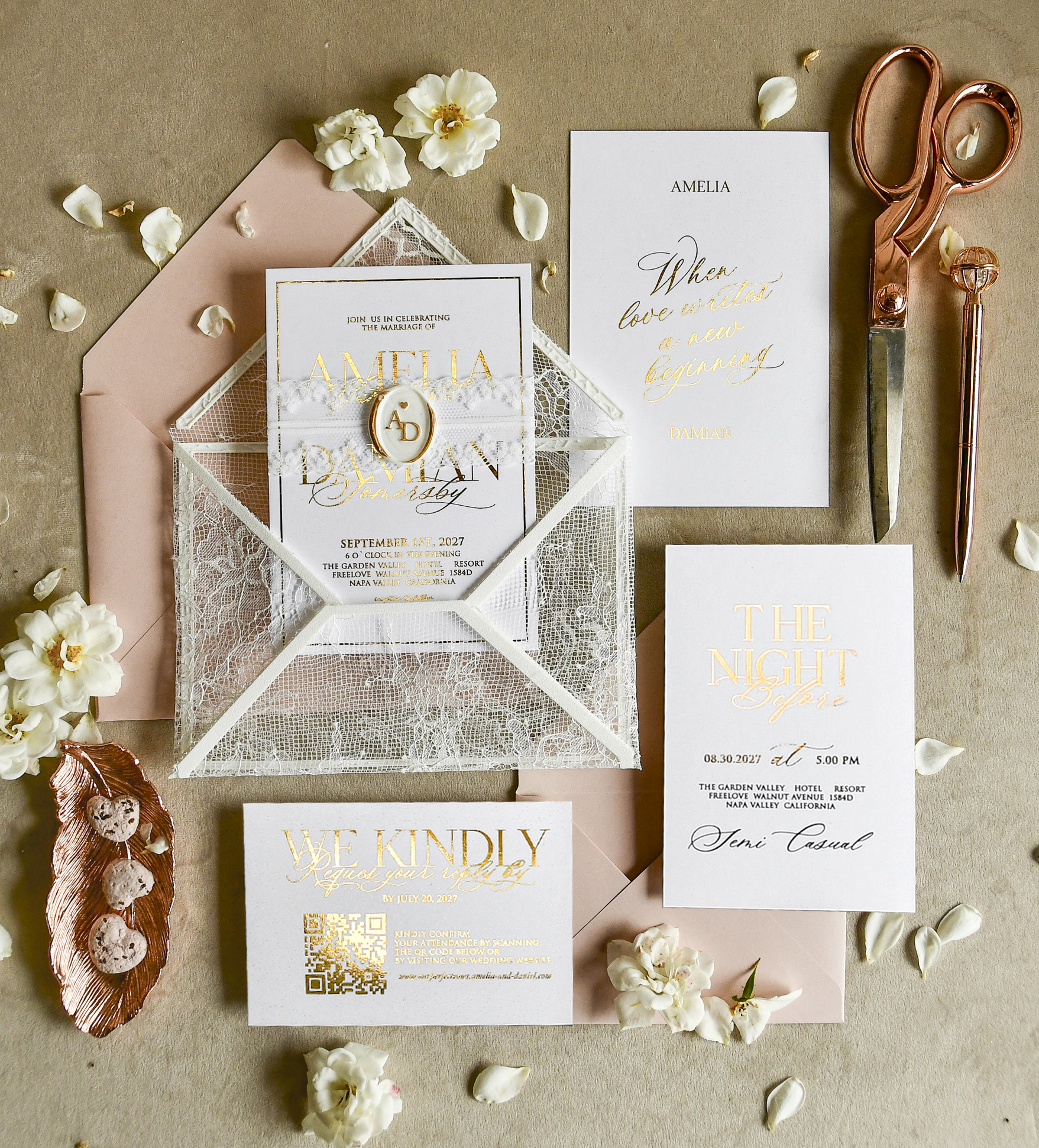
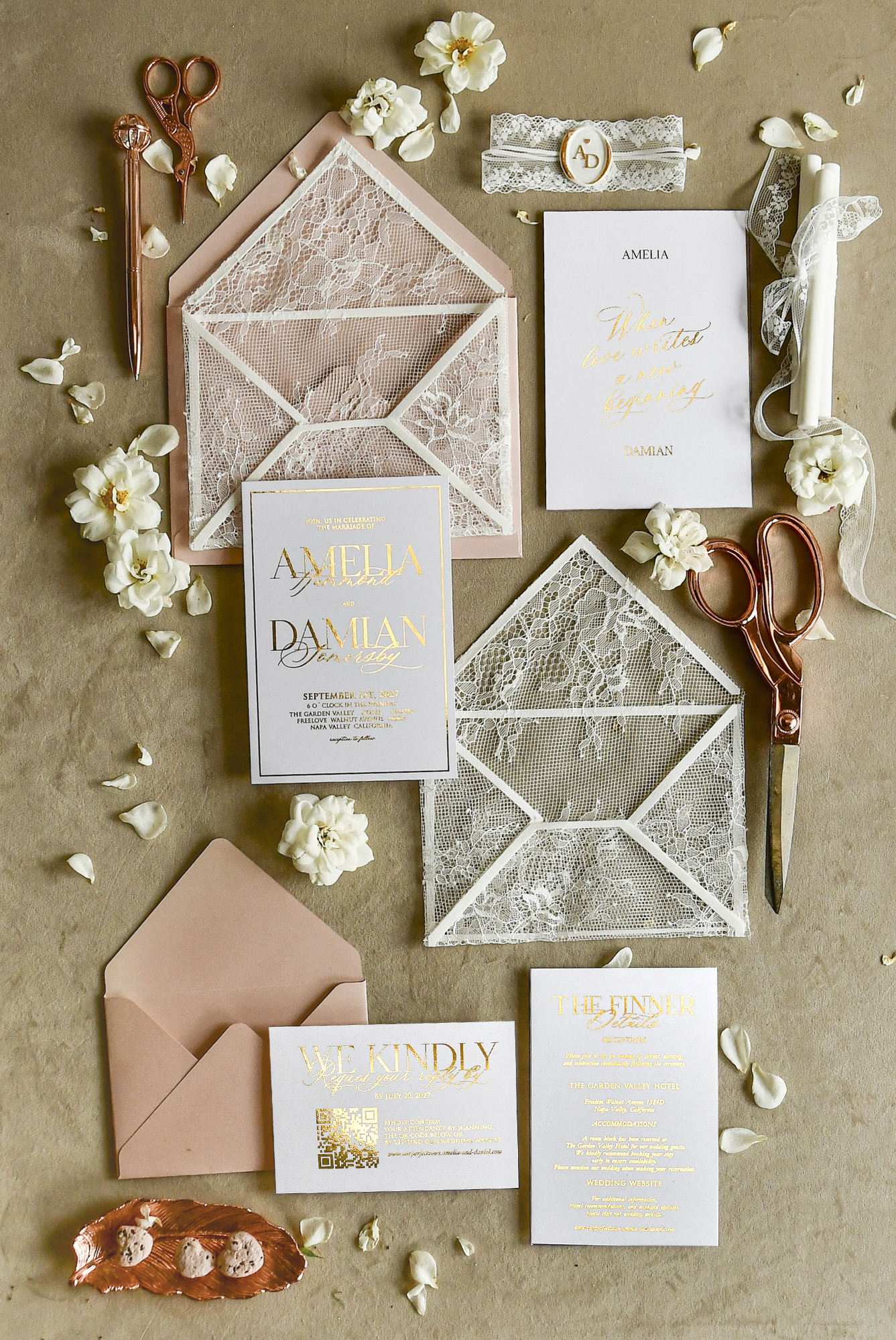
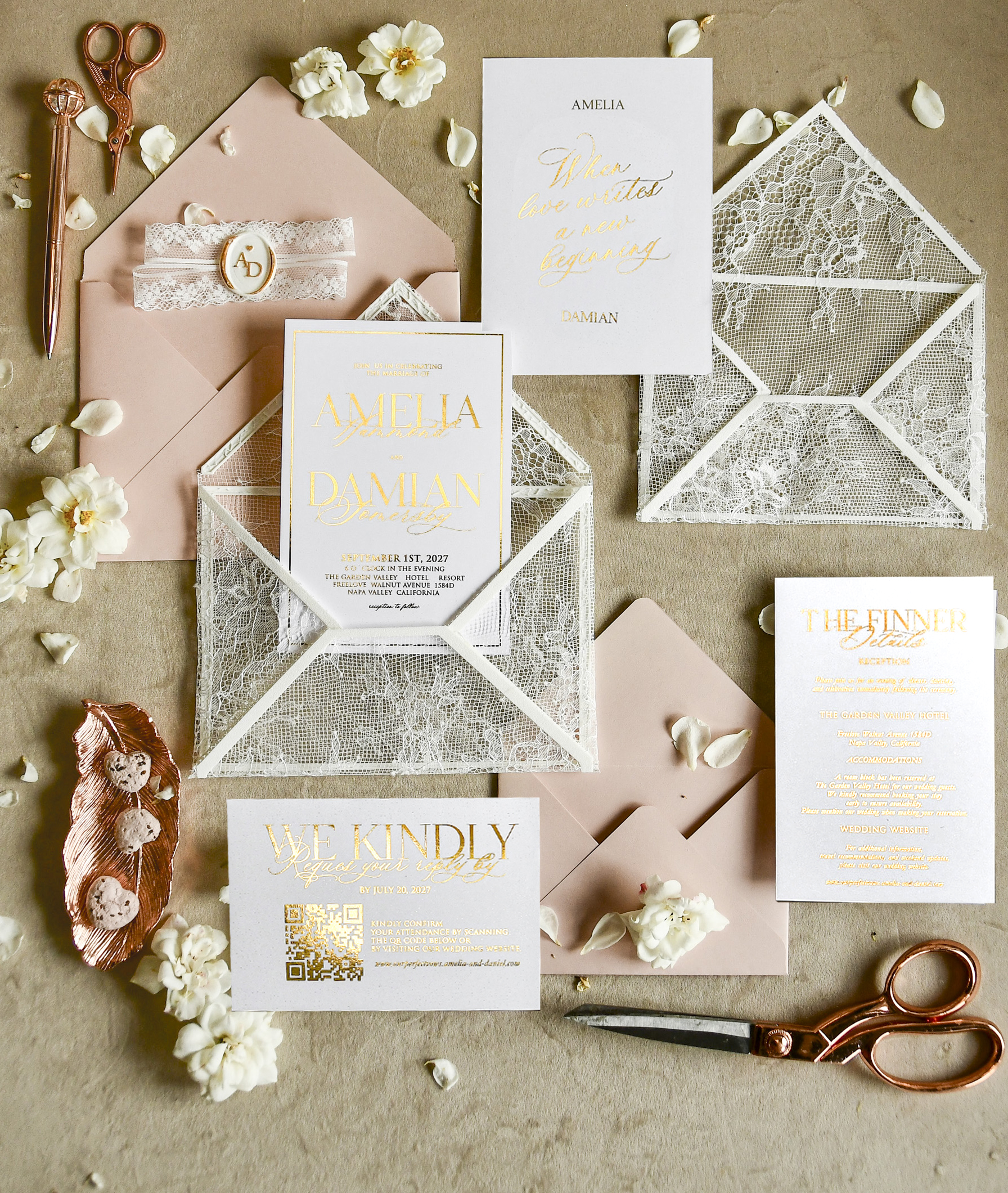
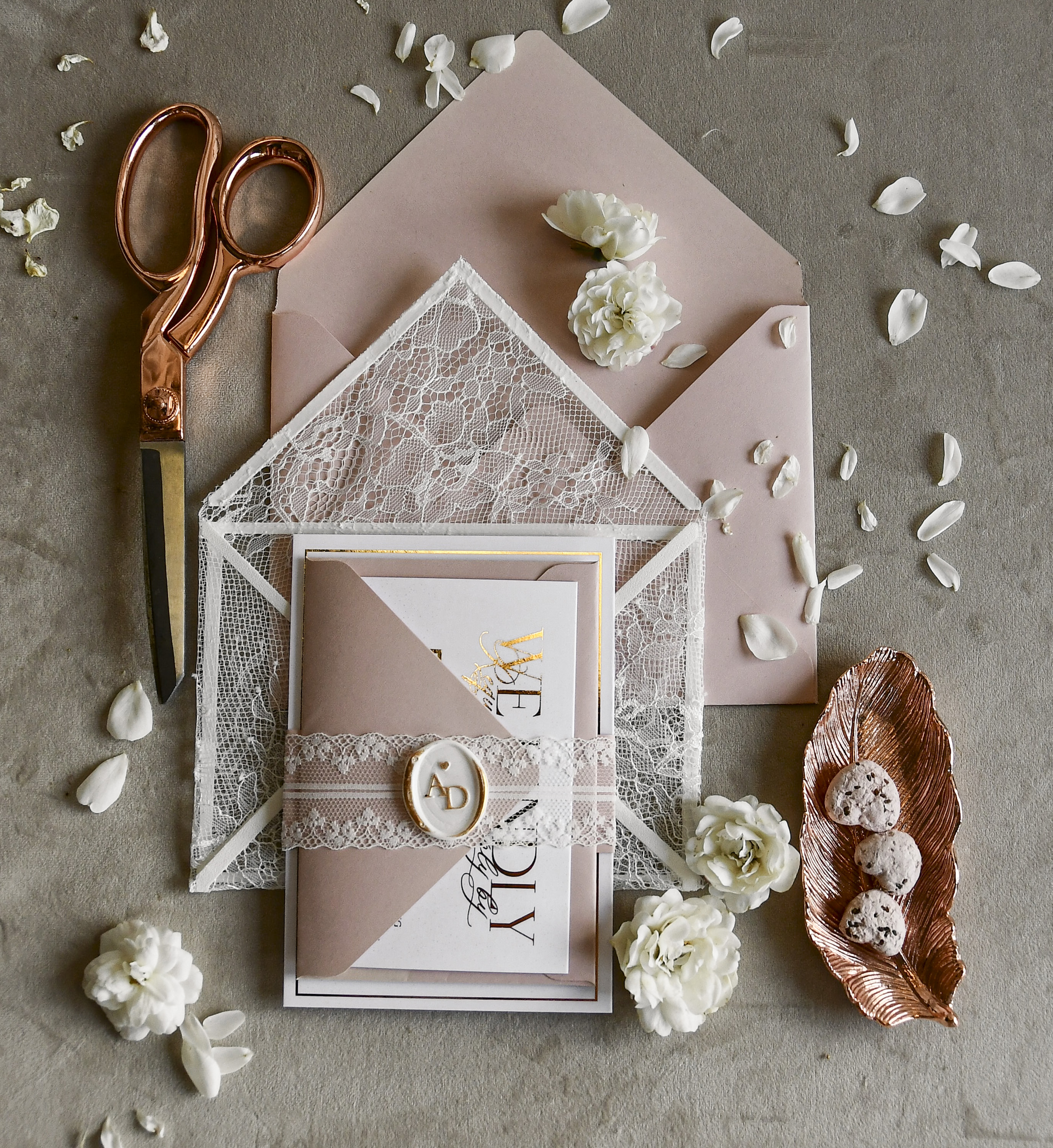
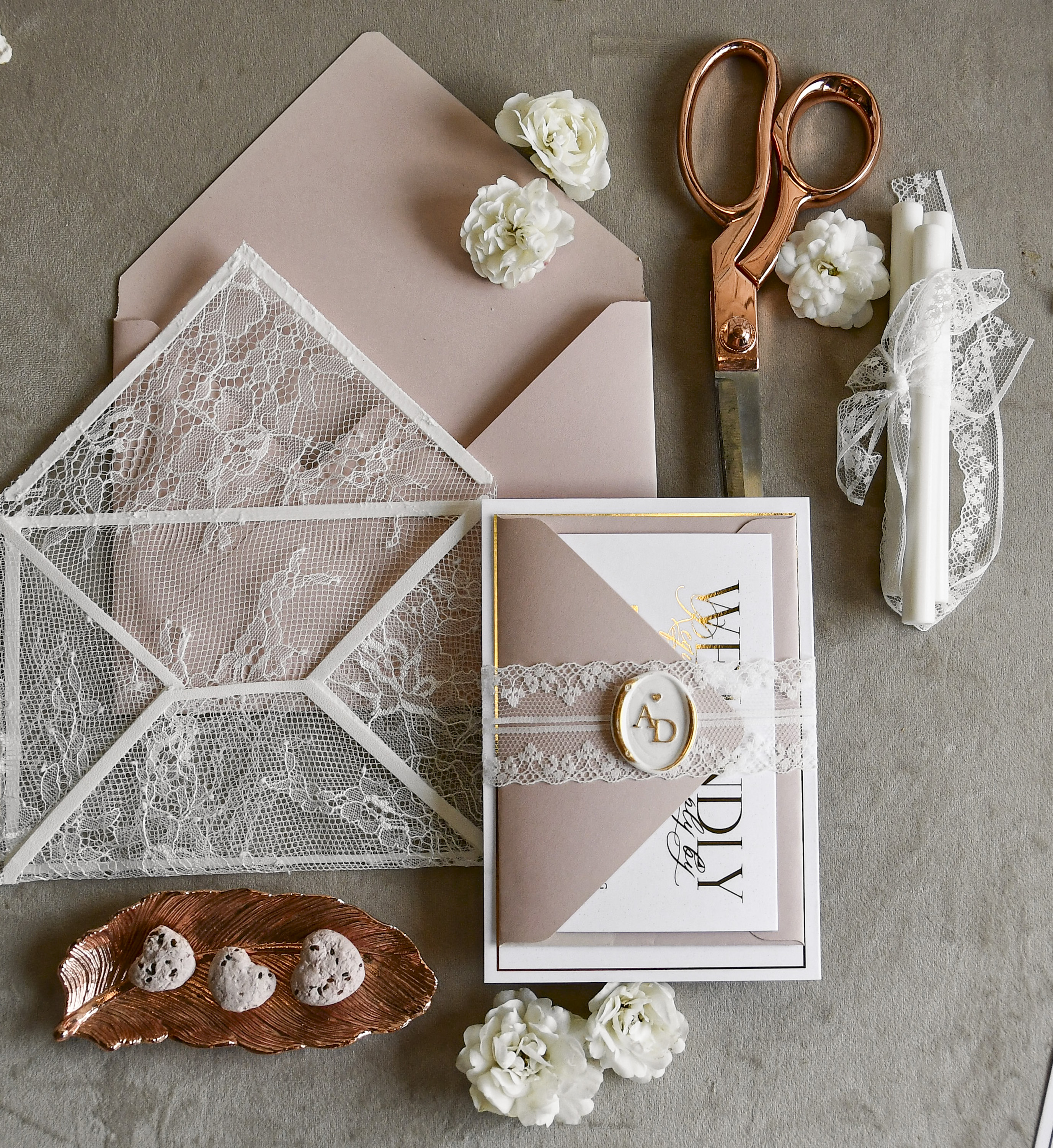
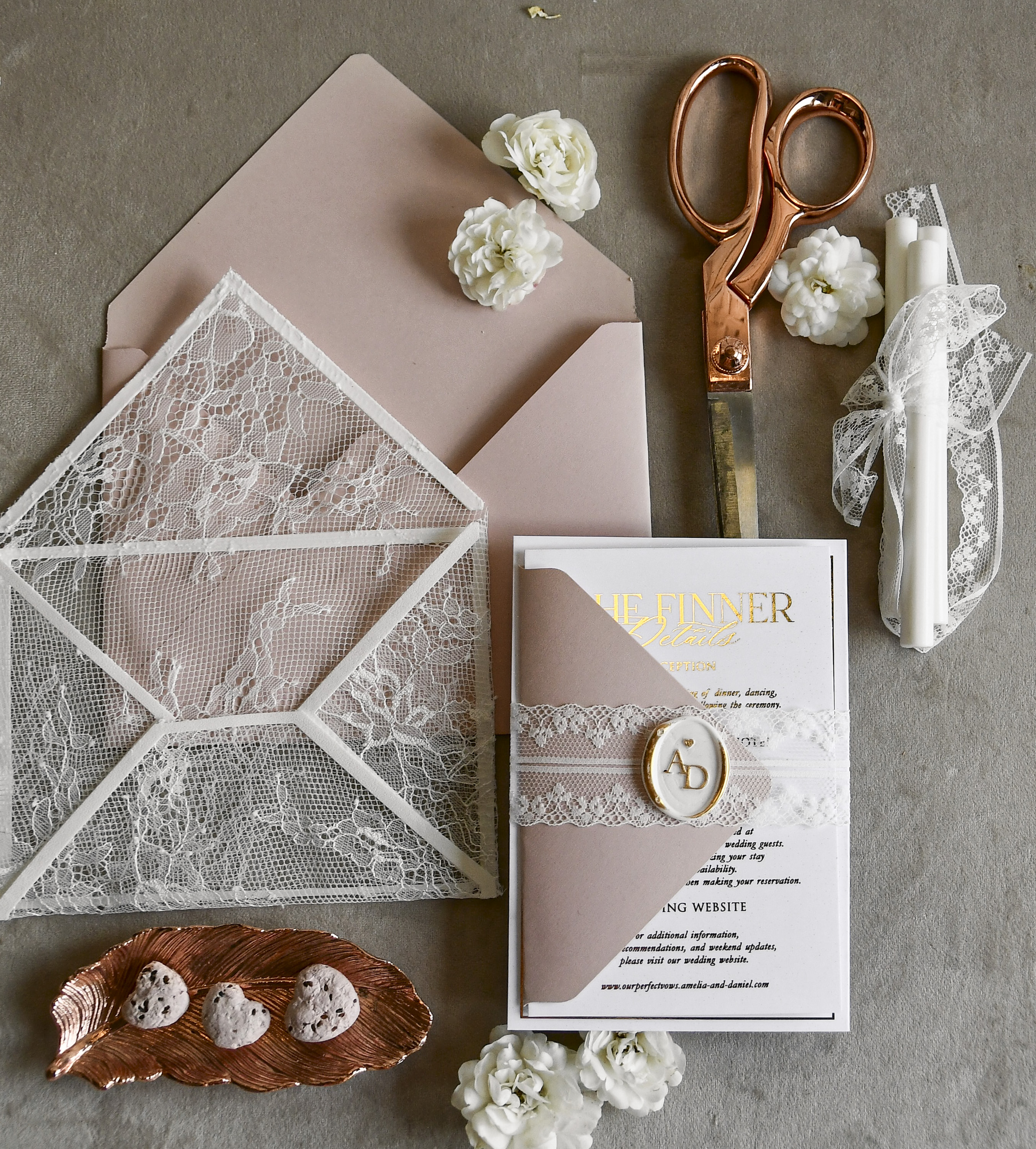
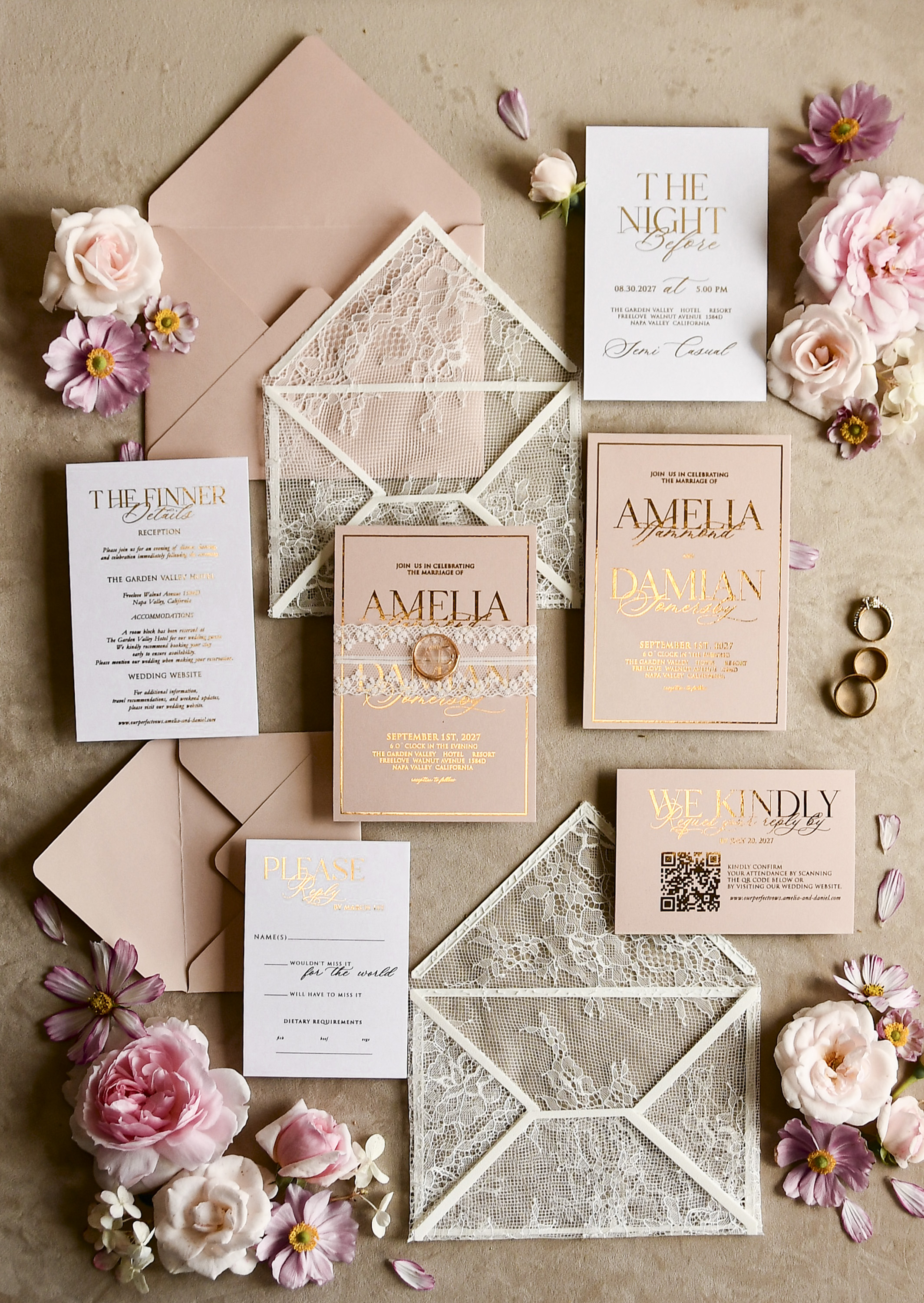
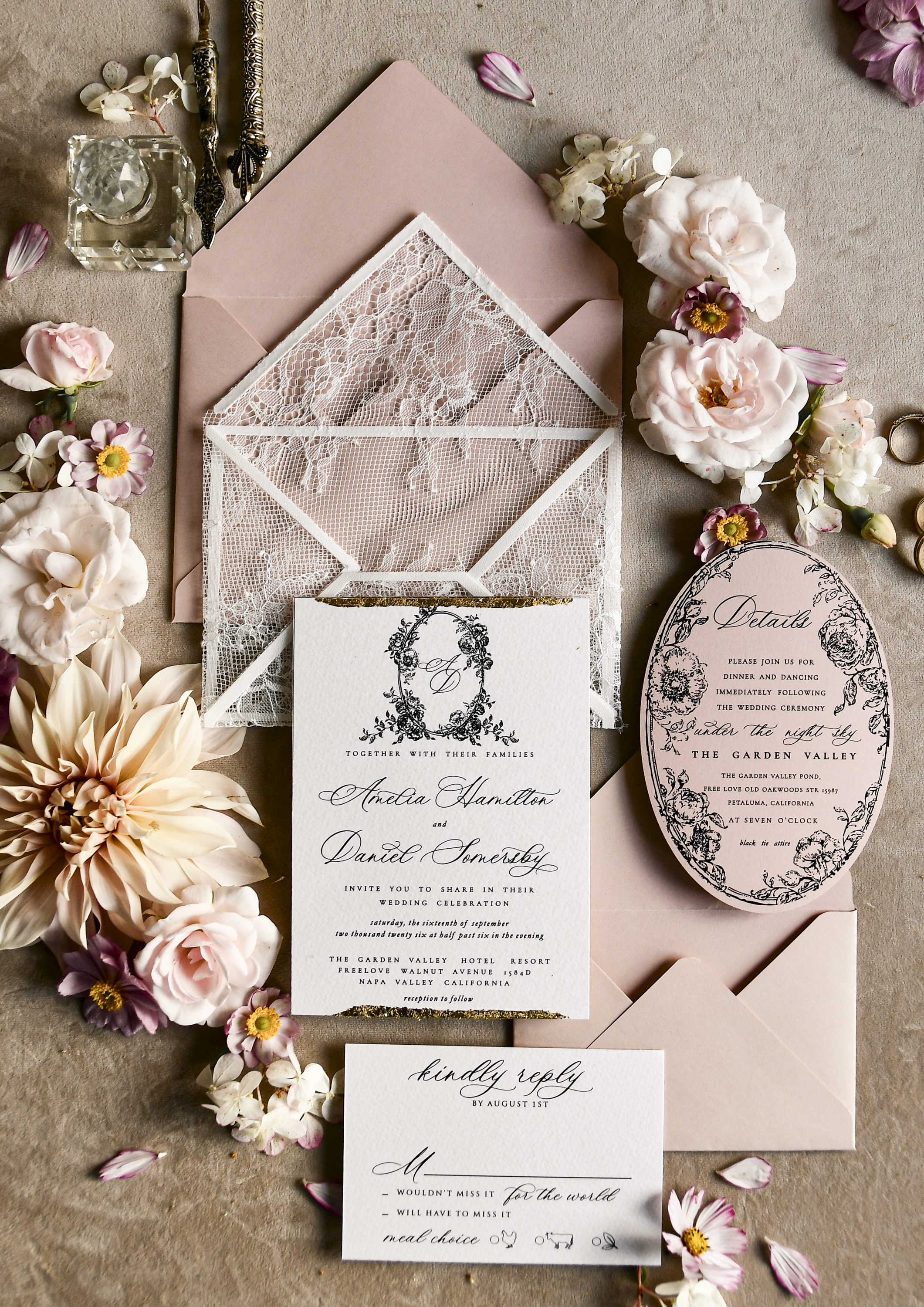
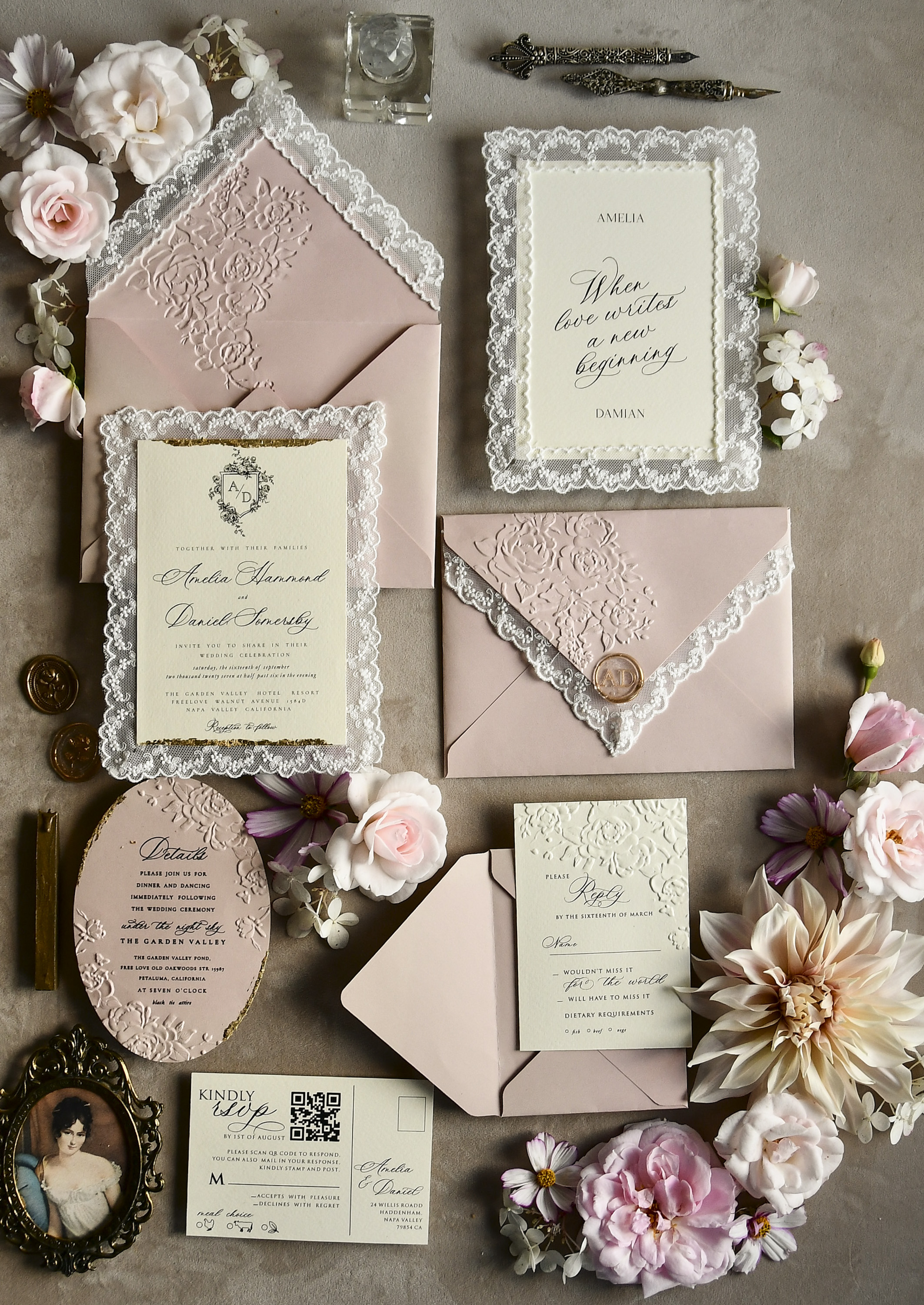
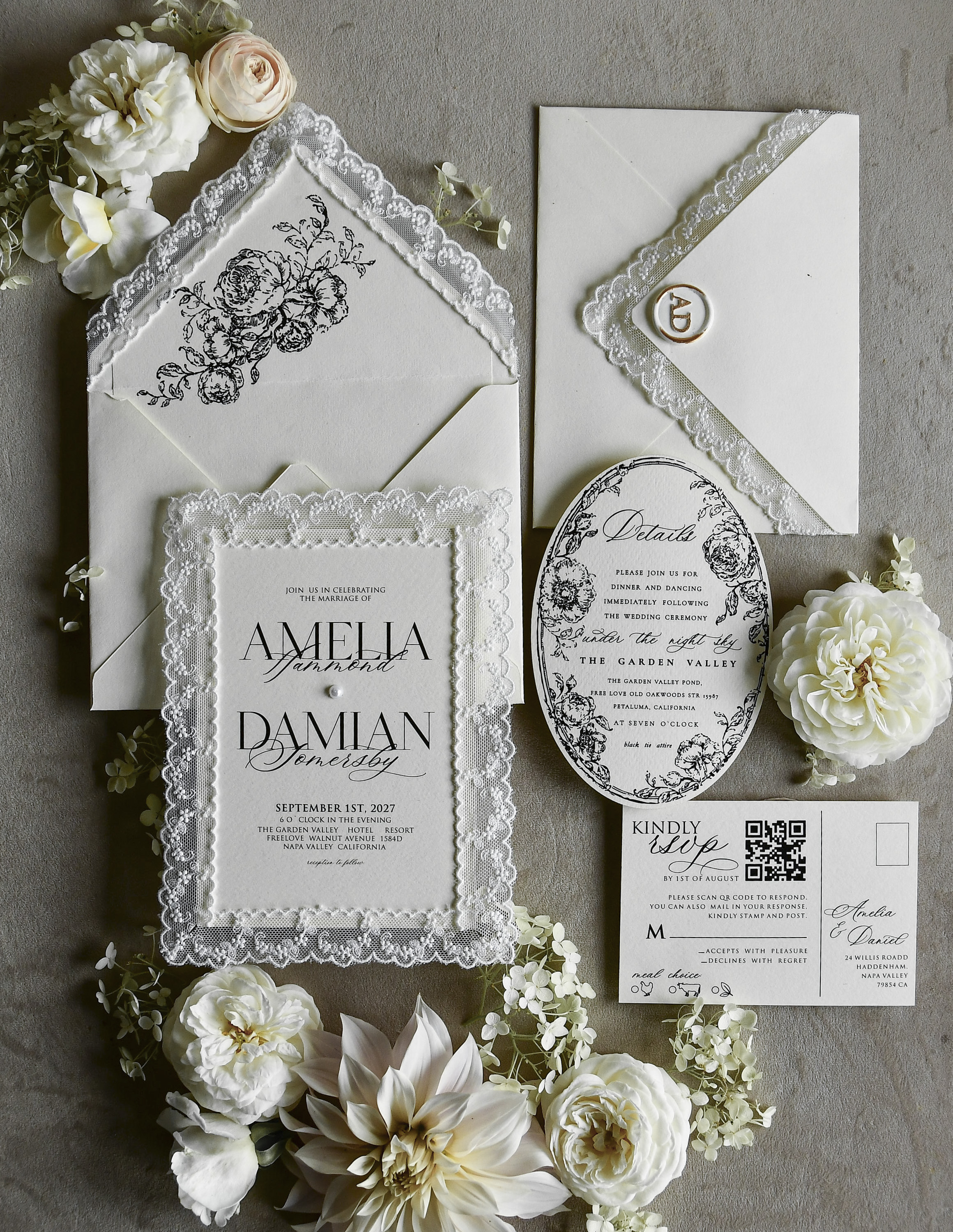
- Elevated stationery: When you are sending 20 invitations instead of 200, you can afford to go beautiful. A vintage lace or rustic lace design — like the 01/lacenvD/z invitation suite from Margo&Bees — adds an heirloom quality that sets the tone from the moment guests open the envelope.
- Personal touches at every seat: Handwritten notes, custom menus, or a small favor that reflects your story feel achievable when you are not multiplying them by 150.
- A better meal: Redirect catering budget toward a multi-course dinner or a chef's tasting experience rather than a buffet for a crowd.
- More time with each guest: You will actually get to sit down with your grandmother, laugh with your college roommate, and be present — not just present for photos.
Etiquette Questions You Will Probably Face
A few situations come up again and again for couples planning small weddings:
"Can I invite coworkers to the reception but not the ceremony?" Yes — ceremony-only or reception-only invitations are perfectly acceptable. Just be transparent so no one shows up at the wrong venue.
"Do I still need to send save-the-dates?" Yes, especially if guests are traveling. Send them 4–6 months out for a local wedding, or 6–8 months out for a destination event. Formal invitations should follow 6–8 weeks before the date.
"What if family members are offended?" Acknowledge their feelings without reversing your decision. Most people, given time, respect a couple who knows what they want. A personal phone call and a plan to celebrate together separately will smooth most situations.
"Should I feel like I am missing out on a "real" wedding?" No. Research consistently shows that couples who prioritize meaning over scale report higher satisfaction with their wedding day. Your wedding does not need to be large to be unforgettable.
Frequently Asked Questions
It is not rude as long as you are consistent and communicate with care. Apply the same rule to everyone — for example, no aunts or uncles on either side — so no one feels singled out. A kind heads-up before invitations arrive helps people process the news graciously.
Start by acknowledging their excitement and desire to share the day. Then explain your reasoning — budget, venue capacity, or personal preference — and hold your number firm. Offering to host a larger celebration later often helps parents feel their relationships are still being honored.
Most couples find that 20–40 guests hits the sweet spot: small enough to feel personal, large enough to have energy in the room. That said, the "ideal" count is whatever lets you be fully present and financially comfortable on your wedding day.
Generally yes — catering and venue are the two biggest wedding expenses, and both scale directly with guest count. Couples with 30 guests can often redirect savings into higher-quality food, photography, or stationery that a 150-person budget would not allow.
Send invitations 6–8 weeks before the wedding for a local event, or 10–12 weeks out if guests need to travel. Pair them with save-the-dates sent 4–6 months in advance so guests can plan accordingly.
Absolutely — this is one of the most popular solutions for couples who want an intimate ceremony without leaving people out. Host a casual backyard barbecue, a restaurant dinner, or a cocktail party in the weeks after the wedding to celebrate with a wider circle.
See This Design Up Close
You May Also Like
More Wedding Planning Guides
- → Keeping the Peace: Your Wedding Survival Guide for Feuding Divorced Parents
- → Extra Guests at Your Wedding: How to Prevent and Handle Uninvited Additions
- → When Guests RSVP for More People Than You Invited: A Calm Action Plan
- → What to Put on a Wedding Invitation: Every Detail You Need
- → How to Decide Whether an Estranged Sibling Belongs on Your Guest List
- → Setting the Record Straight: How to Communicate a Strict Guest List Without the Awkwardness
- → When the Guest List Expands: Who Covers the Cost of Extra Attendees?
- → When to Send Your RSVP Reminder (And Exactly How to Do It)
- → Uninvited Plus-Ones and Tag-Alongs: How to Keep Your Guest List Intact
- → When Family Feuds Threaten Your Wedding Plans: A Practical Peacekeeper's Guide
- → Inviting an Estranged Brother or Sister: Finding Clarity Before You Seal the Envelope
- → Cousins, Invites, and Hard Choices: A Practical Guest List Guide