
Keeping the Peace: Your Wedding Survival Guide for Feuding Divorced Parents
You're engaged and thrilled — and then reality sets in: your divorced parents can't be in the same room without tension you could cut with a cake knife. You're not alone. Millions of couples navigate this exact situation every year, and the good news is that with clear boundaries, smart logistics, and a little advance planning, you absolutely can have a beautiful, drama-free wedding day. Here's how to do it.
Have the Honest Conversation Early — With Each Parent Separately
Don't wait until two weeks before the wedding to address the elephant in the room. As soon as you're in full planning mode, sit down (or call) each parent individually. Be direct but loving: "I need you to commit to being civil with [other parent] on our wedding day. This day is about us, and I'm counting on you."
Set your expectations clearly:
- No snide comments, eye-rolls, or cold shoulders in front of guests
- No recruiting other family members to "take sides"
- No bringing up past grievances — before, during, or after the event
Most parents, when spoken to directly and with love, will rise to the occasion. They may not like each other, but they love you. Use that.
Use Logistics as Your Secret Weapon
Smart planning eliminates most conflict before it can even start. Think of logistics as invisible peacekeeping.
Seating: Seat divorced parents at separate tables on opposite sides of the reception space. Give each parent their own "territory" — their side of the family, their close friends — so neither feels like they're encroaching on the other's space.
Ceremony seating: Traditionally, the mother of the bride/groom sits in the front row on their respective side. If both parents are yours, assign one to the left front and one to the right front, each escorted separately by an usher.
The cocktail hour: This is the trickiest stretch because it's unstructured. Brief a trusted bridesmaid or groomsman to gently redirect either parent if things get tense. Having a designated "point person" for each parent is a game-changer.
Transportation and arrival times: If necessary, stagger their arrival times to the venue so they're not stuck in a parking lot together. Small detail, big payoff.
Handle the Family Portraits With a Clear Shot List
Family photos are often the flashpoint. The solution is a detailed, pre-planned shot list that your photographer receives in advance. Group photos with divorced parents should be taken separately — this is completely normal and photographers handle it all the time.
A simple structure that works:
- Couple with Parent A + Parent A's family/partner
- Couple with Parent B + Parent B's family/partner
- One photo with both parents and the couple only (optional — skip it if the tension is severe)
Communicate this plan to both parents ahead of time so no one is surprised. Framing it as "we want individual portraits with each of you" rather than "we're keeping you apart" keeps the tone positive.
Set the Right Tone From the Very First Detail
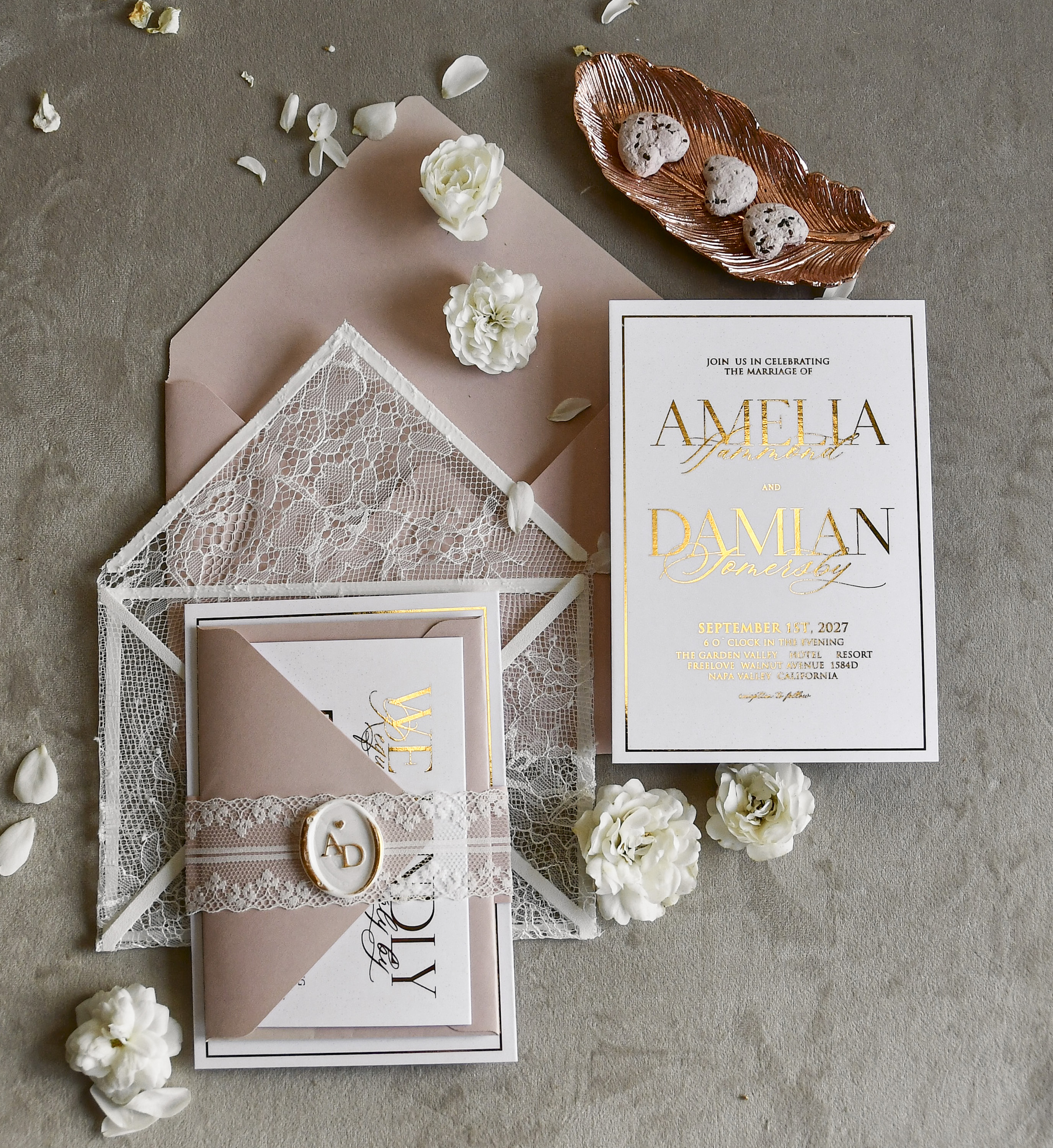
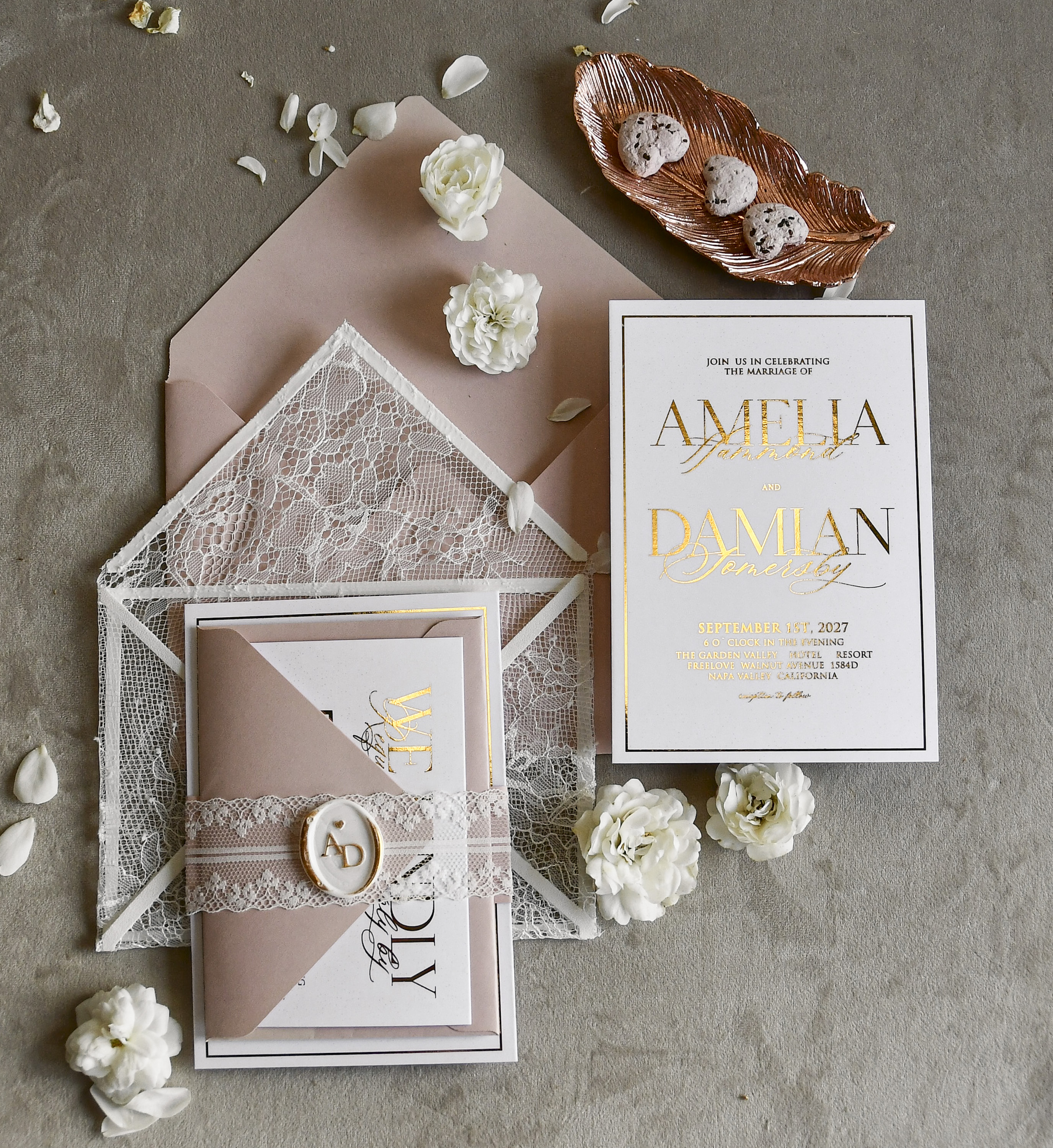
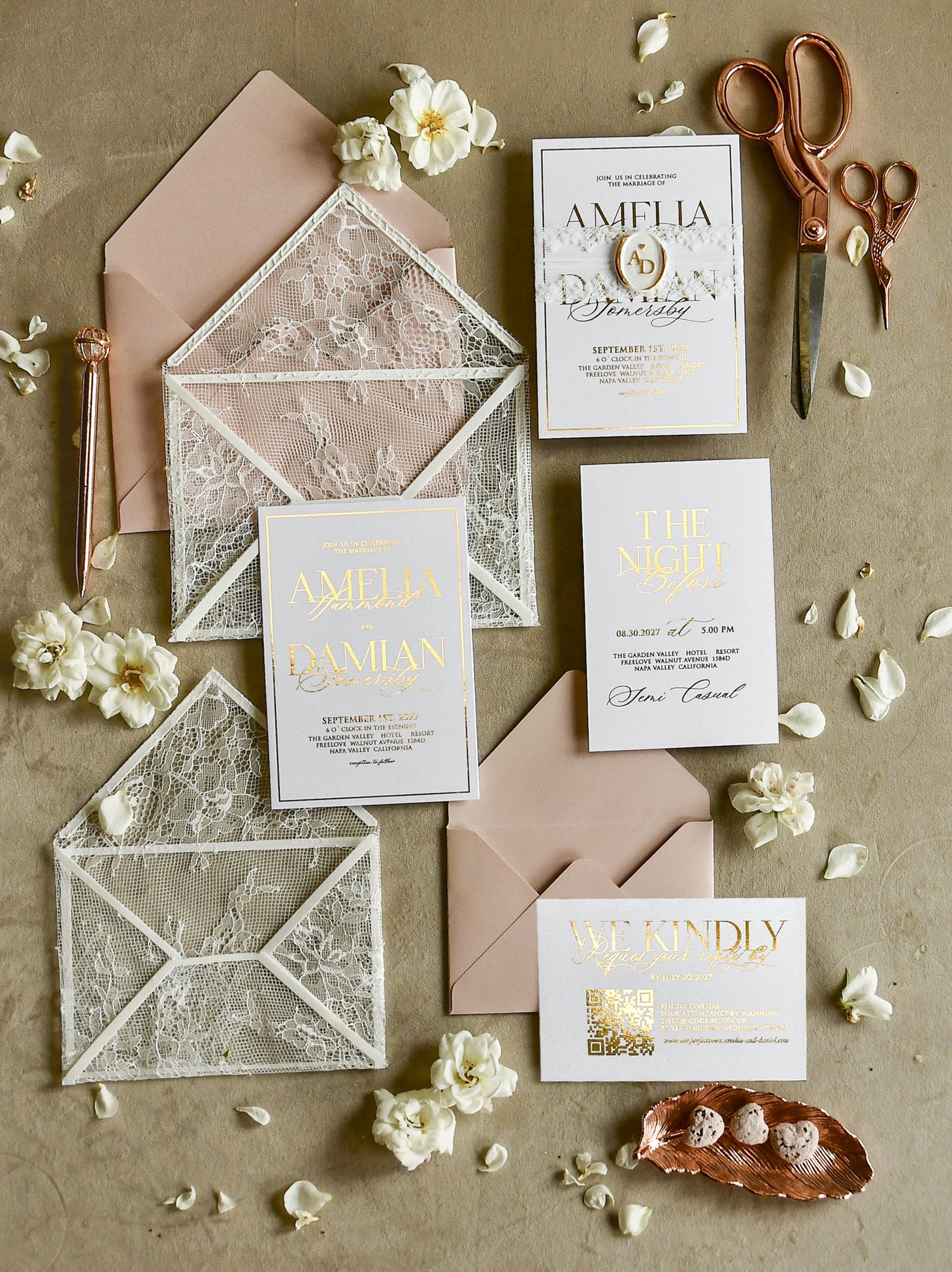
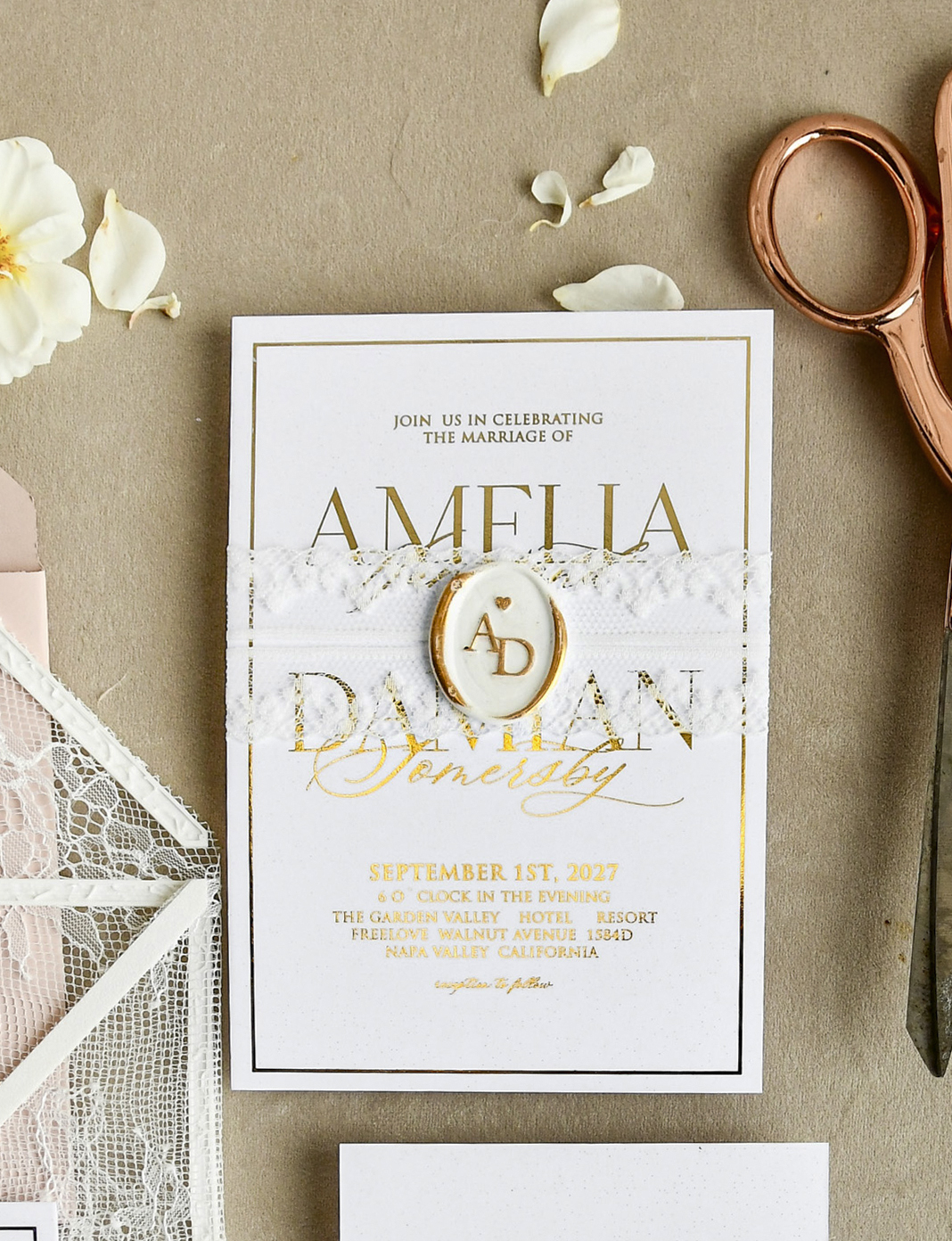
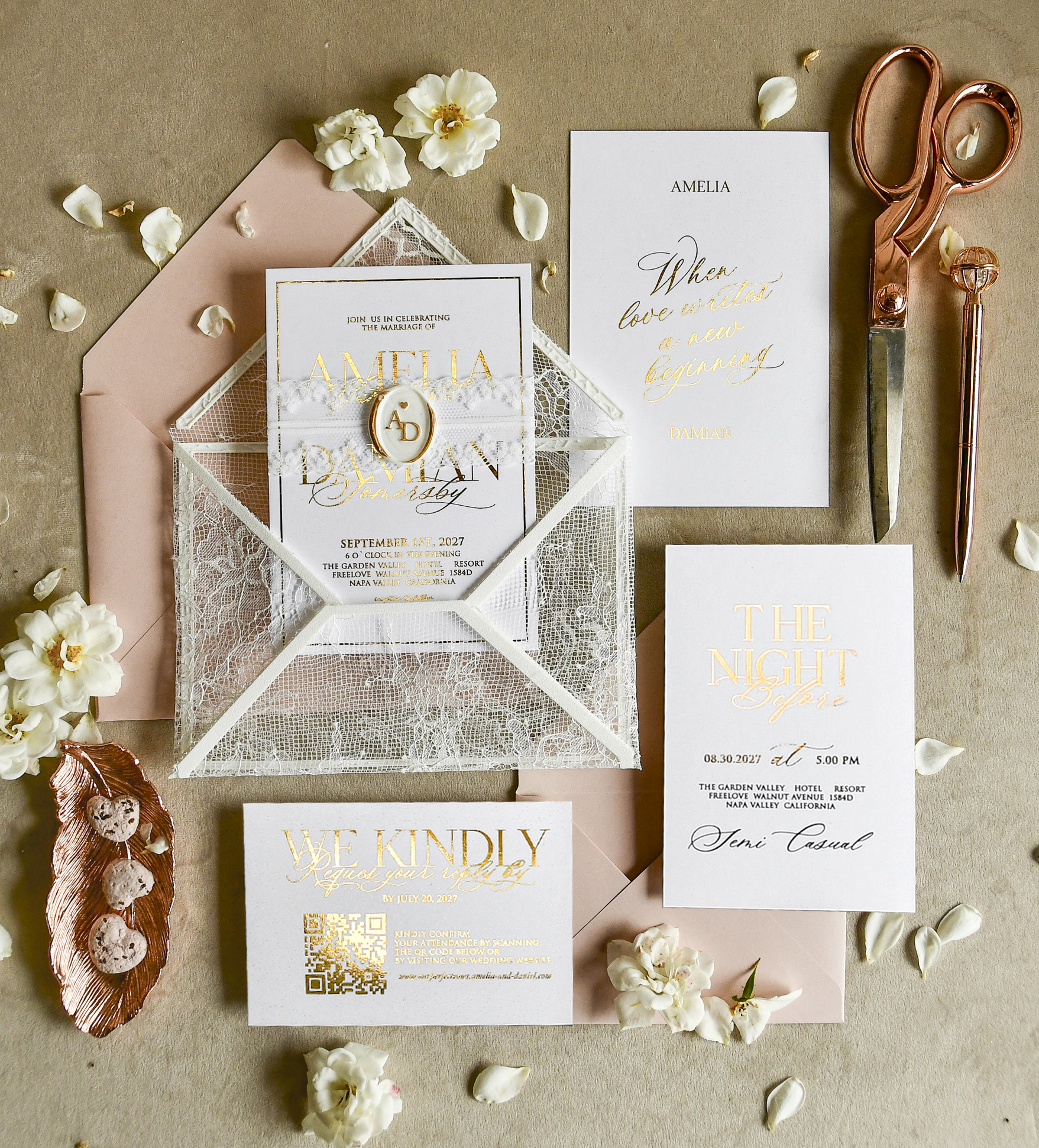
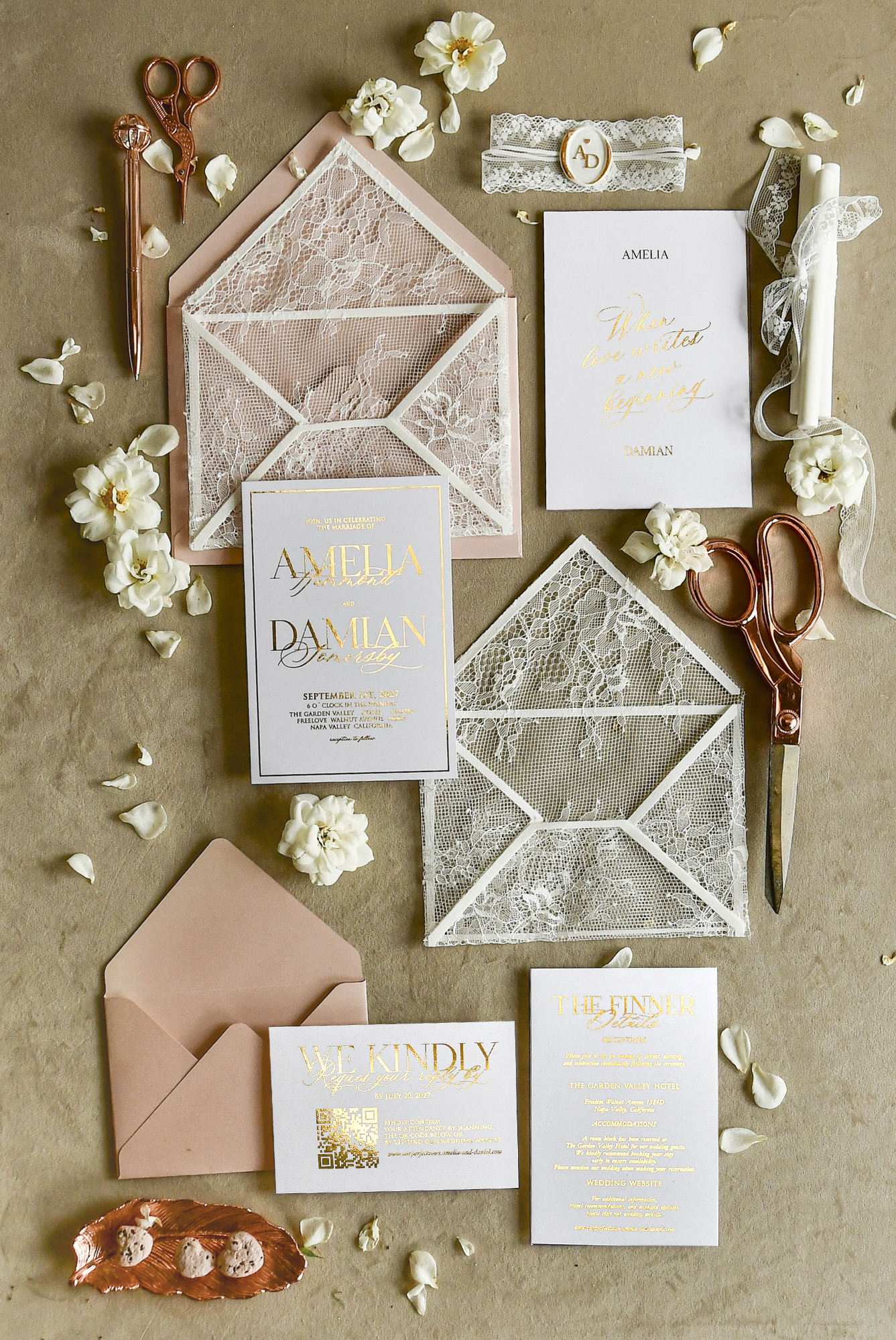
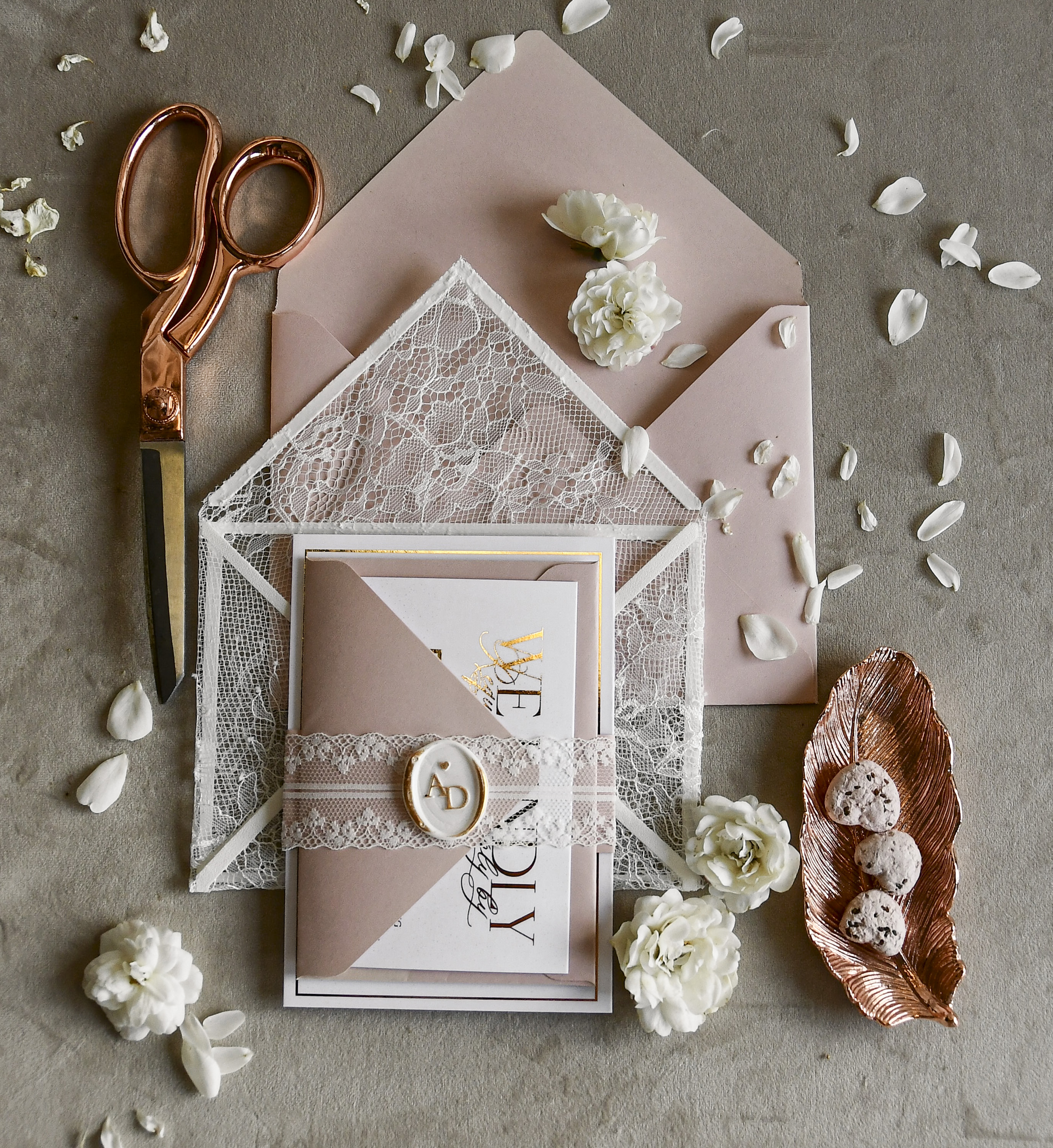
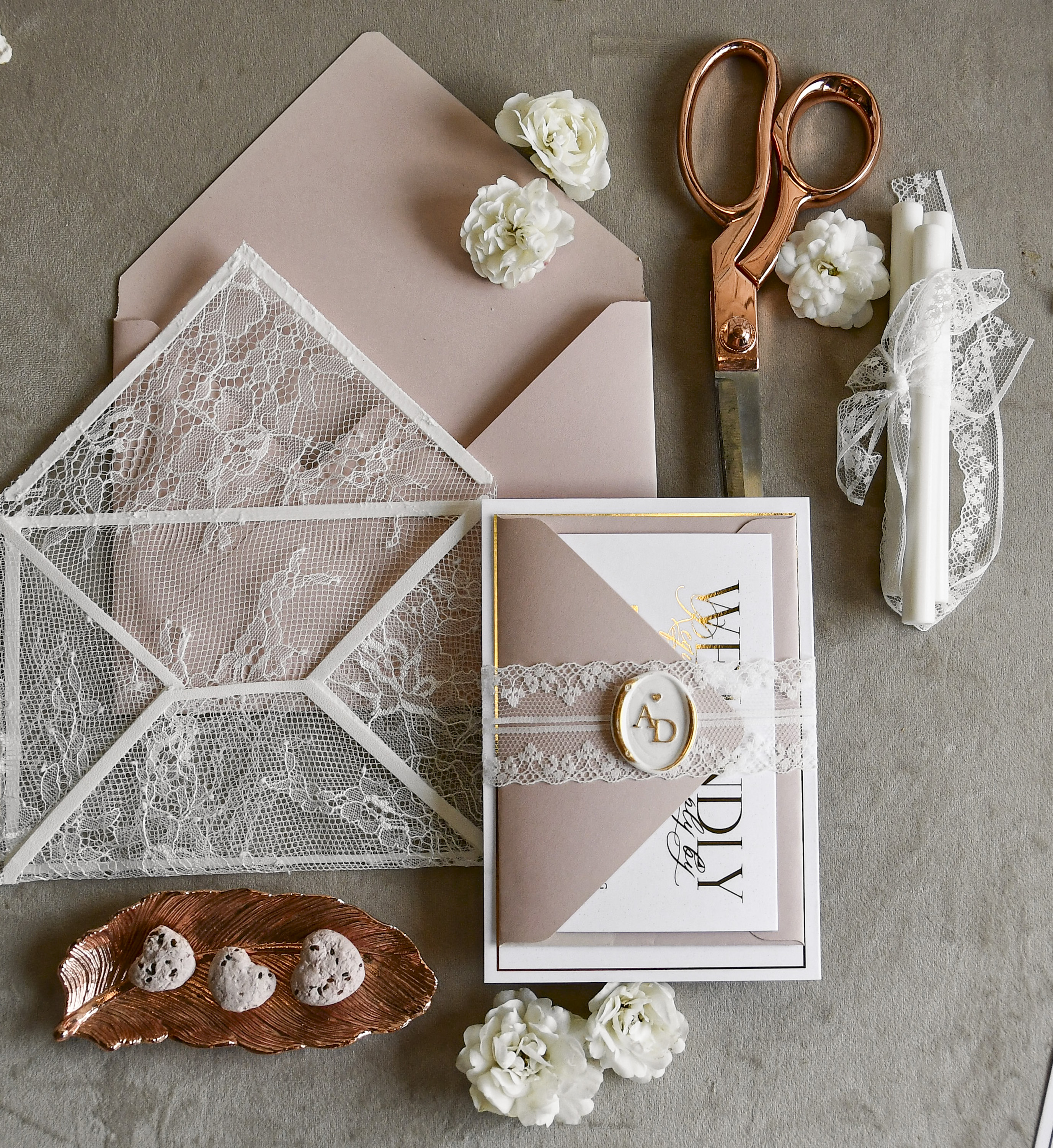
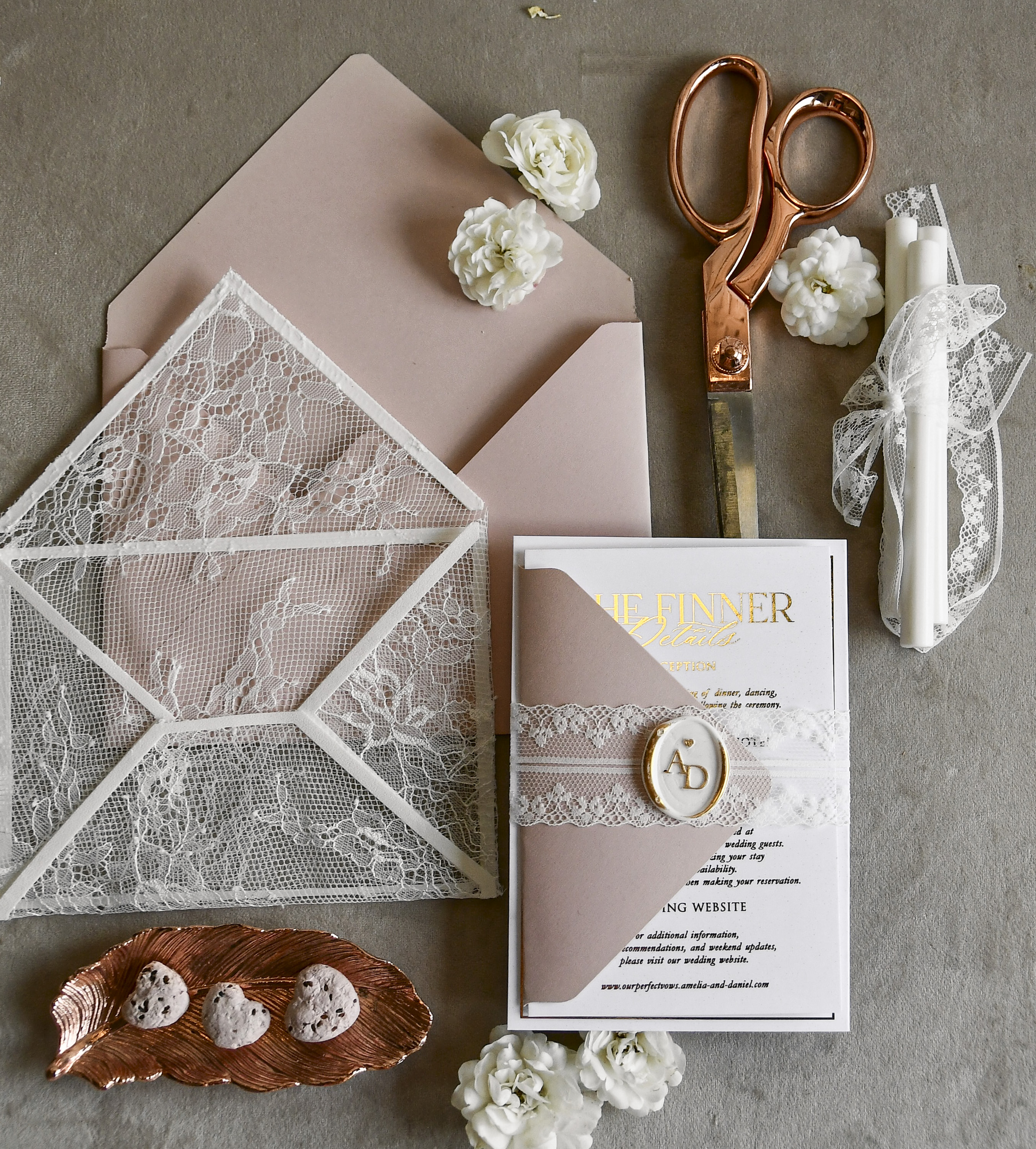
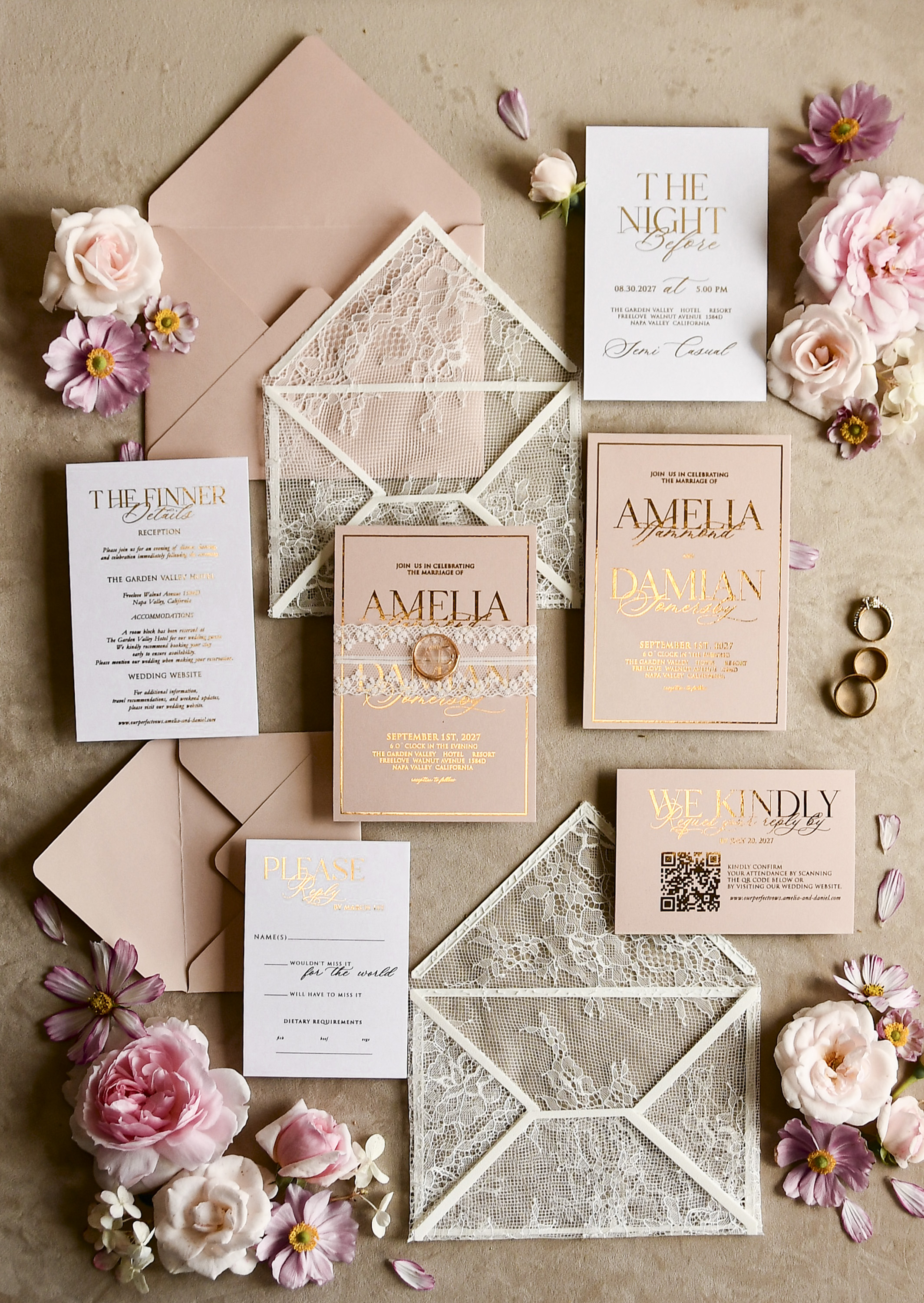
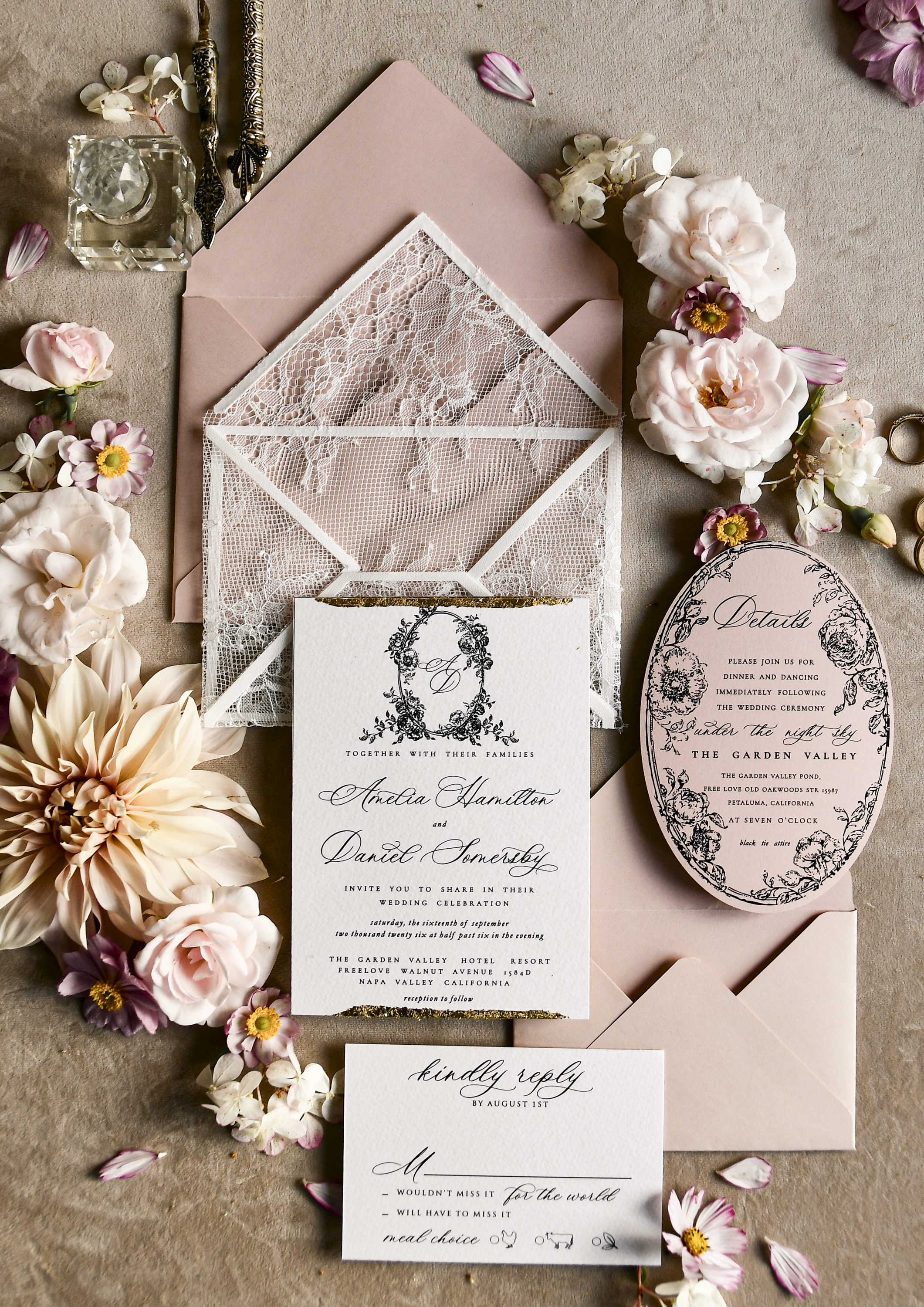
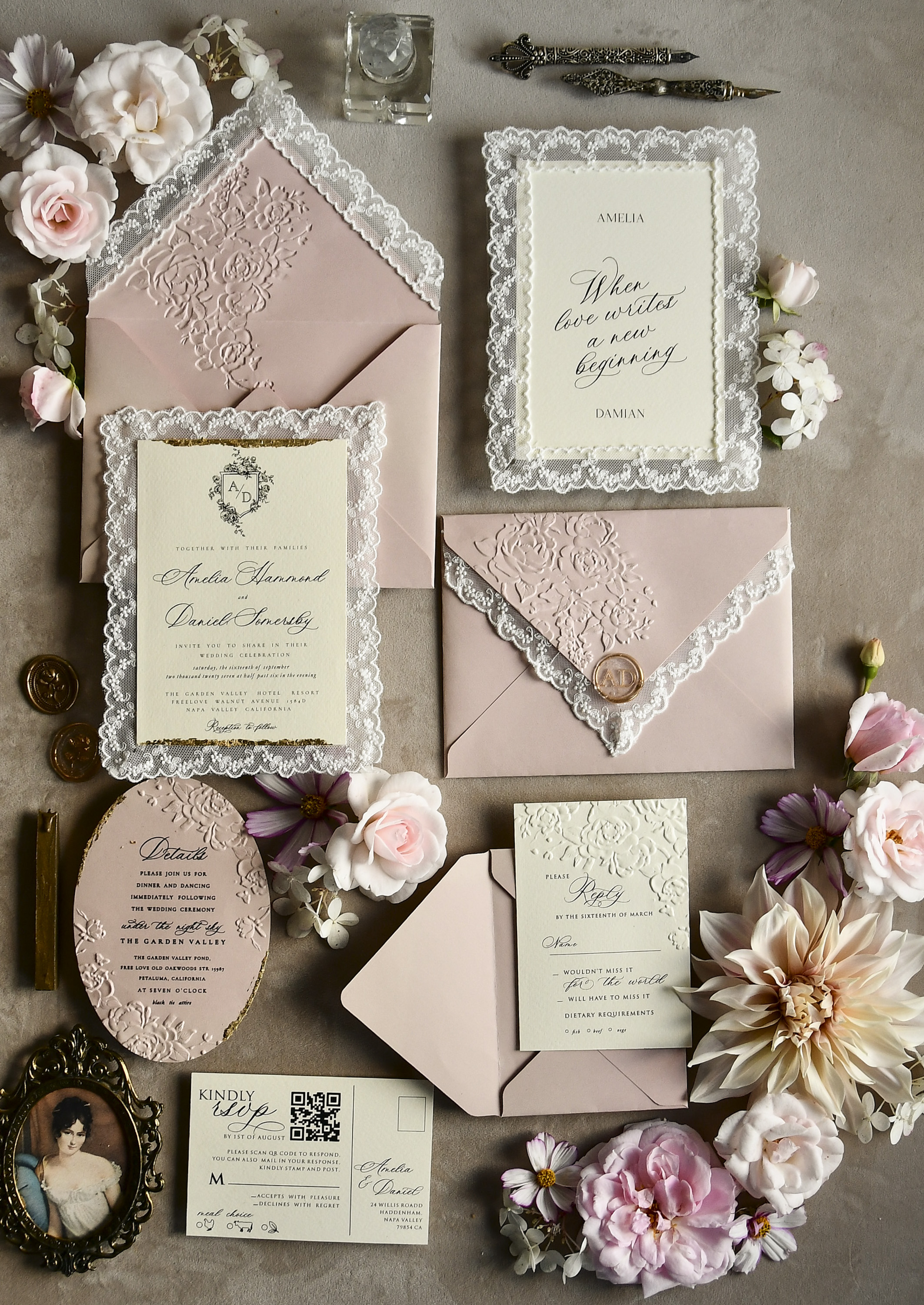
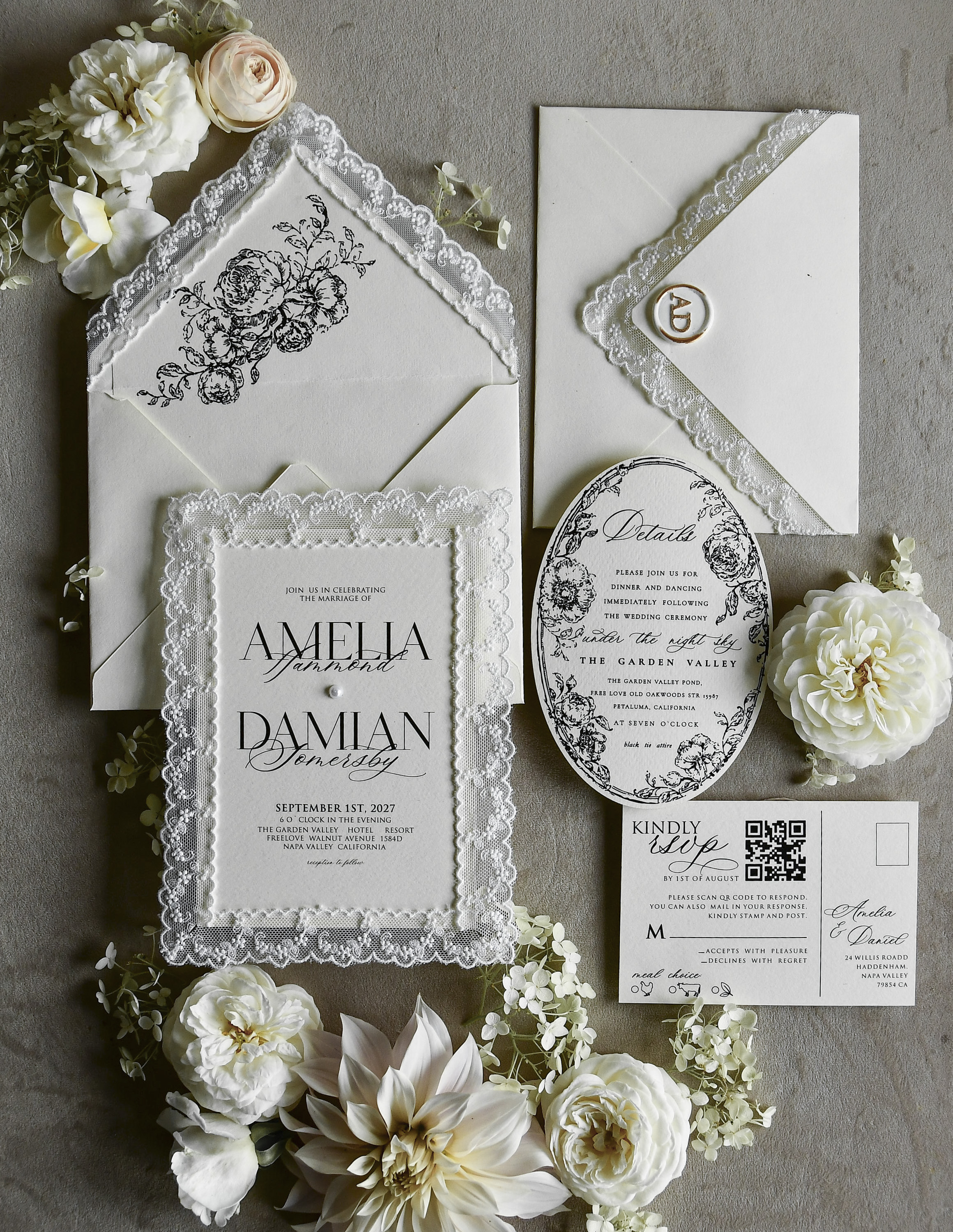
The tone of your wedding starts with your stationery. A cohesive, elegant invitation suite signals to everyone — including feuding family members — that this is a sophisticated, grown-up celebration where everyone is expected to behave accordingly. Our 01/lacenvD/z vintage lace wedding invitations bring a warm, romantic feel that sets exactly that kind of graceful tone from the moment guests open the envelope.
On a practical note: if your parents are not on speaking terms, send each parent their own invitation addressed to them individually (not as a household). This small gesture acknowledges their separate lives and avoids any awkwardness about who "gets" the invite.
Give Yourself Permission to Draw a Hard Line
If a parent has a history of truly disruptive behavior — not just awkwardness, but actual scenes — it's okay to have a frank conversation about consequences. You can say, calmly and lovingly: "If things escalate on the day, I will ask you to step outside with [trusted person] until you're ready to rejoin the celebration."
Assign a trusted friend or family member as a quiet "handler" for each parent. This person's job is simply to stay nearby, redirect conversations, and flag you or your partner only if something truly needs your attention. You should not be managing parental conflict on your wedding day — that's what your support team is for.
Remember: you cannot control your parents' feelings, but you can control the structure around them. Build that structure thoughtfully, communicate it clearly, and then let it go. Your job on your wedding day is to get married and enjoy every moment of it.
Frequently Asked Questions
In almost all cases, yes — not inviting a parent creates lasting damage to that relationship and is rarely worth it. The exception is if a parent has been abusive or completely absent; in that case, you have every right to make a different choice. For the vast majority of couples, the goal is managing the dynamic, not eliminating a parent from the day.
No. When parents are divorced, each should receive their own invitation addressed to them individually. If a parent has remarried or has a long-term partner, include that partner on their invitation as well. This approach respects their separate lives and avoids any confusion or hurt feelings.
Have a direct, private conversation before the wedding and make your expectations clear. Designate a trusted person to stay close to that parent during the event and gently redirect any tension before it escalates. If a true scene occurs, it's appropriate to ask that person to take a break outside — your wedding day takes priority.
You have several options: do separate parent dances (one with each parent), do a group dance that includes both parents and their partners simultaneously, or skip the formal parent dances altogether in favor of a different tradition. Many couples choose separate dances back-to-back, which feels natural and gives each parent their own special moment.
This is a sensitive ask and can backfire — telling a parent their long-term partner isn't welcome often creates more conflict than the original problem. Unless the new partner is the direct source of hostility, it's generally better to include them and focus your energy on managing the dynamic through smart seating and logistics.
Many couples choose to be walked down the aisle by both parents together, which is a beautiful, inclusive option. Alternatively, you can have one parent escort you and honor the other with a different meaningful role, such as a reading or a special seat of honor. Talk to both parents privately and frame it around what feels most meaningful to you as a couple.
See This Design Up Close

You May Also Like
More Wedding Planning Guides
- → Extra Guests at Your Wedding: How to Prevent and Handle Uninvited Additions
- → When Guests RSVP for More People Than You Invited: A Calm Action Plan
- → Small Weddings: Permission Granted (and Here's How to Do It Right)
- → What to Put on a Wedding Invitation: Every Detail You Need
- → How to Decide Whether an Estranged Sibling Belongs on Your Guest List
- → Setting the Record Straight: How to Communicate a Strict Guest List Without the Awkwardness
- → When the Guest List Expands: Who Covers the Cost of Extra Attendees?
- → When to Send Your RSVP Reminder (And Exactly How to Do It)
- → Uninvited Plus-Ones and Tag-Alongs: How to Keep Your Guest List Intact
- → When Family Feuds Threaten Your Wedding Plans: A Practical Peacekeeper's Guide
- → Inviting an Estranged Brother or Sister: Finding Clarity Before You Seal the Envelope
- → Cousins, Invites, and Hard Choices: A Practical Guest List Guide