
Your Parents Want to Invite Their Friends — Here's How to Handle It Gracefully

You've been dreaming about your wedding guest list for years — and then your mom hands you a list of 30 people you've never met. Sound familiar? Parent guest list drama is one of the most common sources of wedding planning stress, but it doesn't have to derail your vision. With clear boundaries, honest conversations, and a little flexibility, you can honor your parents' wishes without losing control of your own celebration.
Start With a Total Guest Count — Before Anyone Makes a List
The single most effective thing you can do is establish a firm guest count ceiling before any family member starts compiling names. Sit down with your partner and decide: how many people can your venue hold, and how many can your budget realistically support? Once you have that number, divide it into categories — immediate family, your friends, your partner's family, your partner's friends, and parent allocations.
A common approach is to split the guest list into thirds: one-third for each set of parents and one-third for the couple. If your venue holds 120 guests, that gives each side roughly 40 slots. When parents understand they have a defined number to work with — not an open invitation — the conversation becomes much more manageable.
Set Boundaries Early and Communicate Them Kindly
Timing matters here. Have the guest list conversation as early as possible — ideally before you've booked a venue or sent save-the-dates. The earlier you establish expectations, the less likely anyone is to feel blindsided later.
When you talk to your parents, lead with appreciation before you set limits. Something like: "We love that you want to celebrate with us, and we want your close friends there too. We have room for X names from your side — can you prioritize the people who mean the most to you?" Framing it as a prioritization exercise rather than a rejection softens the conversation considerably.
A few practical rules that help:
- No plus-ones for people the couple hasn't met. If your parents want to invite a colleague, that colleague comes solo unless the couple knows them.
- Set a deadline. Ask for the final list by a specific date so it doesn't drag into save-the-date territory.
- Put it in writing. A shared spreadsheet keeps everyone accountable and prevents last-minute additions.
When Parents Are Contributing Financially, the Conversation Shifts
If your parents are helping pay for the wedding, they may feel entitled to more guest list input — and honestly, that's a reasonable expectation. A general etiquette guideline: whoever contributes financially gets some proportional say in the guest list. If your parents are covering 30% of the wedding, it's fair for them to have roughly 30% of the guest slots.
That said, financial contribution doesn't mean unlimited additions. Be transparent about the per-head cost at your venue. When parents understand that each additional guest costs $150–$250 in food, drink, and rentals, the list often trims itself. You might say: "Every guest adds about $200 to the total — we'd love to accommodate everyone, but we need to stay within budget."
Make Parent Guests Feel Genuinely Welcome on the Day
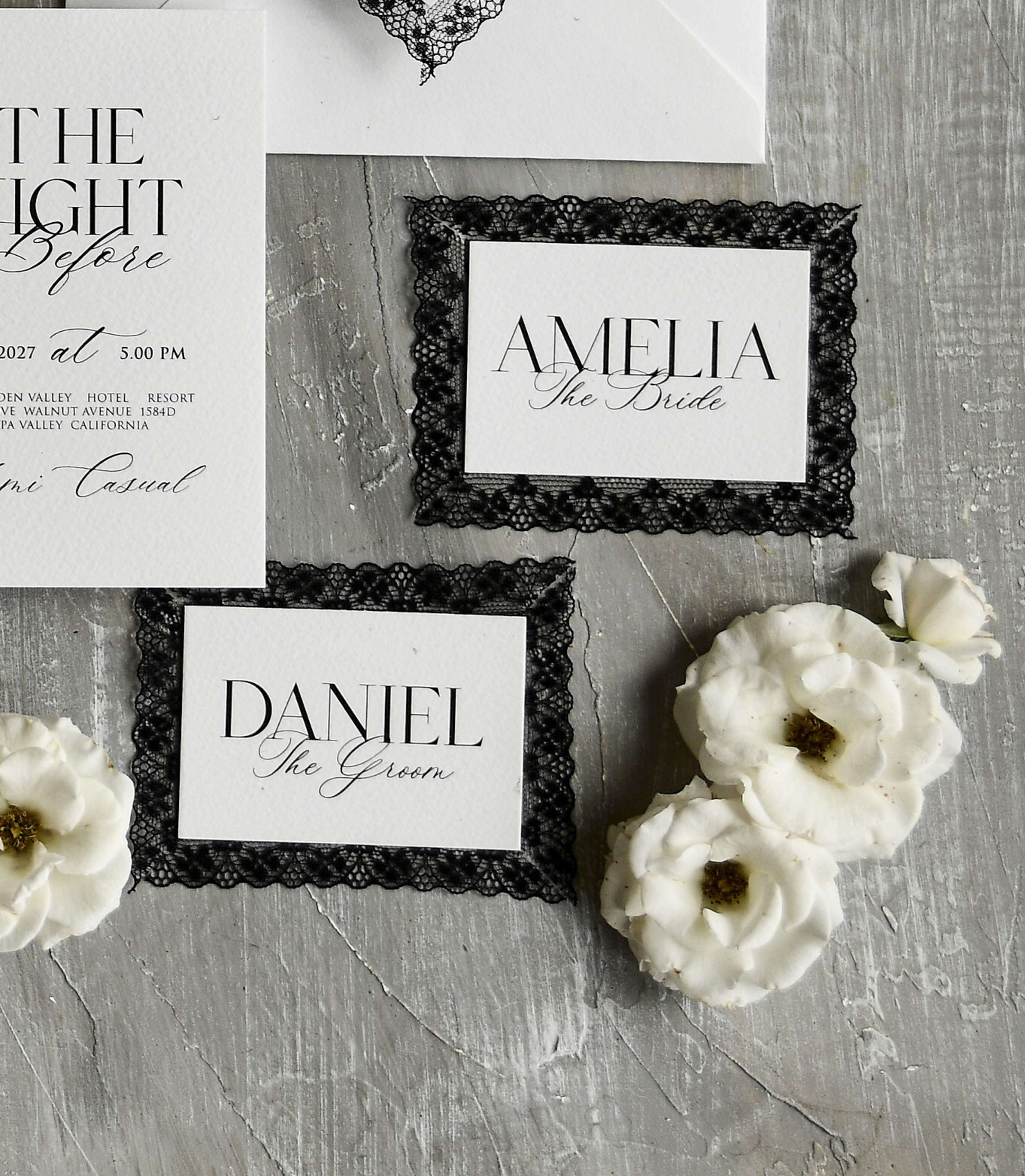
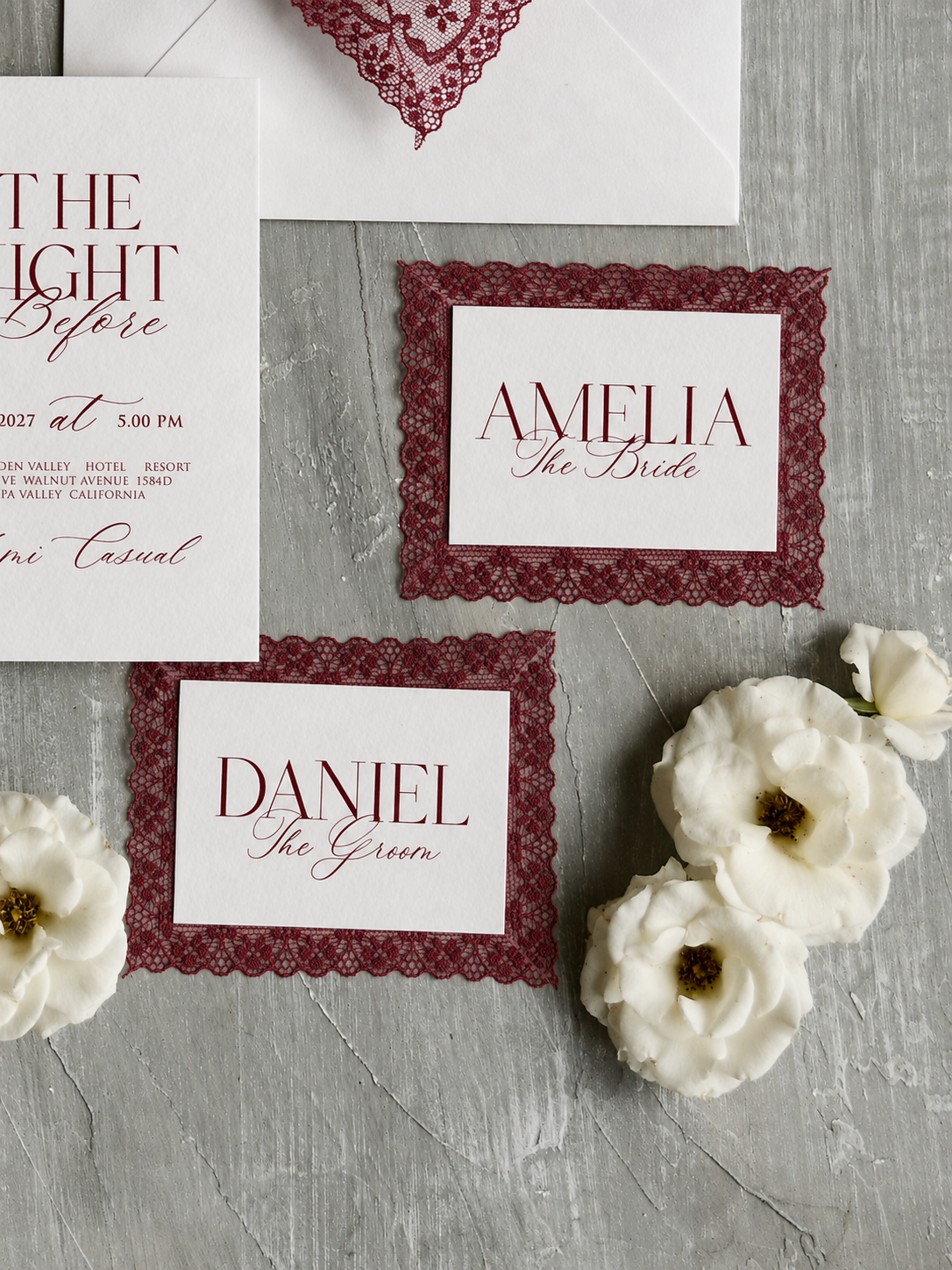
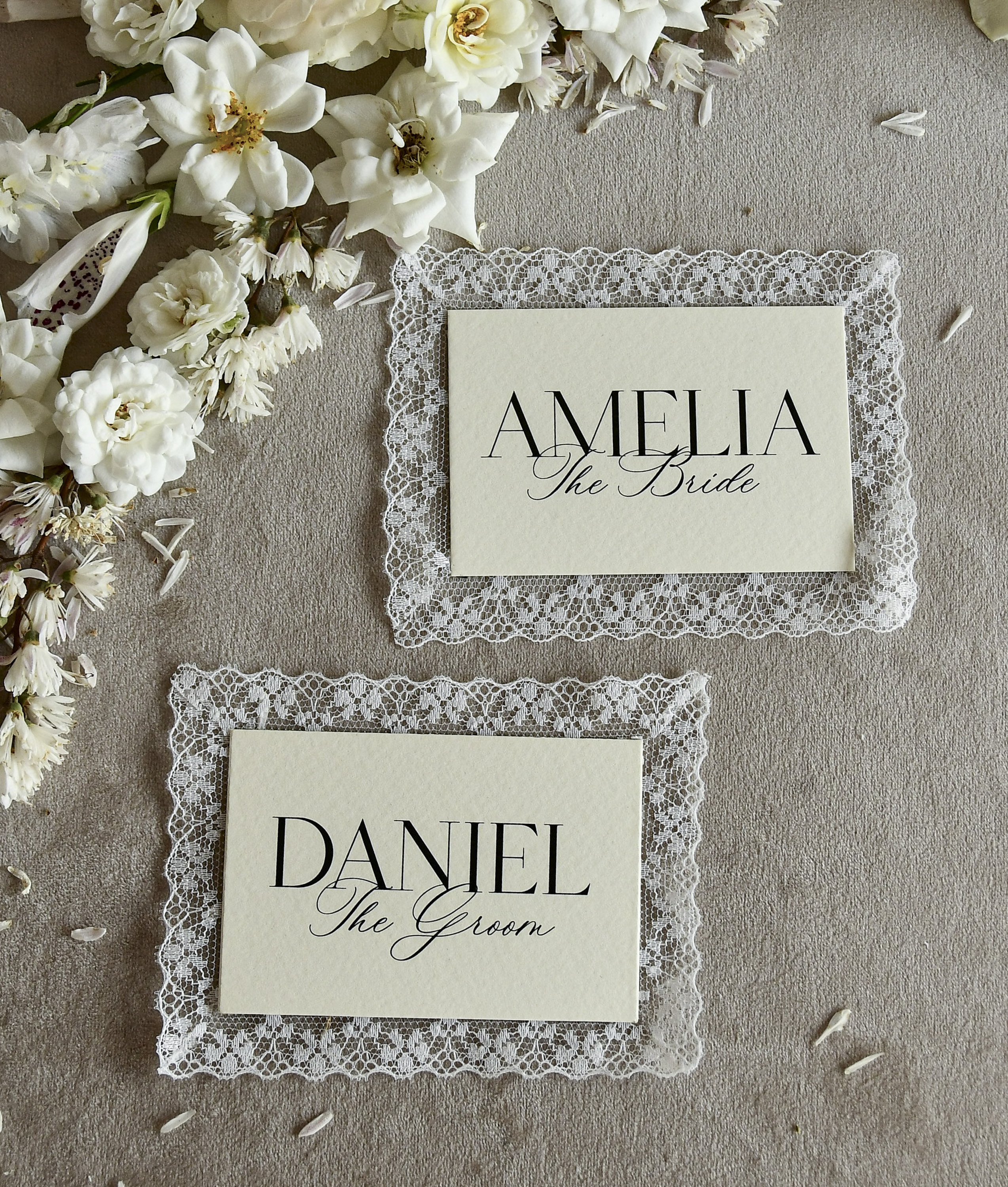
Once you've agreed on who's coming, make sure your parents' friends feel like valued guests — not afterthoughts. A few small touches go a long way. Assign a thoughtful seating arrangement so their friends are grouped with people they'll enjoy. A beautifully designed place card, like the elegant 04/laceD/W from Margo&Bees' Lace collection, adds a polished, personal detail that makes every seat feel intentional.
Ask your parents to handle informal introductions during cocktail hour — it takes the pressure off you and makes their guests feel connected. You might also consider a brief mention in your welcome toast: "We're so happy to celebrate with family friends who've been part of our lives in so many ways." It's a small gesture that means a great deal to older guests.
What to Do When You Simply Can't Fit Everyone
Sometimes the math just doesn't work. If you're having an intimate wedding and there truly isn't room for your parents' extended social circle, be honest and compassionate about it. Offer alternatives: a post-wedding brunch or dinner party where parents can celebrate with their friends in a more relaxed setting. Many couples find this is actually a lovely solution — it gives parents a moment that feels like their own celebration.
Another option is a tiered invitation approach: send save-the-dates to your confirmed A-list, then extend invitations to additional guests (including some parent picks) if you receive regrets. Just make sure this process is handled discreetly — no one should feel like a backup option.
The goal is a wedding where you feel surrounded by the people who truly matter, and where your parents feel proud. With clear communication and a little creativity, both are absolutely possible.

Frequently Asked Questions
A common guideline is to divide the guest list into thirds — one-third for each set of parents and one-third for the couple. Adjust based on who is contributing financially and what your venue capacity allows. The key is agreeing on a firm number before anyone starts writing names.
Gently but firmly refer back to the agreed-upon number and remind them of the per-guest cost. If additions keep coming, loop in your partner so the boundary comes from both of you as a united front. Consistency is more effective than repeated negotiation.
Financial contribution does give parents reasonable input, but it doesn't mean unlimited access to the guest list. Have an upfront conversation about expectations before accepting any financial help, so both sides understand the arrangement from the start.
It's perfectly acceptable to invite guests solo, especially if they are acquaintances rather than close friends of the couple. If a parent's friend is in a long-term relationship or married, extending a plus-one is a nice courtesy, but it's not required when space is limited.
Group your parents' friends together at tables where they'll have natural conversation partners — other family friends, colleagues, or guests in a similar life stage. Thoughtful place cards, like the <strong>04/laceD/W</strong> lace-style cards, help these guests feel welcomed and considered rather than overlooked.
Use the practical reality of deadlines as your reason: save-the-dates, catering counts, and seating charts all have firm cutoff dates. Saying 'We've submitted our final headcount to the venue and can't make changes' is both honest and takes the personal sting out of the refusal.
See This Design Up Close


You May Also Like

More Wedding Planning Guides
- → The Graceful Way to Tell Wedding Guests the Guest List Is Final
- → When Guests Change Their RSVP at the Last Minute: How to Handle It Gracefully
- → Should Children Get Their Own Wedding Invitation? Here's How to Decide
- → Babysitter vs. Kids' Entertainment at Your Wedding: How to Decide
- → Uninvited Plus-Ones and Tag-Alongs: How to Keep Your Guest List Intact
- → When Family Feuds Threaten Your Wedding Plans: A Practical Peacekeeper's Guide
- → Inviting an Estranged Brother or Sister: Finding Clarity Before You Seal the Envelope
- → Cousins, Invites, and Hard Choices: A Practical Guest List Guide